ArgoKnot

weaving

Jacquard Weaving in Perugia

Here I sit in English Harbour, Antigua, thinking about my recent return from Umbria, Italy, and the highlight of my time there: a visit to a jacquard weaving museum and atelier in Perugia that is housed in a 13th c. Franciscan church.

Perugia became a walled city in the Middle Ages, prior to the building of this church in 1212. It was originally a simple hermitage that was founded by St. Francis of Assisi when he and his followers stayed here together. By 1252 the monastery was ceded to Benedictine nuns and given the name San Francesco delle Donne. St. Francis of the women—for the women? It was abandoned numerous times through the centuries, and I don’t know those stories. Our host at La Romita, the art school where we were taking a workshop on tapestry weaving and natural dyeing, mentioned that Perugia defended itself many times over the centuries. Most of the conflicts had to do with the vying city states and their status in the Catholic Church, and throughout the Middle Ages Perugia was an impoverished place, in spite of their reputation for excellent craftsmanship in pottery and textiles, and probably other fine crafts that I haven’t found in my searches. There is some great information on the Giuditta Brozzetti website.

The Brozzetti family started the weaving museum and atelier in 1912, but not in its current location. The museum is named in honor of the current owner’s great grandmother, Giuditta Brozzetti. Giuditta started an atelier to bring back the historic handwovens of Perugia, especially the “Perugian tablecloths” that were often used as altar cloths in churches, as well as being tablecloths in the homes of the very wealthy. Textiles were far more valuable throughout history than they are today and were always listed in the inventories of wealthy families. The atelier and museum moved to this magnificent site in the church in 1996. I believe it took a lot of work to bring the church into state we see it today. It is magnificent!

Here is an excerpt from an interview with Marta Cucchia, the great granddaughter of the founder and current owner:

My studio is one of the last weaving ateliers in Italy – and the only one that reproduces medieval Perugian Tableclothes using Jacquard looms from nineteenth century. Furthermore, with the pedal looms, typical of the Umbrian countryside, we create fabrics using millenary techniques passed down orally from generation to generation. My great-grandmother, Giuditta Brozzetti, founded this Laboratory in 1921. From then on, the passion for hand-weaving was passed down from mother to daughter, each woman bringing her own experience according to her personality and studies.”

Marta has four women who assist her in the studio, and they have all come out of textile schools to make this field their livelihood. What an exciting place to work!

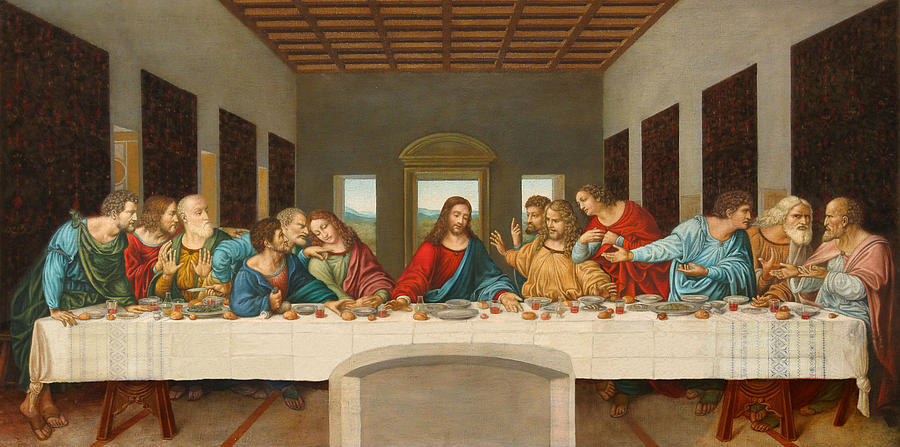
Some of the projects that Marta oversees are replicas of actual textiles in paintings from the Middle Ages and the Renaissance. During our visit Marta showed us a couple of impressive replicas. She had high resolution images taken of Leonardo da Vinci’s “Last Supper,” and she had small areas enlarged so she could study the tablecloth. In hind sight, why didn’t I think to ask her if she thought that cloth had been woven in Perugia?

Even in this low resolution image of the fresco, taken from the intenet, you can see that the tablecloth is highly figured at each end, but also there is a hint that the white on white areas also have interesting weave structures.

Detail of a similar fabric from a different painting:

Here Marta is showing us some of the images she used to design the tablecloth. Clearly I am scratching my head in amazement!

Photo by Jody Brewer

And here is the finished cloth, woven at the Giuditta Brozzetti Atelier:

The jacquard looms in this studio are all from the 19th c except one that is older from the 18 c. These are hand manipulated looms, where the process of weaving involves attaching every thread in the warp to a jacquard attachment that has a series of cards that control the patterns. The weaver stands at the front of the loom and depresses the one treadle (a heavy one that sits rather high off the ground!) with her right foot —yes, they are all women at this atelier. Depressing the treadle opens the shed, and the weaver pushes a lever that is above the beater that engages one of the jacquard cards, then she pulls a cord that sends the fly shuttle through the shed of the open warp. Here is a video of the process, although at this point the weaver is weaving some plain weave between the designs, rather than the more interesting pattern.

Here is Marta showing us one of the many charts of jacquard designs in her collection. These graphed charts are used to make the cards which will control the weaving patten on the looms.

And here is my best attempt at getting a shot of the entire loom. The warp on the loom will be obvious to most of you. The yellow cords anre atracked to each warp thread and are running vertically to a loft area where you just see a bit of the roll of cards used to weave the design. There are other ‘chains’ of cards being stored on the railing of the loft.

I neglected to count how many jacquard looms are in this large studio, but here’s a photo of the long row of them in the museum.

Many traditional Perugian designs can be woven on regular shaft looms with floor treadles. Marta demonstrated this on what looks like an equally old loom to the jacquard looms.

Here is particularly stunning tablecloth woven on a shaft loom in a traditional woven structure with luscious colors. I tentatively asked if it was for sale (and the price) and learned that Marta wove this tablecloth for her wedding. What a treasure…

During the time when Marta’s mother led this studio they produced some designs for clothing. During Marta’s tenure she has also had commissions from Italian haut couture houses.

Photo by Jody Brewer

These dresses were designed and woven here, and I’m guessing this occurred in a past decade, perhaps the 1960s? 1970s?

There are other modern designs available here. This is quite a striking pattern that was for sale as a shawl or a cushion.

While we were there one of the weavers brought out this tiny gem woven in the same structure. They are not yet available, but as soon as they are I need one! I’m sure they will be popular. When I posted a photo of this Facebook some of my friends immediately asked how to get one.

This is my prize purchase from the day, a gem that gives me a little shiver of thrill whenever I take it with me somewhere. It is equally beautiful on the inside, lined in a fine silk fabric from Fendi.

Marta and I also discussed some of the fine finishing that goes into many of the pieces they make. In particular, Marta’s mother adds a beautiful bullion edge to some of the table runners. I must give this a try on some of my handwoven projects. I bought a small runner that I cannot show you because it is at home, and I am writing this in Antigua. Mine is off white on white, with jacquard designs at each end, and the point twill design in the middle. This one is far more elaborate, but I want you see the bullion stitch edges.

Each one of the pieces woven here are exceptional examples of textile skill. In many parts of the US, textiles are no longer valued as they deserve. I hope we can bring some of that respect and awe back into our lives. My house is full of my own handwovens, and sometimes I marvel that many of my guests don’t realize that. I’m not sure people even see textiles anymore, beyond noticing someone in a beautiful dress. There is so much to marvel at in the world of handmade cloth. The Giuditta Brozzetti Museum and Atelier has to be one of the best places to go and relish the beauty of handwoven goods. Get there if you can! If not, there are beautiful images and descriptions on the website.

Janus

Ready or not, it’s 2024. I romped through the fall like a woman with her hair on fire, and I did manage to complete the loom woven projects I was determined to finish. I never managed to touch a tapestry loom. I’m not one who likes to look back and list all the things I didn’t accomplish, but every year I work hard not to do that. Here are some images of what I did finish! And I am celebrating!

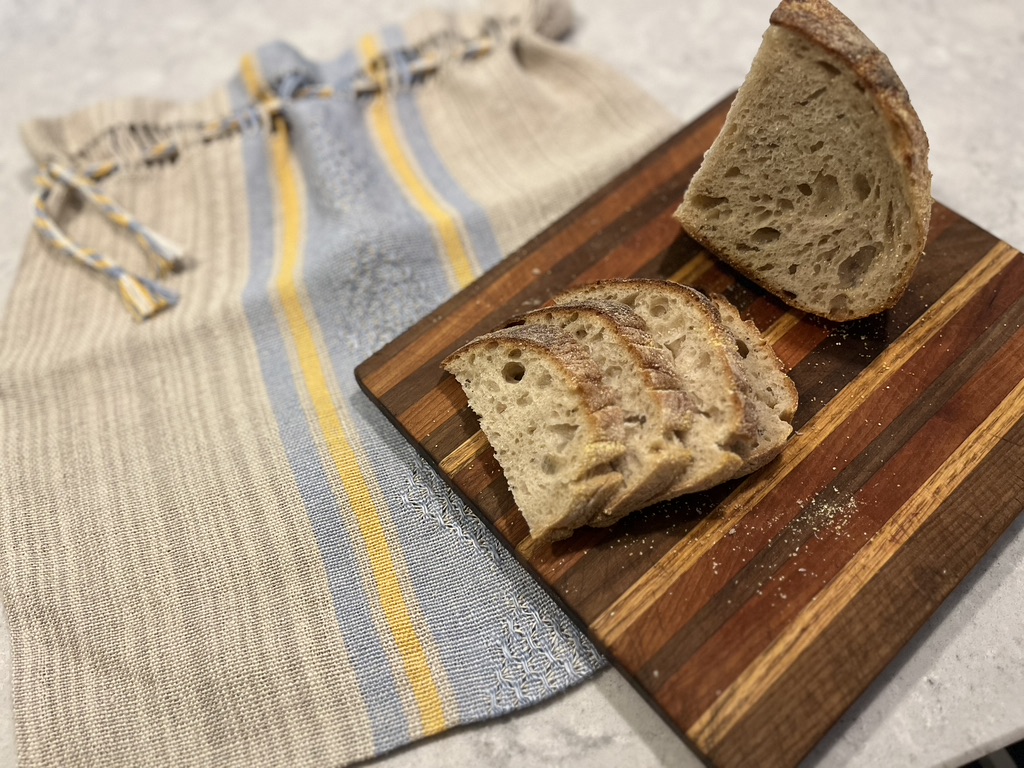
For most of the fall I was in a class with Fran Curran to design a project entirely in linen. While thinking about napkins or curtains, or even just kitchen towels I remembered that I’ve wanted to weave some bread bags for a couple of years. Here was the opportunity, which I wrote about in my last post!

I love using these for my sourdough bread loaves.

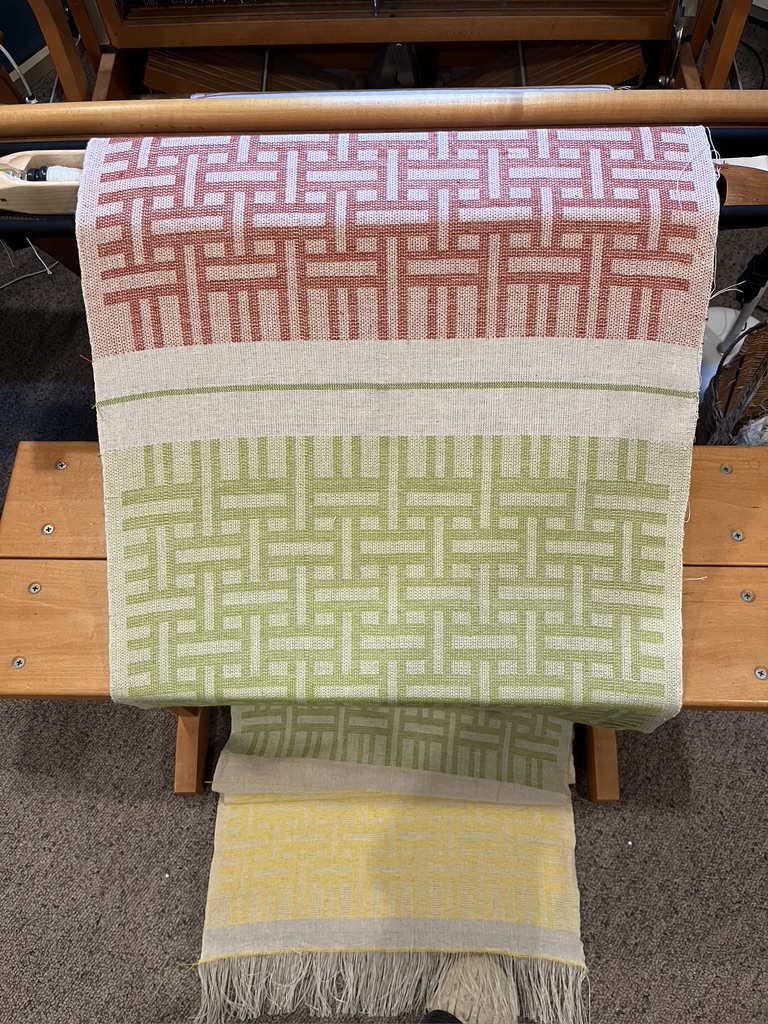
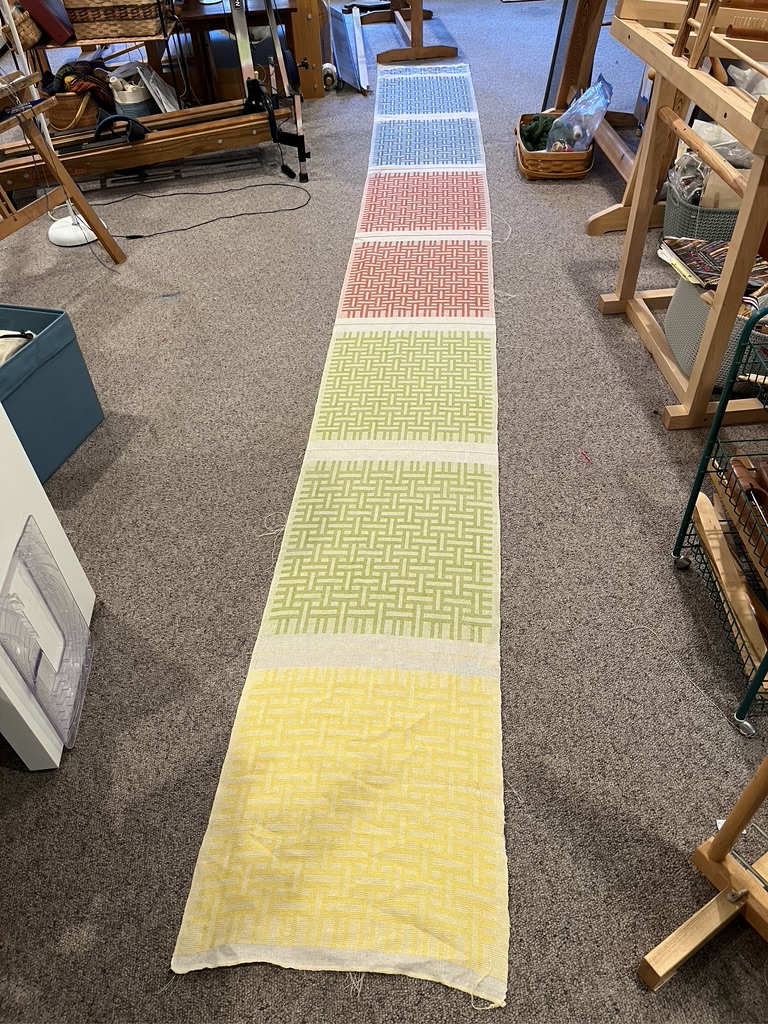
Since I wove my project at home rather than at the Weaving Center where Fran’s class took place, I finished before the class was half done. So I started another linen project, which is also in my last post. This is a wonderful design called “Meta Weave” by Lisa Hill, which you can purchase her Etsy site. I don’t know any weavers who don’t love a design that looks like weaving within weaving! Her instructions are for kitchen towels, but I decided to make 6 napkins in sets of two colors each. I used blue that you can see above, before switching to red, then green, and I managed to get a 7th napkin in yellow. I also found that I preferred the underside of the design.

Five yards and seven napkins!

Okay! Enough of that. It’s been a long time since I’ve woven a project so quickly. It was amazing to zip through this project, especially after the drawn out experience of weaving the paper placemats that required dyeing twice and unweaving two placemats after they were cut from the loom in order to get back some of the paper weft in order to dye it! That was almost the limit of my patience, but not the limit of my stubbornness, which may actually know no limits!

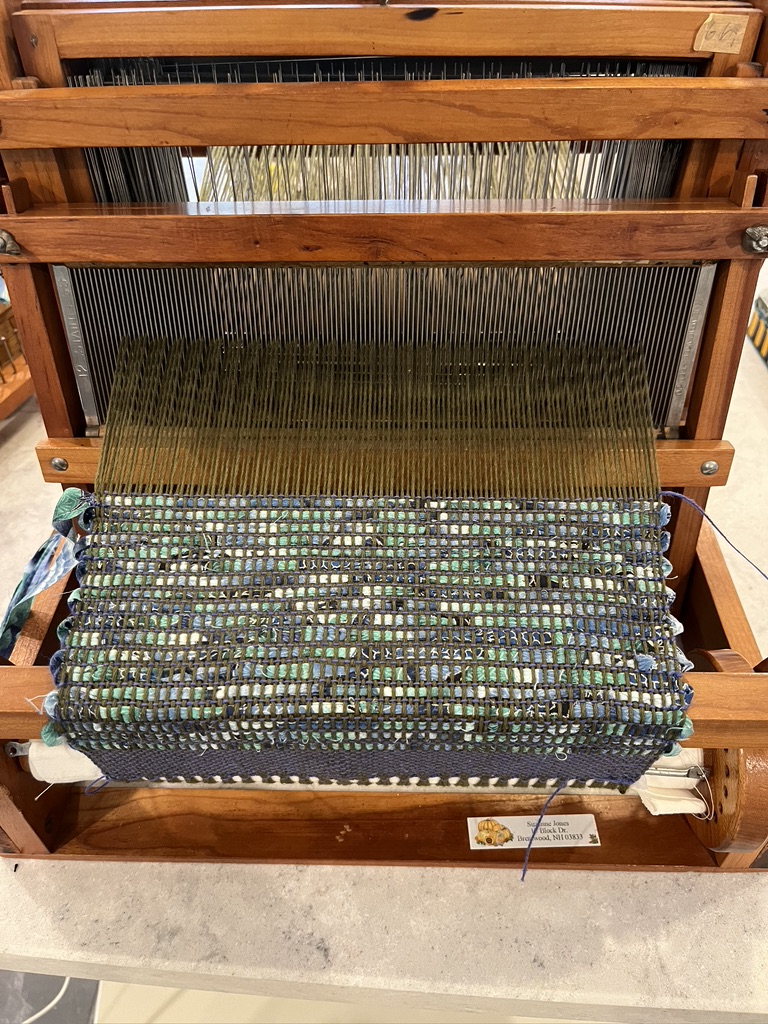
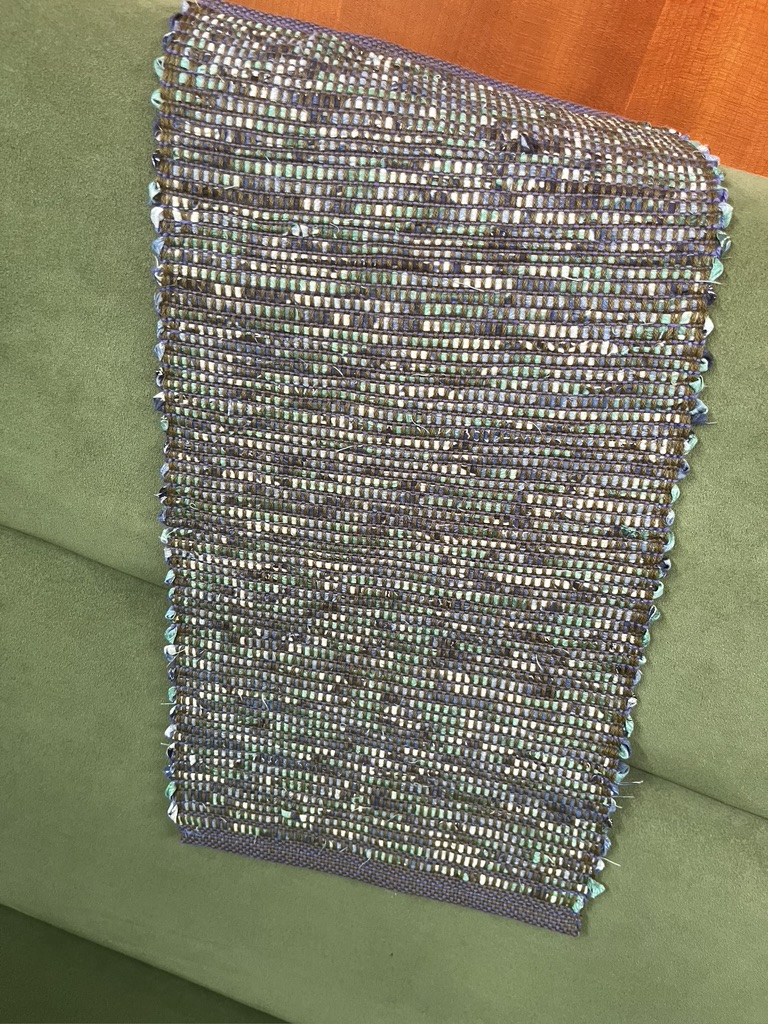
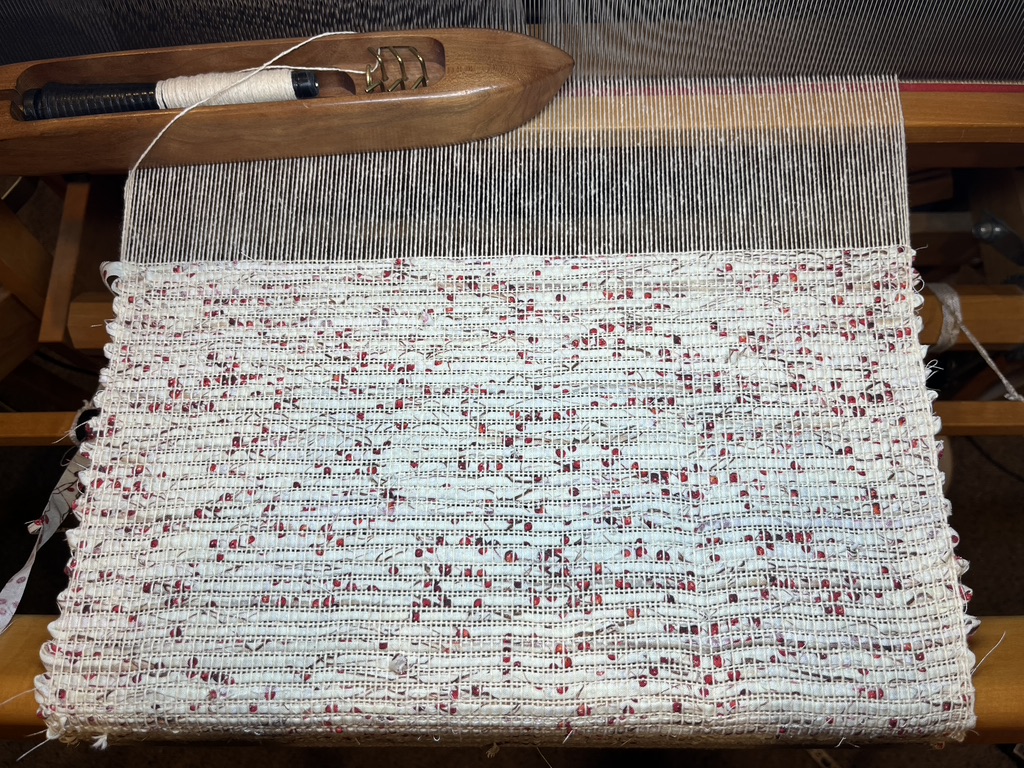
Then, in mid-November, a good friend gave me a table loom dressed with a sakiori project, also known as ‘rag’ weave. She gave me the loom because she thought I might be able to shoe-horn it onto Pandora. It’s a special loom. It belonged to the oldest current member (96!) of our state guild, whose father made several of these looms for her mother. Sue, our member, had dressed this particular loom with a loosely sleyed cotton warp which she intended to weave with 1/2″ strips of quilting cotton. The loom came with a large stash of cut cotton strips. I didn’t know how long the warp was, but I didn’t want to just cut it off. In fact, I didn’t want to lose all those cotton strips she had cut either. So I felt incredible time pressure to weave it off. And it was enjoyable, especially after I learned the interesting quirks of this little loom. When the levers are up the shafts are at rest. When I depressed the levers the shafts raised. It’s the opposite of any table loom I’ve ever used, and it took me some time to get used to that. In the long run the warp was enough for 3 runners, each about 20″ long by 10″ wide.

I gave away two of the runners, one to the woman who passed the loom to me, and the other to a friend whom I learned had helped Sue dress the loom and cut all the fabric strips. Sometimes things work out just as they should. I have my small runner aboard Pandora now. And how serendipitous it is that the color of the weft cotton strips goes quite well with our onboard decor. I couldn’t be more pleased.
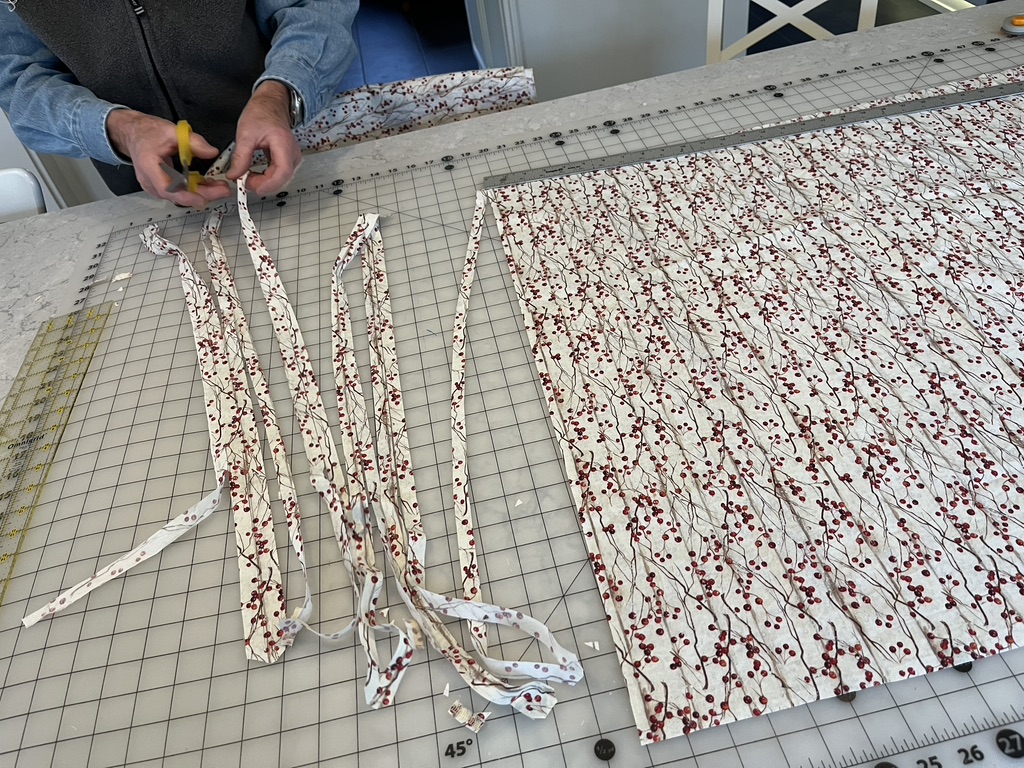
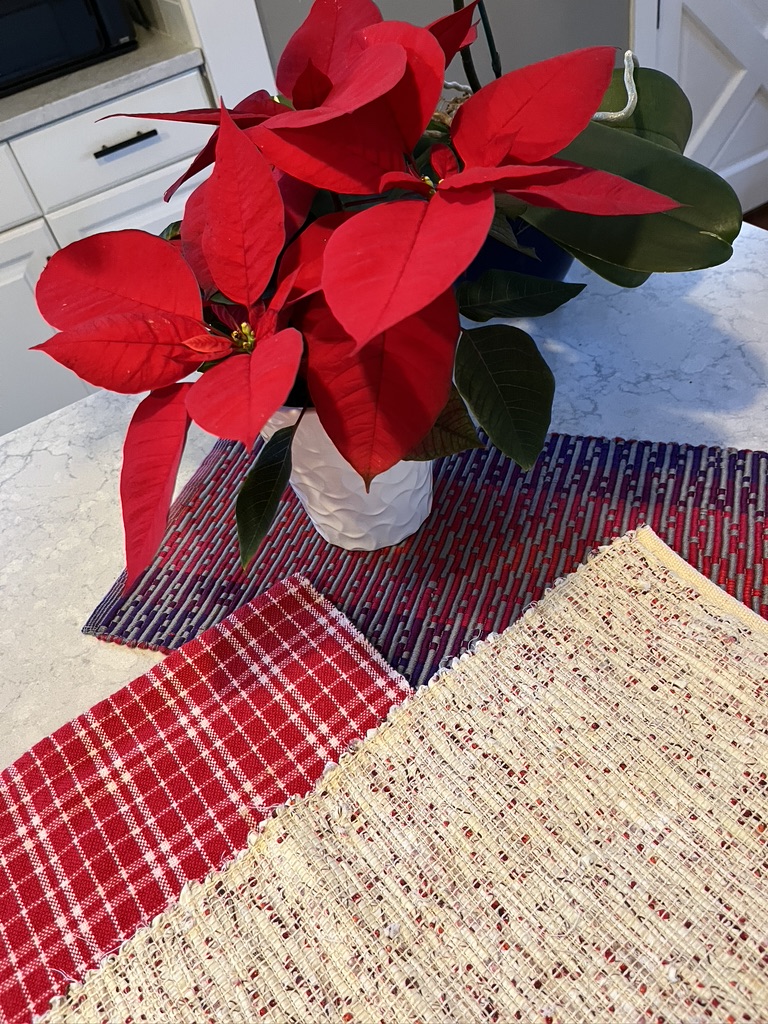
Then, lo and behold, I had the intense desire to weave another sakiori design with my own fabric. Now it was truly approaching time to gather our family for Christmas and get packed to depart. I found some wonderful Christmas-y fabric at a fabric thrift shop while traveling with a friend to see an exhibition in Vermont (Salley Mavor). I wasn’t sure it would be enough, and fate led me to find it on Etsy. Also, it was a stroke of luck that my husband offered to cut the strips! Three yards of 1/2″ strips was no easy feat.
I loved every minute of the weaving. It flew by like skating on smooth ice.

It also worked well with a few of my Christmas runners. Win! Win!

We had a simple Christmas with our younger son and a local family and some of their adult children. Holidays have certainly morphed in new directions since our kids have grown and grandchildren have joined the family, sadly not nearby. It was suddenly time to take down our few Christmas decorations and get packed for the flight to Antigua where Pandora was waiting. That deadline threw me into thinking about what I’d accomplished in three months of weaving, and a temptation to look at the things I didn’t accomplish.

That’s when I thought of Janus and the new year. He is the Roman god of beginnings, hence his placement as the first month of the year. He is depicted as two-headed, each of his two faces looking the opposite direction. This is my Achilles heel (sorry for analogy, but it fits so well). I want to take stock and see my accomplishments measure up to my aspirations. But since they never do….what weaver ever finishes all the projects she plans?….it’s not necessarily healthy to go down this path.

My younger son uses an app called “Notion” in his start up business. I am now trying to learn it because I think it will change my attitude about taking stock. It’s an app for tracking projects and goals, mostly for businesses, but I think it could help me realize that I get a great deal done every year. I’m struggling with the app a bit, but in the long run I think it’s going to be a positive thing– a wonderful way of keeping track of all my aspirations, my progresses, and my accomplishments. Every year there are projects I lose track of, and can’t find, in my over-stuffed work space. This app will remind me of things I started and eventually forgot. If I can just learn the nuances of this application I think I will be thankful to use it. Fingers crossed.

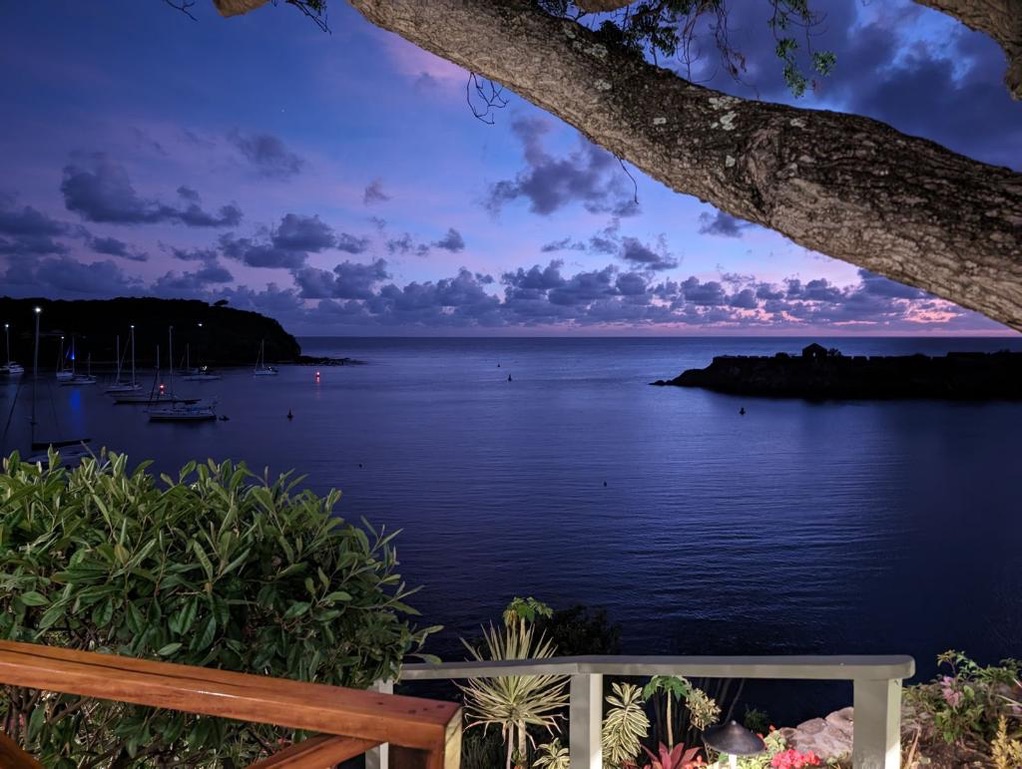
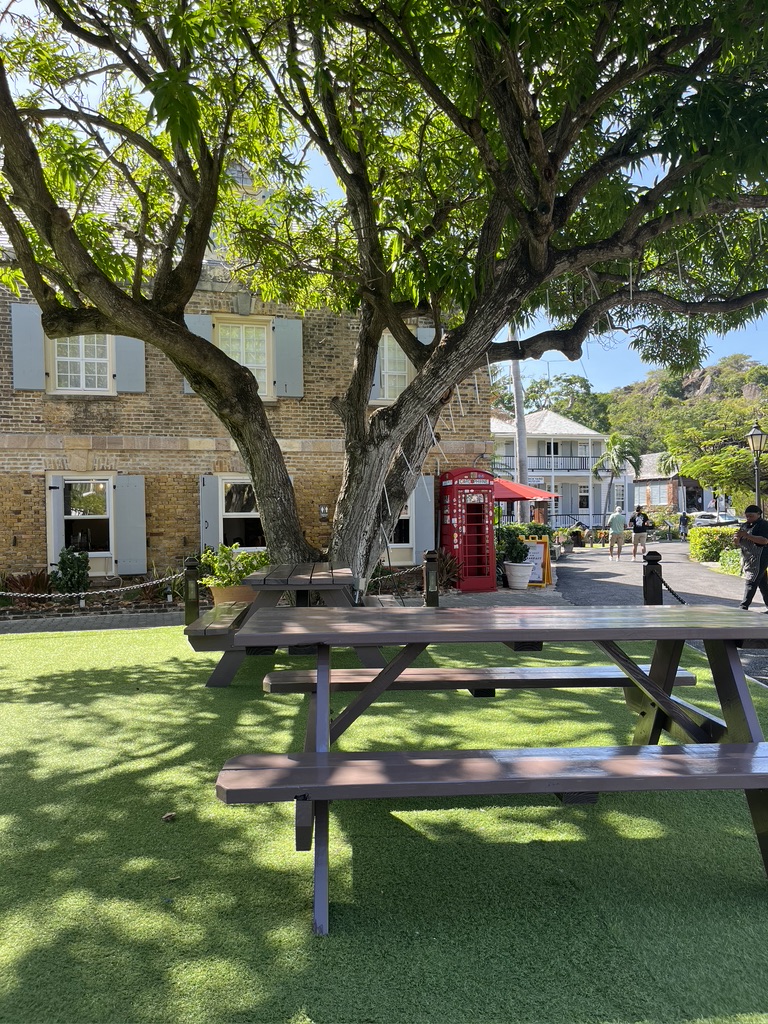
Meanwhile, it’s the new year, I am now onboard living a very different kind of lifestyle, with scenes like these…

This is the giant mango tree in English Harbour, where people usually meet because it’s such an iconic place to gather.

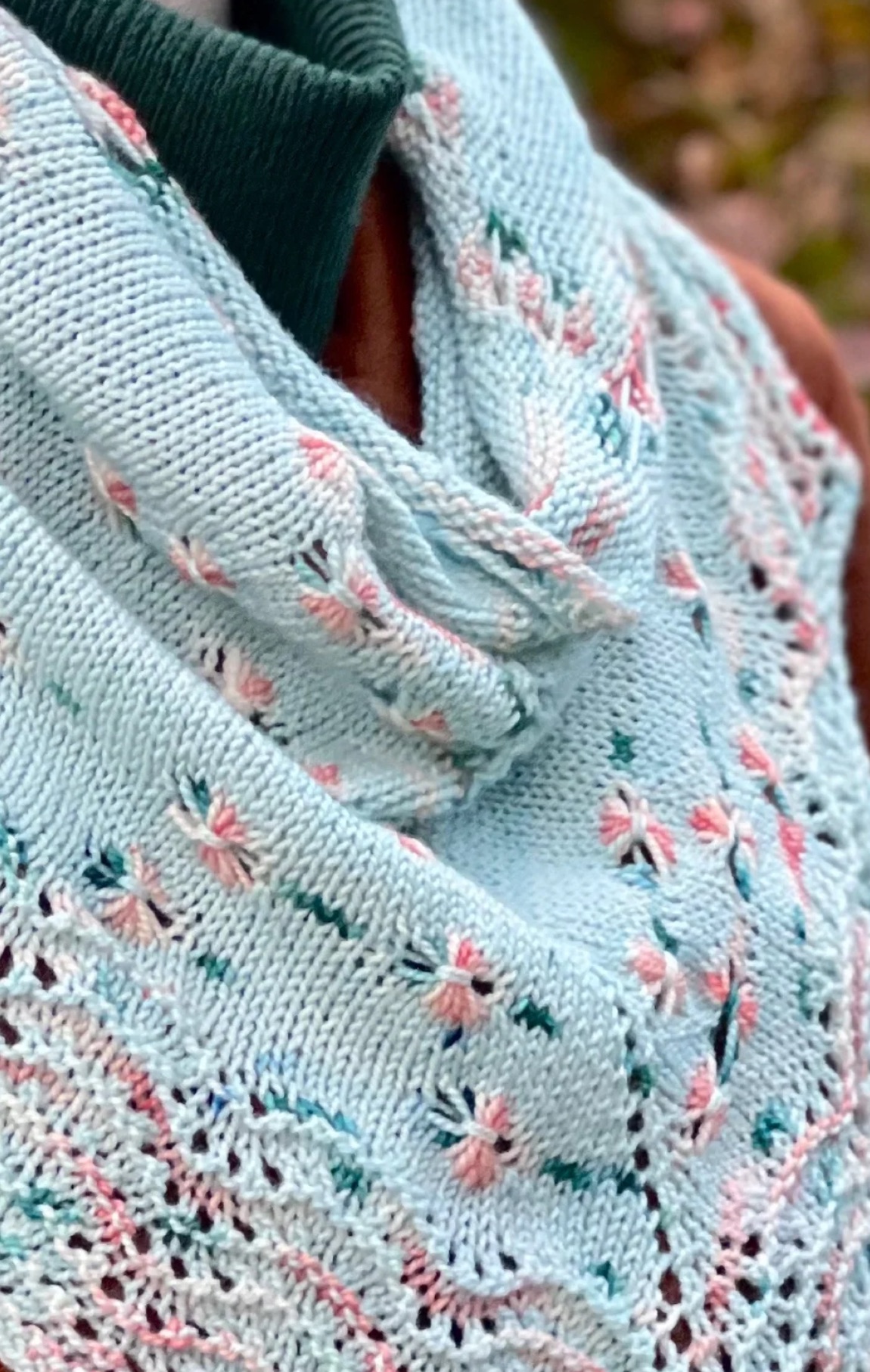
I have started two knitting projects. The first is a shawl, which typical of me, has already been set aside due to more tempting projects! The yarn is what makes this project a zinger. It is handpainted with long runs of the background color and short spurts of the contrasting colors. The pattern calls for knitting the background color in stockinette, then when you see the contrasting colors approaching the needles, you make a little motif by putting five yarn overs on the next three stitches. On the next row you let the yarn overs drop and take the working yarn to wrap those long stitches, creating a little ‘star’ or ‘butterfly.’ I decided to make an asymmetrical shawl shape with a small Shetland lace border called “iron brand” on one side to continue the asymmetrical effect. I was thoroughly enjoying it until bigger thing stole my attention!

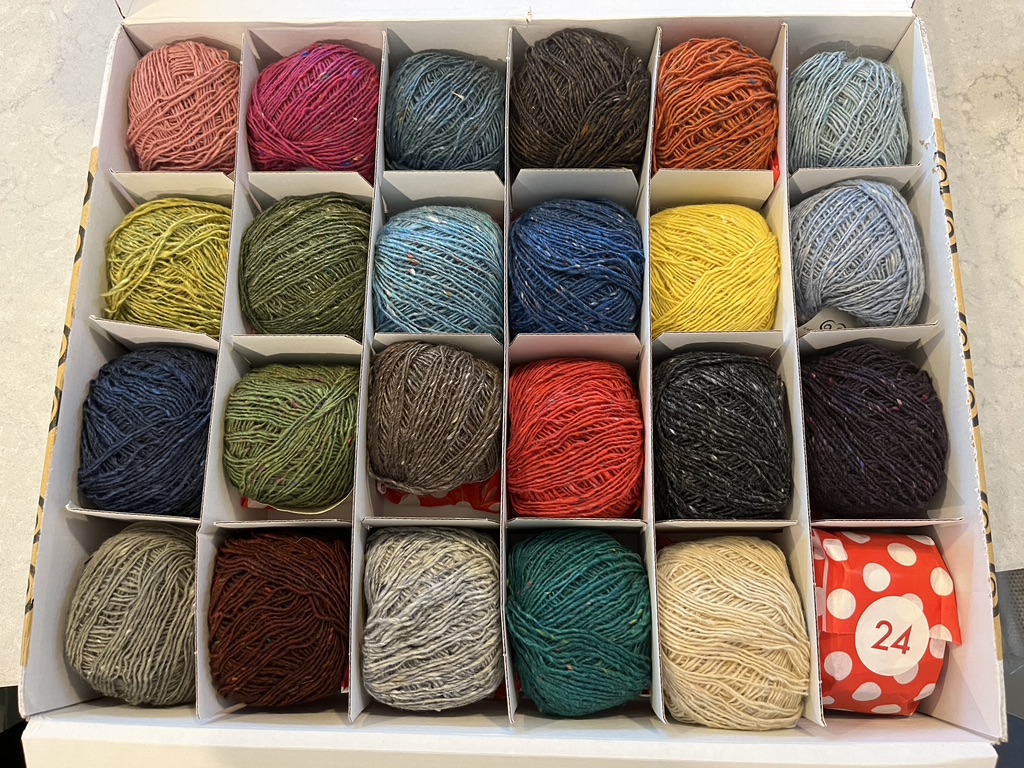
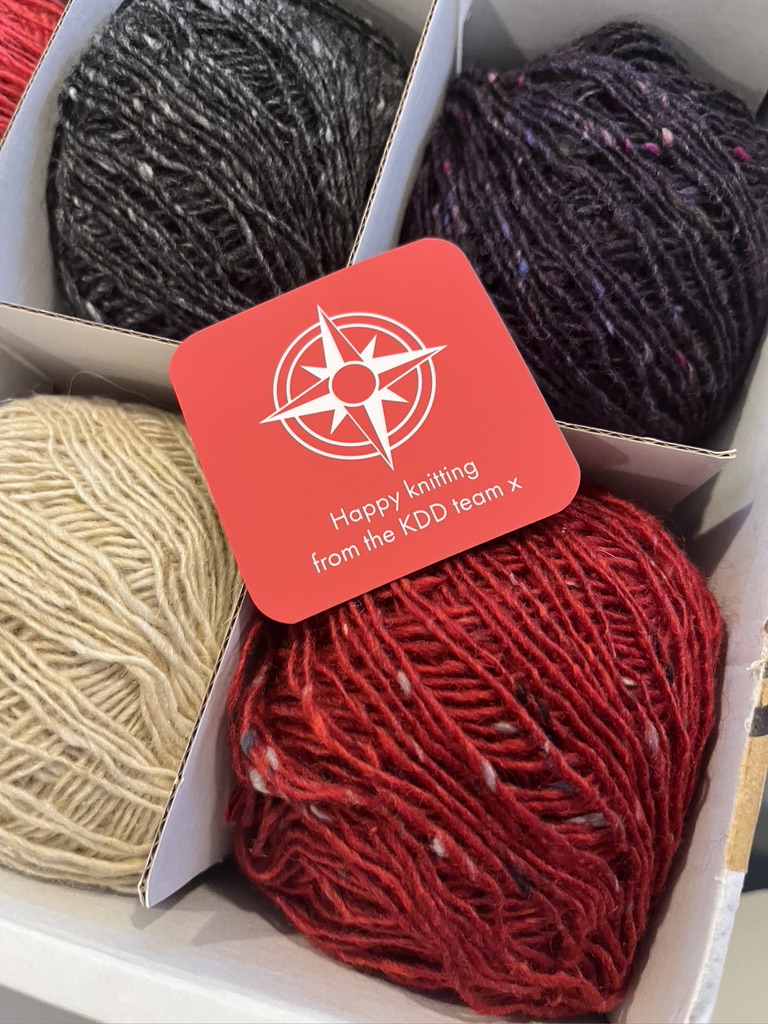
The project that took me away from this shawl was an advent calendar of yarn from Kate Davies Designs in Scotland. She has a yarn called “Milarrochy” that is a single ply, 70% wool, 30% mohair blend. I have used it to make her “Con Alma” vest a couple of years ago. The mohair blooms nicely when wet finished. Well, imagine my excitement when she announced that she’d made up boxes that held 24 small balls of “Milarocchy” for an advent calendar! I could not resist. So fun. The box arrived in early November, and it was hard to wait until December 1, but I did it. Here is a photo of the most exciting day for me. On the last day, the little bundle also held a card with a link to an e-book full of patterns for using this yarn.

Drumroll! I love that last color, a perfect Christmas red.

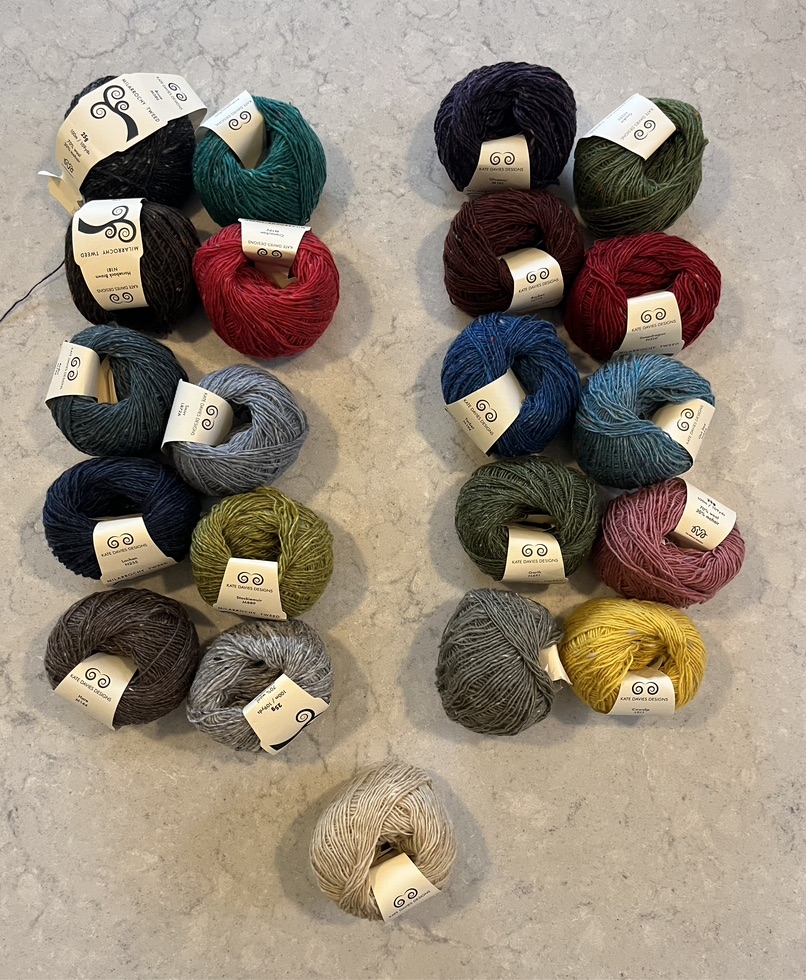
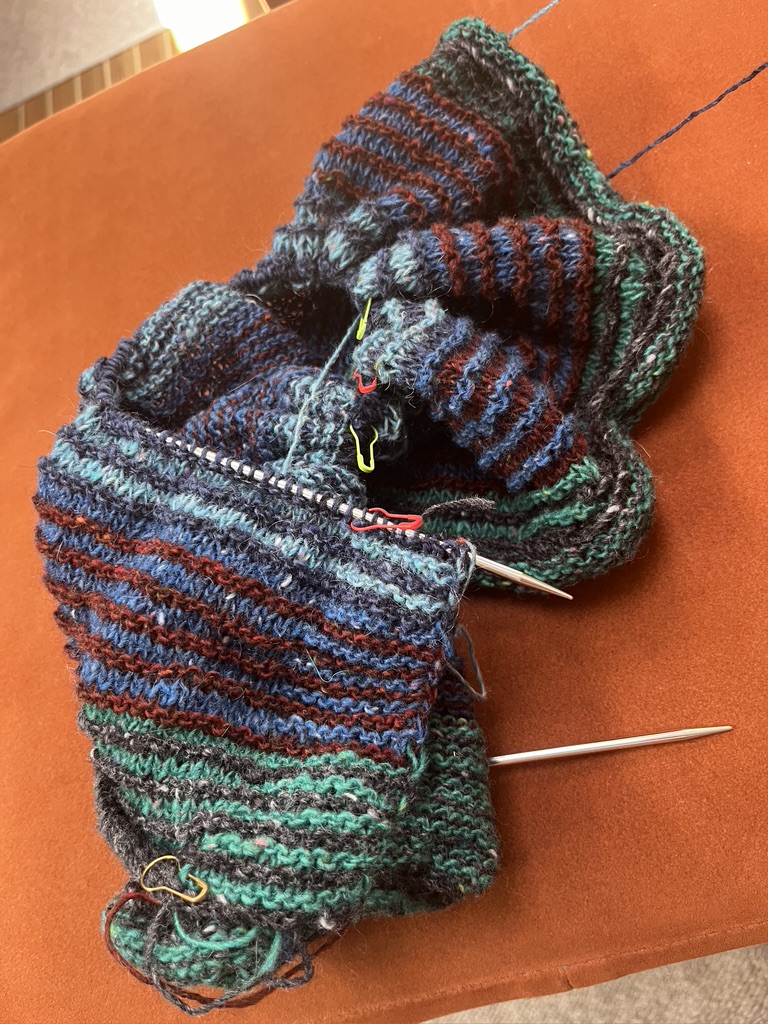
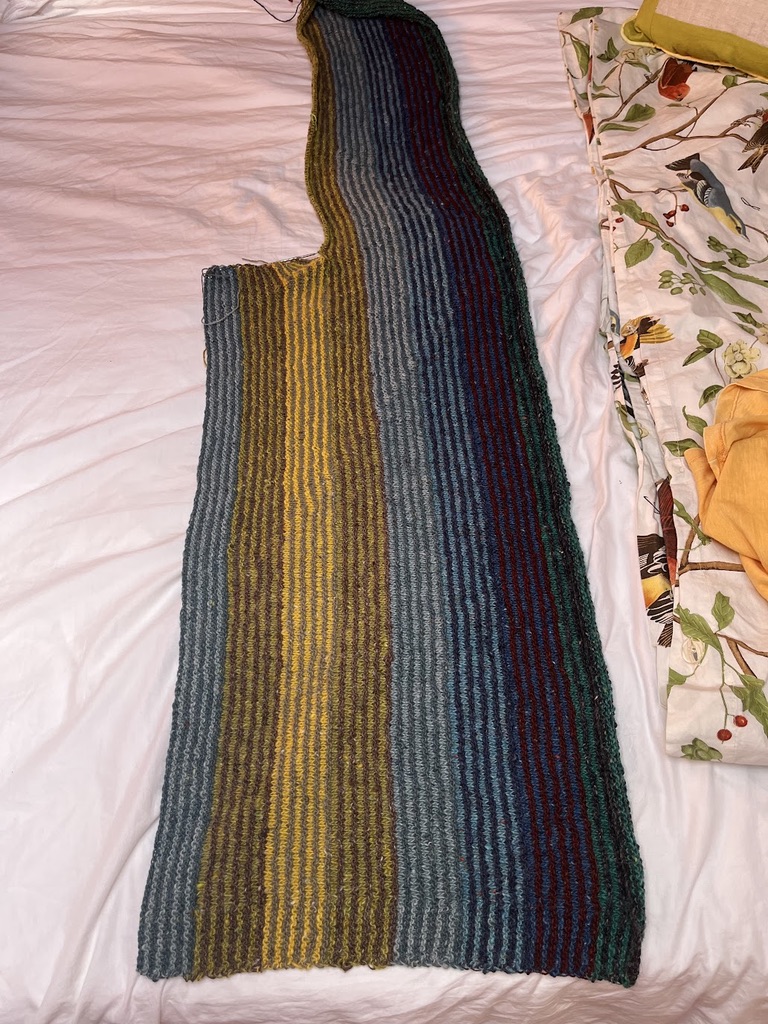
After a good deal of thought, and a fair amount of arranging the yarns into colorways I might knit, I decided to make a vest using Vivian Hoxbro’s ideas for shadow knitting. I am enjoying the process.

I was quite challenged at first because the only needle I had in the appropriate size was only 24″ long. My idea was to knit sideways, a left side front and back, then a right side front and back which would give me vertical stripes with shadows. That’s why I have the yarns gathered in two sections. The right and left sides of the vest will not match. What a struggle to knit that long run of stitches on a 24″ needle!

I was thrilled to discover not just one but two (!) #3 US circular needles that are 40″ long that I’d already stashed on Pandora earlier in the fall. The knitting is so much easier now. Can you see the shadow effect moving diagonally across the knitting? I am almost done with first left side front/back and am looking forward to starting the 2nd colorway for the right side of the vest.

So, here we all are at the open gate of the new year. Let’s all concentrate on looking forward, shall we? Not only about ourselves and our work, but also everything, from family, to community, to global issues. Let’s make this a banner year in as many ways as possible. That’s my wish for all of us.

Stretching the Rules or Just Stubborn?

Early last week I spent the better part of three days determined to get a standard warp onto the sectional beam of my BIG AVL (aka BIG ALVIN). The warp is 12 years old! You must be thinking why on earth would I save a warp for that long, and why, oh why, would I then try to put that warp on a loom not meant for it.

A conservative guess on the time I’ve spent so far on this might be 12 hours. And, if you consider that I needed an extra set of hands for some of this (i.e., patient husband) the total hands-on hours is probably 15 or 16. That is just to get the warp onto the beam.

My first attempt involved winding on one of the two warps, using my trapeze (made by my husband). Bob helped with this process, and we had to stop at every set of section dividers to get each section of warp into the proper divisions on the beam. It was slow going, but luckily it’s short warp.

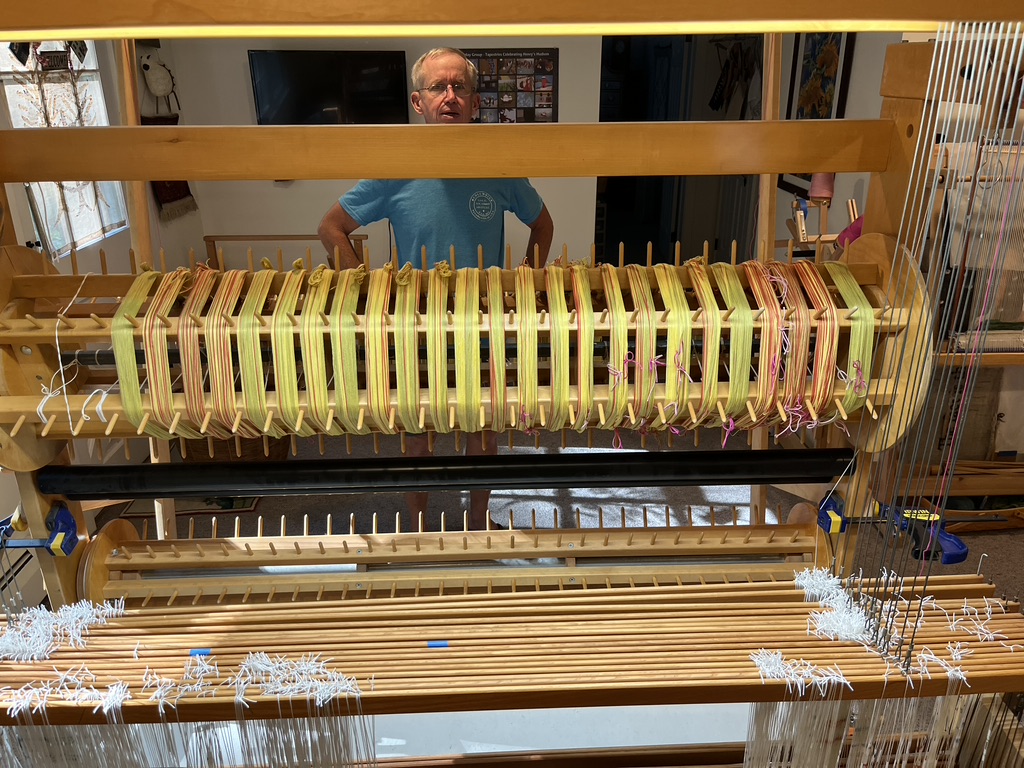
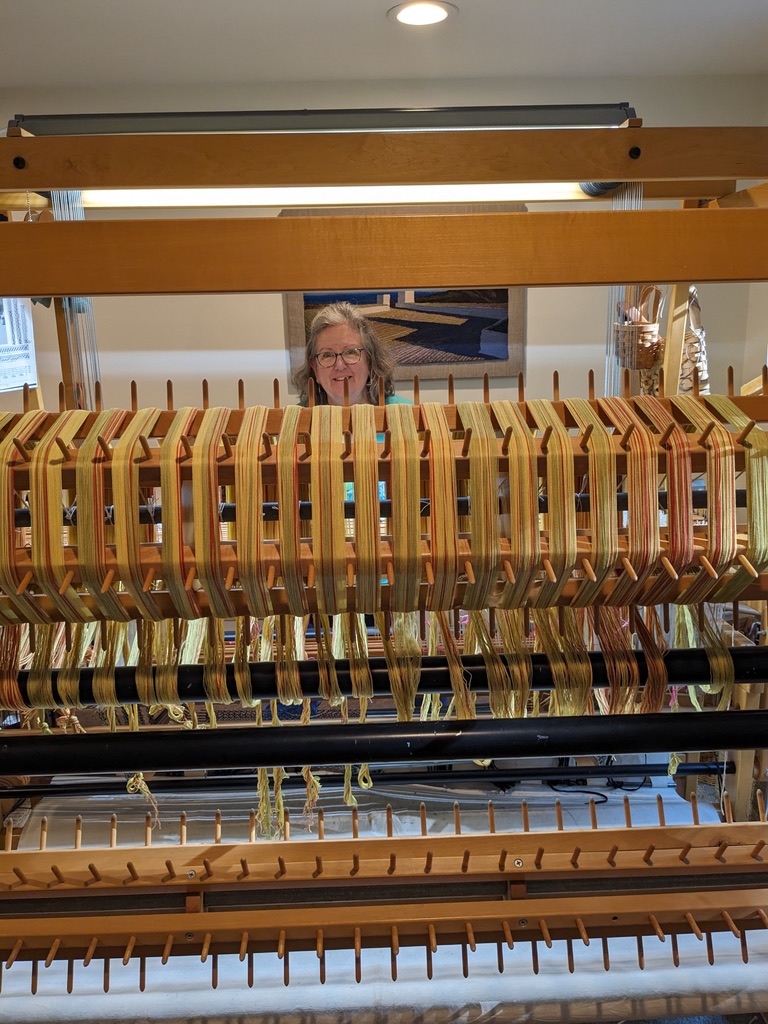
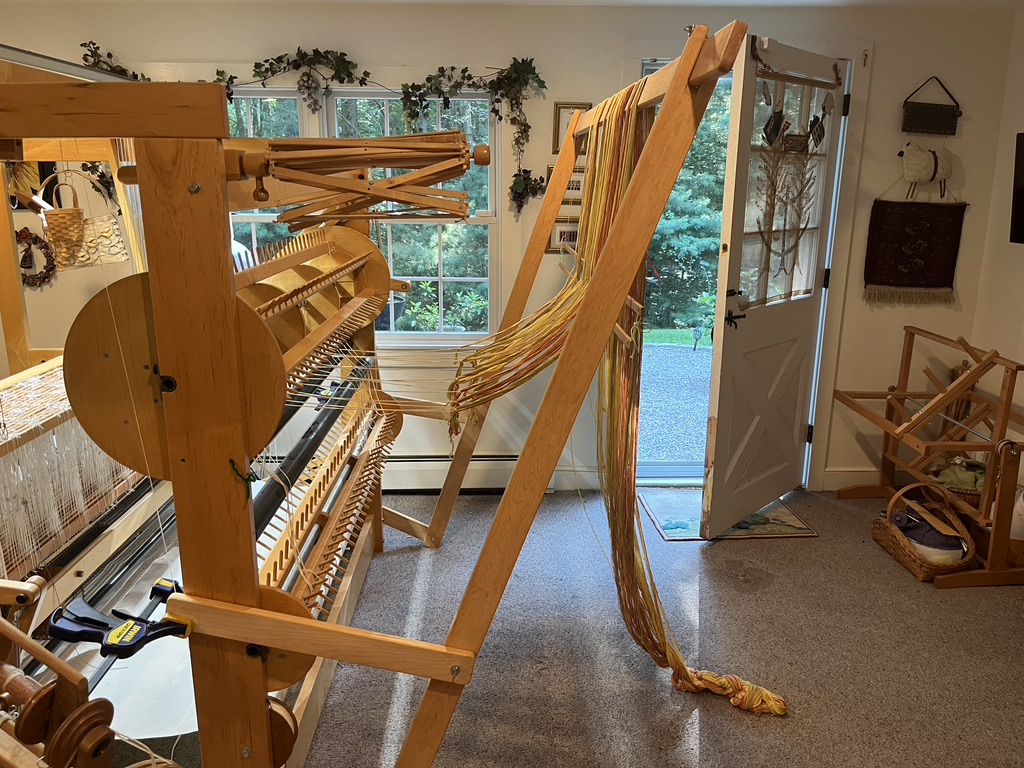
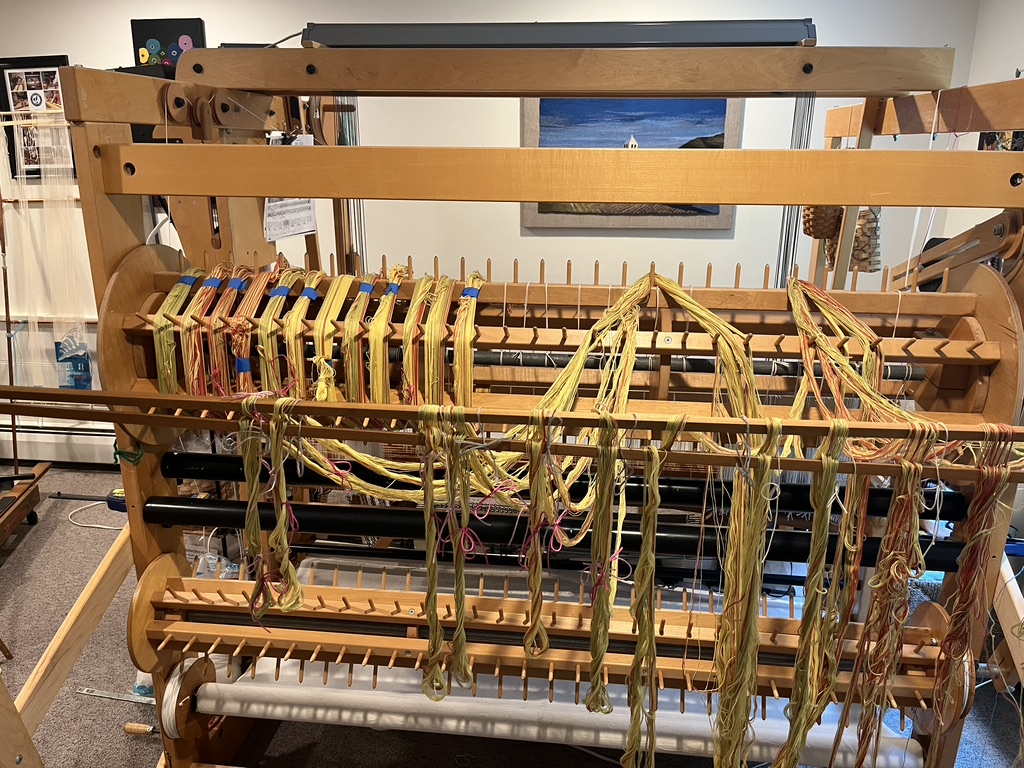
But doing this a second time seemed more challenging for the 2nd warp, so we undid everything and took the two warps together. I divided the whole warp into 2″ sections in order to wind them on one at a time. This horrible sight would give most weavers the heebie jeebies. It certainly felt Herculean to me. It’s two 30″ wide warps that needed to be separated into 2″ sections for the sectional beam.

Why am I doing this? Twelve years ago in May I had a most unique experience–both good and not so good. Some months earlier I had signed up for Vav Stuga’s basic class. I envisioned May as the most perfect time of year for seeing the Bridge of Flowers in Shelburne Falls, Massachusetts, while immersing myself in full days of weaving all week long at Vav Stuga. It should have been one of the most fulfilling experiences. But just a short time before my class began, my father died. It was not expected. It left my mother, who needed full time care, alone. The entire family showed up to be with my father as he was removed from life support, and then we gathered around my mother to care for her and make decisions about her future. I called to cancel my class at Vav Stuga, but it was too late to get a refund. We worked hard to get my mother moved back to New England, where she stayed with me for two weeks before we found a comfortable and safe place for her to live. I took off to Shelburne Falls! During my week in class my mother called me between five and six times a day. She was bereft. She was angry. She was somewhat unhinged. Over time I began fully understand her mental state, but at this time, so early in the process, I was overwhelmed. I could not concentrate.

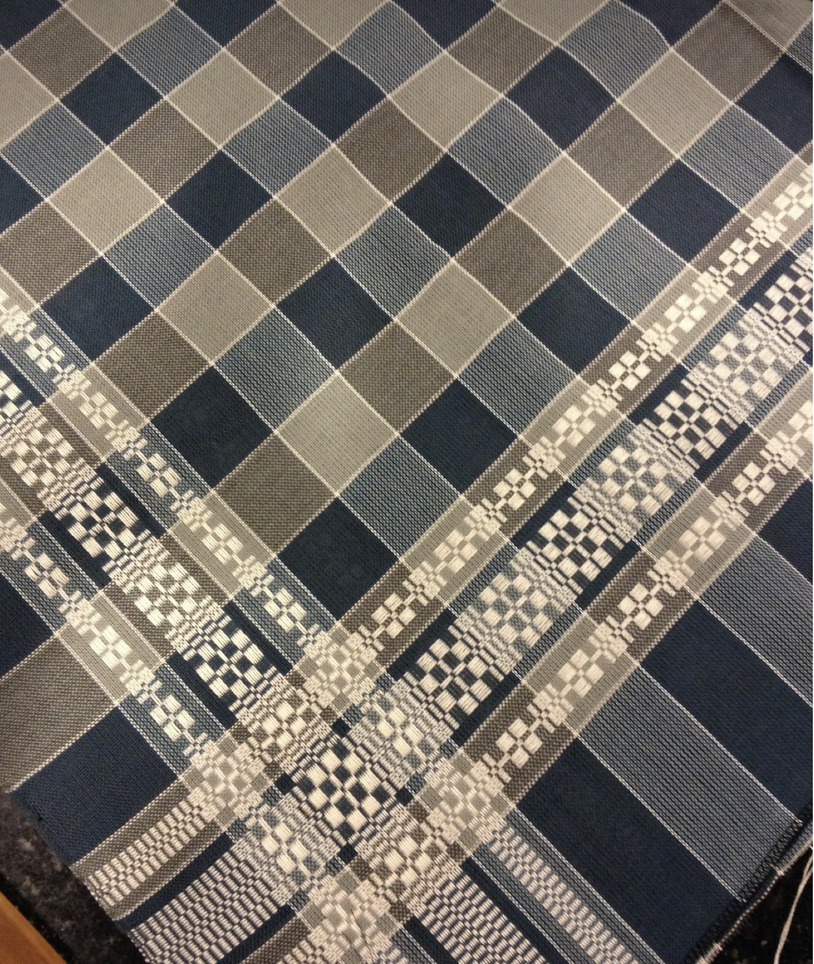
And yet… I was an experienced weaver of 40 years by the time I attended the basic class, and I had benefitted from some amazing teachers along the way. I completed the various projects in the class in time to be offered the ability to make a warp to take home. My sights were set pretty high! I had seen a tablecloth project in one of the Vava med Hemslojden issues in the Vav Stuga library, and of course, I didn’t want a medium sized, 45″ table square. I wanted a tablecloth to fit my dining table. After all, I had a big 60″ wide Toika that was calling me to make a tablecloth!

I love monk’s belt, and the idea of it running both weftwise and warpwise was a thrill. In the book the colors were all in shades of red and rose with cream monk’s belt, while this photograph shows it in blues and cream. I had big plans for a spring colorway in pale green and soft yellow, with coral monk’s belt and fine stripes between the squares. Sometime in the last decade I sold that Toika and replaced it with big BIG ALVIN, hence the dilemma about how to get the warp on my loom.

All I can say is when I get an idea in my head it is hard to let it go. It was a lot of warp to make in the short time I had left at Vav Stuga, back in 2011. I wasn’t at my best mentally, so I have now discovered that I made a few mistakes in the part of the warp that has the monk’s belt supplemental warp threads. I added those in during my beaming process.

I am quite sentimental about this project. It was a difficult time of my life, and yet this escape to an idyllic location, spending a week with like minded weavers in a wonderful setting, is a memory I cherish. This tablecloth warp is a significant part of that memory. My roommate from that week is someone whose friendship has deepened over the past 12 years. And she is somehow also tied up in my need to make this project a reality. It’s complicated, for sure–both emotionally and technically.

Here are Bob and I, feeling somewhat relieved that the winding-on is done. However, I am now faced with the not-insignificant worry that those sections do not have consistent tension.

At the end of last week, before leaving for a long weekend in Maryland with our grandkids and kids, I began threading. There are 1300+ warp threads. I have made it past the right hand border and the right hand monk’s belt pattern in the warp. I now have a long stretch of the stripes in the middle threaded with monk’s belt as well, but not the double warp threads required in the warp patterned area. Whew!

But other things are now demanding my attention. At the end of the month I will begin teaching two tapestry classes each week through early November. I need to get organized for that. In my own work, I want to try my hand at Helena Hernmarck’s tapestry techniques on a twill ground. I am trying to wrap my head around the instructions she sent me, and I’ve decided to tackle this on a floor loom. Since BIG ALVIN and Baby Wolf have other projects on them, I have rented a small Dorset floor loom from my guild.

To balance the chaos I’m feeling in these projects, I try walk several times a week. My smarty-pants watch keeps reminding me to ‘take time for mindfulness.’ That only makes me feel more frantic! It’s not helpful at all. I feel like a woman with her hair on fire, and that may be why I noticed a sign for a hair salon recently: “Hairdresser on Fire” Would someone, other than me, really go inside that place?

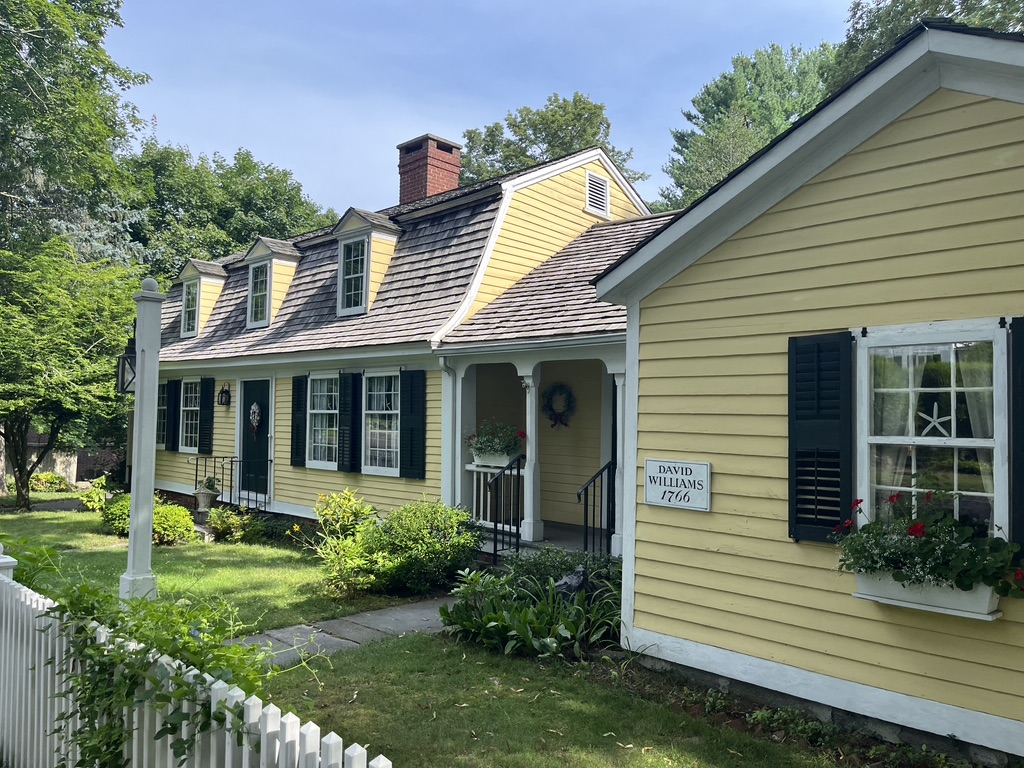
There is a local walk that does seem to take me down a notch in anxiety. I love passing by this house, and think of it as the ancestor of my house. My house is a Dutch colonial with a cedar roof like this one, and lucky for me, better porch railings. My house has a room, our den, that is really the ‘breezeway’ between the house and the garage. I don’t think this house has a garage in that area to the right in the photo, like my house does. My house is also yellow, but with green shutters and door. Anyway, this housenfeels like the more perfect version of my house (aside from those railings, easily fixed). And why not? It was built in 1766. My house was built in 1976, 210 years later with some very nice reproduction touches to make it feel like an 18th c. house. I have sea stars in my windows too! My house is a wannabe of this house. And this house has a beautiful barn in the back and less property to maintain.

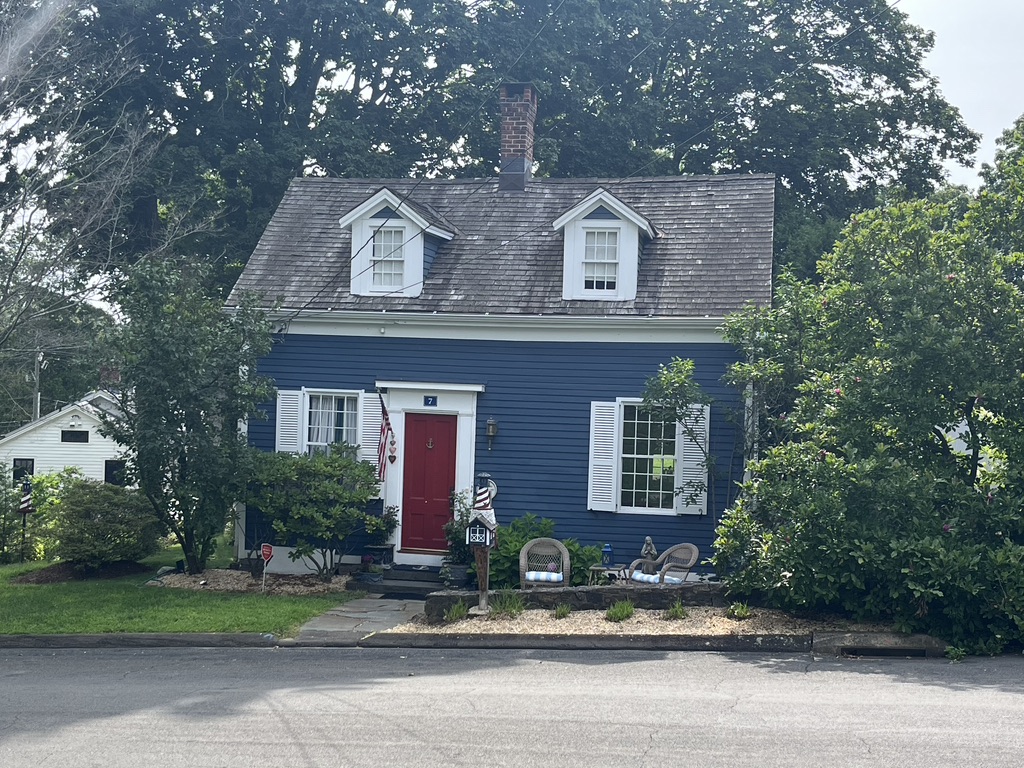
This house may be the smallest house in town. Isn’t it sweet? When I pass by I think of sitting in those wicker chairs myself sometime, maybe with a glass of lemonade and my knitting.

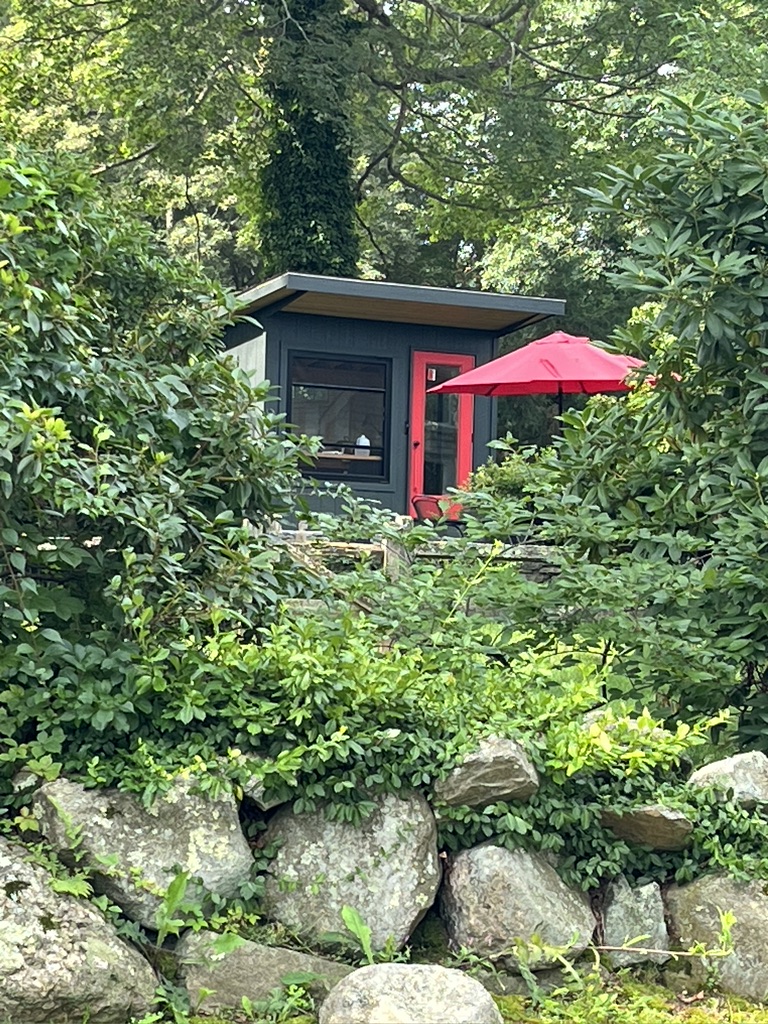
And this shed! Whoa! It’s not big enough to be my weaving studio, but I do daydream of spending time in there, doing something creative. It must be that jolt of red in a such a lush green environment that calls to me.

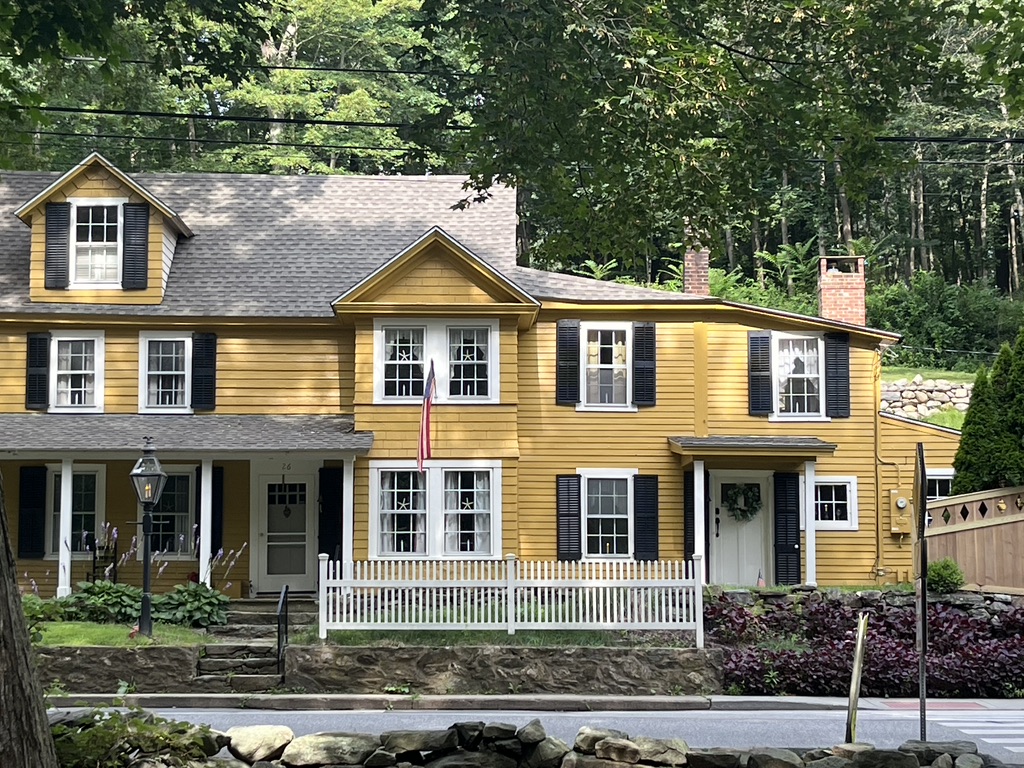
And then there is this big, rambling farm house….sans farm at this point. There is bound to be space in there for an amazing weaving studio. I’d love to get inside to find out where.

And so I’d better get myself downstairs to find the things I need for class and maybe get another inch or so threaded on my tablecloth. I feel the summer starting to wane, and I have much left to accomplish. Soon I’ll know if I’ve successfully bent the rules in putting a standard warp on a sectional beam, or if I’m just hopelessly stubborn. I am hoping for the prior!

Weights and Measures Onboard

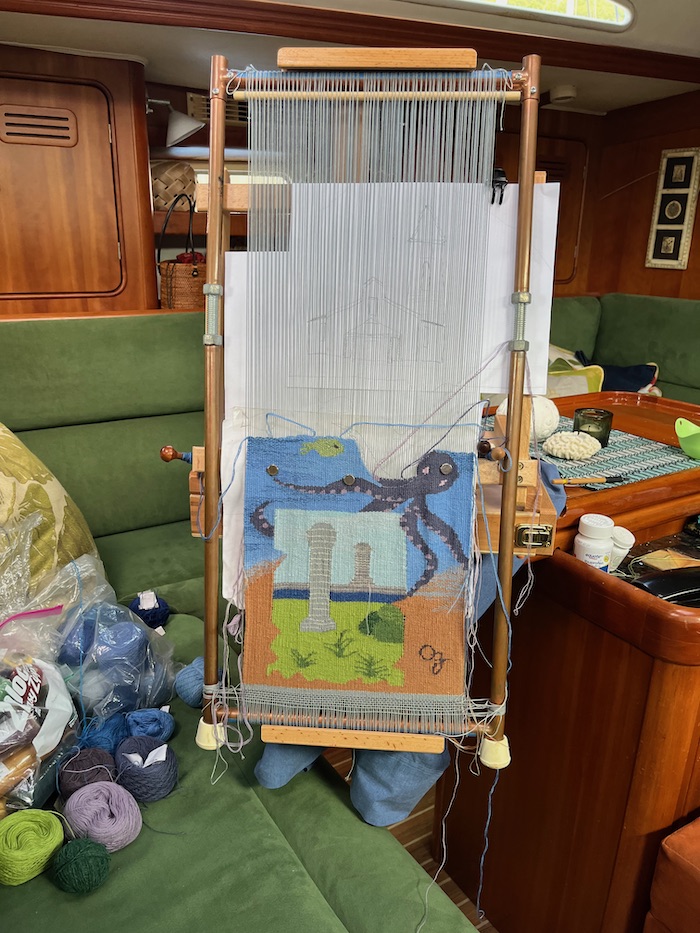
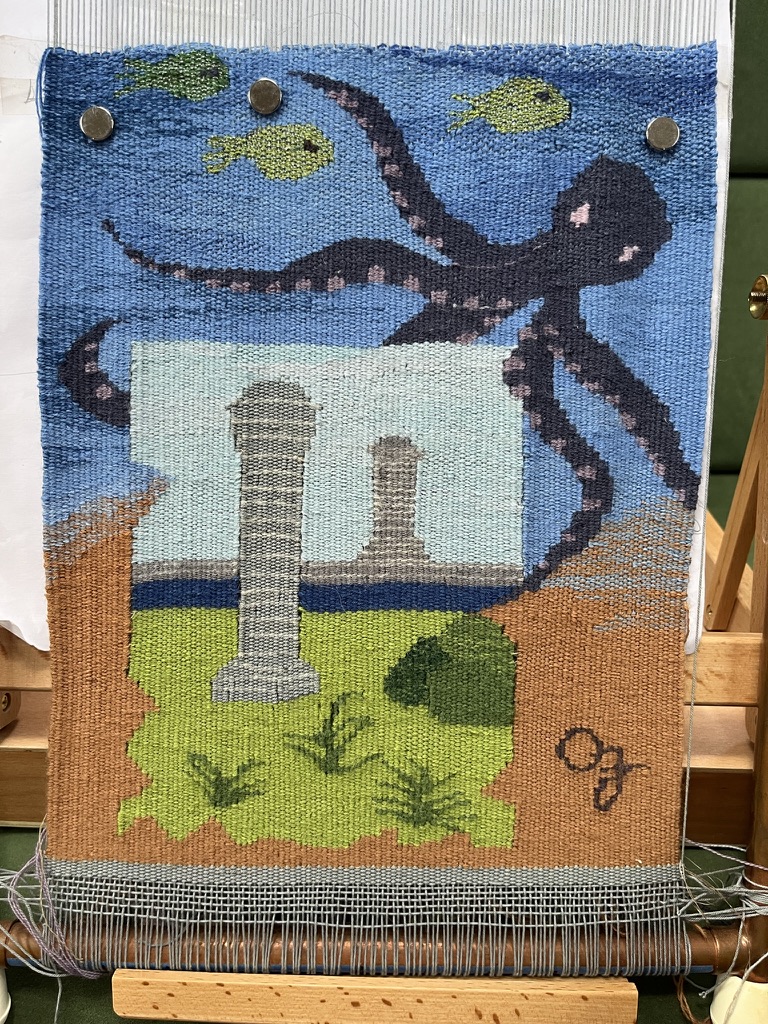
Here is my working space onboard. In yacht parlance it’s called the main saloon (I have always pronounced that ‘salon’), and it is the main living space down below on Pandora. It is connected to a small galley, and there is an aft cabin toward the stern, and a ‘main stateroom’ forward of this room. That’s a glamorous phrase for where we sleep. It doesn’t seem ‘stately’ at all.! I am very good at making a huge mess of our limited living space. We had a couple of days of calm conditions in Deshaies, and I took good advantage of it to finish the first part of this tapestry that I started in May of 2020–more than 2 1/2 years ago. My heart has not been in it, perhaps because of some bad memories of that year. The odd thing is, when I sit down and work on it, I enjoy it. Go figure.

Now I am ready to slide the woven section partially around to the back of the loom in order to keep weaving. I hope to do that today, when I finish this post. The conditions in Les Saintes are not nearly as calm as they were in Deshaies, and that is why I have not gotten back to work on this piece. I’ve been lucky to knit, which was only once. Otherwise, I’m just trying to keep my balance onboard!

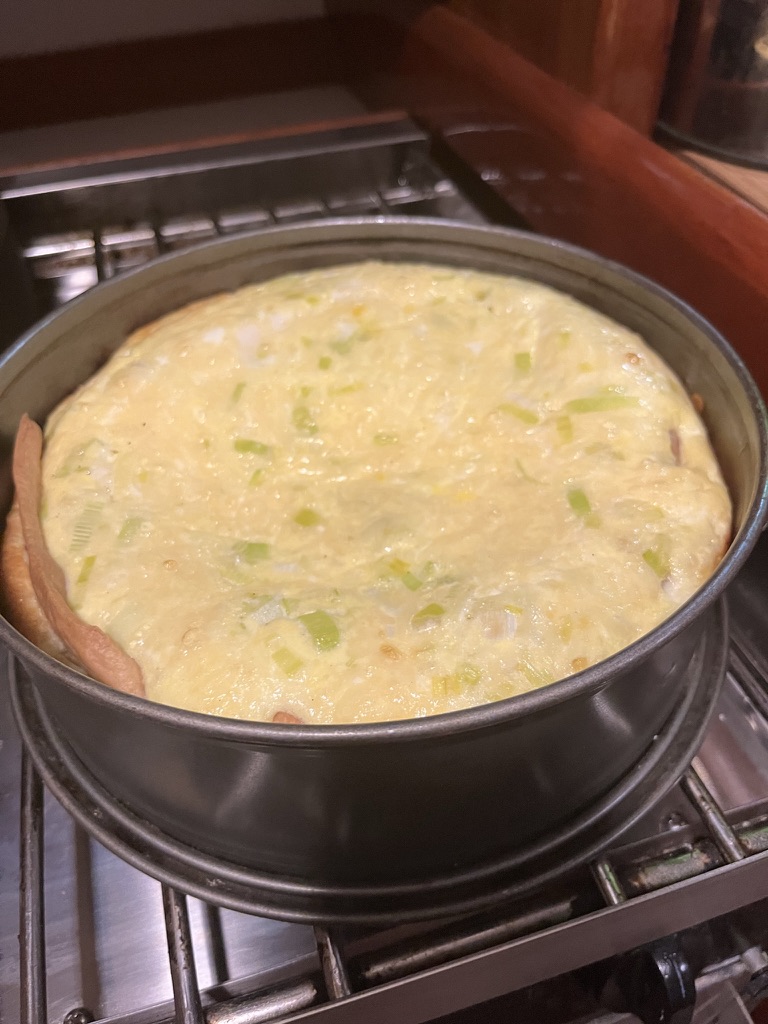
Weights and measures have factored rather significantly over the past few weeks. First I attempted to weight the merino/silk top I was spinning because I wanted to have an equal amount of singles spun on each bobbin in order to have equal amounts to ply together into finished yarn. Have you ever tried to weight something on a boat? The gentle, and not so gentle, up and down movements on a boat raises havoc with a scale. On the scale the read out for my merino/silk to cycled up and down by about 10 grams. I usually just try to pick the number in the middle. When baking a cake it’s far more important to get it right! Here was my guess for baking a quiche. It was not perfect, but we certainly thought it was good.

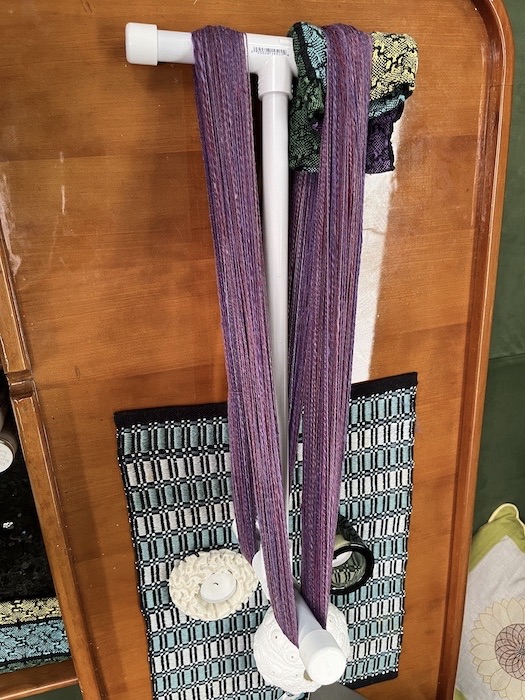
I also wanted to measure the length of that newly spun and plied yarn. Luckily Bob found PVC pipe at a hardware store just outside Falmouth, Antigua, and he made one that has a central arm of 18″. The yarn winds four times around that central core, for a total of 2 yards per single go ’round. I was able to measure that my merino/silk skein is 840 yards, plus or minus probably 10%. I can’t measure this accurately until I get home. Winding on a niddy noddy, or anything else, depends on the tension you use to wind. Too tight, and you’ve got quite a bit less yardage than you think. It’s hard to wind too loosely because of the nature of this repeated action. In general, we all tend to get tighter and tighter even when we are trying to avoid that. I took my time and tried to ‘stay loose.’ We’ll see.

This niddy noddy absolutely will not come apart, even though it is not glued. I wonder if that is due to the heat and humidity of the tropics. I padded one of the arms with a folded napkin, hoping that would give me some ‘wiggle room’ to get the yarn off when I finished winding. It worked.

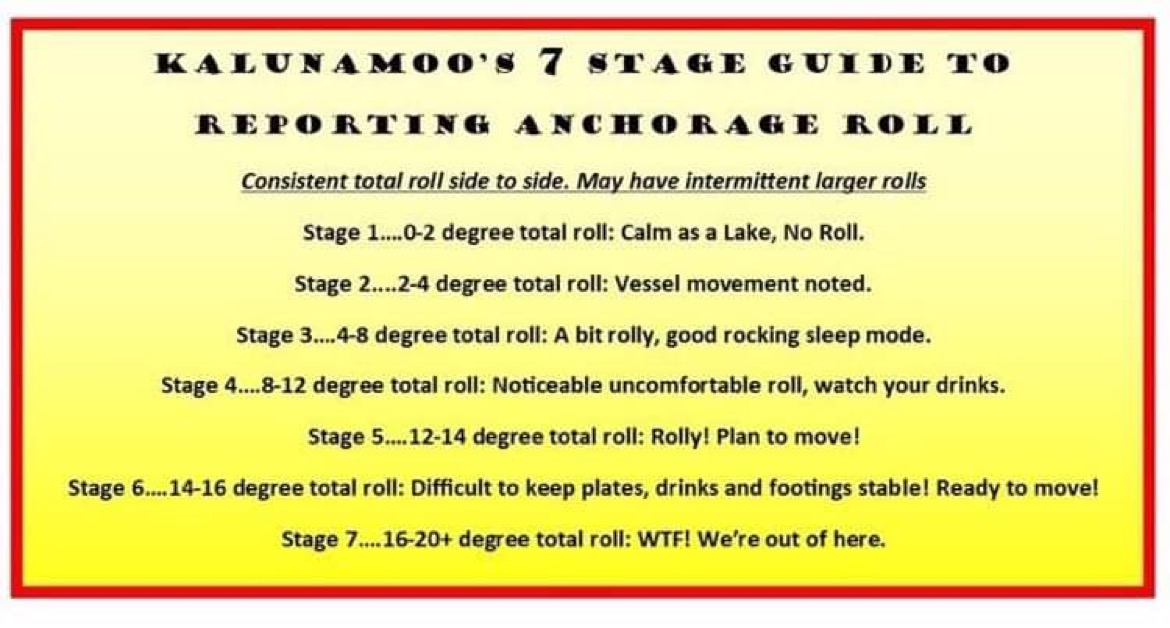
We’ve been in Les Saintes for three days. The conditions here are rough, but the place is scenic. You can’t have everything. Below is a chart that our good friend aboard Kalunamoo created to measure of how UNcomfortable the ‘harbors’ down here can be. Most places are not harbors at all, simply coves or bays in which you can throw down your anchor, but there is no protection from the sea conditions. In Antigua, we were in real harbors, both in Falmouth and English Harbour. That’s a great way to start a winter of sailing, and really quite a come down for the rest of the trip. Deshaies, Guadeloupe is between a 3 and a 4 on Bill’s chart. In Les Saintes, we rarely get a mooring ball right near the village on our arrival, so we have to spend at least one night anchored between the islands of this archipelago. The roll conditions are consistently between stage 5 and stage 7. It’s awful. One night while I was sleeping a book jumped right off the shelf above me and clobbered me in the head! It was a rude awakening. The next morning I discovered that my glasses came down with the book, and I had fairly mangled them by tossing and turning all night on top of them. Bill Woodroffe writes a great blog about the lifestyle of living on a boat here.

Luckily we only spent one night on anchor, and early the next morning we were ready to head closer to shore in the village (Haute de Terre) to grab a mooring from anyone who was heading out. We were on a mooring by 7am.

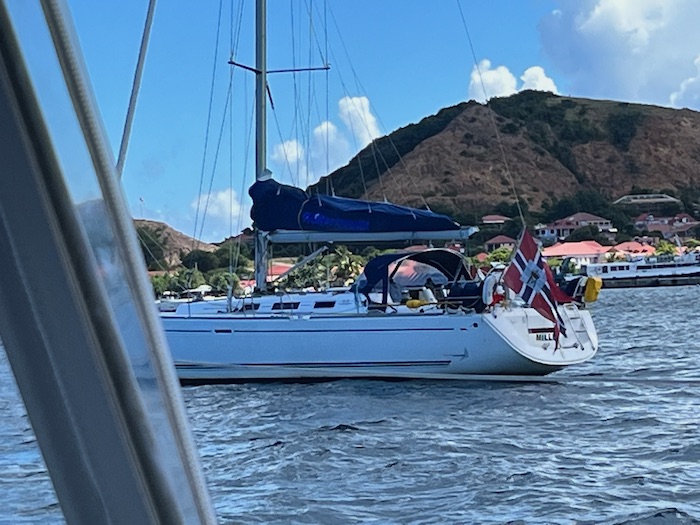
One thing I measure while we are traveling aboard each winter is the home ports of all the boats that are anchored or moored nearby us. Antigua had a predominance of Union Jacks, in all the varieties that signify the colonies and protectorates of the UK. There were some number of French flagged boats, as well as Canadian, and Norwegian/Swedish/Danish, with only a few Dutch flagged boats. I saw a few Swiss and German boats in the mix. The past decade of sailing in the Caribbean has honed my flag recognition abilities. In the French islands, the French flags outnumber the British, as do the Scandinavian boats. I’m used to looking up the variations of the Union Jack when I’m curious about exactly where some of these boats call home. Yesterday I saw a variation on the Norwegian flag that caught my eye. It is currently the most beautiful flag I have seen!

I know it’s hard to see the detail on the flag. It was waving in a fairly strong breeze, as I attempted to catch it mostly open. It’s a Norwegian flag with a triple swallow tail, something I’ve never seen before. Usually swallow tail flags are associated with yacht clubs. This flag is the ensign of the Royal Norwegian Yacht Club. It’s a beauty, even though the boat is not.

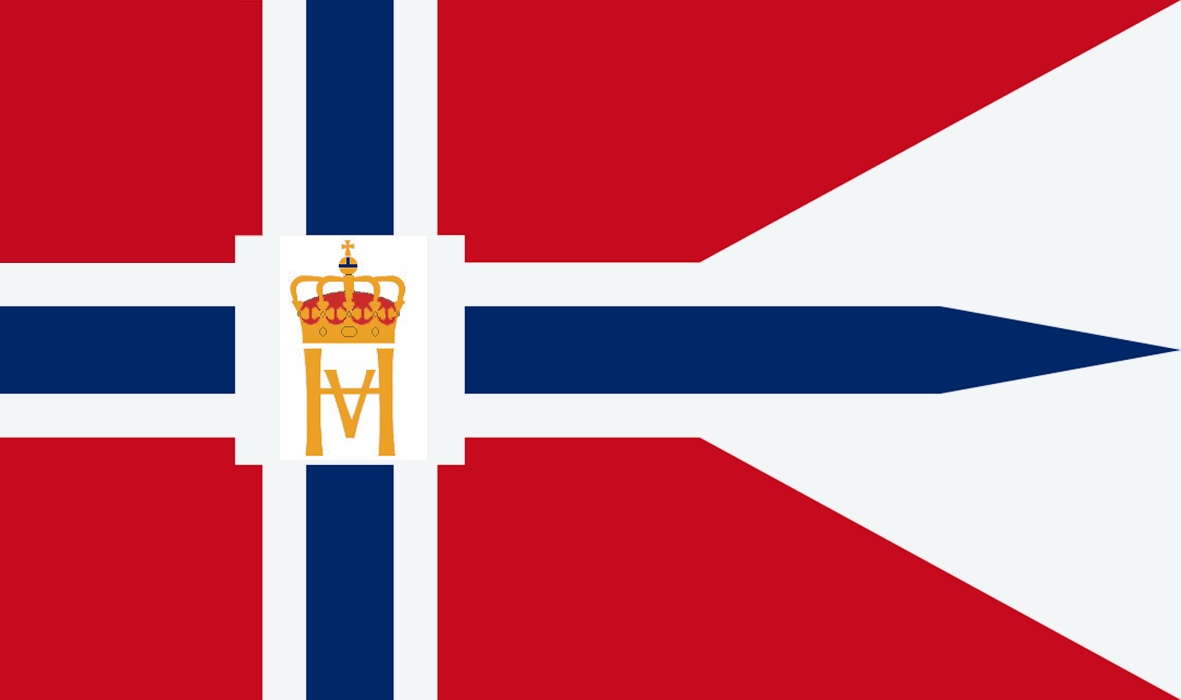
The beautiful center crown and IVI design was Haakon II’s royal emblem, which he granted for use to yacht club members starting in 1906. This image shows a standard flag. The triple swallow tail has the two red points and center blue point with a narrow white outline. This image is from wikipedia.

Identifying the flags of countries in all the places we visit keeps me entertained. In these islands not many natives speak English, so using my almost non-existent French keeps me on my toes, and is something I am attempting to improve–therefore, another form of measurement. Food words are somewhat easier than everything else, since I have a moderate familiarity (and love) for French food! Everything outside of food is quite a challenge for me!

Bob measures more things than I do. He’s constantly tracking how much electricity we have made with our solar panels and wind generator, and when we are motoring, how much power the engine made. He weighs that constantly against our usage. We now have a star link gadget for the internet and that is big energy guzzler. We need to make hot water for showers, we need to make that water (!), and we need lights at night and energy to run our gas stove to cook. It all adds up, and Bob spends a lot time measuring the input and output of energy. He says he enjoys living off the grid. I say give me a light switch and instant access to heat and electricity. It’s quite a process to start cooking on Pandora, not to mention taking a shower or any of the many things we want to do daily. I am not an ‘off the grid’ kind of girl.

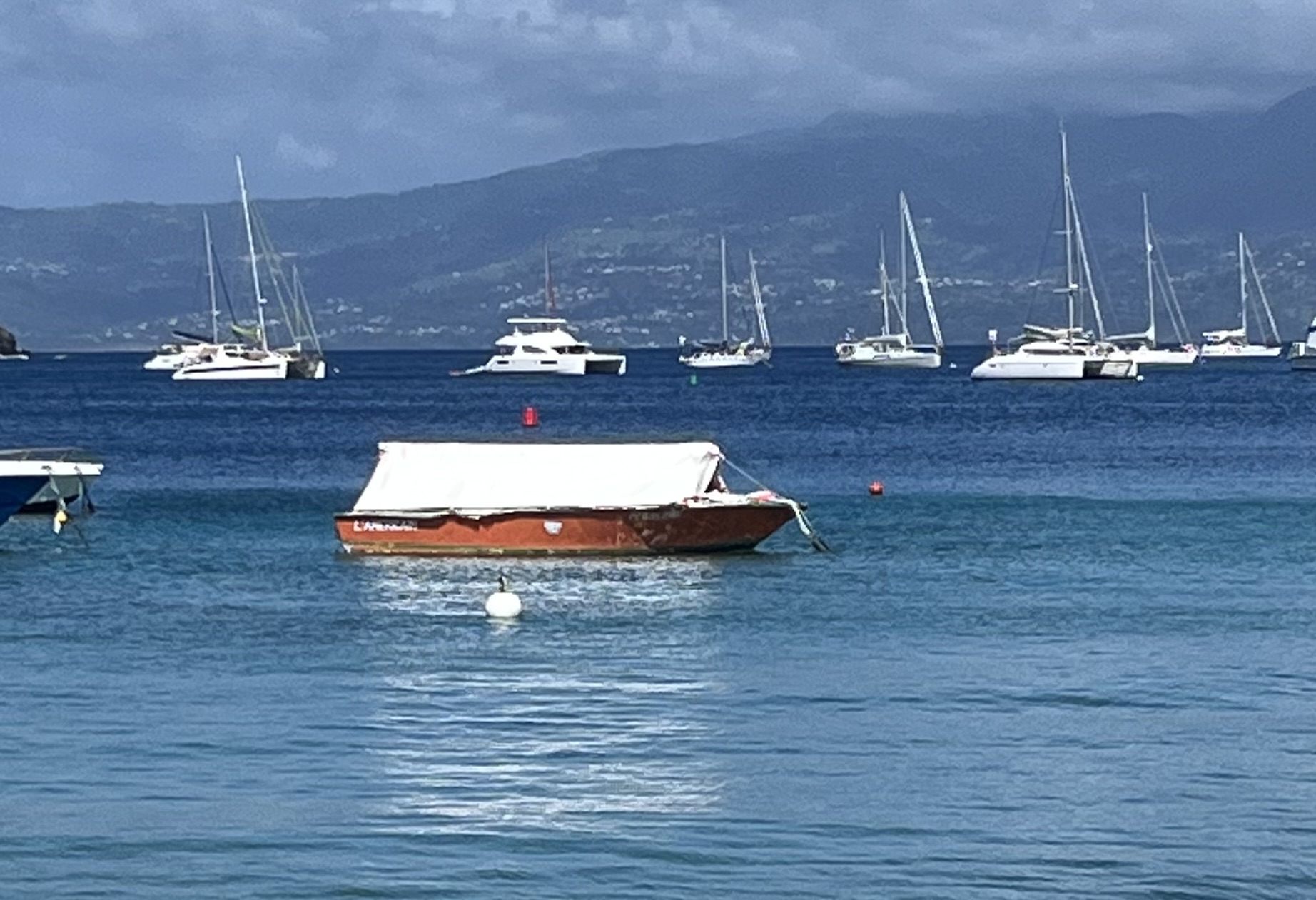
Here are some scenes from Haute de Terre, in Les Saintes. This was the view from our table at breakfast this morning.

Pandora is out in the distance. She’s light grey and just forward of the bow of the boat in the foreground

How about a close up?

Pandora has a light grey hull, in the distance, just forward of the bow of the boat in the foreground.

This is an idyllic place, and it would be perfect without the wind and the rolling conditions. Photographs are also a measurement of sorts. We take the ones we love, and sometimes we share them. Au revoir for now.

A new venue

As happens every year in January, I have changed venue from my messy studio in Connecticut to a tiny living space and studio aboard our boat Pandora, in the Caribbean. It’s now mid-January, and I have been in Antigua in the West Indies for two weeks.

We arrived by plane on January 30, with one day to move into the historic English Harbour for the annual New Year’s Eve’s fireworks, after first having a memorable French dinner at La Brasserie. English Harbour is where Lord Nelson protected this island’s sugar cane plantations before he was Lord Nelson. He made a name for himself here which catapulted his career. Over the past 60 years Nelson’s Dockyard has been carefully restored and is now a UNESCO site. It’s a dramatic place, and also quite lovely. There is a strong sense of the 18th century here, amidst some modern conveniences, like running water and electricity for the boats on the dock!

Dinner at La Brasserie and the fireworks afterward never disappoint!

But my real story here is how I plan to continue to work while I am living aboard. I often get lonely over the winter because I miss ‘my people,’ those I meet with at groups throughout the year. They are the spinners, weavers, lace makers, and others who work with their hands who inspire me and learn with me. Down here people do plenty of work with their hands. Just keeping their boats running is a huge job, and often there are women who do handwork as well, which includes knitting, crocheting, quilting, embroidery, and other kinds of handwork, and even more pressing work like sail repair and canvas work on their boats. Sadly, in the 11 years we’ve been doing blue water sailing, I have yet to meet another weaver.

This year a friend of mine who is down here for the first time aboard her own boat, with her husband, has started a needlework group that meets twice a week. Now, why didn’t I think of that? Every Tuesday and Thursday we meet for at least two hours. The group changes week by week as some sailors move on to different harbors on different islands, and some new comers join us. It’s been fascinating. We actually have a member who lives here in a house, although she’s also quite an accomplished sailor. I definitely look forward to this creative time with new friends each week. Thank you, Ellen, for making this happen!

The restaurant of the Antigua Yacht Club allows us to use their space to meet. How generous! Our surroundings are amazing so sometimes we just have put down our projects and admire the views.

I have been bringing my tiny Nano 2 e-spinner to some of the meetings. This is my first spinning project on this little gem, and I was concerned about stressing it by filling the bobbin too full or spinning too fast. It can handle anything I’ve done so far, and I think it’s perfect for spinning in small spaces.

The second bobbin is almost full, so Bob will soon be ’inventing’ a lazy Kate for me to hold the bobbins while I ply the the strands of yarn together from each bobbin. I knew I’d forget something! I’m looking forward to seeing how the plied yarn turns out. I believe I know what I’ll do with this yarn when I get access to my looms at home.

This old fashioned hot water bottle cover was the first thing I finished during the first week of January. I won’t need it down here, will I? Still, it was something that caught my eye before we left home, and I enjoyed knitting it! To make the opening I knit one round in waste yarn, only on the front half of the stitches, and then unpicked the waste yarn to separate the front into two pieces for an opening.

As I unpicked the waste yarn I picked up stitches on both the upper and lower sides of the knitting. Then I could knit ribbing on the lower half and ribbing plus a button hole on the upper half.

And here is the finished hot water bottle cover. I just need a button. I will block this on the actual water bottle when I return home.

Yesterday was my birthday, and I woke up to two surprises. One was a decorated main saloon on Pandora! Bob bought these fun decorations in the US before he sailed down here. How thoughtful! It feels like party, although I do not! I awoke on my birthday to some kind of very nasty bug. I hope it’s only food poison, but in the middle of the night for the past two nights I’ve imagined myself dying of ecoli or some other horrible thing. Surely, I’ll be on the mend soon!

And how about these fun knitting inspired presents? I love them! This is a journal in case you’re wondering.

In the meantime, I had a wonderful zoom call with family and a couple of close friends. The joys of keeping in touch with loved ones, from such remote places, is priceless! This year Bob has just installed Star Link. So far, so good! It’s struggling with streaming video so far, and it requires more of our battery power than he realized. Thank heaven for solar, wind, and lithium batteries. I have been trying to catch up on the videos I missed from Giovanna Imperia’s class for the American Kumihimo Society’s recent online event. But I’m not discouraged yet! It’s interesting to hear the small white Star Link disc change direction as Pandora moves to and fro at anchor.

I hope to back to normal soon so I can finish spinning and move on to other projects. I wish you well in your own endeavors in the new year.

Scroll to Top