ArgoKnot

weaving

Rearview

The year 2025 has been twirling around in my head for a couple of months now. I don’t think of myself as goal oriented (although my husband declares I am), but I do feel it helps me if I take inventory of what I made in the past year. It’s taken a me a few weeks to get around to this, and I found that I needed to document some things with photos.

The main thrill of the past year for me was travel! I have never managed to go so many places in one year as I did in 2025. Bob will take all the credit for that since he sailed our boat Pandora to the Açores and then on to the Mediterranean, enduring an attack by orca whales to get to his destination, knowing that his trip made it possible for me to see a bit of Europe. Being in the Açores for a month, Scotland and the Outer Hebrides for two weeks, and finally southern Spain and Madrid for another two weeks was such an eye opener for me, being immersed in the many kinds of handwork done in these richely cultural places. I’ve written about the Açores and Scotland in previous posts. I’d like to write about Spain, but not today. I have developed a new tapestry talk about the many tapestries I saw at Galeria de las Colectiones in Madrid, and I will try to cover that here sometime soon.

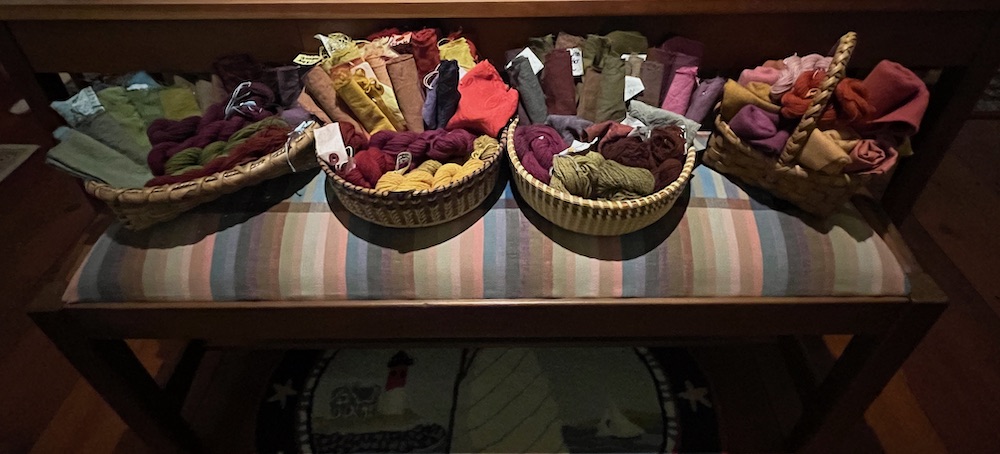
From September until just before Thanksgiving in November, I took the Maiwa Natural Dye Worshsop, led by Charlotte Kwon and her daughter Sophena. Every week of the 10 weeks I spent 5 days dyeing, usually about 4-5 hours a day. The workshop came with new videos each week as well as PDFs to print and put in a notebook. The instructions were thorough. I got fabulous colors that led to dreaming about future projects. I gained so much knowledge after decades of fumbling around with dyes and taking short classes at various conferences. This workshop is incredibly in-depth, and I now feel I have a reasonable amount of knowledge, and even better, confidence!

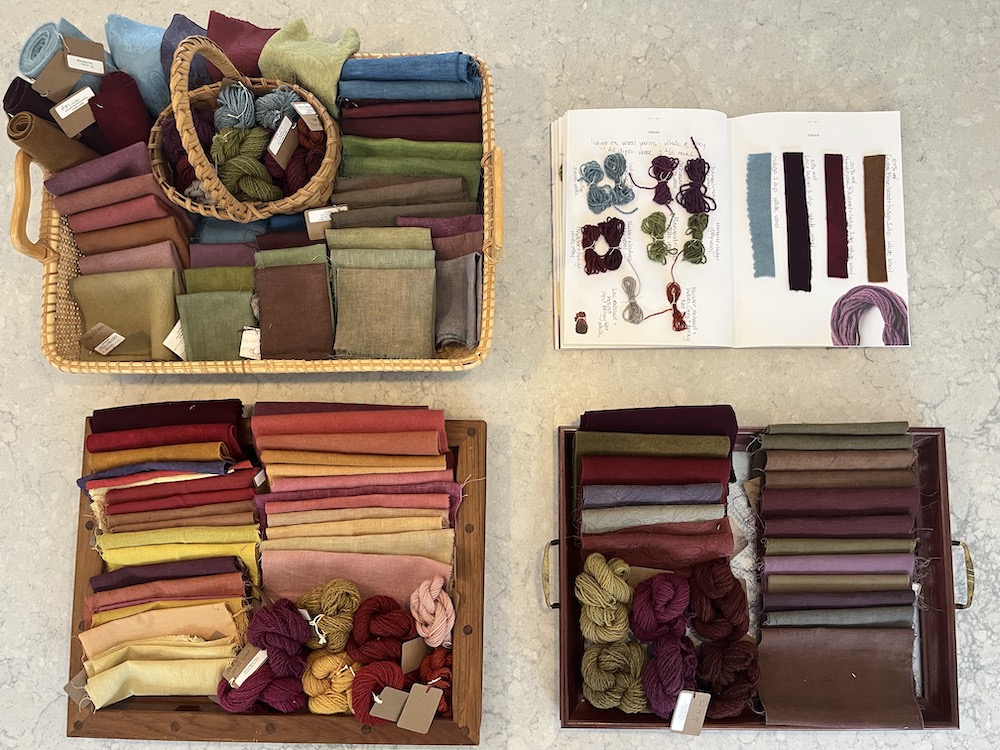
Yum, right? I thought all these samples would go in a notebook, but it turns out we only had to cut a small bit off each skein of yarn or length of fabric, so I have plenty to plan to use in some small projects. Whatever I end up making will be such treasures from this workshop. I have spent about 10 hours cataloguing everything in the journal that came with the class. That’s on the upper right below. The lower left shows all the original dyes done on white and grey yarn, white wool fabric, white silk fabric, natural and white linen fabric, and cotton and cotton/hemp fabrics. Above it on the left are all the original yarns and fabrics dipped in indigo to change the colors. The lower right shows all the original shades dipped in a 2% iron solution to darken the colors. This is a tremendous cache of color on beautiful fabrics. Now that it’s all safely documented in the journal I want to start making things with these bits of fabric.

The notebook was rather a lot of work–far more tedious than dyeing! So I thought I should make a short video describing it.
I’ve been feeling rather UNsuccessful in my weaving projects this year. I am making almost no progress on the ruana fabric made with single-spun Hebridean wool from the Isle of Uist. All the yarns are the natural colors of the sheep, and I arranged them in a gradation on the warp. The one color that I had the most of is the weft. I wish it were off the loom already so I could put the ruana together. Oh well. I feel a bit better about my lack of progress when I realized how much time I devoted to dyeing right up to the holidays.
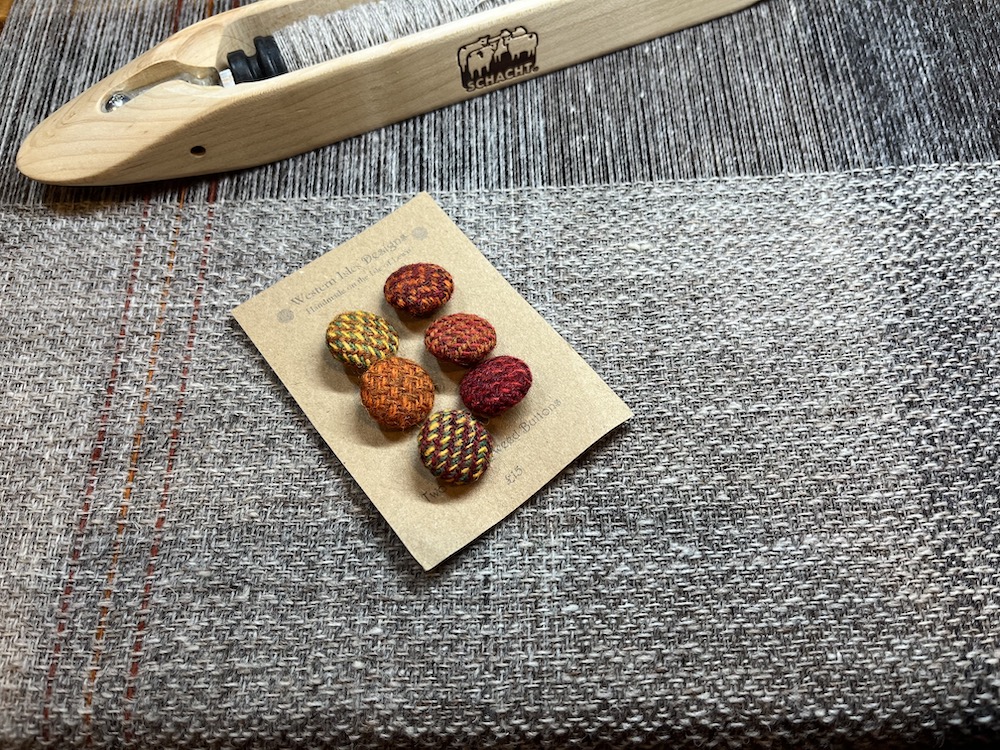
Aren’t these buttons sweet? I also bought them in the Outer Hebrides, at a shop called the Weaving Shed on the Isle of Lewis.

I grow older in the first month each year, and this year I have entered the next decade…70. Whoa. That’s a hurdle for me emotionally. A number of my friends (and Bob too!) are ahead of me, looking great and still in full control of their faculties, mentally and physically, so I am trying to believe I can do that too!

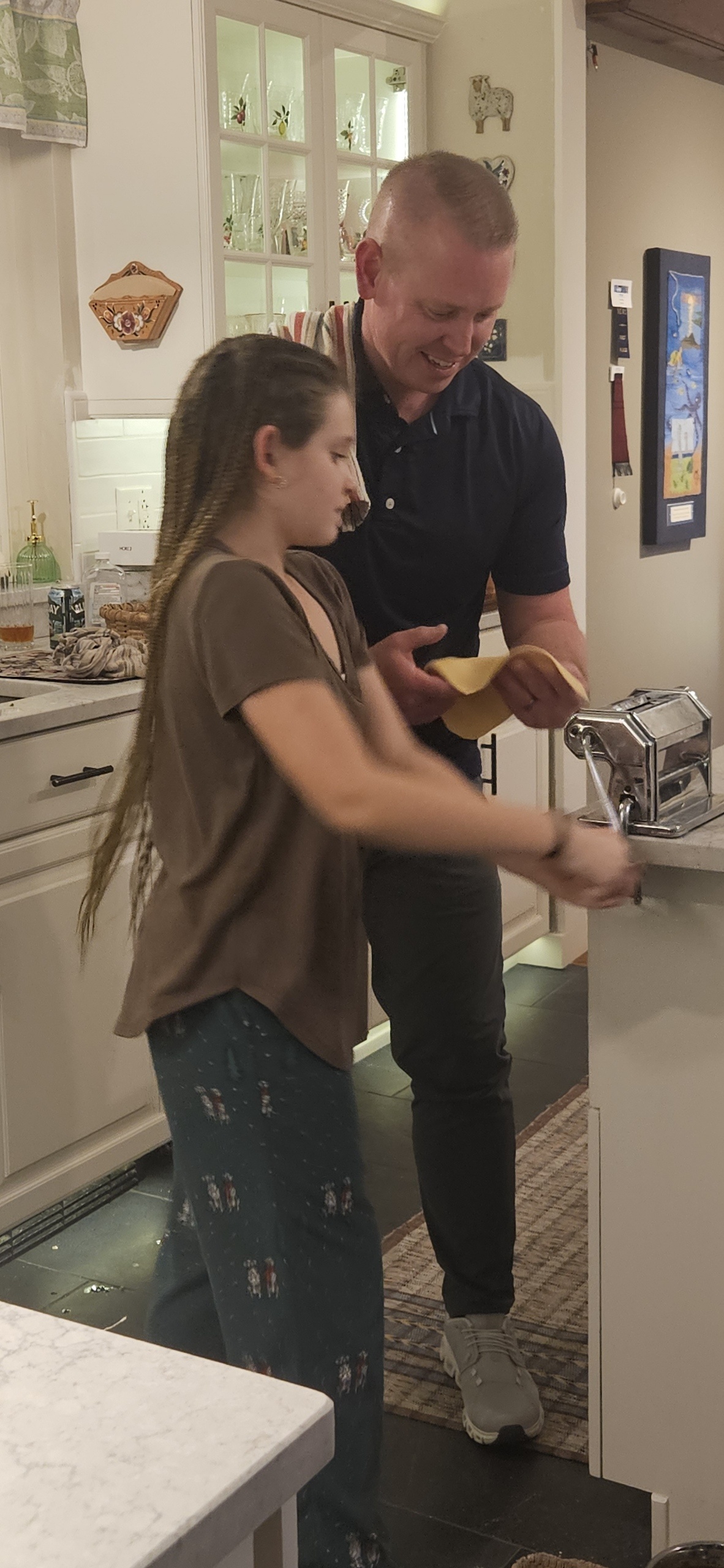
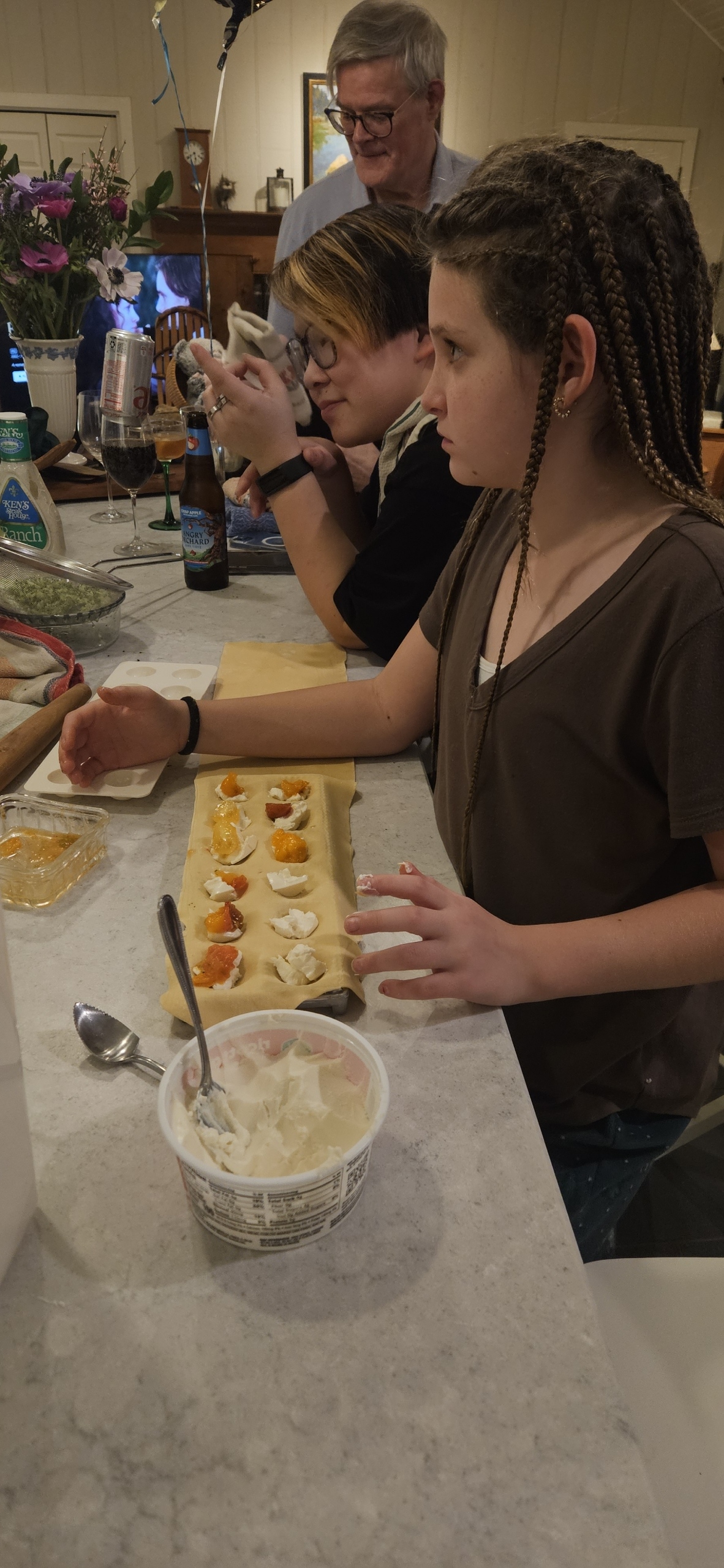
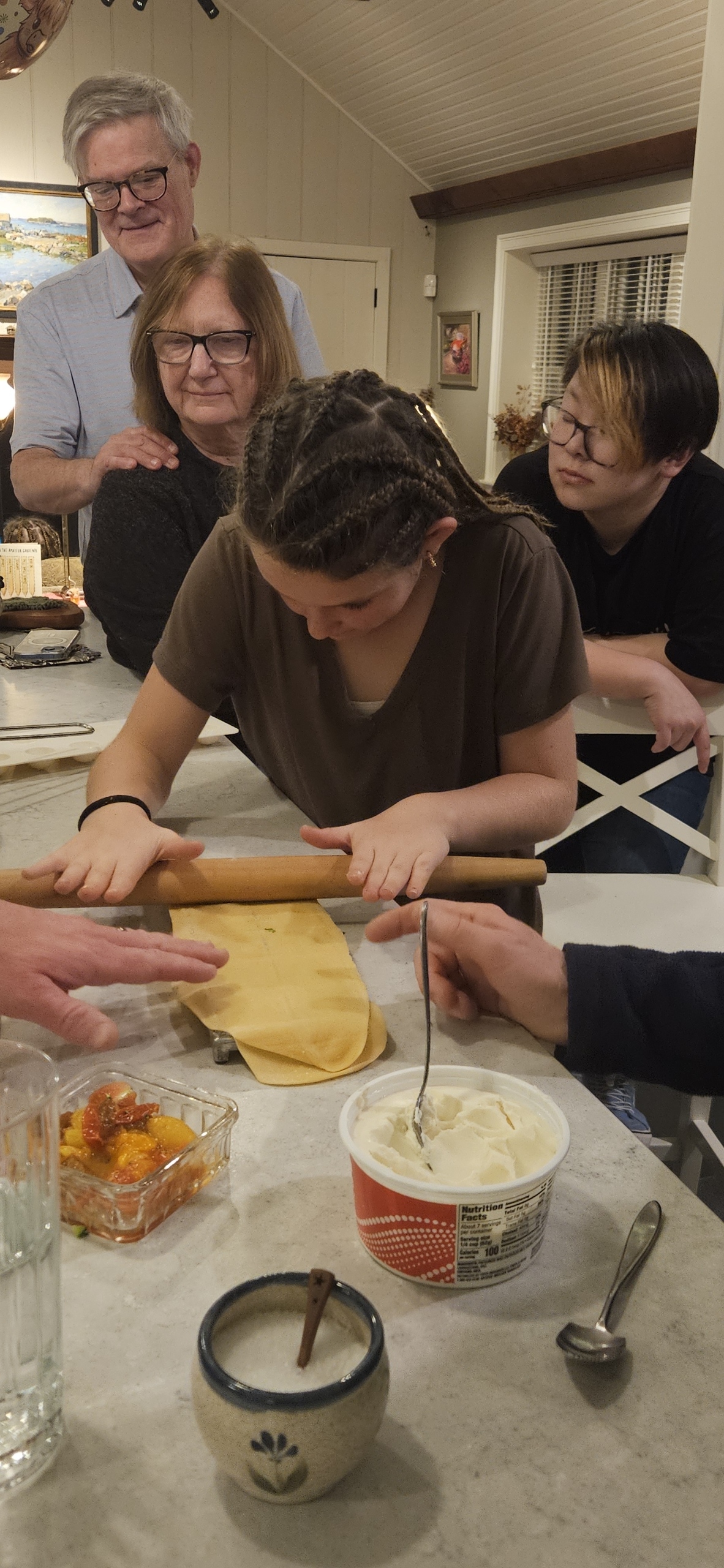
My children and grandchildren, and one significant other spent a long weekend with me to celebrate this landmark birthday. Tori, our oldest granddaughter (of three) made pasta and then turned it into ravioli….and she did it in front of an audience. She’s a natural!

And we had some great relaxation time in between cooking and being outside in our biggest snowstorm, walking in the woods and building two snowmen.

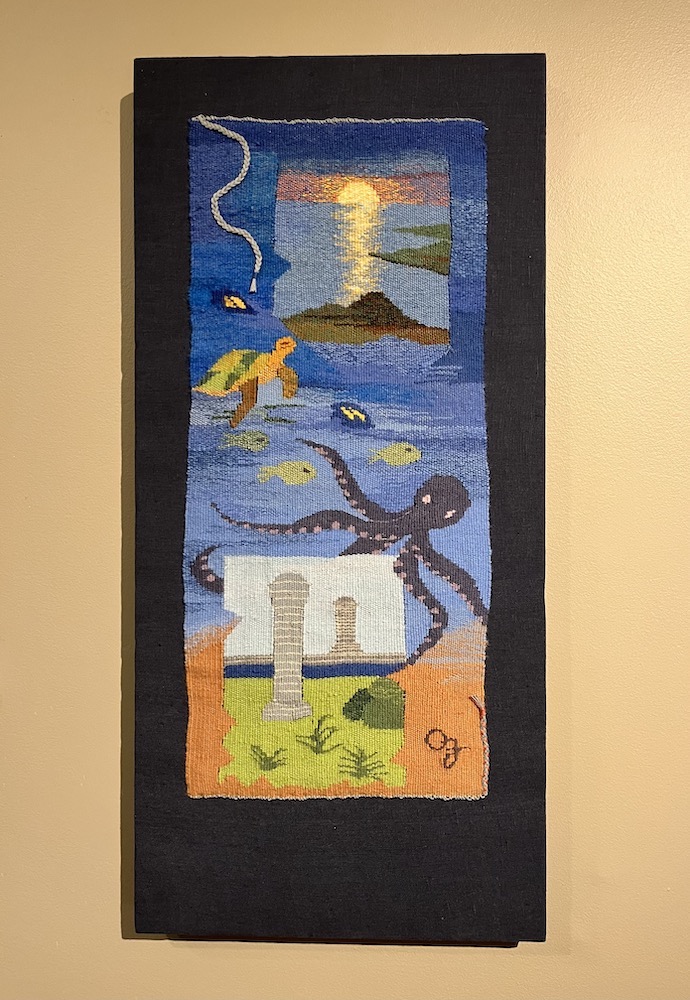
t was a year ago that I finished this tapestry. Hard to believe. It seems like more than that. Again, this is a realization that helps me make peace with the fact that my current tapestry has barely 1″ woven. Where does the time go?

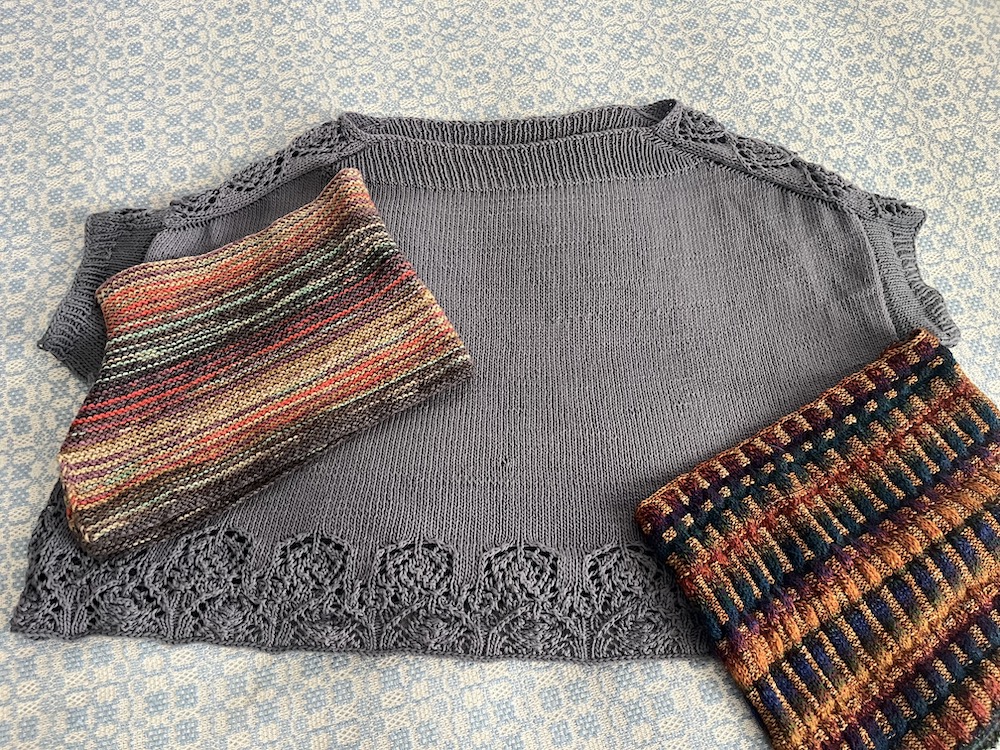
This afternoon I took stock of the knitting I did last year. I had such a great time buying yarn in the Açores, in Scotland, and in Spain. I actually did something with a fair amount of it. Go me! The grey cotton yarn is from Horta, on Faial, in the Açores. The cowl on the left is a free pattern on Ravelry, and the cowl on the right is “Inspira,” also on Ravelry.

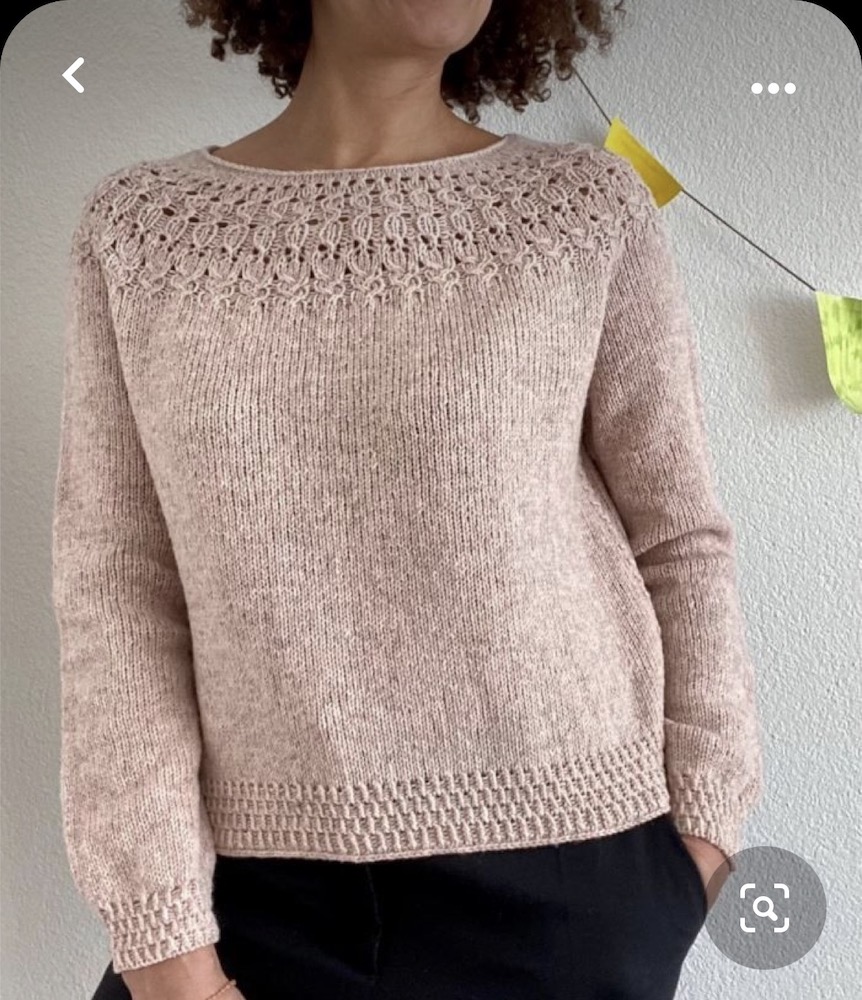
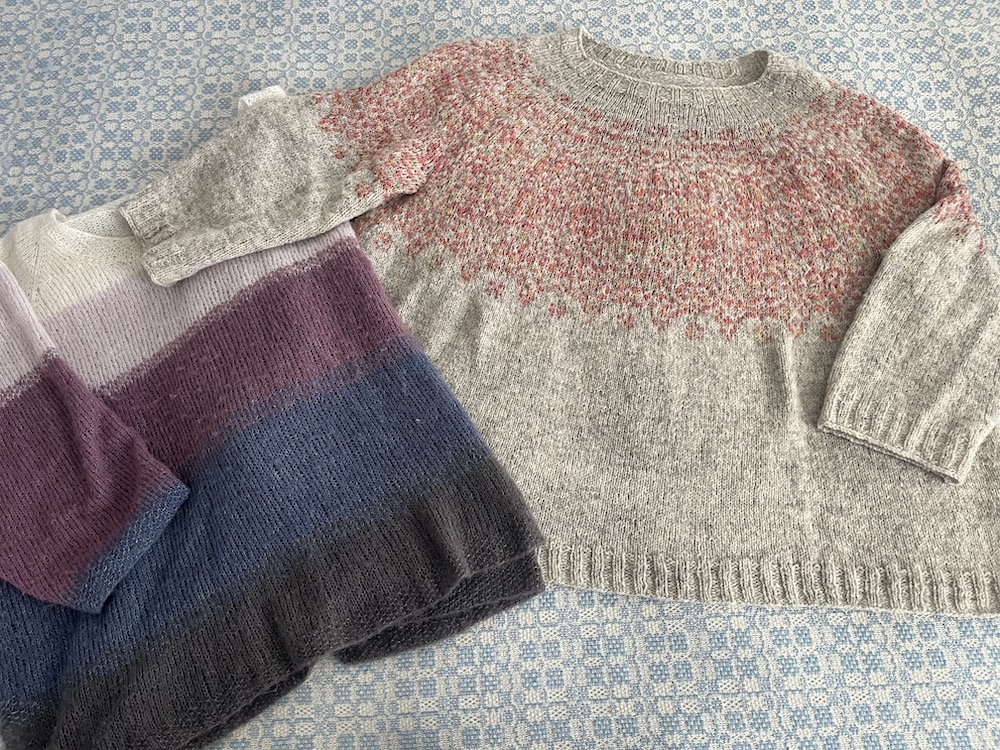
The pattern yarn in the stranded knit sweater is from the Weaving Shed, mentioned above. It’s a blend of merino and silk that is probably not from the Hebirdes, but it was dyed by one of the sisters at this company. The other sweater is 100% cashmere yarn that my son Rob gave me for Christmas in 2024. I wasn’t sure how to best use it, so I just made a simple top/down, raglan sleeve striped sweater in the round. I don’t think it weighs more than an ounce, yet it is SO warm.

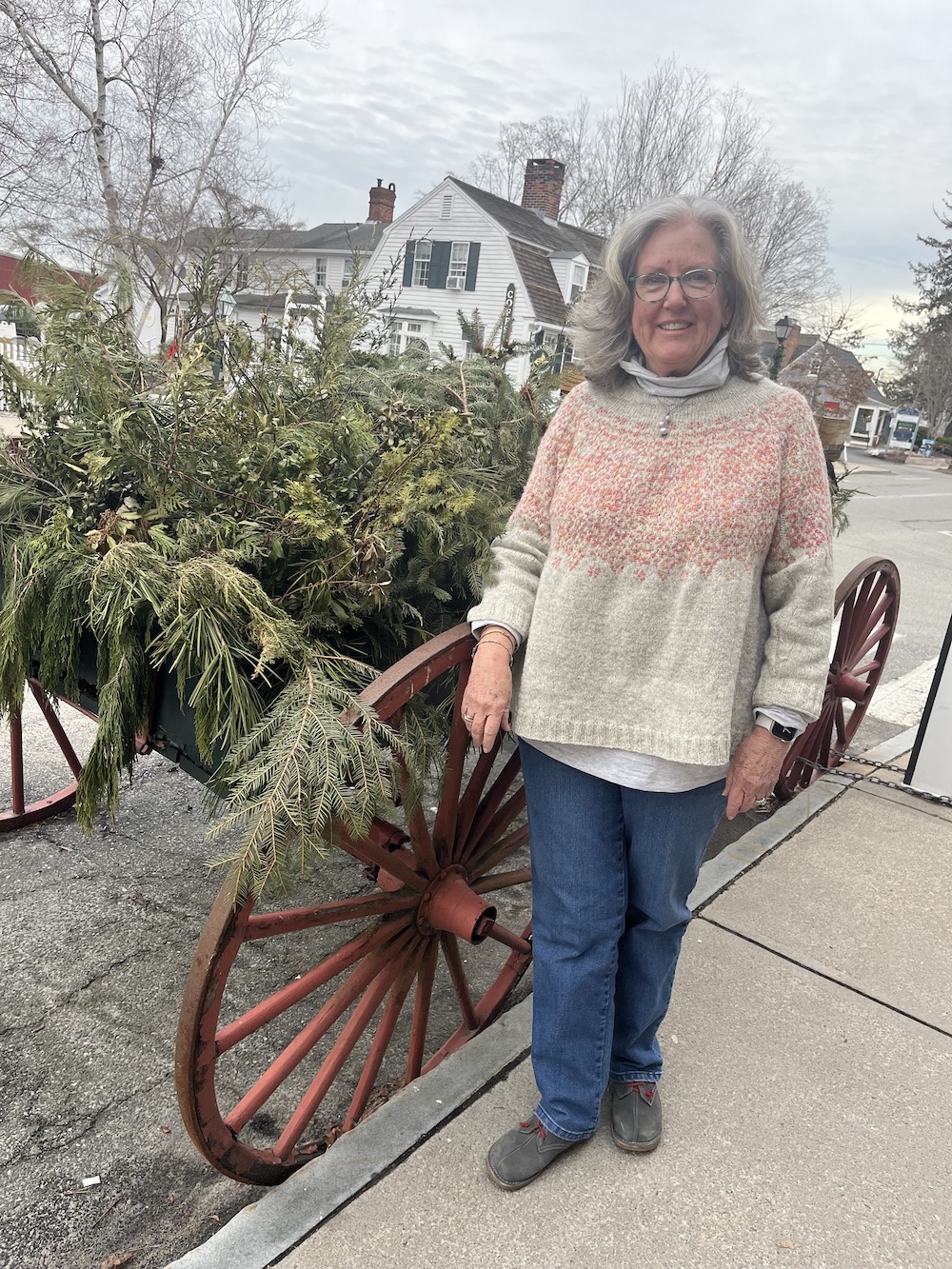
My friend Jody took a photo of me wearing my new Scottish sweater, which is entirely Scottish yarn but a design by German designer Elenor Mortensen on Ravelry. I am standing outside the iconic Griswold Inn in Essex, CT.

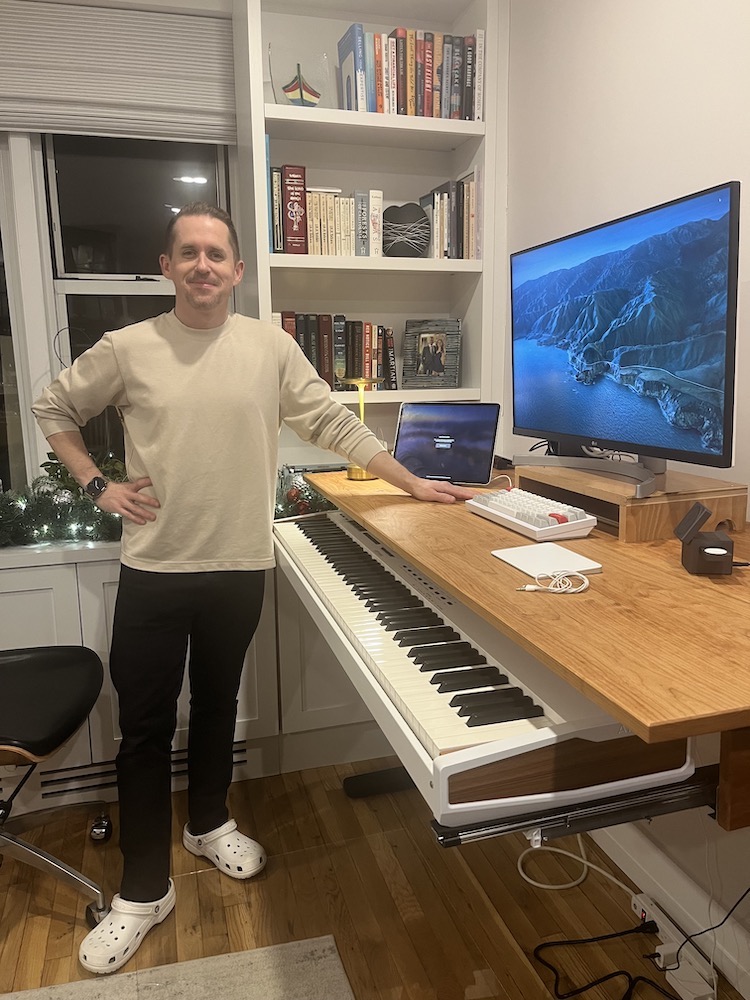
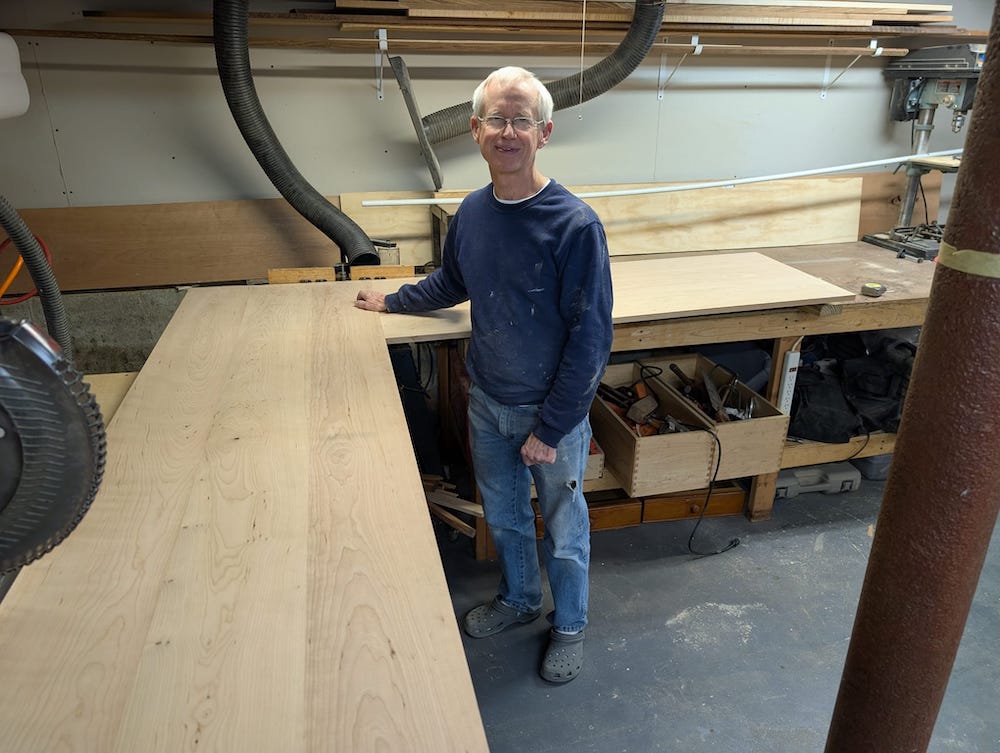
Not too bad a rearview assessment of making things last year. I feel better now. Bob has been busy as well during our months at home. He made a couple of cutting boards, done with end grain, a rather complicated desk for our son Chris who wanted a pull out tray underneath for his keyboard. Now he is making good progress on an “L” shaped desk for his office.

Finally, i want to mention a book I’ve just finished reading: With Her Own Hands by Nicole Nehrig. It has given me some clarity in looking back at my last year of working in textiles, as well as my long history of doing so. I have been knitting for over 60 years now, and weaving for 50. Weaving tapestry for just over 25. Spinning and kumiho are also reaching the 30 year point. The author describes things in life that are beyone words, that some people can only respond to life visutally, not with words. I have always turned to words, but this book made me see that there are times when events and life experiences cannot be contained or described by words. Sometimes those of us who work with our hands can only respond in the ways we are comfortable expressing ourselves visually. This has been a year like that.

 “Counting stitches or holding a complex pattern in mind may distract a knitter, crocheter, or weaver from worries.  We lose self-consciousness through absorption in the activity.  The repetition involved can lead to a hypnotic, calm state, a kind of meditation through motion.  Textile work confers a sense of control and mastery that can counter balance the lack of control we may experience over what is happening in our larger world.” –Nicole Nehrig

Whatever you are currently working on, I hope it gives you this sense of calm, of meditation, and a strong sense of balance. Onward we go.

Penultimate

On the penultimate day of 2025 I find myself thinking about the Outer Hebrides and what the weather is there at this darkest time of year. They seem to have stunning sunsets and sunrises, and rainbows. Somehow I’ve gotten myself connected to more facebook sites about Scotland than I ever imagined. The images of these northern places in December has been thrilling to see every day. I dearly hope I can make another trip to Scotland in the next year or two.

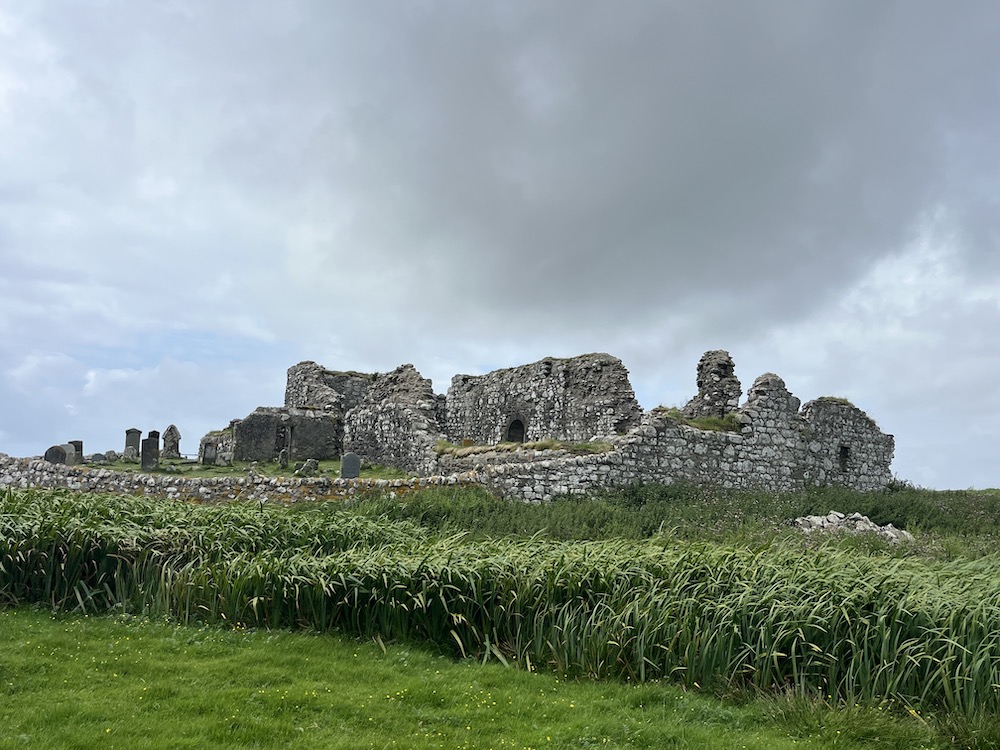
The second half of my visit to Scotland in July was a private tour of the Outer Hebrides. My friend Kari found the tour service that we chose. The tour was just for the two us, with sites chosen by us. The tour company (McKinley Kidd) made all the train and ferry connections for us, all the lodgings, and most of the meals. On each island we had a driver who had a list of sites that we had chosen to see as well as a list of sites we shouldn’t miss. I had seriously considered the idea of visiting the islands on our own. I’m relieved that I got onboard with having the luxury of this tour company taking care of almost our every need. We took a train from Glasgow to Oban to board a ferry to the southern most island of Barra. I had no idea that the ferry alone would be five hours. The map made the trip look like a mere hop and skip. From there we went to South and North Uist, then Bernaway, and lastly the combined island of Lewis and Harris.

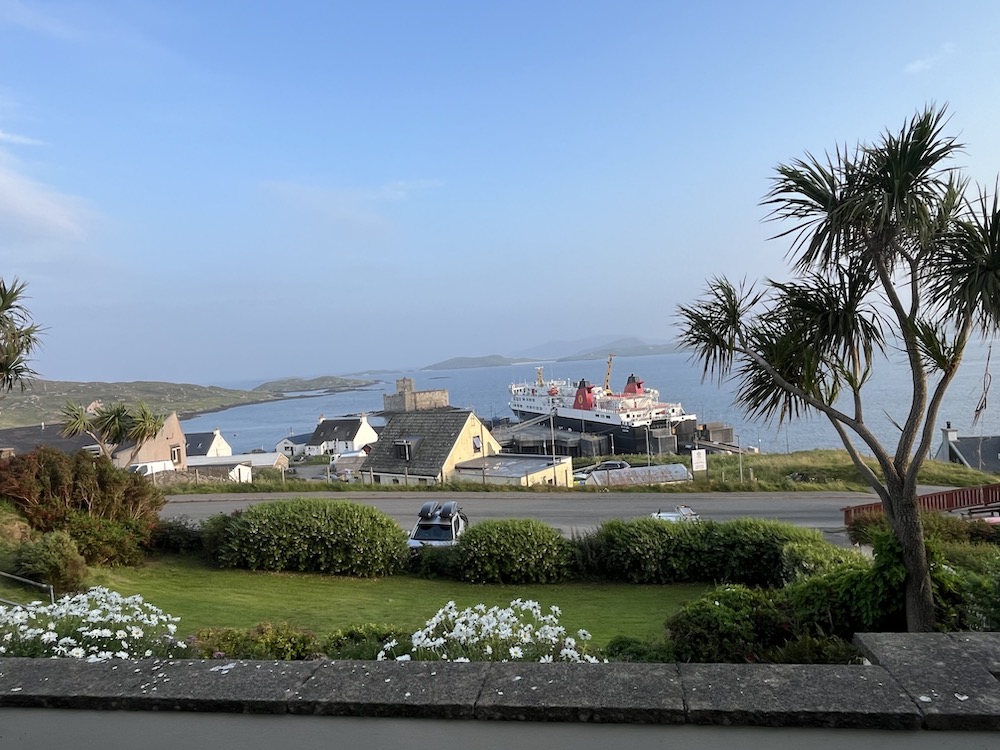
Here is our ferry arriving on Barra after the five hour trip from Oban

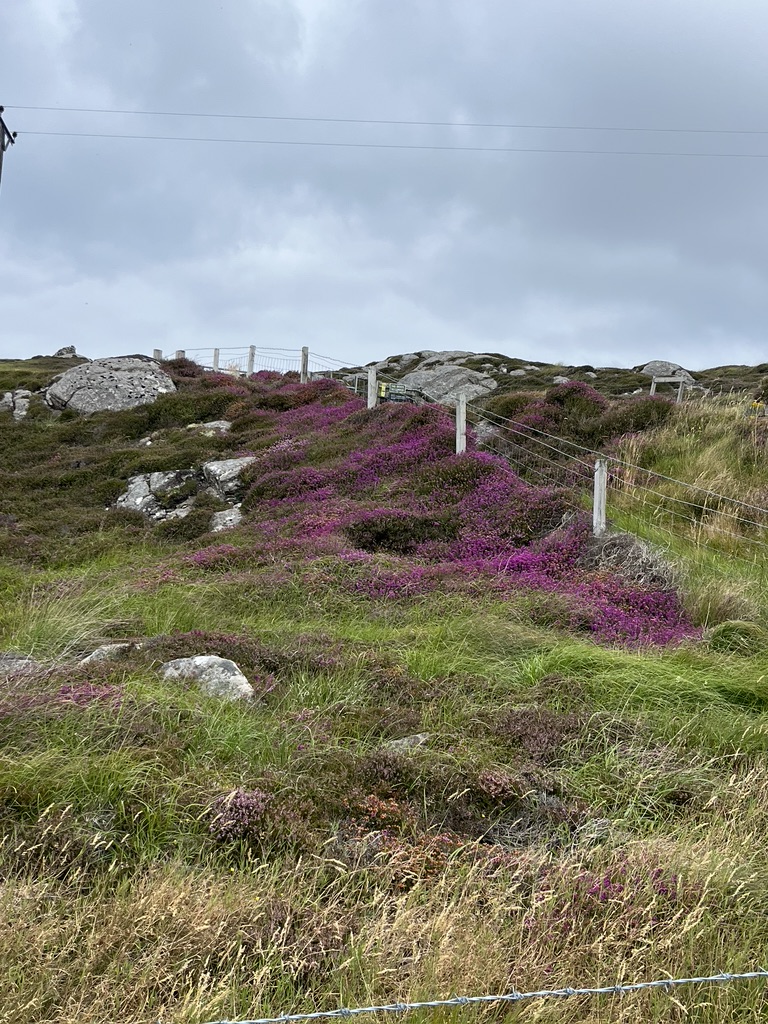
The heather was just beginning to bloom in souther part of the islands.

The ferry terminal in brighter weather.

We stayed here at Hearthbank, where we were unfortunately not able to get dinner! The owner was leaving for the mainland and would have to close and lock the dining room. On the other hand, she arranged for a chef to make breakfast for us the next morning, which was memorable! Perfectly poached eggs on toast.

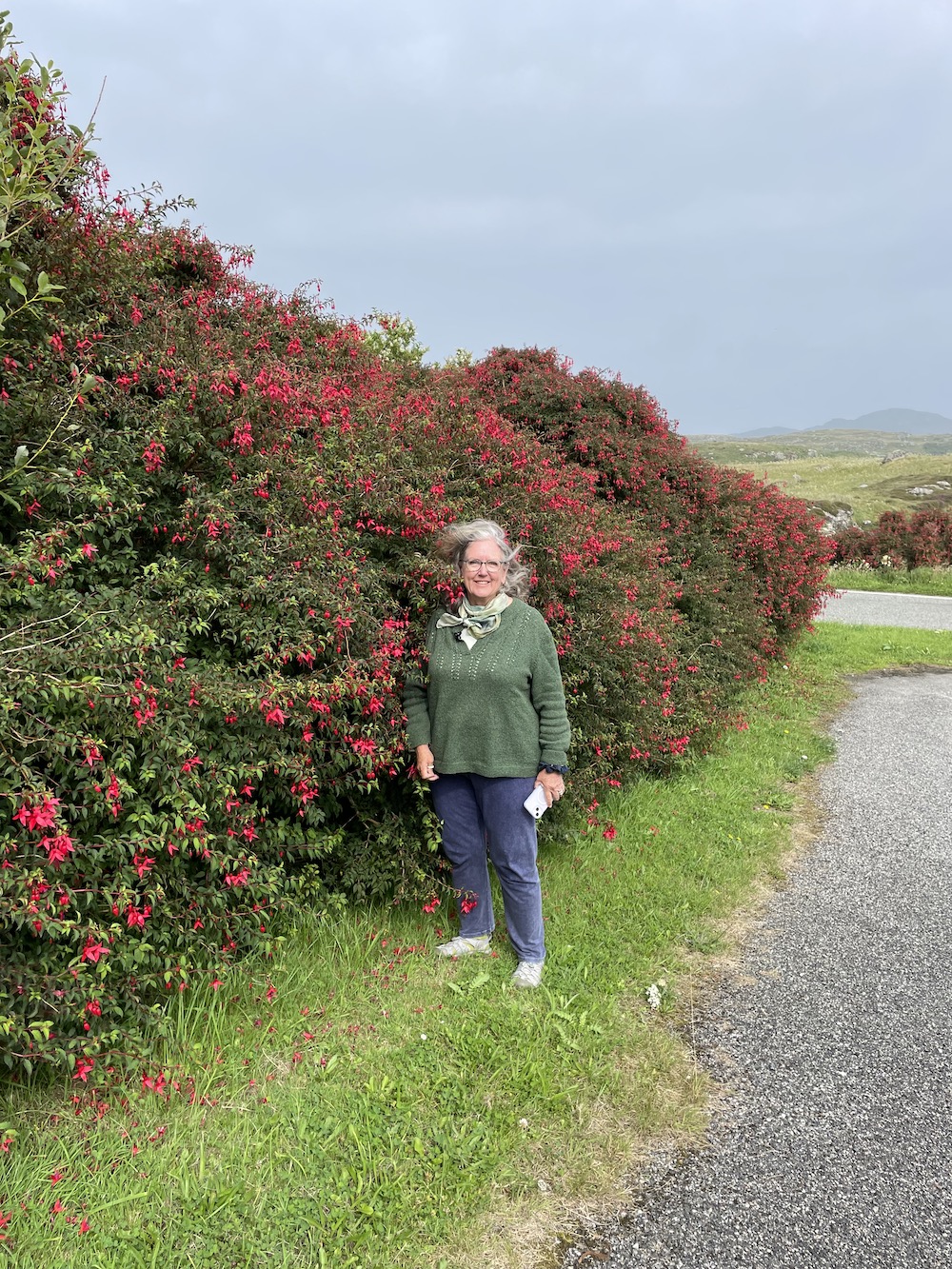
There was a massive hedge of fuschia long the driveway just outside the right side of this photo. Yes, it was windy!

Barra’s airport is on the beach, and the planes take off and land at low tide. That is something to see! We saw both this landing and then the next take off. It was truly something to see passengers deplane onto the sand.

While I didn’t see any wool related things on Barra, this was quite an exciting way to start our week in the Outer Hebrides. From here we went to South and North Uist (is that Grimsay?) I can’t manage the names of towns vs islands. Maybe both islands together are known as Grimsay. Feel free to enlighten me!

We had a wonderful driver/tour guide on South and North Uist. He was keenly aware that I wanted to see sheep and wool production on these islands. He also wanted us to see the mostly buried standing stone sites on these islands, as well as a couple of monuments. He is a budding bagpiper, while his brother is well established and plays at all the local festivals. During one of our walks off the beaten path he picked a handful of locks from the local white sheep. The locks were caught in brambles. They are still in the pocket of my raincoat.

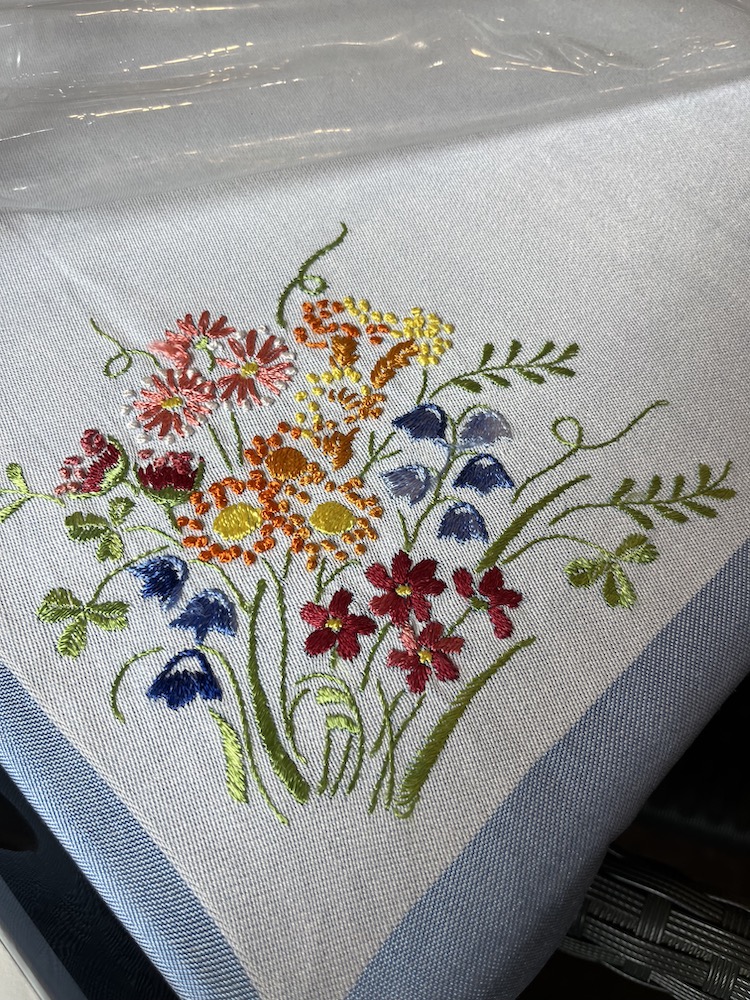
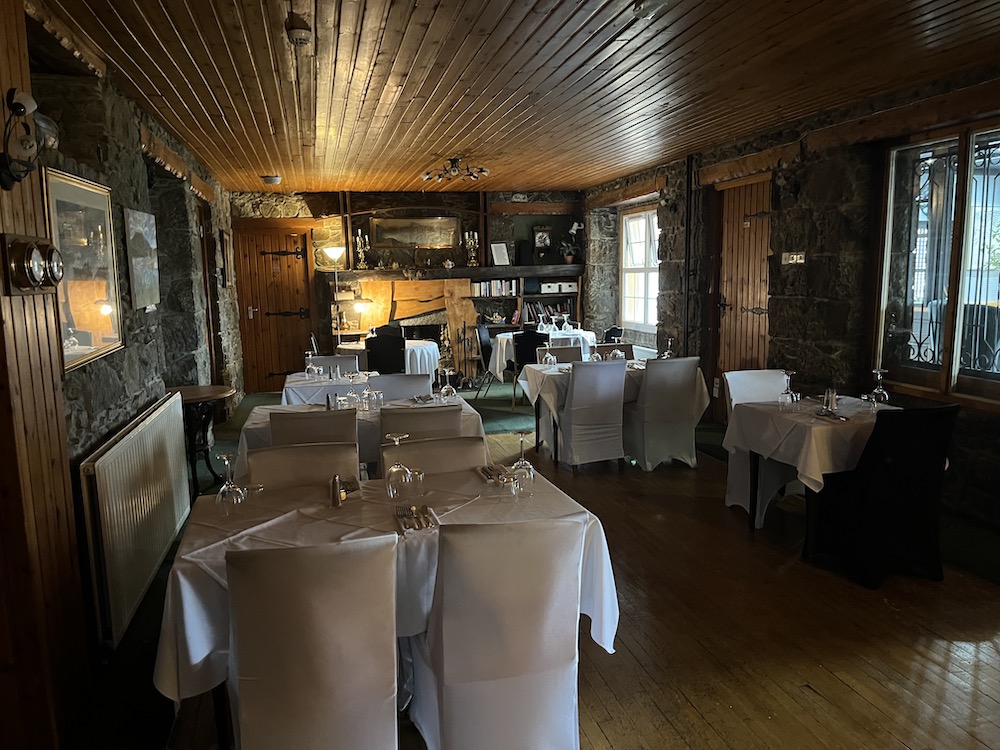
He took us two wool producing places, and equally impressive was the scandinavian bakery near Scotvein where Kari and I had lunch. Every table had an embroidered tablecloth on it, covered in plastic to protect the lovely handwork. I couldn’t care less about the cake! I just want you see the bit of embroidery at the borders of the photo!

Here is our table. I pulled aside the plastic cover to better enjoy the embroidery that was done on each corner of the cloth.

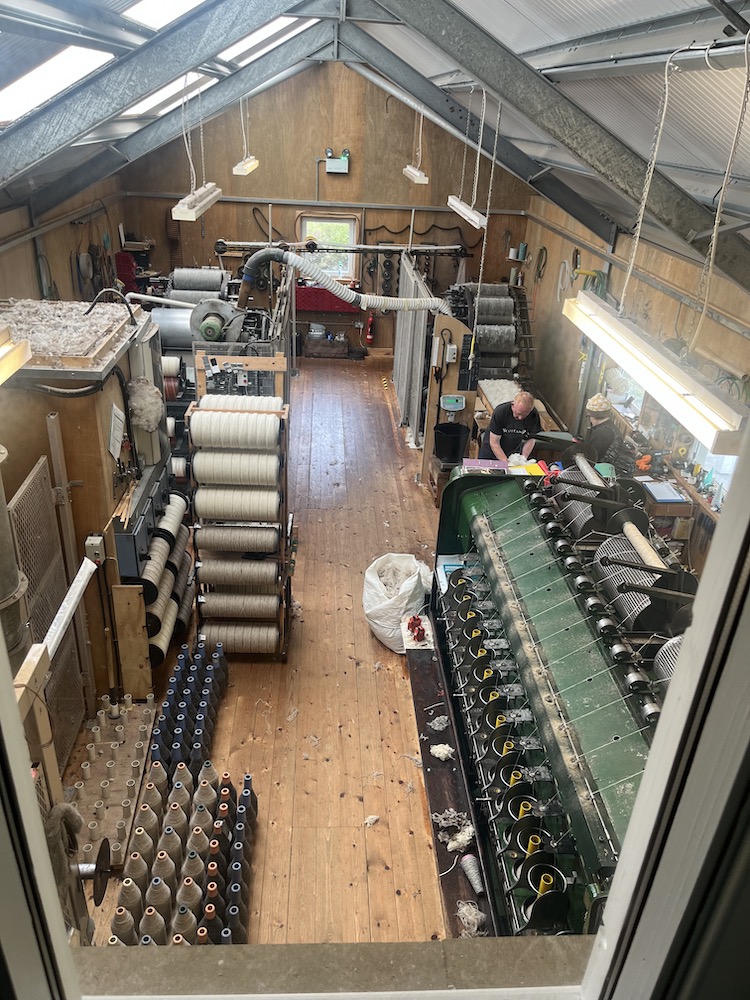
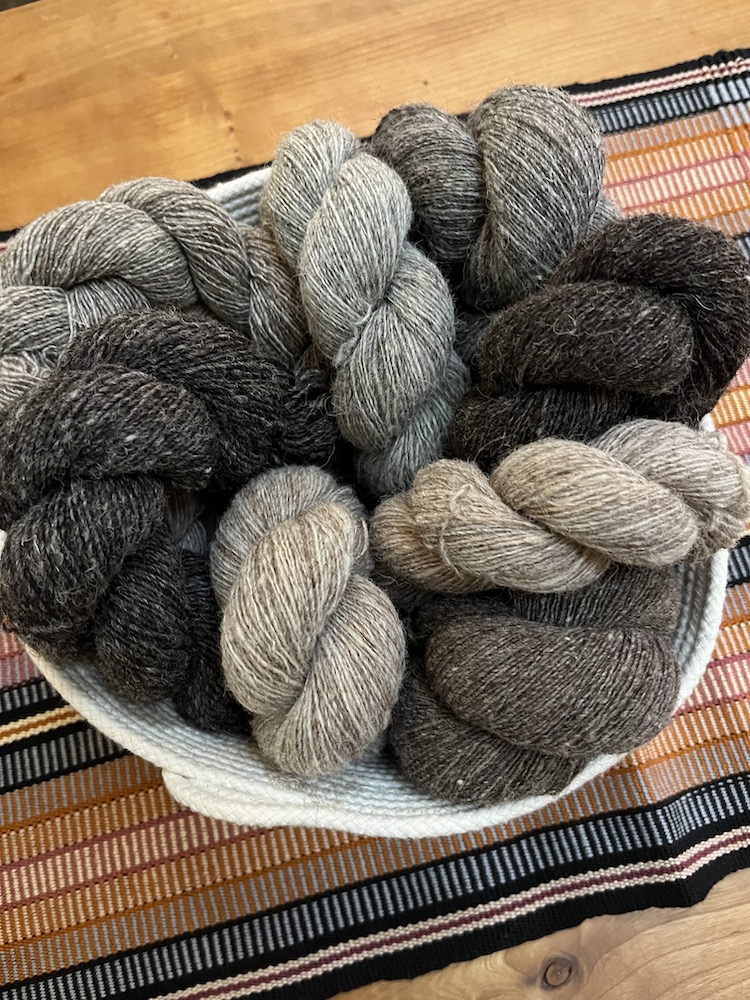
We had two days on South and North Uist, and we saw a wool spinning mill where I bought some exciting things, including a batch of single spun Hebridean wool in natural colors. They spun this wool for someone’s specific project, and what I bought was all there is. I am planning the warp right now, which is pretty prompt of me, only five months after buying it! I also bought three ‘cakes’ of pencil roving that shades from the darkest natural to almost white. I gave away one cake and have spun the other two….not sure what that will become.

We were not allowed into the spinning room at Uist Wool, so we looked down through a large glass window. The website is stunning.

My treasures. I plan to weave fabric for a lightweight ruana.

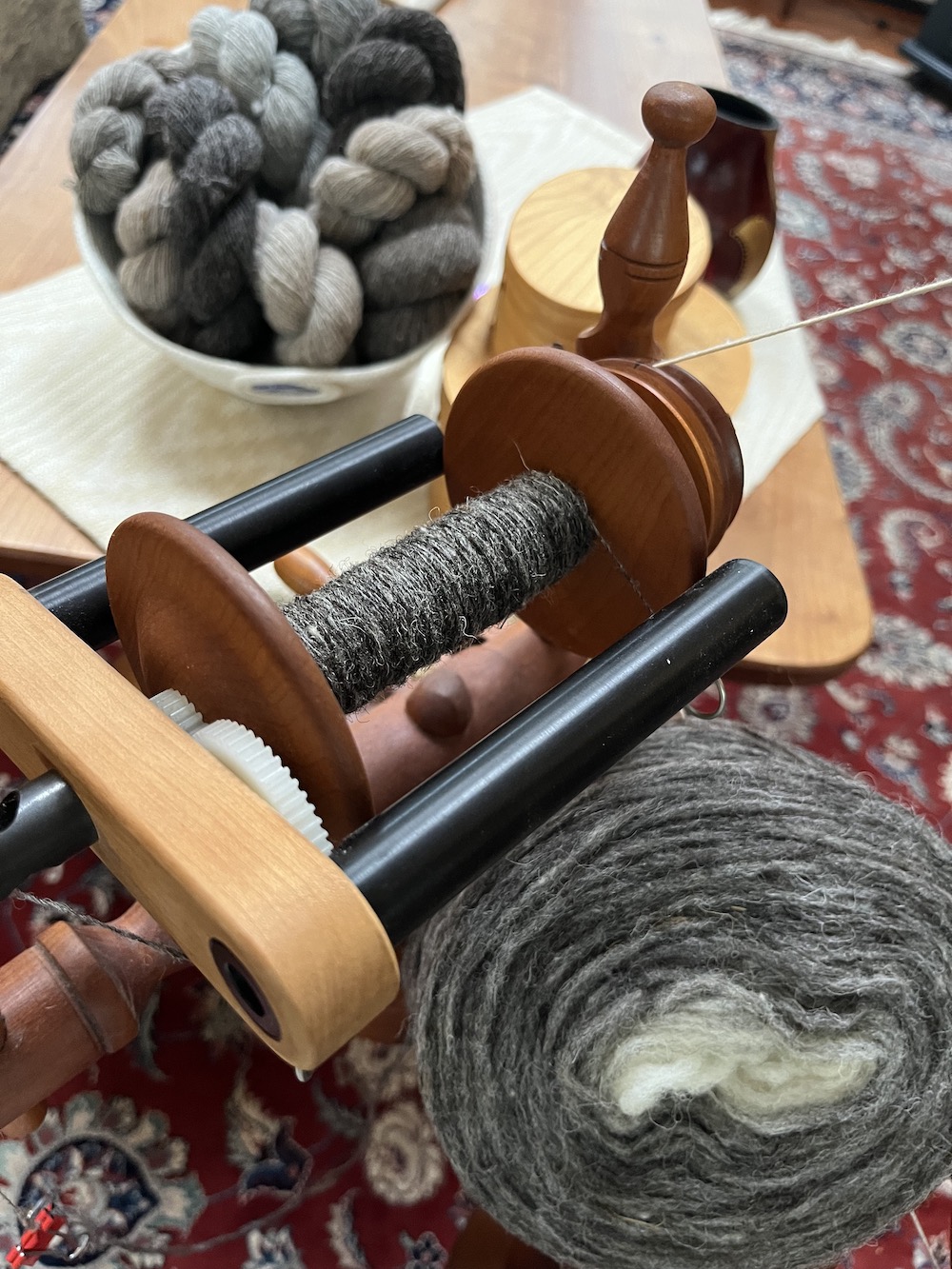
Here is one of the wool cakes I spun, possibly to add to the project.

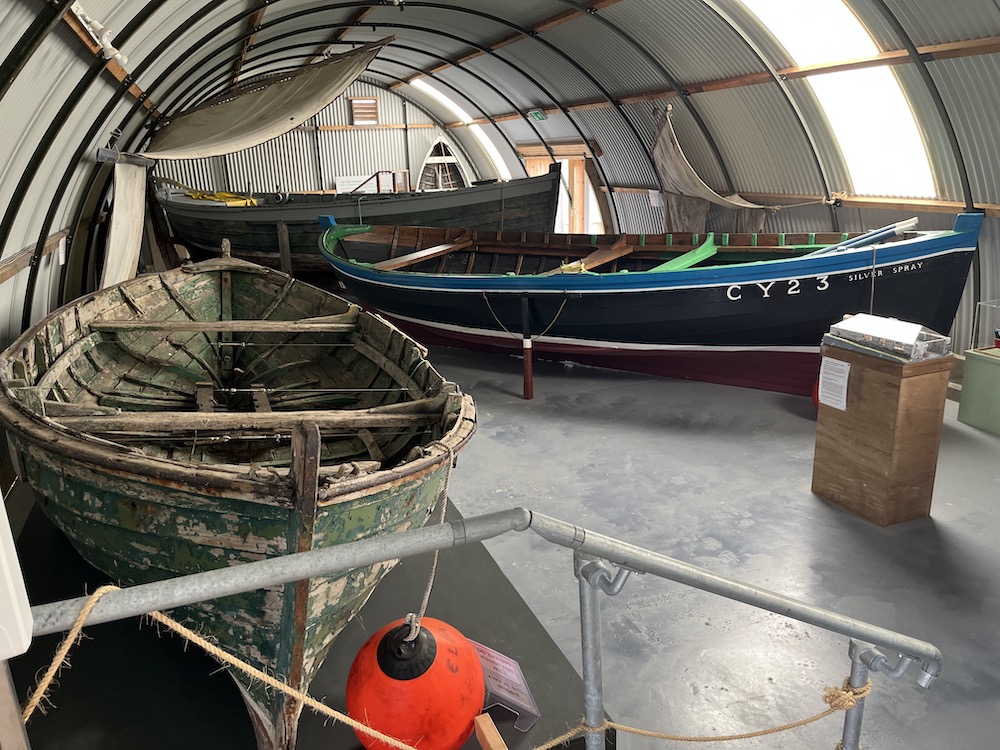
Our guide on the islands of South and North Uist took us to a museum, an historic boatworks location, as well as beaches with cows (and no people!), a somewhat submerged standing stone site, and a couple of monuments. He was thorough and understood exactly what would appeal to any visitor as well as to those of us who love history, and in particular the history of sheep raising and wool culture. I had never heard of Uist (and struggle a bit pronounce it still), and now it is high on my list. I hope to go back someday.

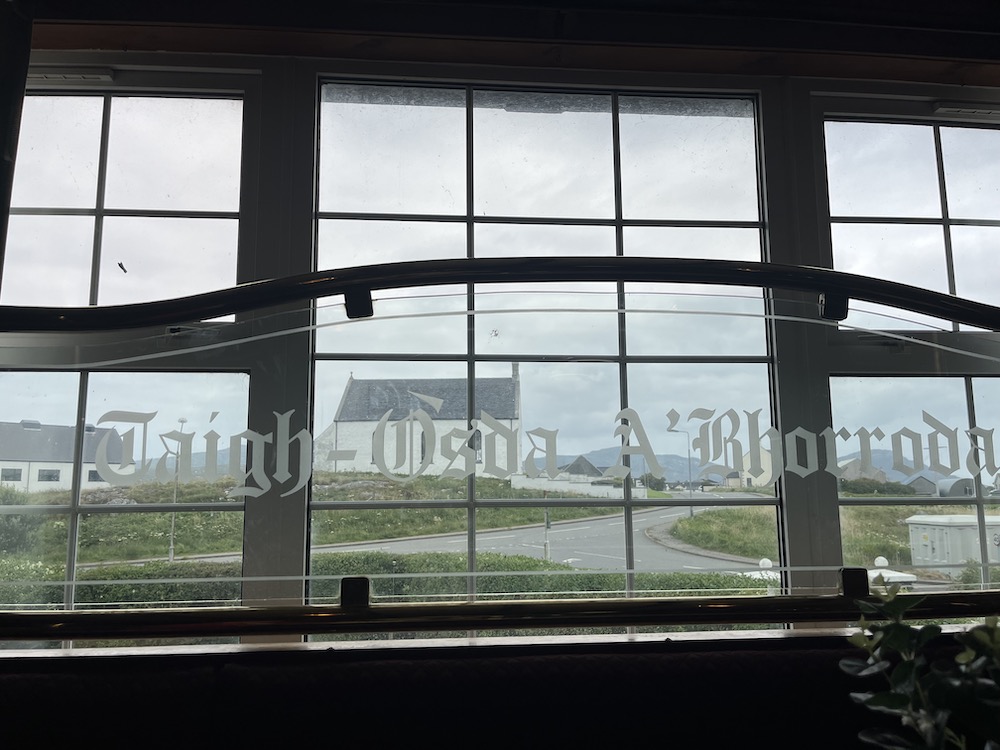
Welcome to Bhorrodale on Uist. This is the window in the pub. The dining room was closed while we were there, but the pub was a charming spot for our dinners.

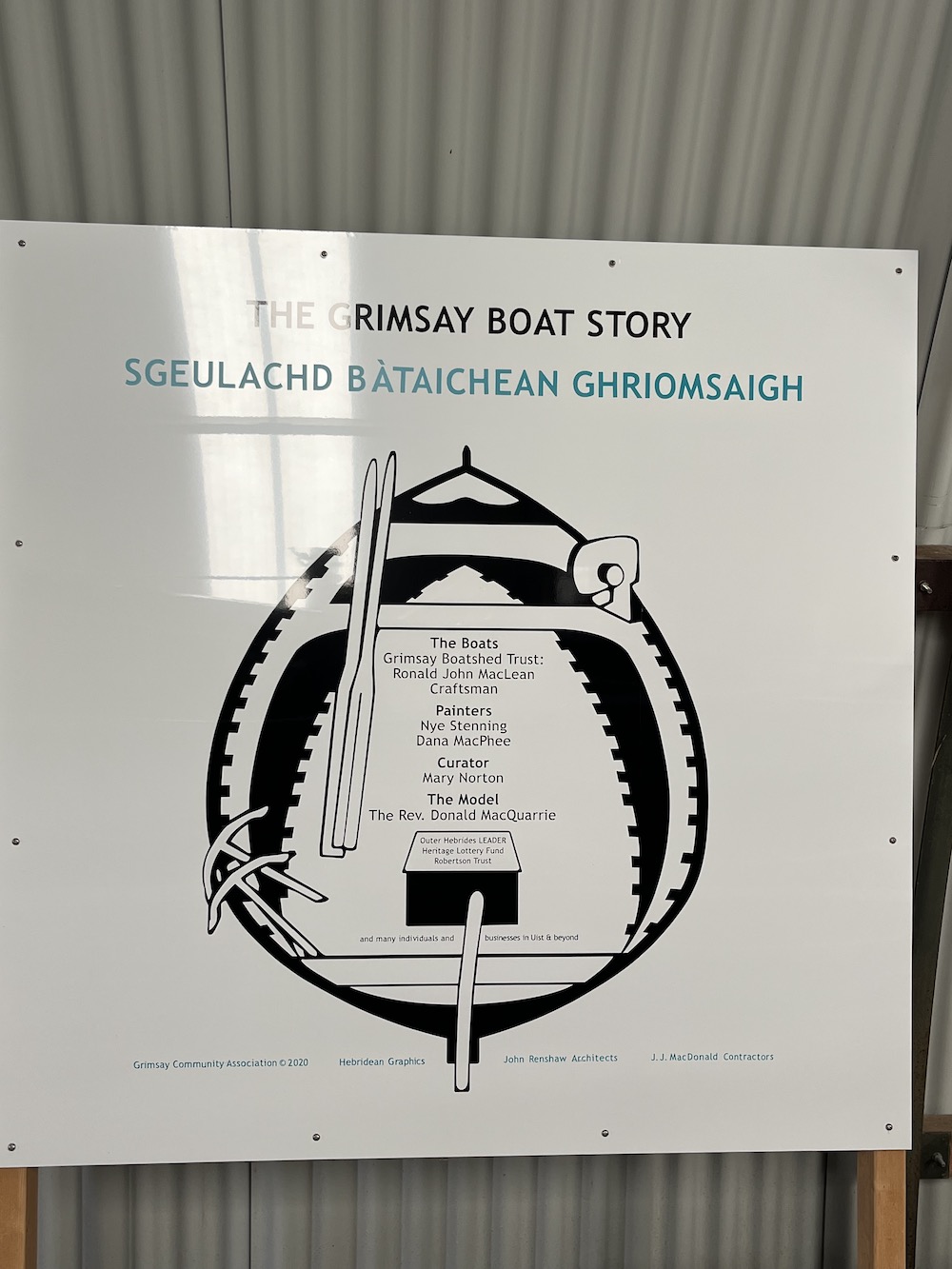
A small museum devoted to the history of small boats in this area.

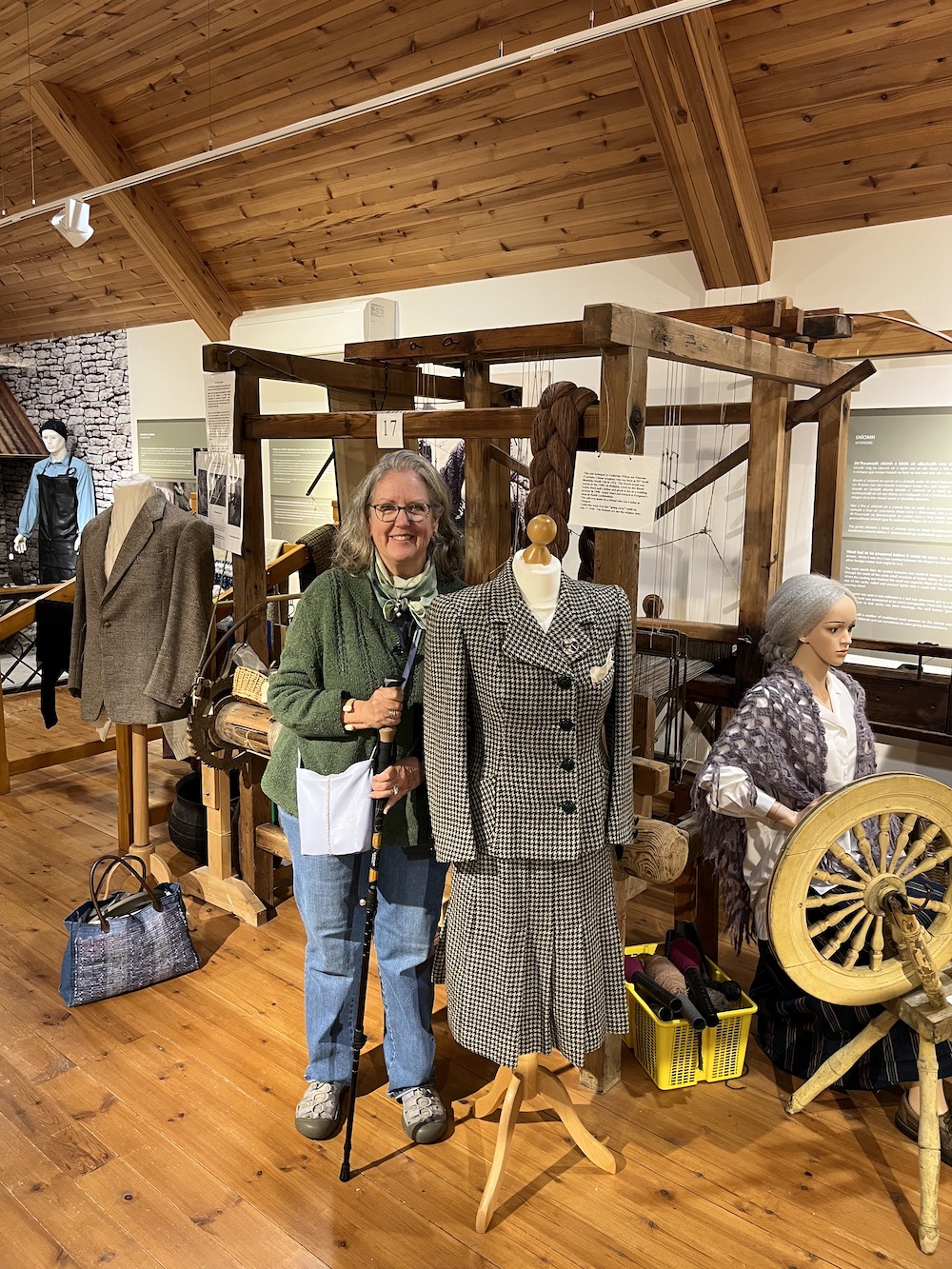
The cultural museum in Kildonan on the Isle of South Uist.

The round houses predate Viking settlements that were long houses. An entire community plus animals lived in these round houses.

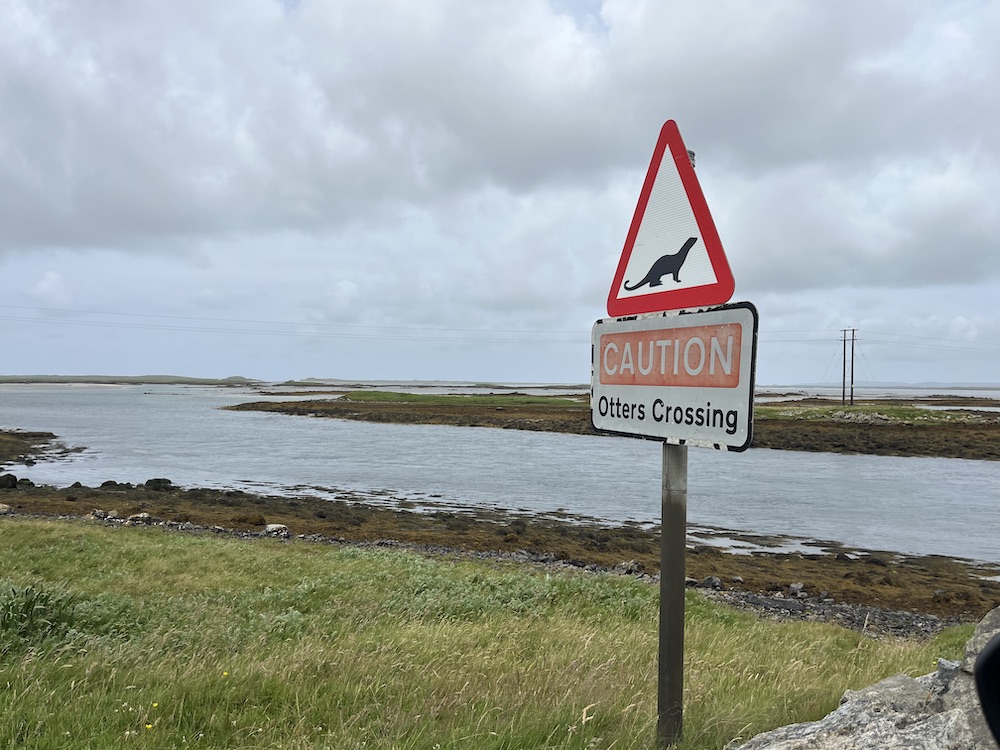
Driving across causeway between South and North Uist. Didn’t see any though.

And then it was time to visit Berneray, where the Berlinn Wool Company was closed. I was sad, but I also knew we’d been awfully lucky with what we did see.

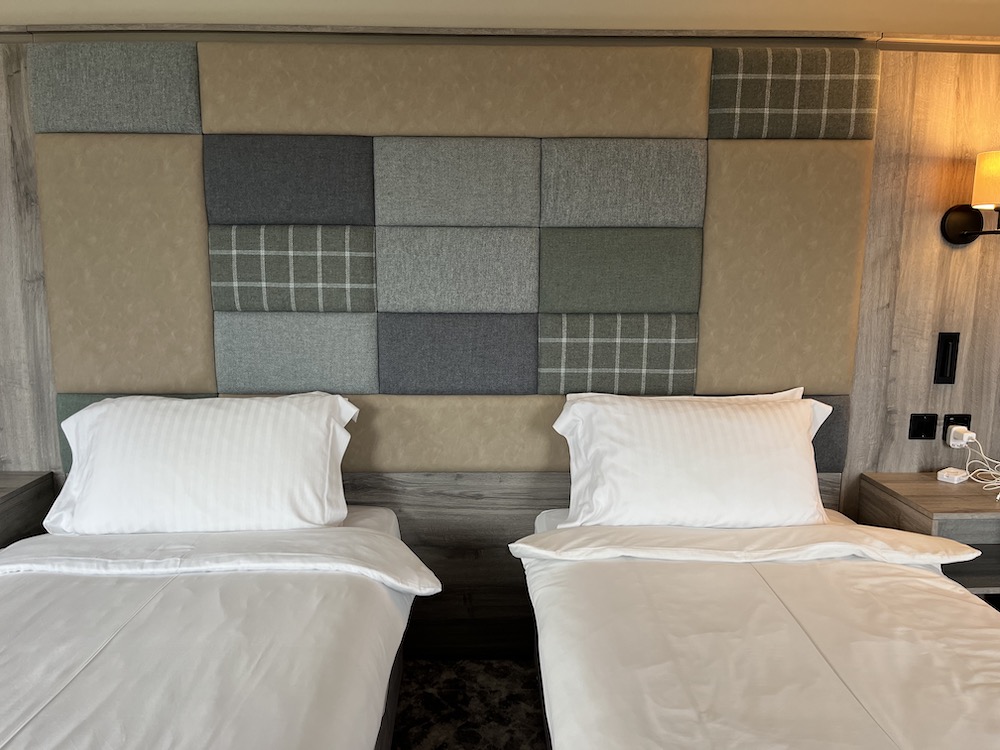
Off we headed to our last island destination, the dual island of Harris and Lewis. If ever there was a celebration of Harris Tweed, this is the place to enjoy it. Now you might well think I’ve taken leave of my senses. I went a bit overboard taking photos of Harris Tweed on every chair and wall that I came across during our stay! This is the wall in our room at the Hotel Hebrides.

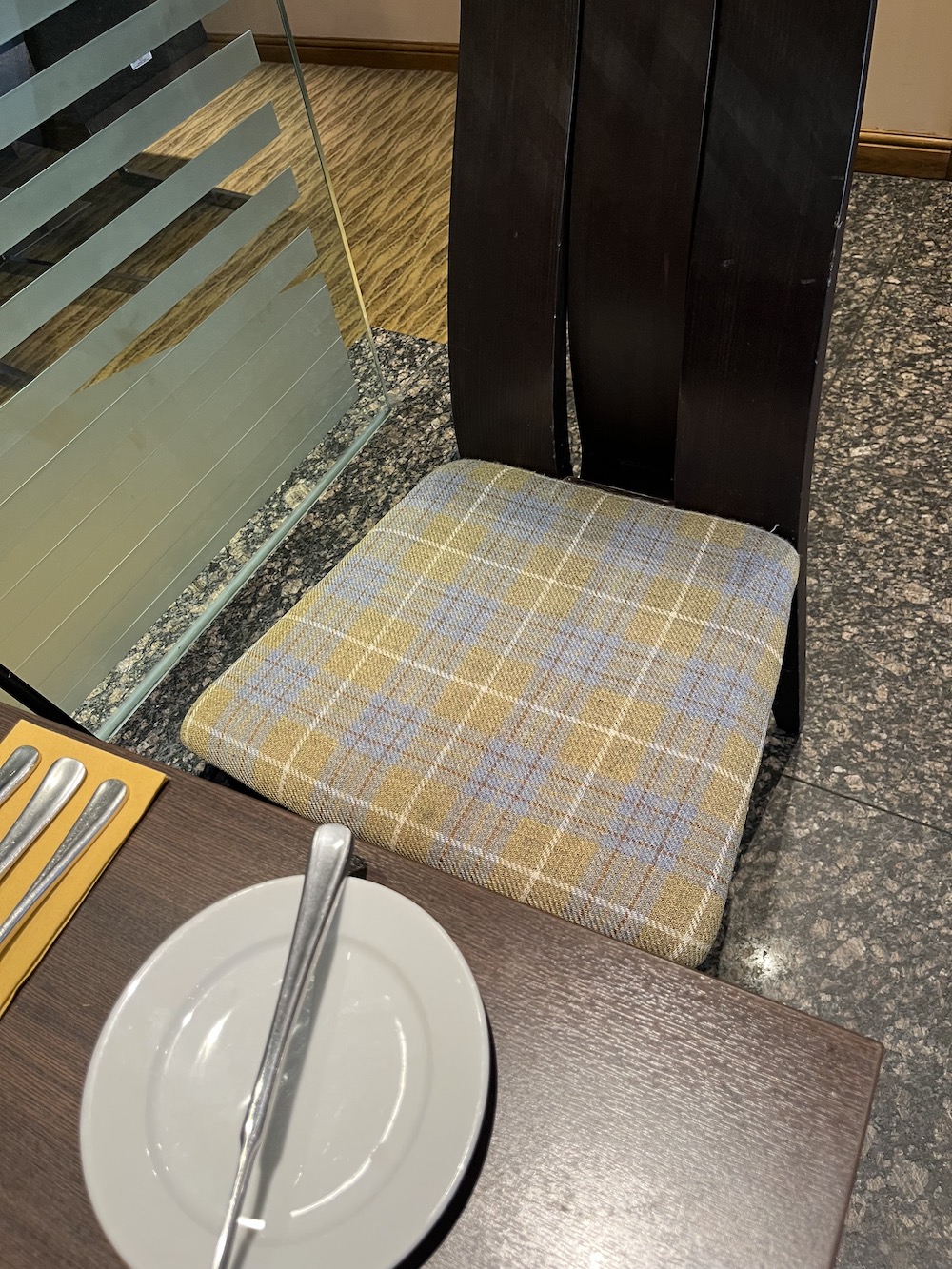
Breakfast and dinner at this hotel featured dining chairs with Harris Tweed fabrics, as well as handwoven napkins (although not wool).

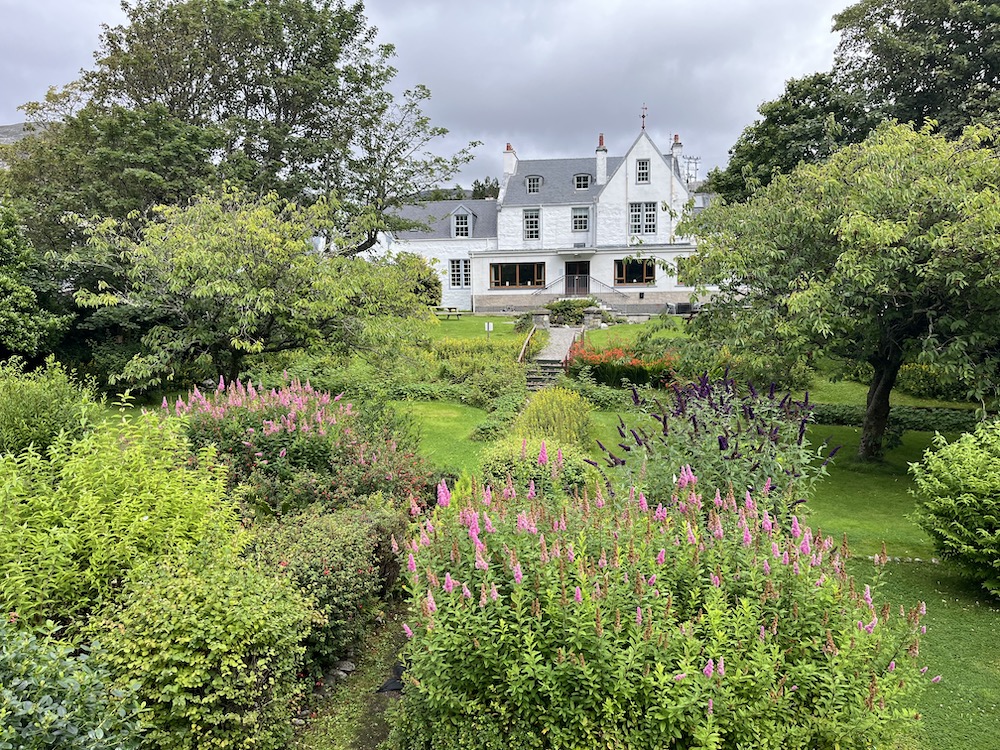
When we arrived we decided to have afternoon tea at a lovely spot within walking distance of our lodging. This is the Inn at Harris. We enjoyed the gardens along with Harris Tweed decorated dining room.

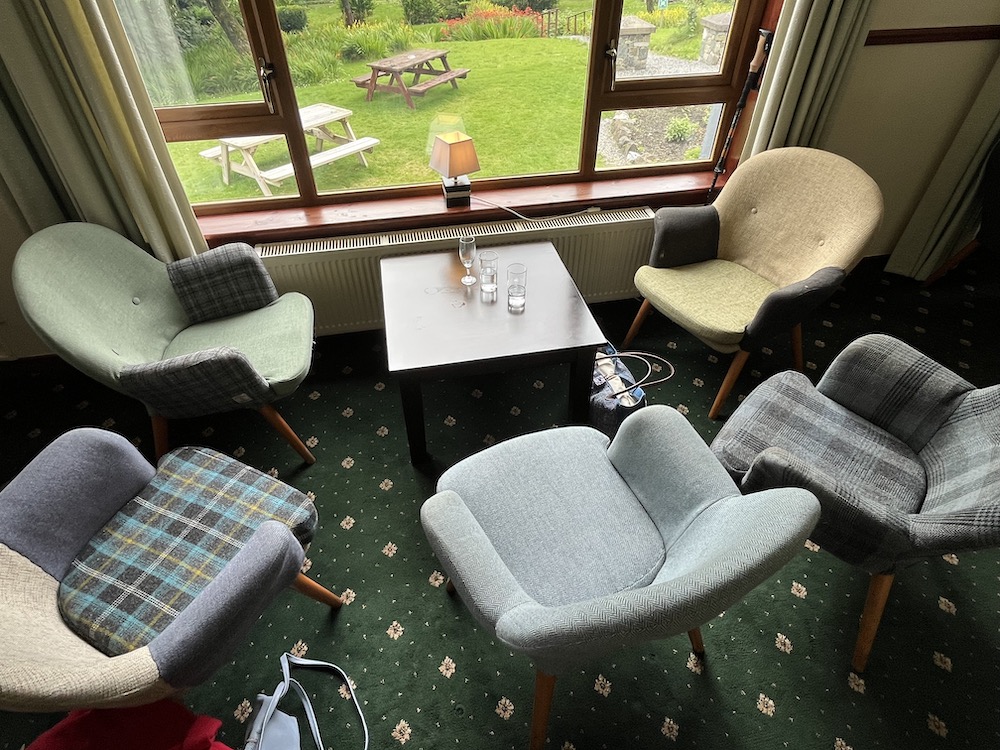
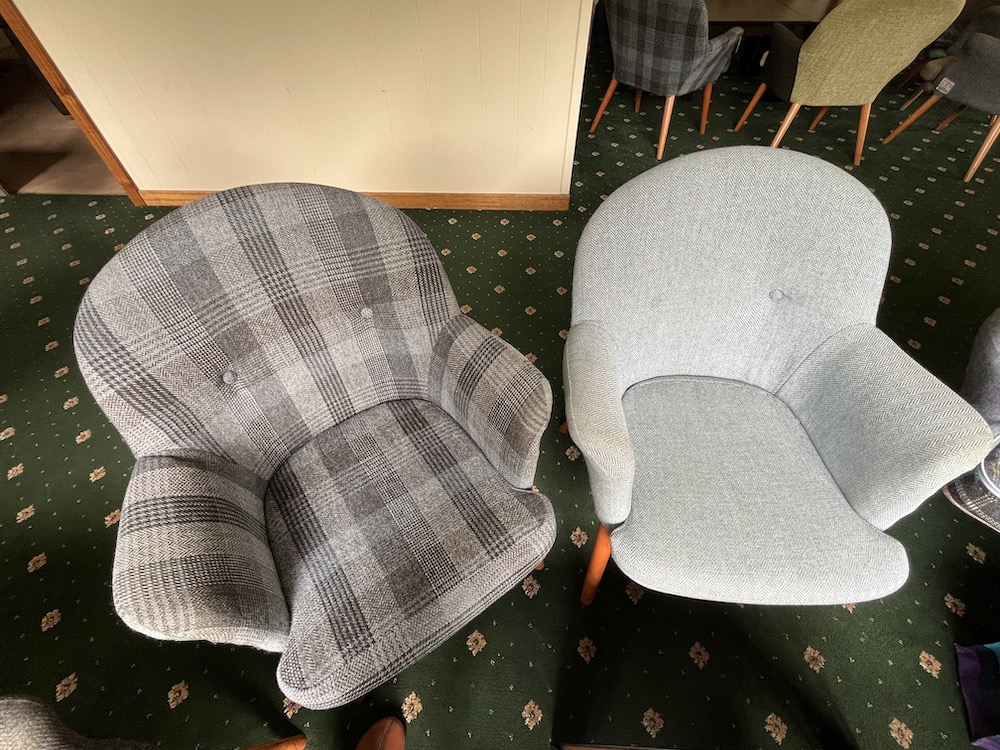
I know some of you will believe how it was for me to choose a chair to enjoy my tea!

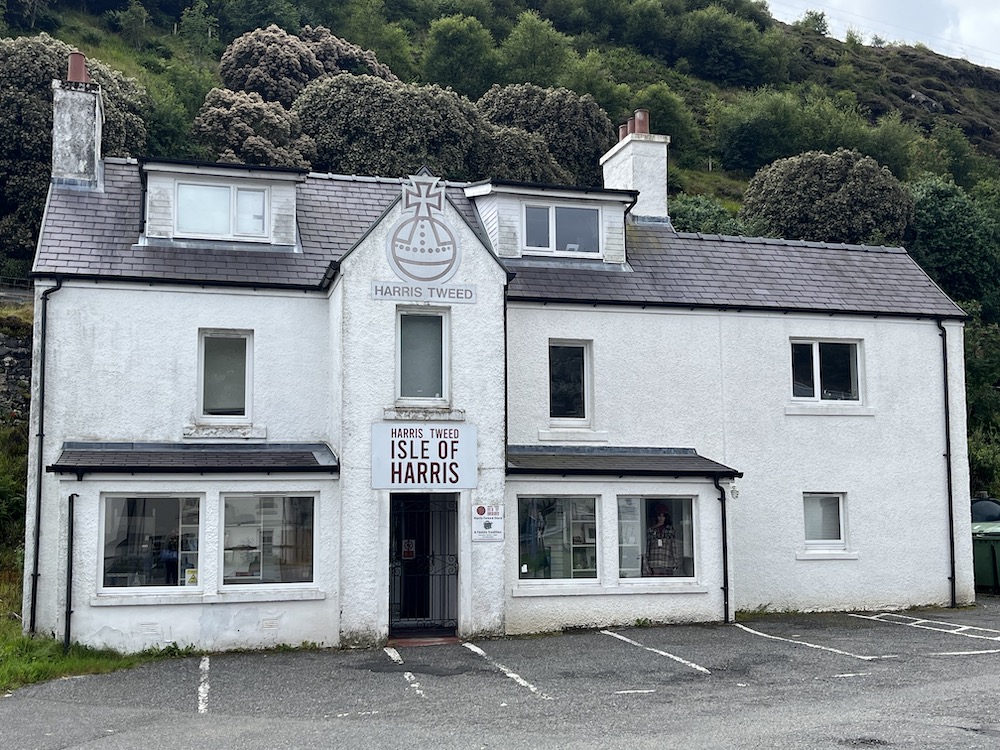
And then a stroll back to our hotel took us by Harris Tweed company. This is the building that houses nothing but bolts of fabrics. It was hard to choose, but I managed to buy two lovely tweed fabrics.

Across the street from the fabric shop was the gift shop. I had waited to visit this shop in order to choose a Harris Tweed handbag. I had seen one in Edingburgh that I loved, but I needed to make sure there wasn’t something even more entrancing at the actual shop in Harris. As it turns out that bag in Edinbtugh won my heart. Even though I had taken a photo of the bag, I neglected to note which shop had it! I was lucky to find it quickly when we returned to Edinburgh for only half a day.

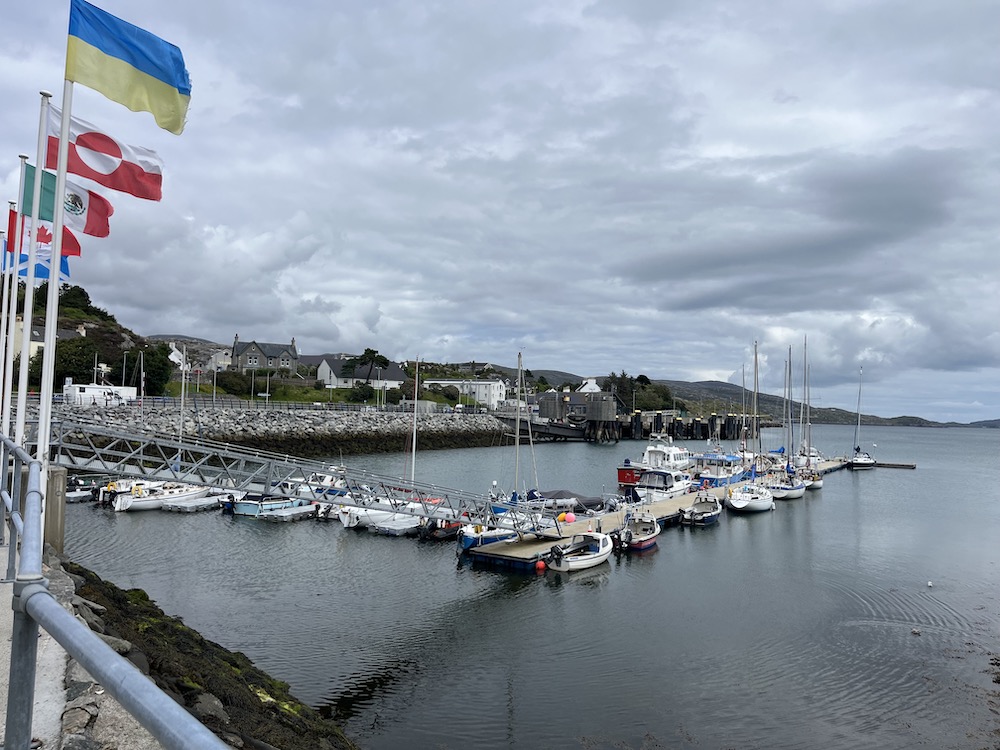
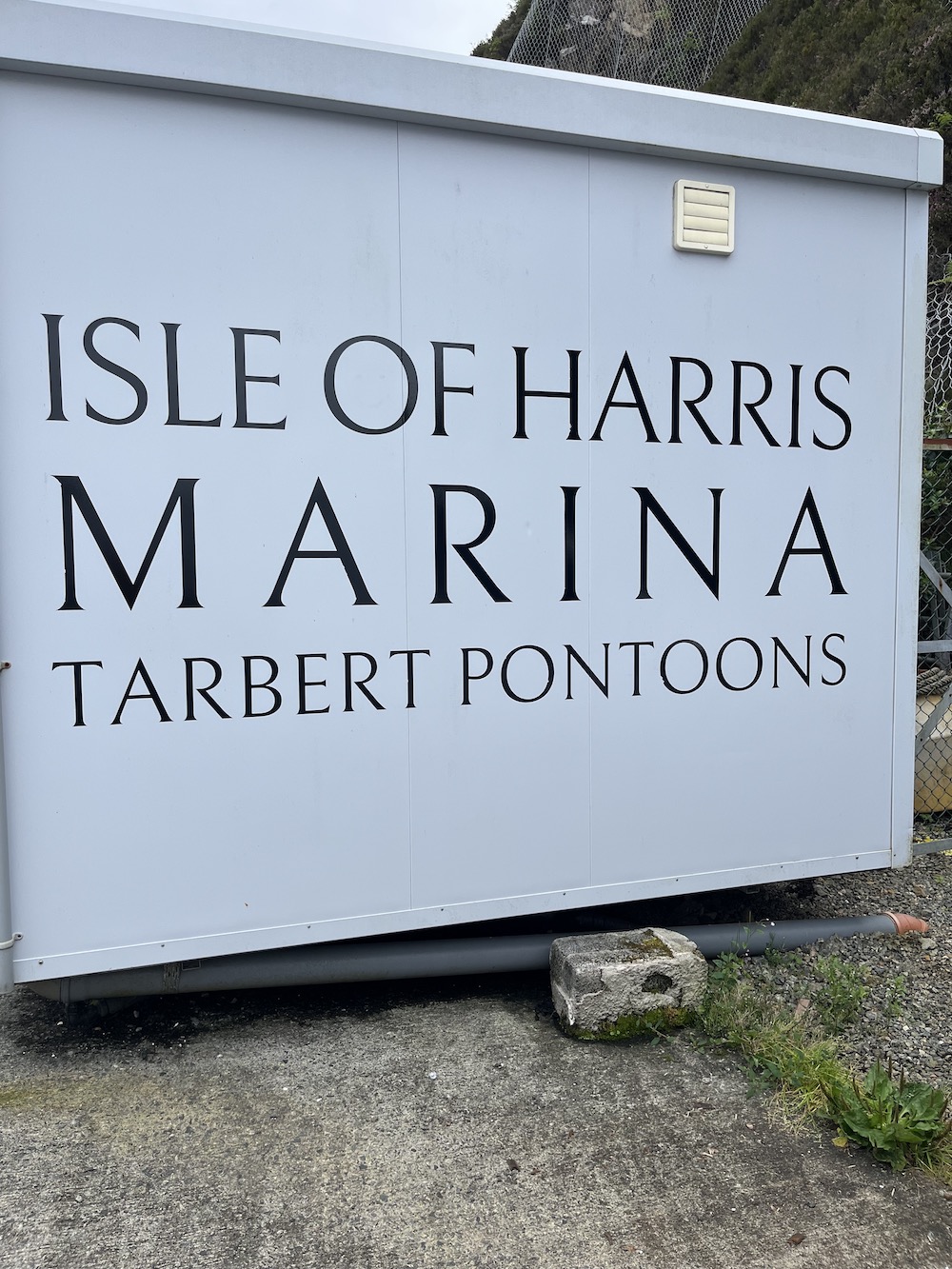
I took a walk along the harbor on my way back to the Harris Inn. There is a very small marina. It is a late July day, and it’s quite chilly. I really cannot imagine visiting here by boat, but clearly a few other hardy souls are doing it. I wish Bob could have joined me here. He would have gone straight down onto the dock to meet some of these sailors.

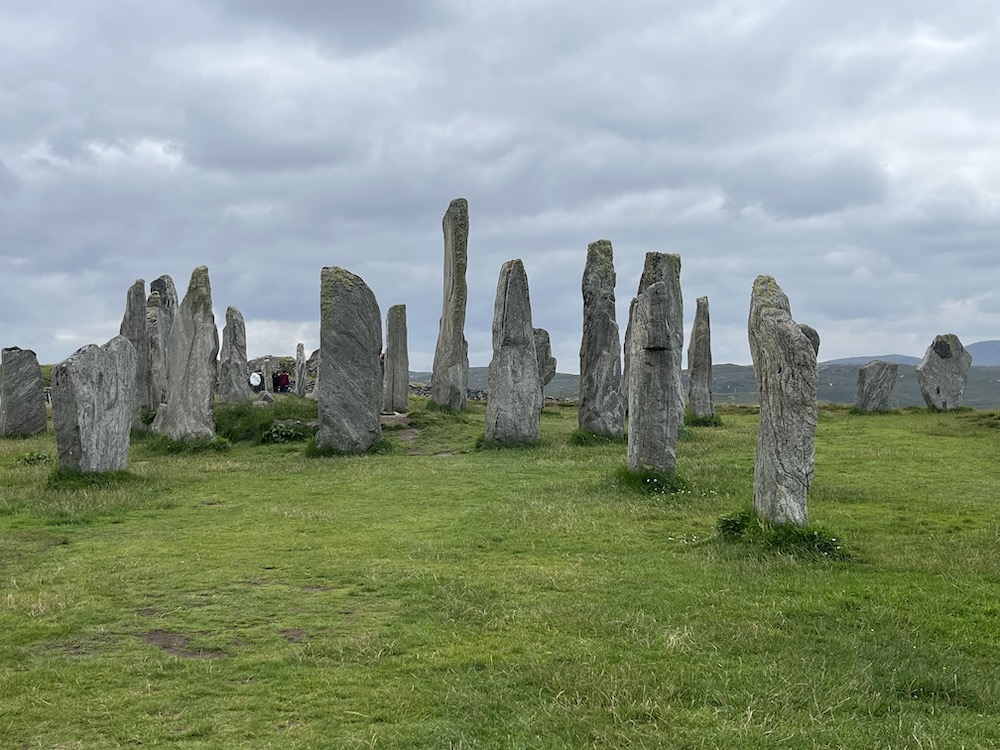
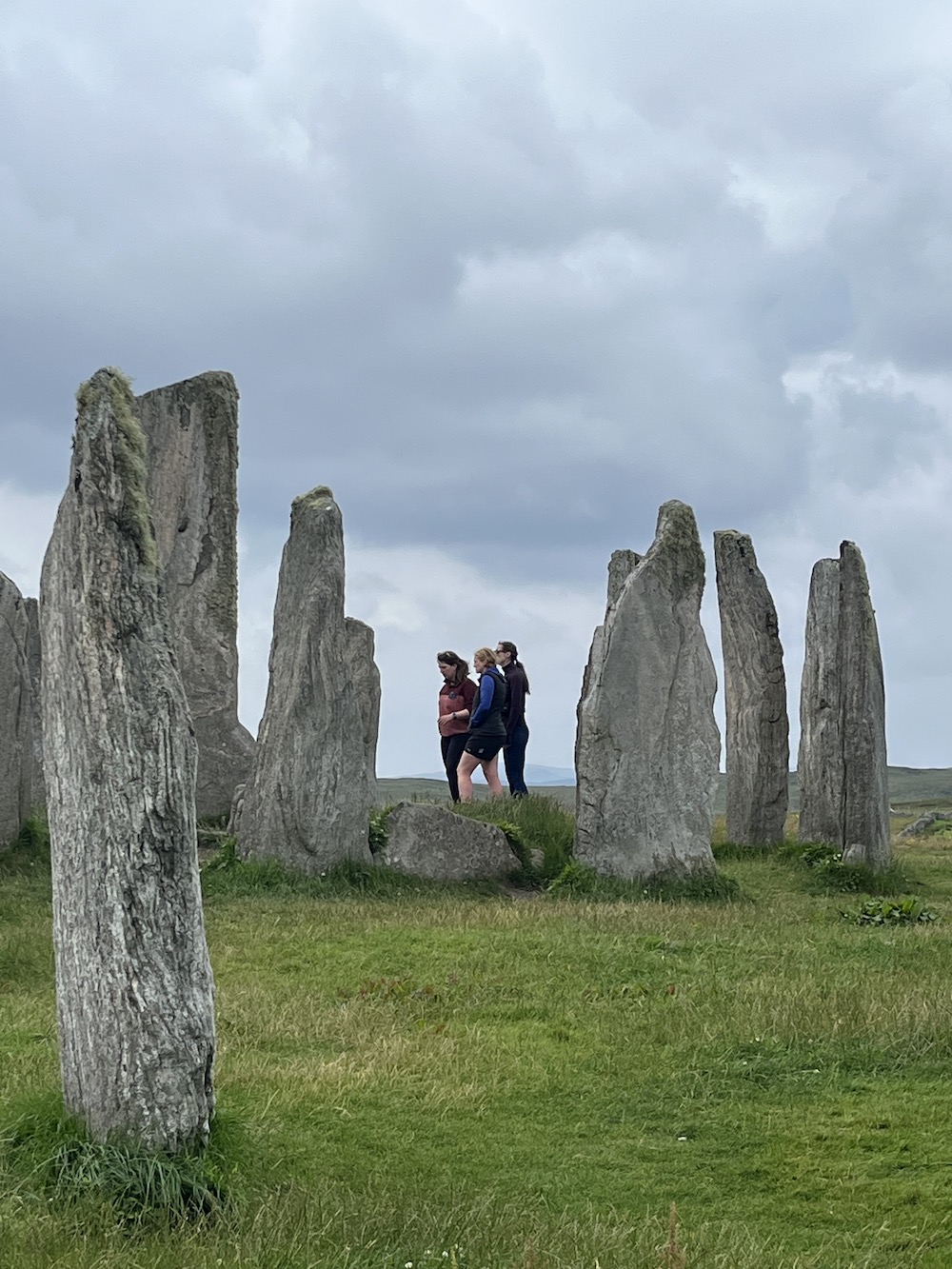
The rest of our visit to Harris and Lewis was quite dramatic. We saw the Callenish standing stones and our guide was well versed in telling us the history of that place. It is supposedly older than Stone Henge, and is roughly the age of the pyramids. I was fascinated by the stones that were chosen. They are metamorphic rock, which is the hardest hardest. Somehow the ancient people here moved these stones and set them up so that once a year on the winter solstice the sun moves straight down the path between the stones that run north/south and east/west. Several times a year the sun has a different interesting path through the stones. There is an altar at the north end of the standing stones. The patterning in these hard stones is magnificent, almost like petrified wood grain.

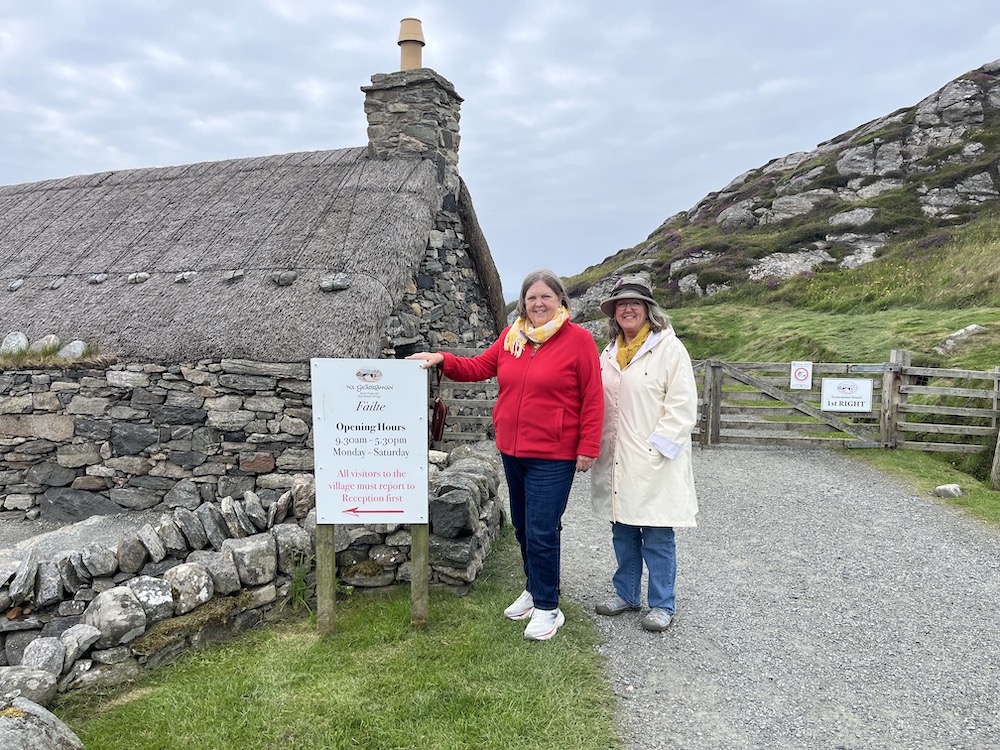
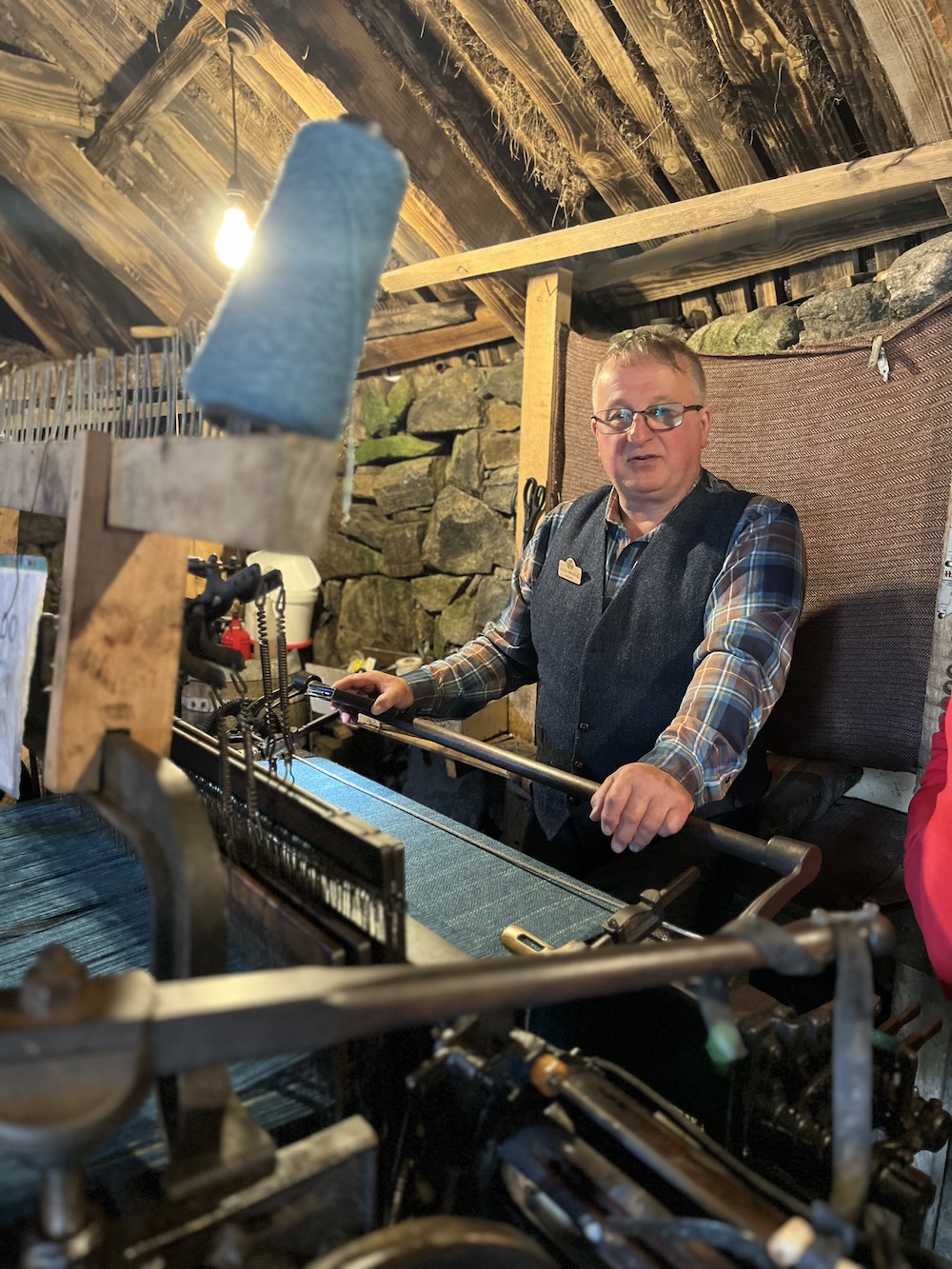
We visited a round house and an entire village of black houses that has been conserved as a museum. They have been well cared for over the centuries, and still have their stone walls and thatched roofs. Our guide is a Harris Tweed weaver, and the loom he uses is in this black house village. These are the style of buildings brought here by the Vikings. They are called ‘black houses’ because they generally had a central hole in the roof for the smoke from the fire to rise, and had no windows so the inside walls turned black over time.

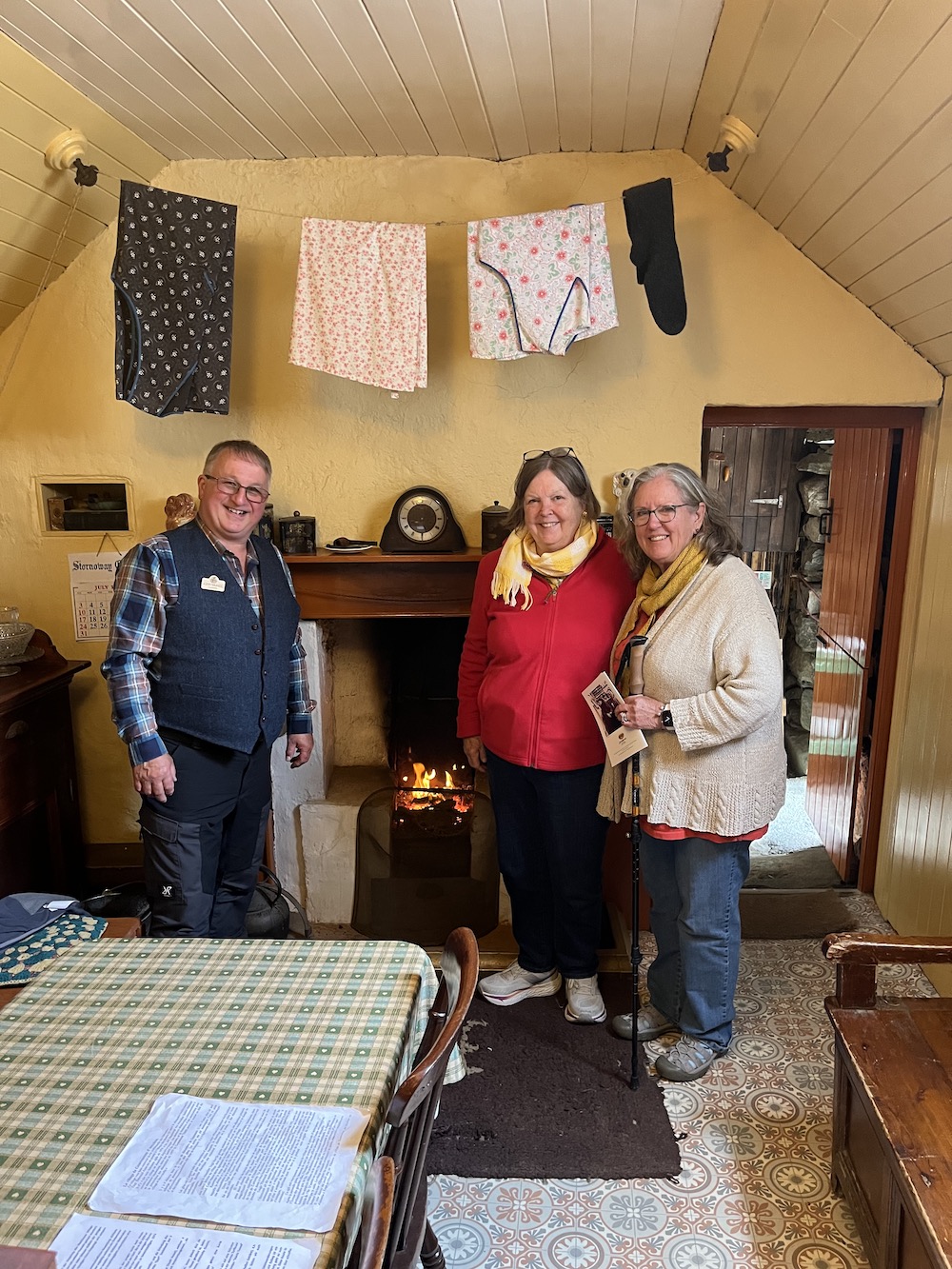
We are inside the black house where there are several docents who are friends of our guide (Tom MacMurray), and where his loom resides in a separate building. This particular house has been left with items from its last occupants, in the 1950s. These houses date much earlier but were in continuous use for centuries.

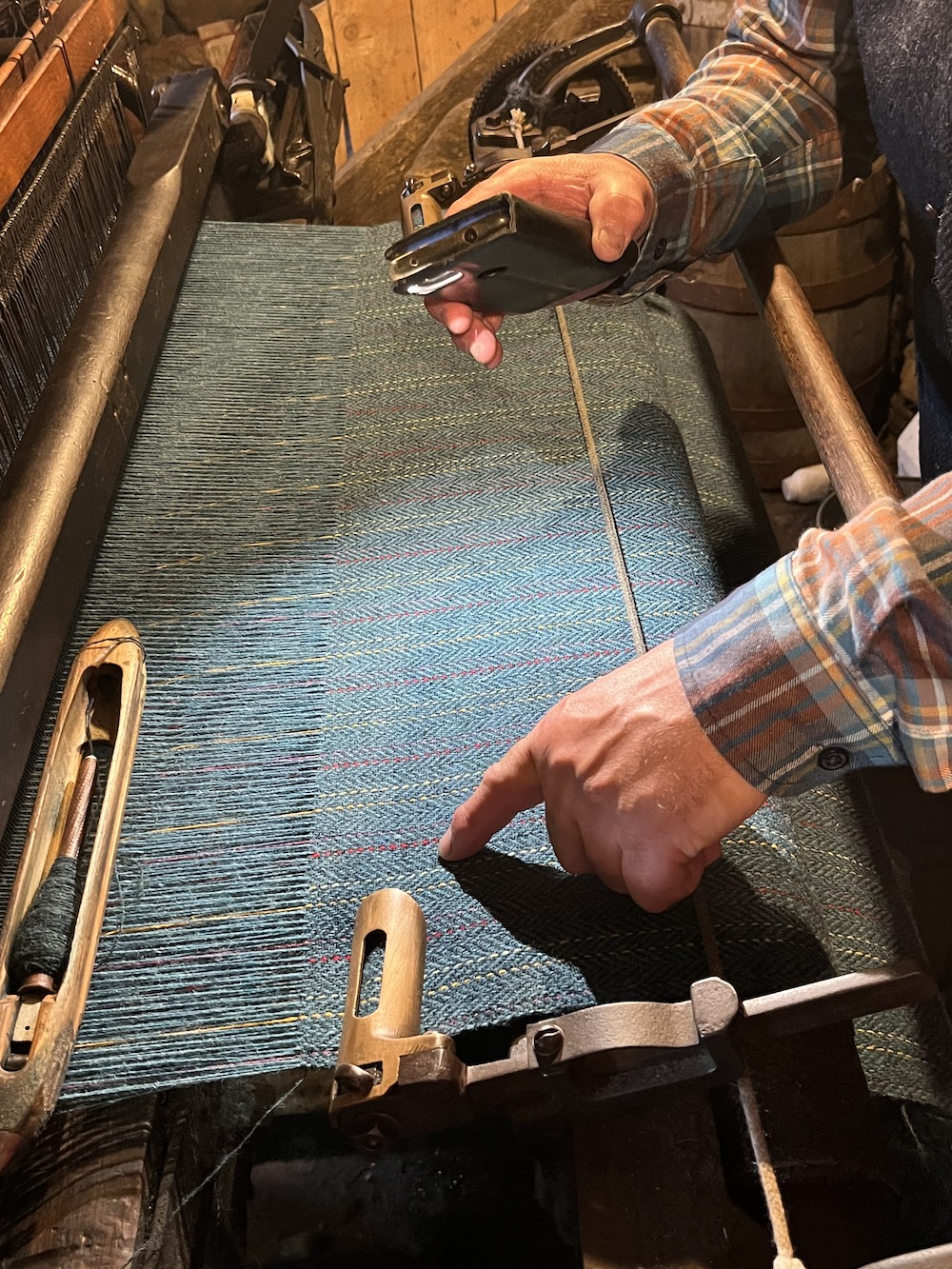
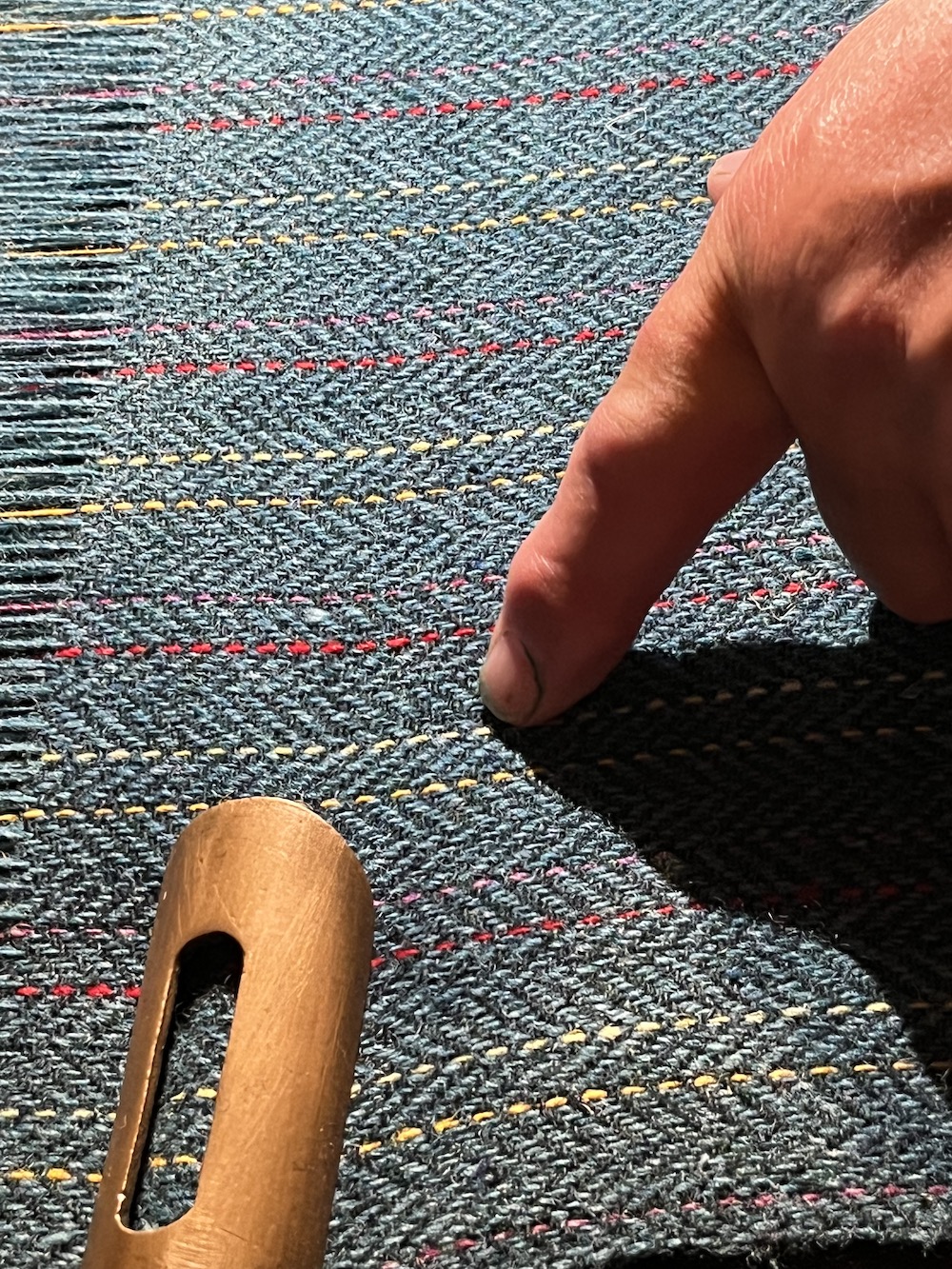
I’m giving this fabric serious attention while I attempt to design the fabric for my Hebridean ruana.

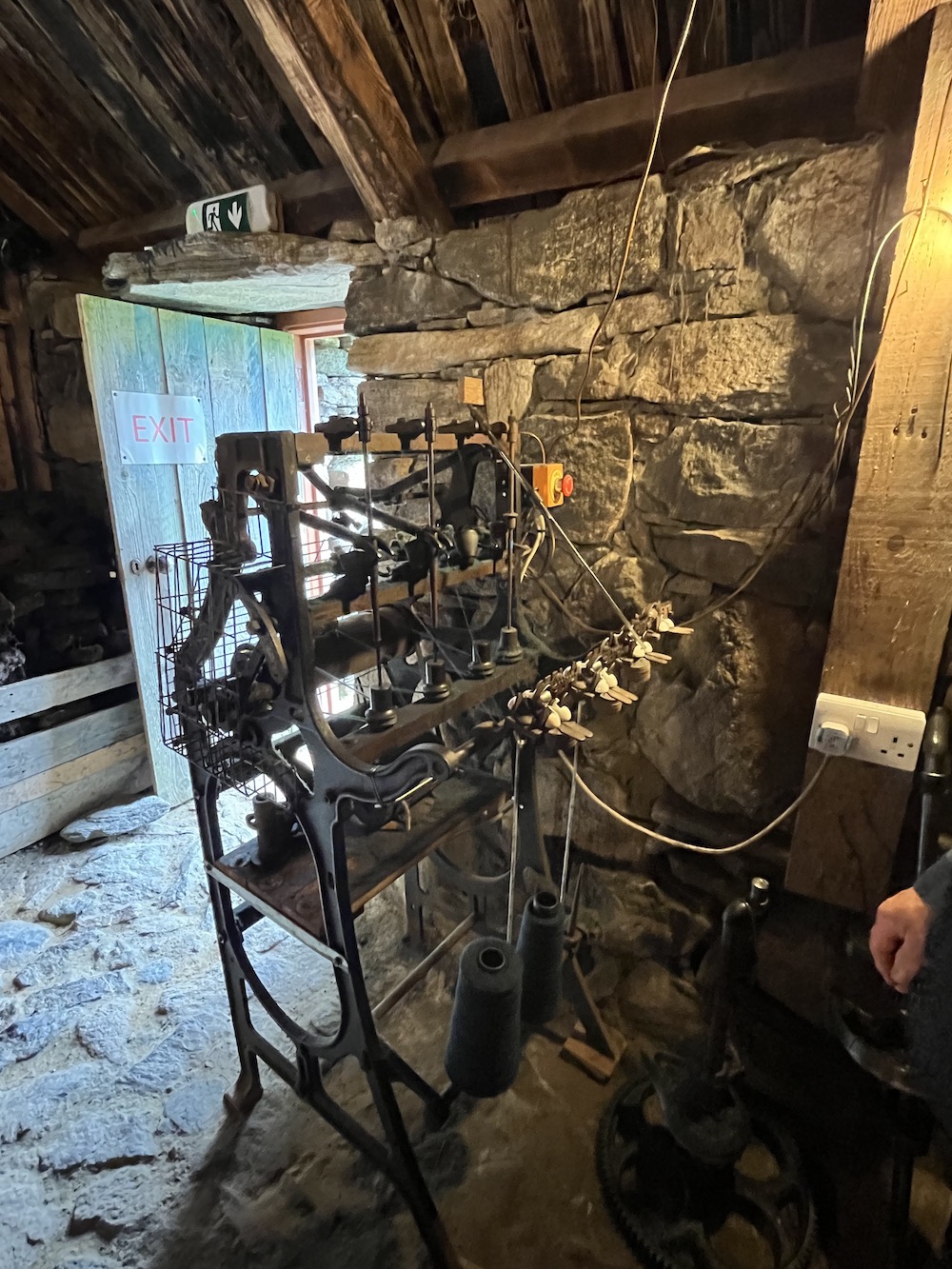
This is John’s bobbin winder. His recently deceased wife used to wind the bobbins for him. She could wind a whole set of bobbins in about 10 seconds. Hard to imagine (but yes, it is electric).

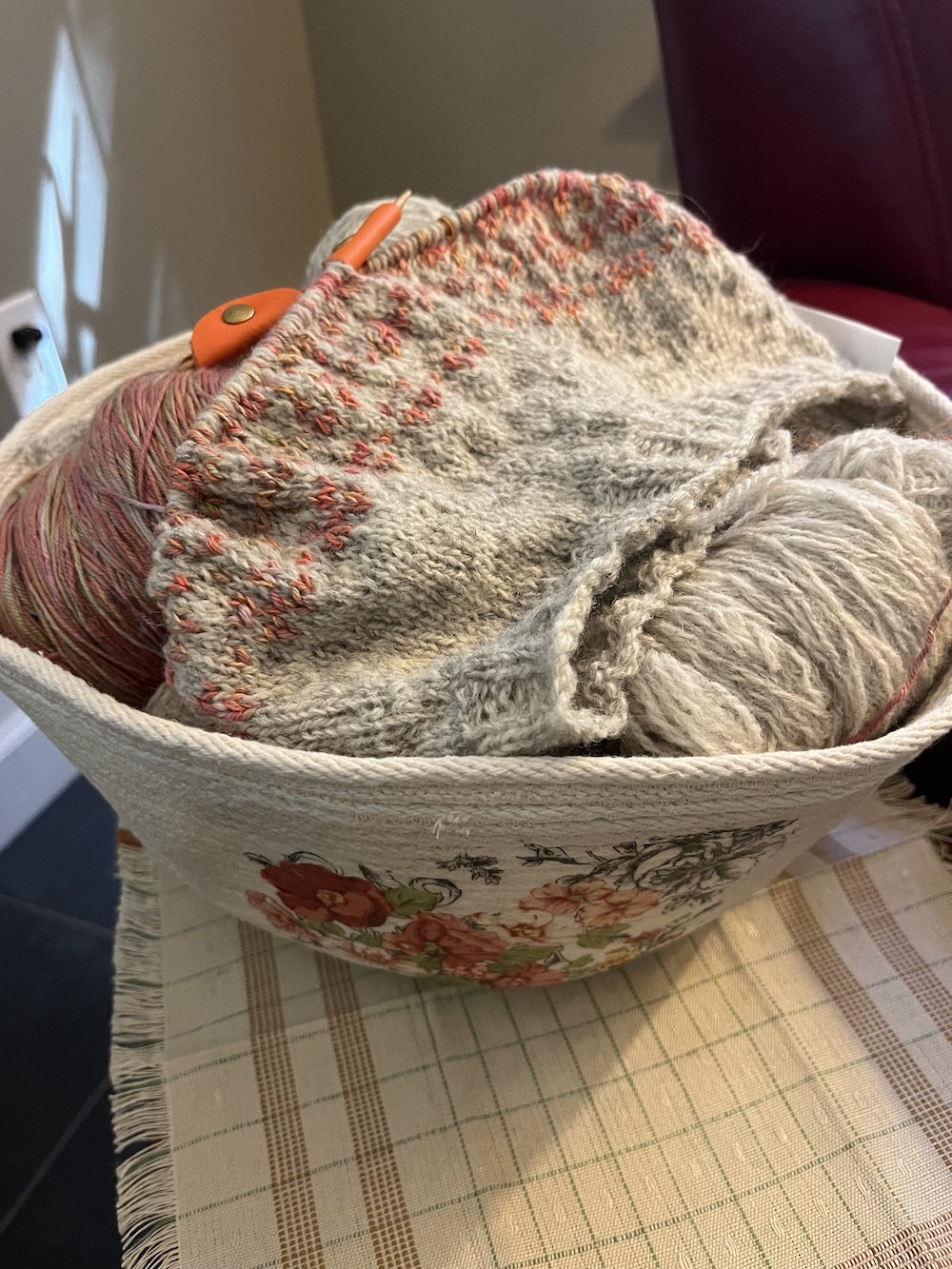
Tom wanted us to meet another Harris Tweed weaver who has left the company to start her own business, Three Sisters’ Weaving Shed. Since I’ve been home I’ve enjoyed following these three sisters, one husband, and one small daughter through the photos they post on Facebook. I bought a hand painted merino/silk skein dyed by the sister in this photo, who is also the mother of the little girl and the wife of the man in the group. I’m using it in a knitting project, “Golden Poppy” by Elenor Mortensen. I’m almost finished (not obvious in the photo) which will make another project bought and executed in a rather brief space of time! The rest of the yarn is Jamieson “spindrift.”

For those of you who have made it to end of this post, I sincerely thank you for sticking with me on this trip down memory lane. I hope the photos made up for my longwindedness! If you’ve been to this part of Scotland I hope I’ve brought back some good memories for you. I’d love to hear about them. For those of you who have never been to the Outer Hebrides, I hope this whets your appetite for going. My friend Kari had been in Scotland 50 years ago, and her plans to get to these islands did not happen. Never too late. We both loved every minute of our visit.

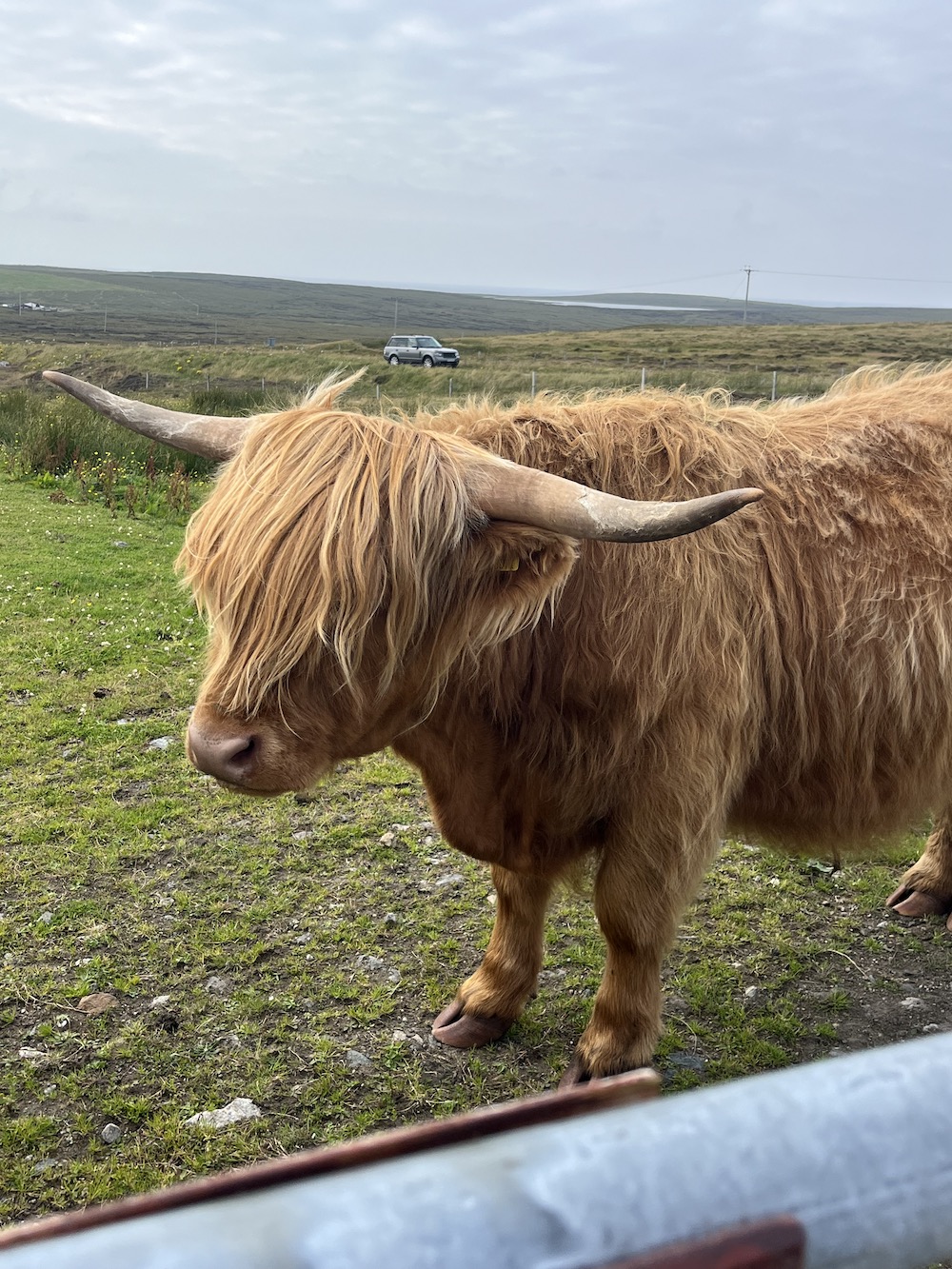
I’ll leave with with an image of a highland cow that I took on Harris.

…and two of Kari and me visiting the large whale jaw bone installed in the village of Bragar on the Isle of Lewis.

Be well, take time to work with your hands, and enjoy the new year.

An Abundance of Good

It’s almost June, and I have been writing blogposts in my head for about two months. None of them has made it to reality here on this site. I am approaching the end of my 3 1/2 months at home before leaving to go back to Pandora in mid-June. It’s almost time to go again. Somehow, when I am living aboard it seems that several months at home will allow me to get a lot of things done. I envision myself weaving, knitting, creating every single day, but life always has other plans. Still, there has been a lot good over the past three months. In 10 days I’ll be on a plane heading to the Azores, where I will wait for Bob to arrive, unless he beats me there. There is a slight chance for that.

In spite of never accomplishing what I hope to do in any given period of time, I have experienced a tremendous amount of productivity and inspiration. I attended all the meetings I normally miss, and what an exceptional treat that was to be with so many other weavers who all have ideas worth noting. I now have a longer list of things I want to weave and knit, spin and sew. But before I can plan new projects I have to finish the ones currently on my looms, currently on my knitting needles.

This is the project I put on my Baby Wolf shortly after I returned home after taking a zoom class on double huck with Cally Booker in January, when I was aboard Pandora with no way to weave. It’s Finnish linen, single ply #8, which I think is about 2400 yards per pound. To start I set my warp at 33 epi, which is only 16 epi for each layer of the double weave. I wove two samples and washed them. I think they are both too loose.

Cally suggested I try 1/2 units of huck alternating with 1/2 units of plain weave before I decided to re-sley. It didn’t help.

I re-sleyed at 40 epi (20 for each layer), and I like what I’m getting now.

So I’m on the real project now, a cowl, with 3-4 colors in both layers of the warp, but only two colors in the weft. I may add more colors in the next cowls after this one. Of course, now I’ve decided that I want to take this with me on my summer travels. So the heat is on! I leave in 10 days.

And of course I wanted a new sweater to take with me for the windy, chilly Outer Hebrides that I’ll visit in July. I have now finished the 2nd sleeve and will sew it in later today. This is a design by Martin Storey called “Skylark,” for Rowan yarns. I bought this yarn years ago for a different sweater which called for two versions of Shibui yarns, “Fern” which is a soft organic cotton yarn, and “Twig” which is a fine linen yarn. That sweater required holding the yarns together, and of course that made it quite expensive. I thought it would look better in this design, even though this sweater “Skylark” calls for a wool yarn from Rowan. So of course this meant I was play a game of ‘yarn chicken’ which I detest doing! And I knew I was going to lose, which is why I decided to do the front bands in three strands of 16/2 linen from my weaving stash. You can see the front bands are a darker color. Then came the mistakes! Although it doesn’t show (to me) there are significant decreases after the cabled ribs at the bottom of the sweater. When I knit the right front (on the left in the photo) I forgot to do that! When I was almost finished with the shoulder shaping I realized that this part of the sweater was WAY bigger than the other front. I had to rip all the way back to the top of ribbing. Not fun, especially since it’s all stockinette stitch. Then came the next big mistake: I did not notice that I accidentally carried the front band yarn all the way across that second front until I was sewing the body pieces together. Can you imagine how frustrated I was when I realized I had another major mistake? I decided I could not face ripping back and knitting again–all that stockinette stitch. This unsightly stripe is on my right, and since I usually wear a cross body bag when I am out and about, the bag will hide most of this problem. If I get really inspired (unlikely) I could duplicate stitch with the darker yarn in various other places to continue the look. I often find that if I wear something before I consider it finished I never go back to do the embellishments I’ve planned. I am going to wear this sweater on Friday, complete with the cross body bag disguise. I’ll probably never do the duplicate stitch. It is what it is. And I won’t even mentioned that in spite of using a different yarn for the front bands, I had to go on long, deep internet search to find one more skein of “Fern” to make the 2nd sleeve. This sweater had its challenges.

A few weeks ago I found some beautiful linen fabric on Etsy. It is printed linen from Finland. I seem to be on a roll with materials from Finland. How could I resist this?

I made a simple top, except that at my level of skill that neckline was not so simple. I didn’t get the two sides of the V-neck the same, even though I re-did it three times. When I tried this on the first time I realized it needed darts, and I did manage to put those in after the fact. One point for me!

I decided to ‘decorate’ the neckline based on sage advice a weaver once gave me: If you can’t hide it, decorate it! I made some crocheted cord that is used in Romanian lace, but that only accentuated the uneven neckline. Then I tried some decorative edge embroidery, but that also drew more attention to the problem. Last ditch effort was to go through my vast scarf stash. Bingo! I found a scarf made of manipulated ribbon that I made in a workshop with Sally Shore, almost 2 decades ago! I have never had just the right top to wear this scarf, so I am thrilled that almost 20 years later it’s just the right accessory.

I no longer have any clue how we made these ribbon scarves. They were entertaining to make, and I don’t think it required as much sewing as it looks like it did.

In 10 days I leave to meet Bob in the Azores. He left home in late April and has been sailing ever since. He started in Trinidad, which is spitting distance from Venezuela, and stopped in St. Maarten and Bermuda. He got a change of crew at each stop. On May 31, he left Bermuda with two new crew members to head non-stop to the Azores. He hopes to get there by mid June, which will mean he’s been sailing for 6 weeks with no rest. He’s had technical problems and health problems along the way. He has mostly taken it all in stride, but I have not. I have to admit that I seriously thought we needed to rethink these plans. But he’s on his way, and the passage is going very well so far. The prep for this passage certainly didn’t.

I will fly to the Azores on June 15th, and just in case Bob hasn’t arrived, I have booked five days in what i hope is very comfortable hotel, right on the harbor, walking distance from a scrimshaw museum, a knitting store, and a fine craft gallery. I hope I find something wonderful to buy for Bob’s 70th birthday which is Sunday. We are missing being together on both our 48th anniversary and his landmark birthday. But he chose to do this trip so I know he’s doing what he loves.

In mid-July I will fly to Scotland to spend 2-3 weeks doing some very exciting things with a good friend whom I have traveled with numerous times. We travel well together and always have a good time. And this is when the abundance of good is going straight into the stratosphere. I have an appointment to see the tapestries that Archie Brennan’s family has given to the National Museum of Scotland. I believe they have in the neighborhood of 100 of Archie’s tapestries. They are in storage now, but I hope there will be an opportunity to display them. We all got cheated for his retrospective exhibition when it took place in July-August of 2021, when it wasn’t yet safe to travel. Maybe there is another chance for a big exhibition of his work.

After that I have an appointment to meet the current director of the Dovecot Studios. The last time I was in Scotland, and so looking forward to visiting the Dovecot, it was closed for renovations. Now is the time. I am so thankful. I’ve been asked to give a talk about Archie, so I am preparing for that, and yes, I am very nervous. The Dovecot is where Archie learned to weave, and where he established his career as a tapestry designer and weaver. He is a legend there. Here he is, age 16, in the center front, with the other weavers from that time. It is 1947 or ’48.

It’s going to be an exciting summer, full of an abundance of amazing opportunities. When I leave Edinburgh, my friend Kari and I will visit Stirling Castle to see the reproduction tapestries of the “Hunt for the Unicorn.” While I was studying with Archie and the Wednesday Group, we met the weavers from the UK, who visited the Met Cloisters in order to study the originals. Now I will get to see their finished pieces. And we’ll visit Galashiels to see the “Great Tapestry of Scotland” which is an embroidery on a vast scale, like the Bayeux Tapestry. As luck would have it, earlier this year I met three women who either worked on this monumental piece or are related to someone who did. What serendipty. Then we’ll head to the West Coast to do a sightseeing excursion through the Outer Hebrides. I’ve got a few mills and other textile places on my ‘must see’ list. I have to wonder if I’ll ever have such a textile rich trip again. It’s an abundance of good.

Into the Future

And now it’s February of the new year. I spent the last month taking inventory and getting my myself organized in Notion, which was also a way to prioritize where I’m headed this year. It was a great exercise, and now I’m implementing what I discovered about my work.

I am halfway through my time onboard this winter and so I’ve begun to plan what I’ll do when I get home. If you set aside small projects like knitting or spinning or embroidery, you can continue to work on other projects. You change the bobbin on your spinning wheel, or get out another drop spindle. Same for knitting. You put the knitted item away, get out more yarn, more needles and off you go on another knitting project. This has gotten me in loads of trouble over the years–no, wait! Over the decades. I have knitting projects that might have passed 20 years since I filed them away.

Weaving projects can be set aside, but you can’t move forward with a loom until you weave off the fabric. Some of us have multiple looms, but none of us can set aside nearly as many weaving projects as we can with other handwork. I have the rest of my sashiko warp waiting for me at home. Lucikly, I’m still enthralled with it and look forward to weaving the rest of that fabric. I am also very much looking forward to putting on a warp for double weave huck once the sashiko is off the loom. Cally Booker’s workshop on double weave huck has me excited to do a few projects. On the sample warp which will come first, I hope to advance to making some cowls at some point on the warp. The main project I want to do is a ruana type wrap which will be a bigger warp and a bigger weaving commitment. I have in mind a double sided ruana, each color staying on its own side, stitched here and there so the fabric stays together, and I can wear it on whichever side I fancy. I love big commitments!

This is a double sided, machine knitted wrap that caused quite a bit of swooning among the group in the workshop Italy. One woman had this one with her, five more of us found them in a shop in Orvieto and bought our own. I would love to make something similar in double huck.

I have gone as far as I can go on the sweater I am knitting with some beautiful baby alpaca/silk/cashmere yarn that my older son gave me for Christmas. I have to order one more ball (but which color?) in order to get the sleeves the length I’d like. It will take only a couple of hours to finish this once I’m home and have ordered the yarn. I am dreaming of wearing this sweater in early spring in New England and also in Scotland in summer.

In order to knit the sleeves I had to divide each of the remaining balls in half. After wondering how to do this, I remembered that Bob had made me a PVC pipe niddy noddy a few years that I store onboard. I had no idea where it was, but Bob found it immediately.

I’ve turned my attention back to a knitted work in progress, although it’s quite a usurper in the UFO category. I started this vest only months ago, and there are far older UFOs that should have been higher on the list. I love the combination of charcoal and marled taupe in this design by Hanne Falkenberg, called “Avenue.” I particularly love the little tool bag that a good friend gave me for my birthday that looks perfect next to the vest in progress. It’s a gem.

It’s such a gem I decided I should carry it as a purse sometimes.

During January I also researched where I might go this summer when I need to get off Pandora while Bob sails from the Azores into the Mediterranean, to Spain. I have a week to ten days to do something. In the long run, I have decided to take more time, 14 – 21 days, to travel through Scotland. I have a lot on my list to see, including the Dovecot Studio, the “Hunt for the Unicorn” reproduction tapestries at Stirling Castle, the Great Tapestry of Scotland in Galashiels. My luck here in the Caribbean has been such that I have now met two women who had a hand in that epic embroidery. I look forward to seeing it in real life. Luck has also smiled down on me that my English friend will meet me somewhere on the West Coast of Scotland, and a dear long-term friend wants to join me on this adventure. We want to include some of the islands which is what will make our trip longer than I originally planned. I met a yacht captain who is from the Isle of Mull and now lives on the mainland. He has invested in a small start up for a friend who wants to knit traditional garments with a flat bed knitting machine. This friend gave Martin a long cowl made on a similar machine by Marie Wallin. He showed it to me and offered to take a photo of me wearing it. I’ve now learned that Marie Wallin runs workshops in her croft where students design and knit a Fair Isle garment. So, so tempting.

I don’t want to leave anything off my list for this Scottish adventure. I can’t count on going back again, only forward. Scotland in July….the light will be beautiful, the weather at its best, and there will be midges, lots of midges.

Tech of All Sorts

I now have a few projects in Notion somewhat under control. I absolutely could not set it up myself, so my younger son came to my rescue. He loves Notion. He says you can create any kind of system for keeping track of things with it, from spread sheets, graphs, tables, or even ‘cards’ with info. And you can add photos and notes. You have to know how to do this yourself though; there are precious few tutorials. It’s a tracking app for people who are already computer savvy, and that is not me. I have a lot more data to put into my Notion file, but I’m off to good start.

This week I am in an online class with Cally Booker on Doubleweave Huck. The Michigan League of Handweavers is hosting this class. They are in Michigan, Cally is in Scotland, and I am in the Caribbean. What a world. There are three class days, and we’ve already had two of them. Cally gets online mid-afternoon, while the Eastern US folks (including the Michiganders) get online at 9:30 am, most of them with coffee cups in hand. I am on Atlantic time and have finished my coffee and breakfast by the time class starts for me at 10:30. An old acquaintance of mine, from my first guild in central New Jersey, whom I’ve thought of fondly over the decades since I moved away from NJ, is taking the class from Arizona. She has to be ready to participate at 7:30 am. When we finish, Cally is ready for tea, and I am ready for lunch. My friend in Arizona can still get some breakfast! Indeed, what a world.

I don’t have a loom onboard, so I am weaving virtually, as well as being virtual myself. I have put a standard 8S huck threading in Fiberworks, and I copy it into new drawdowns to change the lift plans to get different weaving effects. Everyone else gets to go to their looms and actually weave. I look forward to seeing what they’ve woven at our next class. I won’t have anything to show. This is my set up for class. Tech on tech, with tech….I’m in the zoom class on my ipad while making drawdowns on my laptop.

My mind is focused on the incredible trajectory of weaving history as I participate in things this week. Through Marta Cucchio’s facebook page, I learned that the documentary film about her atelier, that my La Romita group visited in October, would have a free screening on the website for Hollywood Short Fest. The film recently won an award from this organization and was offering the free screening until last night. Over the past week I watched it twice. This atelier and museum has been on my mind constantly since I was there. Marta is the 4th generation woman to continue the revival of very old Perugian weaving designs. She moved the atelier to a very appropriate site outside the medieval of walls of Perugia in 1996. It is now housed in the de-sanctified church of San Francesco delle Donne, St. Francis of the Women, and Marta’s workshop employees are all women. The building originated as a hermitage where St. Francis and his disciples stayed when it was built in 1212. The name came when the Franciscan monks gave the church to Benedictine nuns in 1252. Being outside the city walls it was abandoned numerous times, since there were many battles and wars fought in this area, where being outside the city walls would make this building indefensible. The salt wars greatly diminished Perugia’s economy so this building was abandoned. In the early 19th c it was a spinning mill for a short period.

Before Marta Cucchio took possession of this site for the atelier, four generations of her mother and grandmothers had run this business at other locations. Marta is the first of these women to learn to weave and participate fully in the business.

What has been on my mind since visiting her atelier is, of course, the fabrics. We cannot know the woven structures that Mary actually wore, or the fabrics with which she may have wrapped the baby Jesus. What we know are the fabrics painted by the great artists of the Middle Ages. From those paintings and the historic records of woven patterns created and executed in Perugia, we know a great deal about the fabrics woven in medieval Perugia and can identify them in paintings. As it is, the patterns depicted in medieval paintings and frescos would have been woven entirely by hand-manipulation which would have made them incredibly valuable. For many centuries it was customary for wealthy families to have an inventory of the textiles they owned along with inventories of jewelry, silver and other precious household items. I think most non-weavers would be surprised to learn how valuable fabrics were in earlier times.

Marta and her colleagues weave on manual jacquard looms, a technology that was invented in the early 19th c. Her looms date to the late 19th c. It’s a more-high tech way of producing these fabrics from the Middle Ages, but it is far from the technology we have today. It took two years for the Giuditta Brozetti weavers to plan and execute a reproduction of Leonardo da Vinci’s tablecloth from the “Last Supper.” Some of that was research, certainly, but the whole process of making the warp, dressing the loom, which included attaching the many jacquard ‘mail eyes’ or ‘hooks’ to the warp threads, even punching the jacquard cards, took most of that time. I wonder what it felt like to throw those first dozens of weft passes and watch the patterns emerge.

During my visit in October, Marta mentioned that someone had made a short documentary about her project. The film was shown at Cannes, and then this week, she posted that it had won an award at the Hollywood Short Fest. The Short Fest group posted a free screening of the film for six days. I watched it twice. I could watch it a dozen more times. The breadth of history shown in a skill that I love spans most of human time. In this instance, Marta’s great grandmother started this atelier 100 years ago. Marta wanted to mark this historic moment by weaving something far older that celebrates the weaving history of Perugia. I marvel that women have taken this skill from the most basic materials, both in fiber and equipment on which to weave, all the way to the space age, where computers weave fabrics that are not only used in space, but in human bodies to replace vital body parts.

When I return home I will weave my double huck samples on one of my two computerized dobby looms. I will be part of the long chain of women who have expressed themselves through fabric with whatever is at hand, in my case fairly advanced technologies, like machine-spun yarns and a computerized dobby loom. Then I will sit and hand-hem my fabric. From the space age to the Stone Age. It’s all good. I don’t understand much about computer tech, but I am glad to now be able to track my weaving projects in Notion, and even weave some of my projects via computer driven looms. I still make the warps by hand, and dress the loom by hand, winding the warp onto the back beam, threading the heddles, and tying on to the cloth beam, all by hand. I still throw the shuttle that creates the cloth. What a world.

My big AVL 16 shaft computerized dobby
Scroll to Top