ArgoKnot

weaving

A New Direction…

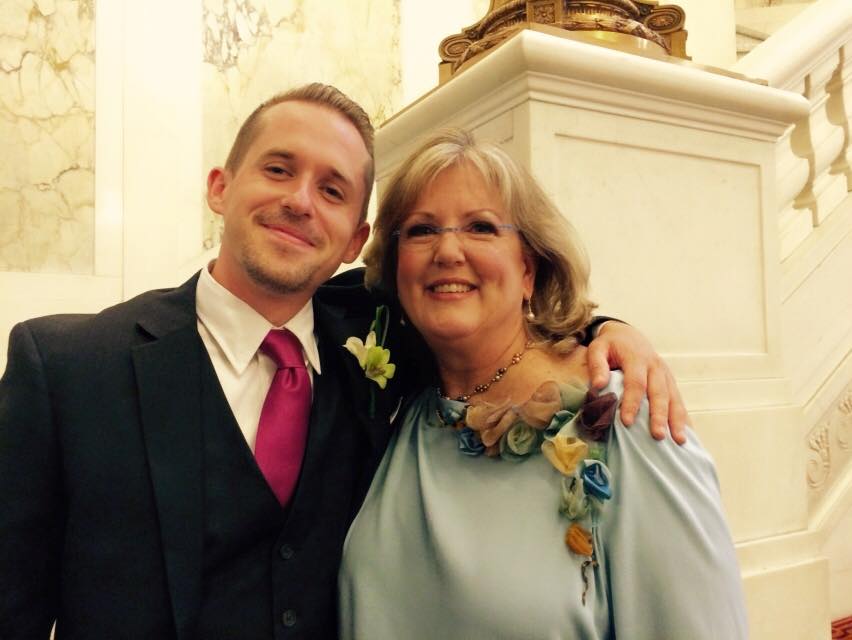
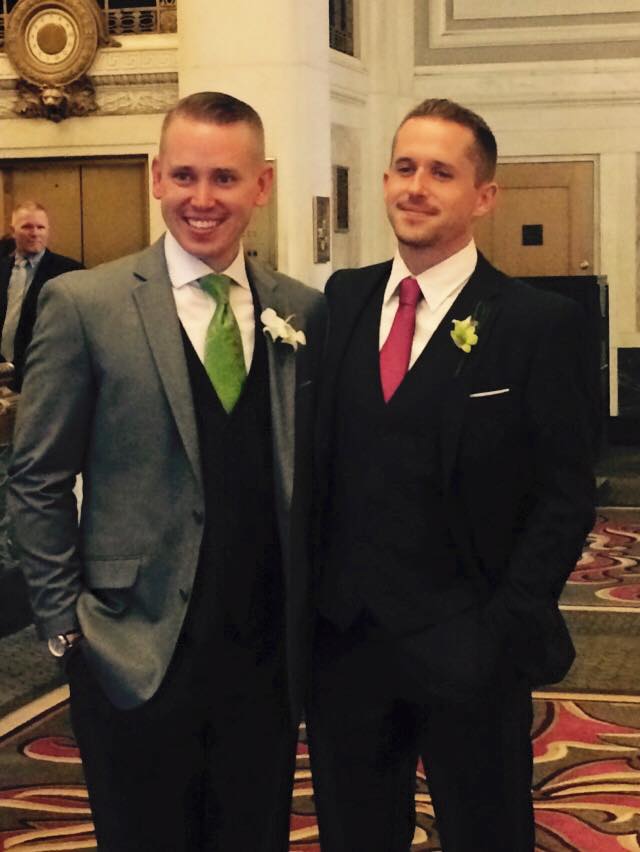
It’s less than a week until my son’s wedding!  I have finished my projects, but I’m still deep in lists–  lists for everything we need to bring to the wedding– a list of  what I need for myself as well as what I’ve promsied to supply for the ceremony…..lists for meals before the wedding,  and a list for what I need to host the wedding brunch at my son’s new house the day after the wedding.

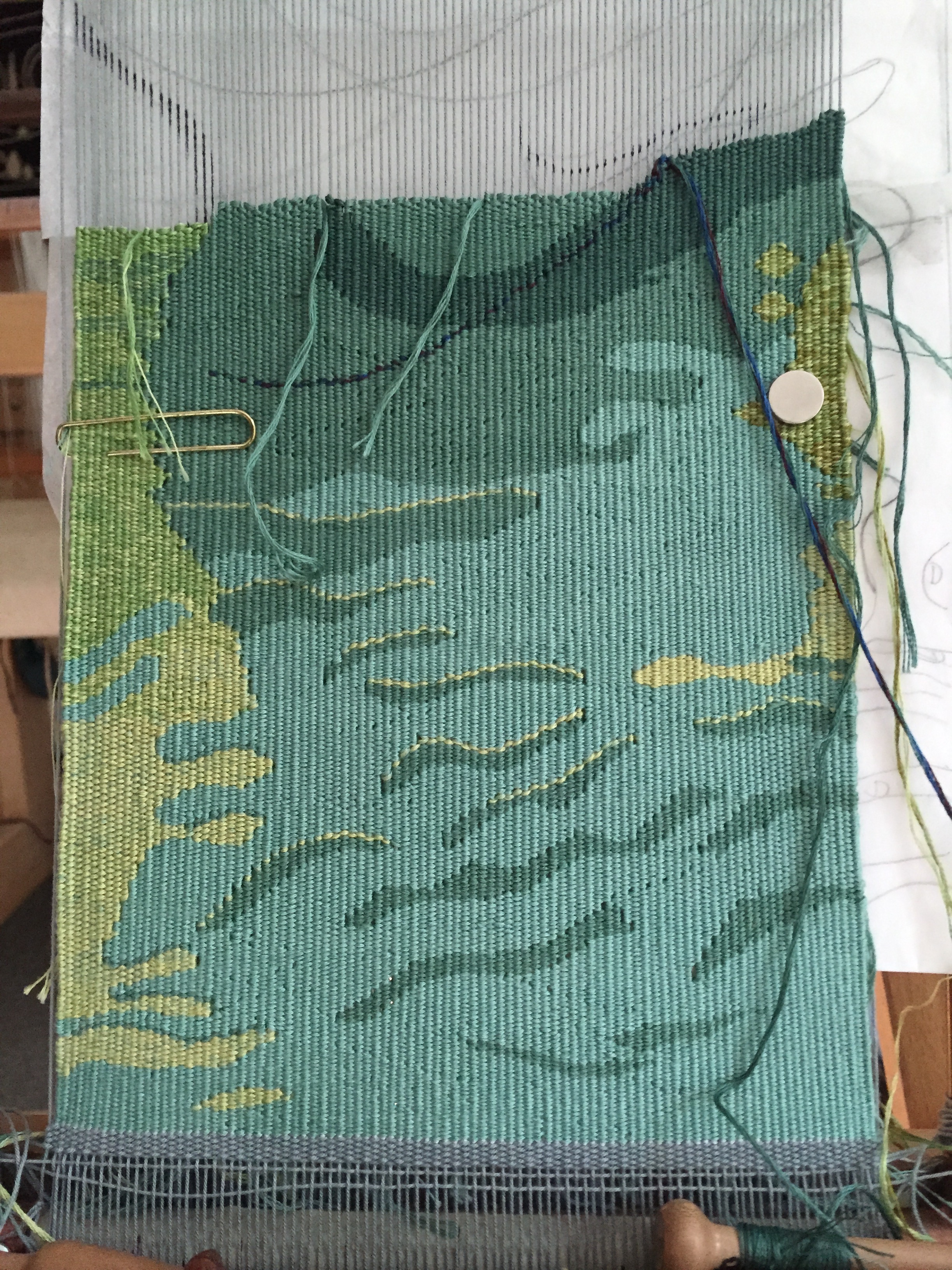
Meanwhile, I can’t help thinking about weaving projects.  I’ve gotten precious little weaving done on the small tapestry I started onboard late winter this year.  What I have done on it has been quite fun–lots of swirling water and the beginnings of the tentacles of a Portuguese Man of War. Very soon I will have my first attempt at pulling the warp around the loom so I can continue weaving up the warp.  I’m more than a little anxious about this, but once I’ve done it I hope it becomes something I can count on doing.  It will allow me to have smaller looms on board if I use this kind of warp.  Check out my new attempts at holding my cartoon in place–a small, very powerful magnet.  These little magnets will jump right out of your hands to fly together they are so strong.  And a very large paper clip.  Neither is a good solution, but I muddle on.

IMG_1249

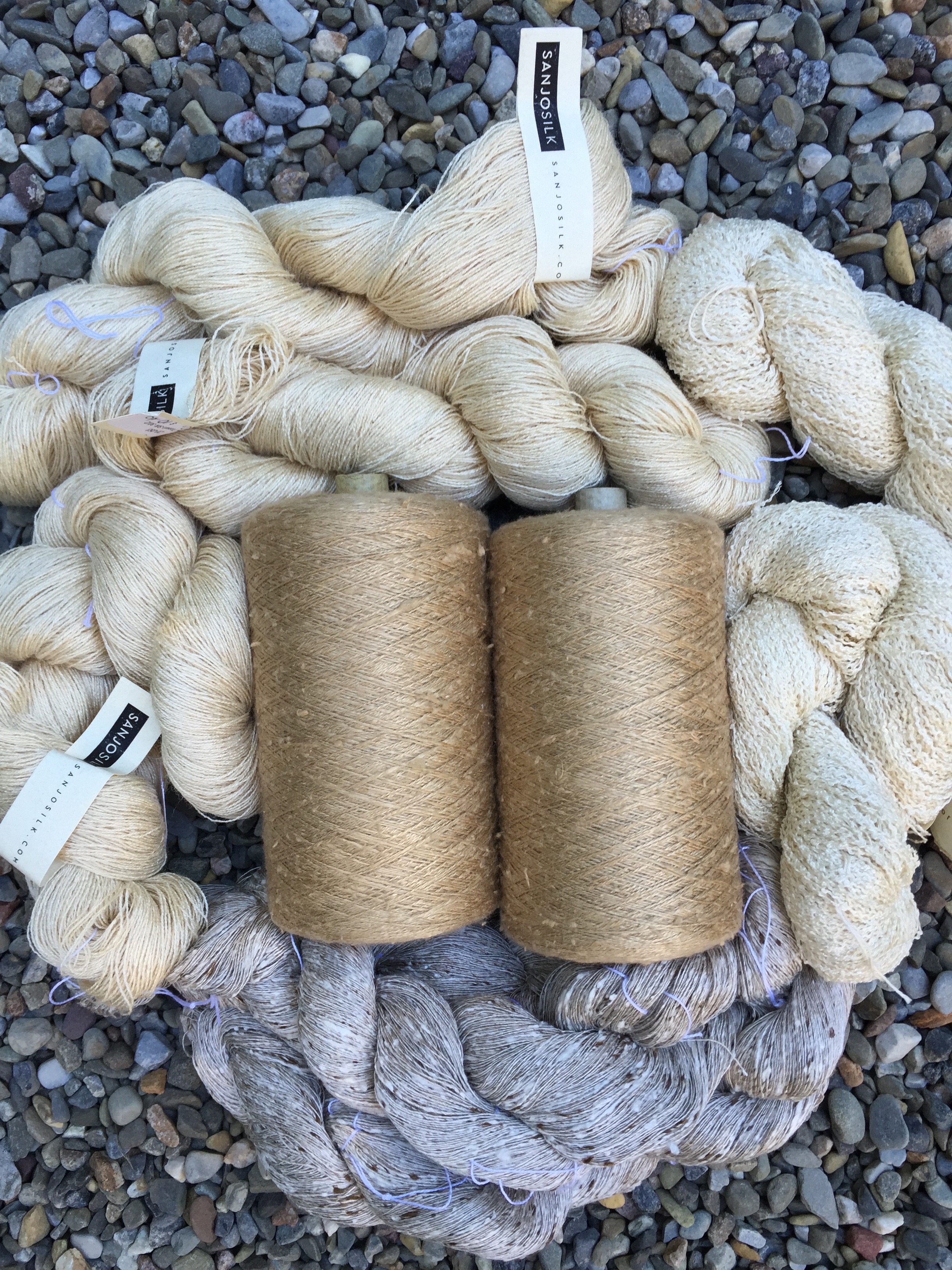
And I’ve been planning my next floor loom project.  It’s so hard to choose what to weave when I have so little time at home and so many ideas.  I think I will weave yardage in Plaited Huck (same structure as my recent linen tote bag).  This time I will make a warp of tussah silk in natural (sort of a pale oat color–not shown in the photo because the cone is the size of a small loom) with random stripes of several  silks from SanJo that are also cool natural colors, but matt–no sheen like the tussah.  One is smooth, another is boucle and the third has wonderful dark flecks in it.  The weft will be golden tussah, in the center of the photos.  It will become yardage for a top I hope to make…

IMG_1247

But here’s my NEW DIRECTION–all caps because I am very excited about this!  At this time of year for the past 3 years— the threshold of late summer–I have become rather anxious and a bit cranky (might be an understatement) that my weaving time at home is rapidly diminshing.  This year I have even less to show for myself than previous years…  sigh…

Yesterday morning I was looking at some messages on Ravelry and then clicking on various links to other things.  Isn’t that the recipe for suddenly losing half a day?  Following various links on Ravelry, a site for knitters, I stumbled on Laverne Waddington’s website about backstrap weaving.  Here is the first photo that caught my attention.

Are these not WONDERFUL???  A little voice is saying to me:  Are these not exactly what you’ve been wanting to weave???  Book covers and handbags. The little voice again: That’s why you’ve woven and sewn two tote bags in the past year.  That’s why you took a class on making paper forms for handmade books…..you can do this….YOU can do this on a boat! 

Look how Laverne personalized these book covers with the initials of the lucky friends who will receive them!

There are lots of small bags on Laverne’s site too, and lots of simply beautiful pick up designs.  Go take a look!

Oh, be still my heart!  I think backstrap weaving might be a wonderful new direction for me.  It will fit on the boat.  It will satisfy my need to weave somewhat complex cloth.  It will allow me to continue my new interest in making book covers and handbags.  It is taking all my willpower not to make a loom right now…  I must stay focused on the wedding for 8 more days, then I can come home and get started!

Funny how things come to you when you need them.  I’ve known of Laverne for a number of years now.  She and I are in a number of the same online groups.  I see her stuff on these groups now and then and marvel at her beautiful weaving.  It just never occurred to me until now that this type of weaving may be the perfect solution to weaving onboard.

It’s summer and I’m thinking about Linen…


There was a recent post on Facebook that linked to a May 16th  article in the New York Times about the two brothers from Pennsylvania who wrote The Big Book for Flax.  Most anyone who attended Maryland Sheep and Wool festival a few years ago saw them there, selling their beautiful coffee table book about linen when it was first published.

The article points out the hardships these two men have faced in trying to build a commune where members would work together to live off the land, including growing flax and spinning and weaving it to make their own clothing.  Their lifestyle is modeled off the colonial Moravian communities that settled in this part of Pennsylvania a couple of centuries ago.

I’ve never been certain how well flax grows in the US.  I know Sara von Tresckow has good success in Fond du Lac, Wisconsin.  Her website boasts a flaxcam, although I did not see live video of flax growing!–truly like watching grass grow!  Instead there is an interesting photo essay of the whole seed to harvest process. Sara spins and weaves with her homegrown flax.  I loved her solution to the volatile weather that the midwest gets each summer.  She cordons off her fields with baling twine to help keep the plants vertical during a blow or a thunderstorm. Now that’s an attention to detail and a labor of love!

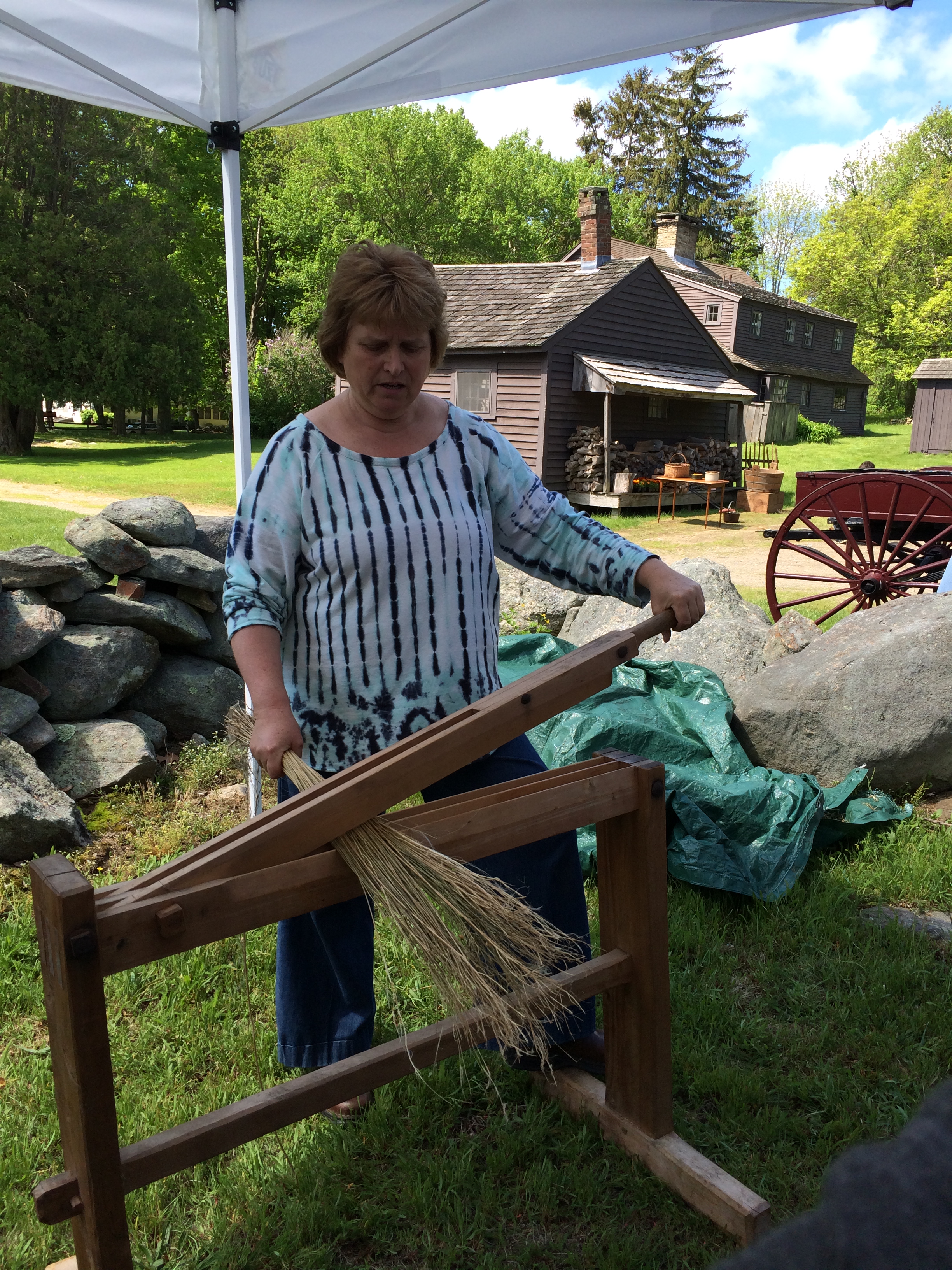
Last year I met a woman from New Hampshire who demonstrated flax preparation at the Bushnell Farm in Old Saybrook as part of an annual historic festival of ‘life on the farm’ in our area of the Connecticut River Valley. Gina Gerhard brought locally grown flax from New Hampshire along with all her tools for demonstrating  the whole process from harvest to stricks that are ready to spin.  I described the whole process last year in this blog post.

Still, I can’t help thinking that flax is easier to grow in northern Europe where the weather is more reliable, where the  light is gentler for softly bleaching the fibers to that perfect silver.

Linen is such beautiful fabric that I have always wanted to spin it.  I have made a few attempts in the past and have enjoyed it.  I have a few spools of wetspun linen waiting to be plied and then utilized in some way.  I have a lovely image of myself in a simple handwoven jacket–where I also am a perfect size 6.  It’s always fun to dream….

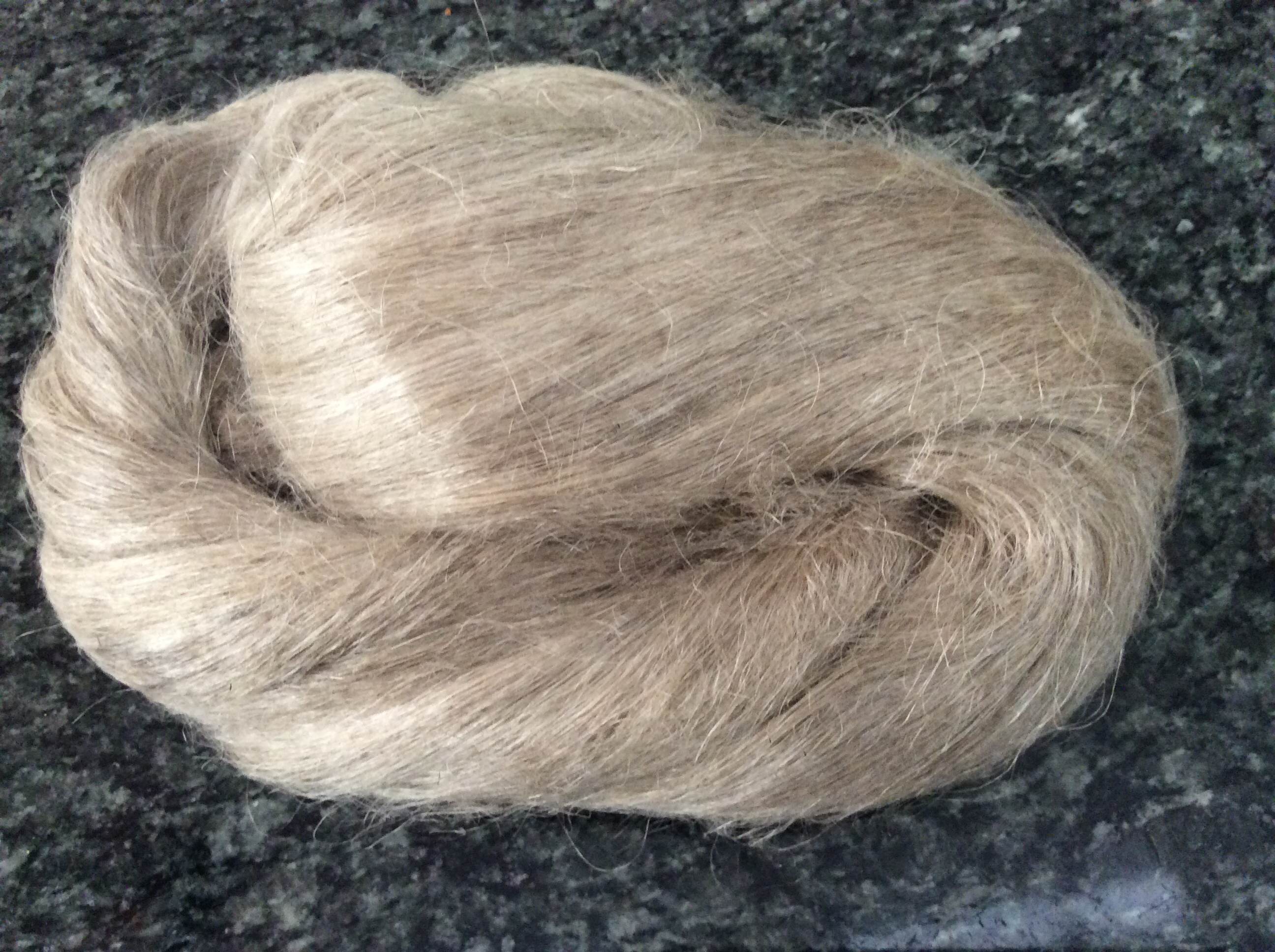
Last week at NEWS I saw some beautiful linen stricks at the VavStuga booth and couldn’t resist buying one. It has that beautiful color that I associate with flax from Belgium or Netherlands.   Now I wish I’d bought two–or three!  I can’t do much with 4 oz!

IMG_0295

 Then today I stumbled on a link to a beautifully done vimeo video on current European flax processing.  After seeing so many demonstrations and videos of traditional techniques for retting, breaking, scutching and combing flax it was very interesting to see the same processes done by machine.  It still appears to be a low impact way of using a natural product–far less environmentally challenging than most cotton.  Check it out.


And there is a sequel that includes some high tech applications for using linen in the automotive industry, for sports items such as bicycles and surf boards,  and even for fishing rods!  There is exciting information in this video about quite innovative uses for linen and flax fibers,  and yet the mechanics of processing flax are fairly basic compared to other high tech fibers. Fascinating!


There is about 25 minutes of video here, and all my words.  I think I’d better stop for now!

Confluence

Once again, it’s been a month since I’ve posted here, and usually when that happens I’ve been writing posts in my head for weeks and weeks before finally getting to a keyboard.  Not this time–I haven’t even thought about posting.  Old age? Beginning senility?  I’m dancing as fast as I can and the music is still accelerating!

The past month has been quite a confluence of all the facets of my life.  Don’t we all have competing interests and obligations that keep us juggling things to try and get just the right mix?  Too long without weaving and I become cranky; at the same time too much solitude in my studio and my hermitic tendencies start to drag me down.

The two big June events in my life were Bob’s 60th birthday, which he glided through like a swan.  He doesn’t look or act a day older, and he enjoyed getting together with some of his dearest friends to celebrate the landmark.  I still have more than 6 months to go, and I am feeling older and older each day.  Hmmm….

Last week Bob and another local sailor hosted a large sailing event for the Seven Seas Cruising Association.  George and Bob put on a three day conference with speakers and social time, a fancy dinner at a yacht club, and a dinghy raft up on the river.  It was a lot of work, but something both men really enjoy.  I sort of go along for the ride, although I did have a house full of overnight guests and made some breakfasts and one rather large dinner for 12!

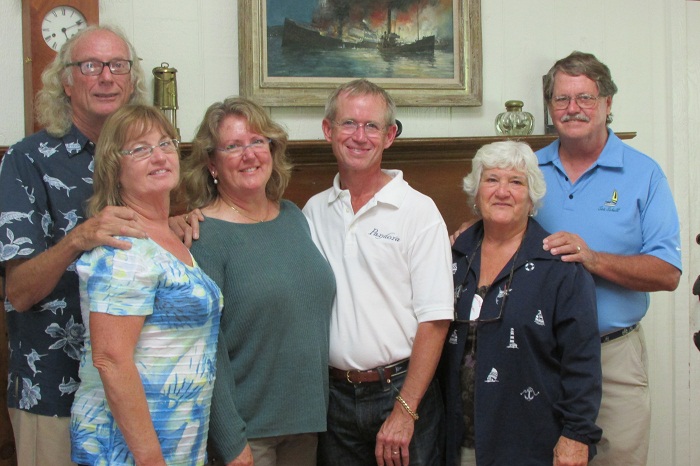
Here we are with in our den with two couples who have helped us immensely in getting used to living aboard.  Both of these couples live aboard full time, unlike Bob and I who only live onboard during the winter months.  They are truly nomads.

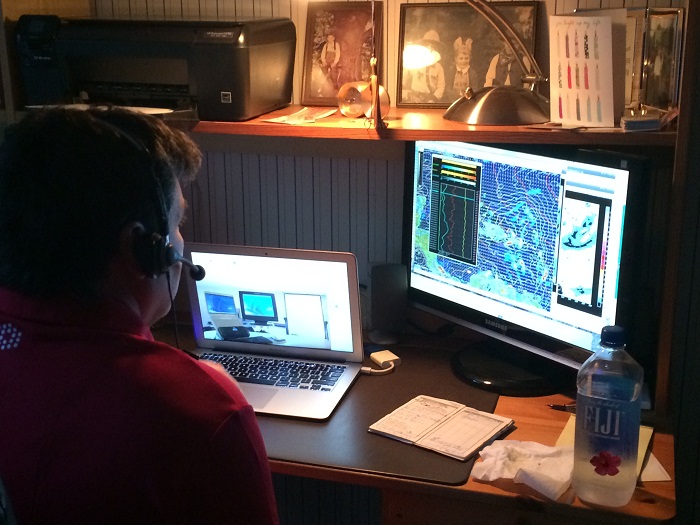
And here is the young man who gives all the live aboards their daily weather information.  This is the man who kept us safe through hurricane Sandy two years ago, and has kept us safe through many other storms over the past 3 years!  He was our honored house guest for the weekend, and he even used Bob’s office to broadcast his daily weather information over SSB radio.  He had some way of connecting to his radio tower in Florida in order to do the broadcast. The amazing Chris Parker:

While both these events were fun, I have not had any time to work on tapestry or fabric weaving.  I have certainly had some important ‘thought time’ making plans for two projects that I will put on a couple of my floor looms.  Hopefully I can finish weaving at least one of these before we leave again at the holidays.  More on that in a bit….

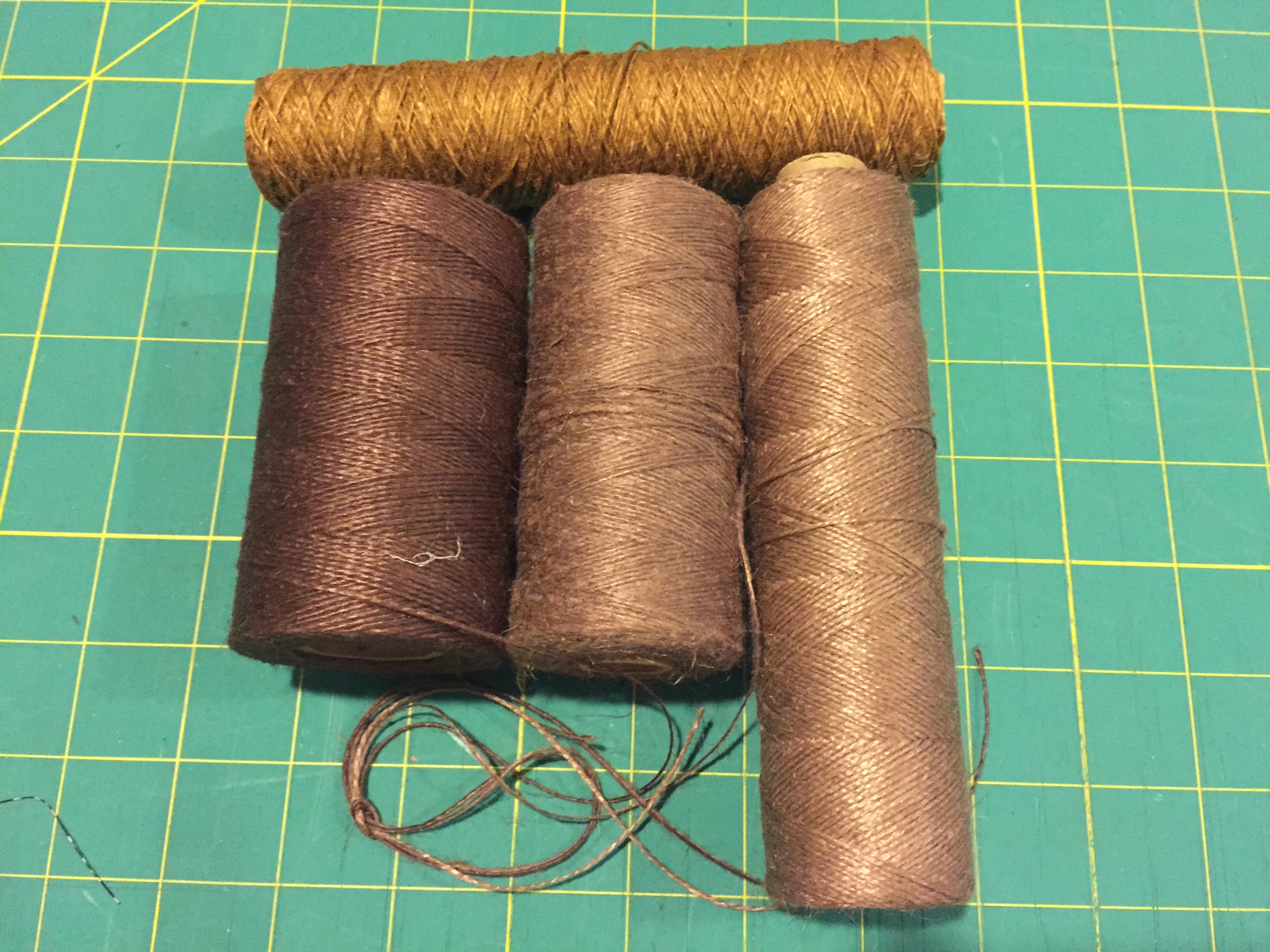
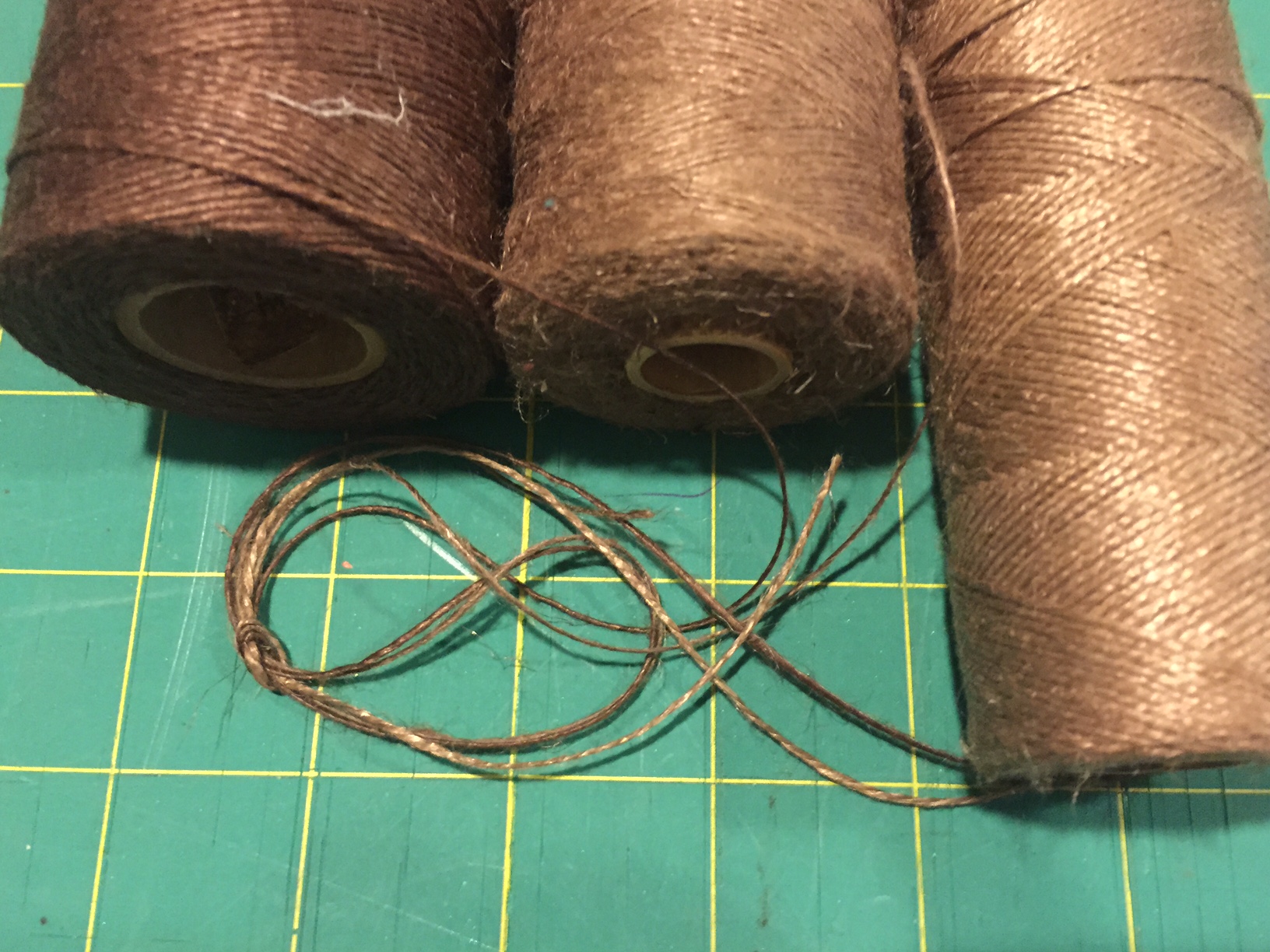
After the guests left I turned my attention back to the linen fabric I took off the Baby Wolf about a month ago.   I spent some time over the weekend sewing a tote bag.  The linen is a medium weight fabric.  The warp was a mixture of several colors of a rather thick 2-ply wet spun linen.  In the photo below the 3 spools used in the warp are lined up together and the golden colored spool on top is what I used for the weft.

IMG_1053

And here is close up of warp threads; you see they are a bit coarse and hairy even though they still have the sheen of wet spun linen.

IMG_1049

This is the fabric off the loom in May, drying outside after machine washing.  You can see the cutting lines I wove in to help me in making the tote bag.  The fabric for the handles and top of the lining is at the top of the photo and is woven in plain weave.

FullSizeRender

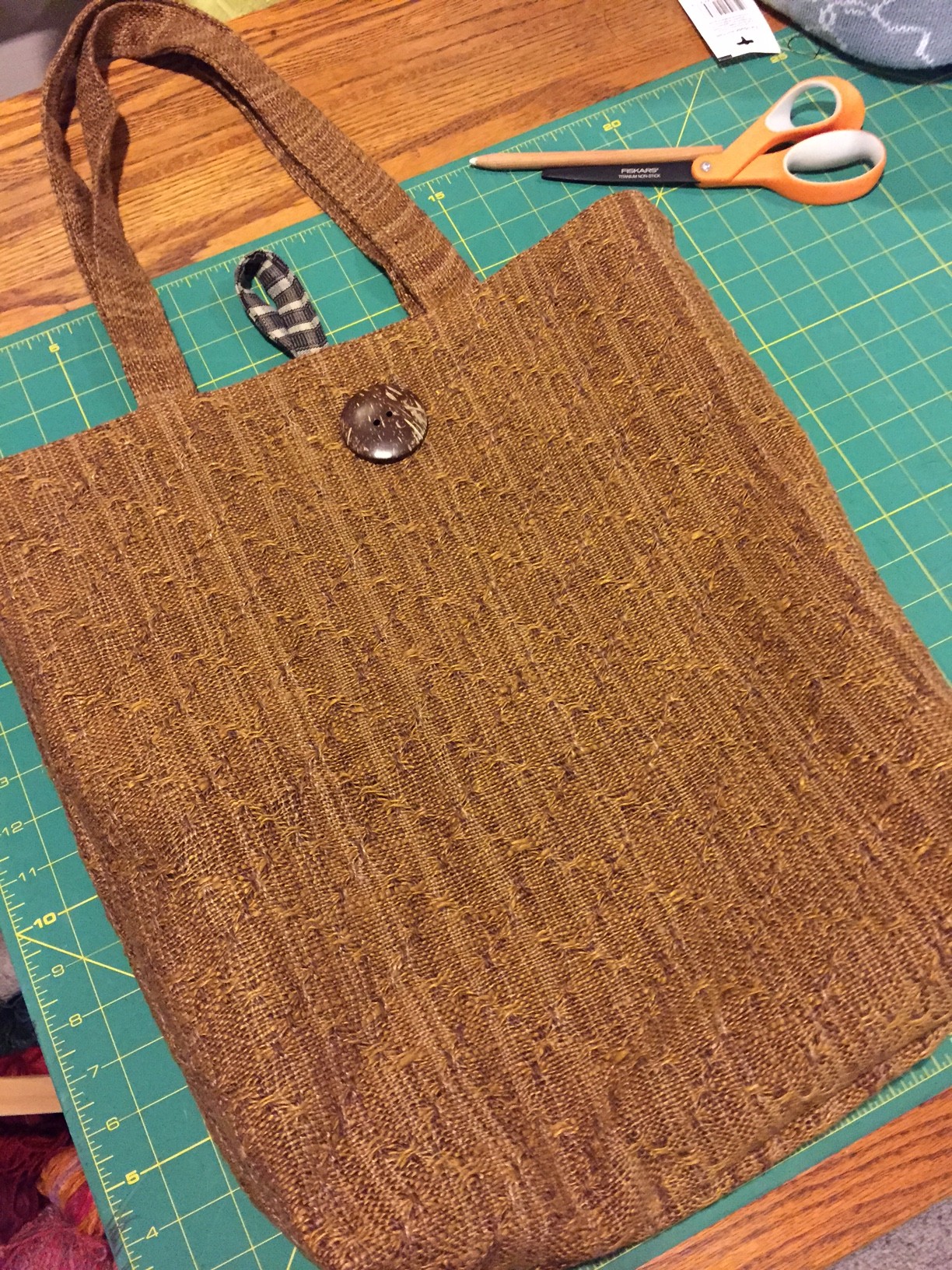
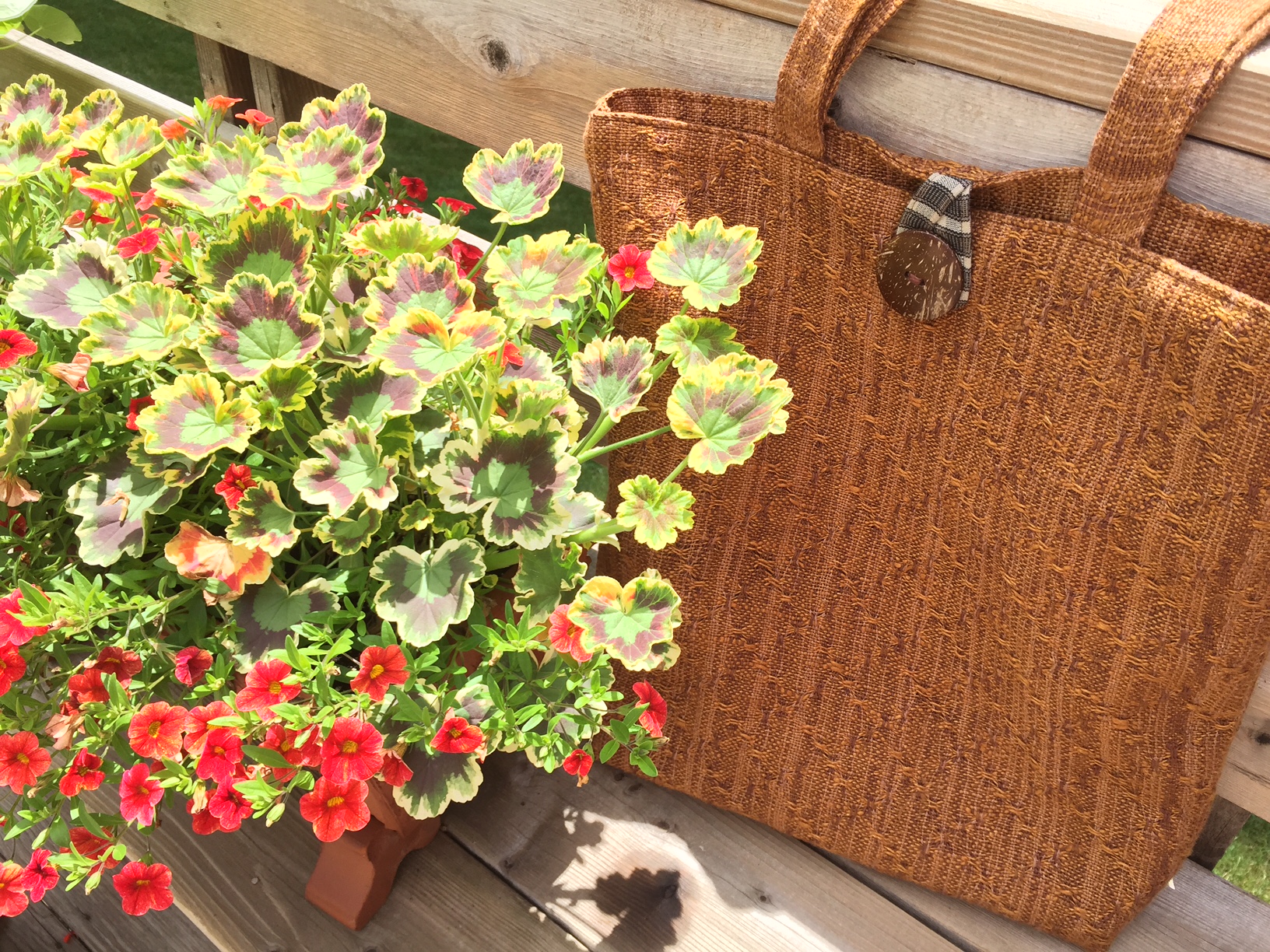
And here is the finished bag.

IMG_1037

The draft for this fabric is a blend of plaited twill with huck blocks.  It makes plaited huck!  How cool is that?  I got this draft from Laurie Autio when she gave a talk called “Designing for Block Weaves Using Twills as Profiles” at our guild last fall.  This particular design is a 6-Block, 8-shaft structure using huck threading on a base of plaited twill.

IMG_1058

My warp was threaded at 12 epi and woven to square.  The fabric is close to burlap weight, but not nearly as open as burlap.  I am very happy with it.  If you weave this structure with a lot of color contrast between the warp and the weft you’ll get a good contrast between the plaited elements, those that go over and those that go under.  I am more a fan of subltety, but the downside is that you probably cannot see the plaited effect in my photos.  I also blurred the woven effect by using multiple colors in the warp.  This is just my preference.  It would be quite dramatic woven in two very contrasting colors.

I plan to write up the procedures for weaving this project very soon.  Stay tuned!

Shameless Landlubber

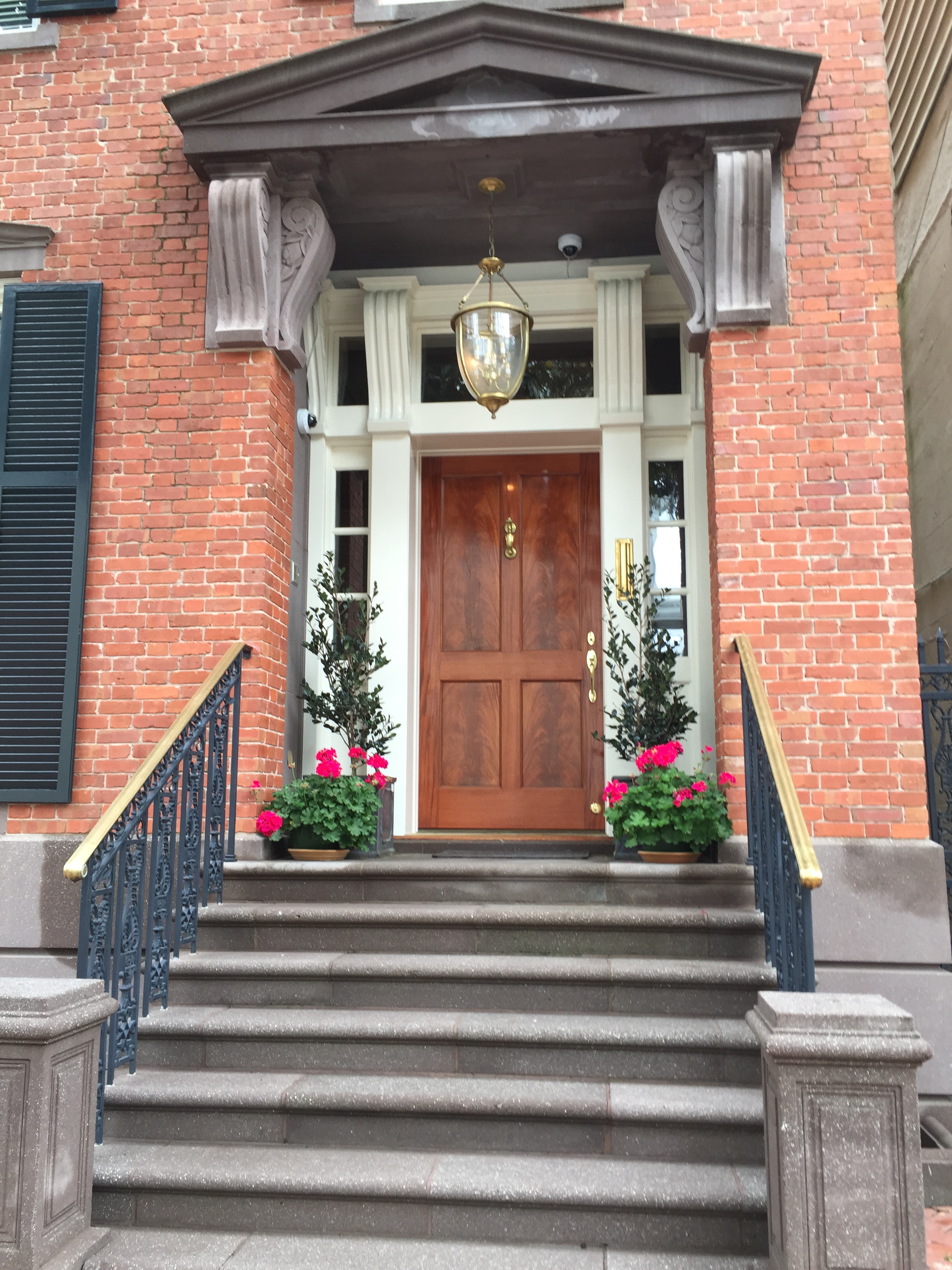
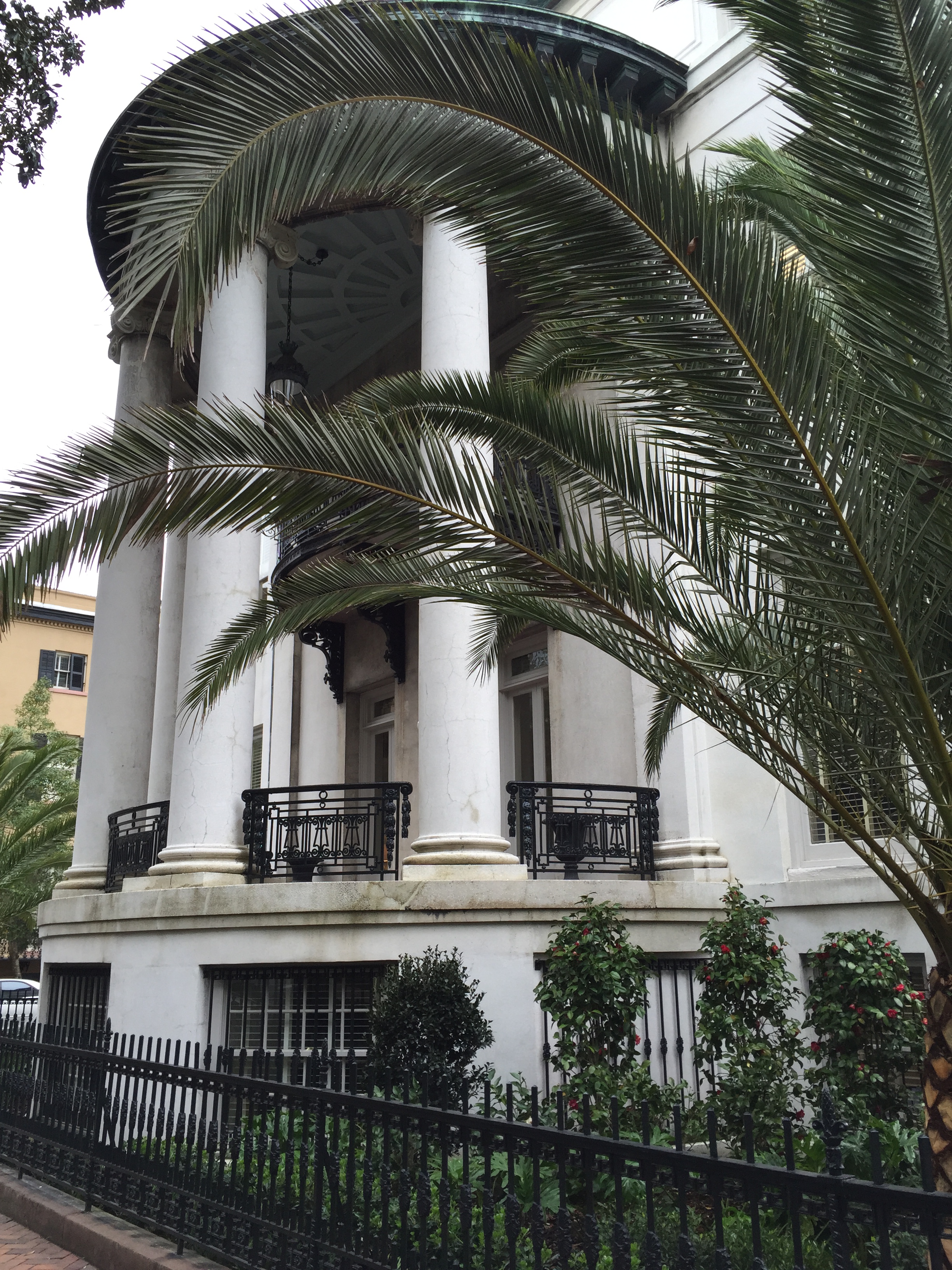
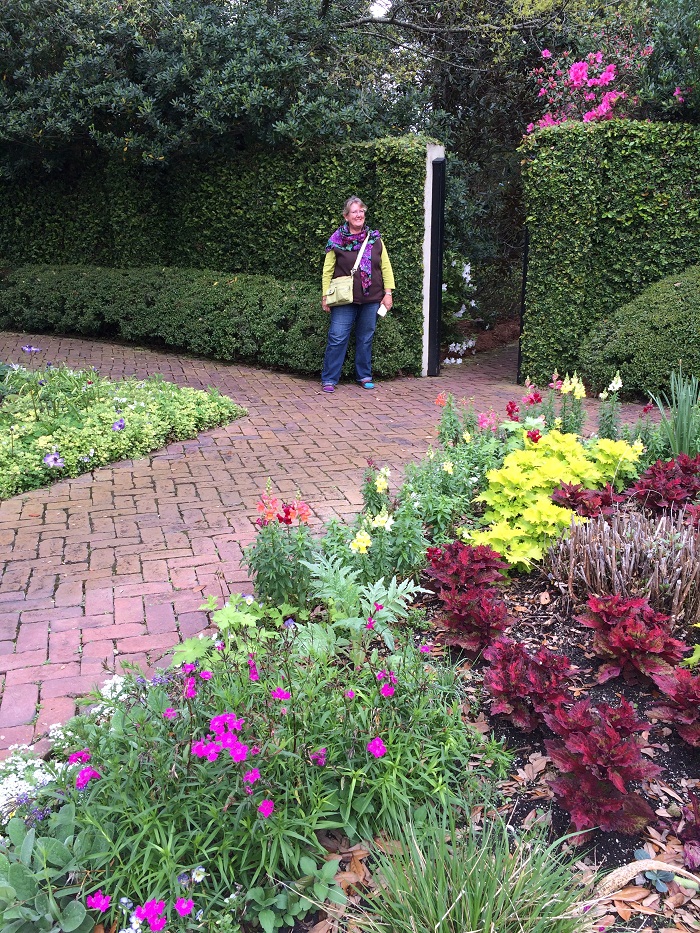
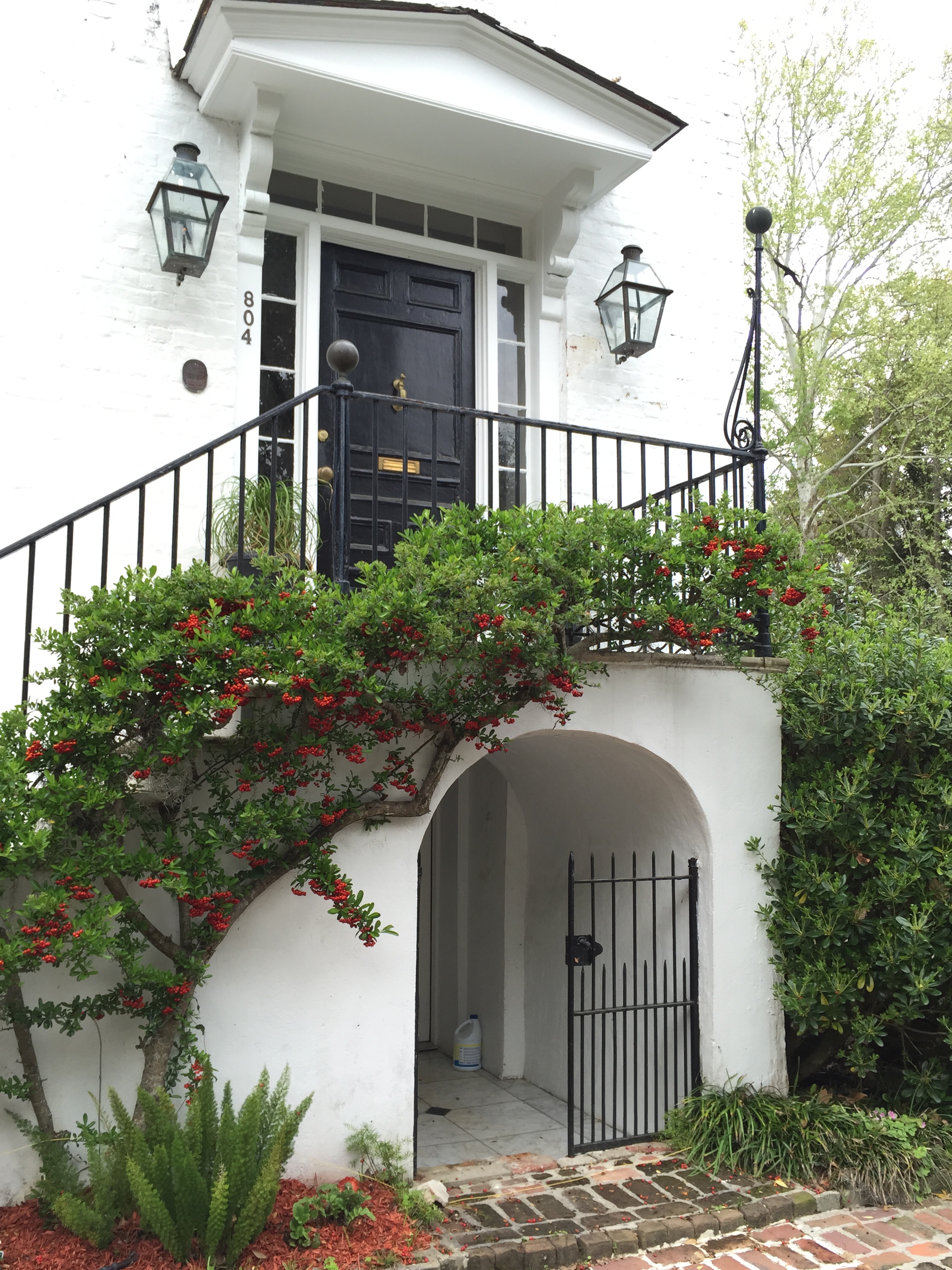
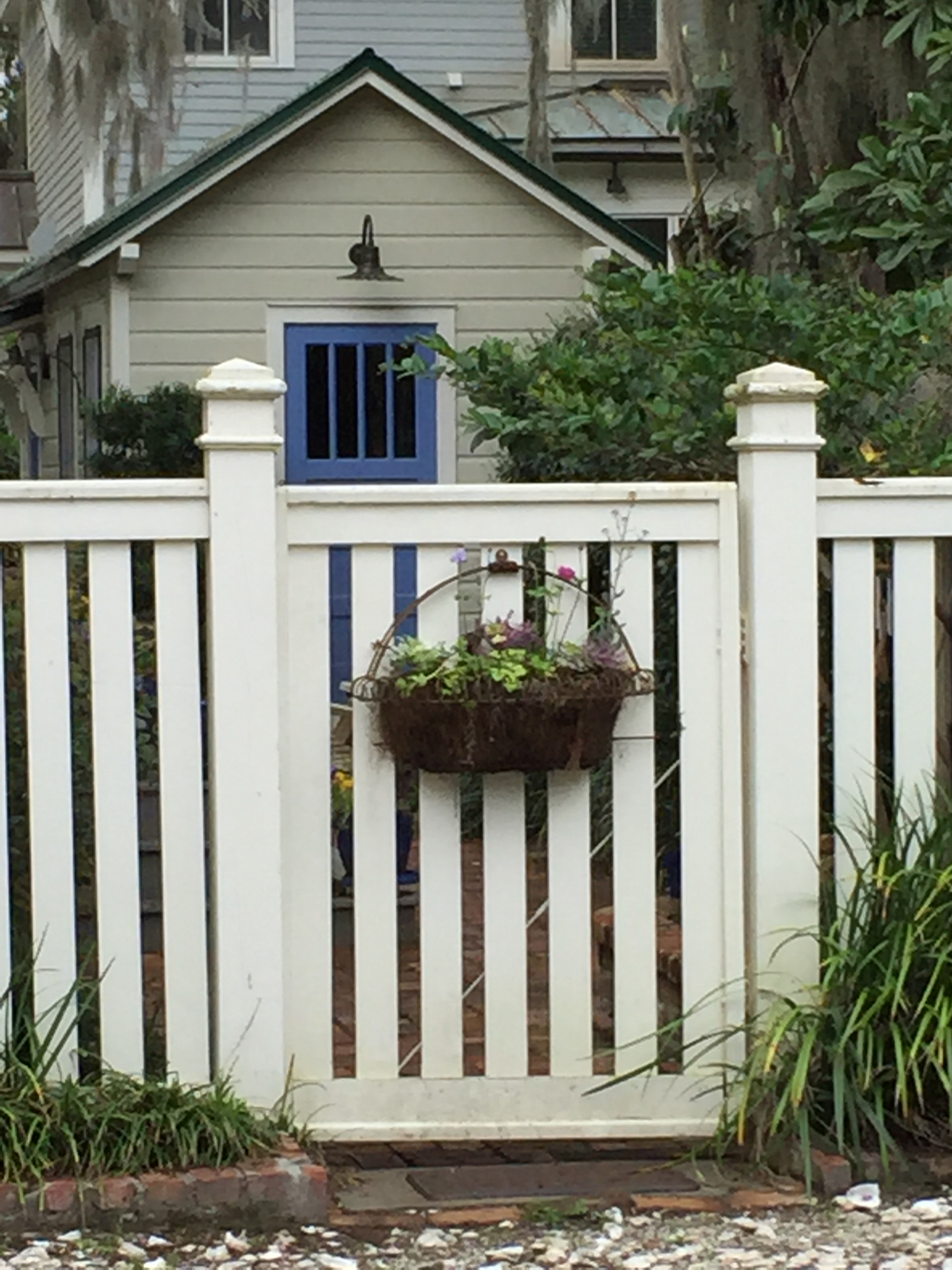
We have spent some wonderful days ashore between Fernandina, Savannah and Beaufort, SC.  I can’t walk 10 feet without taking a photo– of window boxes, planters, a beautiful front door or porch.  Clearly I miss land! –in spite of my little container gardens on Pandora.

Our last day in Savannah: camellias, cherry trees– even a few that have already begun leafing out!—azaleas, pansies.  It is full spring here.

IMG_0416

IMG_0413

And just a few more doors…..I can’t help myself! Note the gas lamp at this door.  There were many in Savannah.

IMG_0417

Elegance on elegance…..would love to get a peak inside both these places!

IMG_0420

IMG_0427

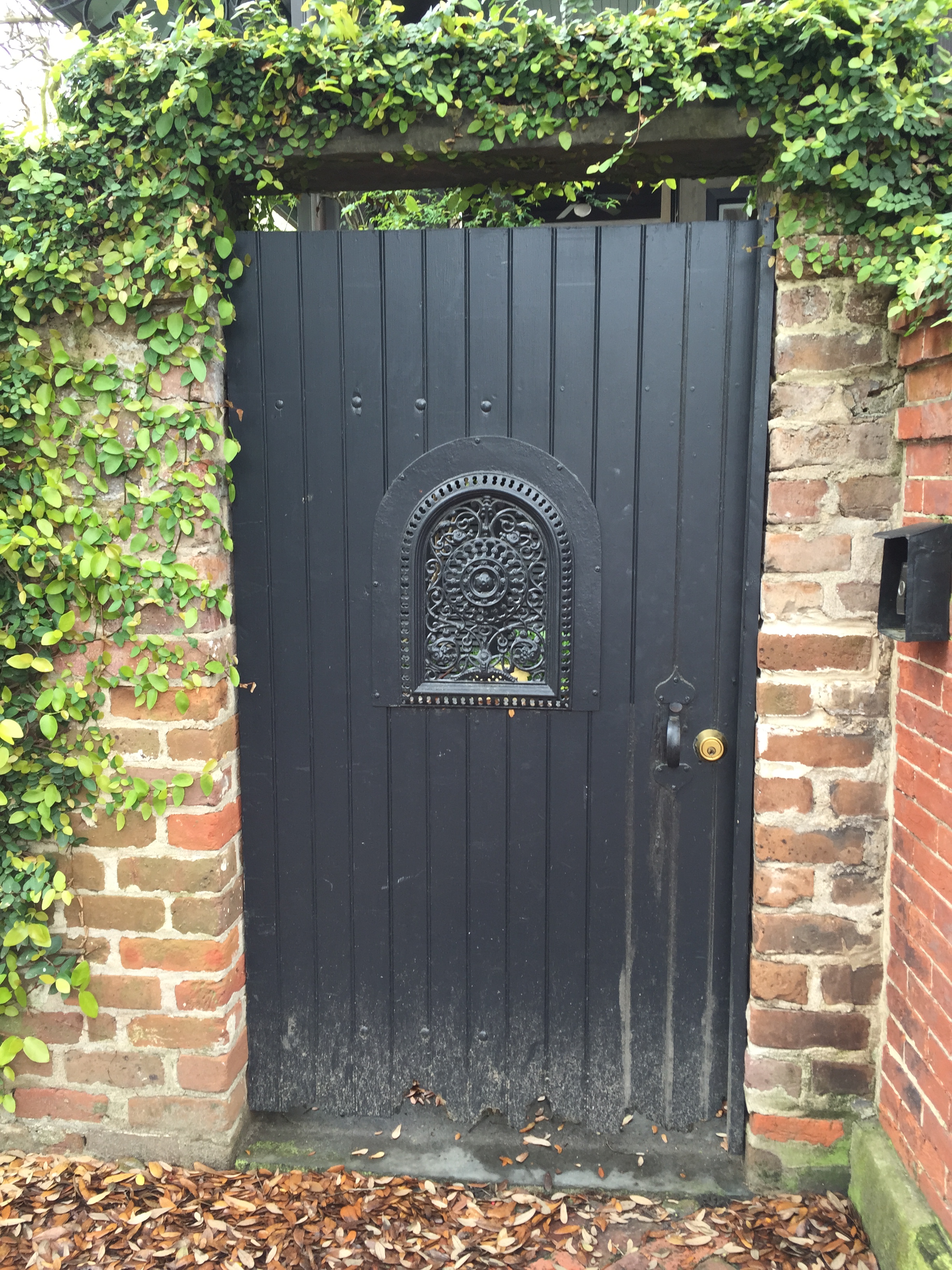
This gate with ivy is so pretty I can only imagine how lovely the garden must be on the other side!

IMG_0426

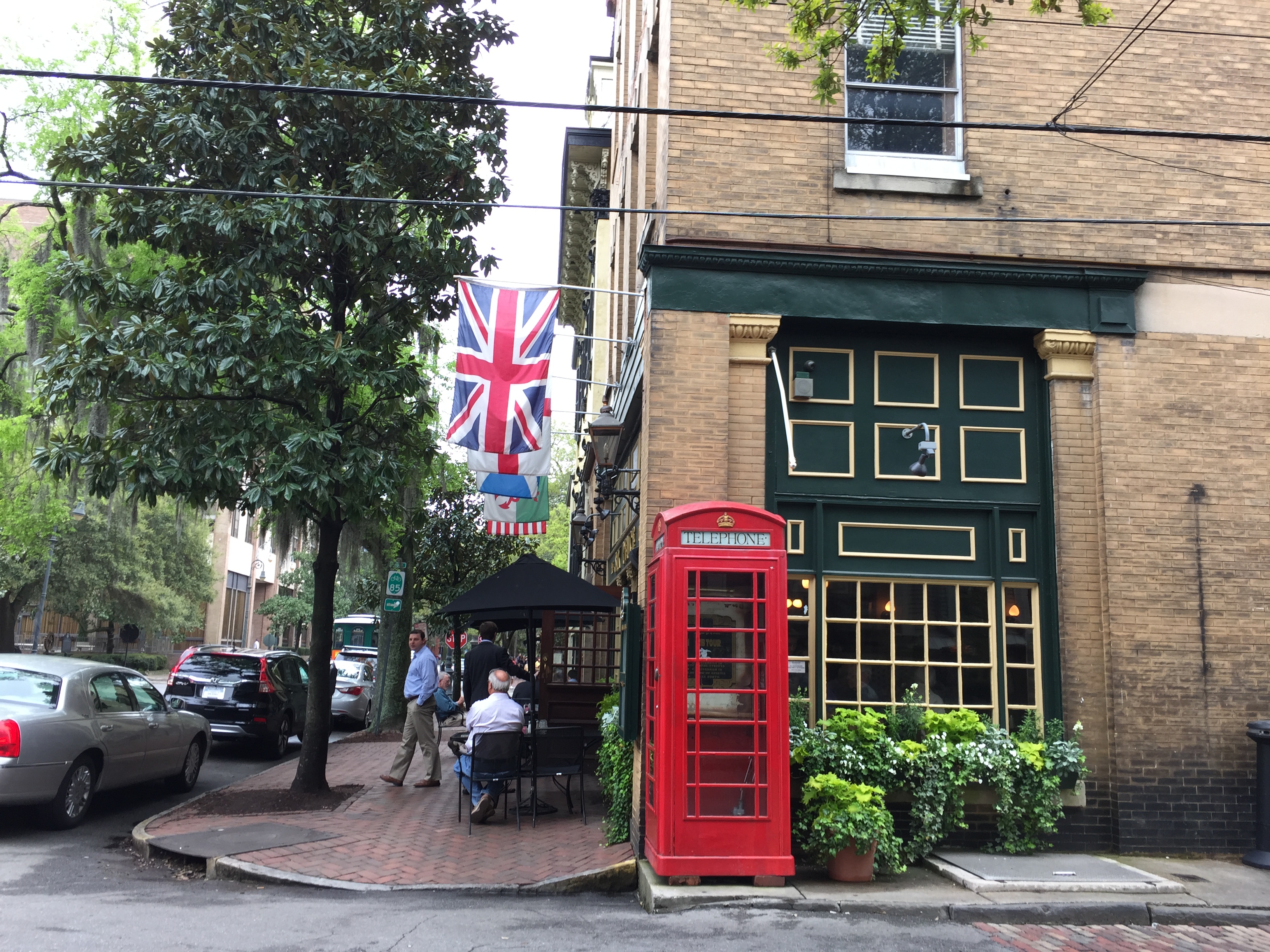
 Lunch was fun in a well known English style pub with good pub fare:  bangers and mash, shepherd’s pie, ploughman’s lunch.  I took this photo to show my dear friend Lesley, but I wish I’d taken a photo of my lunch so she could see I was having a Branston pickle!

IMG_0429

We visited the maritime museum that also happened to have a lovely garden surrounding it since the museum is housed in an historic house with beautiful grounds.

3-26-15a 014

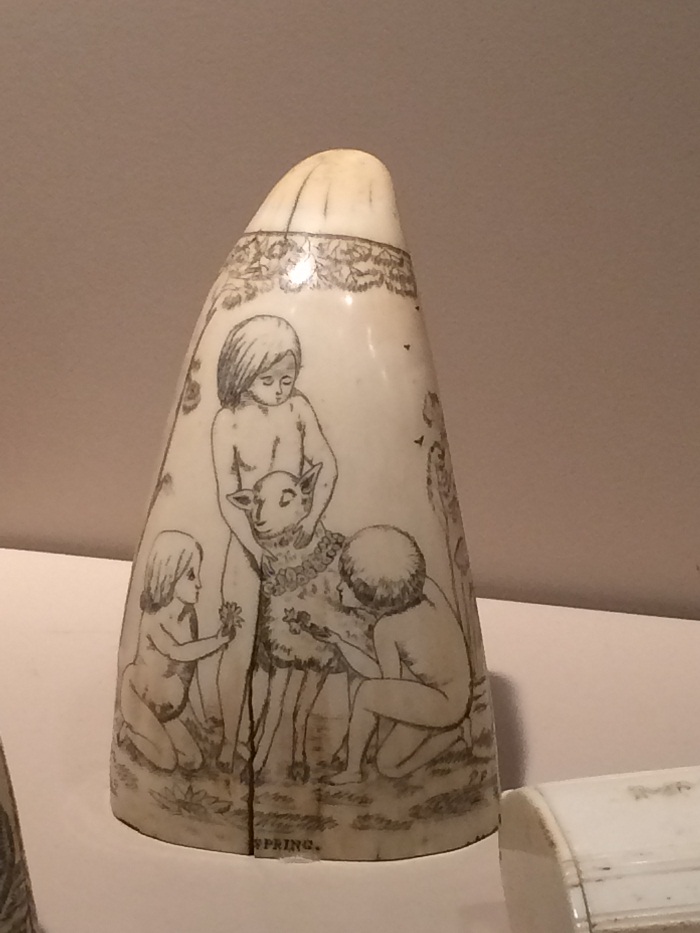
The museum had quite an extensive collection of ship models, but what caught my eye were some of the very few other items, relics from various ships.  There was a wall of scrimshaw in one room, and I was intrigued with these lovely carved rolling pins. I don’t even have a rolling pin on Pandora since I only make a pie once or twice during our time onboard each year.  I use an empty wine bottle….we always have one on hand!

IMG_0401

And of course I had to take a photo of this lovely scene of children with a lamb.  Not your standard scrimshaw image!

3-26-15a 009

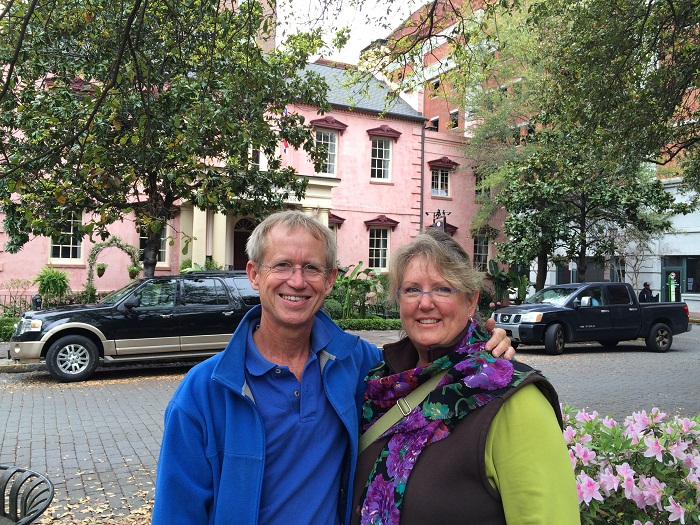
And just before leaving Savannah we had our photo taken by a couple of tourists after Bob offered to take theirs.

3-26-15a 018

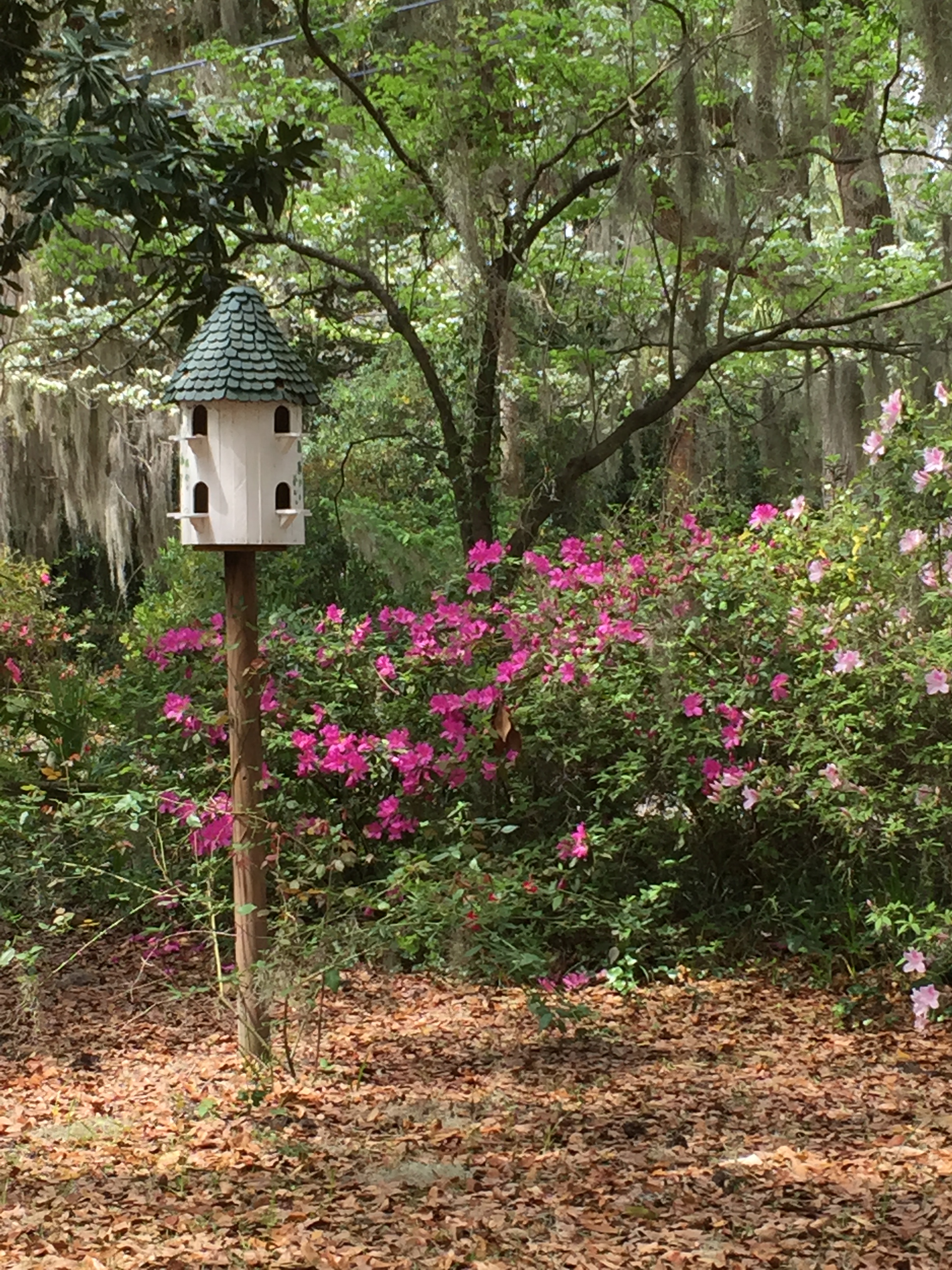
From Savannah we moved on to Beaufort, where I looked forward to visiting one of the friendliest yarn shops, Coastal Knitting.  Just walking through the charming business section of town—so many beautifully tended shops and interesting restaurants—was delightful.  And the residential areas were beyond wonderful!  There were gardens in luscious bloom everywhere.  Here is just a sampling!

IMG_0443

IMG_0451

IMG_0452

IMG_0453

This morning, just one day after leaving Beaufort, I found a comment here from a woman who lives in Beaufort, and who just returned herself from a couple of months onboard her trawler, armed with both knitting projects and a tapestry project.  It is a thrill to know that there are other weavers out there!  It can get so lonely out here without other weavers to talk to!

Non-weavers often recommend that I get an inkle loom or a little rigid heddle.  I love these small tools and enjoy using them when I have a certain project in mind that suits them.  But they in no way replace that urge to weave the type of cloth that I love.  It’s just not the same, and an inkle loom is never going to satisfy my need to design and create fabric.  Anyway—it’s very nice to be in touch with another weaver.  Laura Burcin plans being onboard for a longer period next winter.  I look forward to connecting with her in person.  In the meantime, I feel I have gotten to know her a bit through her blog.

Should I talk about my “For Irene” sweater, which I have ripped back in order to make the lower body smaller?  I certainly don’t want to!  It has not gone as simply as I envisioned!  I knitted most of this sweater in Portugal on my rosewood, interchangeable Knit Picks needles—size 4.  At the airport in Lisbon, as I was headed back to the US, they were taken from me.  Now that I’m trying to match the stockinette on the body of sweater, I am finding that none of my other needles are able to match the gauge of those particular needles I lost!  UGH! I have started and ripped back five times now!  This is a crisis! I did try to replace those needles in Coastal Knitting in Beaufort.  They don’t carry the interchangeables, but they did have size 4 circulars from Knitter’s Pride which I have heard is the same manufacturer as Knit Picks.  Alas, no luck on getting the same gauge!

I wanted to wear this sweater to a wedding in a little over two weeks, and now I’m rather convinced it won’t happen.  Ah well, time to make peace with that.  When I get home I can order a replacement for the needles I lost….

Directions for a handwoven tote bag

8-SHAFT HUCK LACE TOTE BAG

IMG_1480

 This fabric is based on a well-known huck lace pattern that is available in a number of places.  It is included in the The Best of Weaver’s Huck Lace, edited by Madelyn van der Hoogt, on page 12 in the pattern section (by Ruth Morrison), and in the project section starting on page 51.  This pattern is also used as the end plate on the right-facing page at the beginning and end of the book.

 You can also consult Madelyn van der Hoogt’s informative digital workshop on lace weaves which you can preview here: http://www.interweavestore.com/weaving-lace-with-madelyn-van-der-hoogt.

Here is my version of this project:

Warp:  16/2 linen (Bockens Lingarn) in five colors:  1 spool each, 125 grams
# 522 black
# 485 purple
# 4060 dark green
# 40 bright turquoise
# 2030 lemon yellow

The tote fabric requires about a yard of fabric, and each napkin requires ½ yard of fabric, so plan your warp length accordingly.  I wove one yard for the tote and 2 ½ yards for five napkins.  I put on a 5 yard warp to allow some sampling and loom waste.

Weft:  16/2 linen in #522 black, 2 spools (in addition to the one used for warp)

Sett:  20 epi, width in the reed about 17.5” (finished width about 16.5”)

Threading:  There are 7 repeats of the huck pattern with 4 extra plain weave threads in black at each selvedge.  I also threaded two threads together for the first thread at each selvedge.  Total warp threads:  365 ends

Weaving:  to balance at 20 epi

The full pattern repeat is 50 threads.  Each color stripe is 45 threads with 5 black threads at the beginning of each pattern. I placed a stripe of five black threads at the beginning of each repeat to emphasize only one column of the flower motif, as in reality there are two columns of staggered flowers.  (Unfortunately, all huck looks geometric until it is wet finished.  So my flowers look like diamonds in the drawdown.  Consult the detail photo at the end for what happens after wet finishing.)  By having a small black stripe of 5 threads, I minimized the appearance of the staggered flowers so that one straight column of flowers would stand out.  I chose to do this in order to better coordinate with the mug I was using as inspiration for the tote.  At finer setts the staggered floral motif shows up well, but not at the sett I needed for fabric that would be sturdy enough for a tote bag.

Finishing: Off the loom, I machine washed the entire length of fabric in the washing machine on ‘normal’ setting, warm water.  After smoothing the fabric by hand, I let the fabric air dry and then steam pressed it before serging the edges between all the cuts.

Huck Lace Lunch tote final as woven (this link will bring up the pdf file)

Screenshot huck lace tote bag final as woven

In this drawdown I have also included 4 extra plain weave threads at each end of the warp. You might add even more. Huck lace gives a lovely scalloped edge to fabric when it is not bordered by plain weave; however, at such a loose sett of 20 epi I found that the scallops look rather clumsy.  They are lovely at finer setts, but for this project I wish I had used a plain weave border, so I’ve included that here.

The drawdown should be followed until the end of the yellow stripe, then worked in reverse color order back through the blue, green, and purple.

The mug that inspired the tote bag:

Weaving mug exchange

 SEWING THE TOTE BAG

 Materials Needed:

 Tote bag fabric:  15” x 27” plus extra for straps if using this fabric
Lining fabric:  15” x 27” plus more for pockets and possible straps
Pockets from lining:  2 pieces, 7” x 15”
Light Weight fusible interfacing:  14” x 22”
Fusible Fleece:  14” x 22”
Cotton webbing straps if you don’t wish to use handwoven or lining fabric for this

  1. Cut pieces to size.
  2. Fuse the light weight interfacing to the wrong side of your handwoven tote fabric, centering the interfacing so that there is ½” margin on each long end, and 2 ½” margins at the short ends.
  3. Fuse the fleece to the wrong side of your lining fabric, centering the fleece as you did with interfacing on the main fabric.
  4. Sew the pockets:  place right sides together and sew around pieces leaving one short edge open.  Turn right sides out and press, pressing under ½” seam allowance that did not get sewn.  Top stitch around all 4 sides, which will close and finish the edge that was left open for turning. Place the pocket on the right side of the lining fabric about 4” down from the raw edge of one of the short sides.  Sew along the outer edges and bottom of the pocket, attaching it to the lining.
  5. Then top stitch a pocket divider, either by sewing directly down the center of your pocket, or by sewing 1/3 in the distance on the long side.  I opted for the 2nd choice so that one pocket would be larger than the other.
  6. Fold the lining (with attached pocket) in half along the long edge, right sides together, and sew the side seams.
  7. Make a flat bottom for the lining as follows:  with the wrong side of lining facing out, position one side seam so that it is in the center of the fabric, and so that the end of the seam forms a triangle at the bottom of the tote:

tote bag square bottom Measure 2 ½” up from the point and draw a sewing line across the bag that should be 4” across.  Sew across this line.  Repeat this on the other side seam.

8.  Repeat this process of folding the long edges of the main fabric in half (right side together) and sewing the side seam.  Then repeat the process for making a flat bottom for the main fabric.

9.  Put the lining inside the bag, with the right side of the lining facing inward and the right side of the main fabric facing outward.  Turn the triangle flaps on both lining and main fabric so that they face into the bottom of the bag.

10. Fold down the top edges of the lining and main fabric toward the inside of the bag, and so that each fabric is now folded along the edge of either the interfacing or the fleece.  Match the edges and pin.

11. Make your handles.  If you are using the handwoven fabric your handles will only be about 16” long.  Take the hand fabric and press ½” in on the long sides.  Fold in half and top stitch along the pressed edge and then around the entire handle to finish.

12. Insert the handles into the pinned top edge of the tote bag so that each end of each handle is about 1/3 in from the end of the bag.  The finished bag is about 13” wide.  Divided in thirds (4 1/3”), you would place your handles to center on 4” and 8 ½” roughly.  Pin the handles in place with at least 1 ½” down in the seam.  Top stitch around the top of the bag.

FOR NAPKINS:

I wove 18” of huck lace pattern with 2” of plain weave at the end of each napkin.  I wove two picks of a contrasting color of weft in plain weave between each napkin. I turned under a hem at each end so that the plain weave was not showing on the face of the napkin, and hemmed the napkins by hand with black thread.

IMG_1477

Scroll to Top