ArgoKnot

dyeing

As Summer Wanes

It’s Labor Day, the first truly chilly morning of the season, and I LOVE it!  There will be a few more days of summer heat before we hit the equinox, but summer is winding down.  I can feel it in the air and see it in the trees.  In spite of hurricane Hermine heading northward, I feel autumn coming.

The month of August has hurtled by me.  I had lots and lots of doctor appointments, and in between them, I tried to very hard to enjoy one workshop on ec0-dyeing and as many days of weaving and lace making as I could manage.  Looking back, I feel fairly productive!

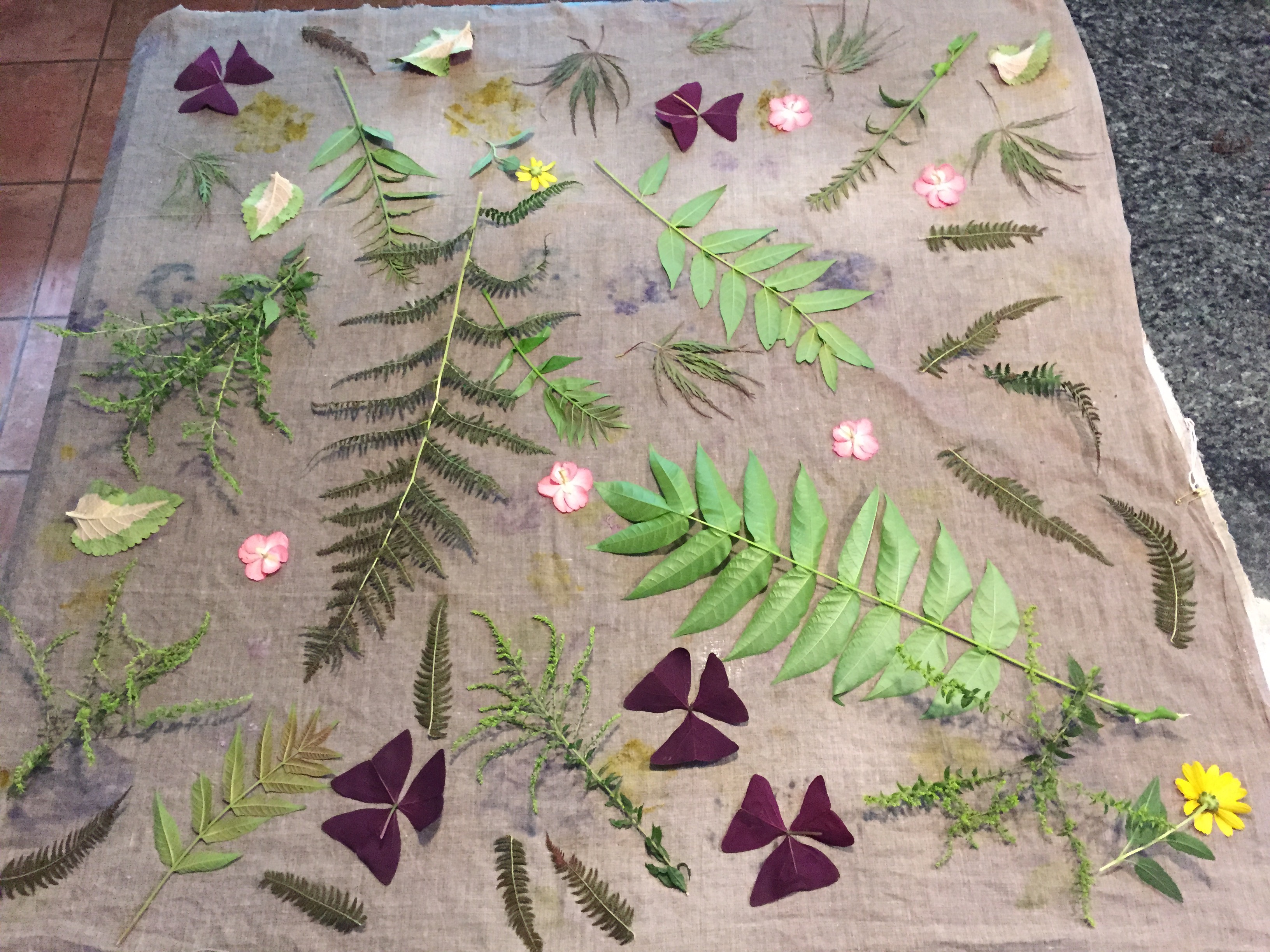
If you haven’t tried Eco-dyeing, give it a whirl!  There is nothing like unwrapping a scarf or fabric to find some lovely imprints of leaves and flowers.  If your first attempt doesn’t suit your taste just put the fabric/scarf away and try it again on another day.  That’s what I’m doing this morning as I write this.  I have a 1-yard length of lightweight linen and one silk scarf steaming.  I used the rinse and spin cycle of my washing machine to re-wet them, and I just collected a few leaves on my morning walk:  one small branch of Japanese maple with about a dozen leaves on it, some golden rod fronds with buds ready to open rather than in bloom, and a few fronds of sumac.

When I got home I spread out my damp linen fabric and silk scarf and placed my plant materials on half of each length of fabric or scarf, because I will fold the other half over to cover the plant material.  To the things I gathered on my walk I added a few gems from my garden.  Today I am trying tall ferns that I hope are ostrich ferns, since I read that those work well in eco-deying.  I have a few dark purple oxalis leaves, some purple cranesbill flowers as well as leaves, some coleus leaves, and one small spray of red flowers from a dragon wing begonia.  As I write this I realized I meant to to pick some hyacinth bean leaves and flowers.  The leaves of the purple hyacinth vine have such dark veining, it might work very well in this technique. Drat!  My fabric is already in the steamer.
IMG_2630

Here are a couple of sites that I found very helpful in trying this technique.  Sherry Harr did her doctoral thesis at Kansas State University on various textile dyeing techniques, and her article is quite thorough.  There are several blogs where the authors have documented their plants and techniques rather well.  Take a look at Threadborne and Obovate Designs.

In mid-August a few people from my local area guild got together and shared lots of plant material and had a go on our various fabrics and scarves.  None of us had ever done this before, but we shared the internet info we found, and a couple of us had talked to others who had taken a workshop with Amelia Poole, whose work in this technique is stunning.

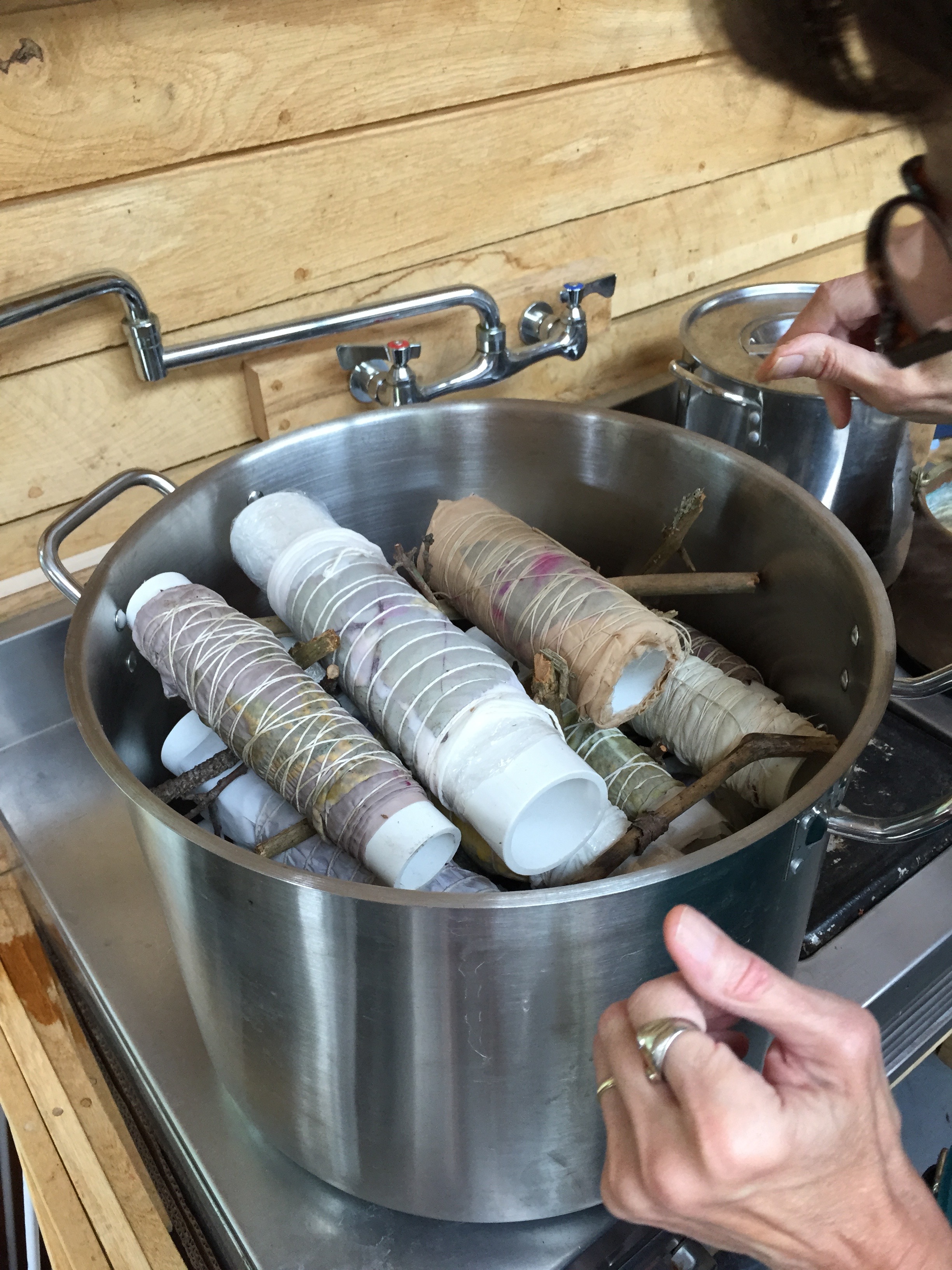
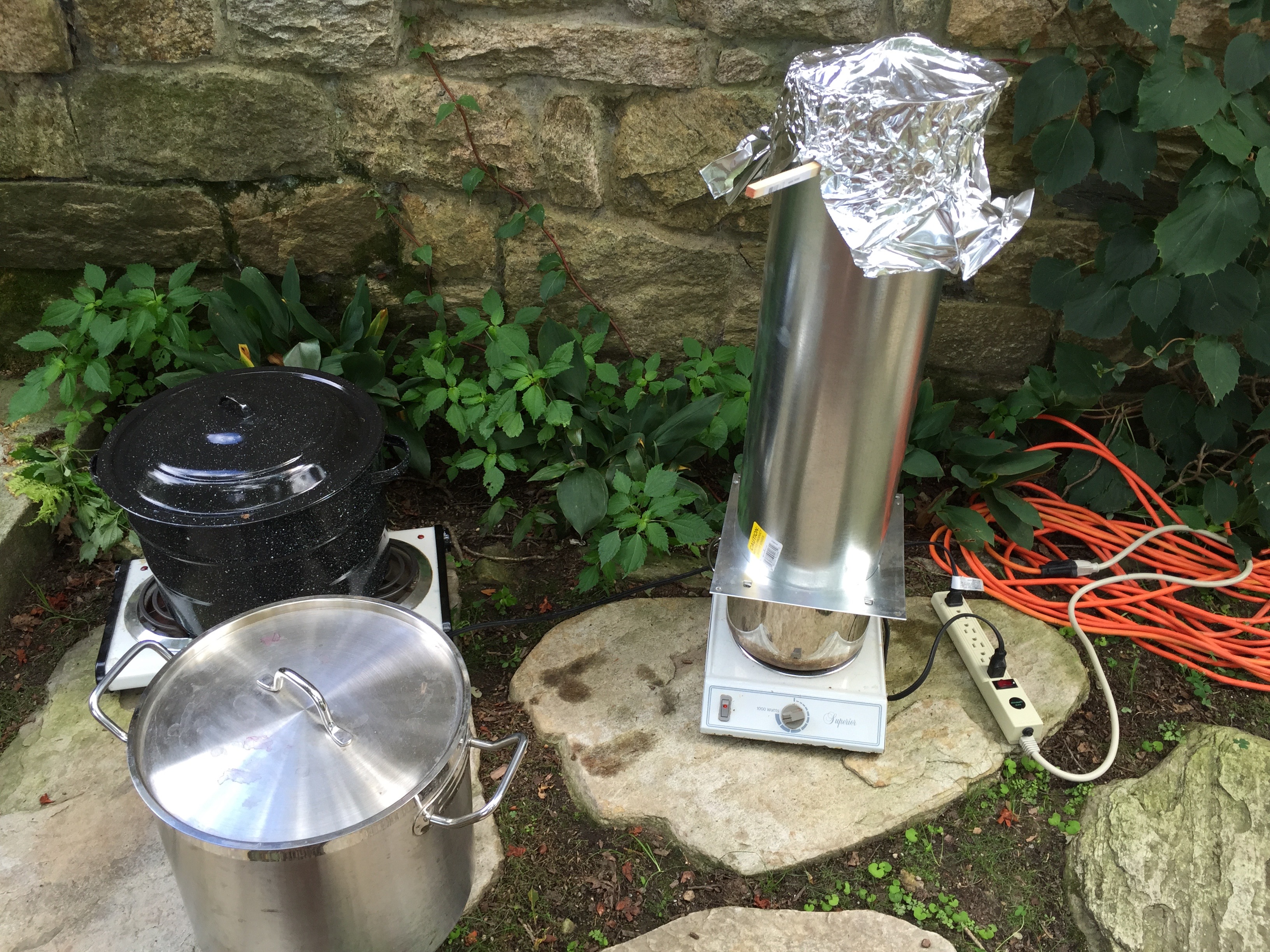
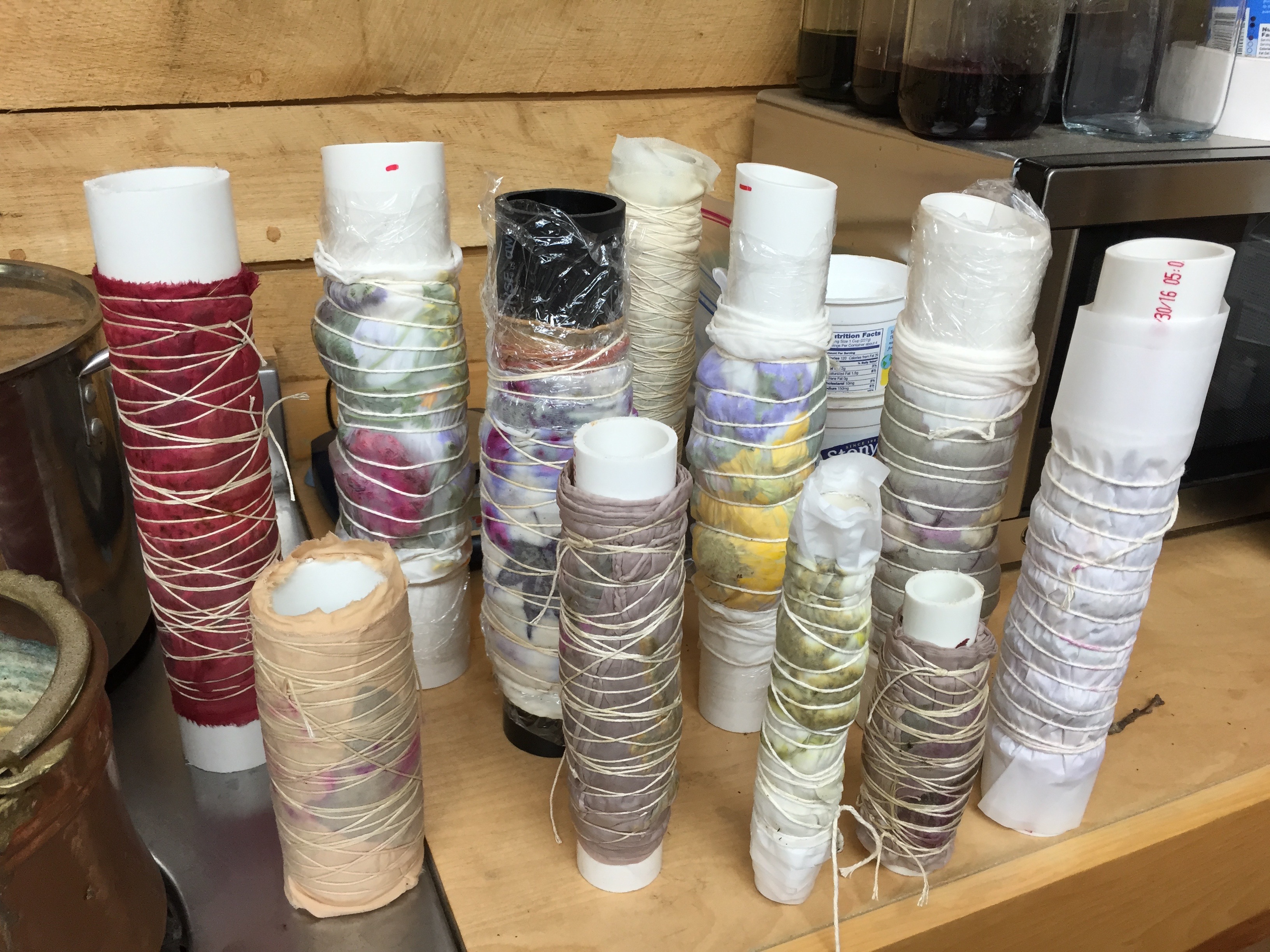
With a bit of info and a LOT of enthusiasm, we plunged ahead.  We were quite lucky to have the use of Kate’s wonderful weaving/dyeing studio for this project.  Here you can see how we layered the tubes of fabric with sticks to keep them from touching.  To make the steamer there are some rocks and sticks at the bottom of the pan to keep the tubes of fabrics above the water level.
IMG_2526

The taller tubes of fabric went in this make-shift steamer.
IMG_2528

After 30 minutes of steaming and a little time cooling down, our tubes came out of the pot.
IMG_2524

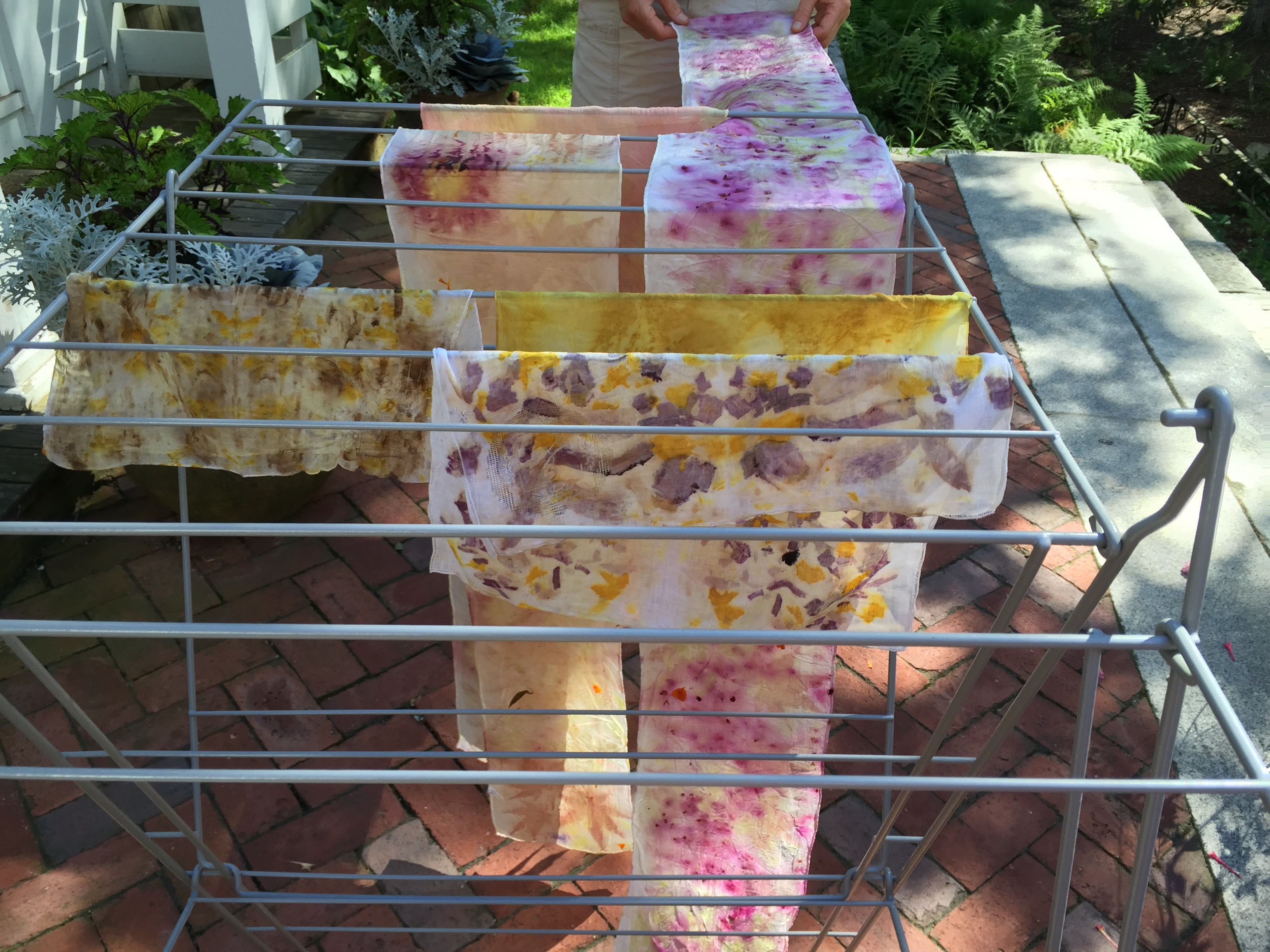
Unwrapping and hanging our scarves and fabric to dry on a rack. We were pretty thrilled with our results.
IMG_2535

My first scarf turned out better than the other things I tried that day.

IMG_4624

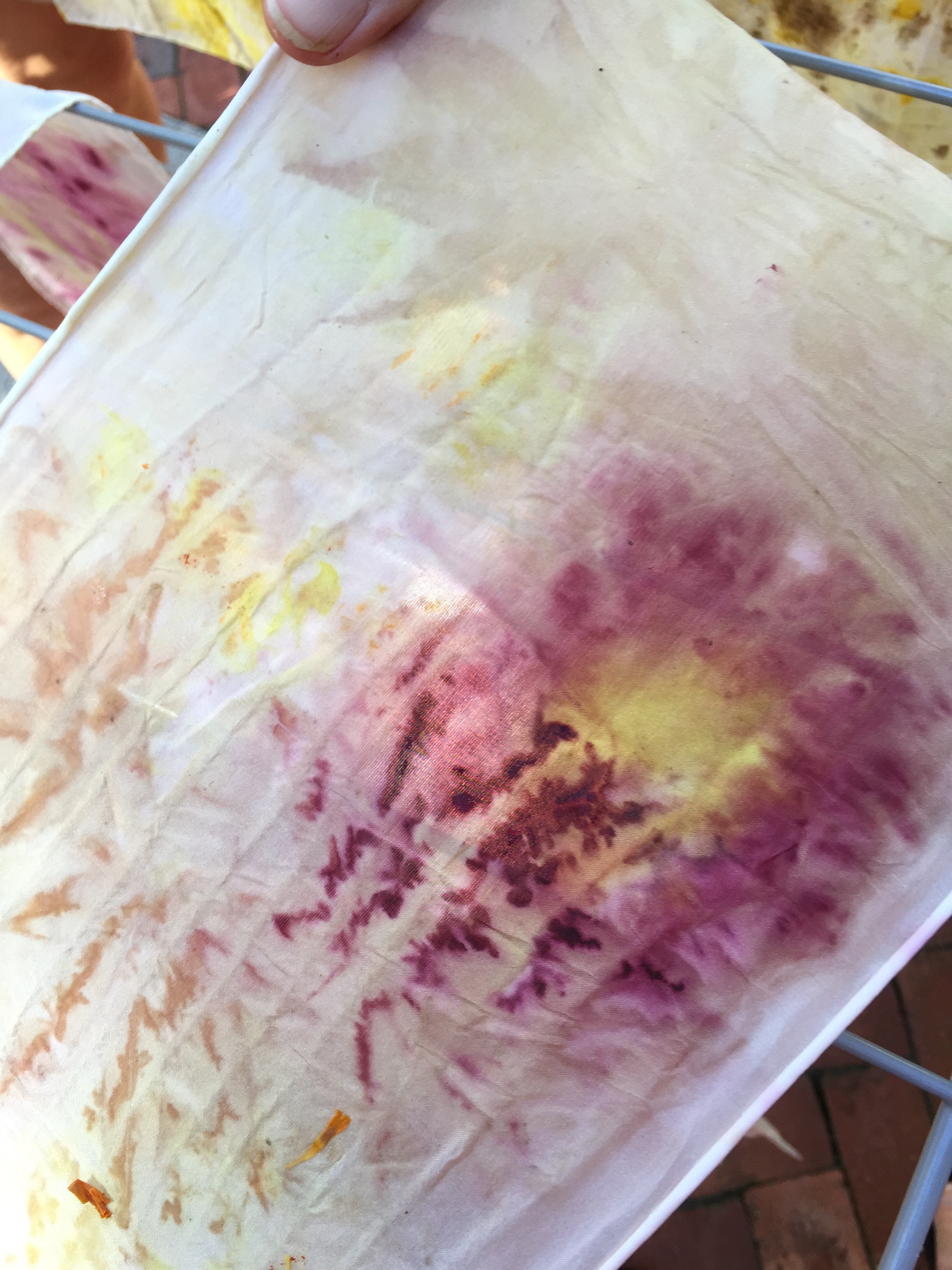
Look at the imprint from this giant dahlia.
IMG_2536

I hope to compile a list of the plants and flowers that work best for me.  Some things leave behind wonderful colors, but the imprint is just a blob.  I’m more interested in the things that leave an actual impression of the leaf or flower.  So far, this is my list of A plants and flowers:

Japanese maple leaves–great leaf definition
coleus leaves–faint leaf definition and pastel colors, lovely on silk
golden rod–great definition for leaves and flowers
purple oxalis–great definition
black hollyhock flowers–a wonderful, deep purple ‘blob’
cranesbill, purple–nicely shaped ‘blob’ somewhat recognizable as a flower silhouette

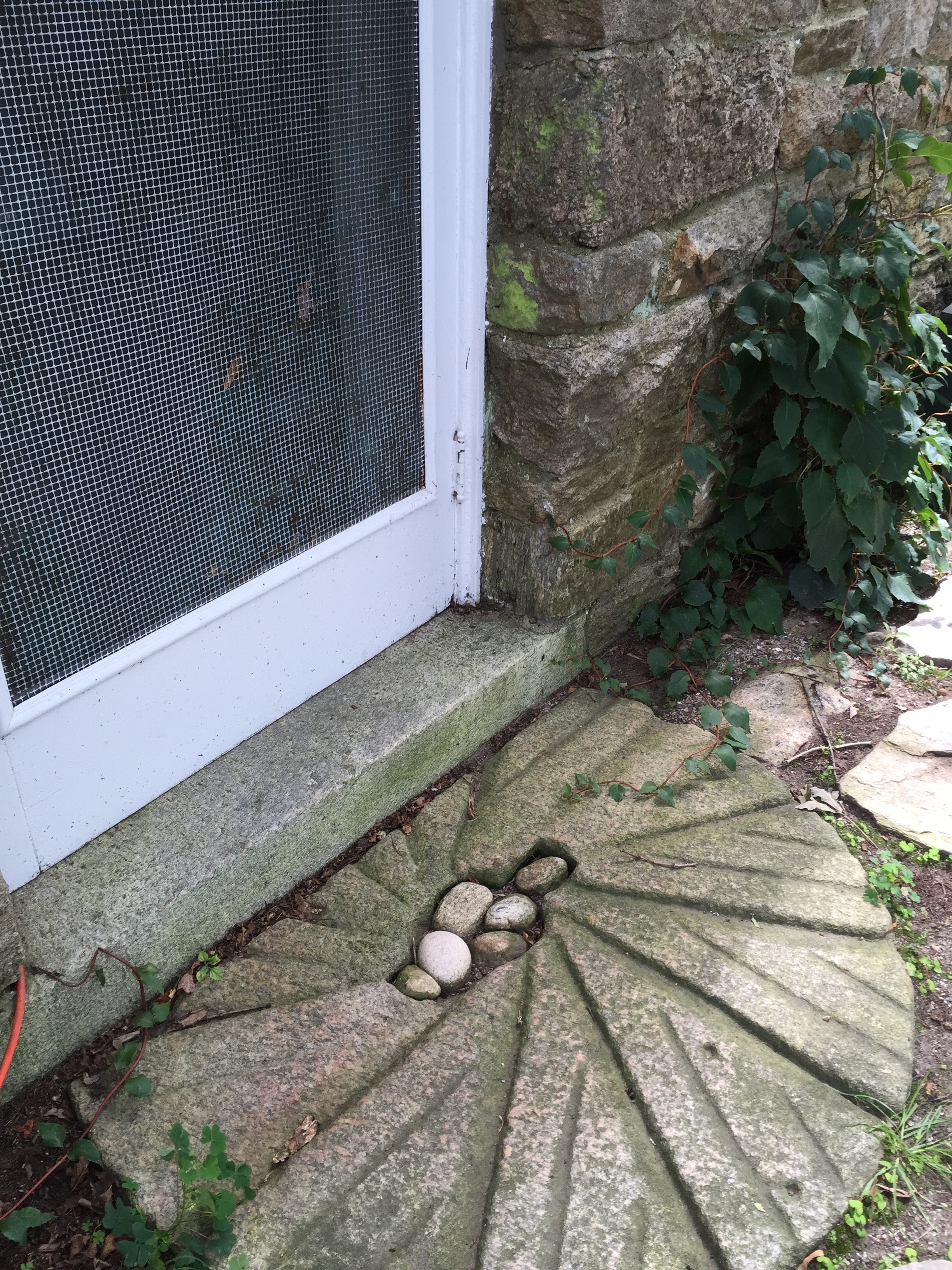
One of the perks of visiting the studios and houses of other weavers, is seeing the lovely details in their living and work spaces.  Weavers usually have such a eye for beauty.
IMG_2529

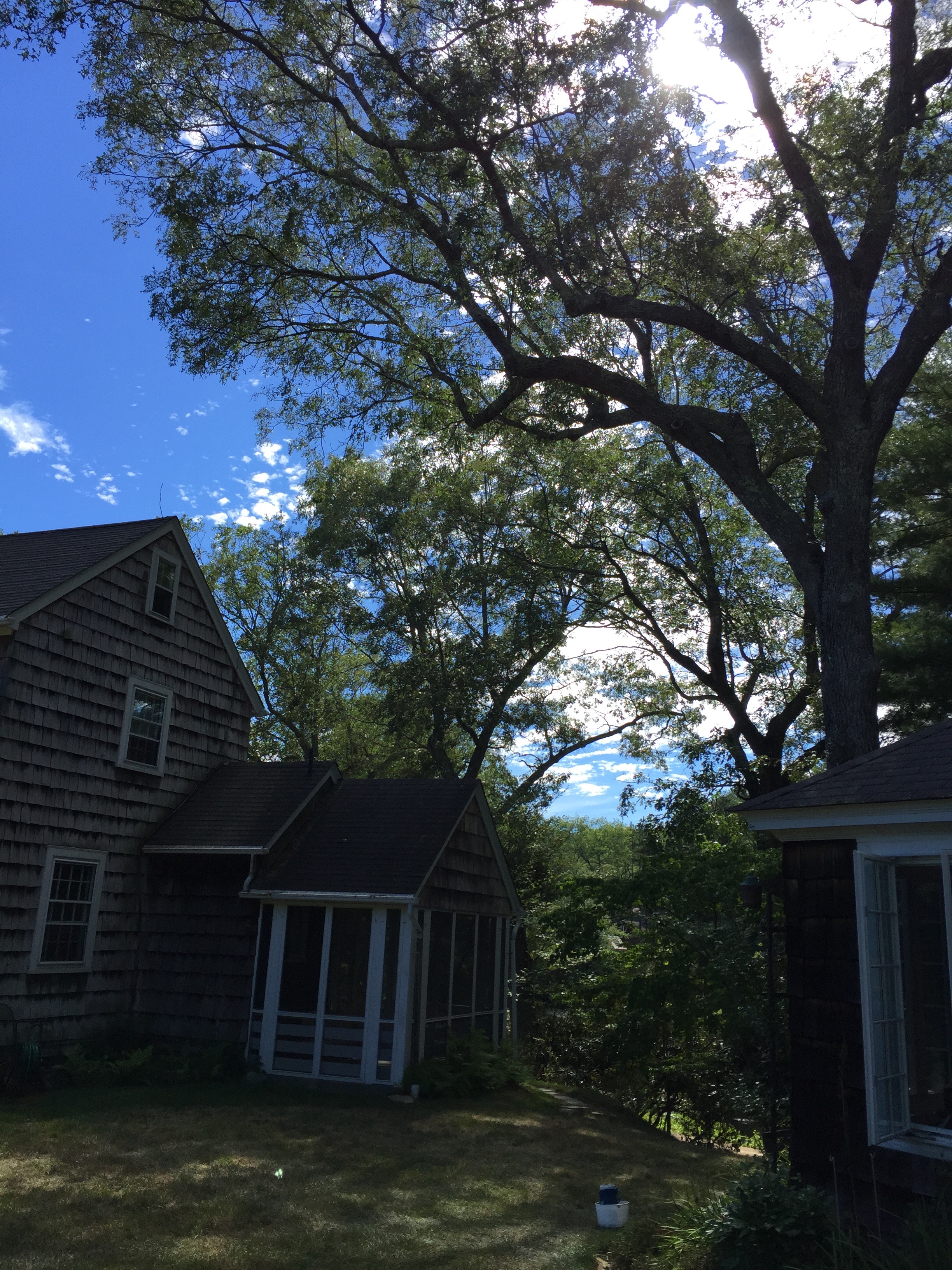
It was a glorious day for our project.
IMG_2545

Fast forward to the beginning of September, and on this stunning weekend I spent a wonderful day at the monthly meeting of bobbin lace makers in Connecticut.  You can find us here.

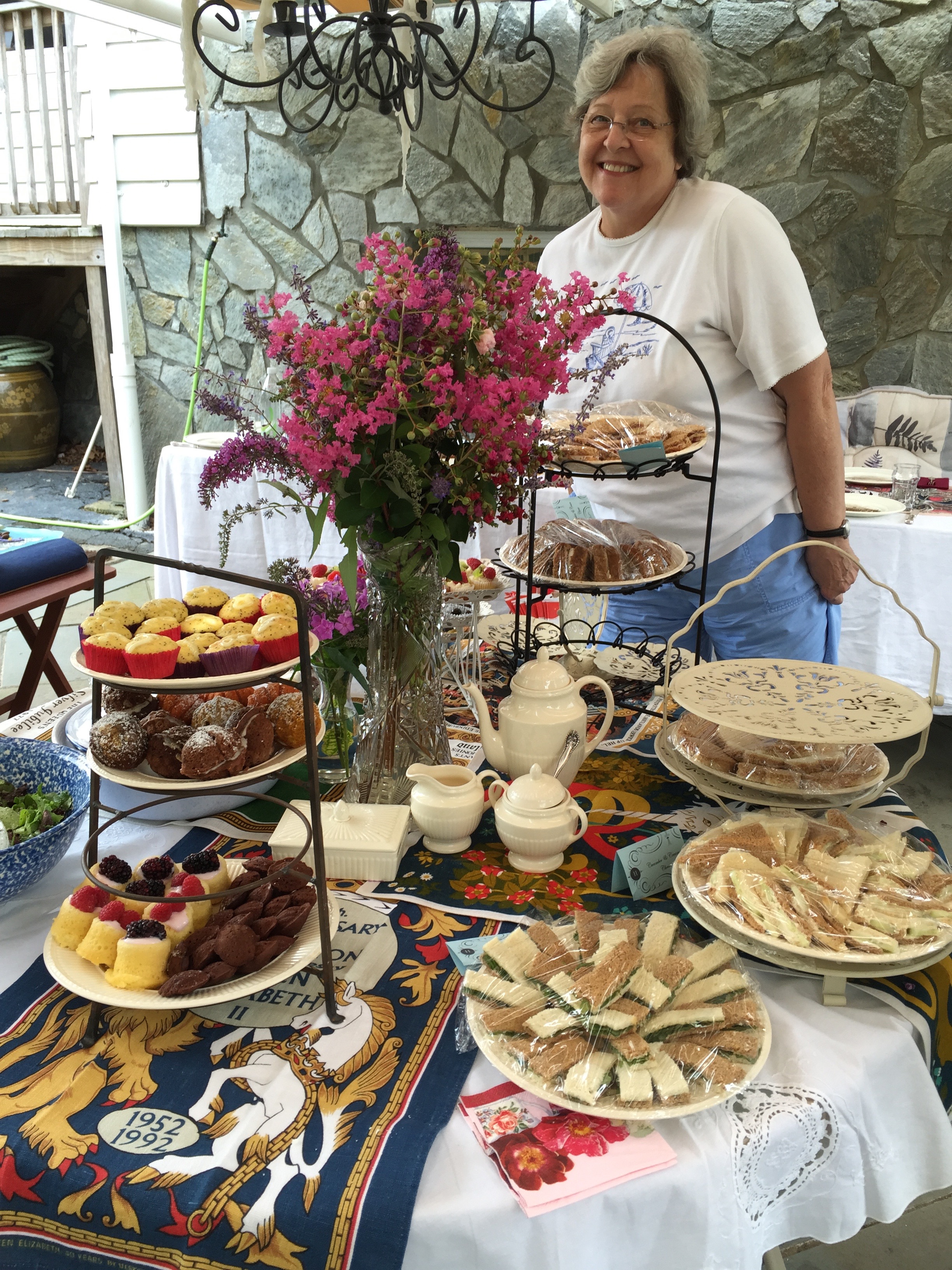
We met outside in a member’s garden under a canopy of billowing, striped canvas.  Her terrace was surrounded by flowers–black-eyed Susans, phlox, and other late season bloomers, with a view of her large vegetable garden nearby, and in the distance her bee hives.  She made an English cream tea for us that we had to share with the bees. Her tables were covered with vintage white on white embroidered cloths, topped with vintage linen tea towels that commemorated Queen Elizabeth’s reign–going back as far as her silver jubilee.  I think we all felt a bit regal.

I hope Mary won’t mind that I shared this photo.  Her expression is a mirror of how much we were all looking forward to having these treats!
IMG_2581

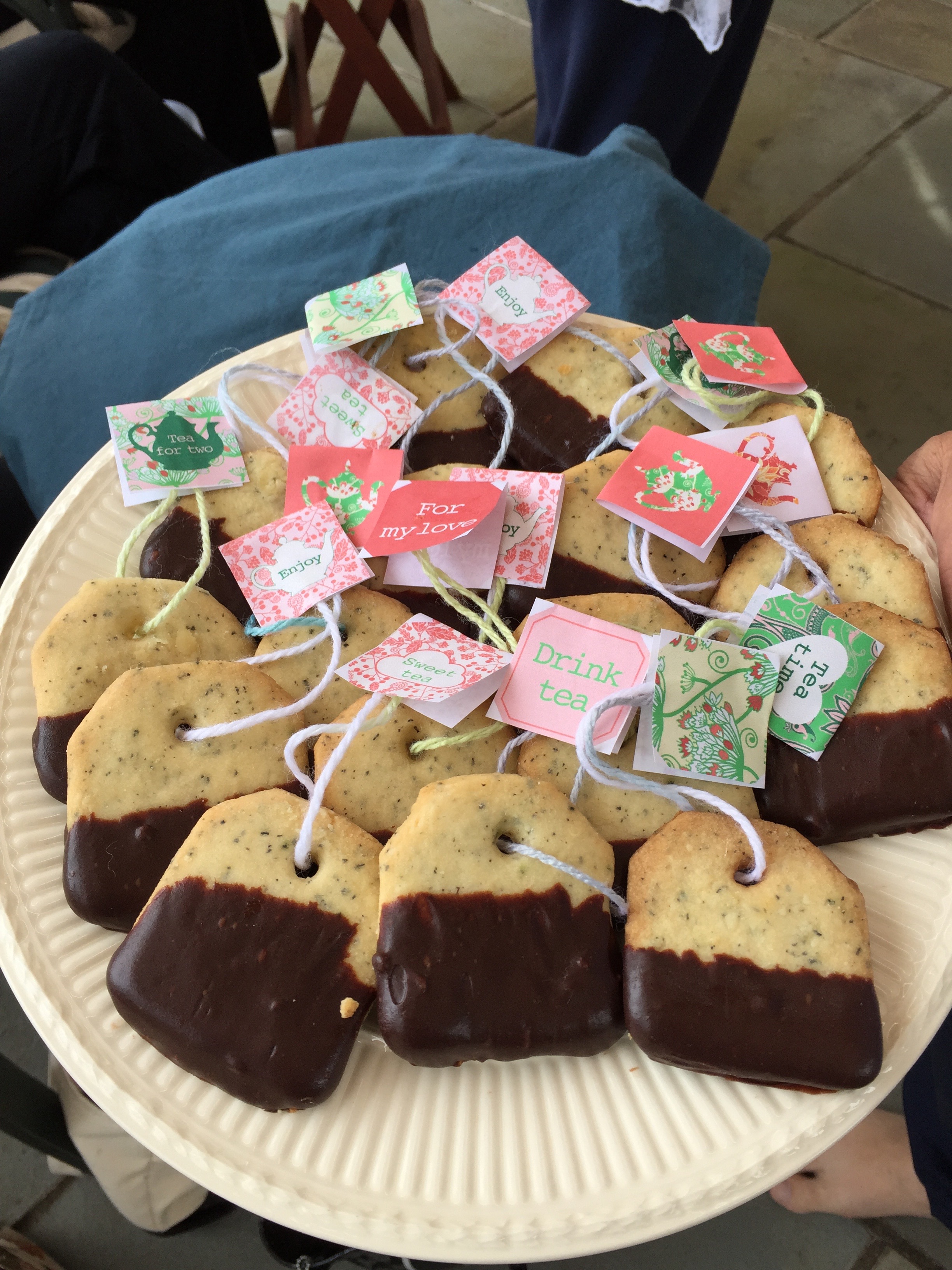
Our hostess made Earl Grey tea biscuits dipped in chocolate that were off the charts!
IMG_2582

On top of this wonderful tea we all actually spent time making lace, too!

This is also the weekend of the Haddam Neck Fair.  Late summer is the time for all kinds of festivals that celebrate farming and animal husbandry.  I have never been to this particular fair before, and it was a wonder.

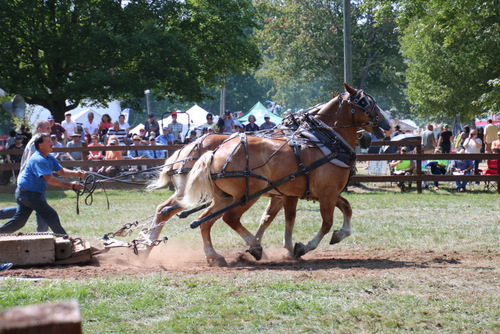
First there were the animals.  We watched a draft horse pulling contest, visited the goats and sheep, cows, chickens and rabbits.  The textile displays were very small, but I met a woman on the fair committee, doing a spinning demonstration, and she hopes to grow the textile area of the fair in coming years.
5-IMG_0752

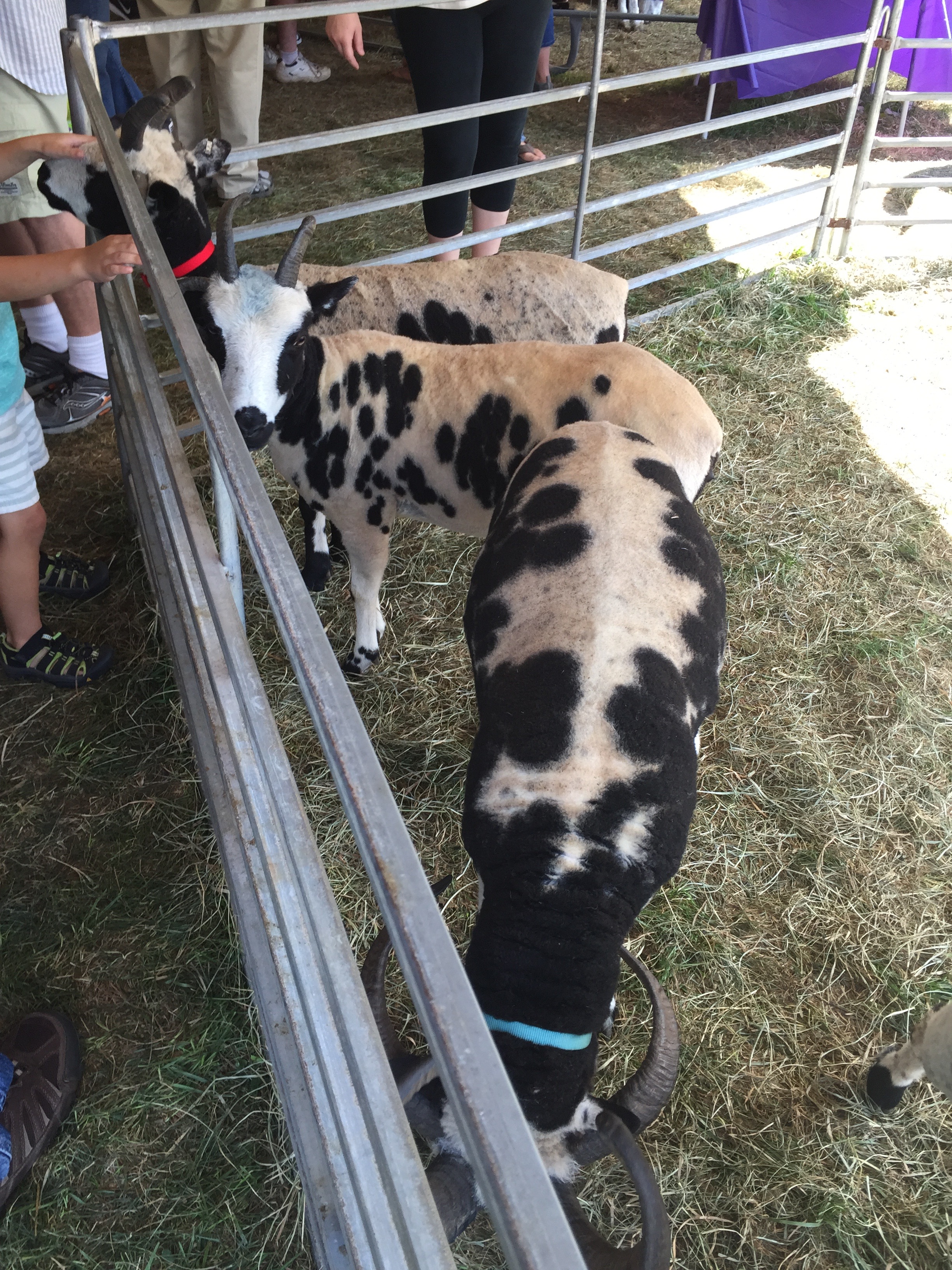
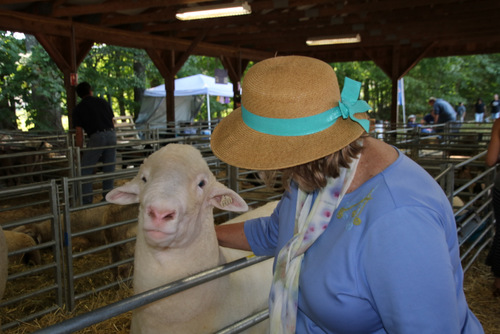
Look at this beautiful Dorset sheep.  Her new fleece growing back was as thick as felt and she loved attention.
4-IMG_0741

Multi-colored Jacobs.

IMG_2590

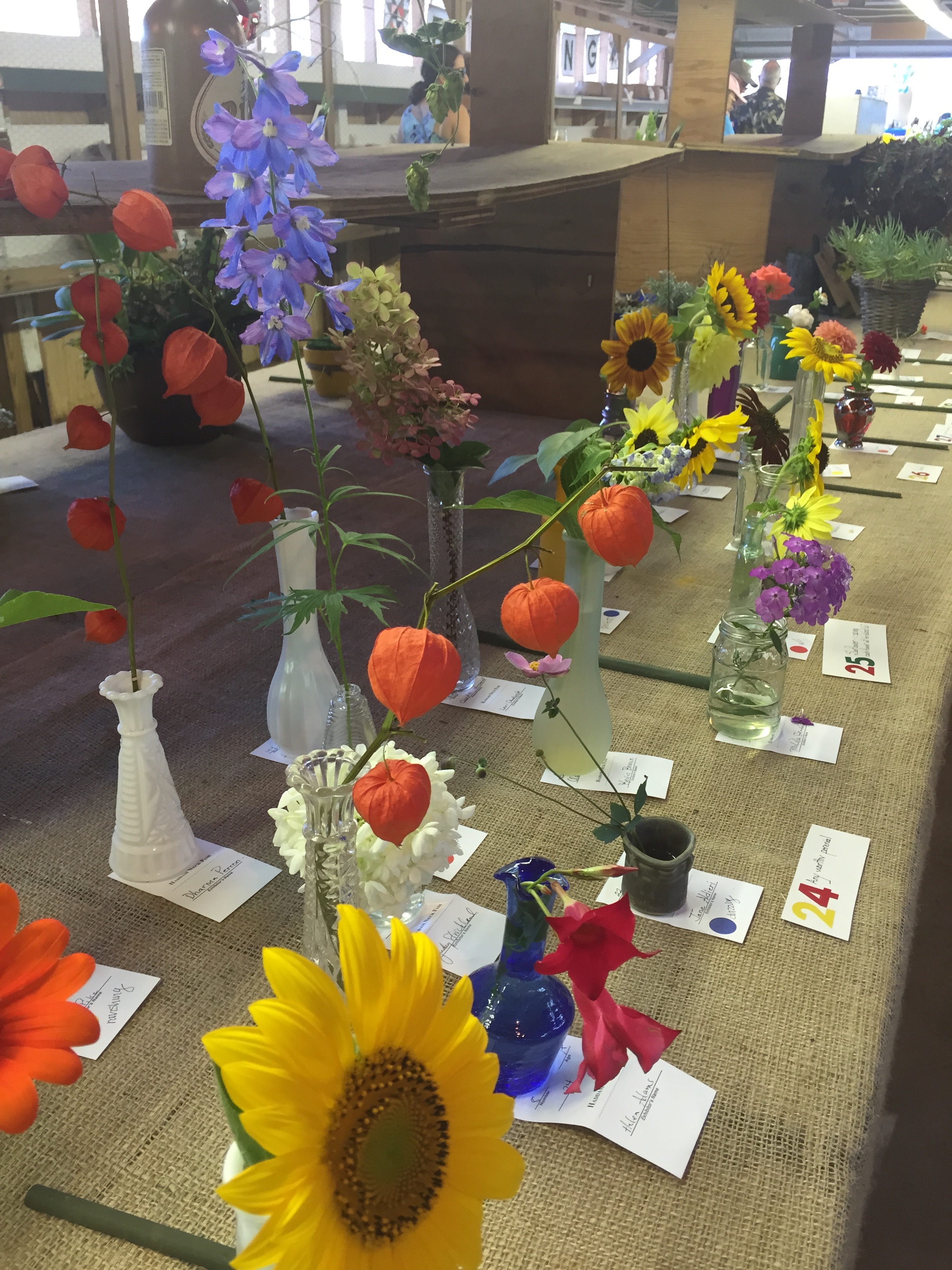
Seeing all the awards for best sheep or cow, all the way down to best cakes, and cupcakes, best flower arrangements, and best single flowers, or best zucchini, made Bob exclaim, “No one can possibly doubt humans’ need to compete!”  Along a row of bud vases that showcased individual marigolds, the judges had written such poetic comments as: “As beautiful as a sexy, 1940s film star!”  And, one a rose that no longer had a single petal left, “A stunner!  Well done!”
IMG_2625

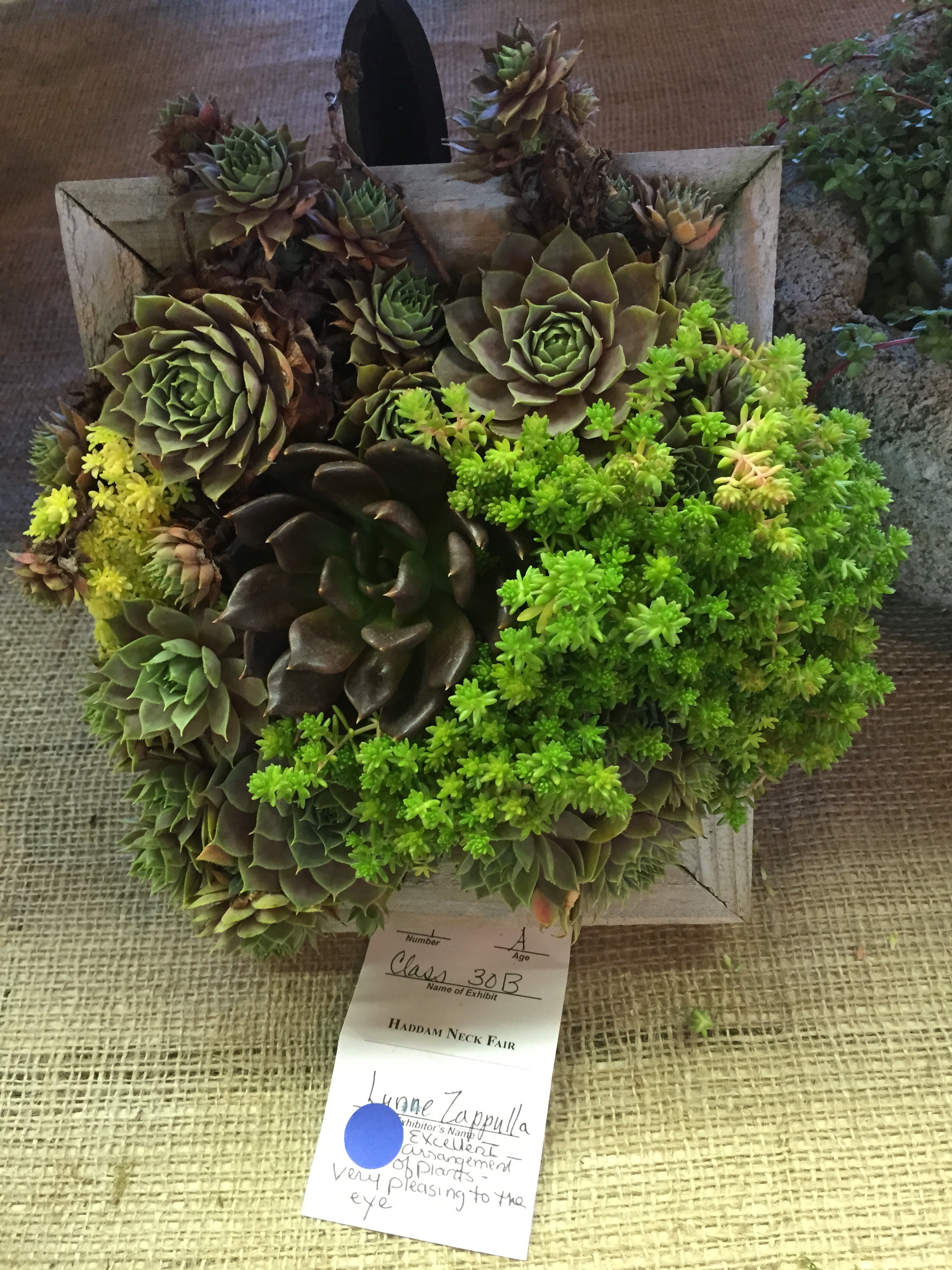
I particularly like this arrangement of succulents in a well used frame. Clearly the judges did too.
IMG_2626

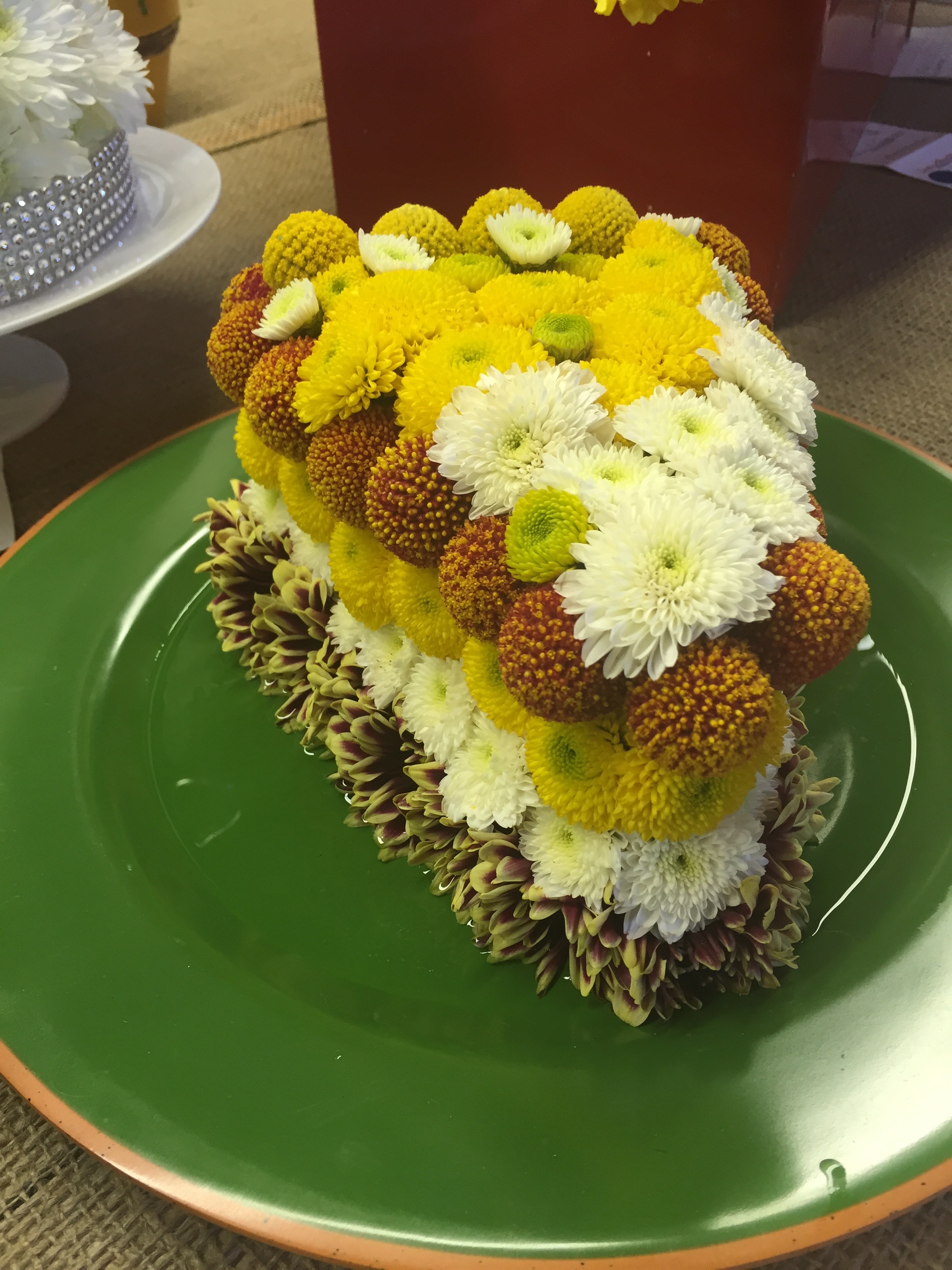
Some whimsical flower arrangements.  There were lots of categories for flower arrangements, and these were two in the category inspired by food.  A tray of floral cupcakes!
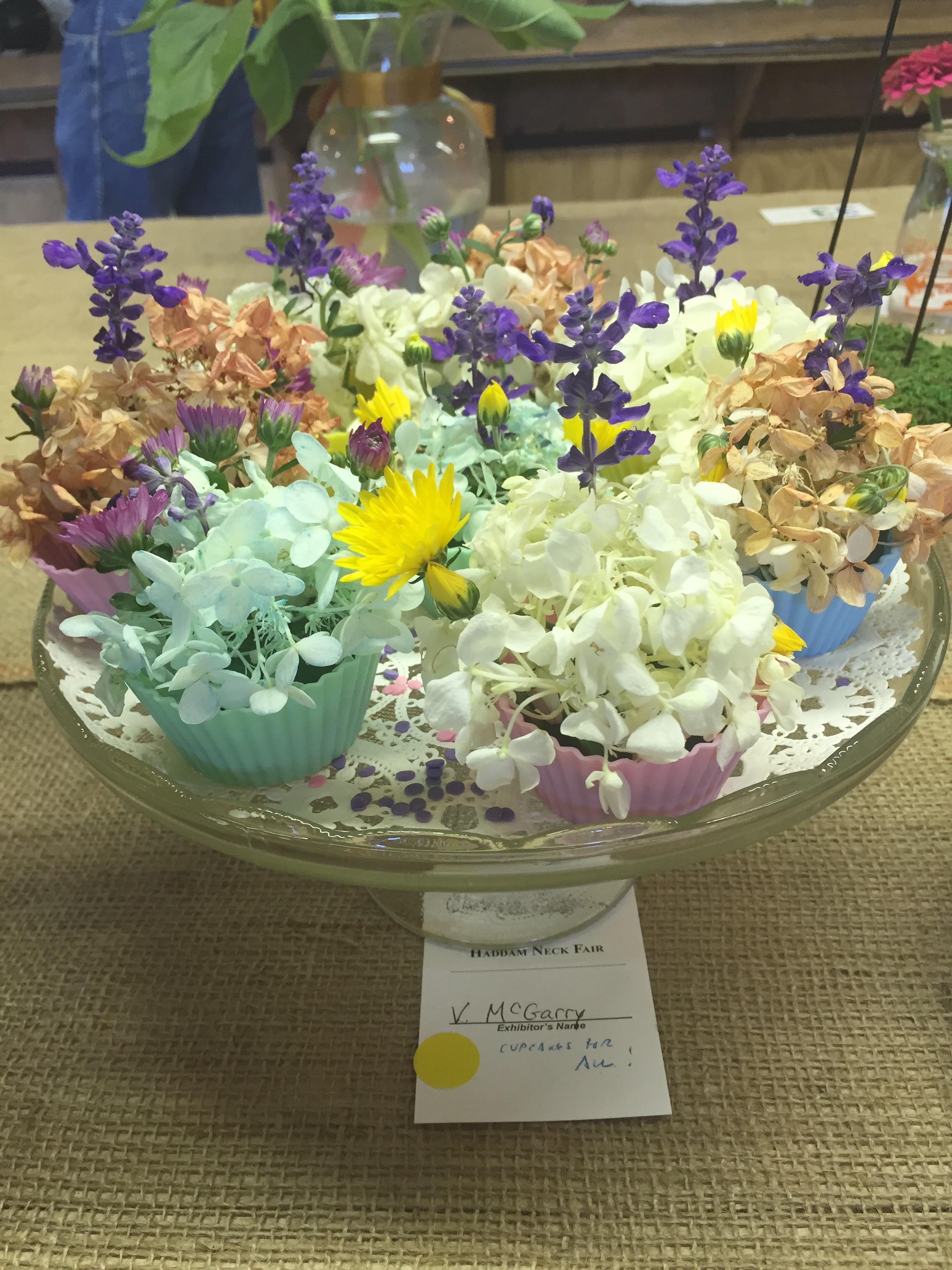
IMG_2592

And a slice of mum cake!IMG_2593 The same kind of judges’ comments showed up on all the individual vegetables, from tomatoes to summer squash, to cucumbers.  If you can grow it or make it, you can compete with others at some local fair!
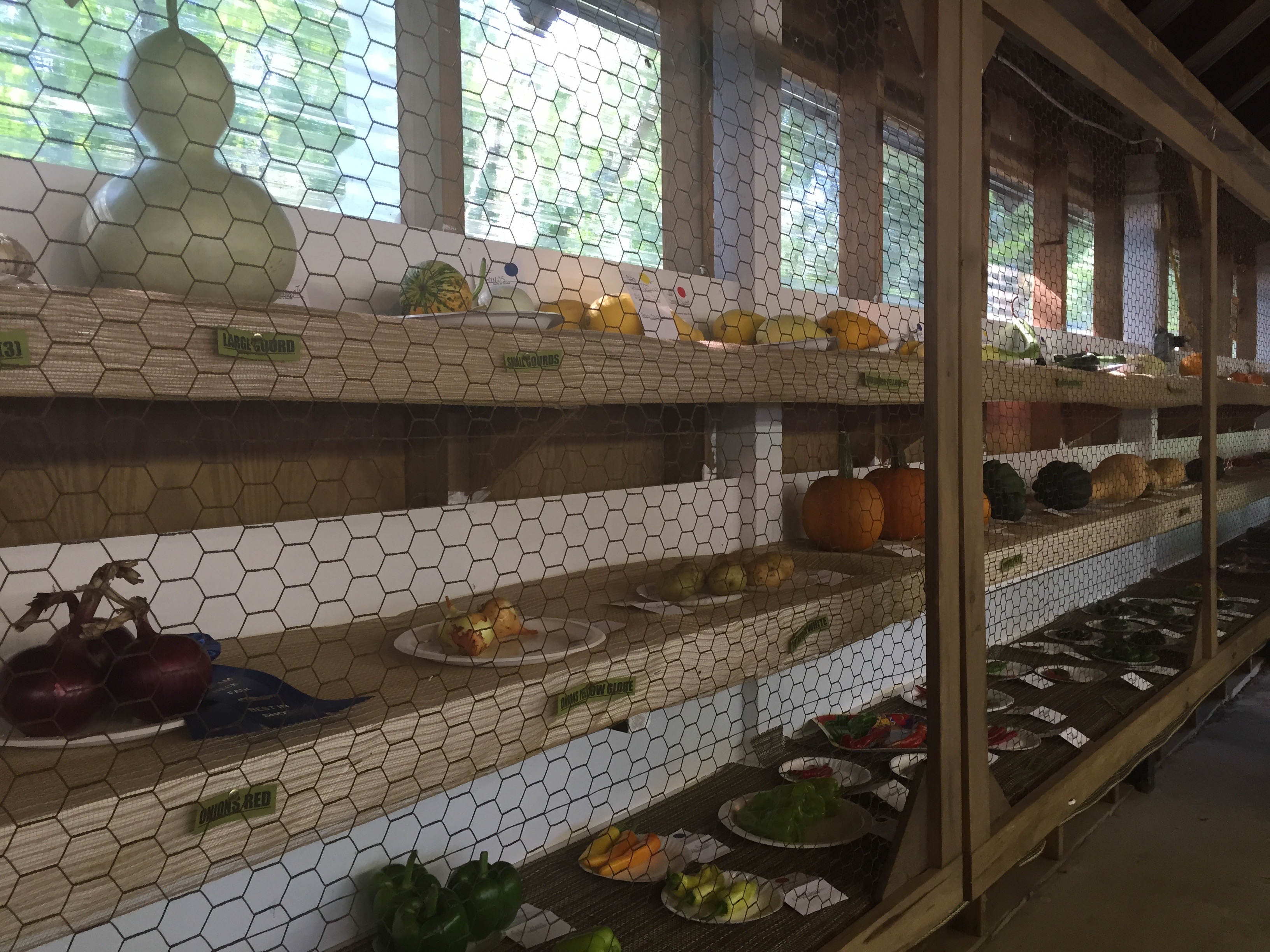
IMG_2627

It was a beautiful day, and it was quite lovely to see how much care and attention can go into growing a zucchini or a marigold!

Sadly, the textile area could not hold a candle to the livestock or the flowers and veggies.  Maybe that will change in the future.  All it will take are a few textile people who want to compete!

The day is getting away from me, and I should turn my attention to Archie’s book and to that never-ending boundweave project.

I’ll end with a recap of what I learned today.  The tall ferns in my garden must not be ostrich ferns since they left no color.  I did add some hyacinth bean vine, both leaves a clusters of flowers buds, but they also left no color or imprint.

Clusters of purple verbena flowers are interesting–they turn turquoise!
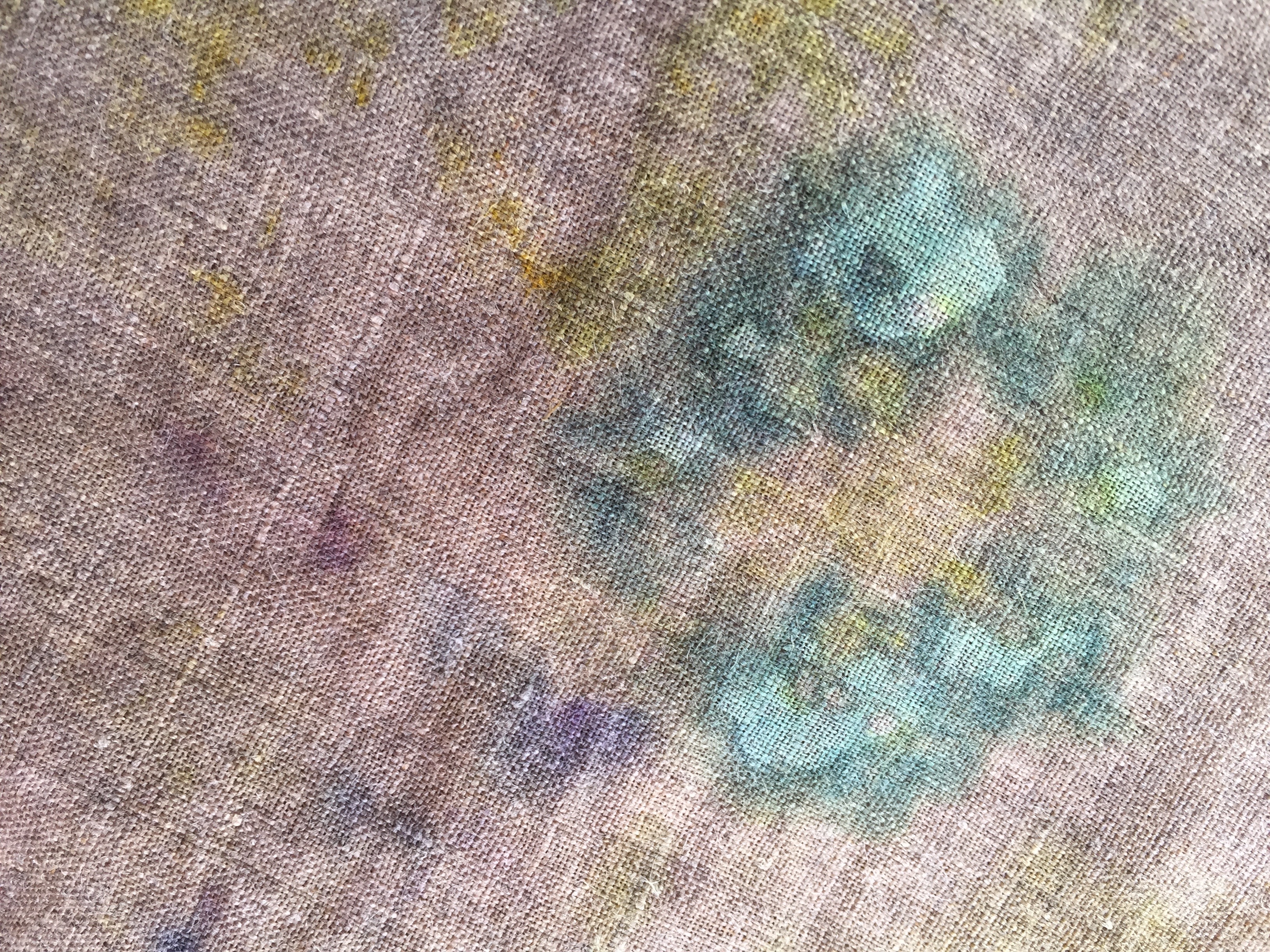
IMG_2633

And signet marigolds left an interesting imprint.  The red stripes turned black.
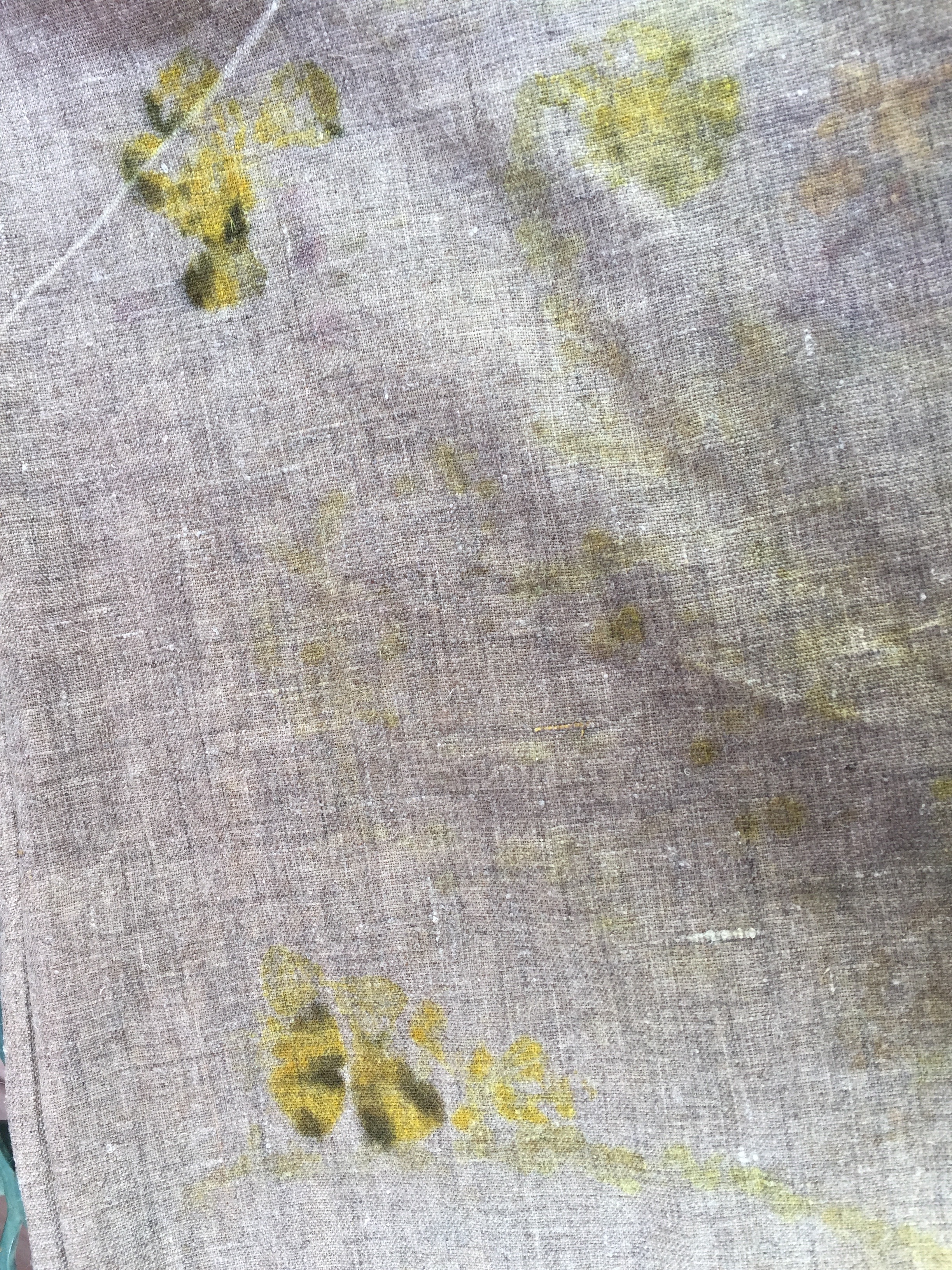
IMG_2632

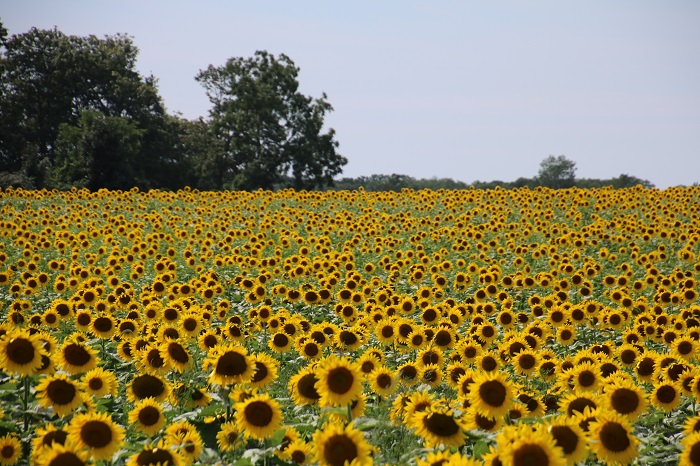
And speaking of flowers, I have to share one last image.  The well known, oft-photographed field of sunflowers on the north fork of Long Island.  Bob and I sailed to Sag Harbor and stayed for almost a week back in the middle of the month.  Even when compared to an amazing dinner at the American Hotel, and wine tastings along the North Fork, seeing this field was the highlight of that trip!
sunflowers long island

Now to work!


Round 2, Ready to Weave!

Teacher knows best!!

Repeat like a mantra:  Teacher Knows Best, Teacher Knows Best….

Yesterday, after painting the warp, Bob set up a heat lamp over the warp to keep the temperature as close to 70 degrees F as possible for its curing time and overnight drying period.  It worked like a charm, so this morning I have wound the warp back onto the back beam, tugging the warp firmly after each revolution of the beam.  There is no significant shifting!  Hoodah!  What a thrill to actually learn something from this process.

I now have two cardinal rules:
1.  Always blot the warp before painting, even if I cannot see any excess water.
2.  Always tug the warp when winding back on the loom.

I hope to complete the weaving today since it is only about a yard. I hope to paint the 3rd attempt tomorrow….. ever hopeful!

Journeys

The word journey has been foremost in my mind for months now…. my father in law’s major journey (his life) has just ended.  He led a beautiful life, and he was as much a father to me as he was to his three biological children.  He was a great man in all the best ways possible…. devoted to his wife, his children, and a consumate volunteer which means he was devoted to all the causes he he championed.

Lately my own journey seems fraut with anxiety, too many deadlines, too many places to be in such a short time.  I feel like I’ve just returned from our long journey down the Eastern seaboard of the US and across to the Bahamas, and now we are to leave again in just a couple of weeks.  Where has the time gone?

Well, mostly we’ve been spending some very special time with Bob’s father.  It hurts to know you are losing someone, but in the long run I feel it has been a gift to help Bob, Sr. through the last months and a gift that we could be with him as much as possible for our own needs…. I think this is far better than losing someone you love without any warning at all.

During this last summer/fall/winter of my father in law’s journey I’ve been thinking about the Moirae, whose names are Clotho (the spinner), Lachesis (the measurer), and Atropos (the one who holds the scissors and cuts the thread of life).

I love Sarah Swett’s rendition of these fates “The River Wyrd.”  She has done a great job portraying them having a laugh at our small lives, our loves, our passions. At this moment in the grieving process, I’m much too bogged down in the sadness of missing him, and wonderful memories, and nostalgia and schmaltz…. to treat this subject with humor.  And I am searching for a way to find voice for the respect and love I have for my father in law’s life.

So I’ve been rather focused on images of the thread of life.   My father in law, the original “Bob” in the Osborn family, had a wonderfully long life, although not nearly long enough for all of us who loved him.  He was connected to many people, a life long best friend with his brother who died just weeks ahead of him, and a life long friend of a surprising number of others.  How many people do any of us know who can get together regularly with friends they’ve known since before a marriage of 60 years?

Anyway…. my own recent journey has been in trying to depict images of a beautiful, long life.  I’m not there yet, but impatience led me to attempt a less than fully developed idea, with a technique I learned a couple of decades ago from Betty Vera and revisited this summer with Sarah Saulson.

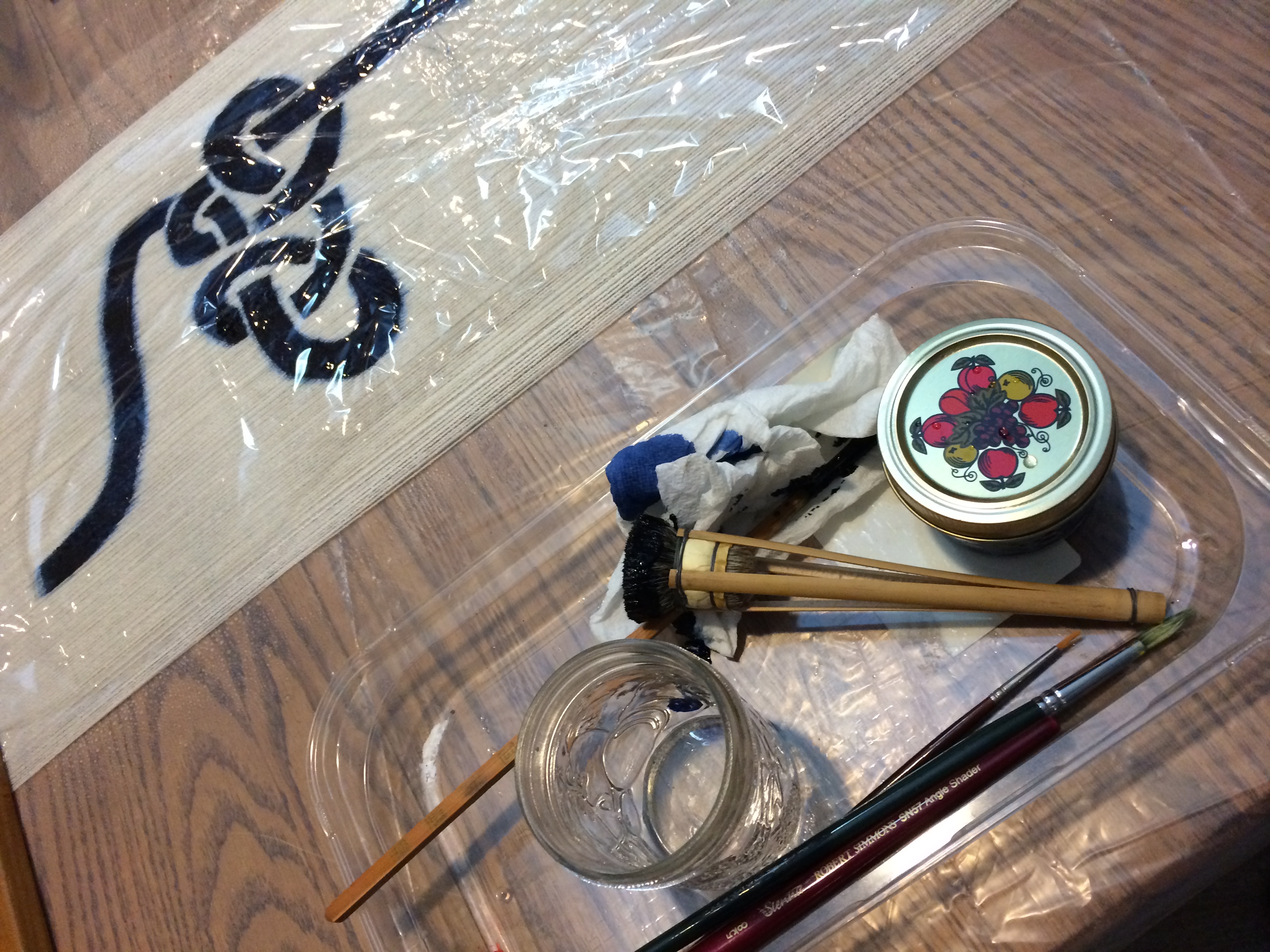
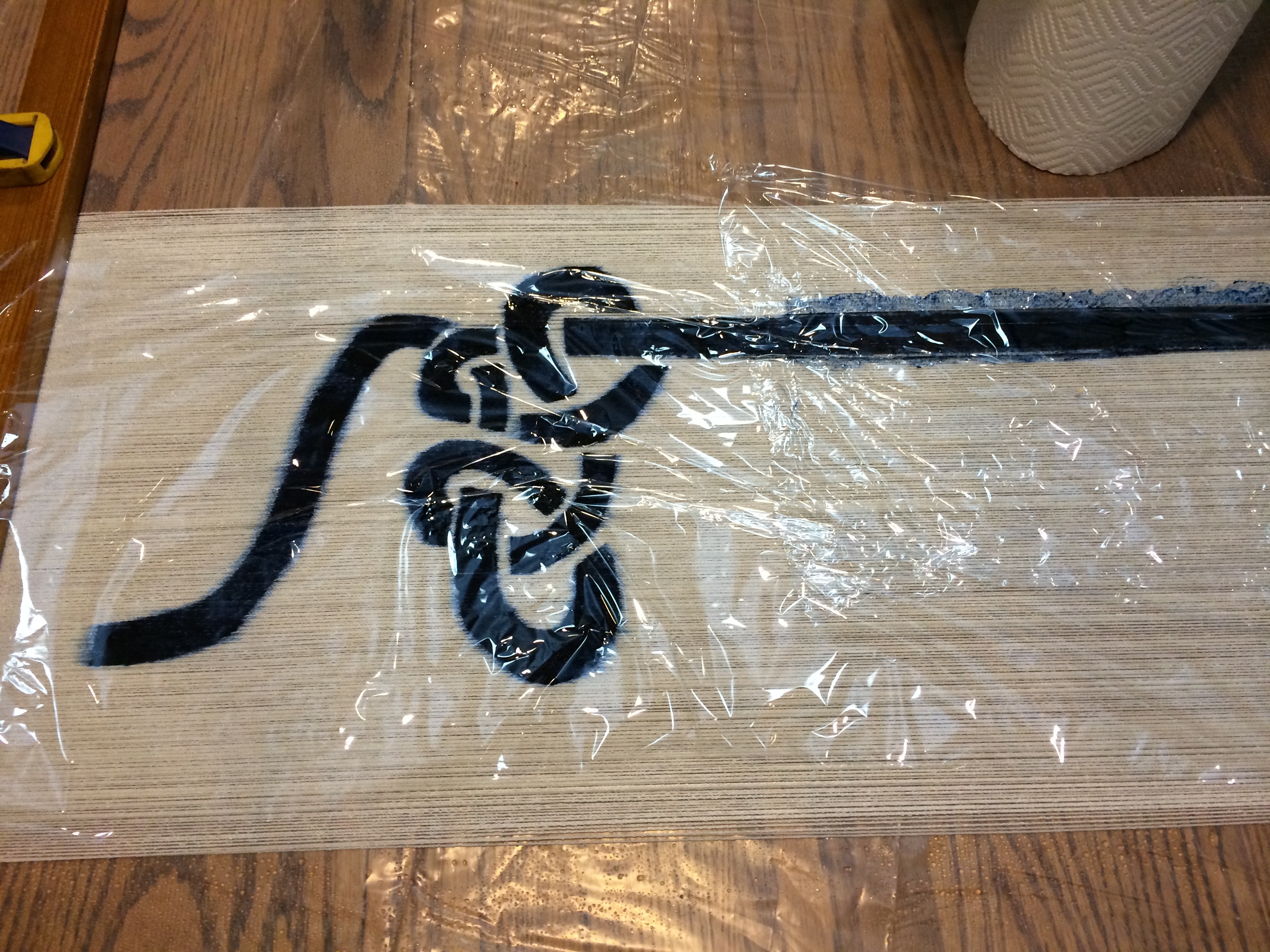
The technique involves dressing a loom with a warp, then pulling out the warp onto a flat surface, under tension, and painting the warp with dyes thickened with printers’ paste, or  sodium alginate.  Here are some photos of my first attempt at this.

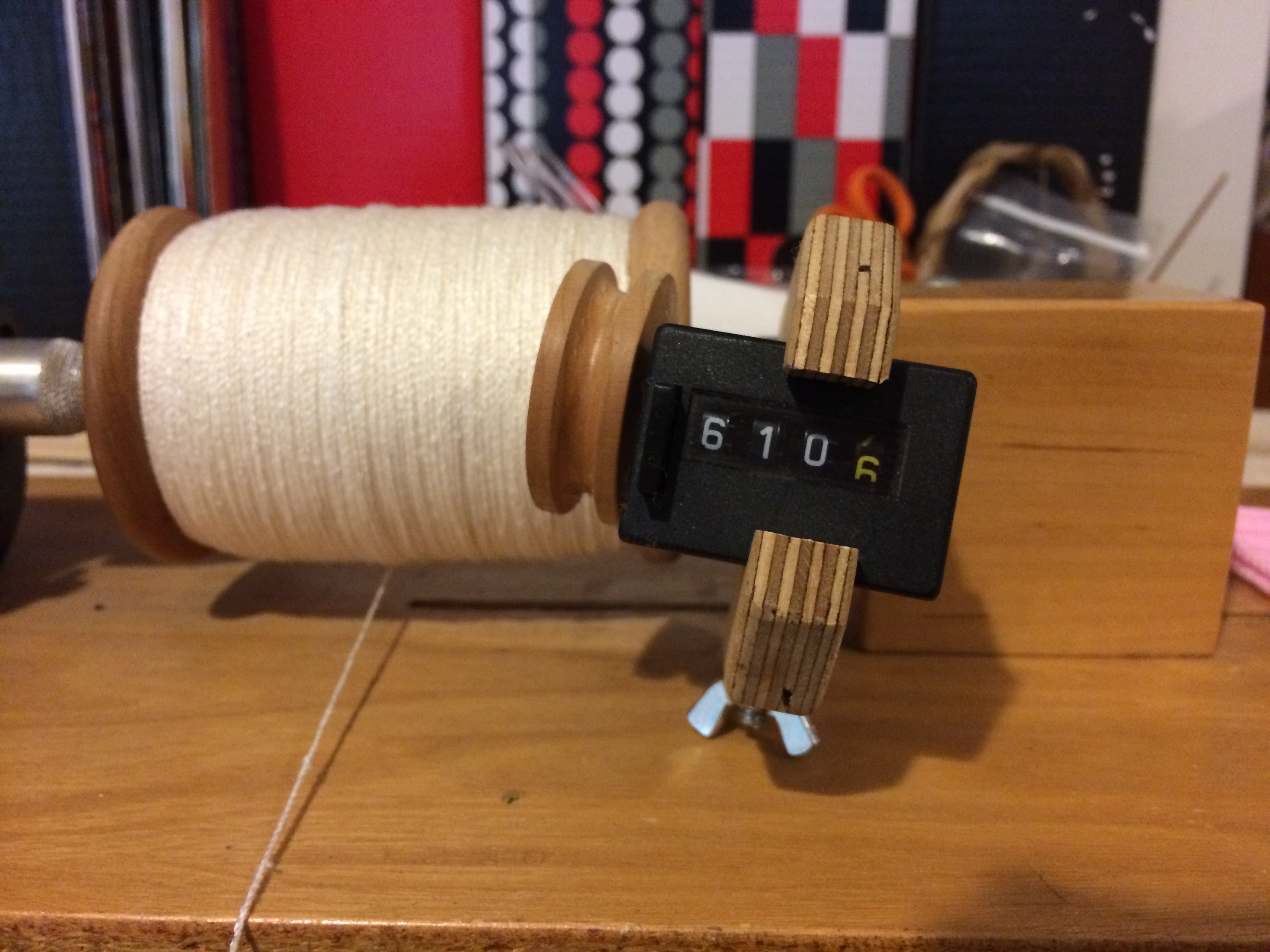
My warp is silk crepe which I wound onto two spools for easier handling.

2014-01-08 12.22.32

I made a stencil of my design on a manilla folder.

2014-01-01 16.39.10

 Here is the warp after painting.  The dye is ProChem blue #402 mixed for full saturation with a little “New Black” added.  You can see the stencil brush I used in the lower left.  It is a wonderful tool that I found at Long Ridge Farm’s booth at Rhinebeck one year.  It is made of very tightly packed natural bristles, but I don’t know anything else about it since the attached tag is in Japanese, and Nancy Zeller did not have the information on her when I bought it.

The dye required four hours to set with moisture at a temperature of 70 degrees F.  After that the plastic film is removed to allow the warp to dry before being wound back on to the loom.

2014-01-01 16.38.53

2014-01-01 16.38.37

In my haste to work on this project (I had envisioned this piece hanging from the lectern during Bob, Sr’s. funeral…pipe dream!) I did not take any photographs of the weaving process.  My 8 shaft Baby Wolf was threaded with an undulating twill, and I used a natural colored, smoothly spun silk thread for the weft.  I think both warp and weft are in the range of 20/2 silk, but neither of these silks, in my stash for decades, were labeled.  I threaded the undulating twill at 30 ends per inch. The seredipitous surprise after weaving and wet finishing was the amazing sheen of the silk crepe!  It glows.

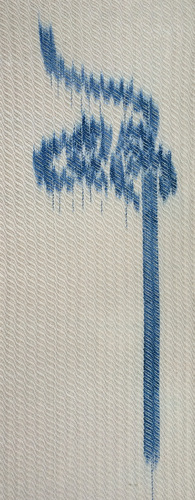
Here is the finished piece.  It shifted more than I expected when I wound it back on to the loom, which is when I discovered that some of the heddles were not oriented properly on the shafts.  A number of heddles were upside down, and I think this opposite orientation caused a bit more drag on the threads which resulted in significant shifting.  I tried repositioning these threads by adding a bar at the back of the loom with these threads pulled around it….but as you can see from my photo, it did not help.

This is not what I had envisioned for the finished piece, but I am not unhappy with it!  Yesterday I made a new warp (and used up all the rest of my silk crepe!) and dressed the loom so that I will probably be ready to paint again tomorrow.

thread of life 500 dpi

2014-01-11 10.03.18

Thanksgiving

It wouldn’t be Thanksgiving without some outdoor time, walking in the woods, putting the garden to bed, and (hopefully) having bulbs already planted. This is not the first time I’ve posted photos of these two lovely structures.  There is moss growing on the cedar shakes of this pretty barn.  I did not catch the light properly because (in real life) the moss was glowing vivid green in the soft light.

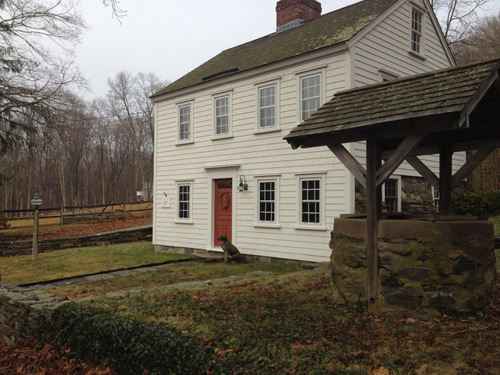
I can’t seem to walk by this house without taking yet another photo of it. It was a mostly grey holiday weekend, rainy and raw, but I seem to love the scenery along this walk in almost any weather.

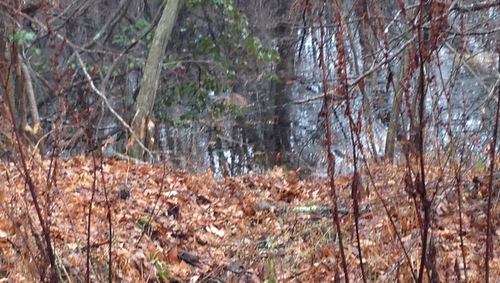
The highlight of our walk yesterday was seeing the beaver that has caused so much destruction along the banks of this stream!  He has not left a single tree untouched….busy guy!  I was thrilled to see him, although I know you probably won’t!  He reall is there, right in the center of the photo, just under the branches with the green leaves! Trust me!

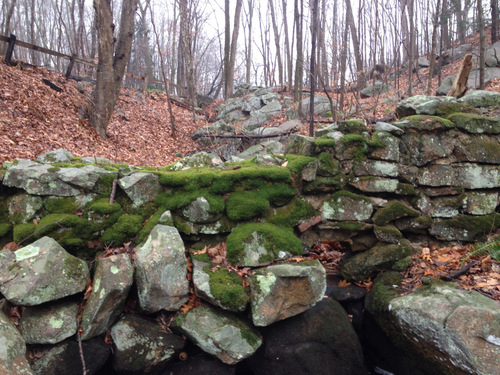
Moss and lichen on rocks.  Someday I’ll get just the right photo to begin a tapestry cartoon.  This is intriguing, but the light is not quite what I saw yesterday.

At home I am re-mounting my Flax Spinner and getting a new silk warp ready for painting.


Alchemy

It’s that time of year again…..time to head south on Pandora.  But before I go back to living onboard there is SO much I want to do on land!

My small guild always has a natural dyeing workshop in October, and I’ve been looking forward to this all summer!  Bob and I made our plans to head south based on the date of this dyeing workshop.  My 4 lbs. of goldenrod was collected for this workshop, and I also planned to reconstitute my indigo vat.

Everything about natural dyeing seems like magic and alchemy…. The recipes are as old as civilization and some of the processes seem downright absurd!  Who figured out these strange concoctions and procedures??

I mordanted two 100 gram skeins of my handspun white alpaca with alum and cream of tartar.  I had two small hanks of fine linen (80/2) which will be for sampling bobbin lace designs (one for me and one for a friend), and I had a 100 gram skein of raw silk in the lovely natural color with black flecks.  I have not mordanted linen before, so that was my first challenge.  It requires some tannin along with alum.  Sure would have been great if I’d realized that in time to order tannic acid online.  Barring that I had to find something natural growing nearby or lying about.  My only option, since I didn’t find any oak galls on my trees, was to cut some sumac.  I’m not sure I’m ready to tell that story…. suffice it to say that henceforth, I will only cut sumac that is in flower so I can see that large red/brown flower stalk of the safe sumac. … ‘nuff said….

The dyeing workshop was fantastic!  It was held in Bozrah, Connecticut, a town I’d never even heard of before this event.  The drive there was stunning for an early October morning.  I drove along my side of the river for a bit, crossed the historic Haddam Bridge, and the drove along the east side of the river before turning northeastward toward Bozrah.  It was a beautiful morning with mist on the river burning off as the sun rose higher, and the trees almost at their most brilliant autumn color.

Our workshop was in the garden of a lovely rambling farmhouse with numerous outbuildings.  The gardens wound their way through the property giving privacy to each garden ‘room.’  The tables for the dye pots were set up on a slate terrace near the kitchen door.  The hostess uses one of the prettiest outbuildings for her weaving studio, and we all sighed and wished we could weave in such a bucolic setting!

Our dyes of the day were marigold, jewelweed, black walnut, onion skin, goldenrod, golden marguerite, indigo, and an orchil lichen.  Quite a nice selection!  I dropped one skein of alpaca into the onion skin bath and put the other one in my goldenrod.  When they were finished I had a wonderful combination of deep pumpkin from the onion and a beautiful gold from the goldenrod.  I wanted to get a green by dipping my goldenrod skein in indigo.

My indigo did not reconstitute, even with the addition of both thiourea dioxide and more dyestock.  It got the slightest bronze bloom but never turned yellow green.  It stayed blue.  When we dipped a trial piece in it the blue rinsed out completely.  Ugh.  One of the other women happened to bring a little indigo ‘kit’ and we mixed that up in an extra dyepot.  So I did get to dip my goldenrod-dyed alpaca to make a mysterious, very interesting green.  I can’t say that it coordinates as well as I’d hoped with my pumpkin colored onion dyed skein, but I love both colors!

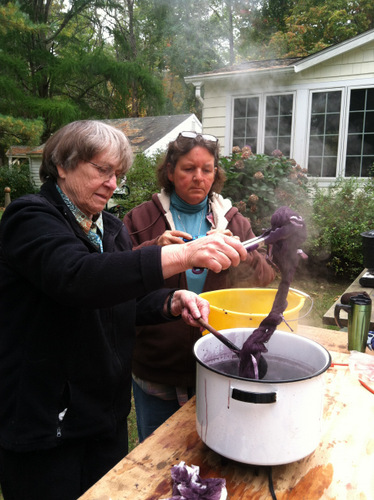
The true excitement of the day for me was that lichen dye pot.  The woman who brought it has this particular lichen growing on rocks on her wooded property in Connecticut.  Lucky woman!  She is very careful not to take much of it, and the little she takes has lasted her for years.  I could not believe what a deep purple we got when we put in our various skeins of yarn.

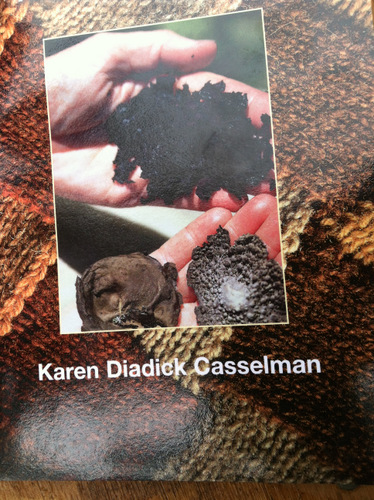
 The lichen she uses is the one pictured at left on the cover of Casselman’s book.  It can be light green in wet weather or grey in dry weather, but the underside of the lichen is always a very dark almost-black.

Perhaps the lichen dyeing seemed the most like alchemy to me.  Sharon said that the fibers dyed with lichen need to stay wet for 24 hours and then dry in natural sunlight!  Doesn’t that sound magical?  Well, I certainly wasn’t going to tempt fate, so I brought my three lichen-dyed skeins with me down to the Chesapeake so they can get their sunlight under the dodger on Pandora. It’s been quite cloudy in the Chesapeake so I hope that won’t affect my color.

So… after my day of dyeing I returned home to throw some things in a bag in order to leave for Annapolis early the next morning.  I’ve been on board for a few days now, and we are heading south to Beaufort, North Carolina.  I will get off the boat there and Bob’s crew will drive my car to me so they can get onboard and I can drive home!

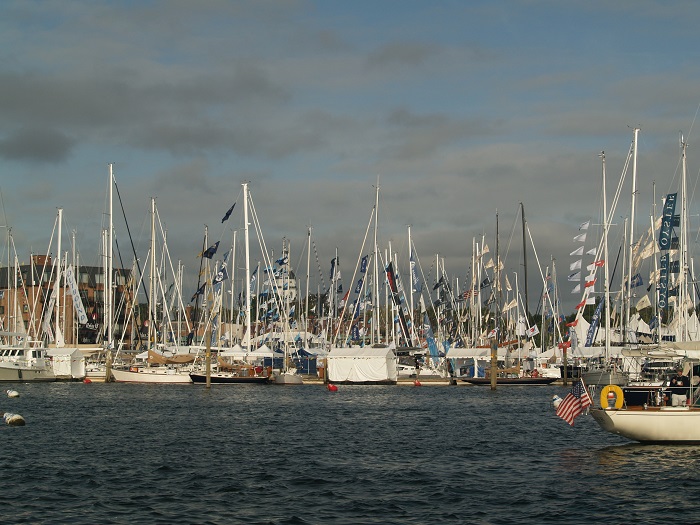
Annapolis is such a pretty city!…although I am reluctantly missing the beautiful fall colors of New England.  It was the last day of the boat show as we left the harbor.

We sailed to Solomon’s Island yesterday and on to a little creek just south of the Potomac River today.  We should be in Hampton, Virginia, by the weekend in order to participate in a big cruisers’ festival over the weekend.  We are already seeing many friends from our trip south last year.  It is such a small, small world….

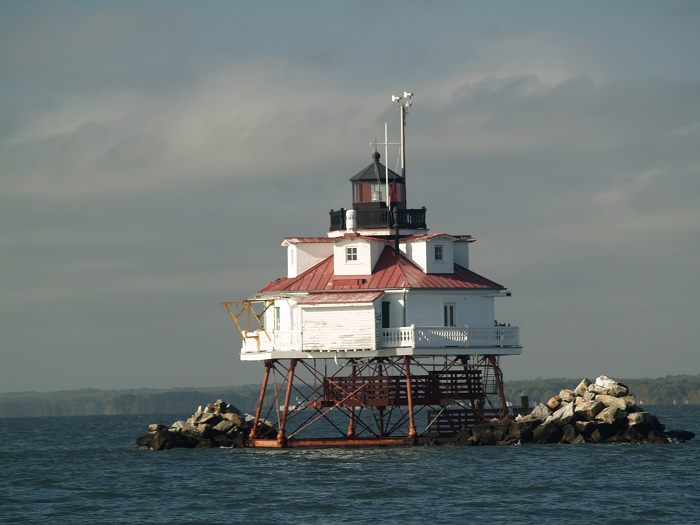
This is the Thomas Point lighthouse that we passed on our way to Solomon’s Island.

Scroll to Top