ArgoKnot

Author name: ozweaver

Summer Weaving

Summer is a time when my weaving projects must take priority since that’s when I’m home to work!  Yet summer offers SO many wonderful distractions!  The garden, family and friends visiting, lots of conferences to attend.  I want to kick back and enjoy the season, but I also feel the pressure to make as much progress as possible before I leave home again.

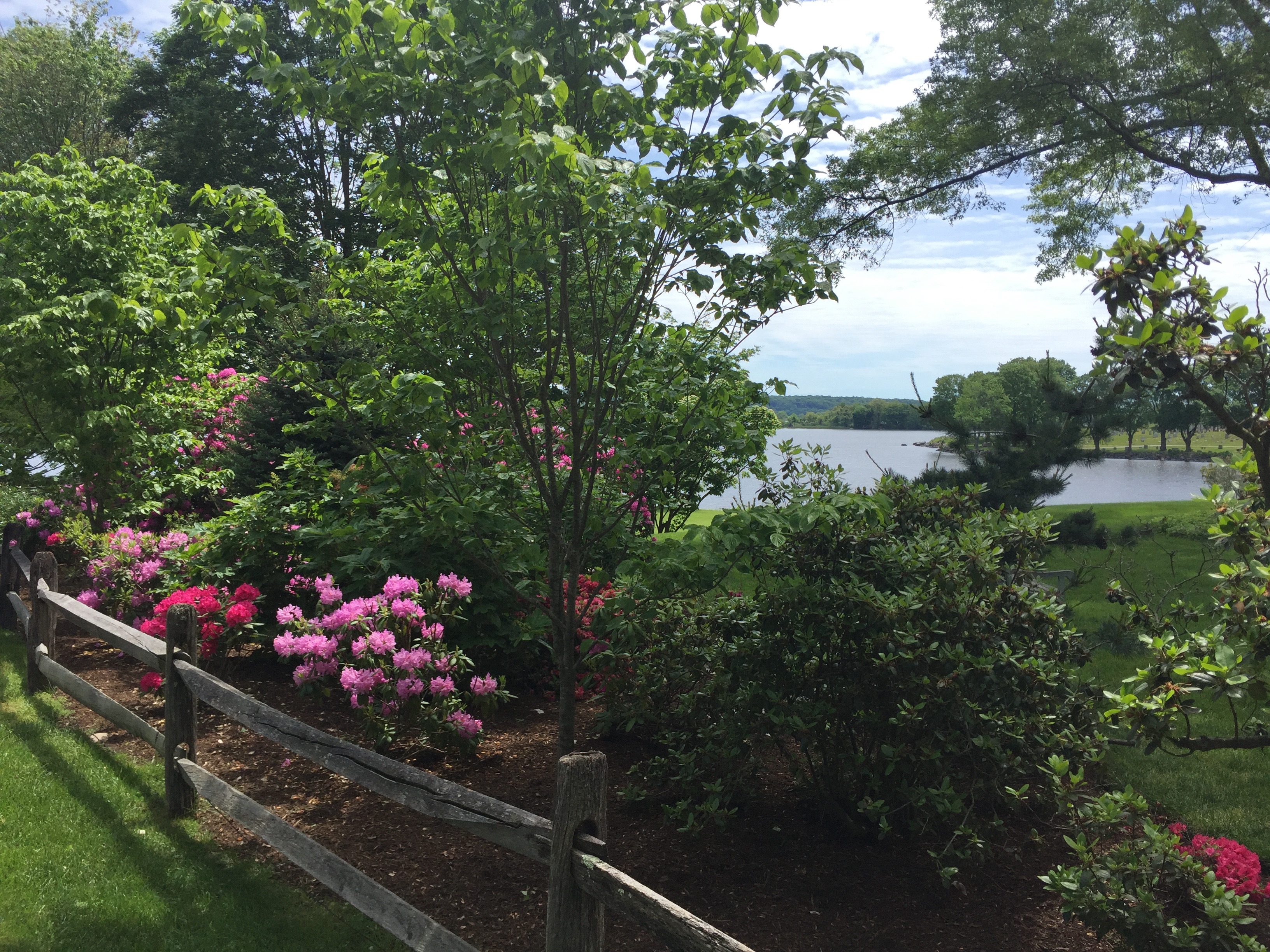
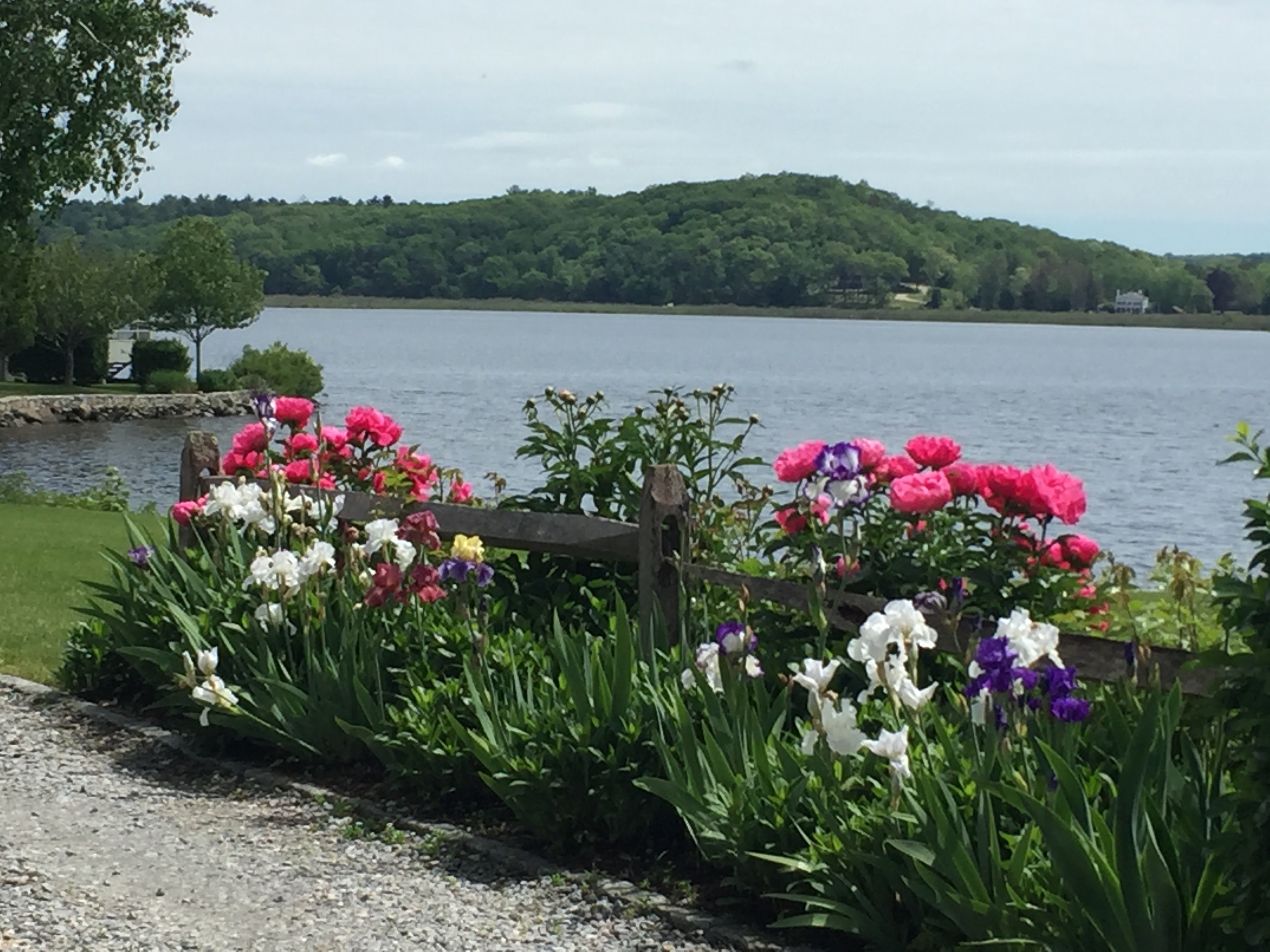
These are the scenes that greet me each day on my walk along the Connecticut River, although the peonies and iris have shifted to roses, and now the roses are being overtaken by hydrangea.

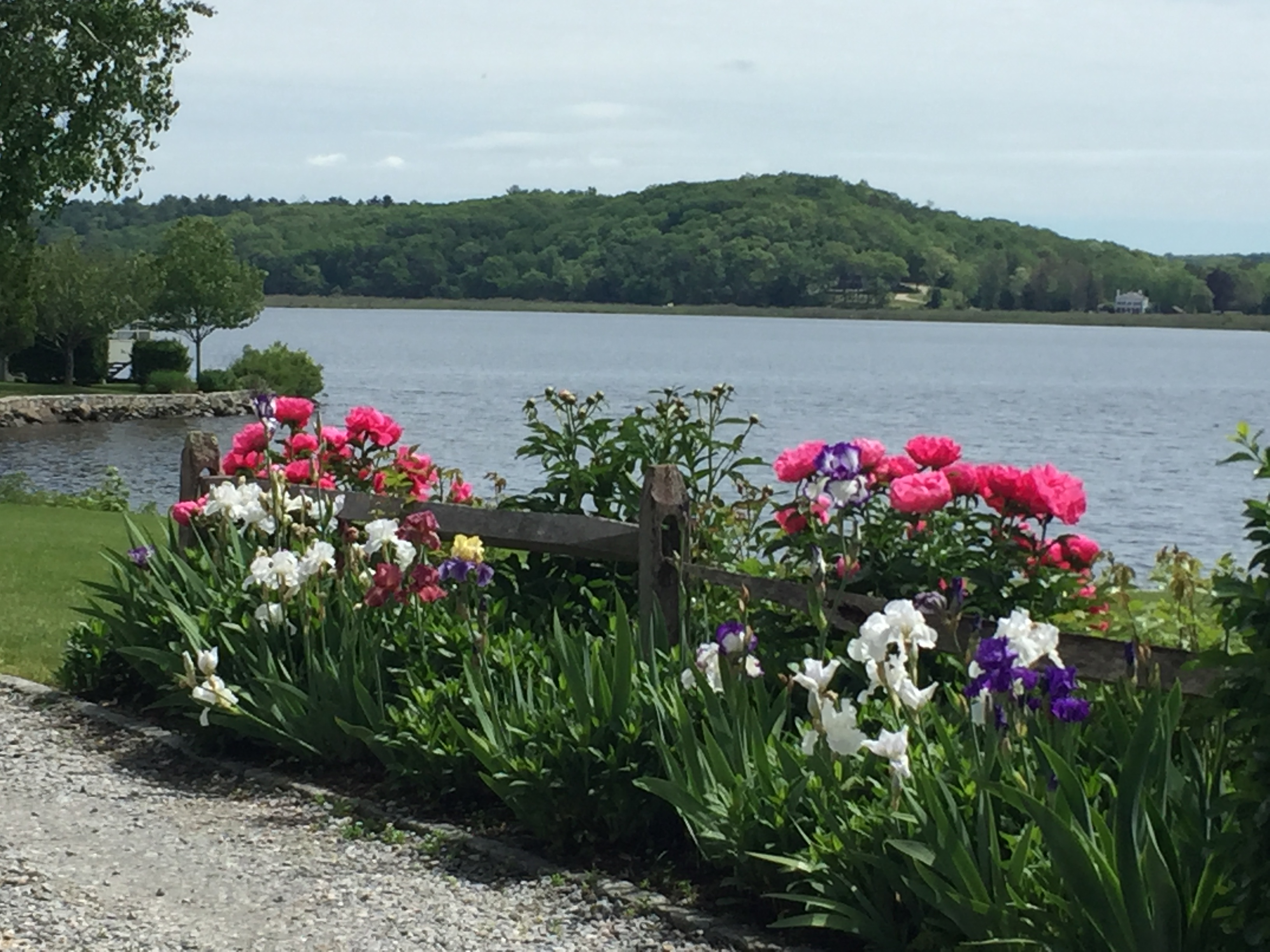
IMG_3564

IMG_3503

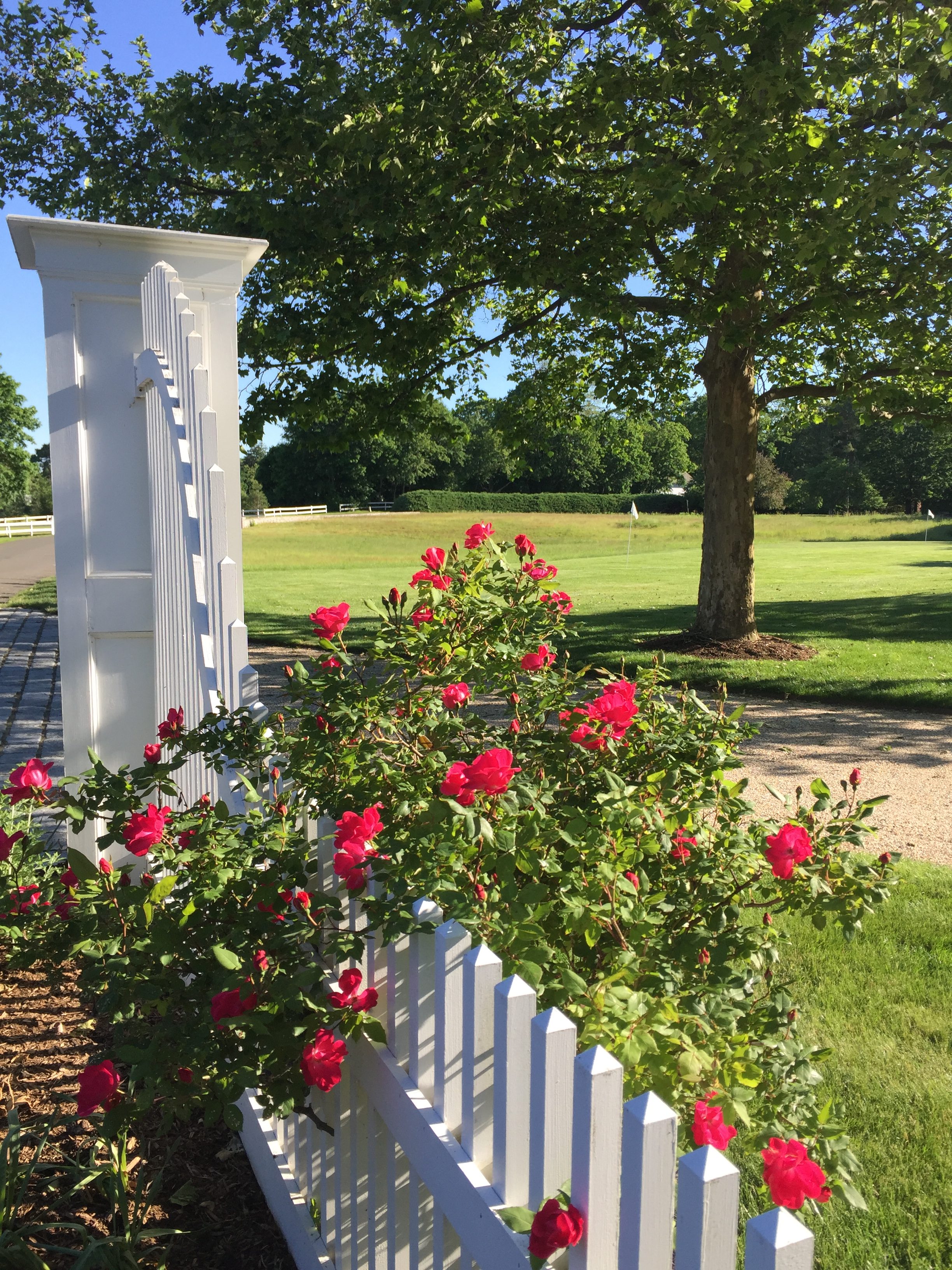
It’s been a banner year for roses in my own garden.  I have to give all the credit to Bob since he has fertilized every time I’ve asked, and he’s also used some kind of eco-friendly spray when the gypsy moths fell out of the trees on to the rose bushes.
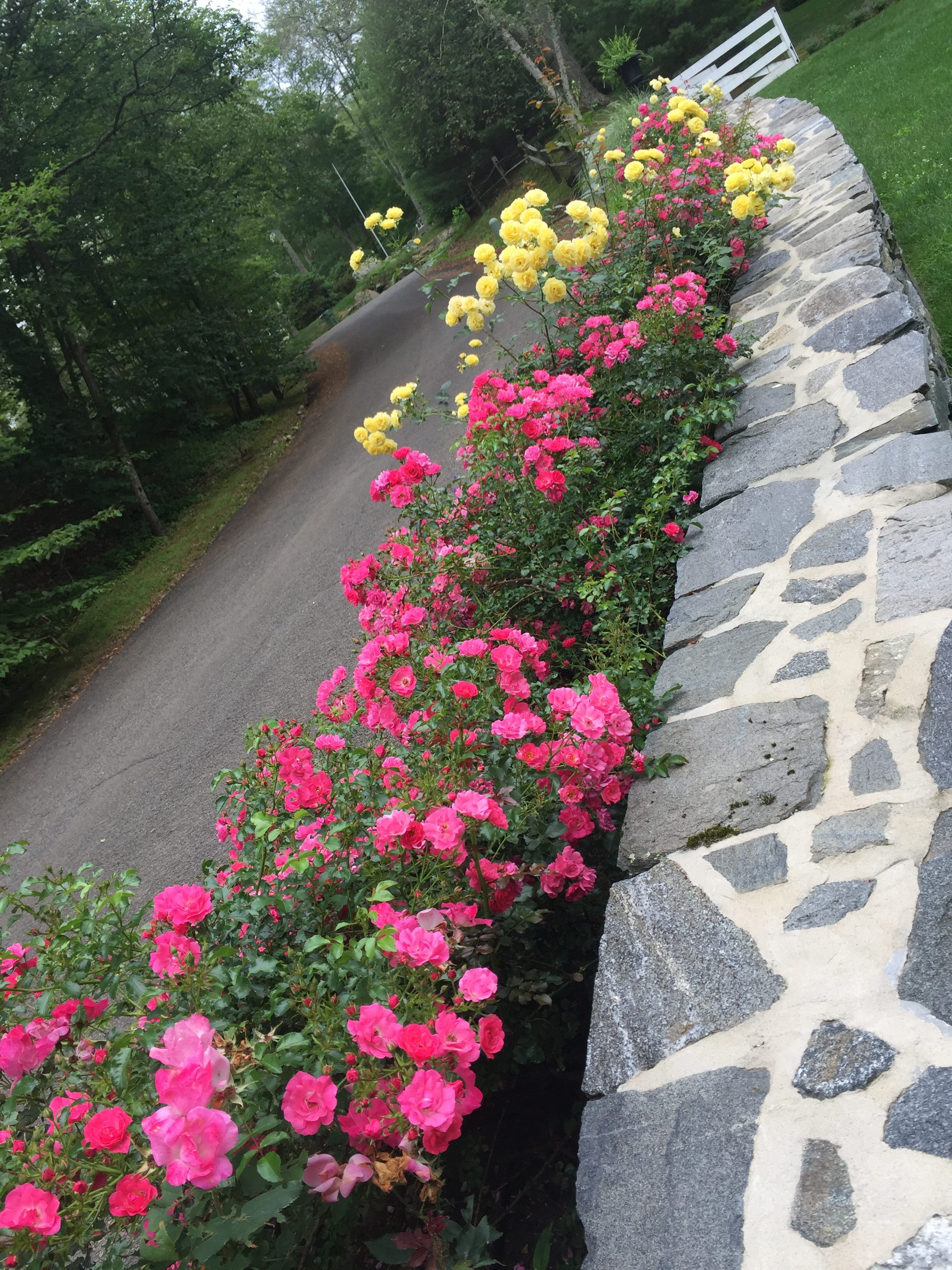
IMG_3702

We have a granite wall that is about 100′ long and planted in pink and yellow roses, interspersed with lavender, daisies, and boxwoods.
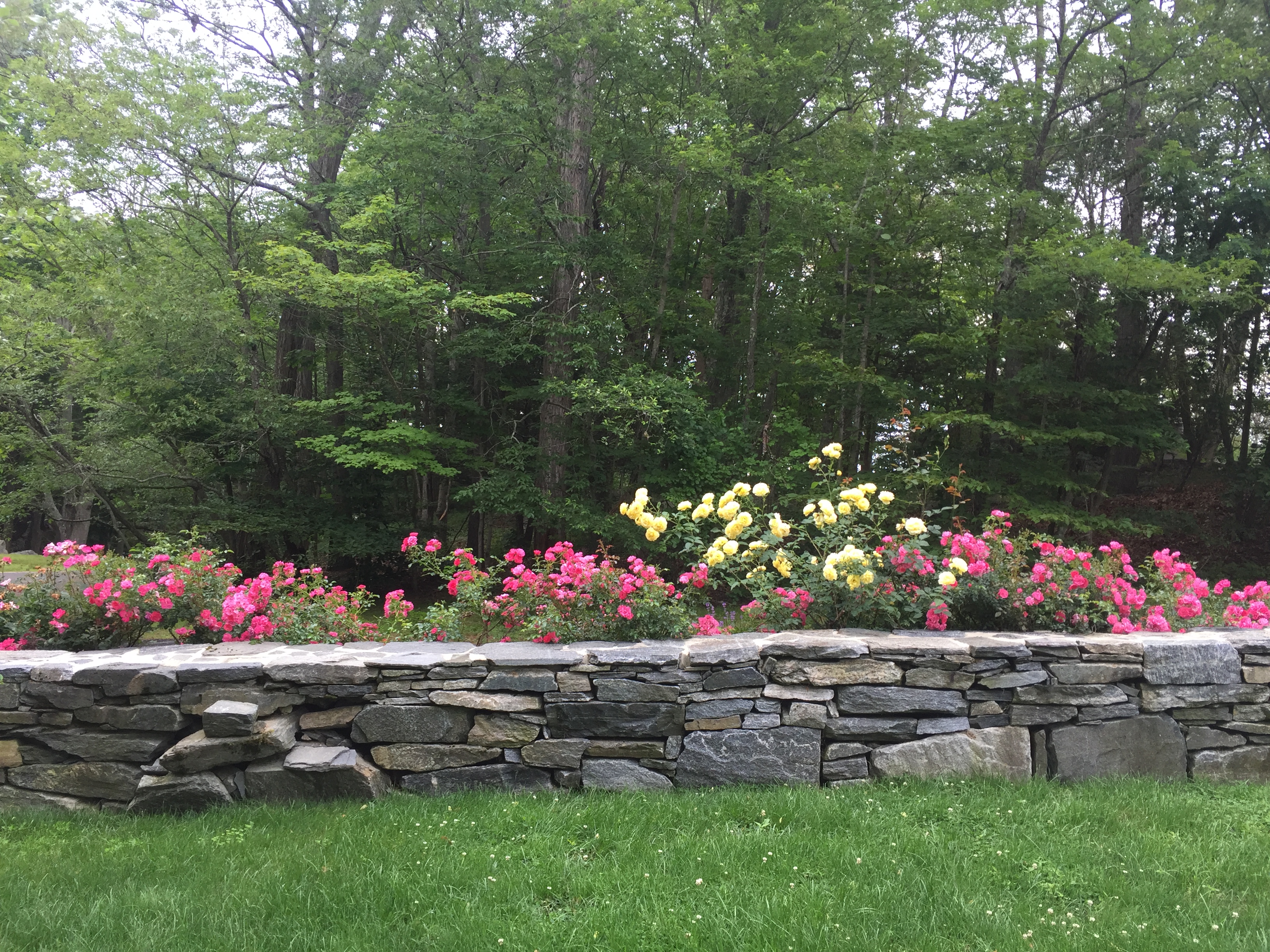
IMG_3694

I’m going to back up a bit and reminisce about the trip I took to Tennessee to attend the Southeast Fiber Festival back in April.  Back in April?  Time flies!  I took three weeks to drive down to Gatlinburg and back.  It was a perfect mix of relaxation and adventure.  After spending Easter weekend with my new granddaughter and her parents, I continued south to meet my good friend and tapestry weaver AnnaByrd to make the rest of the trip together.  We had a wonderful 500 mile drive through the Shenandoah Valley and into the Smoky Mountains.  Both going and returning we stopped in New Market, Virginia, and enjoyed lunch in a cafe at the civil war museum there. We were both taking a 3-day class with Jon Eric Riis on Coptic tapestry techniques.

In spite of the terrible destruction in Gatlinburg by last autumn’s fires, Arrowmont is still a stunning place.  There is plenty of evidence of the chaotic and destroying force of fire, but I was relieved to see that there was still plenty untouched. This view is not the direction of the fire came from.
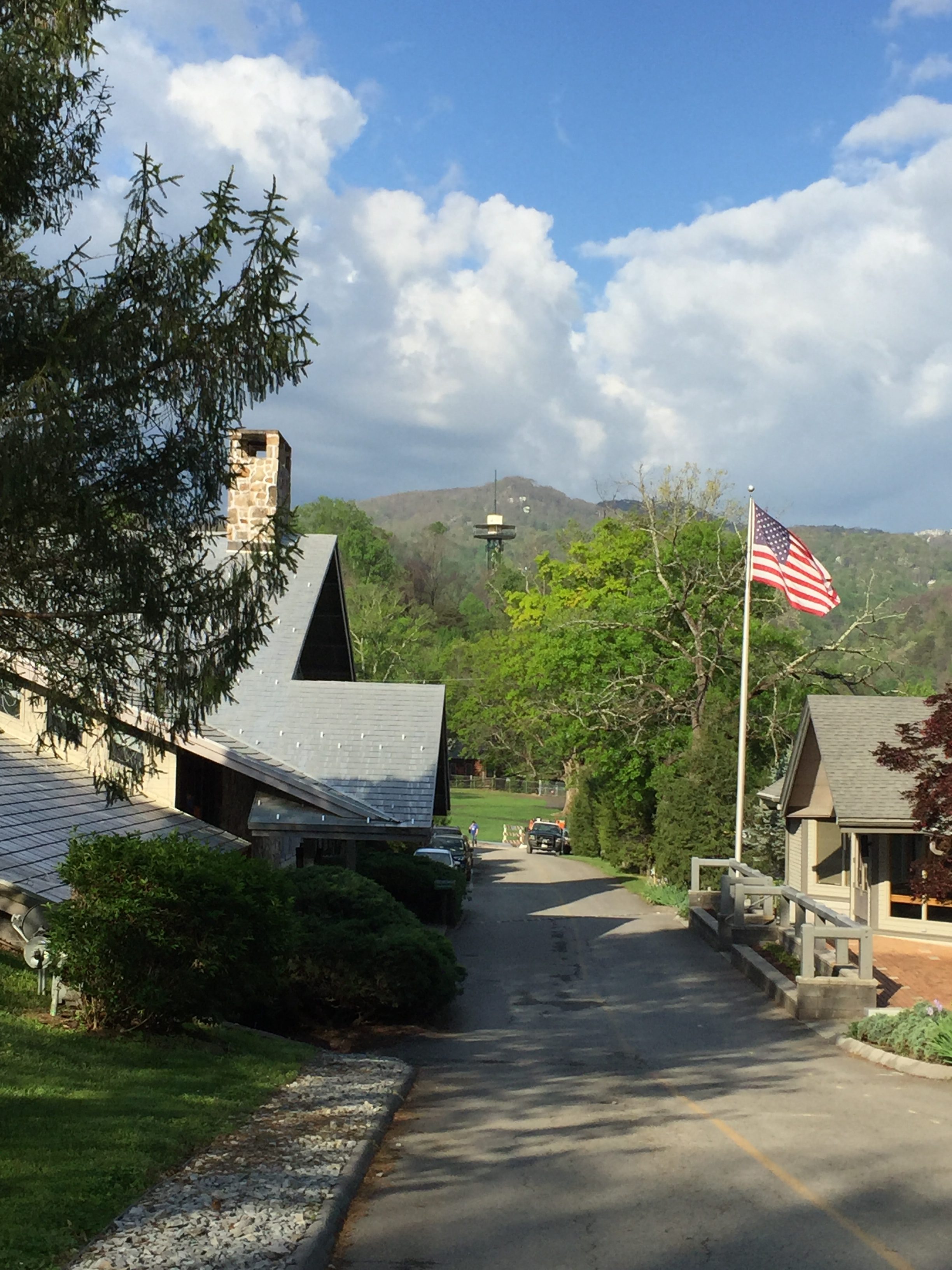
IMG_3329

A view of the main building from the dining hall.  The dining arrangement is the best I’ve had at a conference.  I wish I’d photographed the dining room.  It is cafeteria style, and the food is excellent.  You sit at real wooden dining tables that have real chairs.  Although there are a lot of tables in this large room, it feels quite like gathering in a home situation because the food is excellent and so obviously prepared with care, and the setting is so comfortably home like.  Well done!
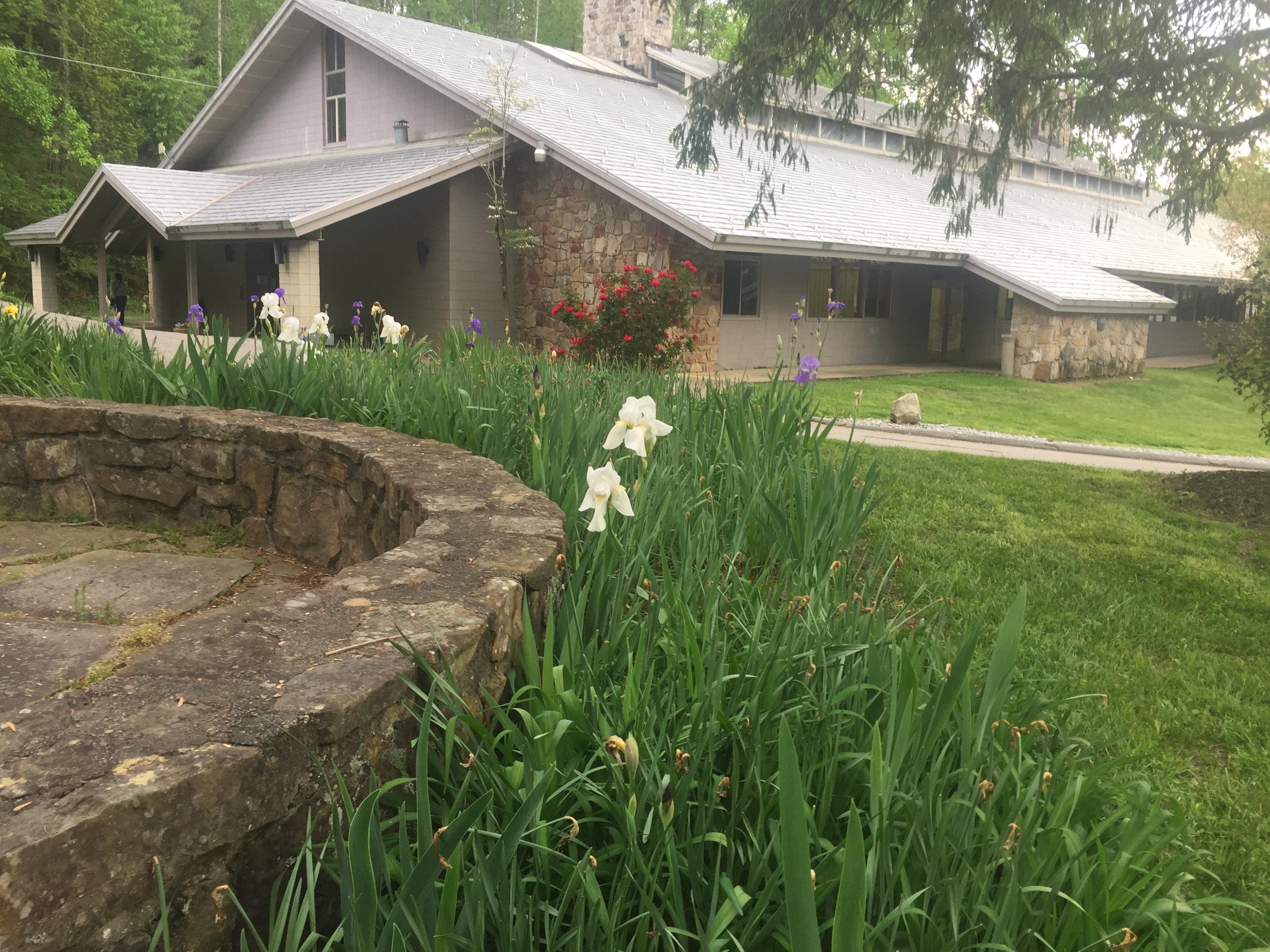
IMG_3326

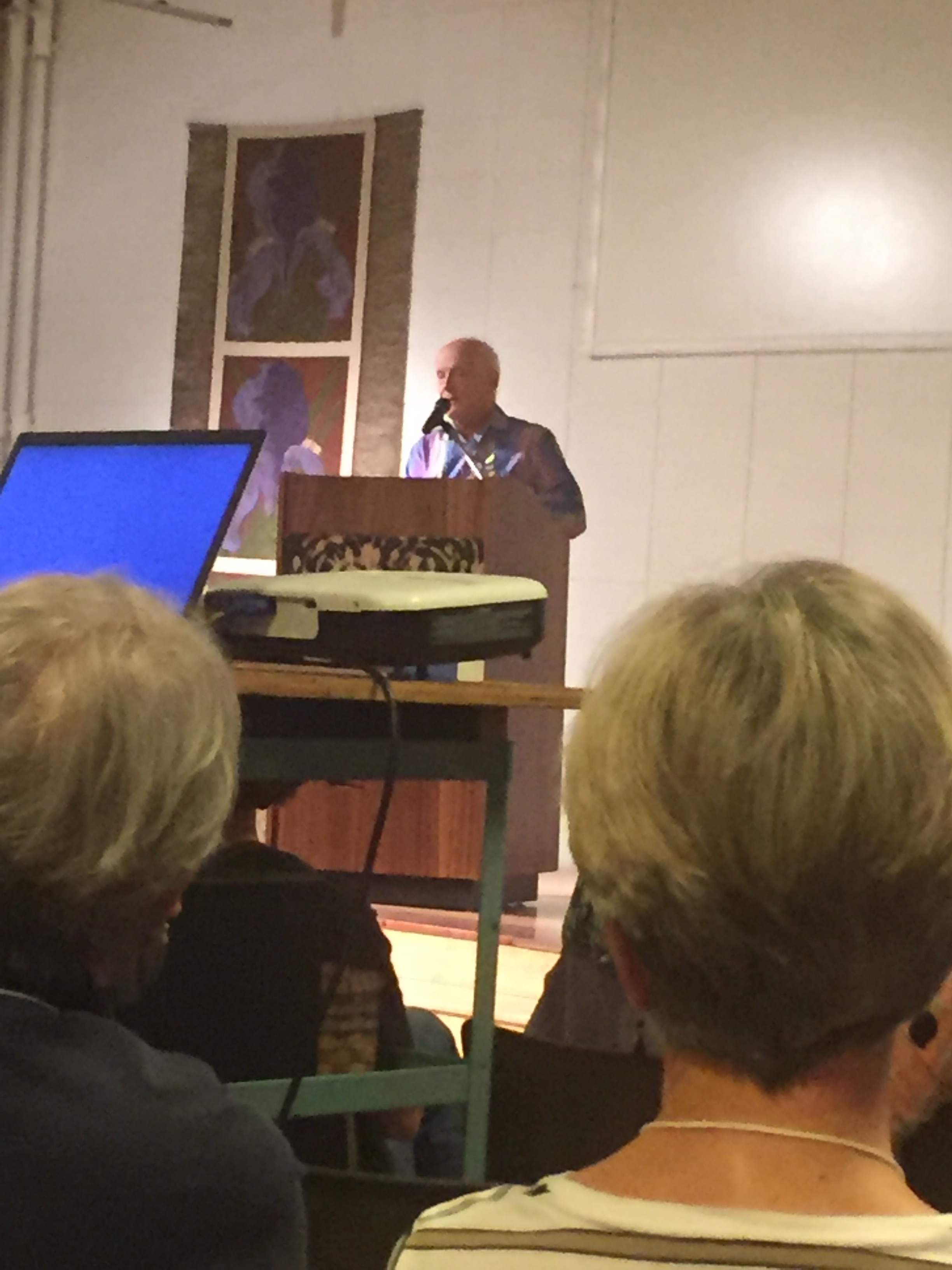
My few photos from this trip are not memorable, but the memories they conjure for me are too good not to use.  Here is Jon during his keynote address for the conference.
IMG_3367

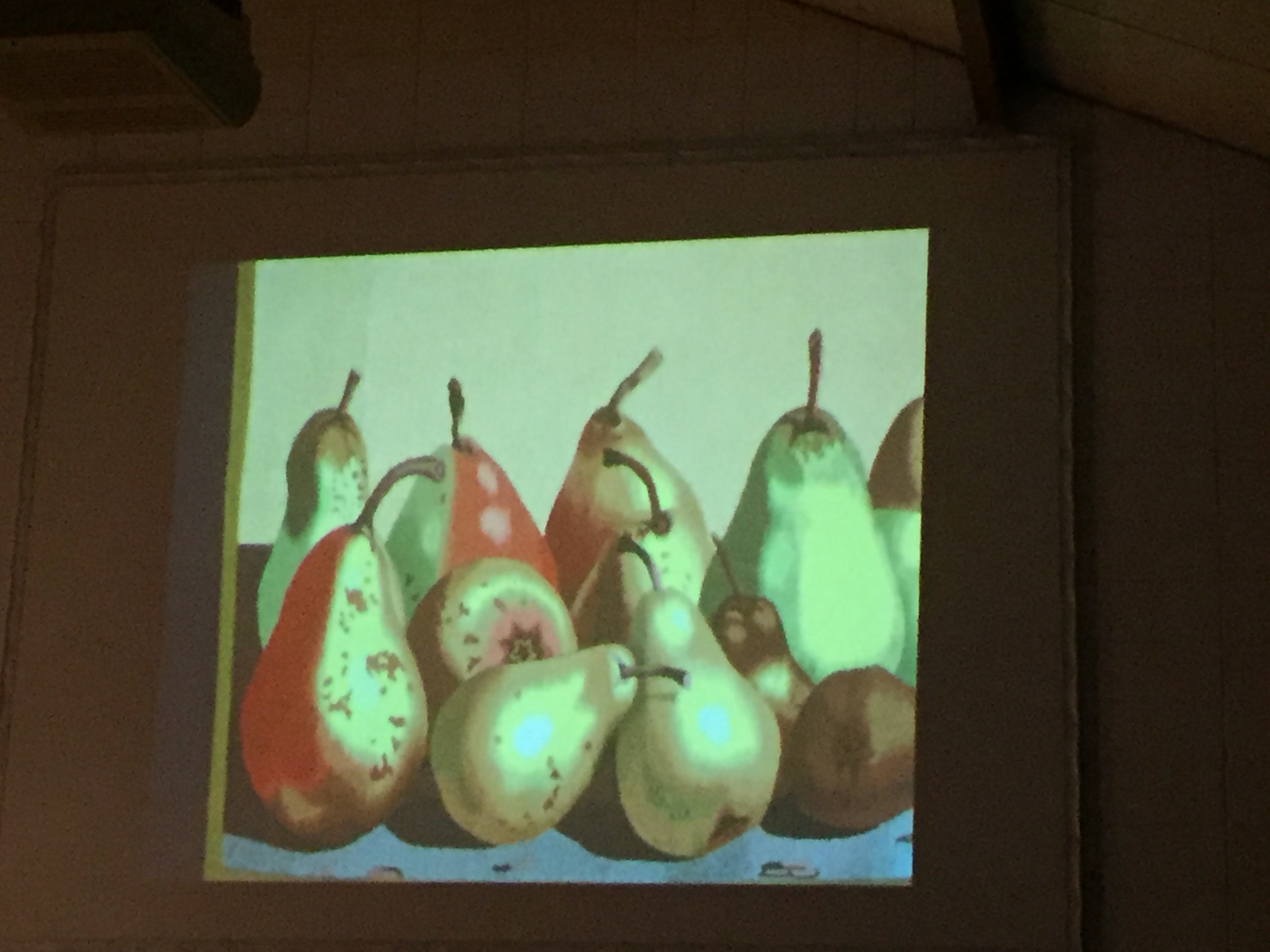
The slides of his work covered most of his weaving career.  I had no idea he’d been weaving for 50 years–how can he be old enough to have had such a long career?  I have always loved his Icarus tapestries, and I no idea just how many works he’s done over the years.  Look at this assemblage of pears! I know, it’s a bad photo– what can you expect of a photo of a projected slide during the presentation?
IMG_3342

AnnByrd took this photo of Jon and me together, and it’s a great memory for me, even though blurry.  Some day the memory of the workshop will become like this photo….a bit out of focus–but hopefully not too soon.
20170422_115352

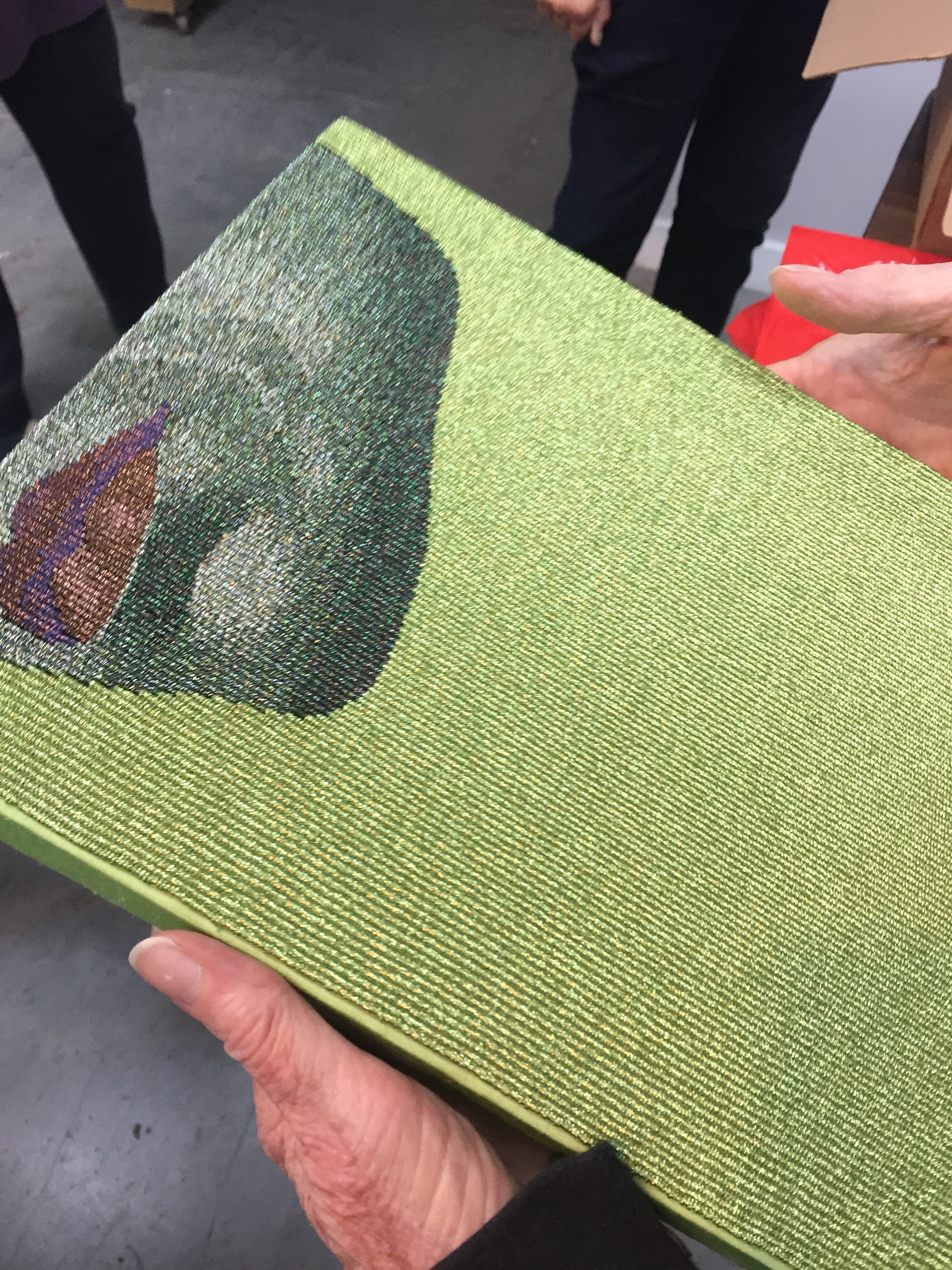
On display in the instructors’ exhibit were a series of partial faces that Riis wove entirely in metallic yarns.  I don’t know HOW he got such a beautiful surface with such challenging materials.  On the last day, after this work was crated, he unpacked a few and let us pass them around.  Look at the curve of the chin–and the shading!
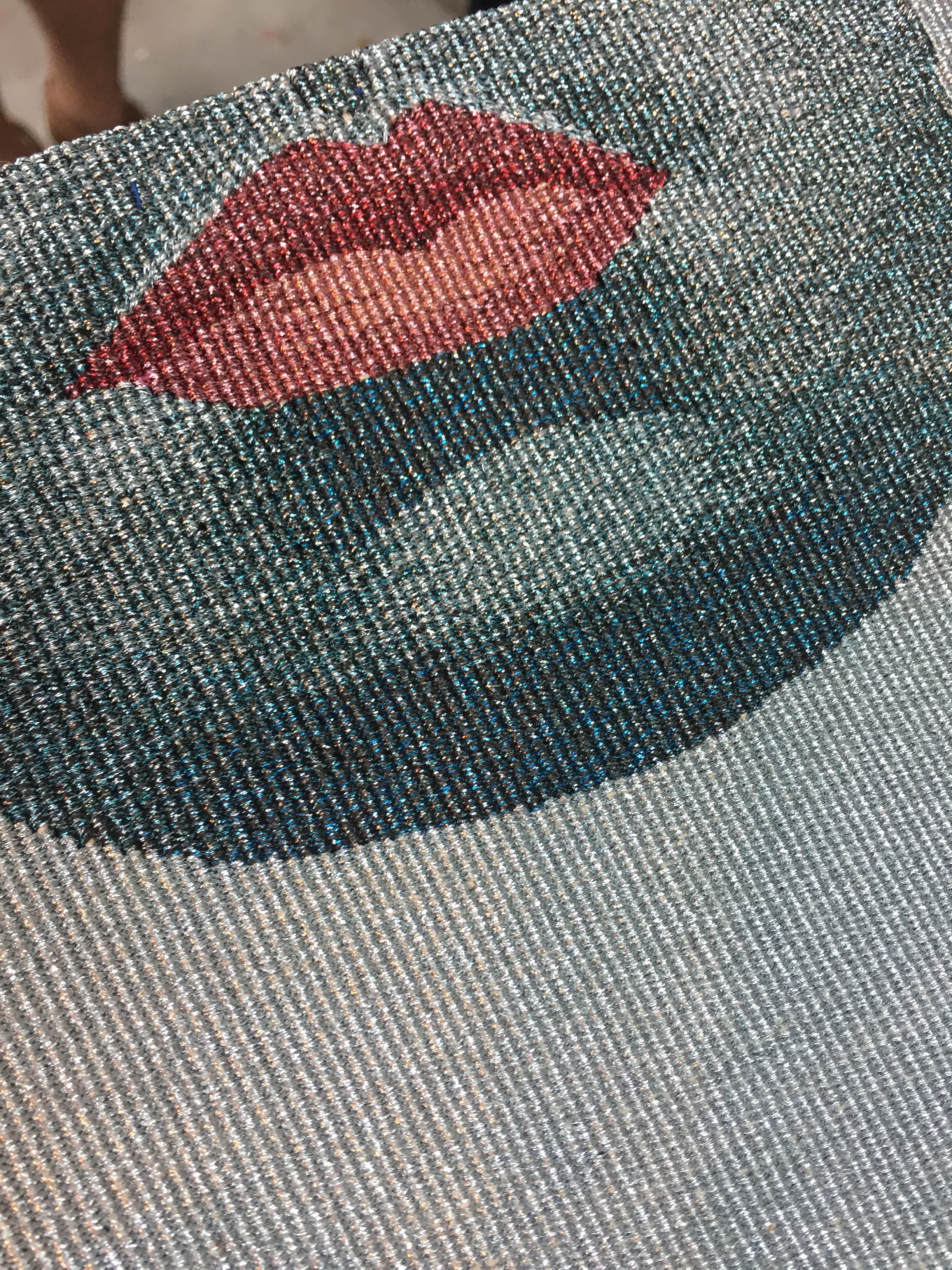
IMG_3389

IMG_3391

There are 20 partial faces in this series that hang together in a grid.  The piece is called “Diaglogue.”  You can see it here.

About 10 days after I returned home from this adventure, I was off to the Cape with a couple of lace making friends.  We were headed to the Sacred Hearts  Retreat Center in Wareham, Massachusetts, for the annual weekend  retreat of the New England Lace Guild.  It’s a wonderful setting near the beach, all our meals are served to us family style at big tables in a large dining room.  We have private rooms and shared baths, and we can stay up all night making lace if we like, go for walks, take classes, and even buy stuff from the Van Scivers who always come. For the past two years I’ve opted not to take a class, and instead, filled my days sitting in the sunroom with a couple of my own projects that needed uninterrupted attention. There are plenty of other lace makers who do the same.

I spent the weekend working on this project while also keeping track of the eagle cam that was following the eaglet Spirit, on the Anacostia River, just off the Potomac in Washington, DC.  You can just see Spirit at the edge of the nest (upper right) on my computer screen.
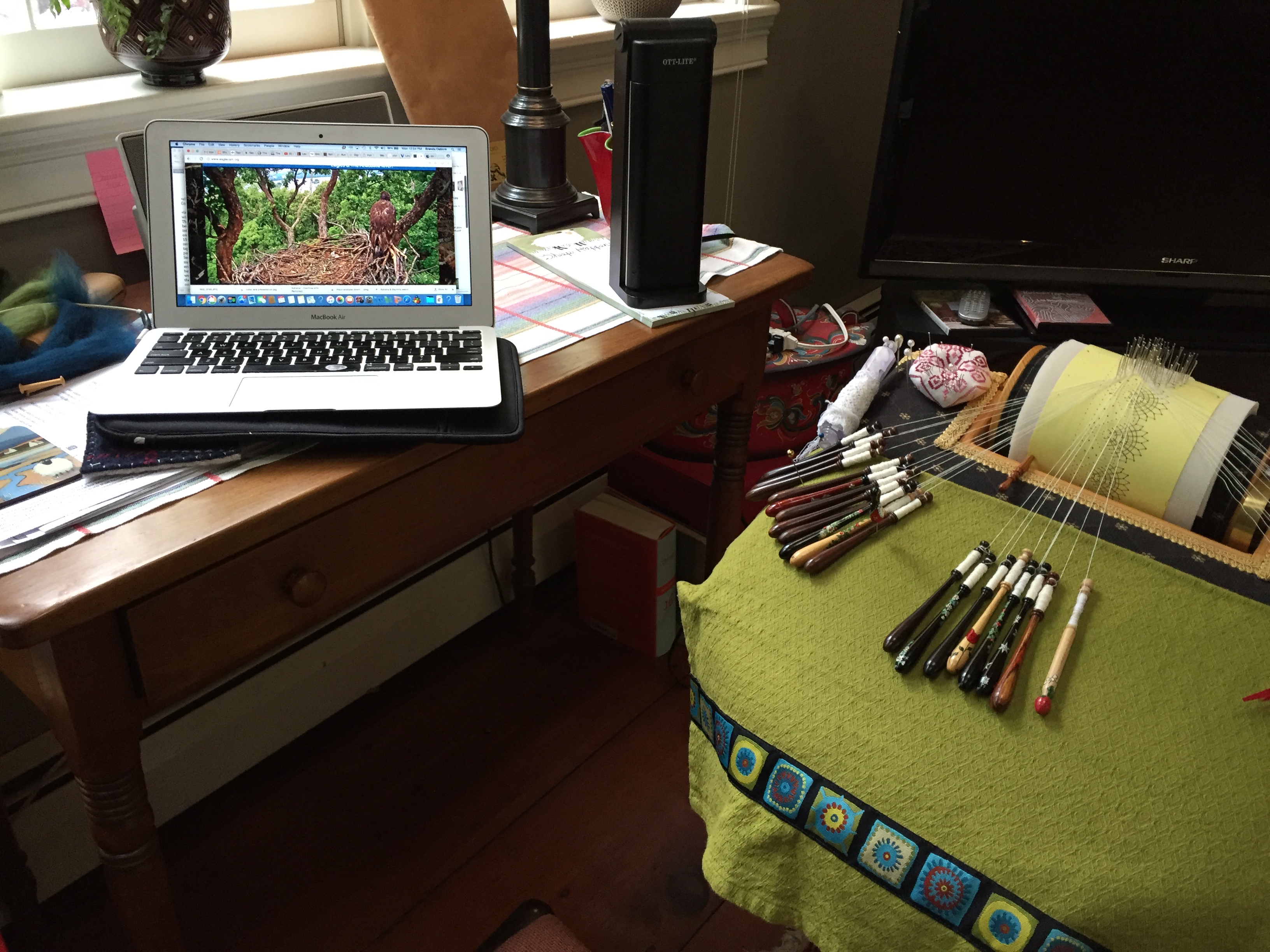
IMG_3479

Here is one of the two classrooms….. since the center is in a large Georgian house, the rooms are generous and furnished from decades past.
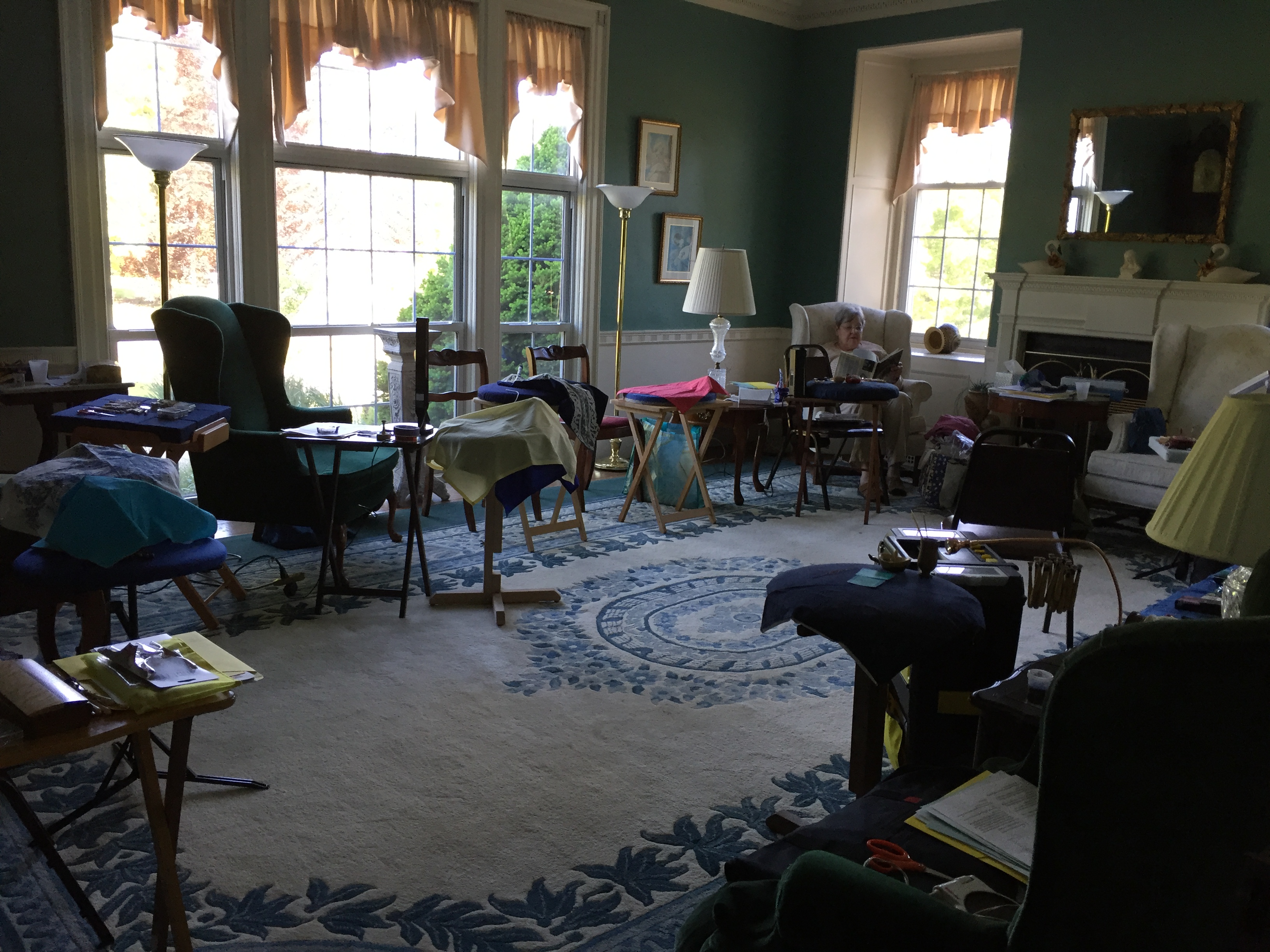
IMG_3468

Back at home, with the summer unfolding, we’ve celebrated our 40th anniversary, and been treated to a long weekend with both our sons and daughter in law, along with cherished new granddaughter Tori and a few good friends.  I’m working on a couple of floor loom projects and two tapestries.

One tapestry is the line of text that our son Christopher asked me to weave.  As of this week, I am 20% done.  It seems like an insane thing to weave, and even Archie tried to dissuade me from this project, in spite of having woven quite a lot of text himself.  Yet I find it both relaxing and challenging.  Chris made the font and then hand manipulated the spacing of letters for my cartoon.  I am not making any marks on the warp, since I’ve found that I have more success working from a cartoon when I let the cartoon be an idea of the weaving, rather than trying to actually follow the cartoon slavishly.

IMG_3780

And here is the work in  progress on the design I created in Riis’s Coptic workshop.  The workshop was titled “Unraveling Coptic Weaving,” and we were to bring family photos to reinterpret in a Coptic style.  I balked at that idea and brought a lot of other images that intrigued me more–Minoan dancers, Greek vase paintings, and one of the bas relief religious figures from the facade of St. John the Divine Cathedral in NYC.  Anyway, after playing with those compelling ideas, I settled back on the idea of a family member…..dear little Tori.

The warp is sett at 16 epi, which is considerably finer than the finest sett I’ve ever used before — 12 epi.  Between the fine sett and the neutral color of the warp thread, I am struggling to see what I’m doing!  Still, when I pick the right threads, the weaving is also compelling.
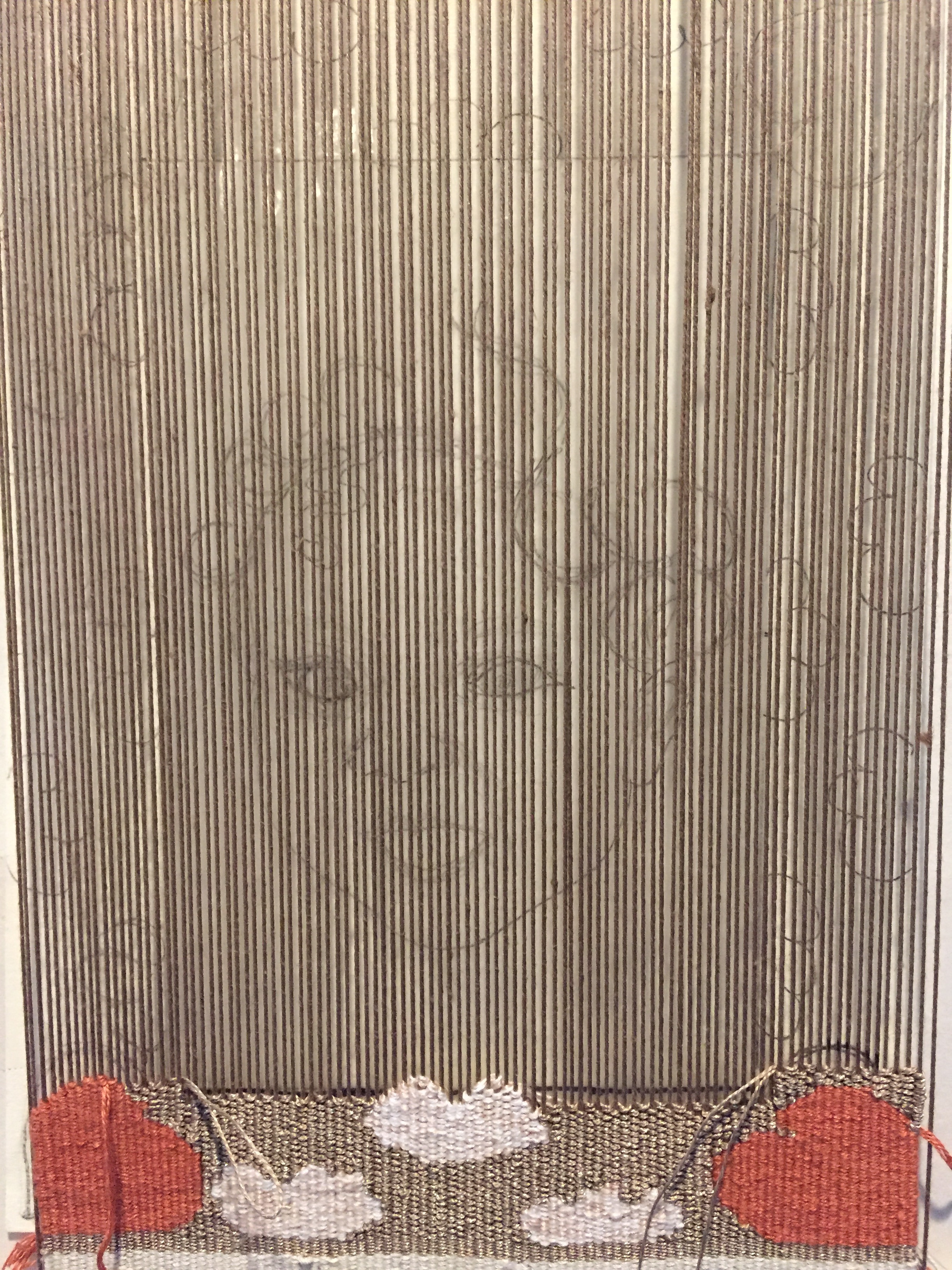
IMG_3791

It was a good challenge for me to draw this cartoon.  Tori will be surrounded by clouds with hearts in the corners….schmaltzy for sure, but I hope to balance that a bit by using some tertiary colors. Each cloud and each heart is somewhat different from each other….the only way I can do it. We’ll see.

This morning I measured the lace that I started at the retreat.  It’s also for Tori.  I just photographed it after I put away the measuring tape.  It is now a whopping 32″ long!
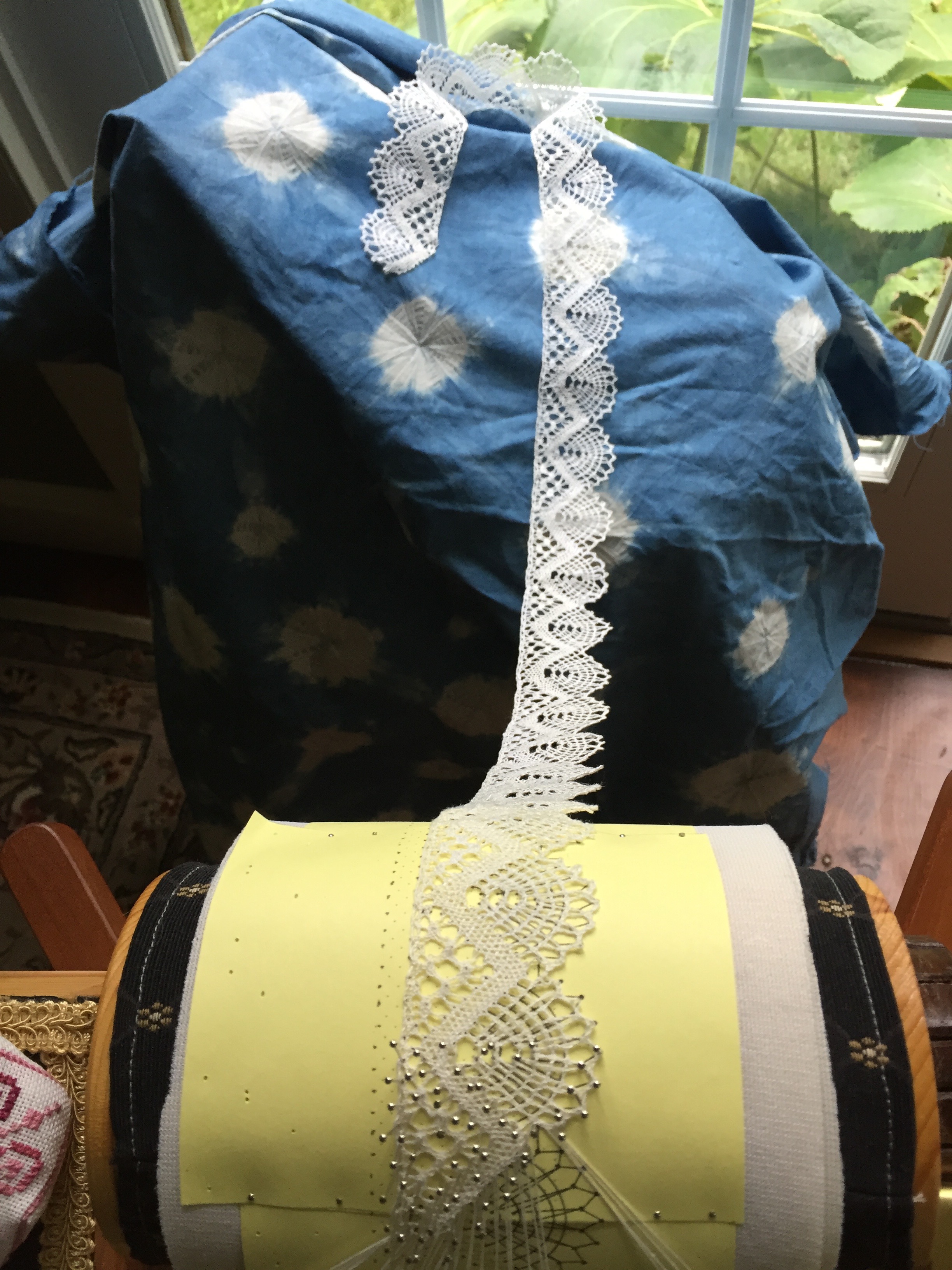
IMG_3789

So I’d better get back to work on these projects so I can get some of them finished before the season changes!


When Weaving and Sailing Converge

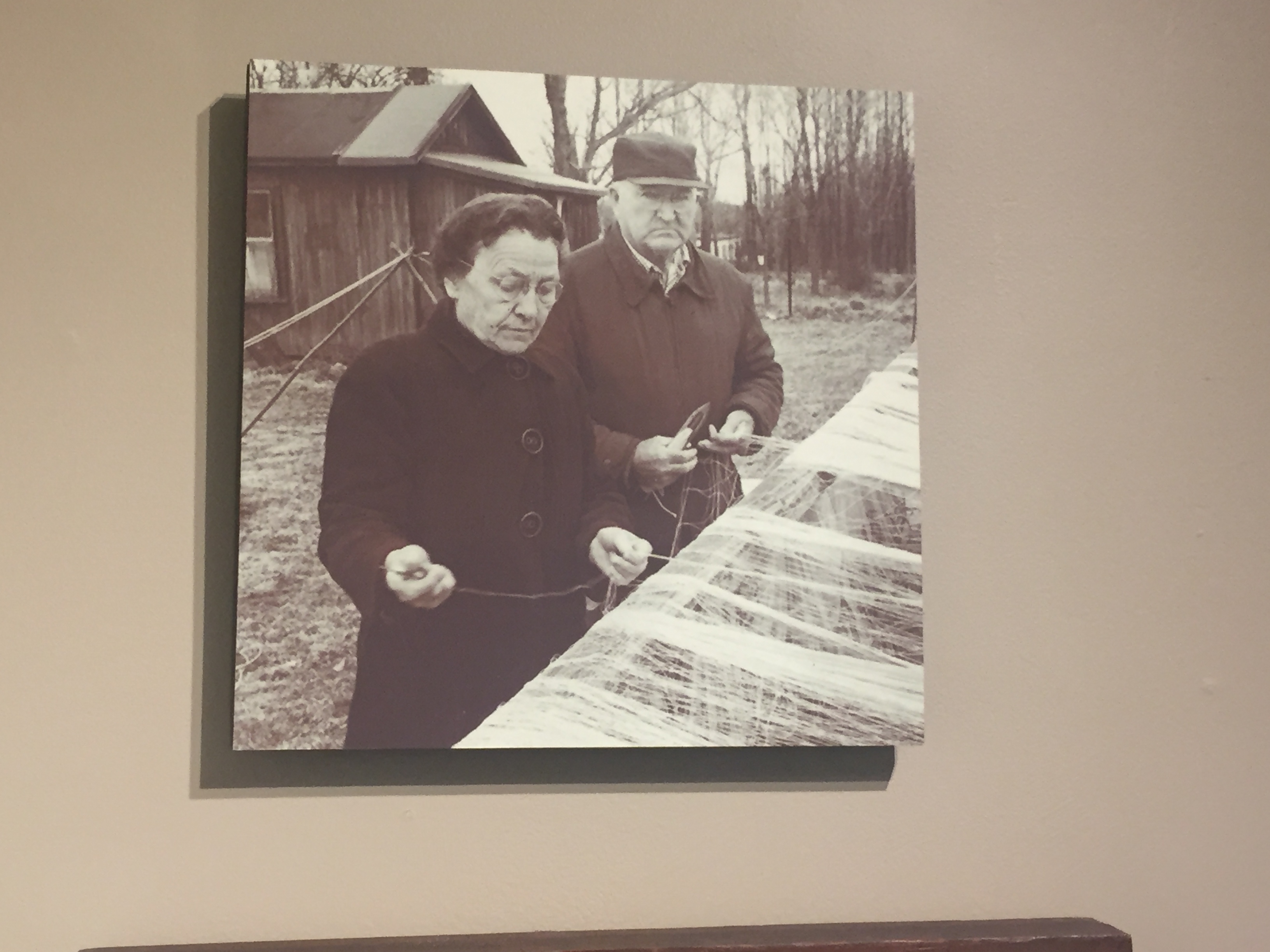
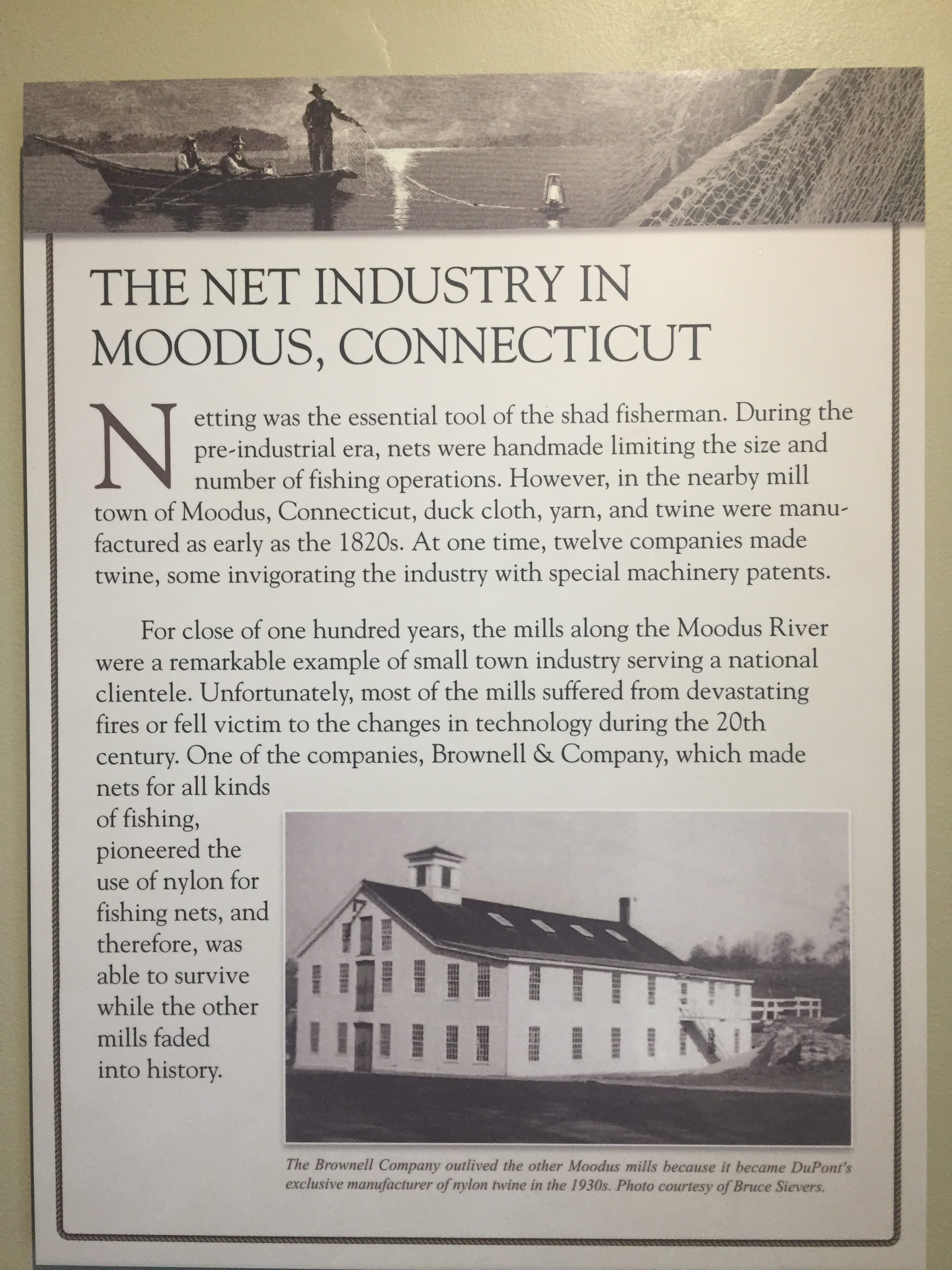
The month of June is shad season all along the East Coast of the US.  This is the time of year when many communities have shad festivals.  Our festival in Essex took place over the weekend, although Bob and I were not able to take part in it.  The day after the festival, we happened to be visiting the Connecticut River Museum, where Bob enjoys volunteering.  We visited the new exhibit on shad fishing along this river, and  I learned that the town of Moodus, just across the river from us, used to be the twine making center of the US. Amazing that there is such a thing!  The twine making center of the US, in quaint Moodus. There were numerous mills for making gill nets, the type of nets used to catch shad.  These nets work by trapping shad right behind the fish’s gills, in a way that they cannot free themselves by swimming either forward or backward.

IMG_3558

Many tapestry weavers use cotton seine twine for warps, and it is getting harder and harder to find. Most of us rely on a Swedish brand of twine that comes in several sizes.  I had no idea that this very type of twine was made in this part of the world.

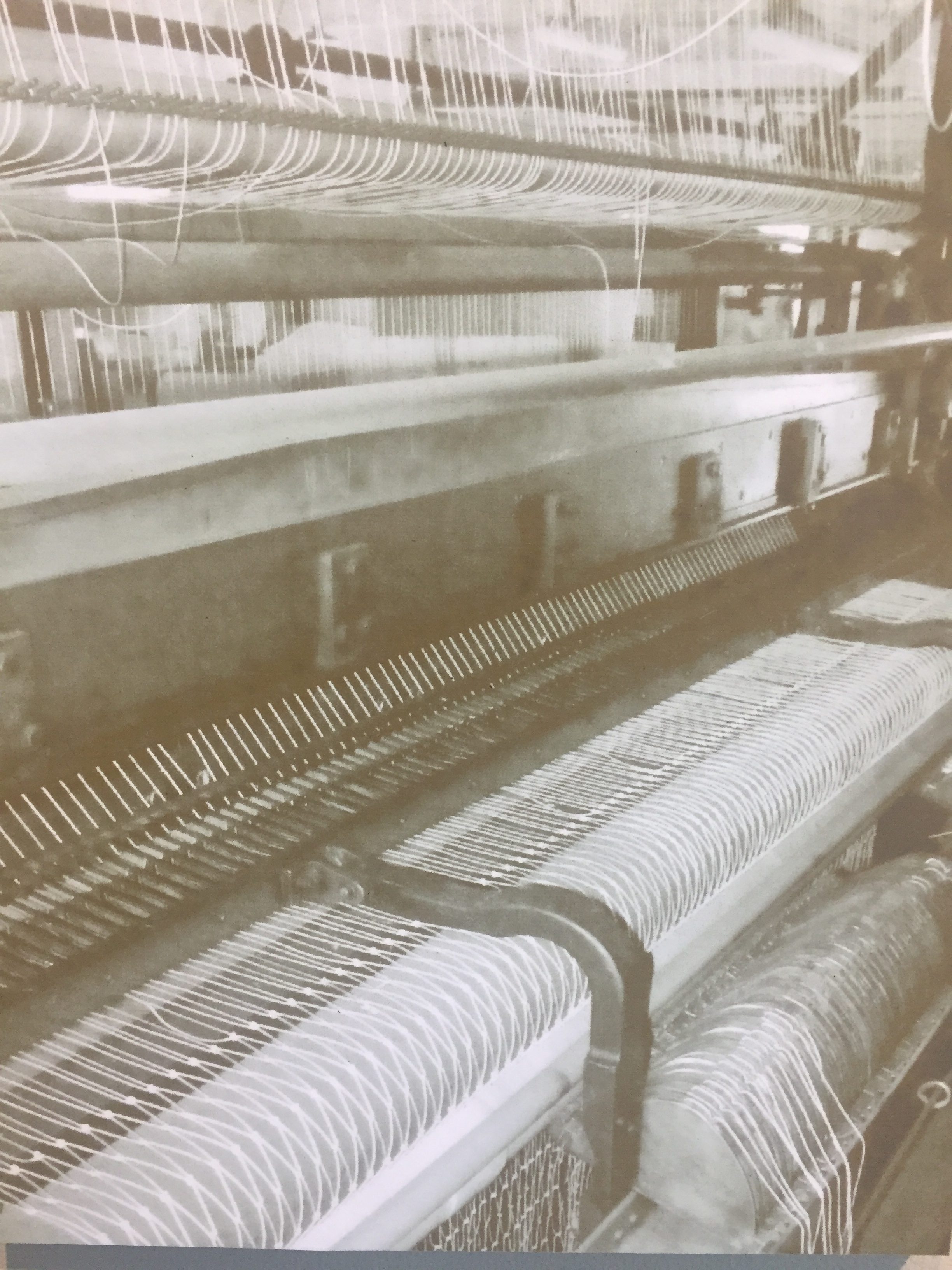
Here is the gill net making machine invented by Wilbur Squire around 1872.

IMG_3553

A close up of the knots

The twine made in these mills was also used for warps for rag rugs that were woven on industrial looms in this area, for sewing sails for boats,  and a finer cotton yarn was used in commercial sock making, and even the cotton string used inside yo-yos!  If this kind of history intrigues you, you can read more here.
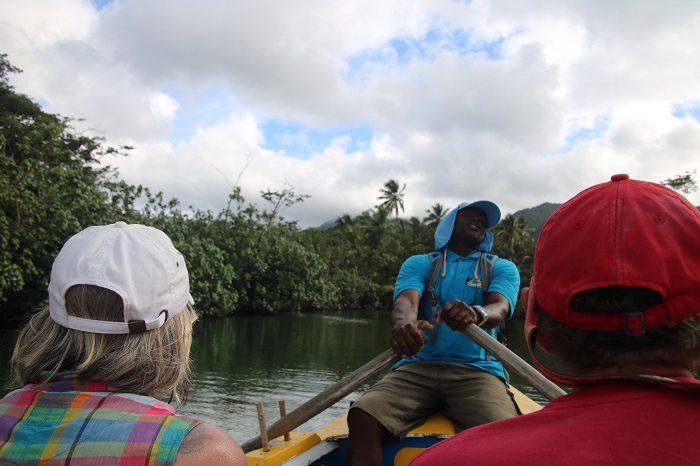
The Moodus River is a tributary of the Connecticut River. It’s a small, fast flowing river that feeds into the Salmon River, which flows into the Connecticut River at Haddam.  In the hey day of twine making there were 15 mills along this small river.  If you happen to be in the area and want to take at look at the remains of some of these mills and the dam that used to harness the power, travel along Rte. 149 to the East Haddam Land Trust’s Hidden Valley Farm Preserve, and also  Grist Mill Road off Route 149 just east of its intersection with Route 151. The Bernstein Preserve is on Falls Road/Route 149.

Here is some of the interesting information about the  twine mills and net making on display at the Connecticut River Museum.

IMG_3557

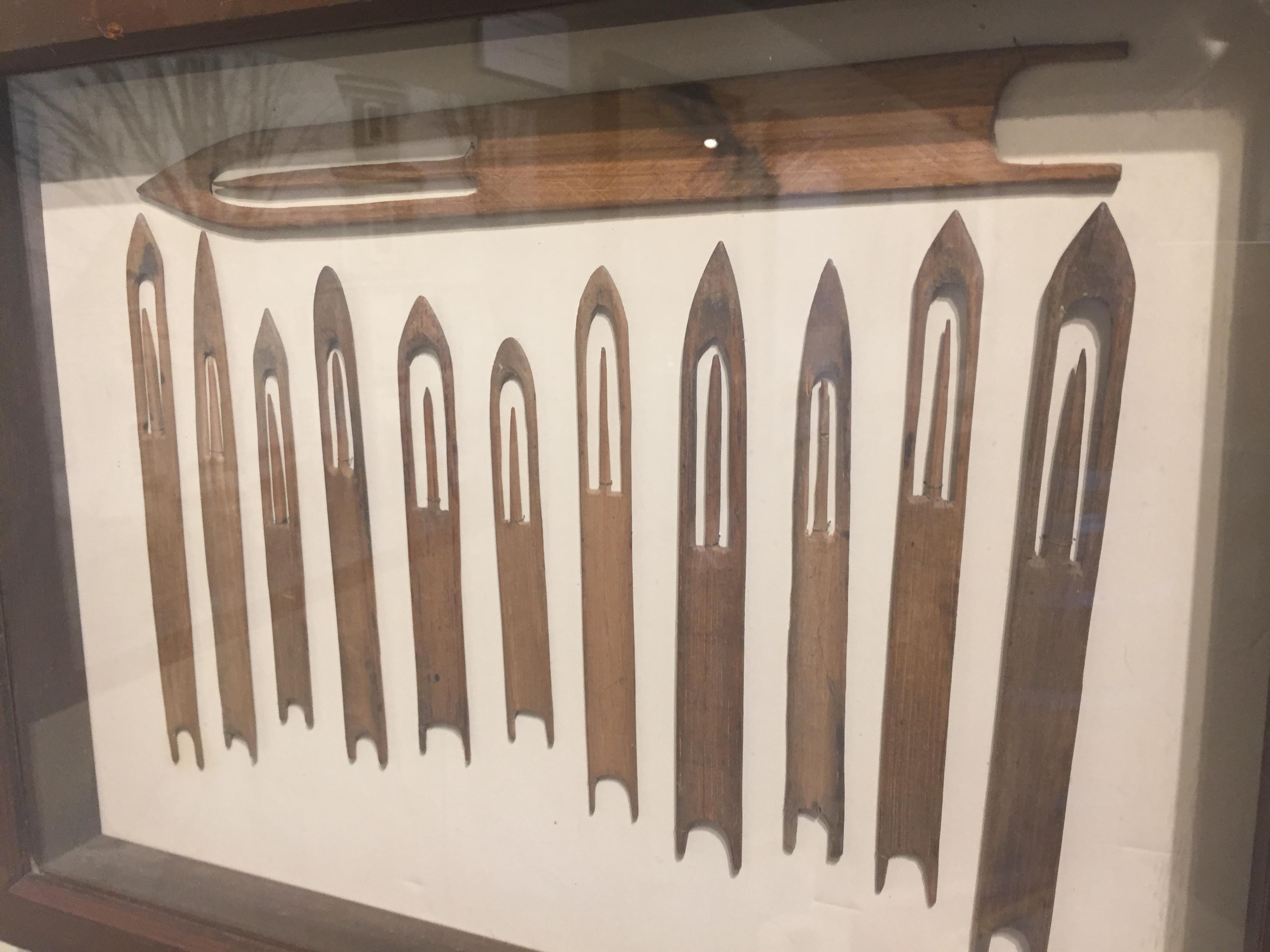
These are netting shuttles that are used to make nets by hand.  The very day that the shad festival was taking place in Essex, I was at the monthly meeting of my Connecticut lace group, and one of my good friends was teaching herself how to make netting with a shuttle just like one of these–an interesting coincidence!
IMG_3556

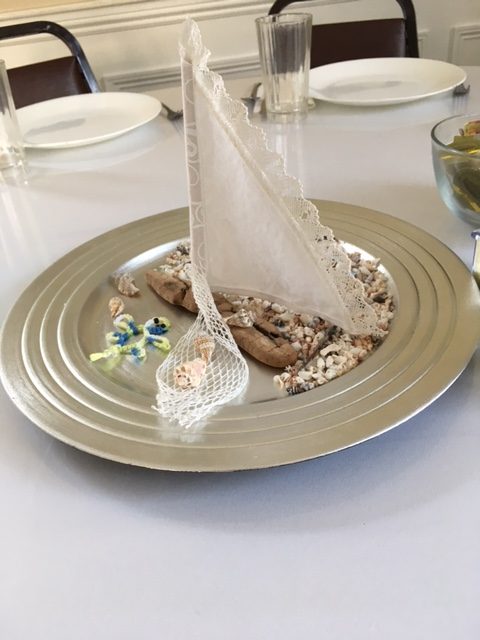
Another member of our lace guild made several small pieces of netting for Mary to for use in the centerpieces for our annual lace retreat on Cape Cod.  That little piece of netting makes just the difference, doesn’t it? It is just the right size to go with Mary’s driftwood sailboat with lace embellished sail!– and the tatted the tatted sea turtle!  Pretty impressive! Mary takes making these centerpieces very seriously! Each year she makes five or six centerpieces for our annual lace retreat that takes place on Cape Cod.  There is always a beach or seaside theme.

IMG_0664

I am intrigued by the interesting history of my new home along the river.  Ship trade in the Caribbean gave Connecticut it’s name “the nutmeg state,” and the area around Willimantic had a number of silk mills, where local farmers tried their hand at raising silk worms for a few years in the hey day of the Industrial Revolution.  Although it’s not unusual to have textile production and ship trade coexisting in a community from that time period, it is interesting to me to live in such an area now, where I can enjoy the textile history and Bob can enjoy the maritime history.

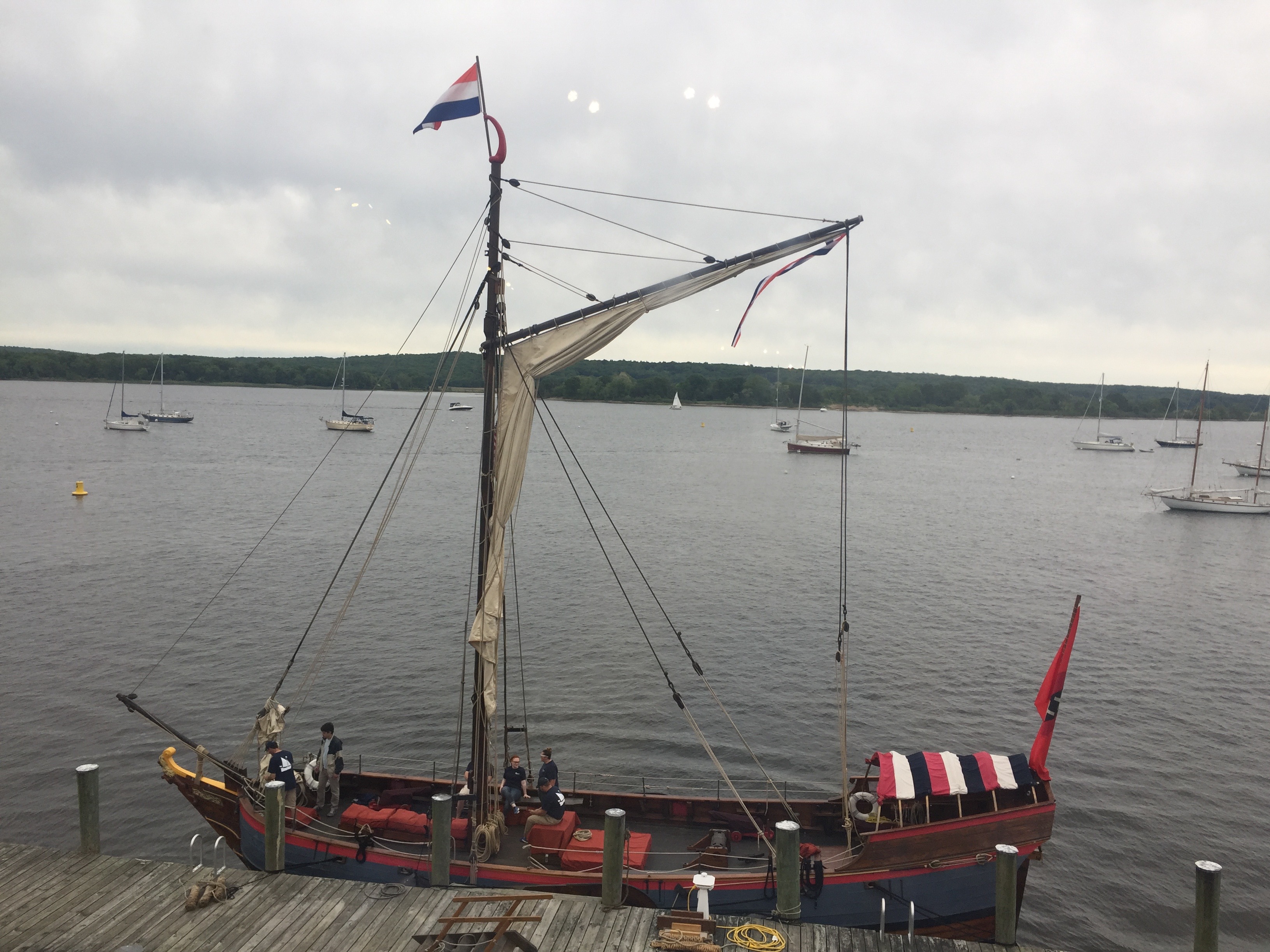
I took this phoe of the Onrust at her new home on the river,  from the 3rd floor shad exhibit at the Connecticut River Museum.

IMG_3552

A walk along the river at any time of year is beautiful, but maybe June wins because of the wealth of spring flowers. In early June azaleas and rhodies are at their height.

IMG_3499 (1)

Peonies and iris are a fleeting burst of color in late May and early June.

IMG_3503 (1)

And the first roses of early June along the river.

IMG_3564


Women’s Work

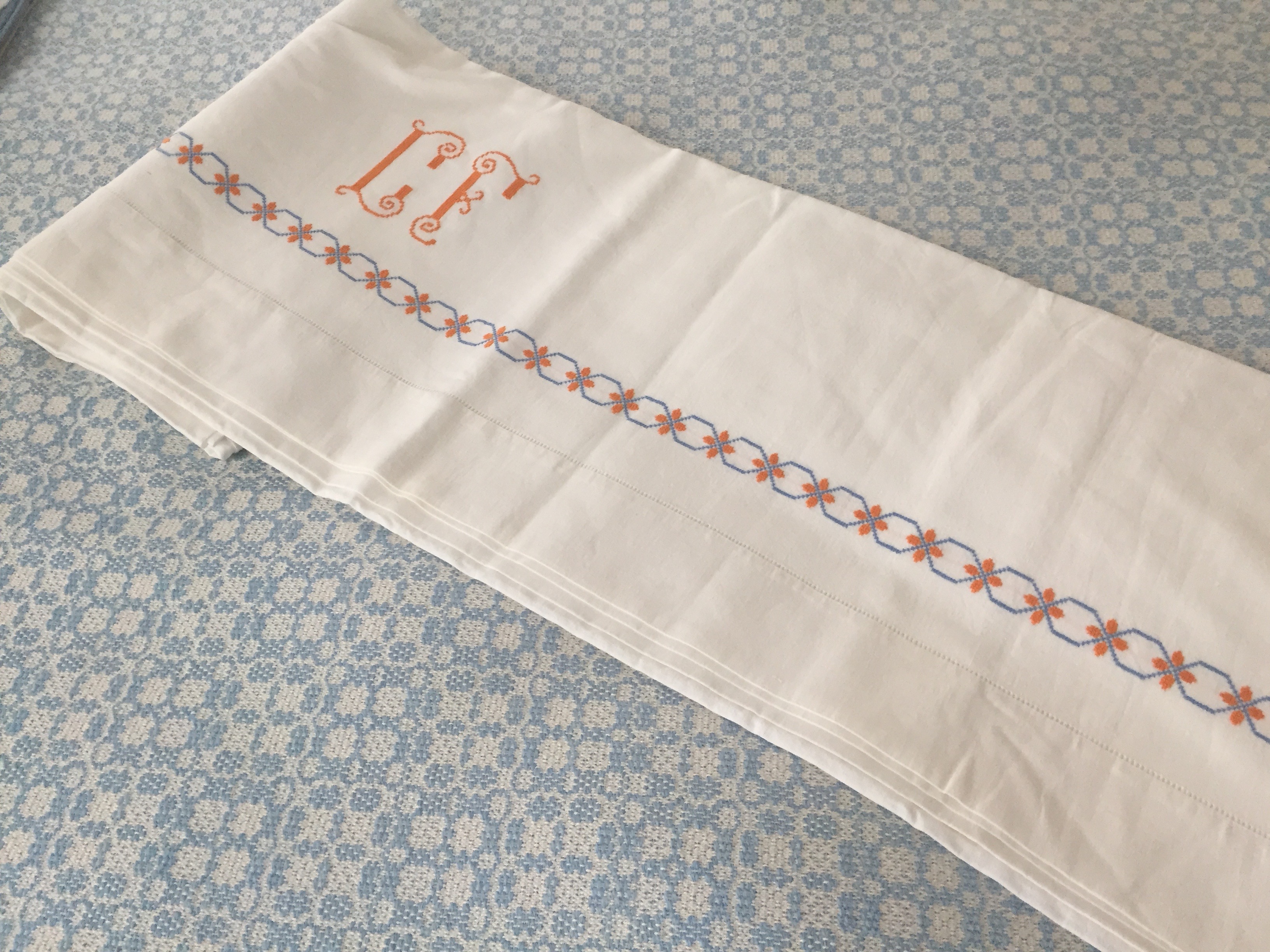
Today’s mail held a treasure I’ve been looking forward to seeing!  Last week on Etsy I found a vintage bedsheet with matching bolster pillow that had been embroidered in counted cross stitch and bordered with laddered hemstitch.  The sheet itself is a luxurious, heavy weight French ‘metis,’ which is 65% linen and 35% cotton. According the to vendor, Hanky Heiress, this fabric blend was developed to be an ‘easy-care alternative’ to 100% linen sheets.  Look how beautiful it is!

IMG_3512

Here it is opened up across my bed.  The blue and orange cross stitch look wonderful on my vintage, machine woven, overshot bedspread!  I’m thrilled!

IMG_3511

The seller of this sheet and bolster set believes it’s from the 1960s, and she speculated that that they have never been used.  Now that I’ve seen it firsthand, I agree with her.  Who knows where it originated; by the time I found it, it was residing with an Etsy vendor in Cheshire, England. What a sad thing that it may have spent 50 years in a drawer or closet.  I have been imagining various scenarios in which this might happen, and the only that makes sense to me is that someone made this as a gift for someone else.  Perhaps it was a wedding gift, with the two initials signifying the union of two different names.  I can only imagine that the woman who did this put so much love into this gift.  It is truly a treasure!  And I’d like to think that the woman who received it loved it so much that she was hesitant to actually use it.  Well, I intend to use it, and I intend to enjoy it.  I will always think of this story that I have created to go with it.  I feel it has good potential for being true!

It amazes and inspires me that women (and men too) have been making and embellishing textiles since the dawn of humanity.  There’s a reasonable chance that textiles are older than pottery, as Elizabeth Weyland Barber has speculated.  It seems we are hardwired to surround ourselves with the work of our hands.

In early April I learned that our friend Hank, had arrived in Havana on his boat and would soon try to deliver all the all donations of lace-making materials to the woman I met last year.  I wrote about the lace makers last year while Bob and I were visiting Cuba on our boat. Due to lack of communication in Cuba as well as while sailing offshore, I did not get confirmation of the delivery until mid-May.  What an emotional moment that was for me!  And I understand there were few tears shed by Hank and his wife, along with the women who received this bounty, and even the male interpreter!  I cried myself when I saw the photos and this wonderful video that Hank and Seale made for me.

When Bob and I first hatched this idea of sending materials to Cuba, neither we nor Adriana fully realized the effort involved.  I had been quite saddened to see the poor quality materials women had access to–sewing thread used in multiple plies for embroidery and crochet, and poor quality knitting and crochet yarns that looked like some Russian version of Lily’s “Sugar N Cream” yarn–and only available in one color  —  Ecru!  Mailing gifts is simply not possible, since all mail is opened and usually the contents are ‘re-purposed.’  Even making a face to face delivery had a high degree of risk for confiscation.  Adriana and Hank worked out the best plan they could come up with, and still both of them were worried about being discovered.   It is forbidden in Cuba to have guilds or groups, so the women who meet to do various types of lace together have to be quite careful.  I am so relieved that this venture was a success!

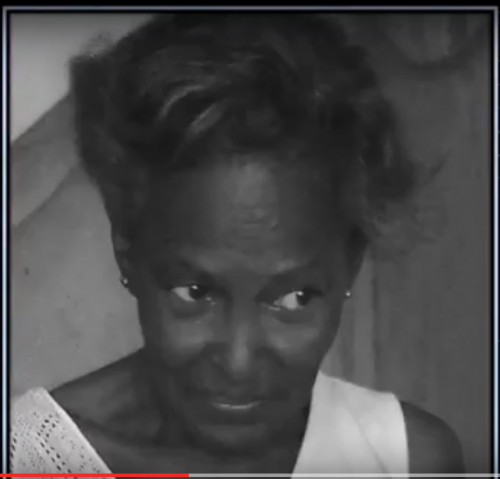
This is now my favorite photo of Adriana, where she looks like a young woman again, full of excitement for the many projects that lay ahead for her and all the other women she tutors in lace techniques. I can almost see the ideas starting to swirl in her head!

Screenshot 2017-06-01 12.50.07

Here is photo of the stash before Bob and I packed it up in four extra-large vacuum seal bags.  In early January, Bob sailed to the British Virgin Islands, where he transferred the stash to Hank’s boat.  In early April, Hank sailed for Cuba as the leader of a rally of sailboats that would spend two weeks in Havana.

1-12-17 004r

Best of all, here are some photos of Adriana’s lace work that I bought from her last April.  First a Torchon  doily that I gave as a present at my lace group’s annual holiday party.

1-IMG_2988 (1)

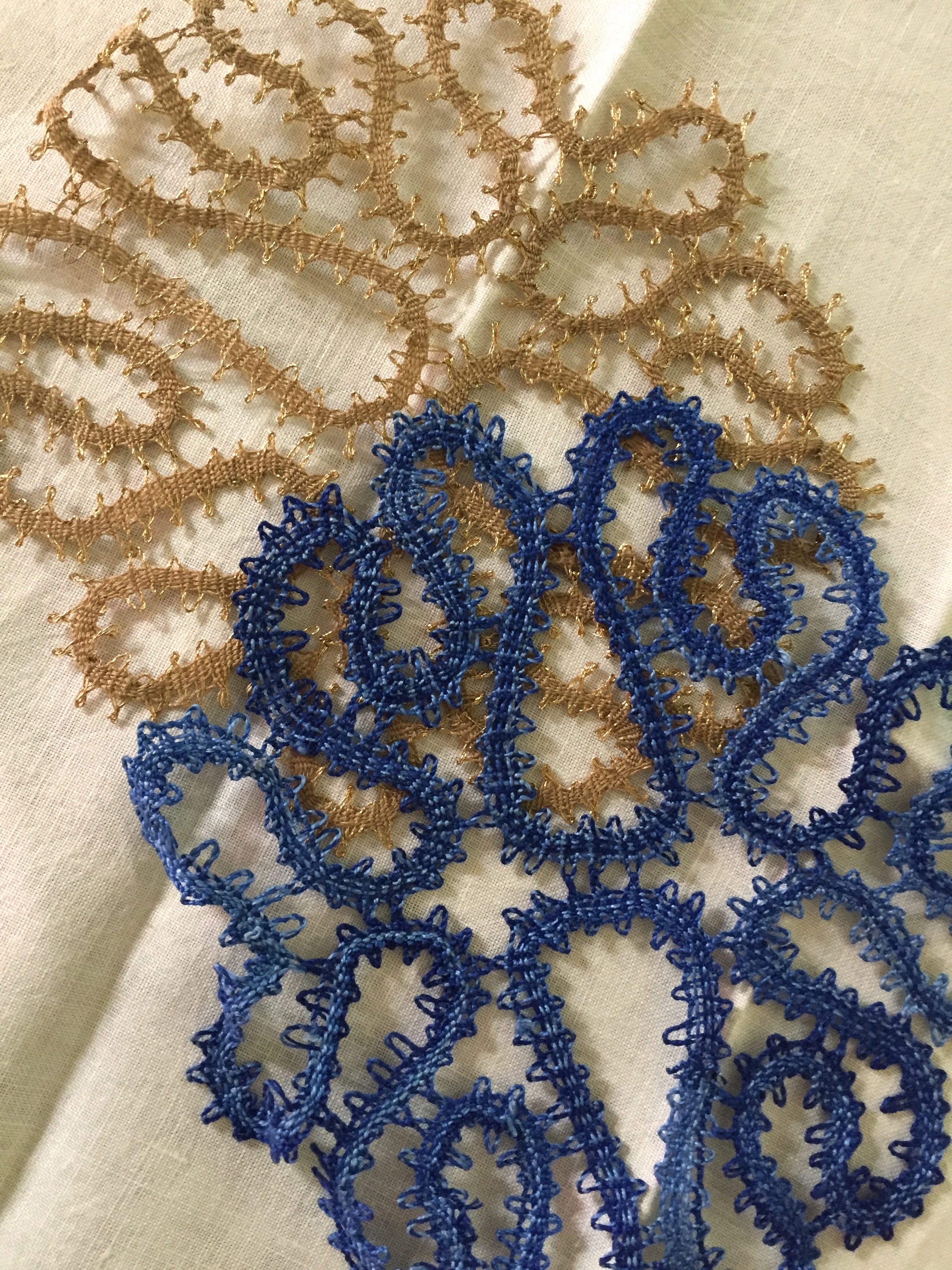
And two pieces of Adriana’s tape lace that I kept for myself.

IMG_3513

The work of our hands–across the decades– and across the world.  And this is just the tip of the tip of what is out there in the world.


Where in the World Have I Been??? Well, Beaver Brook Farm for Starters.

A lot of water has rushed under the bridge and over the dam, since I returned home more than 6 weeks ago.  A whole bunch of wonderful things have happened that I should have written about already.

Bob has had a hard time sailing the long distances this year, both going south and returning north, but he managed to get home just a few days before this holiday weekend.  He had to leave Pandora in Hampton, Virginia, and drive the rest of the way home. Hopefully he’ll make the last few hundred miles back home in late June.  It’s terrific to have him back!

For now, I’ll write about this holiday weekend.

Since we’ve moved to Connecticut it has been our new tradition to take a drive through the beautiful Connecticut River Valley each spring as part of our Memorial weekend festivities.  Yesterday was a glorious day, one of the first days without rain in about a month.  I put together a picnic, and we headed out in our toy car to visit a sheep farm/dairy and a local winery.

Only a week before I learned about this sheep dairy from a friend who traveled with me to a long weekend lace conference.  On the other side of the Ct River there are three dairy farms that make cheese:  a cows’ milk dairy called Cato Farms, a goats’ milk dairy called Beltane Farm, and a sheep and cow dairy called Beaver Brook Farm.  Imagine that! All three right within a few miles of each other!

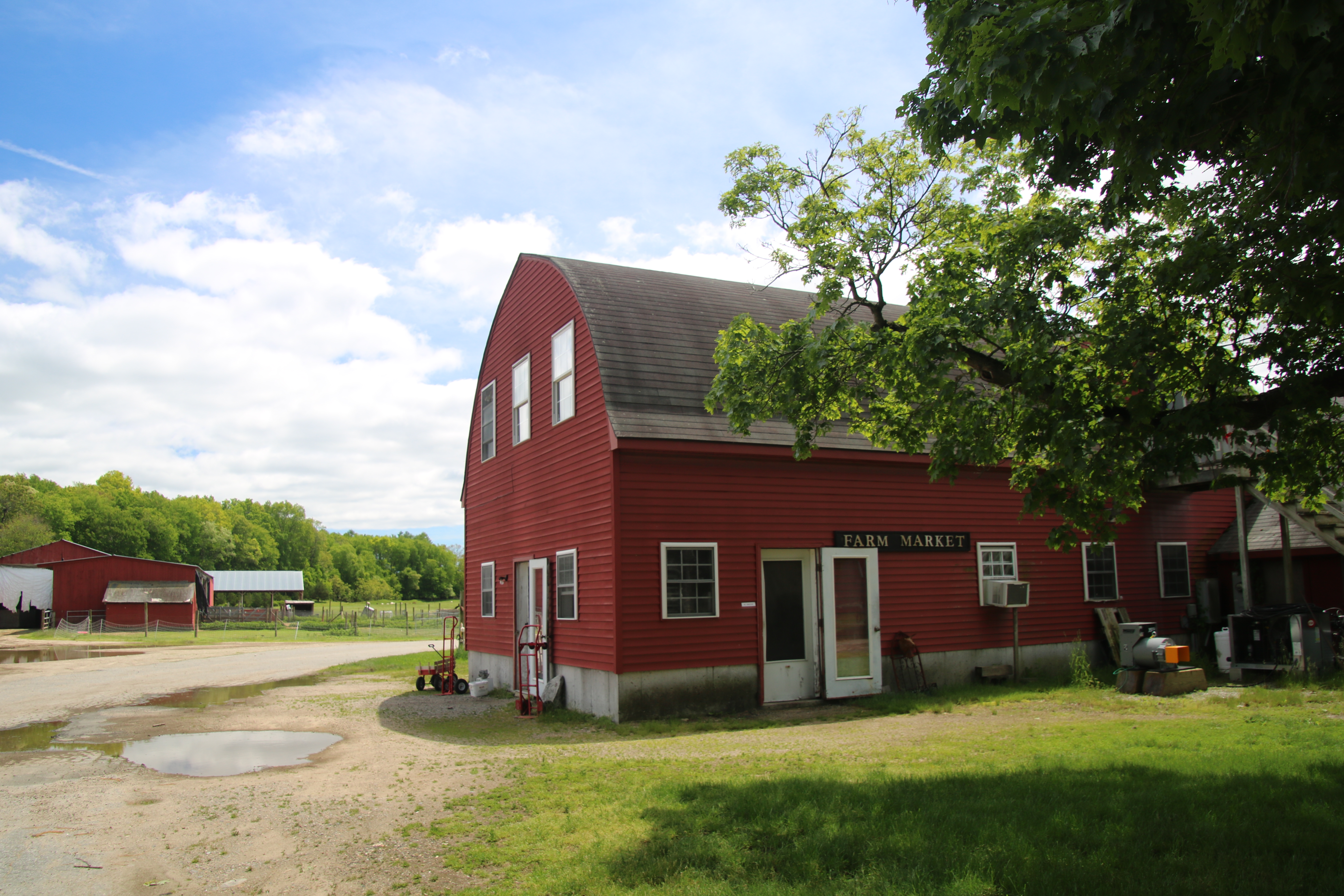
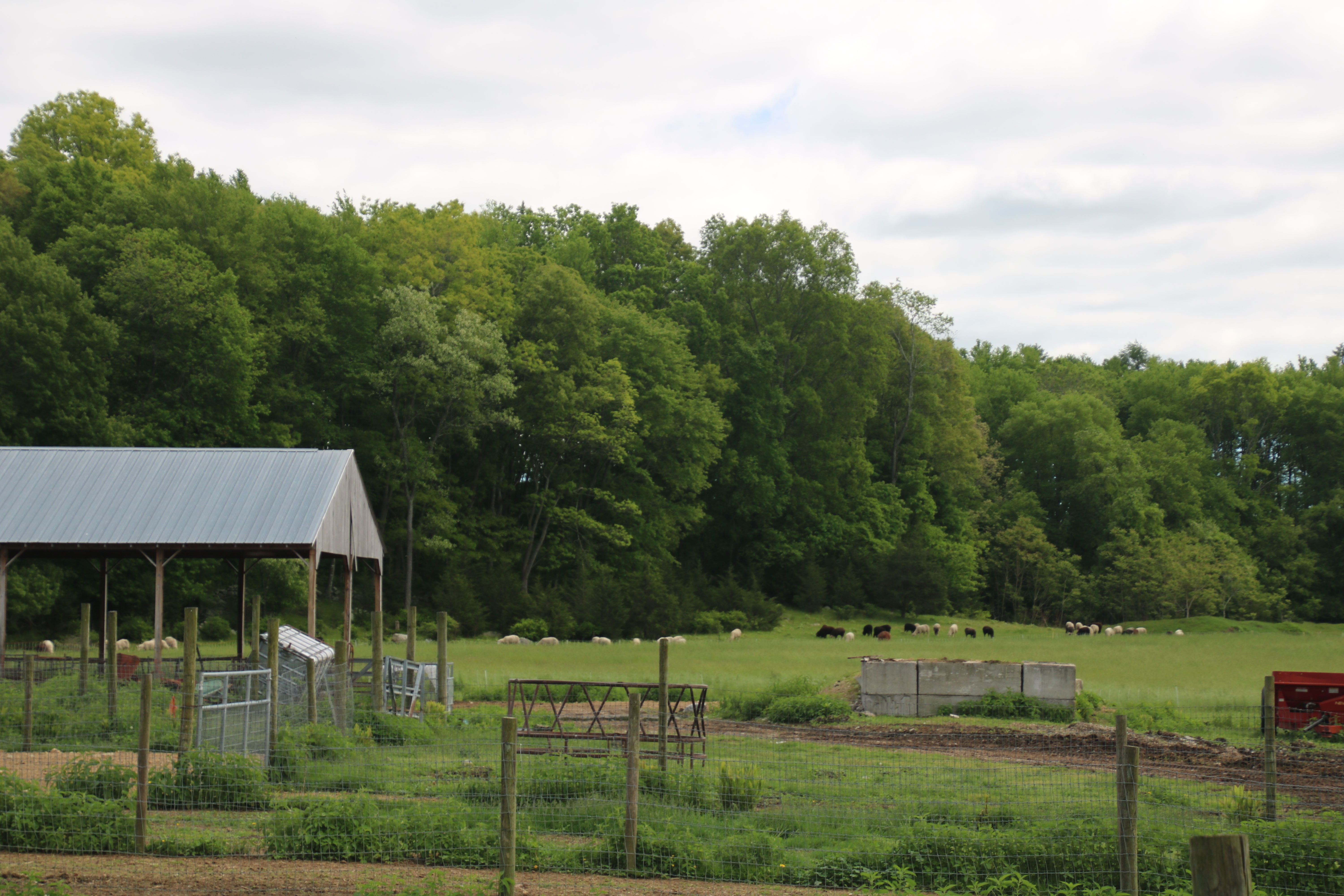
Here is bucolic Beaver Brook Farm, owned by the Sankows.  The farm has been in their family since the beginning of the last century, and they’ve been raising sheep and making cheese since the current generation bought their first sheep in 1984.  I found some newspaper articles tacked up on the walls of their farm market that date from the early 2000s.  These articles came from the New York Times, “Saveur” Magazine, and several local publications.

5-28-17a 026

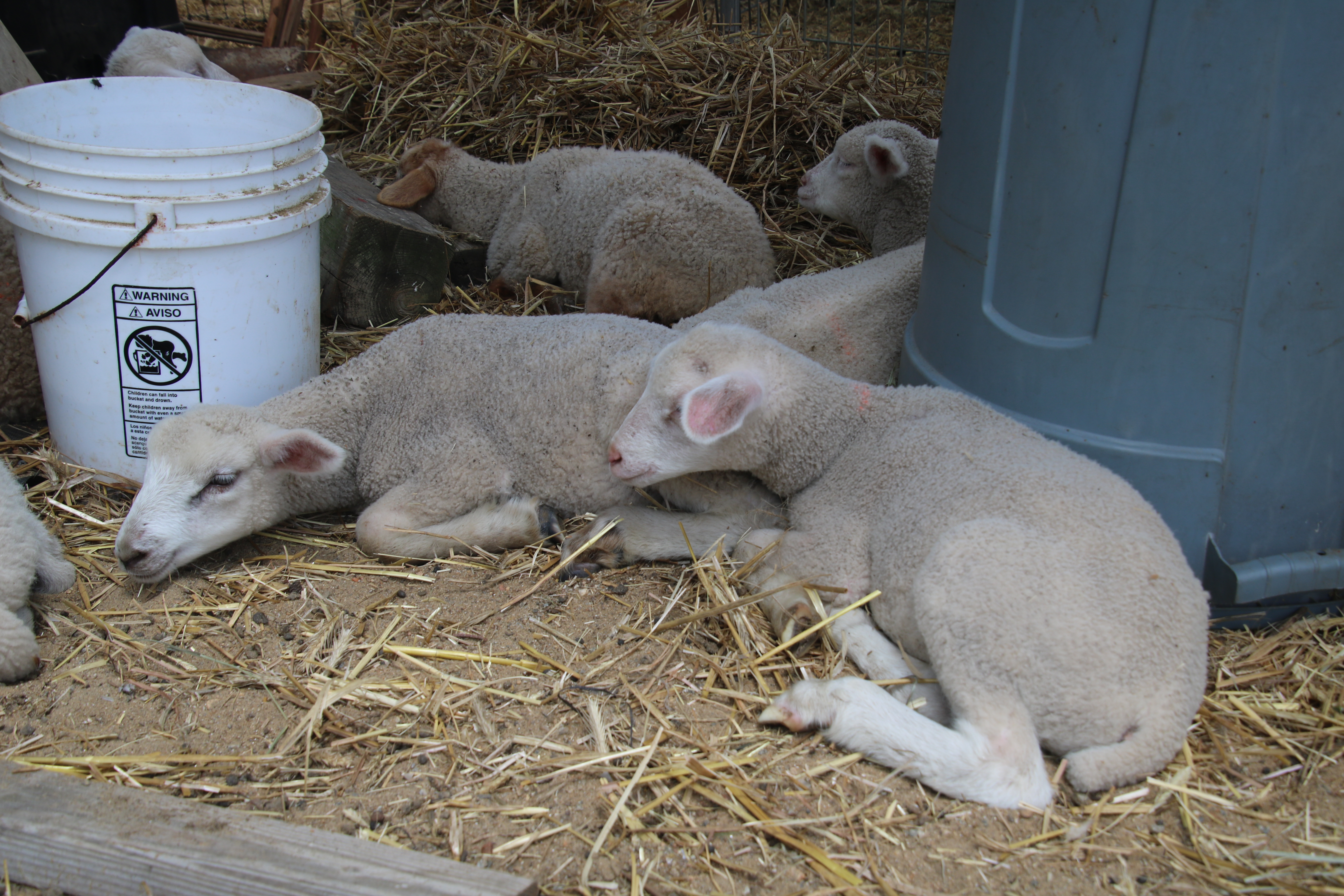
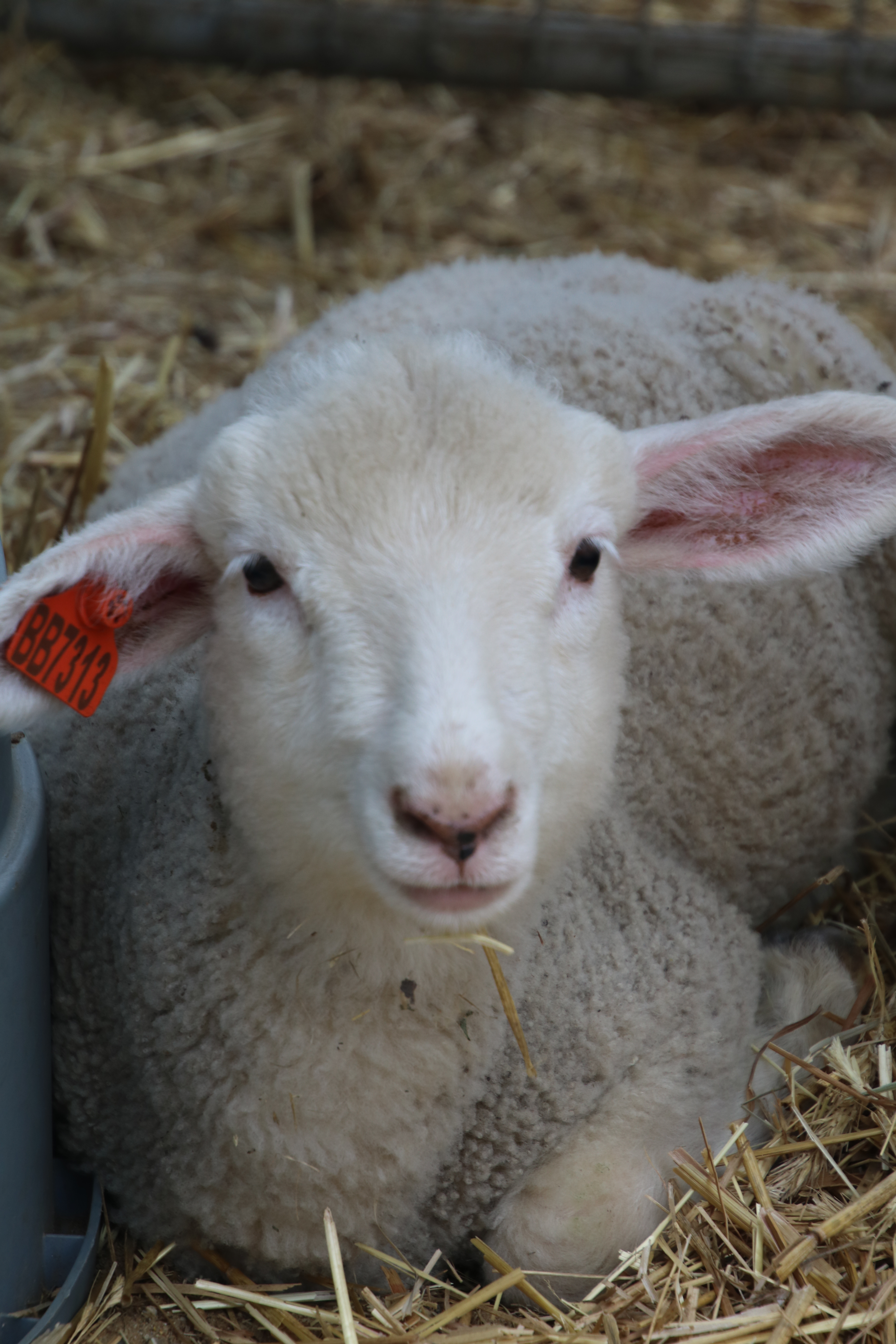
It was a stunning day for a visit.  First came looking at the new lambs.

5-28-17a 028

5-28-17a 029

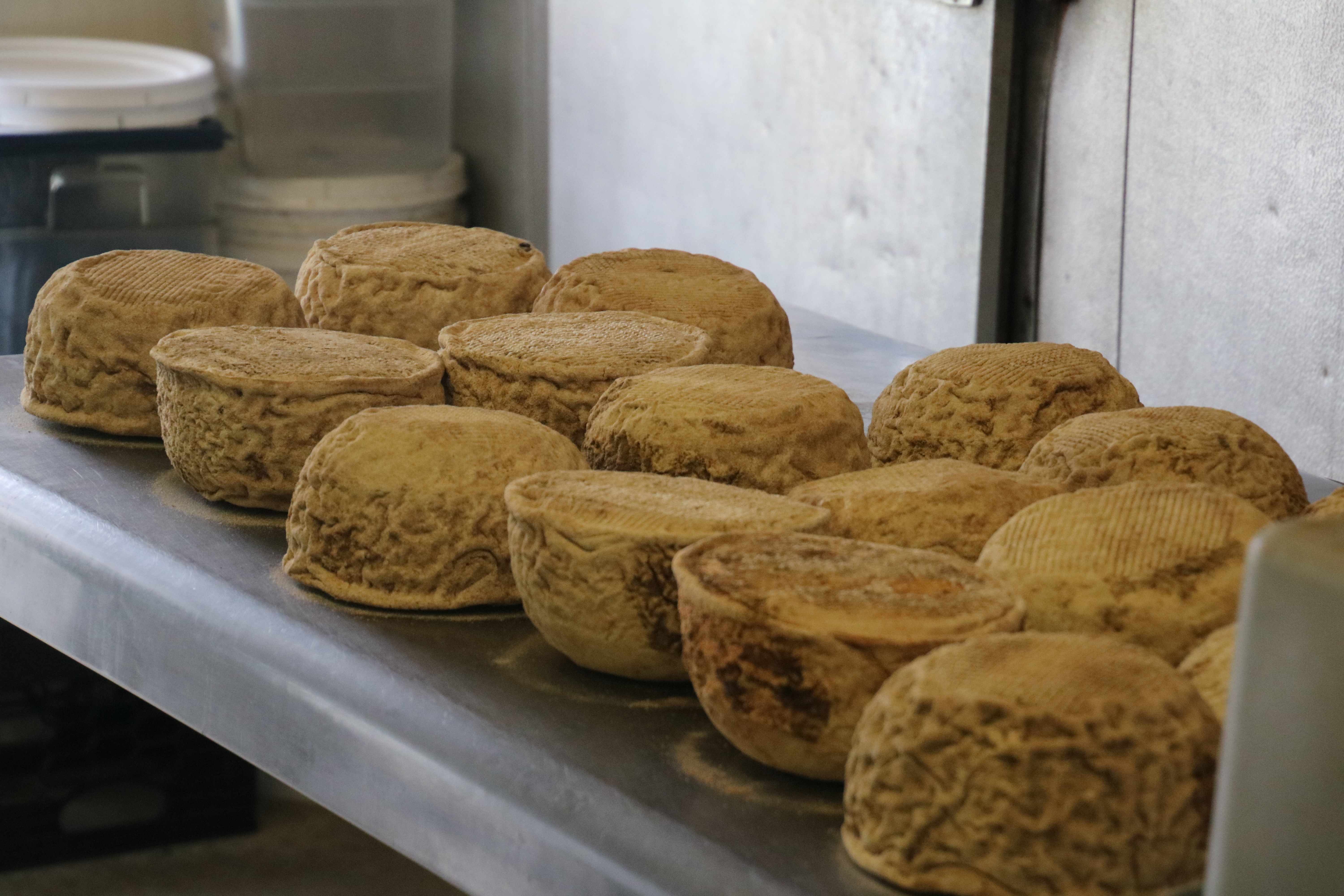
Then we met Suzanne who gave us a tasting of fresh sheep’s milk cheese covered in herbs de Provence, feta, an aged cheese that she calls “Farmstead,” and even a fresh sheep’s milk cheese mixed with pesto.  All of it was delicious!

Here is Suzanne cutting some feta for us.

5-28-17a 014

And here is a counter of aged Farmstead ready to be cut and packaged. It is a semi-firm cheese with a LOT of great flavor.

5-28-17a 015

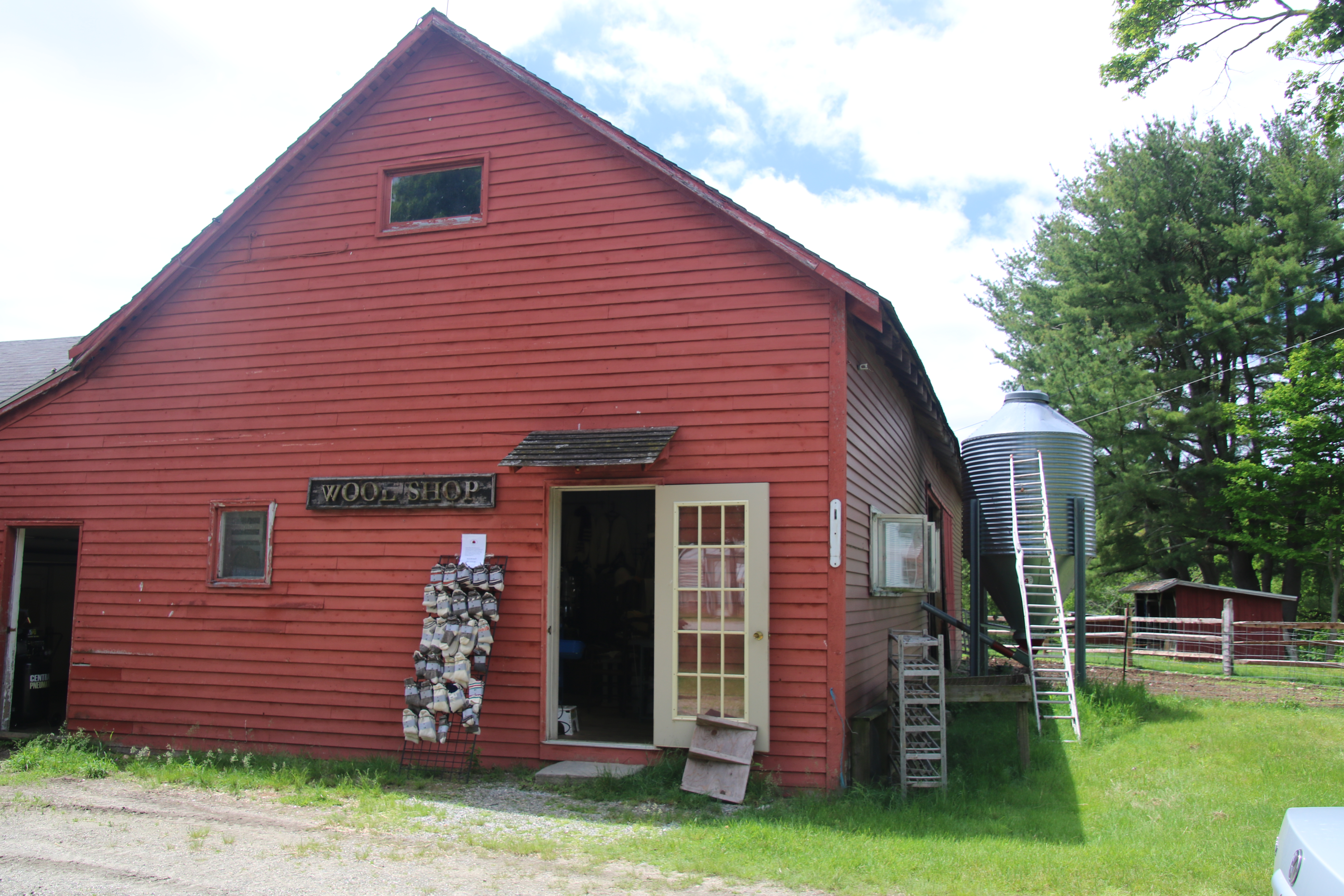
Suzanne gave us samples enough for a meal, and we enjoyed all of it.  Afterward we visited the small building next door called the Wool Shop.

5-28-17a 010

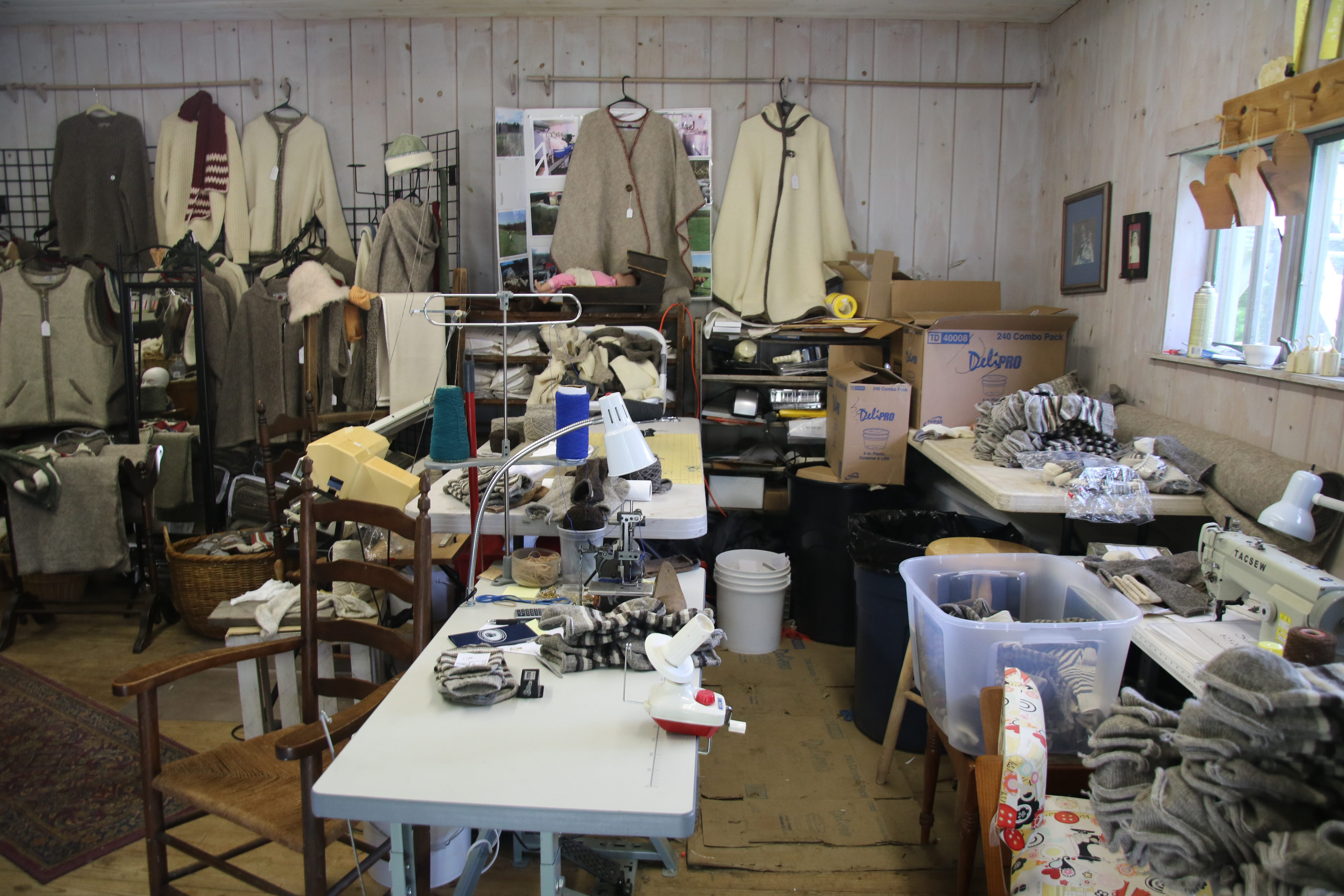
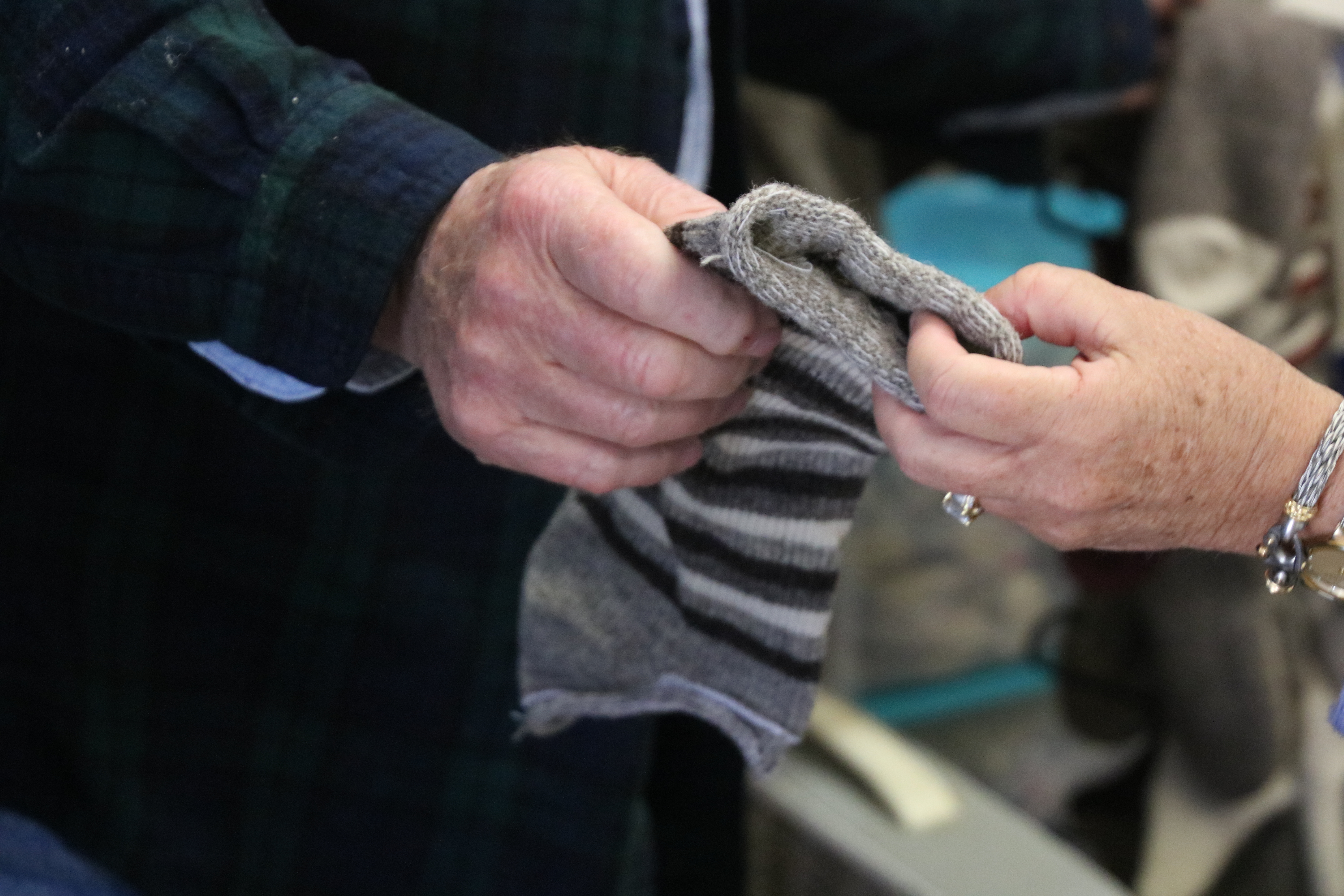
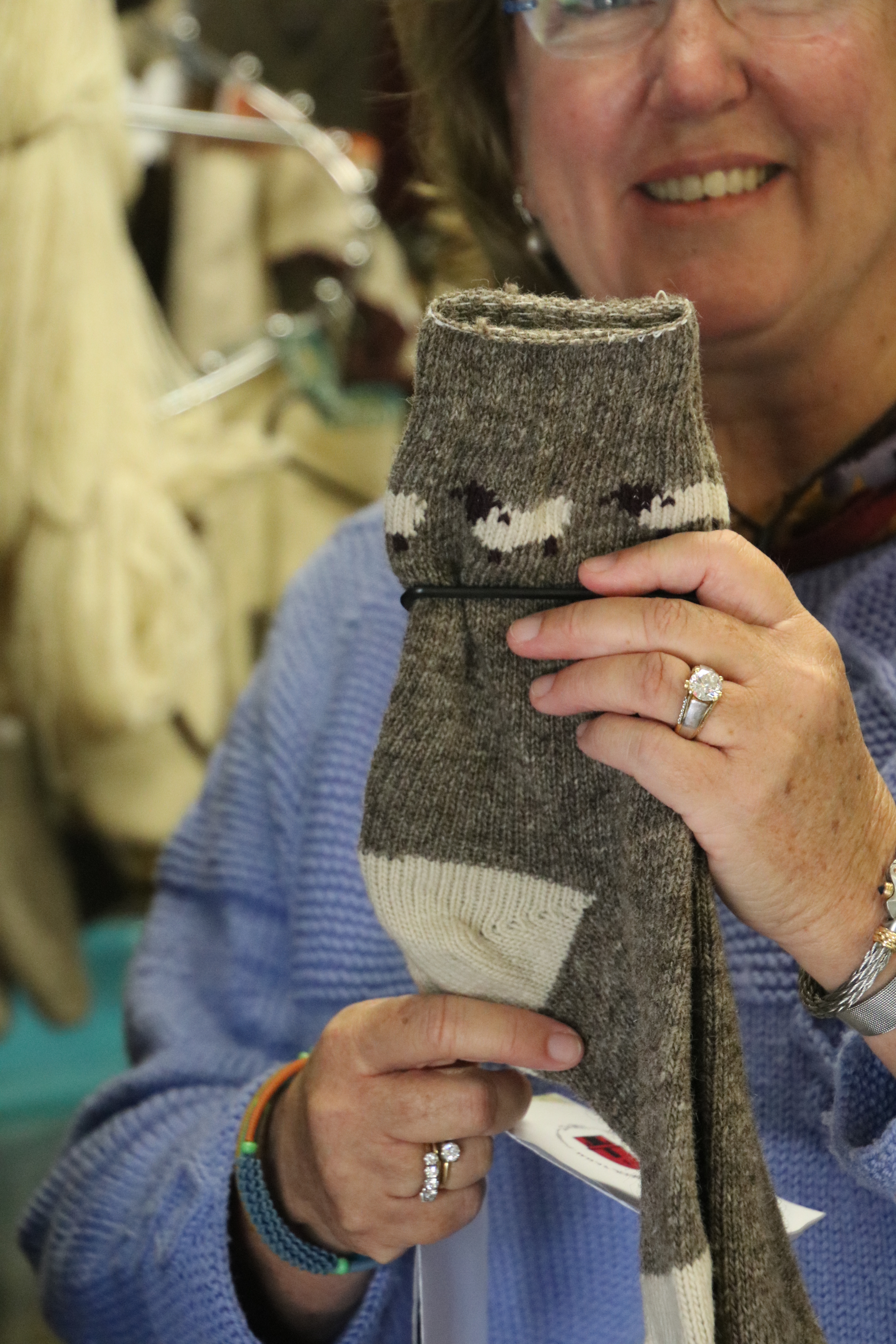
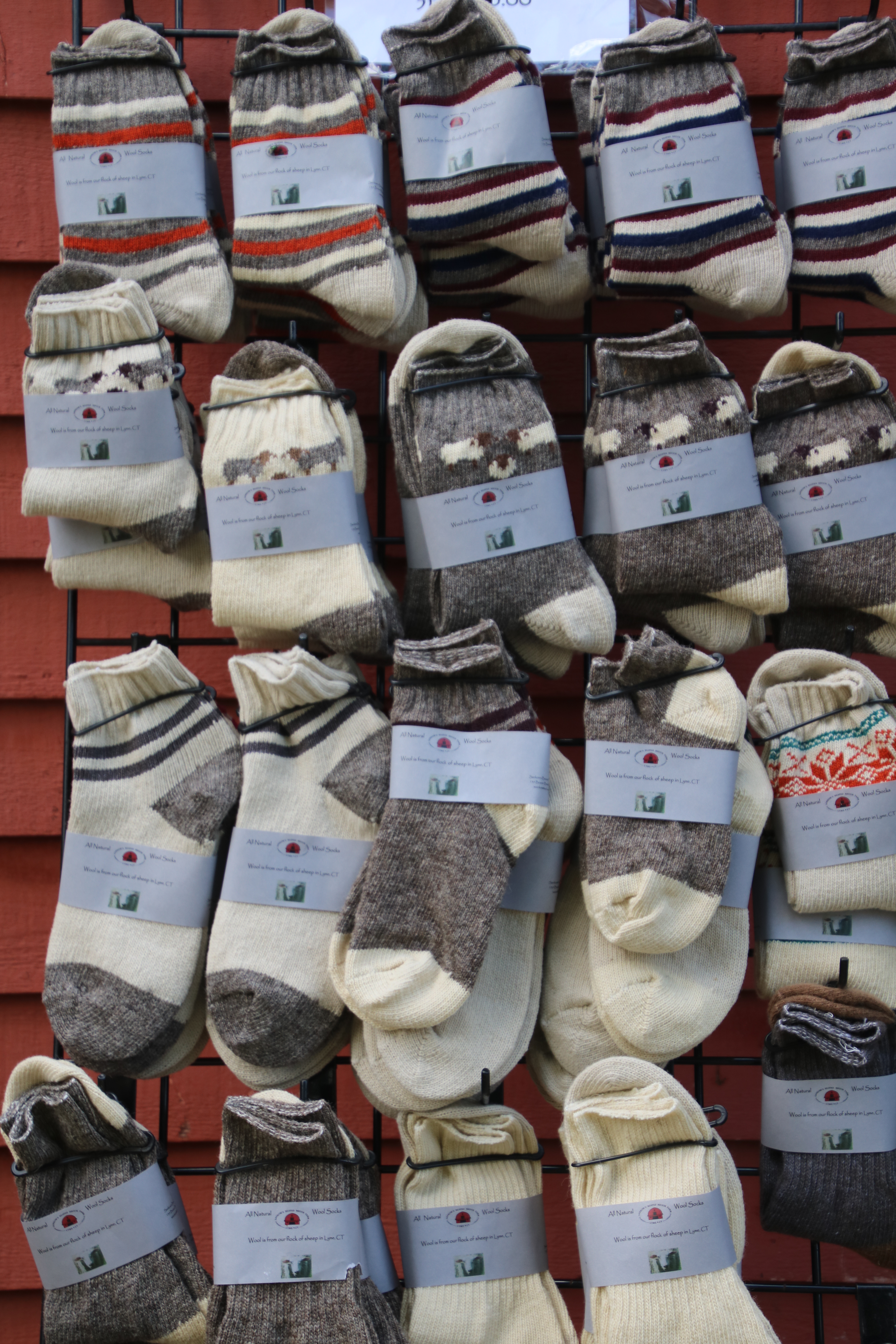
Inside the shop is more of an idea in progress than a fully functioning shop.  They are just now branching out with the idea of making and selling things from the wool of their sheep. (Did I ask what breed these sheep are??  How could I neglect to do that?)  The raw fleeces are sent to a mill in Massachusetts to be washed, then sent south for spinning at a mill in in either North or South Carolina. Some of the yarn is used to weave fabric that becomes blankets or clothing items, like capes and vests and sweaters.  But look at all those piles of socks!

5-28-17a 011

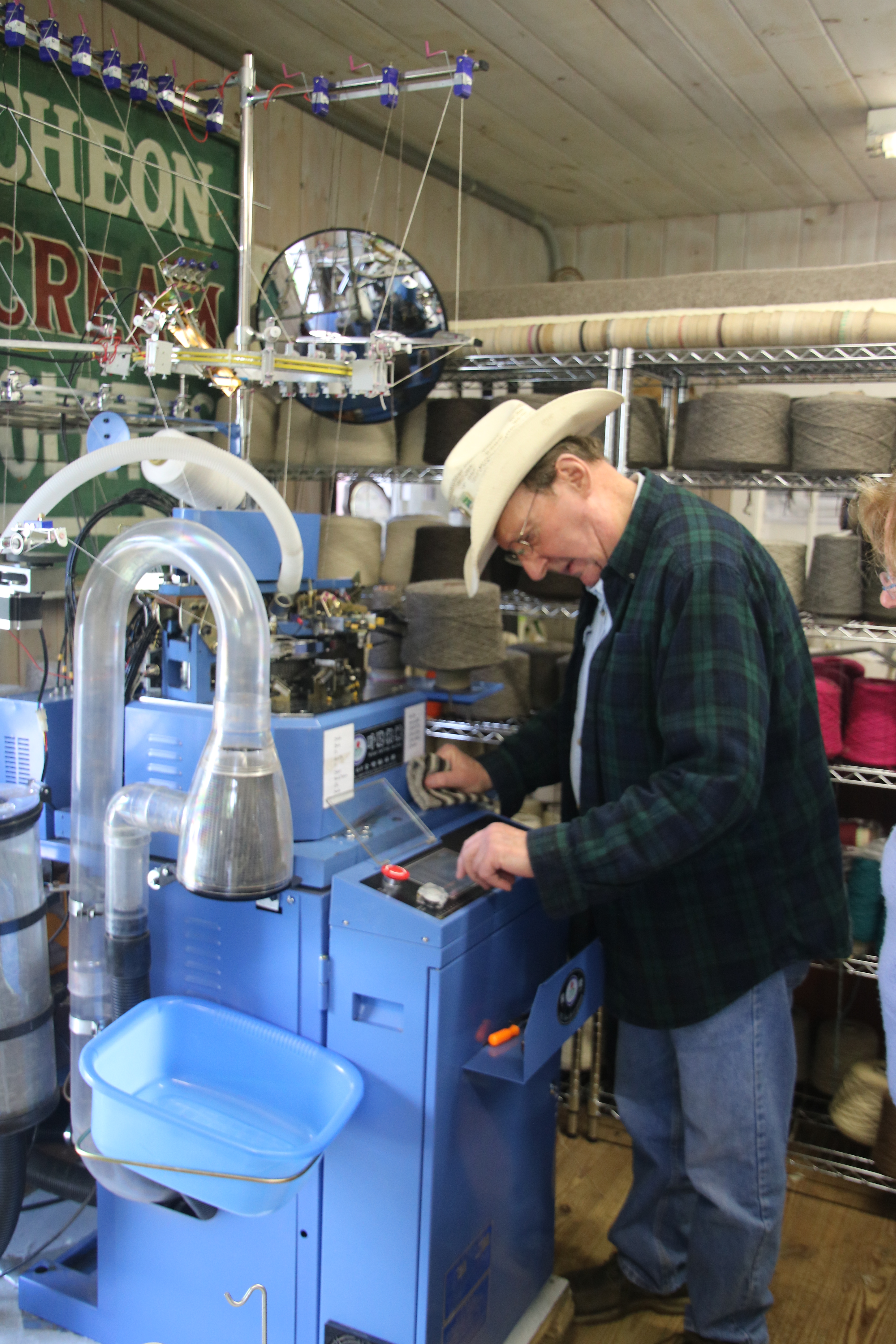
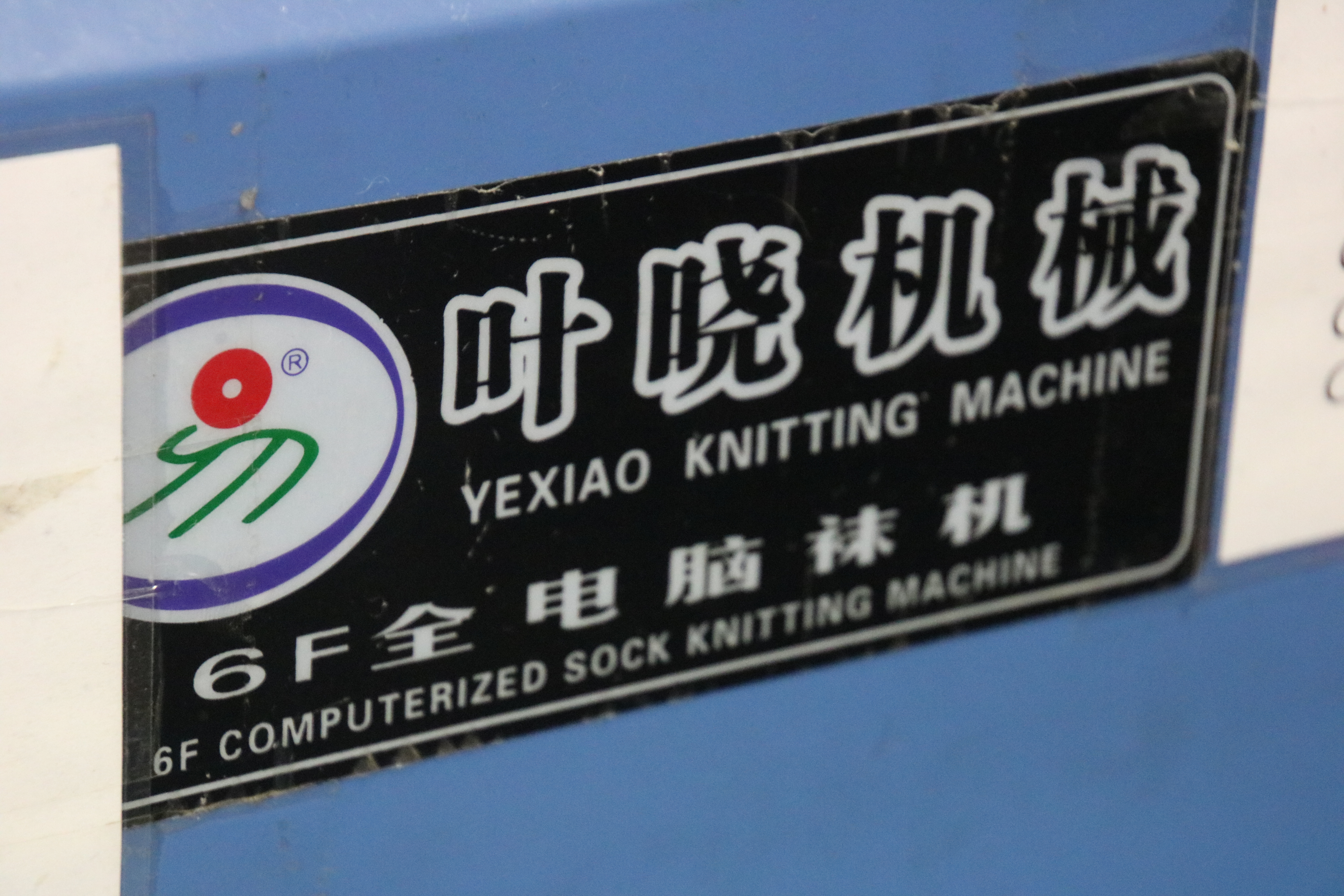
Recently Stan bought a sock knitting machine from China and is busily making hundreds of socks per machine knitting session.   Sometime back, I remember reading in the NY Times that there is one town in China that produces almost all the socks sold in the world.  Is that where Stan got his knitting machine?

5-28-17a 025

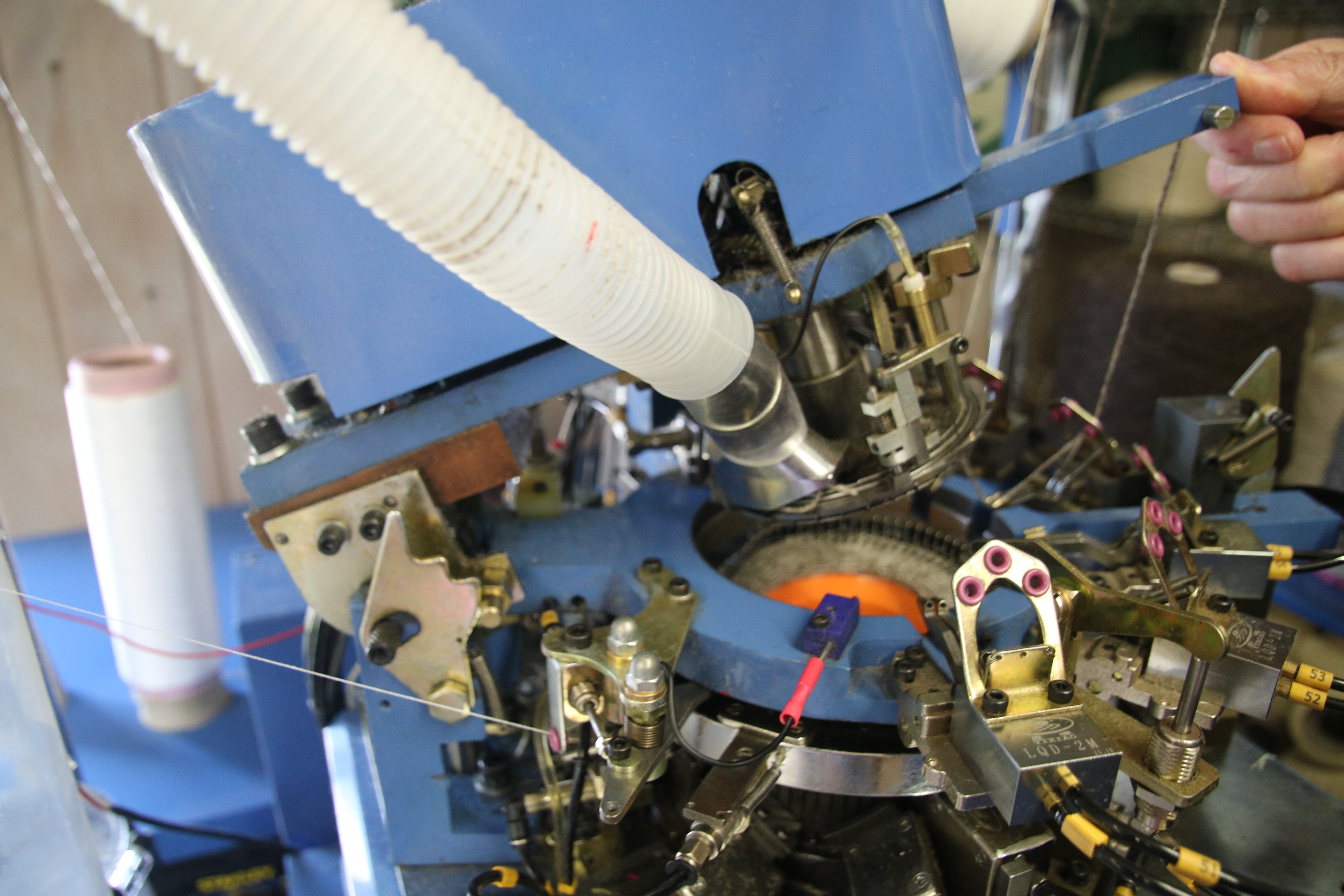
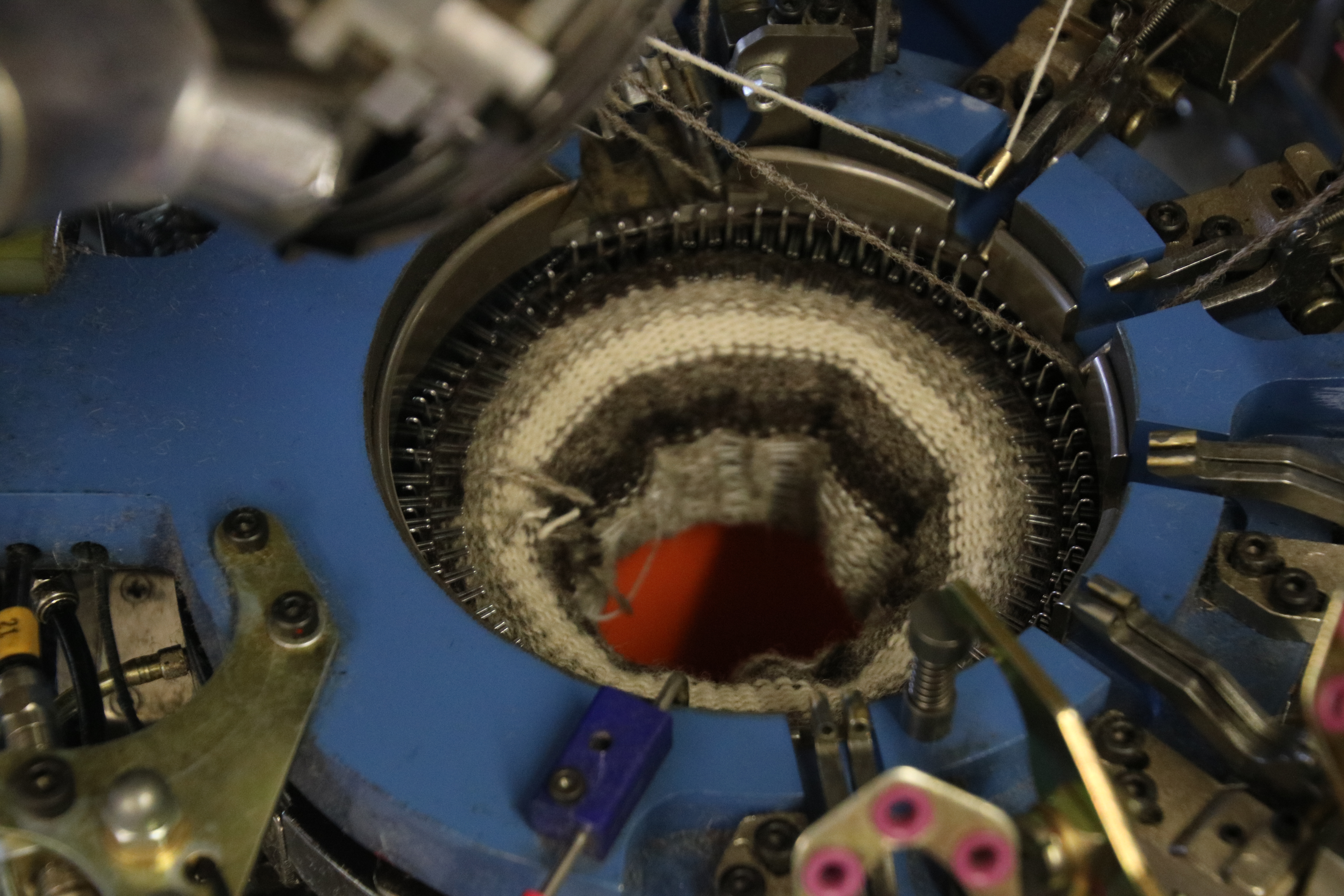
It takes only 3 minutes for this machine to knit a sock.  There are lots of choices of sizes and designs for the socks.  When the sock is finished it shoots out into the blue plastic bucket in the foreground.  I burst out laughing when the sock came shooting out!–sans toe because Stan has the toes done elsewhere and also has the socks washed elsewhere which makes them much softer than what we are holding here.

5-28-17a 022

Want one?  Here’s the info on that. The basic machine is about $6,000.  You’ll need to fork out more for all the design possibilities.

5-28-17a 021

A sock in progress down in the center.  That plastic tube is where the sock will get shot out of the machine and into the bucket.

5-28-17a 017

5-28-17a 020

Just a head’s up for friends and family.  There will be sheep socks coming your way this Christmas.  How can I resist?

5-28-17a 023

There are many to choose from!

5-28-17a 038

Then we went to take a look at the sheep in the field.  What a bucolic setting….

5-28-17a 039

The farm is in Lyme on Beaver Brook Rd, in Lyme.  Suzanne says they are open 7 days a week.  That’s hard for me to believe with all the chores that must keep them busy, but she says they always have time to greet visitors and give you a cheese tasting.  We went home with the fresh cheese covered in herbs de Provence, two hunks of feta and and some Farmstead.  Yum…

We capped off the day with a stop at Priam Vineyards in Colchester, just a bit north of Lyme, and a lovely drive too on a spring day in a very old MGA.  Cato Farm, where you can buy some wonderful cow’s milk cheese is just around the corner from them.

We sat on their shady terrace overlooking the vineyards and had a glass of  chardonnay with our picnic.

IMG_3495

What a way to celebrate the beginning of summer in New England.  It is the best time of year for remembering and acknowledging how lucky we are to have such freedom and so many opportunities to enjoy life.

Dominica, Our Final Destination

This is the final week of my Caribbean winter.  When we left home in January, we had no idea how many islands we’d get to visit.  As it turns out, it was less than we imagined, but what a trip it’s been.  We have only been through the Lesser Antilles, or Leeward Islands so far. Dominica is our final destination before turning north to return to Antigua in time for my flight home this Sunday.  It is magical place that has entranced both of us.  We will be back again next year.

In the past Dominica had a reputation as a trouble spot for cruisers.  A group of locals realized that Dominica is such a gem with so much to offer tourists, as well as so much of traditional island lifestyles that could support the locals, it was worth making an effort to make this island a safe place to visit.

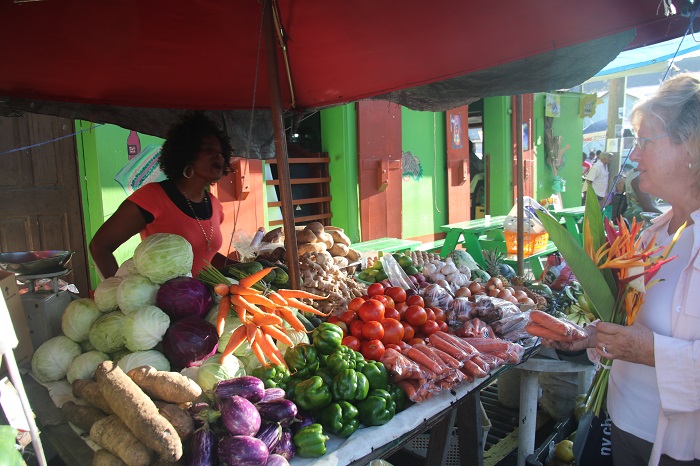
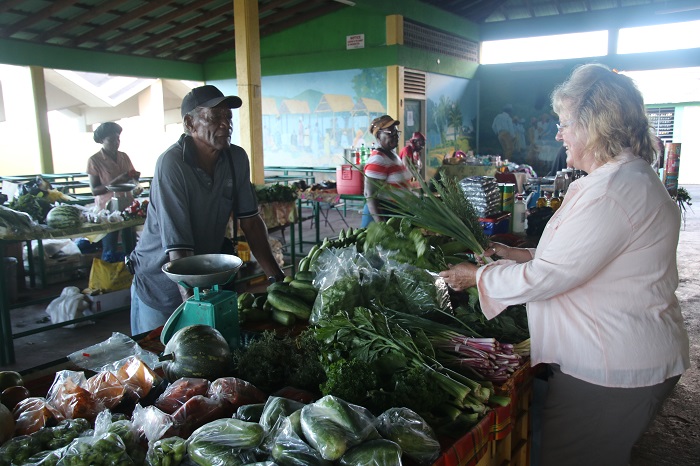
Bob and I arrived just a day before the weekly Saturday market in Portsmouth.  We learned that almost everyone on the island has a little plot of land, a small ‘farm,’ that may be only a small fraction of an acre, but is bountiful in supplying so many crops and a few chickens.  The market is full of tropical fruits and veggies, like pineapples, bananas, sour sop, Caribbean pumpkins, coconuts, nutmeg, along with plenty of European vegetables like carrots, onions, corn, peppers, eggplant, and even some cold weather veggies like lettuce and cabbage.  Many people also have jobs in tourism or government offices, but they all get up extra early each morning to tend their farms.  It is quite impressive.

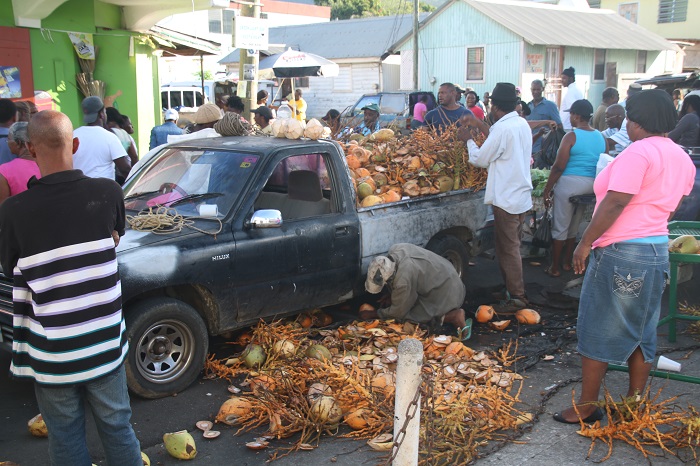
Look at all these coconuts!  There were several trucks like this at the market on Saturday morning. We learned that Dominica used to be the biggest exporter of coconut related things until coconut oil took a serious downturn years back during the ‘fat scare.’  Now there are more coconuts than the locals can keep up with, and every time a coconut falls to the ground it germinates into yet another coconut palm.

4-1-17a 018

The tomatoes and cucumbers here are beyond belief–even better than home grown.  How do they do it?

4-1-17a 015

4-1-17a 004

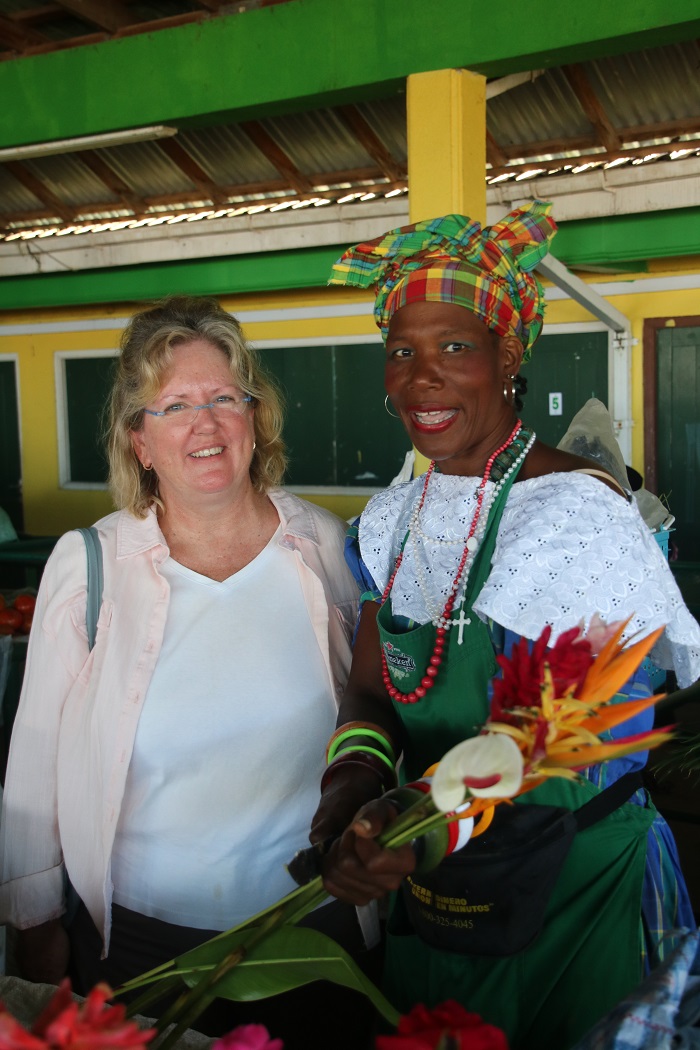
This woman was selling flowers along with food.  She would not allow us to pay for the flowers, and when we added a few ECs (Eastern Caribbean coins) to her total she threw in a few bananas.  She is stunning in the traditional madras head covering.

4-1-17a 007

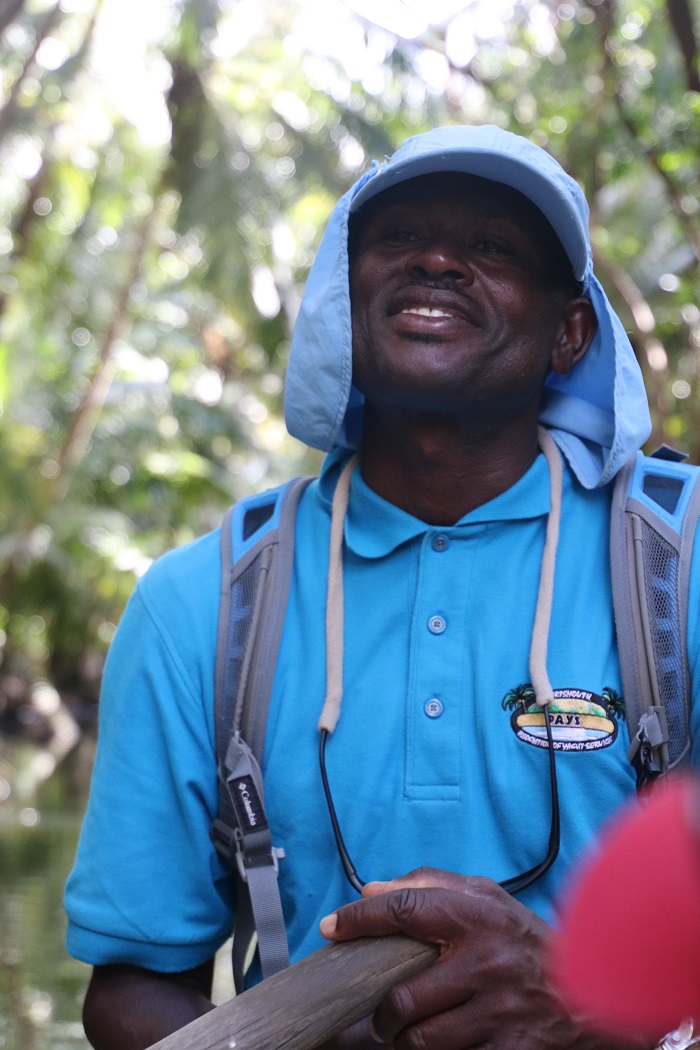
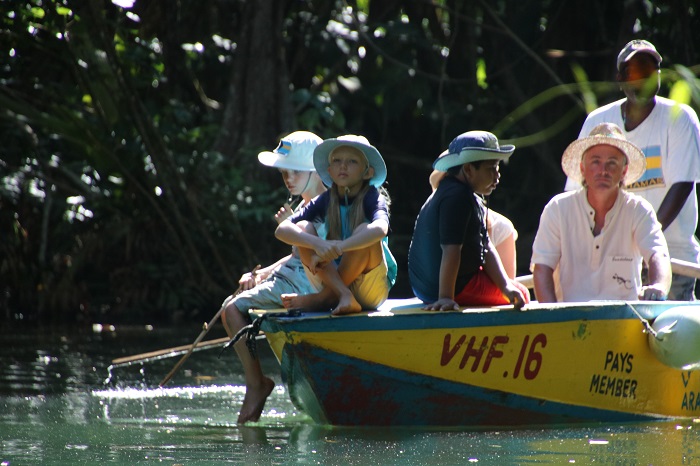
The next day we hired Faustin Alexis to take on a river tour of the Indian River.  He is an excellent guide, so if you find yourself on Dominica you should ask for him.  All the guides through PAYS (Portsmouth Association of Yacht Security) get training, and in Faustin’s case, he has become very committed to the traditional way of life and wants to return to it himself while also helping others preserve it for future generations.  His enthusiasm for the plants and animals of the rainforest was moving, and it was impressive to see his knowledge of plant life, birds and bird calls, and fish.  He says he’d like to return to living in the rainforest when his children are grown.

4-1-17a 056

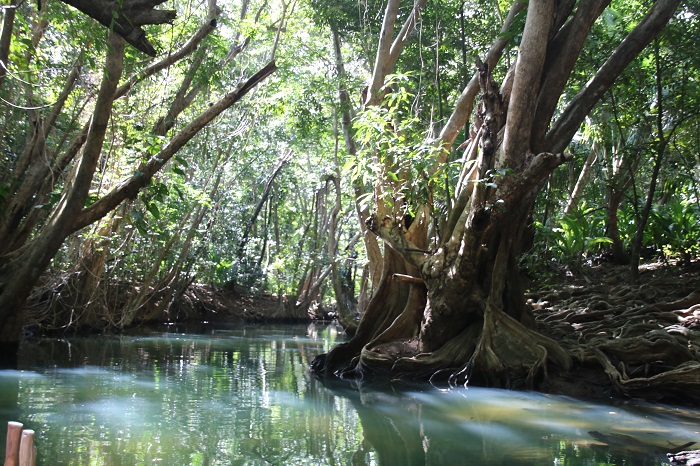
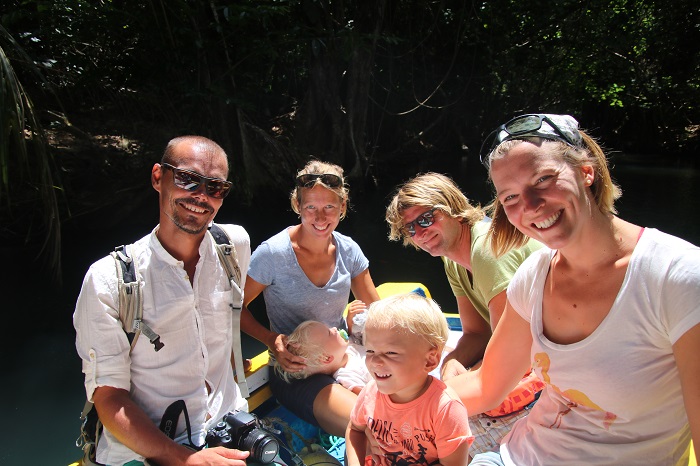
No motors are allowed on the Indian River, so after Faustin picked us all up from our boats (8 adults and 2 toddlers, plus Faustin which made 9 adults) he walked to the front of the skiff and began rowing into the river.  In spite of rowing upstream, he kept up an ongoing conversation, pointing out plants, birds, and bits of traditional lore.

4-1-17a 020

As we entered the river, another tour boat was exiting.  I think these tours are highly organized so that there are never more than two boats on the river at once.  We could not resist getting a shot of these adorable kids on the other skiff.

4-1-17a 044

We had our own adorable kids onboard as well.  They belonged to two Dutch families who happened to meet just before their Atlantic crossing in the Canaries.  I hope someday we can share this wonderful experience with our own granddaughter, Tori.

4-1-17a 097

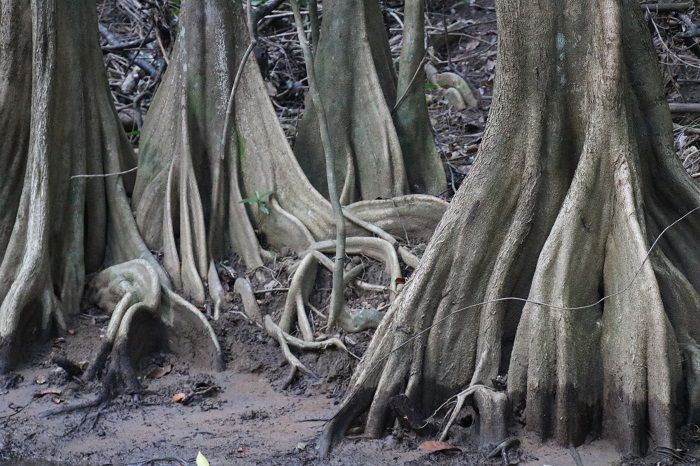
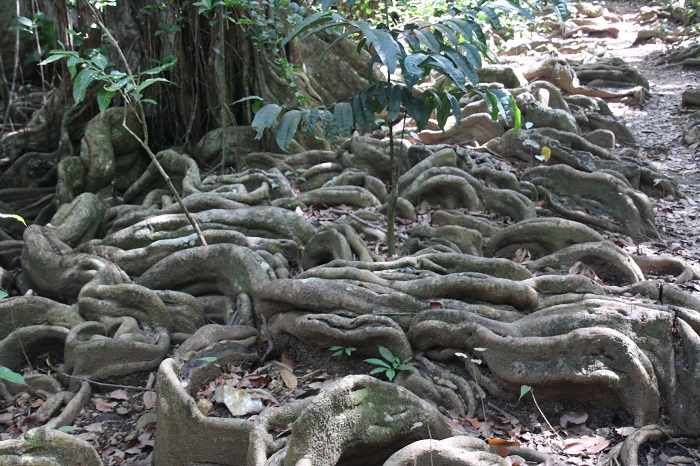
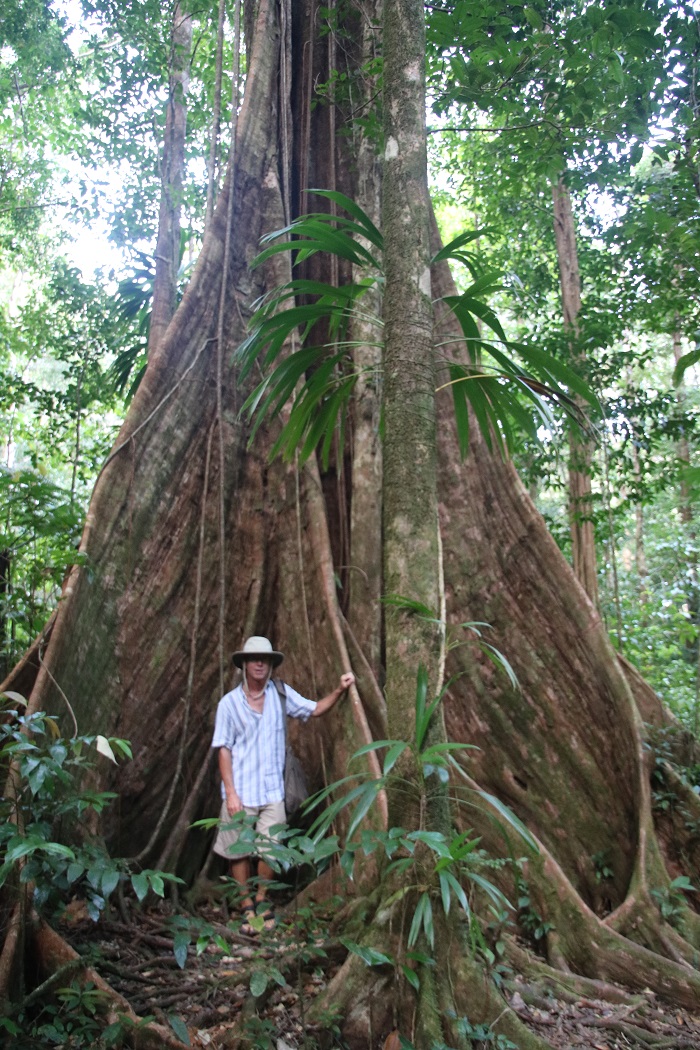
These amazing trees were all along the river.

4-1-17a 062

4-1-17a 077

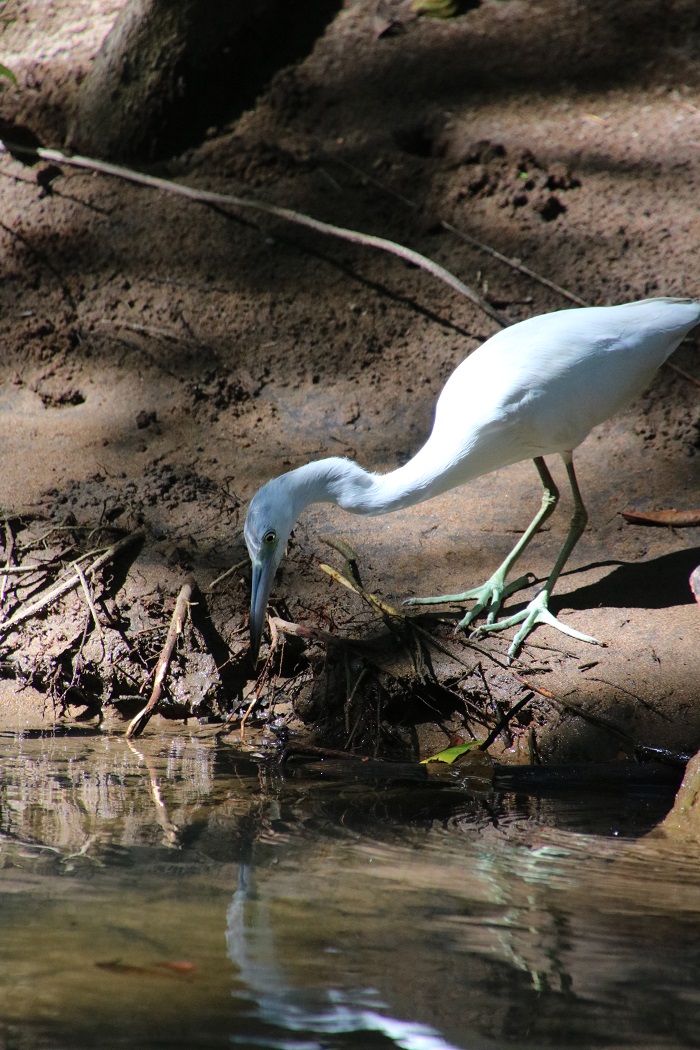
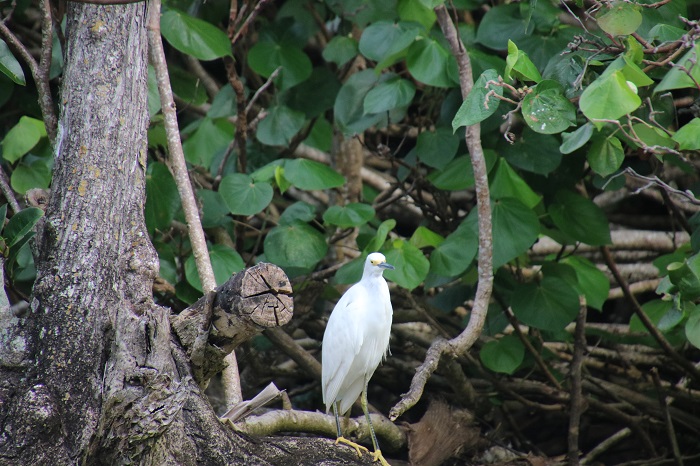
There was lots of bird life that we saw and sometimes only heard.  There were parrots in the upper story, although we could not see them.  But we saw the shore birds feeding along the river’s edge.  Here is a white heron looking at the little crayfish at the water’s edge.

4-1-17a 051

4-1-17a 022

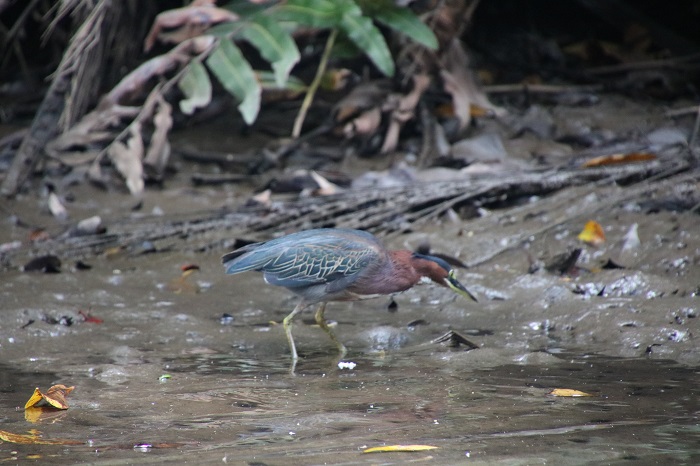
And a green heron.  There is even a type of duck in Dominica, but I missed the name.

4-1-17a 101

And there were so many plants that Faustin identified for us that are used for food or medicine or for general health.  He often jumped off the boat to peel some bark from a cinnamon tree, or to pull a branch of bay for us to smell, or a nutmeg laying on the ground, or to show us plants used to make poultices to heal wounds, and the bright magenta leaves of another plant that would be used to wrap as a bandage around the poultice. His knowledge seemed quite encyclopedic.  He told us that the older person on record came from Dominica and was a woman who lived to be 127.  His own great uncle lived to be 115. Faustin showed us which trees are used to build the traditional houses and which trees are prone to termite infestations.

4-1-17a 036

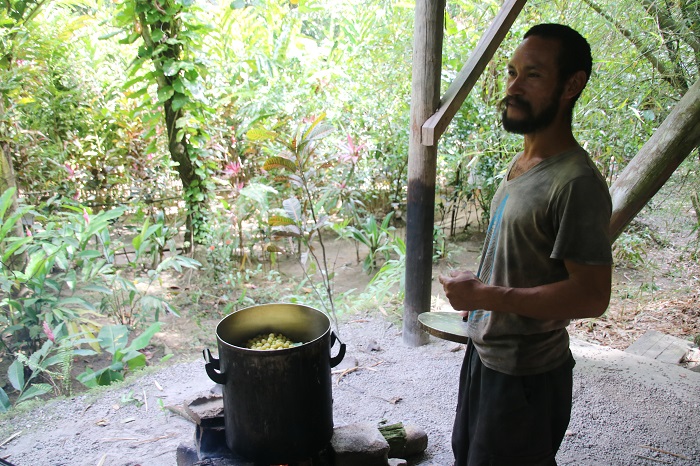
At the farthest point of the tour upriver we stopped for a bit of a walk, and explored a set of traditional buildings where a couple of men served flavored rum to the tourists and demonstrated how they make it.  Here is a big batch of gooseberries being boiled down to flavor a new batch of run.

4-1-17a 080We all enjoyed the day’s drink offerings which were a coconut rum drink or an ‘ultimate’ rum drink.  I also had a small taste of the medicinal rum that Faustin had– flavored with ginger root, nutmeg, bay leaves (a very pungent type of bay that must not be bay laurel), a few ingredients I’ve now forgotten, and ganja!  What a surprise!

The next day we arranged for Faustin’s nephew Fitzroy to take six of us on a walk through the rainforest up to an impressive waterfall.  There were Carol and Bob from Oasis and Dave and Chisholm from Pantine, along with Bob and me.

Fitzroy had a similar respect for the wonders of Dominica as Faustin has.  He was an excellent guide.  He recognized many bird calls and pointed out to us that the main birdsong we were hearing was that of parrots.  They were all around us!  After straining and straining to see them in the canopy of leaves, two parrots took flight and shocked all of us with their bright flash of color.  No one got a photograph.

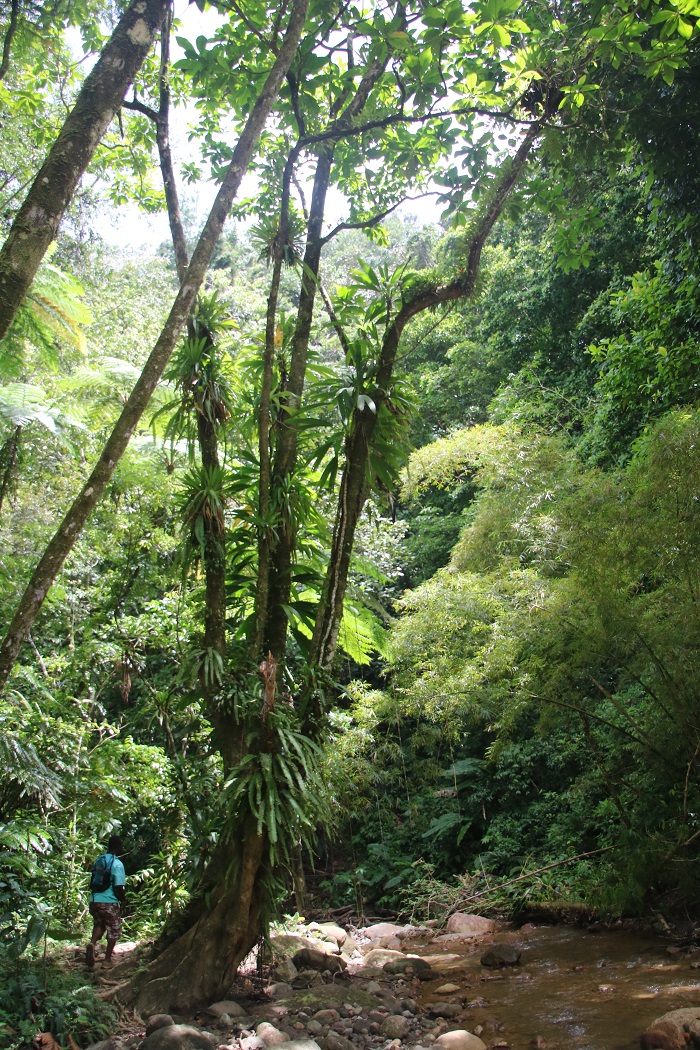
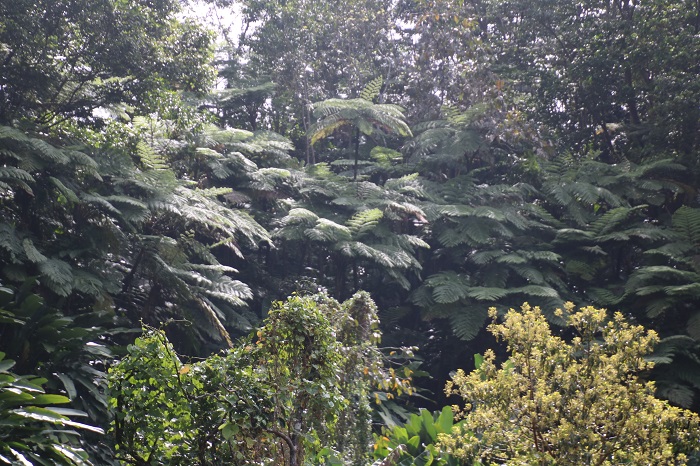
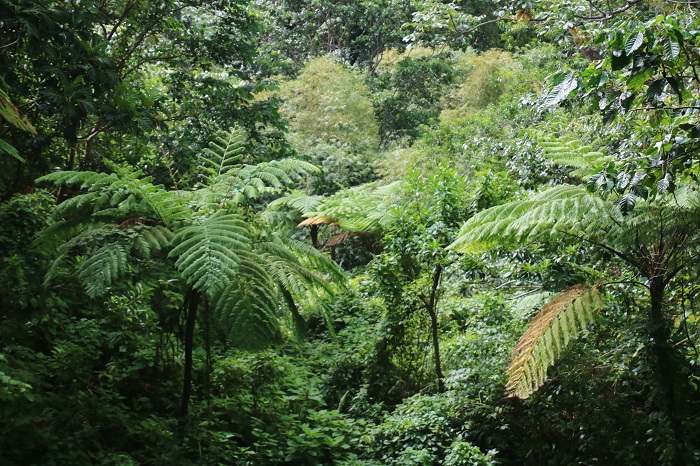
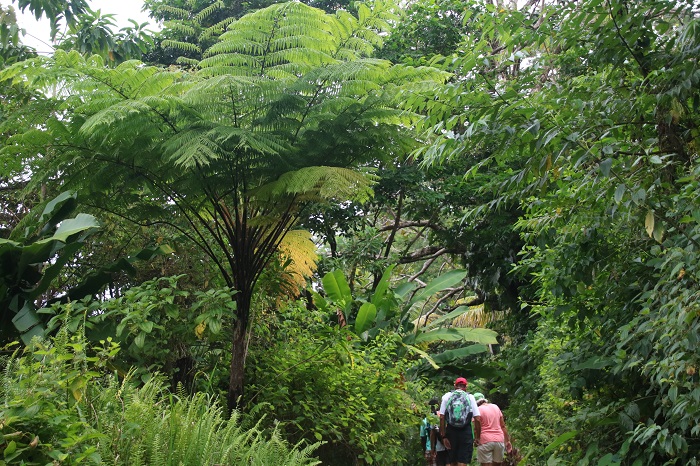
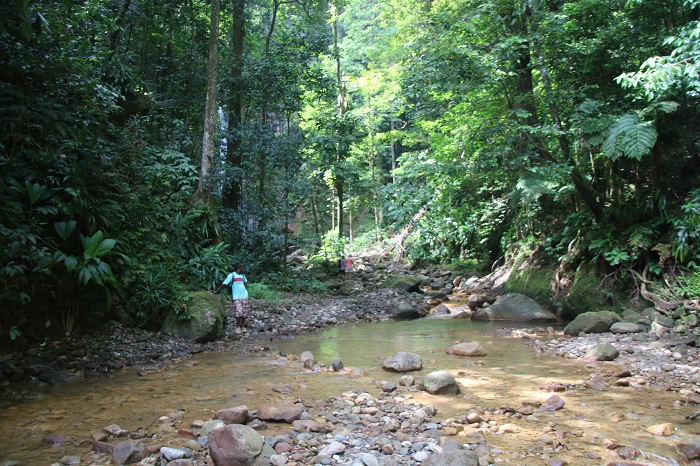
This is the forest we walked through.  Sometimes there were openings to the sky as here, and sometimes we were in deep shade with the canopy of the trees about 150 feet above the ground.

4-2-17b 154

4-2-17b 040

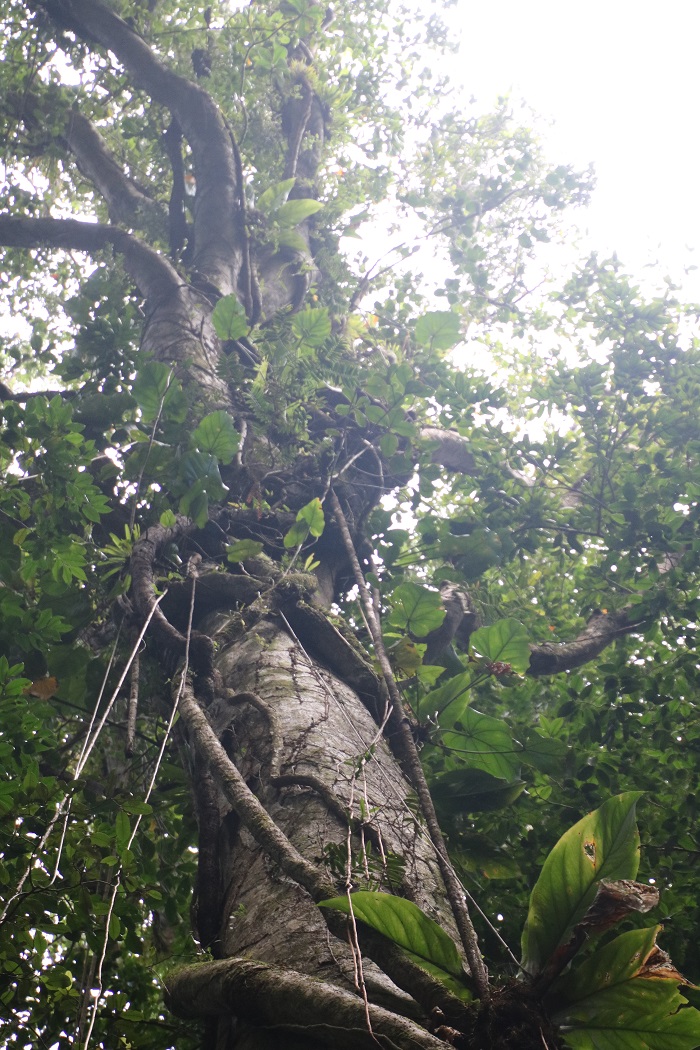
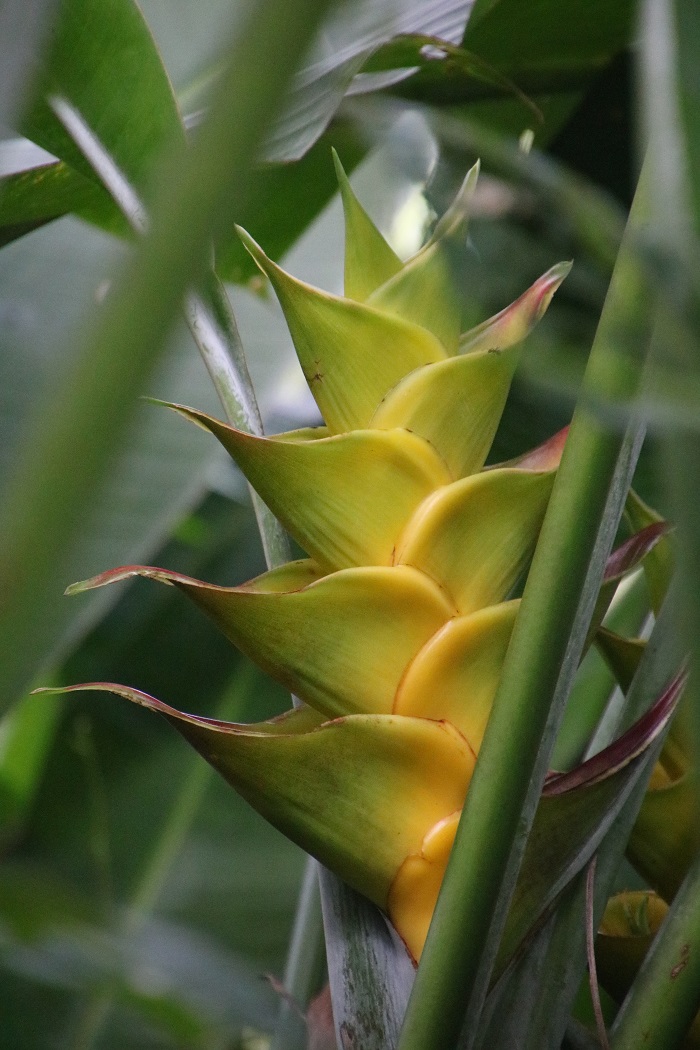
Looking up into the upper story where plants get the most light, we could see many orchids and bromeliads growing on the tree trunks, as well as huge vines.

4-2-17b 045

In the deep shade there was plenty of plant life too.

4-2-17b 160

4-2-17b 157

There were places with great vistas–

4-2-17b 077

4-2-17b 073

And places so deep in the understory that it drew our focus into the details.

4-2-17b 061

4-2-17b 078

4-2-17b 162

4-2-17b 026

4-2-17b 037

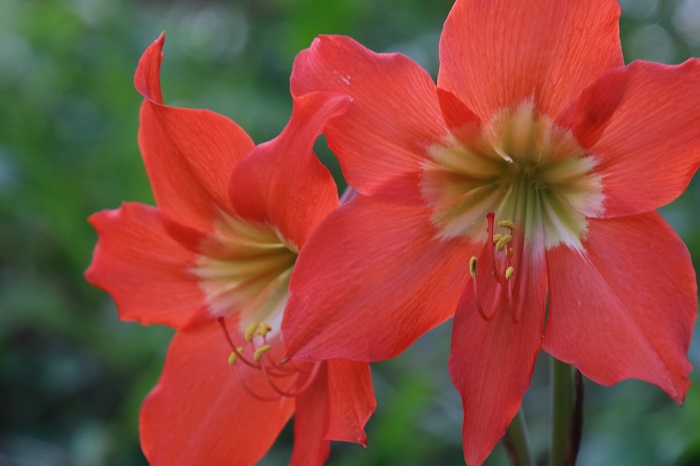
There are even wild amaryllis in the sunnier parts of the rainforest.

4-2-17b 070

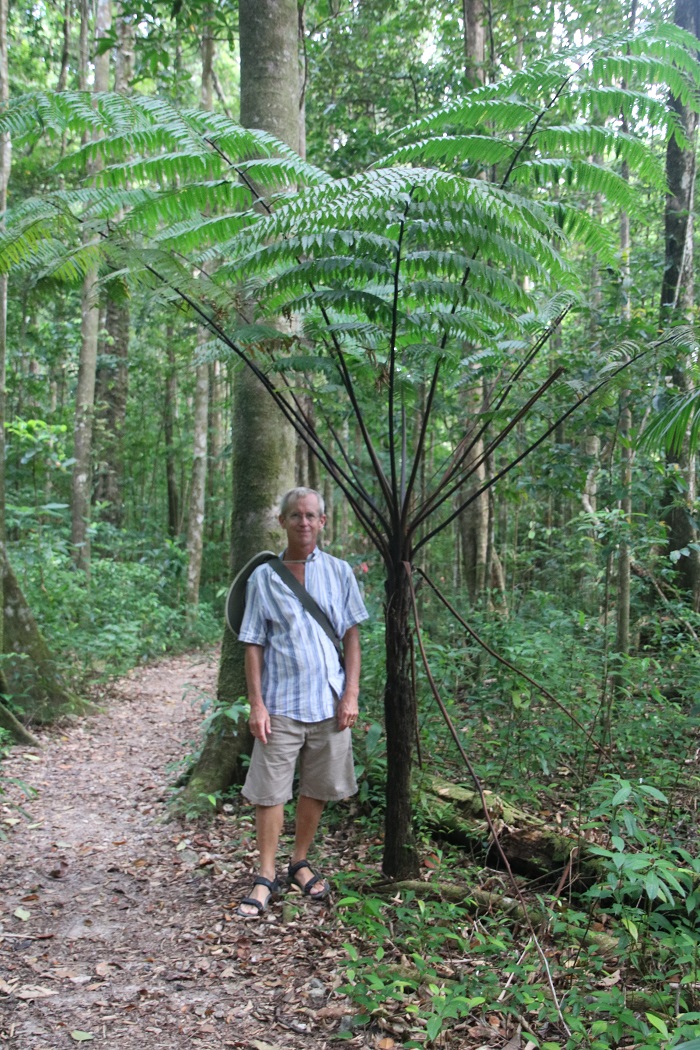
Bob and I were particularly on the lookout to see orchids and tree ferns, and there were plenty of both.  There are traditional uses for tree ferns in Dominican culture.  What we know it best for is a planting material for epiphytic orchids.  Fitzroy was surprised to learn that is all we used it for back home.

4-2-17b 050

Tree ferns are very ancient plants, older than humans.

4-2-17b 163

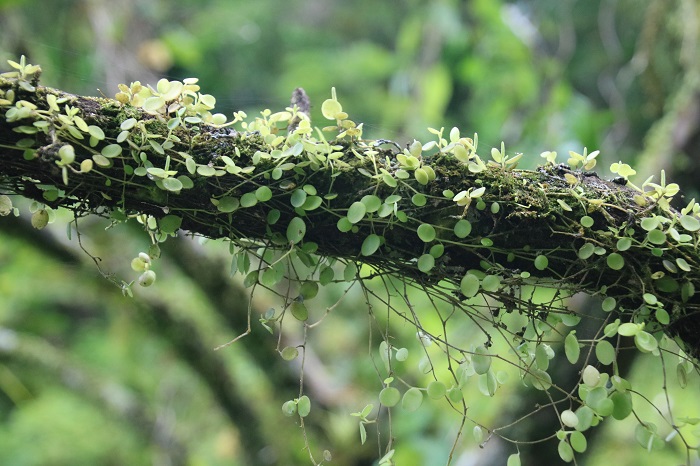
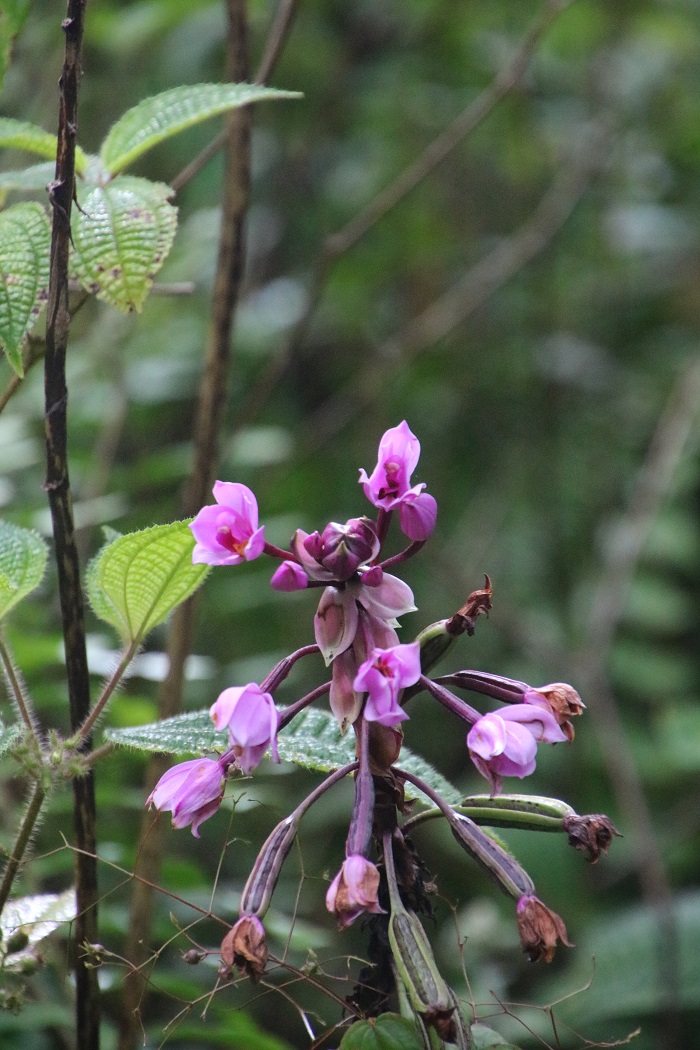
There were plenty of orchids too.  Bob was thrilled to find a few brassavola nodosa in bloom on his previous walk, and plenty that would soon be blooming.  We saw lots of orchids on our walk to the waterfall, but none in bloom.  There were some very tiny orchids and some very large terrestial orchids.

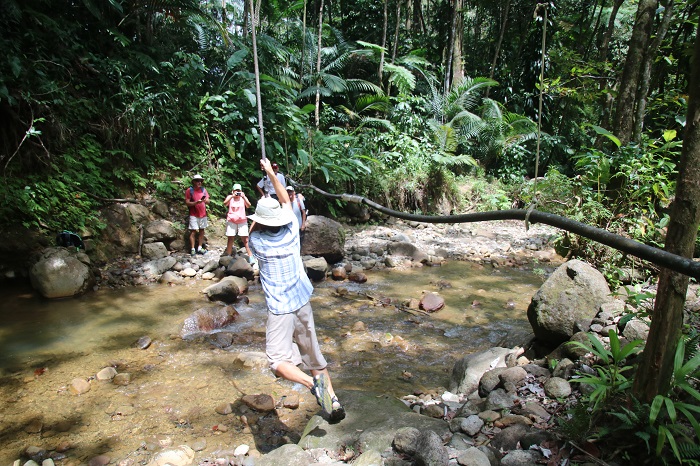
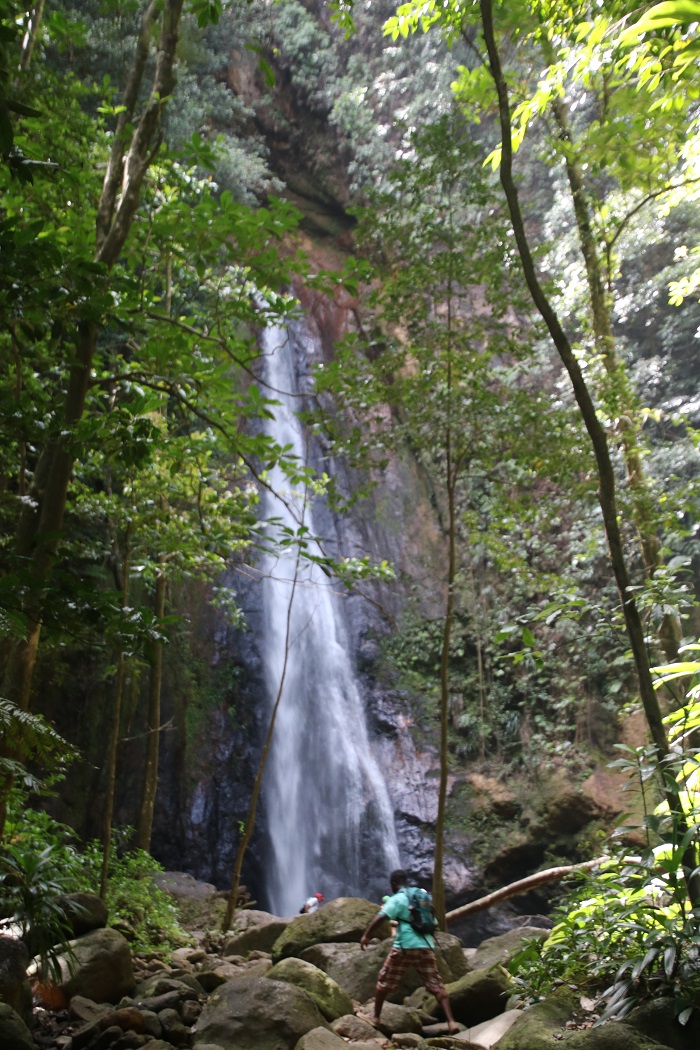
The goal of our walk through the rainforest was a large waterfall.  The path we followed crossed the river several times, the final time involved swinging across the river on a large vine, Tarzan style.  Here is Bob swinging through the air.

4-2-17b 111

And we’re on our way to the waterfall along the relatively dry river.  The rainy season will come in another couple of months. That is our guide Fitzroy in the distance.

4-2-17b 086

You can see how high it is based on how small our fellow travelers are!

4-2-17b 088

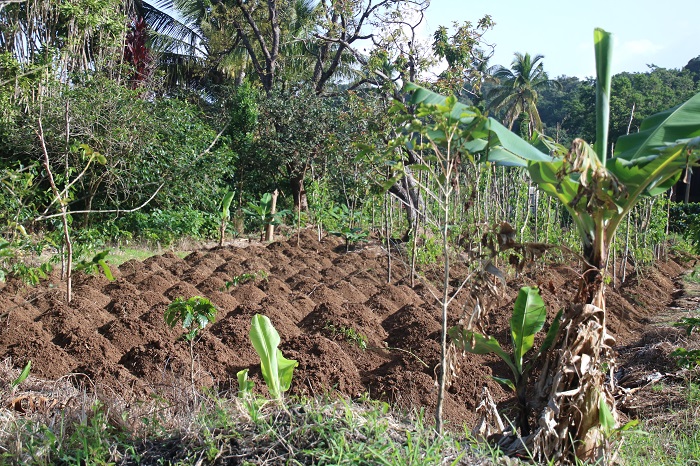
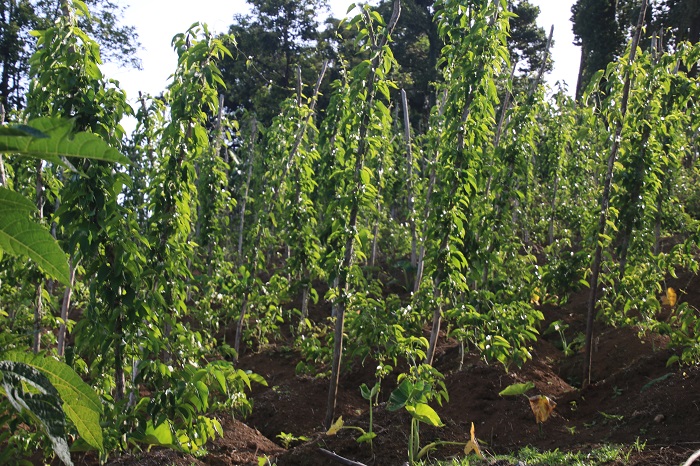
Along the edges of the forest there are houses and small farms, places where the locals have burned a bit of the rainforest to create a small plot for growing their own food.  Here are lots of banana trees, coconut palms, and plots of vegetables.  This plot which was labor intensive to start is for a type of yam vine.   Each tuber was planted into its own mound of soil.

4-2-17b 018

4-2-17b 021

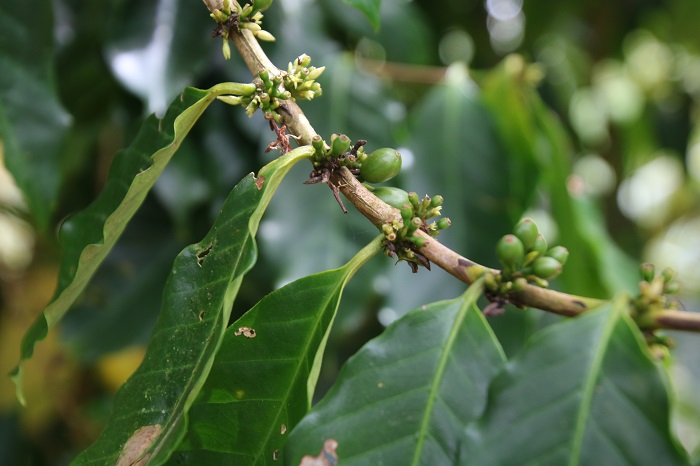
And the locals are growing coffee plants and cocoa plants.  This is a branch of unripe coffee beans.

4-2-17b 164

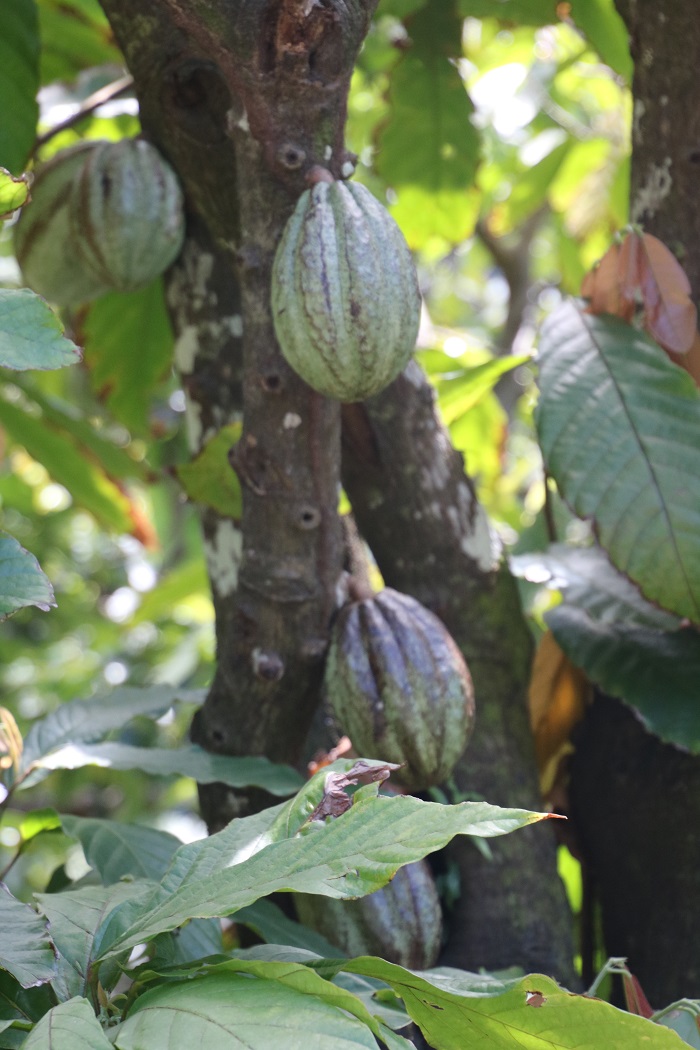
–and a branch of rather ripe cocoa seeds.  Inside these pods are strands of thick cocoa.  I bought some in the market and they have a deep chocolate aroma.

3-31-17b 055

At the end of the day Fitzroy asked me what I use all the plants for that I grow.  I was left a bit tongue tied by that.  Use?  I grow a few herbs and vegetables, but mostly I grow plants for the sheer enjoyment of it.  That is all I could tell him.  He was surprised by this.  What a very different culture we were experiencing here on Dominica.  This is my lesson from visiting this place.  Perhaps I can figure out how to be a bit more conscious how I can be more self sustaining.

Yesterday we began the trek northward so I can catch my flight home on Sunday from Antigua.  We have returned to Terre de Haut in the Saintes and treated ourselves to a wonderful dinner out last night at Bon Vivre.  We were happily surprised when Judie and Phil from Rum Runner walked into the restaurant shortly after we sat down.  We shared a table together, and tonight we will have them aboard Pandora for a last dinner before we each head our separate ways.


Scroll to Top