ArgoKnot

weaving

Let Me Get Out My Soapbox

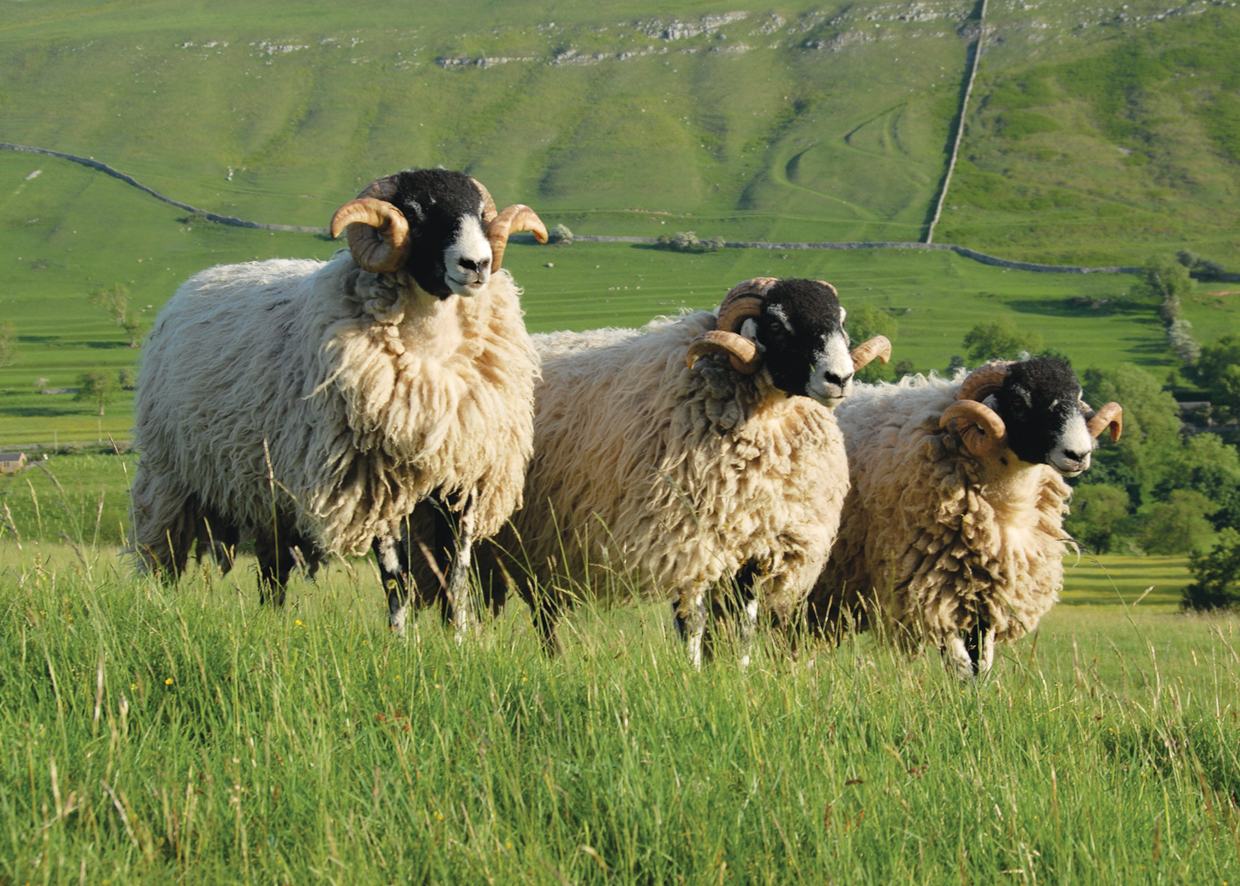
Oh, boy! Last night I got quite riled up about people’s attitude toward wool. Bob sent me this article from the Times of London. It’s called “Shear Waste,” and it covers the dire situation of sheep farmers across the UK. This year many farmers burned their fleeces or added them to their compost. For years I’ve heard that farmers expend more energy and money in caring for sheep than they get when they sell the fleeces at market. This year the new low was 33p per kilo, which I learned does not even cover the expense of shearing. This is heartbreaking. Seriously, I am crestfallen by this situation.

From the Times of London, Fleeces being composted at Stuart Fletcher’s Sussex farm

I went looking for more information, and I started with the Campaign for Wool. I had no idea this endeavor is now 10 years old. Time flies. How have things gotten worse instead of better? It seems that many people in the UK feel that wool is only useful for rugs these days. Whoa! I have had the pleasure of spinning some wonderfully soft wools from the UK, and nothing–absolutely nothing!–gives me more pleasure than knitting or spinning Wensleydale or Shetland wool. Am I mistakenly under the impression that everyone in the UK knits? …at least for a few years as a child? Don’t they need fresh supplies of wool and the ability to try the many breeds that are grown all around them? Aren’t designers, especially of men’s suiting, always in need of wool?

A few months ago I read the book Wild Dress: Clothing and the Natural World, by Kate Fletcher. The author is Professor of Sustainability and Fashion at the University of the Arts London. She has written other books, but in this one her writings are autobiographical. She explores the relationship between garments and our human connection to nature. The chapters read like essays to me, and in one she marvels at people who spend time in nature by hiking through the landscape. She notes that nowadays, you have to dress the part of someone who spends times in nature by wearing the most unnatural clothing. If you aren’t wearing a polyester fleece made from recycled plastic bottles and elastane-nylon pants, you must not be a serious outdoorsman. Kate Fletcher writes, “As garments go, there are few pieces less natural than a polyester fleece pullover. Nor are there many pieces that act to distance the world outside more than those made from filaments of hydrocarbon with their high resistance to micro-organisms, poor heat isolation and low water absorbency. The things we are wearing to arrive in nature do not, cannot, let nature in… We keep her at arm’s length, or more literally at sleeve’s length, with hydrophobic fibres, an impervious fabric membrane and garments so durable they will outlive us all.”

Wool has so many uses. It can keep you warm and is fairly water resistant. Through millennia of sheep breeding wool can be soft enough for undergarments and tough enough for weatherproof yurts. It can insulate houses, hang on the wall as a beautiful way to keep out drafts. It can become stunning clothing and household items when knitted or woven or felted. I thought there were many millions of people clambering to have excellent sources of wool. So how can these farmers be in dire straits right now? I am worried that they will soon give up sheep farming and turn to something else. What will I do? I can’t possibly be the only one who fears this.

I own exactly one polyester fleece pullover which I bought at least 30 years ago to support a non-profit group I had joined. I still have it, and I wear it only occasionally, although never out in public. I have a wardrobe of sweaters I knit myself that I love to wear out in public. Most of my friends and acquaintances also love the sweaters and other garments that they have woven or knitted. Even if you yourself do not knit or weave, I bet you know at least a handful of people who do. We are everywhere.

About a decade ago I joined the Association of Guilds of Weavers, Spinners and Dyers in the UK. Ten months of each year there are online workshops to take. One month we focused on breeds of sheep that are not well known. Each participant got a small amount of fleece directly from the farmer to comb or card and then spin. I got some Ronaldsay fleece from the Orkney Islands off Scotland. I got some Bowmont-Merino fleece from Leslie Prior’s farm in Devon. That was an amazing bit of fleece to spin. She has the only Bowmont sheep farm in the world, and at one point there were only 28 sheep at her farm. I felt so lucky to get a bit of this wonderful fiber to spin. Since then I believe she has prospered with this breed. She has an outlet for getting the yarn spun in the UK, and made into garments and household items that are manufactured in the UK.

When we had the fleece workshop through the UK Guild, those of us outside the UK did not know for certain if we’d ever receive our fleece samples, or how long it might take to receive them. The ones I chose all arrived at my house, and I think the longest delivery time was only three weeks, which is fast considering these packages had to go through the Animal Plant Health Inspection Service of the United States Department of Agriculture. The inspectors have the right to send back anything they deem unsafe. After playing with various fleeces from the around the UK, I ordered a kilo of Ronaldsay from Orkney. I washed the wool, combed it and spun it before knitting it into a sweater for my younger son Chris. I’d love to spin some more Bowmont now!

This is my long winded way of saying that I hope there is some way to save the wool industry in the UK. I read that half the wool stays in the UK, but the other half gets exported throughout the world. One quarter of the wool goes to China, and this year, due to the pandemic, no wool could be sent there. In the article I linked at the beginning, I also learned that British wool is used in carpets on airplanes and cruise ships, and those industries are certainly suffering at this point in time. To me, wool can be such a luxury item that we should all cherish it. I don’t want to lose that. What can I do?

I’ll end this with some stunning wool products and some links.

This is the story of a student design project for Campaign for Wool to create new designs for Holland and Sherry, a well known Saville Row shop known for their use of high end wool fabrics.

The Campaign for Wool is making a good argument for using wool to insulate dwellings.

And no post about British wool from me would be complete without a mention of the wools grown and spun and woven on the Hebrides Islands for Harris Tweeds.

Stay well, pick up some wool, and get busy knitting….or weaving….or felting…or spinning.

Change

We are stumbling closer and closer to our move to Connecticut.  We have a buyer for our house in New Jersey, and we’ve committed to a house in Connecticut…..but getting everything to fall into place so everyone involved can move on has been a bit difficult.  It looks like we will be en route to our new home by the middle of next week!  We have been rattling around in our empty, echoing house for a few weeks now.  It doesn’t feel like our home anymore, so it’s time to move on….

We packed my last loom over the weekend.  I probably should have taken some photographs!…but it was too stressful.  I had the strong impression that one of us was going to end up in the ER, so grabbing the camera just didn’t happen.  This last loom is my big Toika, and it had a warp of cotton seine twine on it for a boundweave project.  My dear friend and experienced Toika weaver, Sister Bianca recommended leaving the warp on the loom.

Sr. Bianca advised me to take the beater, the harnesses, and the jacks from the top of the loom, and wrap them all together around the warp beam.  It was a brilliant suggestion!….

….executing it was not so brilliant….. imagine cutting the warp from the front apron and taking the reed out of the beater.  While trying to keep that from flopping about, I then tried to hold all the jacks in place while my husband tried to disconnect the jack-holding frame from the large side frames of the loom.  Where was our 3rd set of hands for this job???  Certainly no extra hands for photos…  At one point I thought the jack frame would surely hit one of us on the head, necessitating a hospital visit, and possibly necessitating a long recovery from head injuries (if not worse).  My husband was not amused at my conjectures.  I wanted to take a ‘time out’ to plan a strategy; he just wanted to get it over with!  Typical male/female disagreement, I believe!

I’m happy to report that there was no loss of life…..or even loss of consciousness!  But I don’t want to do that again any time soon.  If there is to be a next time, I must remember to get more detailed information on how to accomplish this! Advise welcome!

With my looms packed, I have turned to more portable projects.  (Hey, who am I kidding?….I haven’t actually woven in several months, just knowing that I was going to have to pack up those looms.)  Have you seen the swing knitting projects on Ravelry? Amazing!  I’m intrigued…

I did buy the workshop download for learning this technique, but I didn’t want wristlets, or a hat, or socks.  I wanted a jacket!  So I jumped in the deep end of the pool, and really, this technique is not difficult to understand.  There is no reason to do a little project if you really want the big one!  This jacket, designed by Heidrun Leigmann, requires four sections just like this one which I finished a few days ago:

Swing Knitted Jacket by Heidrun Leigmann

As you can see, it is a mitered square with short rows to create the curving elements.  The yarn called for is Noro’s “Flower Bed,” which I cannot find here in the US.  Since it is roughly sock weight yarn, and since I love the weight and bounce of Shetland, I have chosen to use a Shetland-like yarn by  Kauni in a long colorway that runs through the entire spectrum.  Is it too colorful??  Probably.  Do I have the guts to wear something this blinding?  …not sure… but I am enjoying knitting it!  Can I really knit four of these sections without losing motivation?  …not sure of that either!

In other facets of life, when not packing, I have made another “Blooming Gardens” crystal bracelet, along with matching earrings and even a small pendant.  The purple one is for my sister’s very belated birthday.

And lastly, I finished the Nantucket basket that I want to give as a wedding present to a dear friend’s daughter.  It’s only three months late…. that’s actually quite good for me! Now I’d like to make one for each of my own kids!


Recharge

Life has been pretty stressful for the past 8 months.  My blog is a place where I try to put my daily, non-fiber obligations behind me, but all those obligations have basically taken over my life these past few months so it’s been hard to feel connected here, especially when I’m avoiding talking about these obligations!

Thankfully, this is a time a year when I recharge my enthusiasm, my commitment, my passion for weaving, knitting, spinning, dyeing.  My wonderful family and friends have encouraged a rekindling of fiber energy by giving me some empowering gifts!

‘Warped 2 Weave’…..exactly the message I need to get me back on track!  My son ‘painted’ these sneakers for me with colored pens.  He says if I keep him supplied with shoes he’ll keep making them!

Finally!  A way to organize my circular needles!  Some Tofootsie sock yarn to knit while drinking my favorite morning beverage in this adorable sheep mug.

This sheep mug is from Herdy.  I’m in love…..
Their website has a creative video of escaping sheep that showcases their products.

Time to get busy!

Glorious Summer

herb garden on board Pandora

This is the extent of my gardening on board (well, almost)! Rosemary, thyme and a bright red geranium! I have no idea how my gardens at home are faring in the 90+ degree heat of the past few weeks, but this little pot makes me quite happy!


A visit to the Coastal Maine Botanical Gardens in Boothbay with a good friend was a perfect summer day. These gardens sit on 128 acres that border the shoreline of Back River.  The idea for the gardens started in 1991, and the land was purchased in 1996, with some of the founding directors using their personal homes as collateral for the land purchase.  The grand opening occurred in 2007!  There is a wealth of inspiration here, and most plants are clearly identified.  There are tranquil spaces, such as the Meditation Garden and the Waterfall garden along with several quiet woodland paths. And then there are spaces that are strikingly beautiful such as the Children’s Garden and many perennial borders.

One of several mazes in the gardens

Birdhouse at edge of Cleaver Event Lawn and Garden


Really large bonsai planter


So many daisies!


Path through the Vayo Meditation Garden

Pond in the Children's Garden

And here is the winning idea I took from my tour: a wall of plants!  It is made by filling wire baskets with soil, then stacking them and framing them into an attractive wall.  This wall of plants not only saves space, but also makes a good screen to block unsightly views!  I want it!


Herb wall

This example of a planted wall is filled with herbs.  You can see one of the wire boxes in the lower left on the ground next to the wall.  They had walls planted with annual flowers and one shade wall planted with ferns.


Today the wind is howling so we will sit on our mooring in Boothbay Harbor.  I am going to work on my Nantucket purse and remember my wonderful day in the gardens!


Fodder for tapestry


Blue Heron at Seal Cove
Taking flight (startled by our approach)

In this cove the shallows are full of the shells of sea life eaten by the various birds fishing these waters.  We found a huge scallop shell, several large quohog shells and a razor clam shell, and endless mussel shells. Mussel shells are so beautiful with their range of iridescent  blues and purples! Looking through the water at the shells made me think this would be a wonderful tapestry, having some of the shells in sharp focus as seen through clear water, and others obscured by light reflected on water. Now, how to actually depict that!  I took several photos with a polaroid filter, but they all came out perfectly clear, as if there were no water at all!….

Then I happened to read Kathy Spoering’s post about taking the time to osbserve the natural world, to really look….through an artist’s eyes.   I definitely need more looking…

Scroll to Top