ArgoKnot

weaving

Summer of Weaving

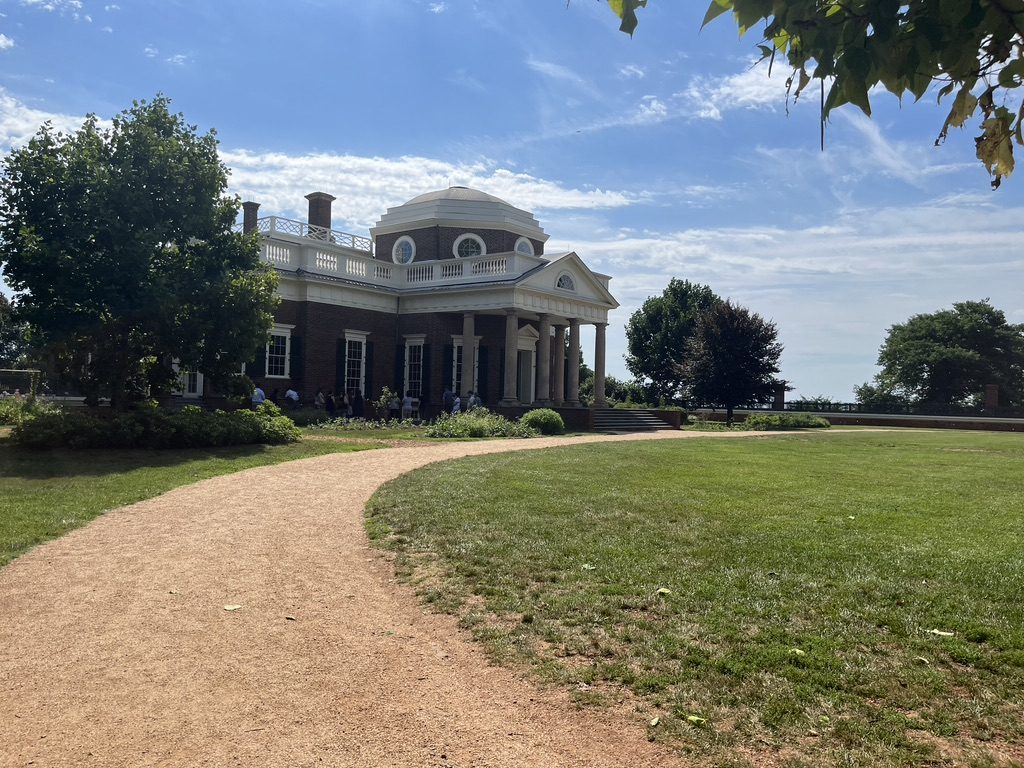
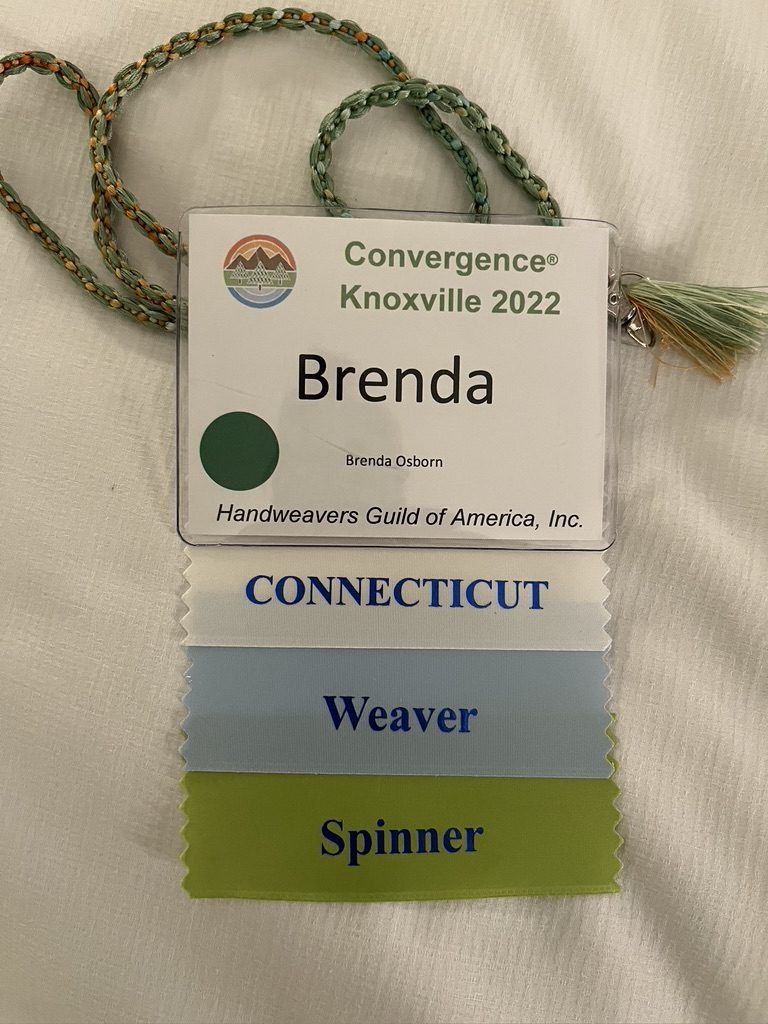
Through all of July I was focused on weaving. What an extraordinary time it was! After a winter of missing weaving and all my weaving friends, I signed up for everything that crossed my path on the moments when I could be online in tropical ports. First I went to Convergence in Knoxville, Tennessee. My friend Kari and I went together by car, doing a fun bit of sightseeing along the way. We traveled via Skyline Drive and the Blue Ridge Parkway, stopping to enjoy the views along the way. We spent a day at Monticello. It was a hot one. We would have explored more if only it had been a few degrees cooler. We had some adventures along the way, such as when we were stuck on Skyline Parkway with an overheated radiator. It took about four hours to get help from AAA and get some coolant added to the engine, but during that time we met a lot of travelers who stopped to talk and offer us water and food while we waited. The world is a much friendlier place than shown on the news. But you knew that, didn’t you?

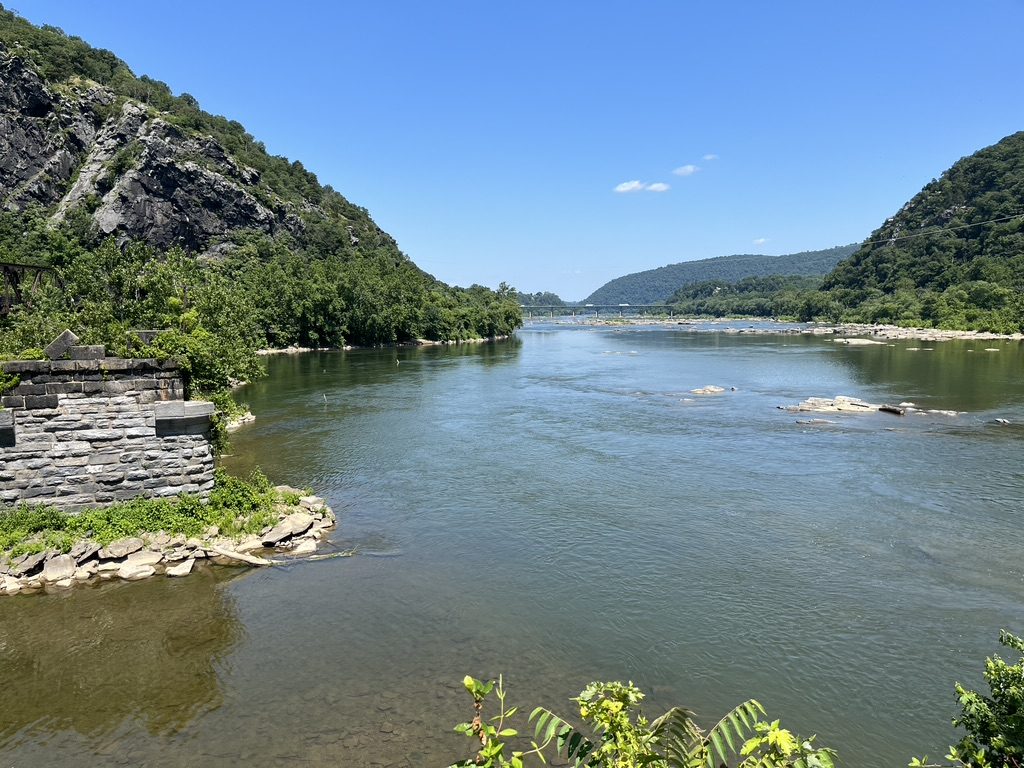
Harpers Ferry
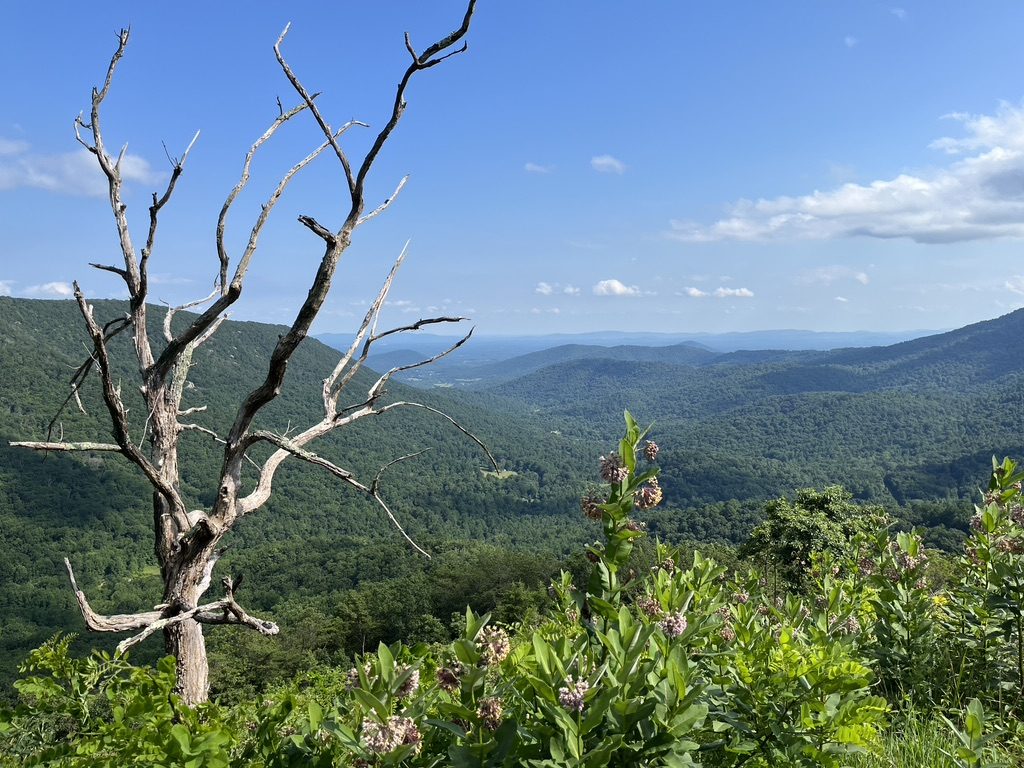
Shenandoah National Park

We left from the Baltimore area and arrived in Knoxville four days later! Hello Convergence!

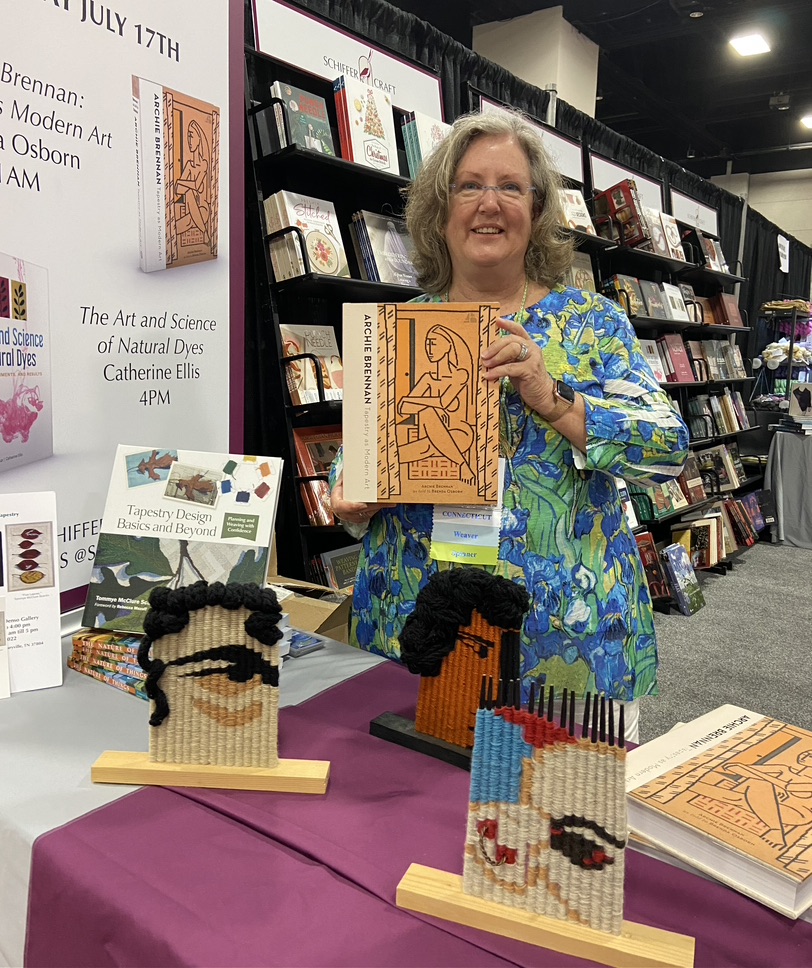
I registered for three classes–beginning sprang, a lecture on Frieda Hansen by Robbie LaFleur, and a ‘make and take’ Dorset button project with Denise Kovnat. My publisher had a booth in the vendor hall so I was asked to give a short talk there.

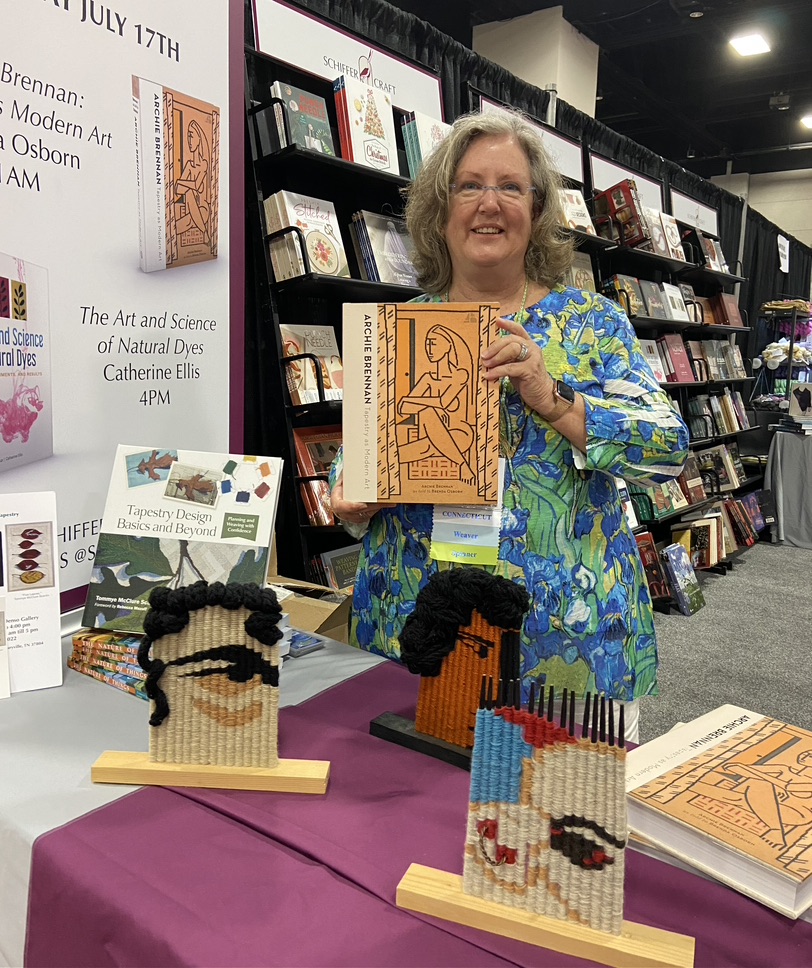
Although my talk was not well attended, all the copies of Archie’s book had sold by Monday morning! And the talk gave me excellent practice for an upcoming short talk and chopstick loom workshop I’ll give in early September. All good.

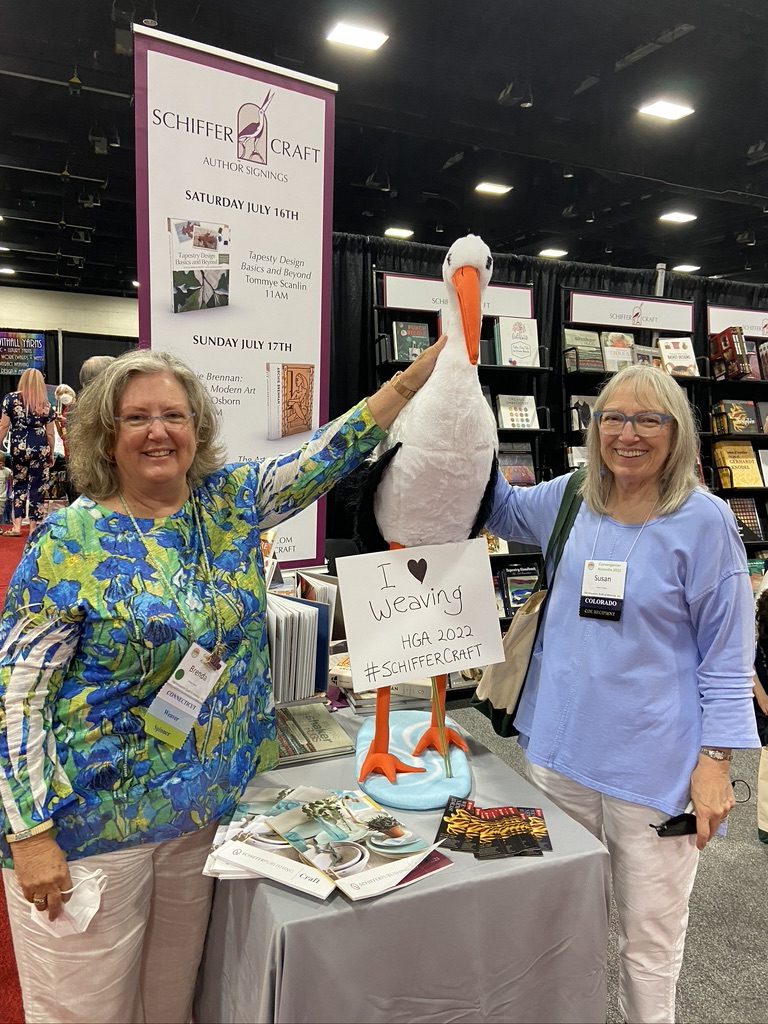
Here Susan Wilson (author of Weaving Crackle and More) and I are petting the Schiffer Stork–an interesting mascot since publishing a book is a bit like giving birth. The gestation period for the Archie Brennan book was more than 12 years.

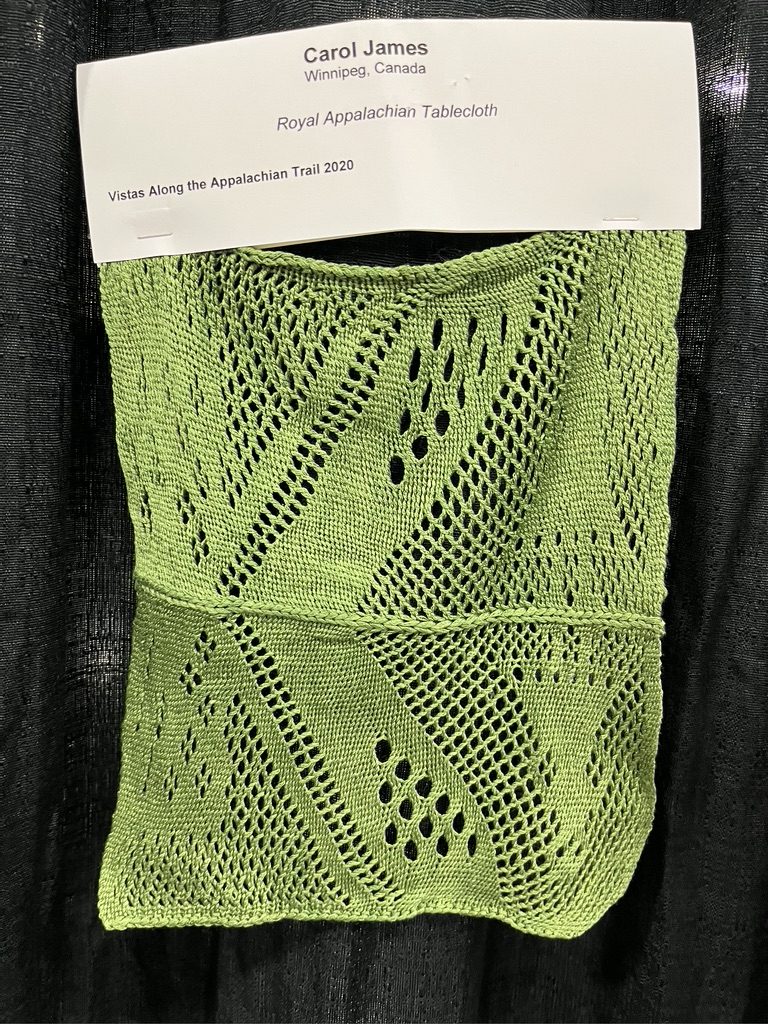
The sprang class sent me down a rabbit hole I did not expect to go. I just wanted to understand it as an historical artifact and technique. Now I’d like to make things, which will involve learning and practicing–I’m sure a lot of practicing. Carol James makes such lovely clothing in this technique. In September I will start a six-week online course with her in beginning sprang. Sprang rabbit hole, here I come!

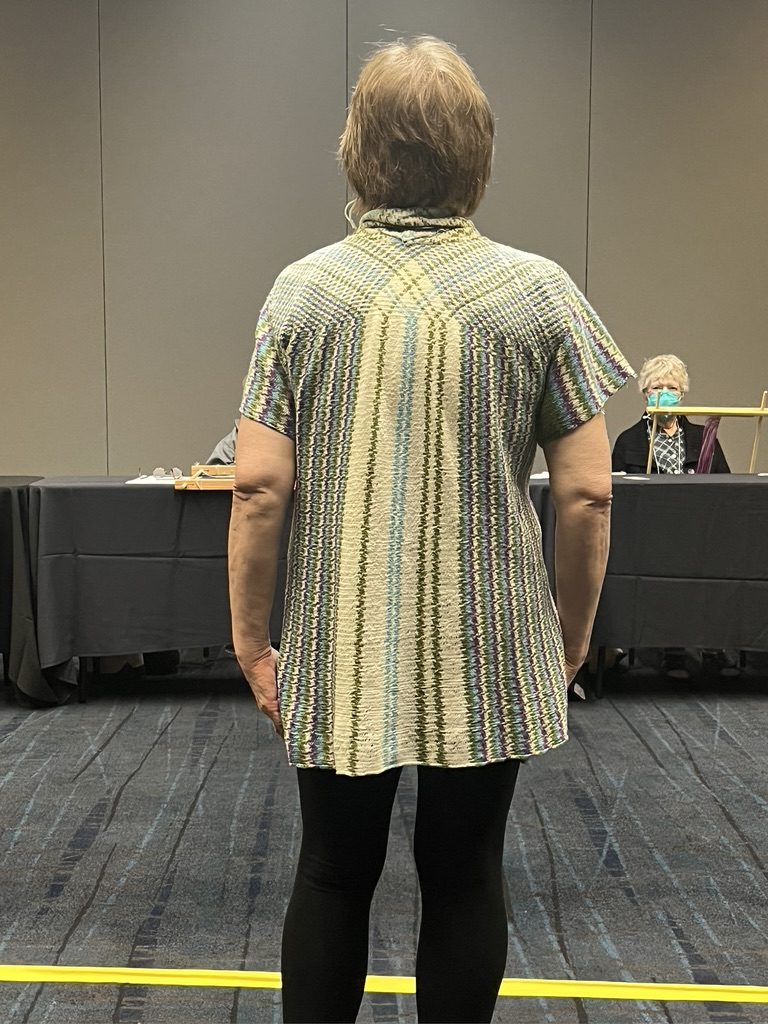
Her work in the juried show was so delicate and drape-y and elegant!

She also had work in the yardage show in which she wove the entire alphabet in sprang. It was hard to see, but here is her touchable sample.

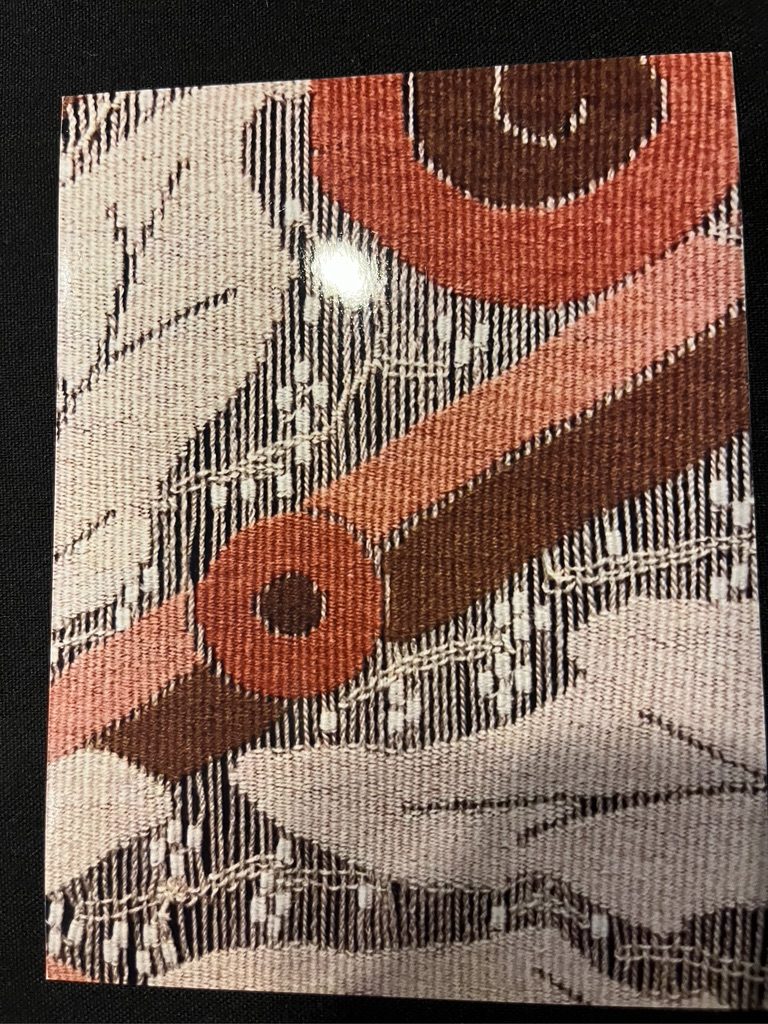
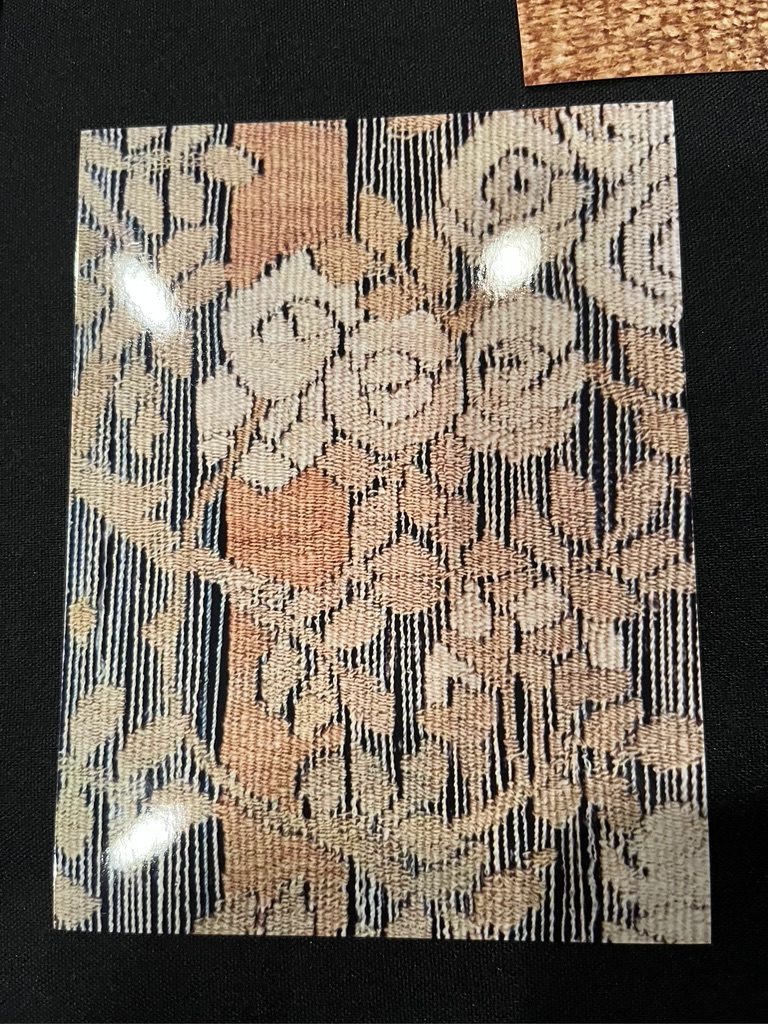
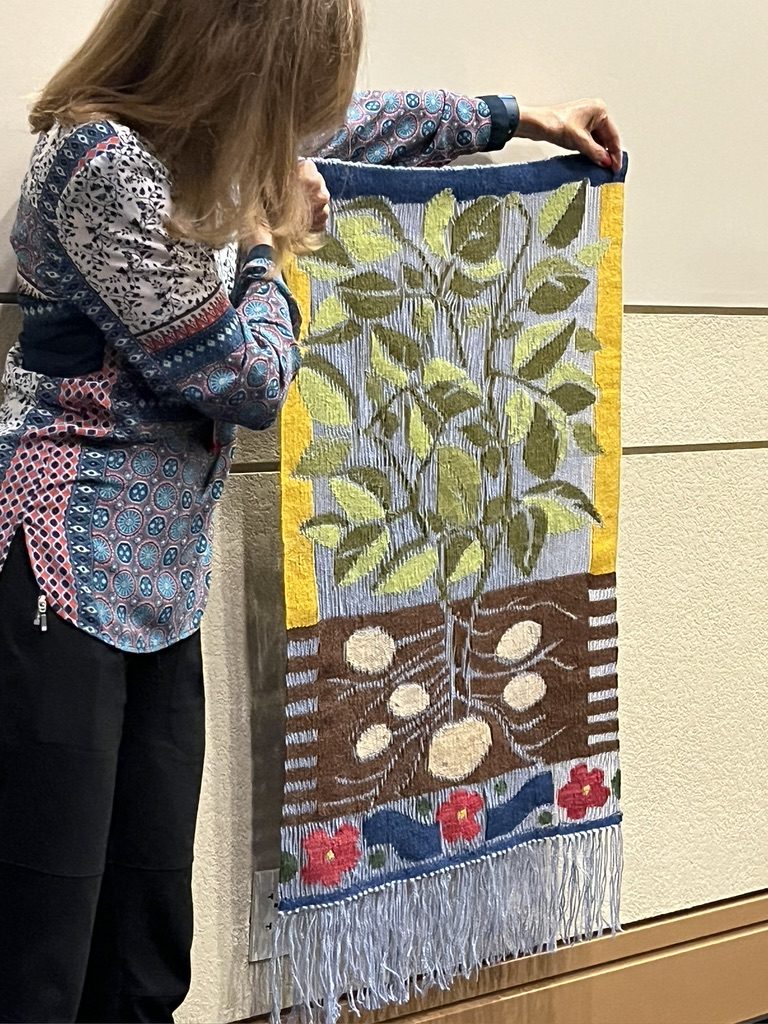
The lecture and slide presentation that Robbie LaFleur gave on Frieda Hansen gave me more intriguing ideas to pursue! We had three hours to learn about Frieda and see many images of her tapestries, which are unique for leaving so much warp unwoven. Excuse those bright white dots. They must be a reflection from the screen.

Robbie LaFleur has done quite a bit experimenting with this technique. I thought each woven shape must have been soumaked to hold it in place, but no! Wool warp and wool weft are just clinging to each other in their inherently wooly way. Seeing actual tapestries done in this technique showed how beautifully supple the fabric can be.

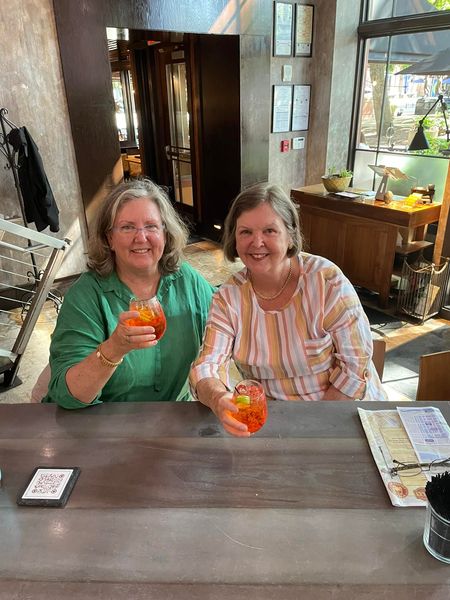
Knoxville is a charming city, part of a larger area that includes Ashville, NC, and Gatlinburg, TN, that have many galleries focused on fine craft and art. Walking to Market Square was easy from the conference hotel, and there was much to see! The exhibits that were related to Convergence were “Small Expressions,” hosted by HGA; “Tiny but Mighty,” hosted by American Tapestry Alliance; “Complexities,” hosted by Complex Weavers; and a lovely show works from members of the seven weaving guilds throughout Tennessee. Kari and I spent a wonderful day touring these exhibits. I have loads of photos, but I bet you’ll see a lot of these in the upcoming issue of “Shuttle, Spindle and Dyepot.” I can’t resist a photo of Kari and me having a cool adult beverage on a very hot Knoxville afternoon!

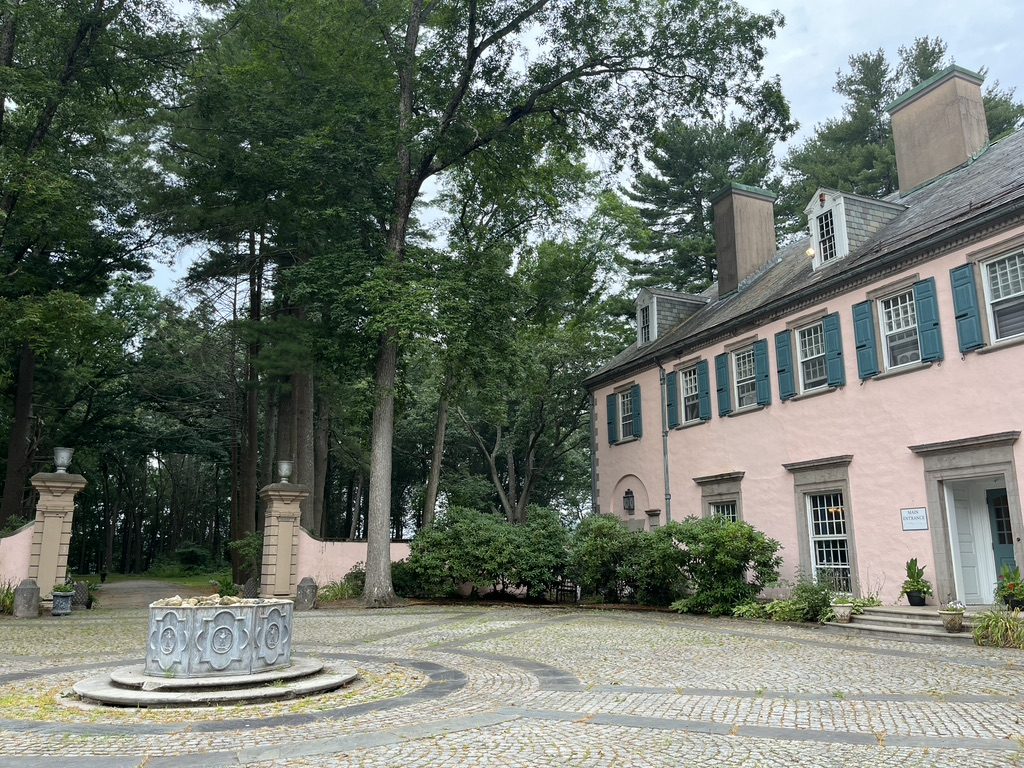
I knew that Scottish tapestry weaver Fiona Hutchison was at Convergence, but I never bumped into her during the conference. In March I had entered a lottery to take a workshop with her just three days after Convergence ended–in Massachusetts. It was a hurdle to drive home–not to Baltimore where my friend and I started our journey–but to Connecticut! I had only 36 hours to unpack, do laundry, and gather all my materials before heading out for a 3-day workshop with Fiona at Rolling Ridge Conference Center in North Andover.

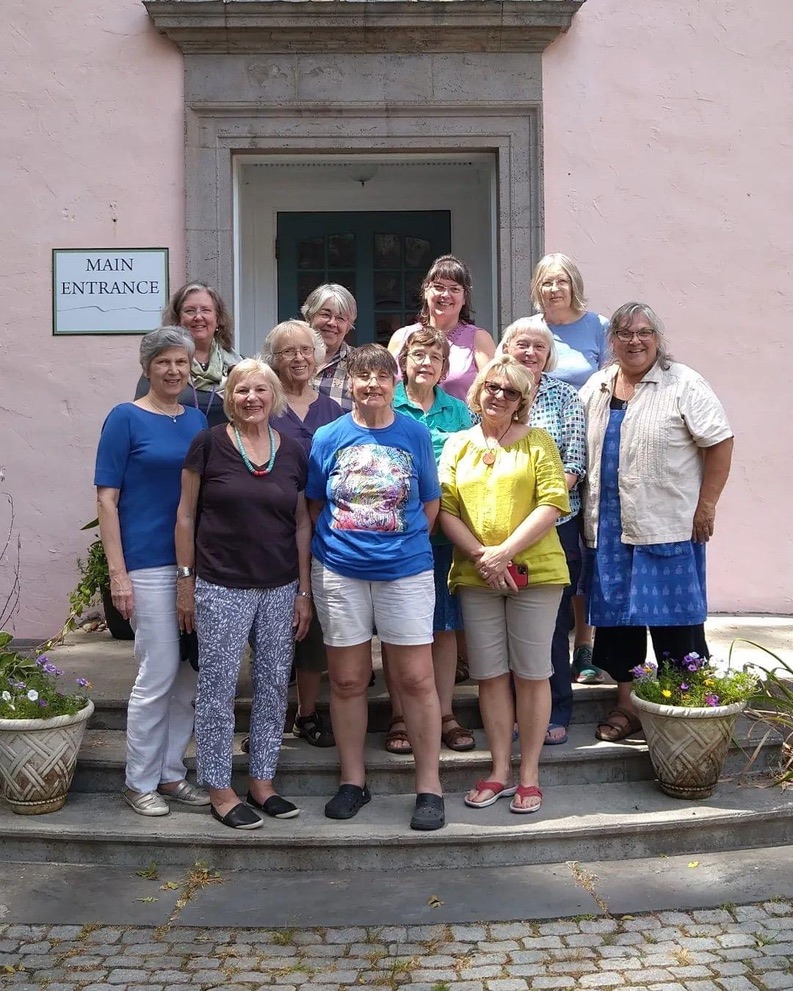
Here is our group of twelve lucky participants. Fiona is in the second row, second from the right.

Fiona’s work is so interesting! It was a challenging and inspiring three days making samples of just a few of her many techniques to bring tapestry off the grid and create such interesting fabrics.

Here are some of Fiona’s woven samples of techniques. Here she has taken one warp and woven separate small sections of differing lengths and differing numbers of warp threads. She has left the linen weft ends exposed for a textural effect. Off the loom she pulls the warps to create all these small undulations.
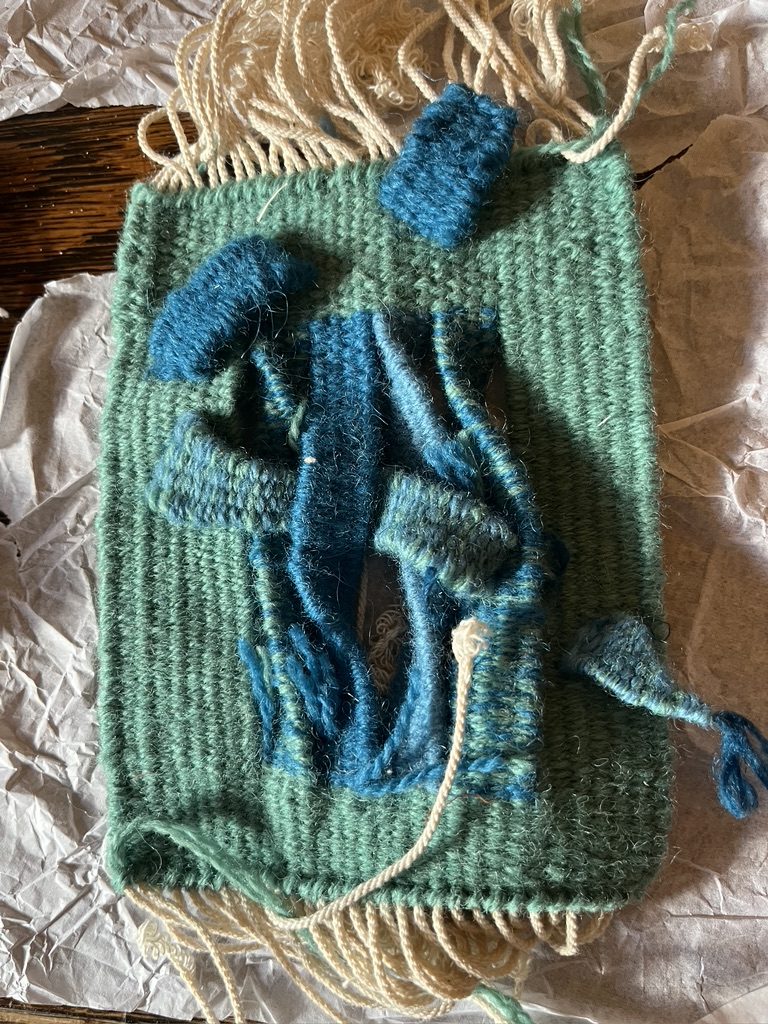
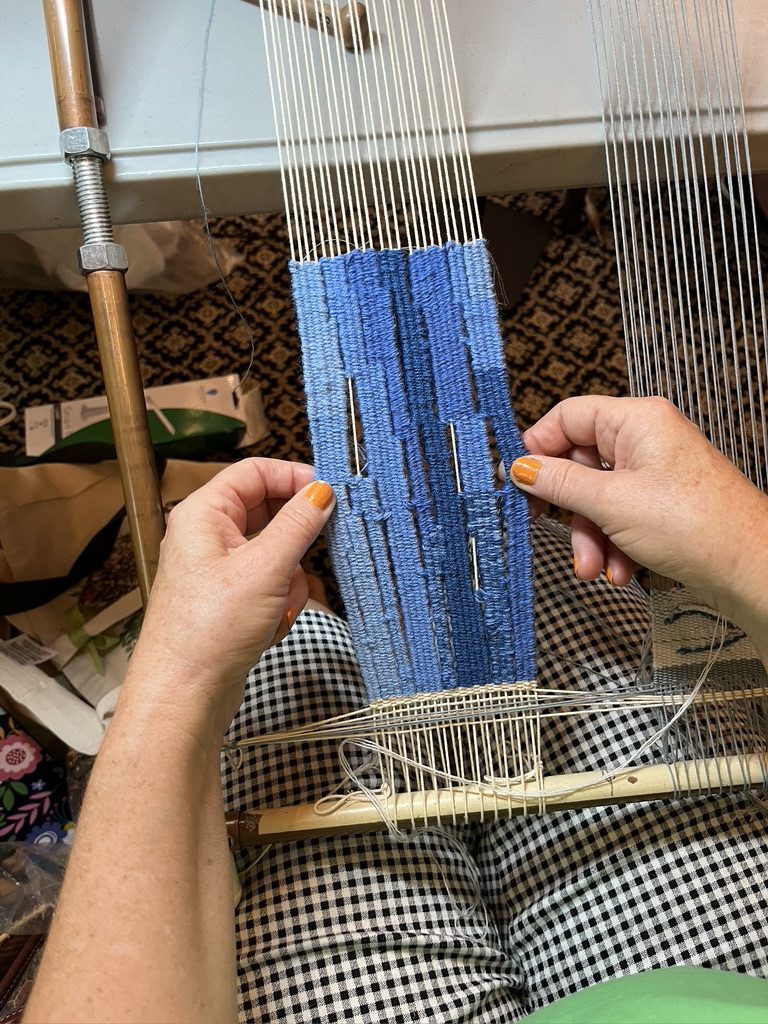
This is my sample of what the weaving looks like before being cut from the loom and manipulated into undulations.

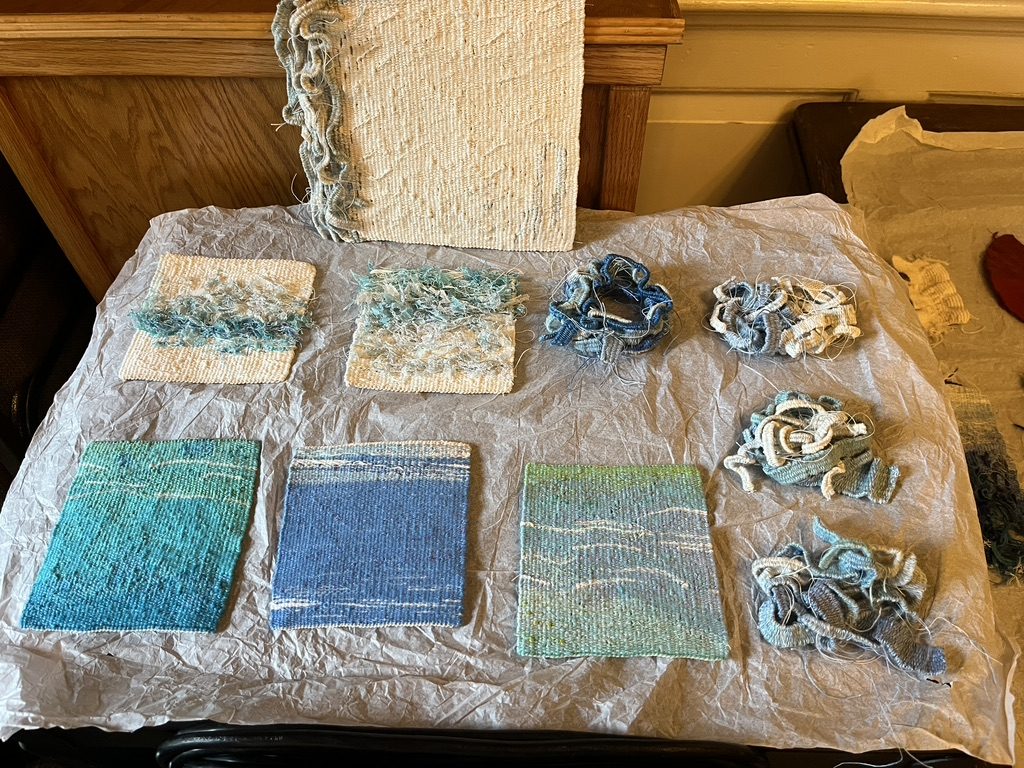
Here are a number of different techniques woven by Fiona, displayed together for us to see.

Twisted warps and supplemental warps make this very interesting sample.

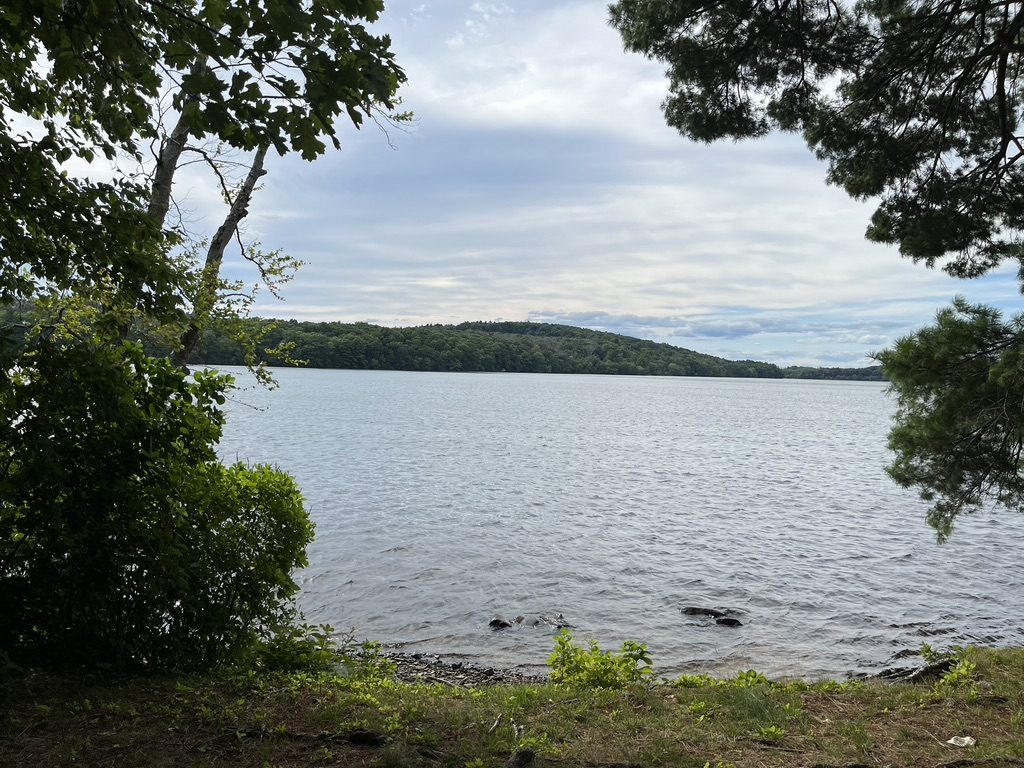
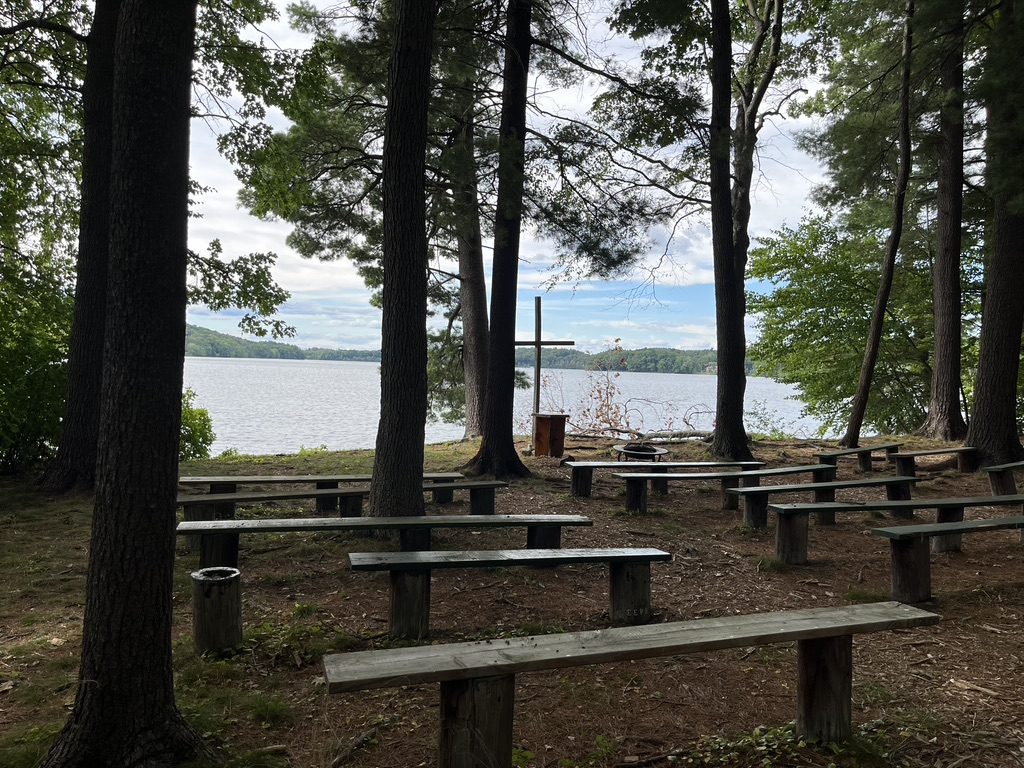
At various points during the day we had time to explore the grounds. We all loved the views of the reservoir.

The Center used to be a Methodist retreat center (perhaps it still is), and there is a chapel at the water’s edge. The workshop was a magical three days of hard work and terrific inspiration, with good food and a picturesque location thrown in for good measure.

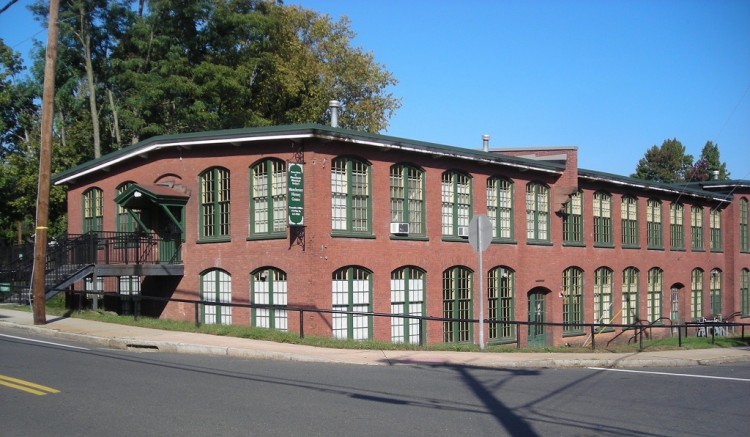
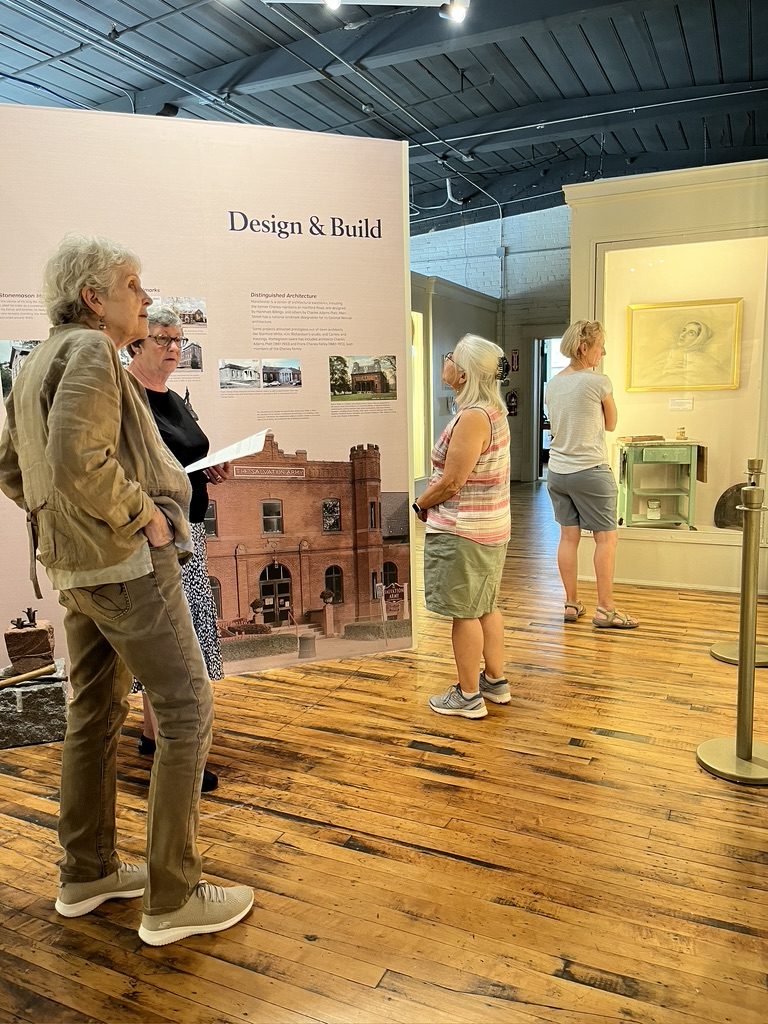
Back at home, exhausted from so much artistic exposure, I had only a few days to get ready for my own class on beginning tapestry. I had eight students who stuck with me on the roller coaster ride to learn some fiddly techniques that I call a ” tapestry weaver’s toolkit.” We focused on opposing sheds, making lots of small shapes and adjusting the tension at those little selvedges, then headed into angles, curves, and circles. The students worked hard to get all that info in three long days. On the last day we had a tour of the historic mill where Hartford Artisans has class space full of light and beautiful views out the huge mill windows in Manchester. It’s a room full of floor looms with a great view!
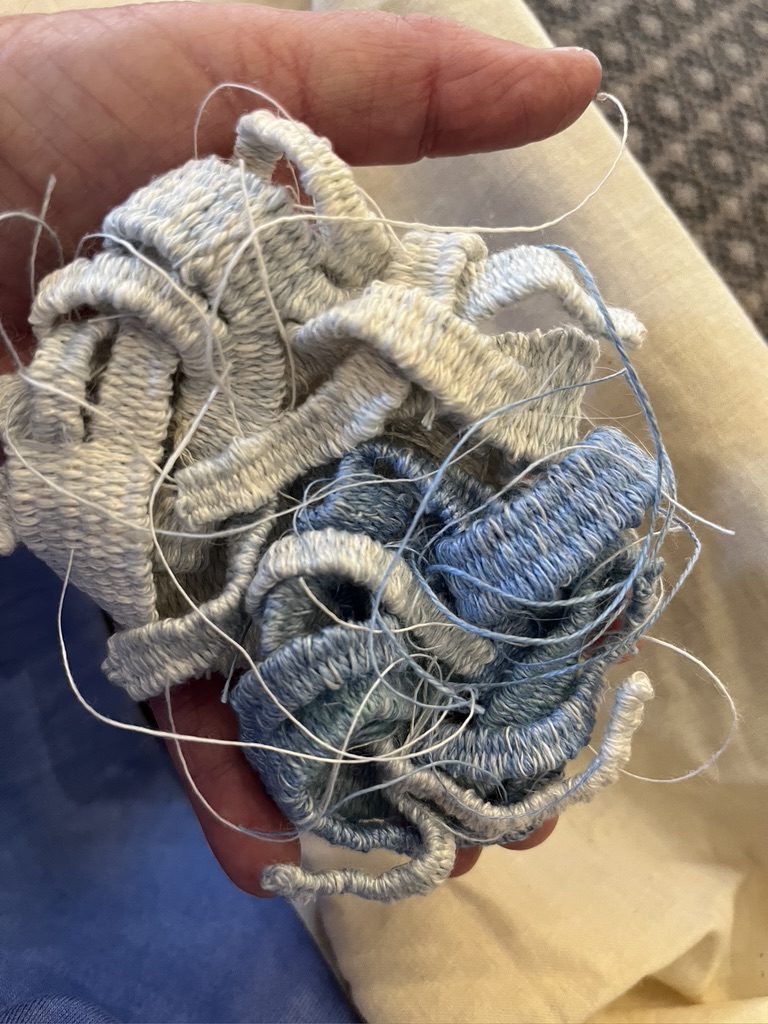
As I’ve been writing this I have received an update from Robbie Lafleur about our Frida Hansen class. She calls it ‘Borders and Edges.’ I’m off to read that and learn more. It’s been a whirlwind, especially during July, but I’m living the experiences I dreamed about last winter!

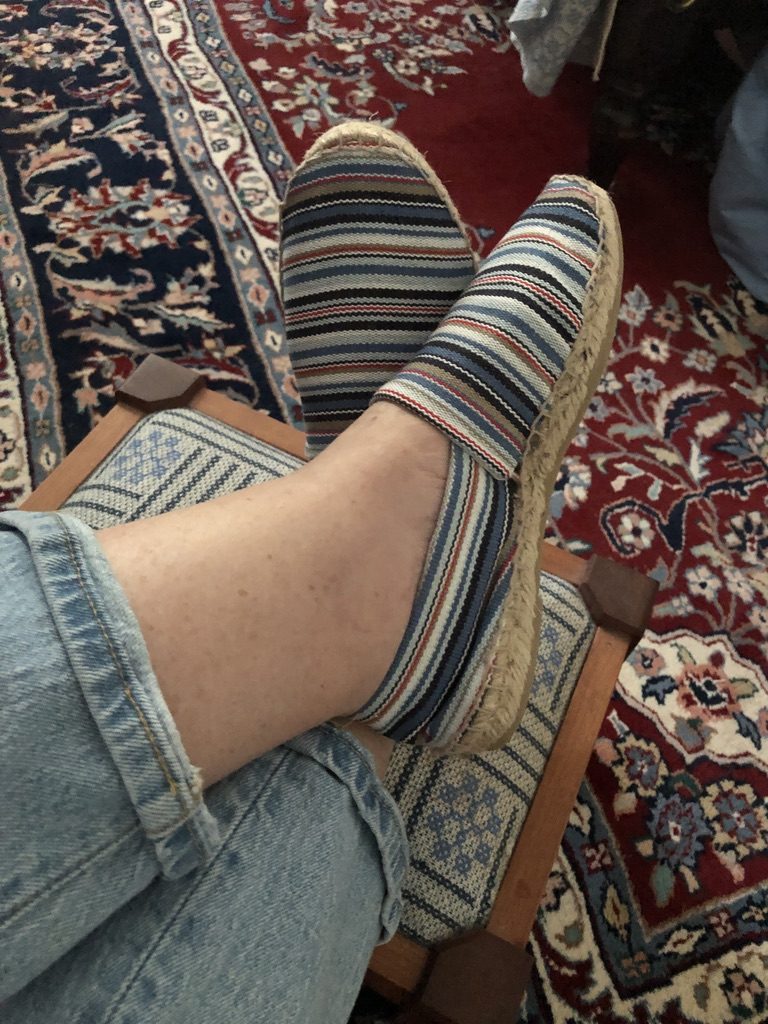
Handmade Espadrilles with Handwoven Fabric!

Doesn’t that sound like an amazing project? I certainly thought so! I am having my first go-round on this idea, based on my local area guild having a workshop on this with Suzi Ballenger. You may know her as the current President of Handweavers’ Guild of America. Yes, I mean that Suzi!

Suzi started making shoes in the early 2000s when she found an article about it in one of the popular craft magazines from the 1980s. The magazine was “Decorating and Craft Ideas,” issue July/August, 1982. She made espadrilles for herself, her children, and other females in her family. Now she’s made quite a few with her handwoven fabric. We are lucky that Suzi lives in nearby Rhode Island, so she didn’t have to travel far to be with us in person. She first ran a zoom meeting to give us background and instruct us on the prep work we’d need to finish before the date of our in-person workshop last week.

We all ordered our supplies from Diegos’ Etsy shop. All the supplies are made in Spain, but they have a warehouse in New York state, so shipping costs and time were reasonble. The soles are made of jute and the bottoms are coated in a layer of natural rubber. If you want to buy material for the uppers, they have power looms weaving quite interesting fabrics. Since I always make a trial run or “muslin” of a new pattern, I opted to buy one of their fabrics. Take a look at their Etsy shop because the choice of fabrics is quite exciting!

Traditional cotton Selvedge canvas made in Spain | Originally used to make accessories and espadrilles | 5.9” (15 cm) wide canvas

This is a weft faced fabric, like a wide inkle woven band. The weight of the fabric feels like canvas.

My supplies arrived quickly from Diegos’ warehouse in Champlain, New York.

There is a page on their website that describes the process of making the soles, making the fabric and putting it all together as espadrilles. I enjoyed seeing the loom that weaves the fabric.

There is even a documentary film to watch that is 8 1/2 minutes

Our espadrille soles have been coated in rubber, and I notice that the video did not cover that. But let’s get down to Connecticut’s Area 4 weaving guild project.

Suzi Ballenger gave us paper patterns to use as templates for our uppers. She suggested cutting out the toe box and heel backs on the cutting lines and finishing all raw edges with double fold bias tape. My bias tape sewing skills are not up to par, so I’ve opted to line my uppers so they have finished edges. I am using natural lightweight linen for the lining, and I’ve put some adhesive lightweight interfacing on the lining. Here are my materials gathered, ready to start.

I’ve added a 1/4″ around all the pattern pieces so that I can sew the fabric to a lining and have the finished pieces be the size of the pattern piece.

I finished one toe box and decided to test it for size.

I am a bit concerned that the upper does not reach far enough back on my instep to attach to the heel piece. Looks like I was right. The upper toe box piece needs to reach back to at least the instep. Back to the drawing board to resize the toe box! I added 1 1/2″ to the length of the toe box, which includes the 1/4″ seam. It’s a good thing I ordered extra fabric.

I wrote all the above about a month ago! Where does the time go? I have my new toe pieces ready to sew onto the sole of the shoe, but I still haven’t done it! Maybe today. I really want to move on to writing about other things, and I really want to wear these shoes this summer!

My Area 4 group got together late last week, and about three people have finished their espadrilles and were wearing them. I hope that’s the impetus I need to finish my own!

The Annual New Beginning

The start of each new year coincides with me moving onboard Pandora for a winter of sailing in the Caribbean. We stayed home last year because of Covid. After following the mandates being enforced here and the level of infection in Antigua all year, Bob decided it was somewhat saferfor us to be in Antigua this winter than we’d be at home. (Of course, that didn’t include the absurd crowds we enccountered at JFK airport!–never again!) I was not as confident, but here we are! Happy New Year from English Harbour, Antigua.

I don’t know if we’ll get further down the island chain. Antigua seems to be the safest of the islands at this time.

What is on my mind every time I ring in a new year is how much I didn’t get done while I was home, how many projects on ‘my list’ remain just ideas. I spend some time each January grieving the things I didn’t accomplish because now I have four months with no looms, no sewing machine, no spinning wheel, no marudai and takadai, no lace pillow. Oh, I could on and on about this. I get rather morose at this time of year dwelling on what I’m giving up for the winter months. Those winter months are such a marvelous time to hunker down, almost hibernate, and just create. It used to be my most productive time of year, mingled with guild meetings, which no longer occur, that inspired me to do new and better things.

During the pandemic I have subscribed to a journaling newsletter called the “Isolation Journals,” written by Suleika Jaouad. She is a wonderful writer who inspires me to think differently and to record how my ideas and attitudes might change with her weekly prompts. Lately, I’ve been enthralled by her messages, in both good and sad ways. She is going through the recurrence of some serious medical issues, so her prompts about attitude have deeply affected me. At the end of last week she wrote a message about re-thinking the new year, and her ideas helped me to look at my accomplishments differently. For years she makes five lists around the new year. On the first list she records all the things she has accomplished. That’s what I did yesterday, and I feel a LOT better about the things that didn’t get done. Try it! We all do so much more than we think we do when we reflect on our time. It’s a great idea to list the things. It’s more than you remember until you force yourself to list them all.

I won’t go through the other four things that are helpful to list because you can read the message here. I hope you will.

My grief at leaving home has lessened. I don’t have quite the projects onboard that I had hoped to bring because Bob may not sail Pandora home this spring. After 10 years, he is getting tired of the long journey home each spring and the longer journey here every fall. We are considering leaving Pandora in Trinidad which is outside the hurricane zone. With that in mind, I had to choose carefully projects that are compact enough to make some kind of journey back to me, either by crate on a ship or in various suitcases (that we’ll have to buy!) to check on a flight home. It will certainly be a new hurdle for us, and I’m already worrying about it. I’m so good at that!

My year ended with some wonderful family time, in spite of the pandemic. We are a small family, although my older, married son sees far more people since his children are in nursery school and his wife has a large family. We visited them in Maryland the week before Christmas so that we went ahead of their visits with the distaff side of the family. But, nothing is completely safe these days. On the evening we arrived our son got a message from the nursery school that a teacher had tested positive for Covid and that the school was now closing until the new year. The families of the students were required to quarantine for at least 10 days. That included us since we were now in their house. All went well for us; no one got the virus, although we got a good dose of a different virus! Bob calls our grandchildren adorable virus vectors, and they are!

At Rob’s house, along with nine people, three of whom are still nursery school age, there were three dogs and two cats. Everyone got along well, and mostly the cats just hid somewhere safe from dogs!

Our younger son and his partner also joined us on this early Christmas weekend. It was the first time all our family was together in several years. That is because Chris (younger son) has been living on the West Coast for about seven years. He doesn’t make it home every year. Now he has moved back to Manhattan, and we’ll have more family gatherings as long as we are all well enough to do so safely. This is a wonderful gift for me.

This was a moment I won’t soon forget. Tori and I fell asleep on the couch together at her house. When I awoke she was still sleeping. Is there anything more angelic than a sleeping child? Yes, actually there is! Watching a sleeping angel cuddle the knitted toy sheep I made for her about three years ago.

For the Christmas weekend, Chris and Melody came to our house, along with a dear family friend who has been in our bubble for the entire pandemic. It was a quiet Christmas, but very moving for me.


It snowed on Christmas Eve this year, and Melody got up early Christmas morning to take photos.

When she sent me this photo of Mila from Christmas morning, she added the caption, “Snowflakes that stay on my nose and eyelashes!”

One more photo of our oldest grandog, who is only three. We have a family of young children, young dogs, and old cats!

I ended the year with a heart full of gratitude, and with help from the Isolation Journals I’m not beating myself up much about the things I didn’t accomplish this year. This new year feels like a positive new beginning, rather than a time for moping about lost opportunities. That is a huge difference for me. It’s time to knit!

I wish all of you health and safety in this brand new year.

Still Playing with Paper

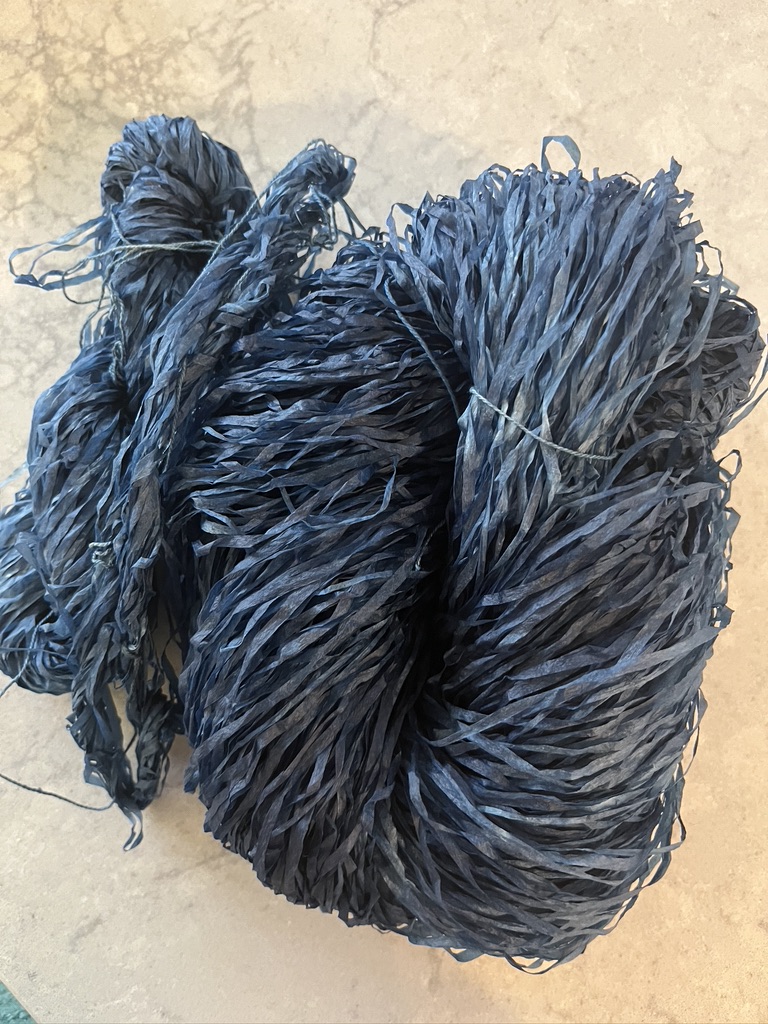
There is more paper yarn to choose from on Habu Textile’s site. I wanted to see what an indigo dyed paper yarn might inspire. With all the colors on the site, Takako Ueki, the owner, warns that the colors I might choose may not actually look like they do on my monitor. That’s a worry, but unavoidable for online purchases.

Another paper yarn on the site is called “Shigoki” (n-14 Shigoki paper) which comes in some interesting colors including a pale blue called ‘water.’ It is also 100% linen paper, and the put up is 1.7 oz, and the yardage is 285 yards. That seems too heavy for what I hope to do with it. It does not look any heavier in the photo from the website, but I have to trust the yardage.

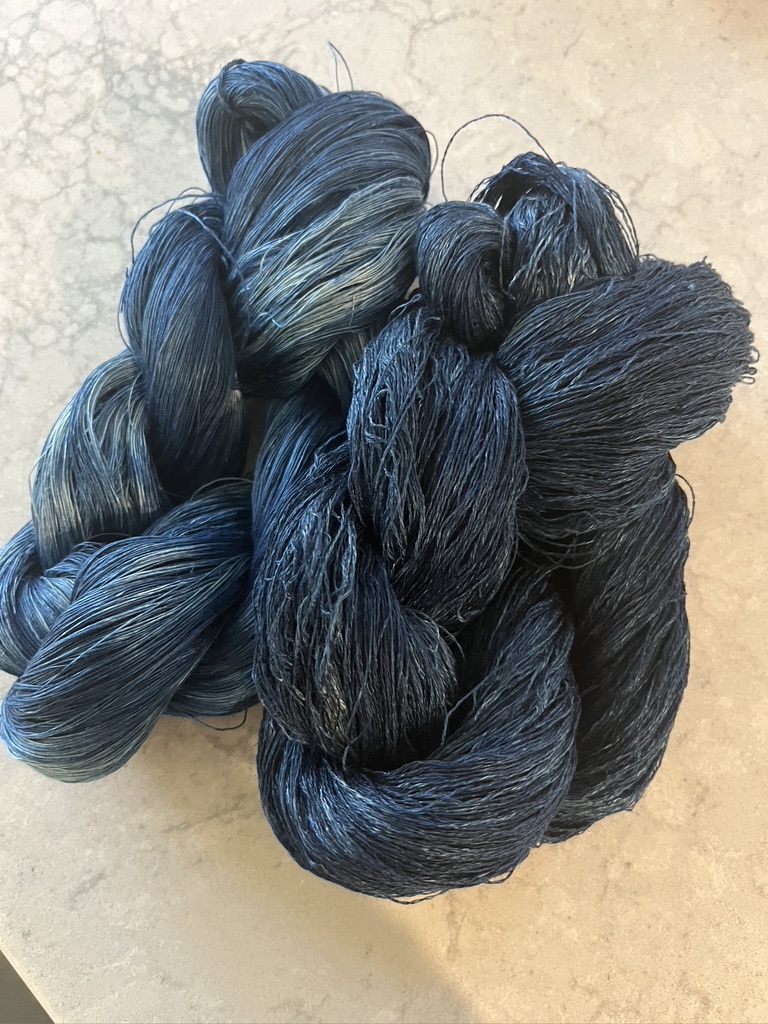
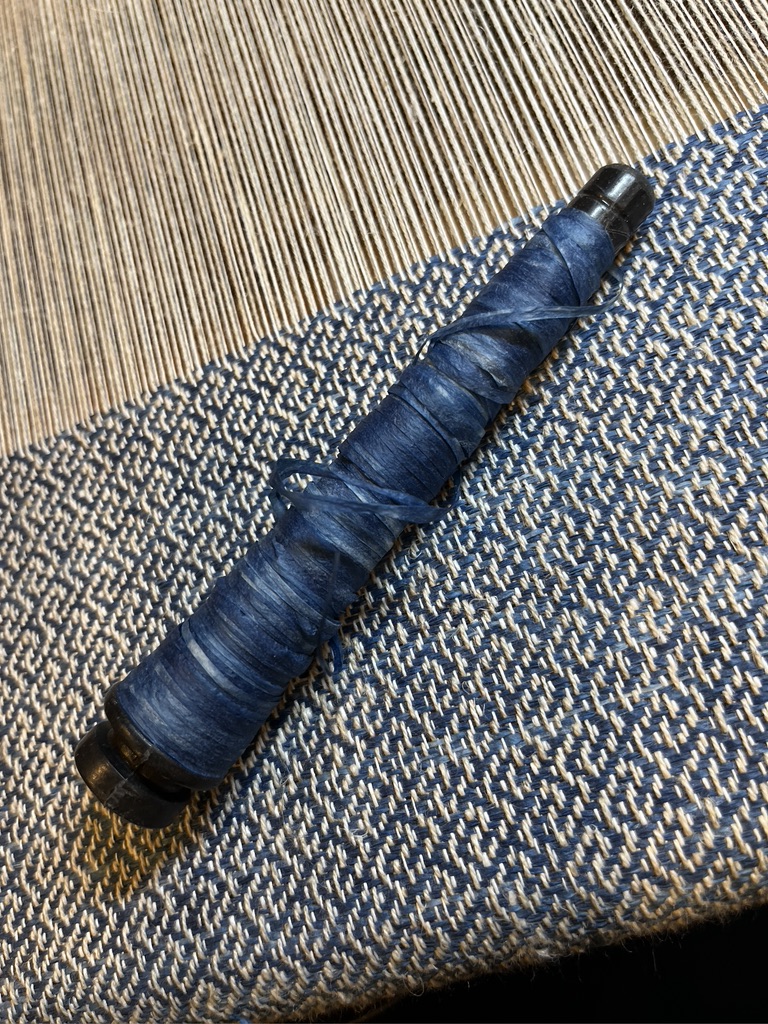
In the long run I ordered two skeins of n-73 indigo linen paper. The color is “mizu.” I wonder what that means in Japanese. It is dyed with natural indigo, and the put-up is 476 yards for 1.7 oz skein. That’s twice as fine as the n-14, and the color is closer to the blue I envision…at least on my monitor! (Ha! I just googled ‘mizu,’ and it means ‘water.’)

I have to wonder why Shosenshi (n-60), which is 100% linen paper with the same yardage per ounce as Indigo Linen Paper (n-73), is less than half the price. Could it be the dyeing process? Shosenshi is $29.50 per 1.7 oz skein, and Indigo Linen Paper is $67.00 per 1.7 oz skein. My placemats will be very dear, indeed! I justified this by noting that my current blue linen placemats were made in the mid 1990s and still look new. I hope I get as many decades out of this set of placemats!

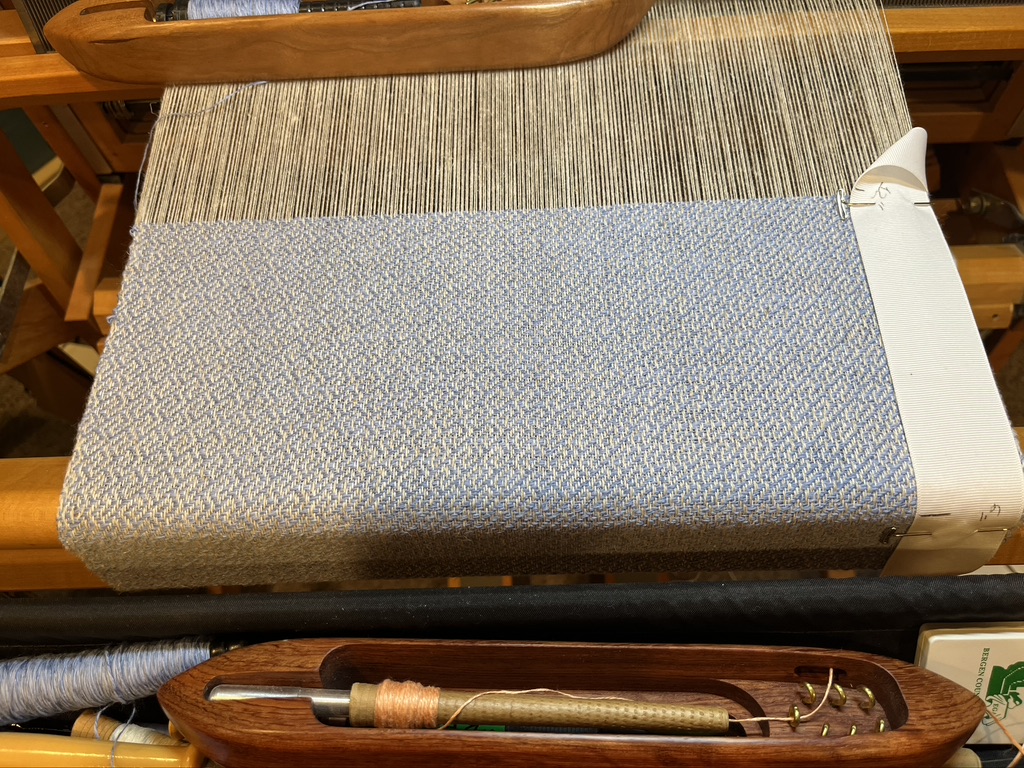
After quite a bit of thought, which mostly occurred in the wee hours when I can’t sleep, I am going to make the warp out of cottolin again, sett at 24 epi, just like my paper towels. I love the hand on those towels and how well they come out of both a machine wash and machine dry. They will be easy care. This time I will mix the natural colored cottolin with a fine white linen to give some energy to the warp color. The weft will be the paper. I want to make six placemats. If I have more diners at the table I will add in my aging blue linen placemats. I like the idea of a coordinated table more than a perfect match of place settings anyway.

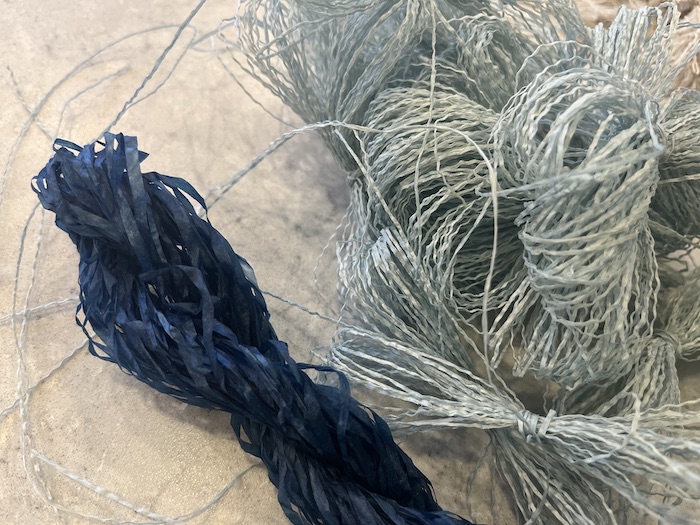
Here are the materials I’ve gathered for this project. The blue is not as pale as it looks here–must be that dark blue background, but I couldn’t resist using an old sashiko embroidered runner that I made almost as long ago as my blue placemats. I have twisted a bit of the white and natural warp yarns together to give a sense of how the colors will blend in the warp.

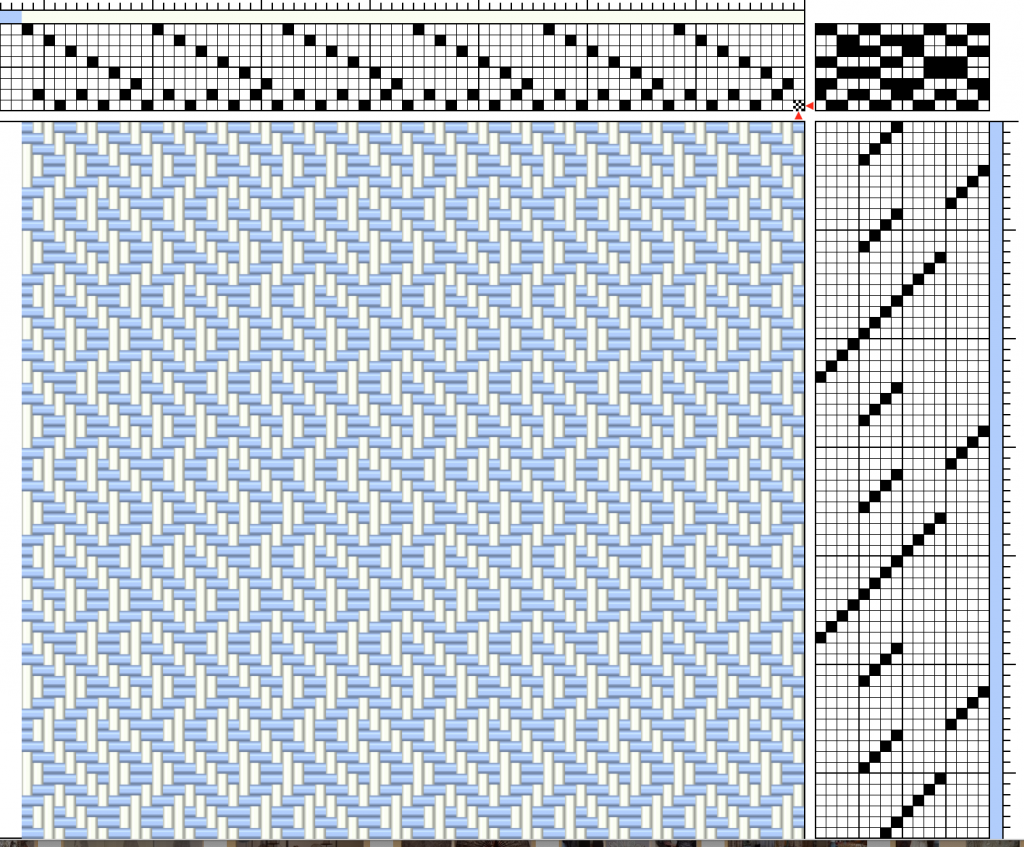
And here is the draft. I did a bit of searching for a Greek ‘meander’ pattern, without much luck. And I tried designing my own, but found I needed more than 8 shafts, and I had uncomfortably long floats. When I get this excited to begin a project I am not one for sticking with the design process. I want a solution right now! In the long run, I’ve found something in Strickler (#365). The Greek key is on an angle because the structure is a twill. The pattern requires 16 treadles, which is not a problem since I’ll be using the Baby Wolf combby to weave. If I could have designed a Greek meander pattern that didn’t have such long floats, I would have been willing to put this project on my 16S AVL. But to find an 8S pattern with short floats is the better choice.

Here is my draft:

If you are tempted by this pattern and don’t have 16 treadles or a desire to figure out a skeleton tie-up, take a look at #367 which is quite similar and only requires 8 treadles.

I don’t know when I’ll make the warp. I am tentatively planning a week or two away at the beginning of next week. This week I am supposed to be putting final edits into a book I volunteered to produce years ago. It’s been a long project that is finally reaching its end. I need to discuss that in another post. Yet I’d love to have a new paper yarn project on the loom before I leave, waiting for me to begin weaving when I return. Wouldn’t that be nice?

Weaving Paper! It’s fun!

Did you see Tom Knisely’s article about weaving with paper in the March/April 2021 issue of Handwoven? It certainly caught my attention, as I mentioned in the last post.

Yesterday I finished weaving my own version of paper towels, and I’m very happy with the outcome. In fact, I am smitten with the lovely paper yarn “Shosenshi” from Habu Textiles.

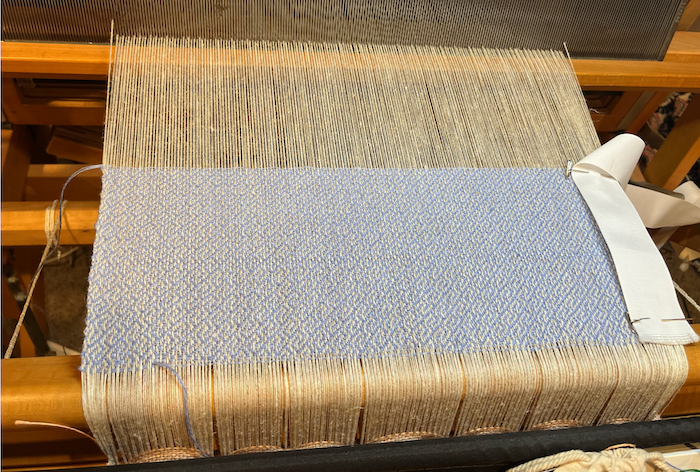
Here it is underway back in May or early June.

Here is the fabric coming off the loom, quite stiff. I love the crispness of the fabric.

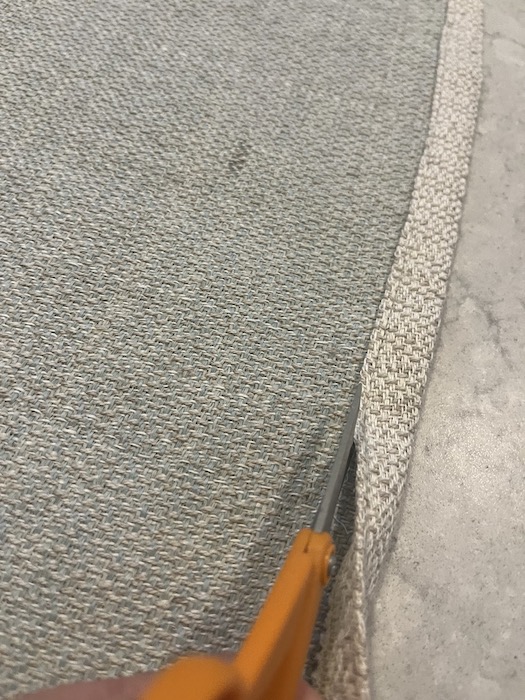
The hems are woven in a fine white linen to minimize bulk in this area. I tried plain weave at the beginning of the warp for the first hem, and did not care for it, so I continued weaving the twill for the rest of the hems. You can see my cutting lines for separating the towels in this photo.

It took a leap of faith for me to weave a first attempt at paper yarn in a twill pattern when Tom had wisely tried plain weave for his towels. The 8S goose eye twill I chose has mostly 4-thread skips in the design with a couple of places that have 5-thread skips, and one place in the pattern where the skip is 7 threads. I just held my breath about that. The warp is cottolin from Camilla Valley, and I set it at 24 ends per inch. Those 7-thread skips are between 1/3″ and 1/4″ long. Once I was weaving I began to think that this would not be a problem. Whew!

I have had some distractions this summer (frankly, for years!) that keep me from the loom. Over time I’ve developed the habit of getting projects prepared to go so I can walk away from them for any amount of time. It seems to me that getting a project ready to go, whether weaving or any of the other textile projects I enjoy, is the more challenging part of ‘making a thing.’ If the project is ready to go, I can return to it when I have time and just knuckle down to the process of making.

But back to my paper towel project. I had to set it aside for about a month as I spent time editing the text of a book which will finally get published, and captioning over 300 images. There will be more info on that shortly. I had all of last week to get back to weaving for myself, and I was thrilled! Right as I turned on my ancient (10 years old!) laptop to sync with the combby on my Baby Wolf, I discovered a horrific situation. My computer was bulging like a balloon. Have you ever seen this? Now I wish I had thought to photograph it. The metal case of the laptop was completely distorted. It turns out that Apple used some batteries from 2008 to 2011 that begin to swell with gas over time. Since I had not used the loom in over a month, it had begun to swell quite dramatically, while I never even looked at it since I was busy with other things. The track pad was unusable since it was recessed by the swelling computer case. Apple said they could not fix this problem and offered to dispose of the laptop for me. I refrained from that because I thought I’d better wipe the computer before turning it over to anyone. Then my husband thought we should check with the local computer shop he uses for his PCs. And voila, only four days later, I have a new battery in my laptop, and the swelling is gone. I can’t believe that the computer case ‘deflated’ back to normal! And it synced with the combby the moment I reattached it. I often wonder about my decision to put this combby attachment on the Baby Wolf, but that’s a subject for another time.

I finished weaving the paper towels last night. It was late, but I had to serge the ends and get the fabric in the washing machine. And then, of course I had to wait up and put the fabric in the dryer. After a month’s hiatus from weaving, I didn’t want to wait even one more night to see the outcome of this project. It was 11pm when I took the fabric out of the dryer, and I was so happy with it. Tom Knisely says he washed his paper towels in hot water and then dried them in the dryer, so I did the same. He said the towels softened up dramatically, but somehow I thought he meant after many washings. So I was shocked and pleased to see how soft my fabric became after only the initial wash. Amazing.

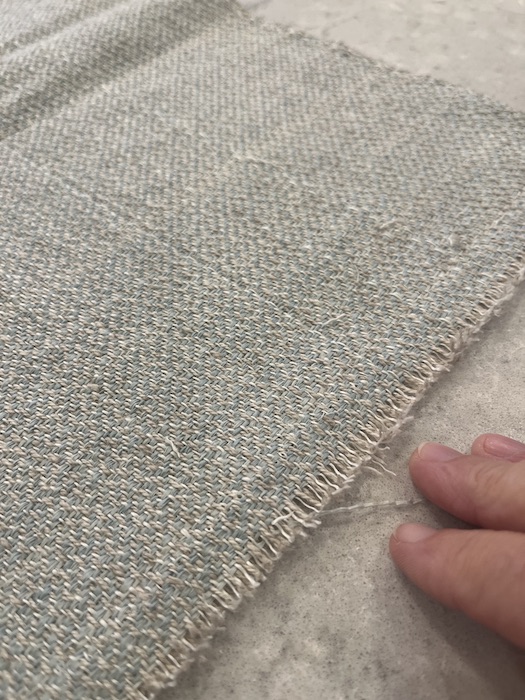
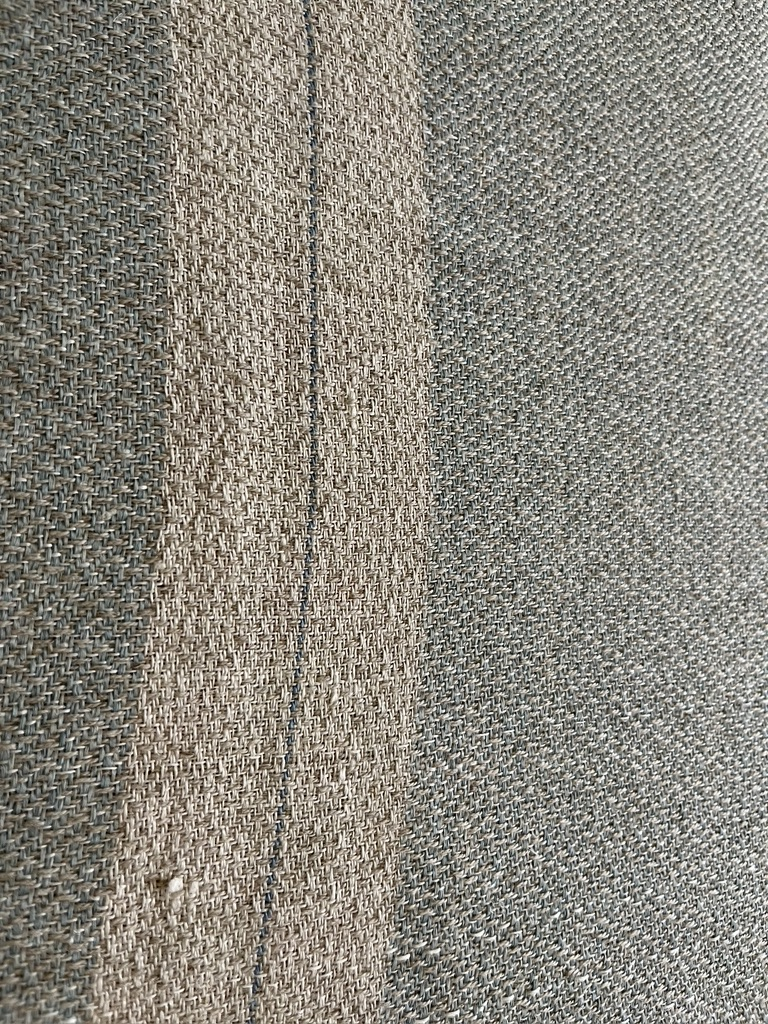
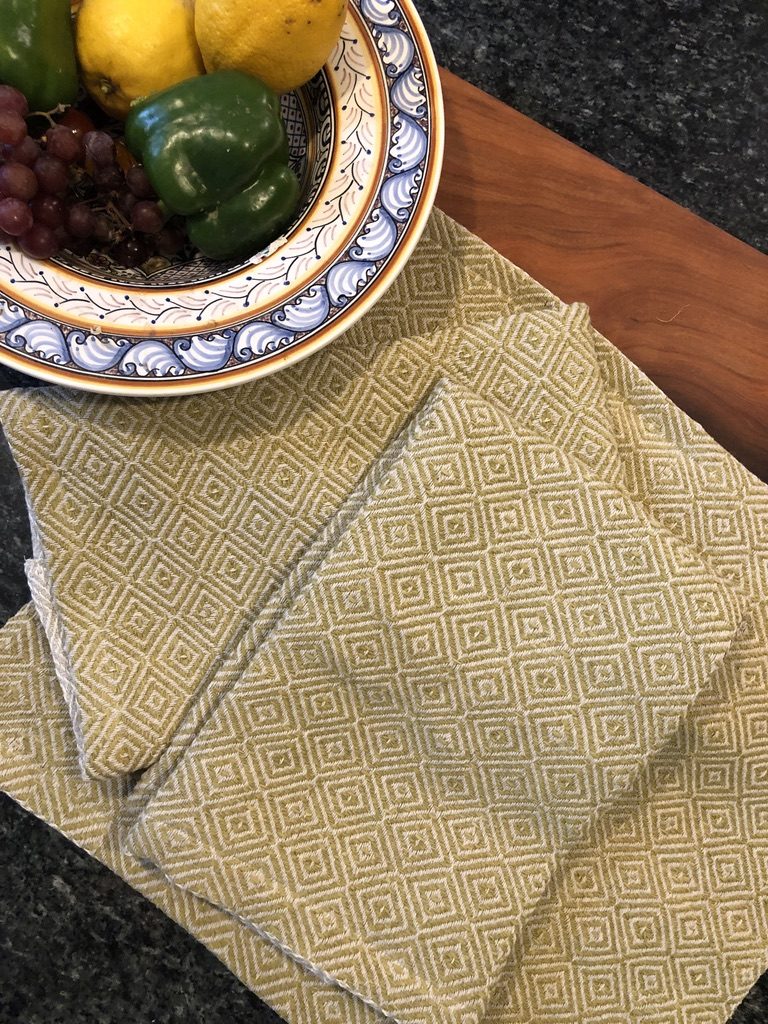
I wish this photo conveyed the softness better. I wish you could touch them. All I can say is try it yourself. None of these photos quite shows the lovely spring green of the paper yarn.

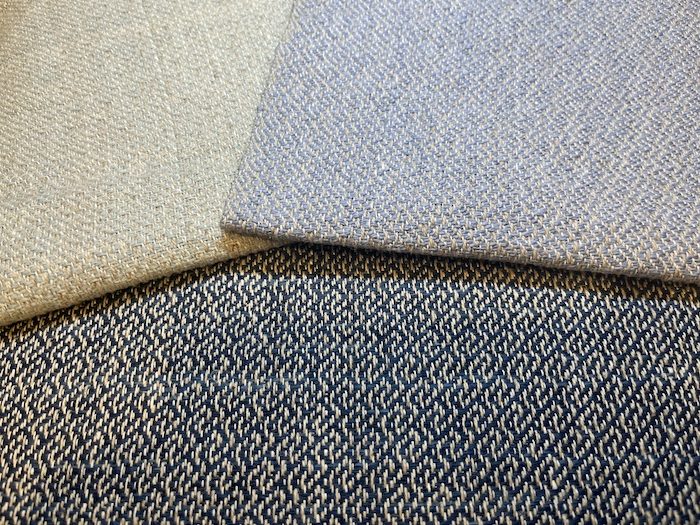
I was so pleased with this fabric even as I was weaving, that I ordered another kind of paper yarn from Habu to make some new placemats. I am going to try a somewhat different paper yarn, n-73 indigo linen paper, in a lovely blue called kamenozoki, which should coordinate with my much older linen placemats for those times when I need to seat a small crowd. Remember those times? In the meantime I’ll have a new set to use for our daily meals.

Here is a recap of the paper towel project:

Warp: Camilla Valley cottolin in natural. Warp sett is 24 epi and 20″ wide= 480 warp ends x 4 yd length for two kitchen towels and some practice warp. The Goose Eye twill requires 46 ends per repeat , so I had 10 repeats with an extra 20 threads. I used the extra 10 threads at each end to have one floating selvedge thread, and 9 threads that I threaded in a straight twill.

Pattern: 8S Goose Eye twill:

Weft: Two hanks of “Shosenshi” linen paper yarn from Habu Textiles (item a-60 on the website) in color “Tea Green.”
Fine white linen singles from my stash for the hems.
I woven two inches of hem for each towel with the fine linen singles, and 27″ of twill with the paper weft for the body of the towels. On the loom my towels are 19″ wide by 27″ long, with additional 2″ of hem at each end.
The finished size after washing is 18″ wide by 24.5″ long. The shrinkage in length was more than I expected.

Give it a try in your own combination of yarns. The cottolin and fine linen singles were from my stash. See what you have on hand that will work for you. You will have fun, and you’ll have some luscious paper towels!

I rushed to publish this earlier today, and now I have hemmed the towels. Here they are–finished!

The color is not quite true on this close up image.

Scroll to Top