ArgoKnot

Author name: ozweaver

Wishes Come True

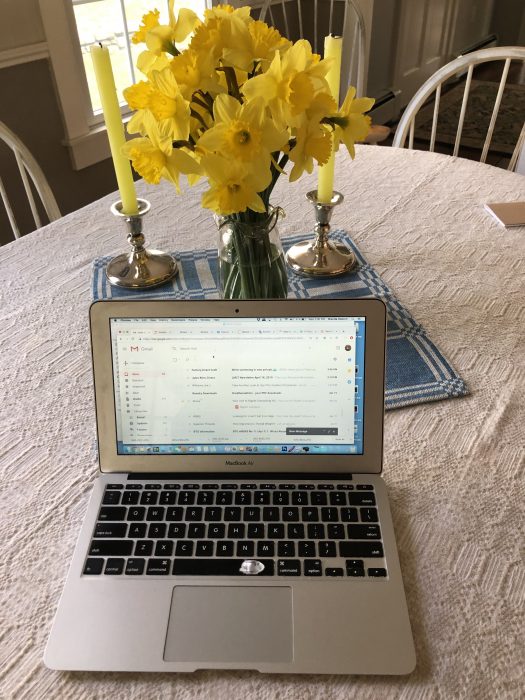
It’s a damp, bedraggled Monday after Easter, but spring is definitely here.  Bob saved a nice bouquet of daffs before the deluge began.  We’ve had our share of April showers now.
IMG_2444

This was our first Easter without any family.  It was odd for sure, and I don’t plan to do it again, but I had a wonderful afternoon on Saturday with my sister, sitting in a coffee shop and catching up on a couple of months of news together.  Before that, Bob and I spent 10 days in California with Chris and Melody!  Those wonderful days should keep me smiling for a long time.

Northern California is a wonderful place, even without the added treat of being of with family, and being there in April when the hills are so alive with poppies and Indian paintbrush and myriad other wildflowers was just the thing.  It was a perfect time away.  To top things off, Melody and Chris made sure I got to visit some places that have been on my ‘wish list’ for many years.

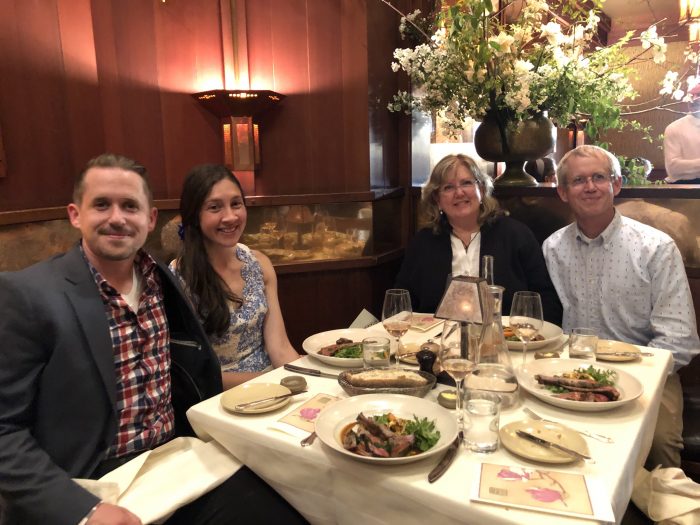
How about dinner at Chez Panisse?  I actually never thought I’d do this because it is on the other side of the country, in a town I’ve never visited, even when I was visiting the West Coast.  But fast forward to now, when our younger son works in Berkeley and lives just a few minutes south! I’ve been intrigued with Alice Waters since she started this restaurant, when I was a teenager on the verge of falling in love with cooking.  Remember the 70s?–the back-to-nature movement to whole grains and locally sourced, sustainable veggies?  Molly Katzen and the Moosewood Restaurant?  And how about  The Vegetarian Epicure?  For me, Alice Waters is all tied up with my initiation into cooking.  Her restaurant conjures up all kinds of magic for me, and the reality of it was every bit as magical as all my years of imagining!  We got keepsake menus for the night…. Amy Dencler was our chef that night, which was a thrill to me since I’d read about her joining Chez Panisse.  And to top off a stellar evening, Alice herself showed up for a while during during the prep of our meal.
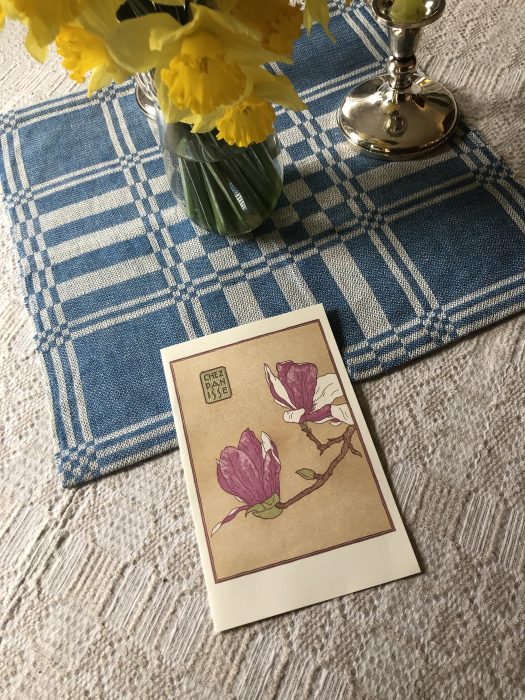
IMG_2472Dinner is served.

IMG_2405

My favorite course may have been the soup, which was a pureed asparagus.  I decided to make it for our Easter dinner yesterday.  I looked online for a recipe by Amy Dencler, or even Alice.  No luck, so I fell back on Julia’s recipe from the first volume of Mastering the Art…. which I already knew from years of making it that it would be delicious!

The Lacis Museum has also been on my wish list for eons.  It is also in Berkeley.  All these years, Berkeley has just been a place name to me.  We’ve been to San Francisco and along the northern coast of California numerous times, but I’ve never included a stop in Berkeley.  I never even bothered to look up where the Lacis Museum is located.  So I’m not sure you can imagine how excited I was to learn that Chris works only a few blocks from there!
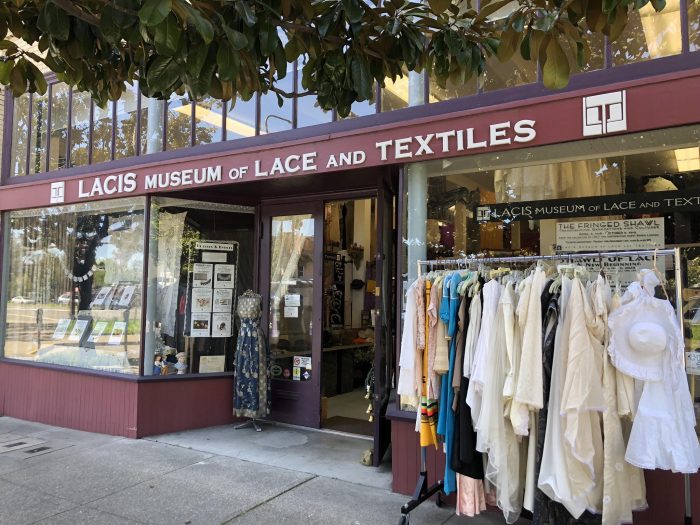
lacis store

Inside is an unbelievable opportunity to buy lace supplies for lace knitting, tatting, bobbin lace, embroidery–I think that’s just the tip of the iceberg!  I got some supplies that I’ve been putting off searching for online.
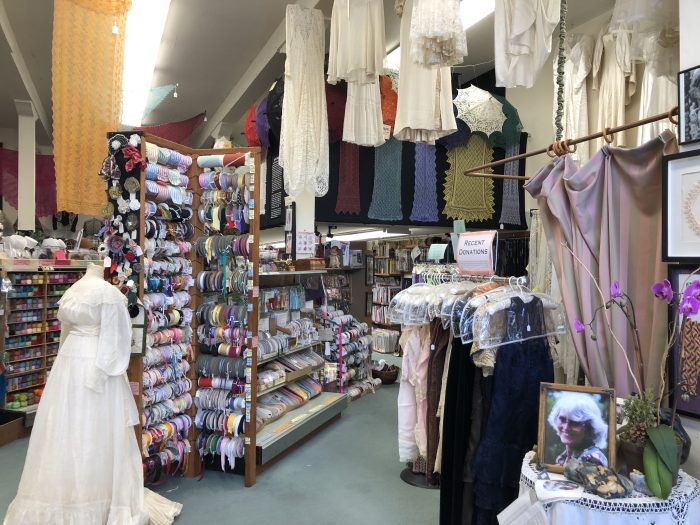
IMG_2360

Upstairs from the shop is where the lace exhibits and classrooms are.  At the moment there is an exhibit on embroidered shawls from the late 19th and early 20th centuries.  Jules Kliot arrived to take us up to see the exhibit.  I have been getting the email newsletters from him for at least a couple of decades.  Now I’ve met him!
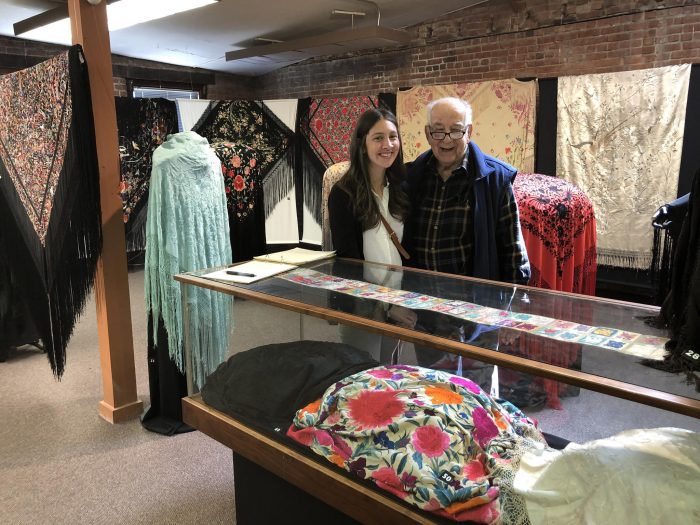
Lacis Jules and Melody

There are so many shawls in this exhibit, and all beautiful.  The early ones are all hand embroidered with hand tied fringes; Jules said they took 10 years to make.  Later shawls were machine embroidered with machine tied fringes.  I took a lot of photos which I’ll enjoy looking at in detail for years–some in natural shades and some in such brilliant colors.

I want to include all the photos I took, but how about just this one shawl?  It is hand embroidered with attached faces done in painted porcelain.  The embroidery was all done in shades of cream, natural, ecru. One or two of the faces were missing, and underneath the missing porcelain faces there were still embroidered faces.
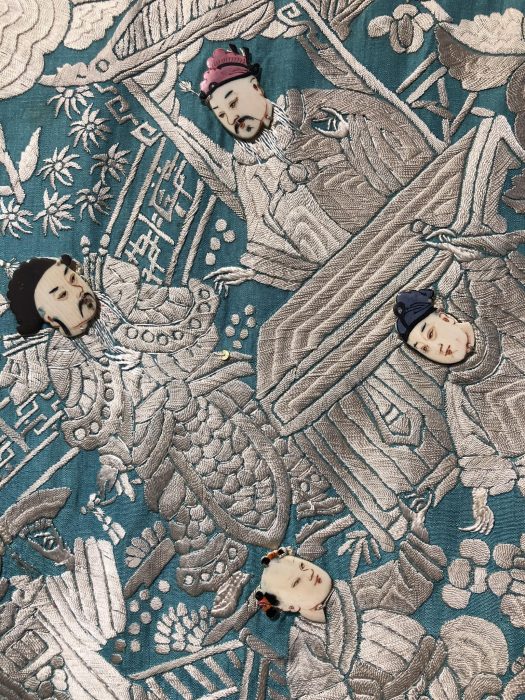
Lacis shawl

The hand-tied fringe is pretty elaborate too.
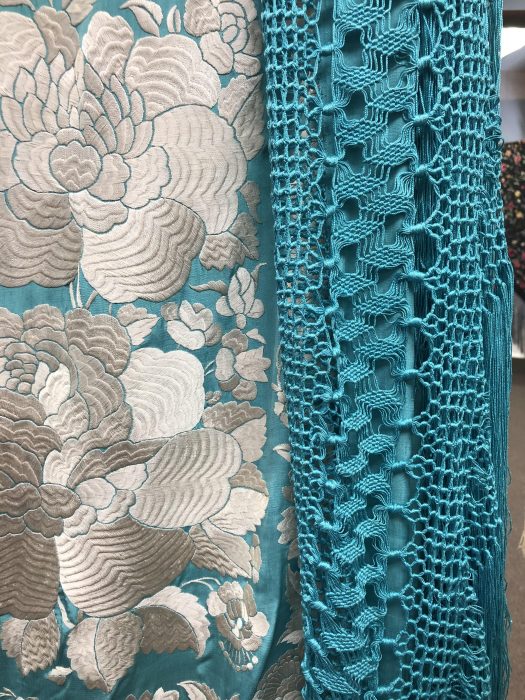
Lacis shawl with fringe

Next on my wish list was a shop called A Verb for Keeping Warm, or AVFKW….kind of a mouthful!  It has only been on my list for a couple of years, since I keep reading about it in the Making and Madder magazines.  I didn’t even know it was in Berkeley until I just happened to be looking at one of my knitting patterns while out there.

What a fun shop.  They dye all of the their own line of yarns with natural dyes.  Their own yarns range from worsted weight to lace weight, in wonderful wools and blends that include silk and alpaca.  As you can see the shop is full of luscious yarns and wonderful knitted items to entice anyone.  Look at all that dried indigo hanging along the wall.  They grow about 250 pounds of indigo every year.

I fell for a knitted shawl on display designed by Andrea Mowry of Drea Renee Knits called “Find Your Fade.”  You can make it in as many as seven different colors, or just one.  I took a look at the naturally dyed, laceweight merino/silk blend yarns and chose two skeins that were dyed with logwood. My version of the shawl will use these two skeins.  I also bought a packet of ground madder.
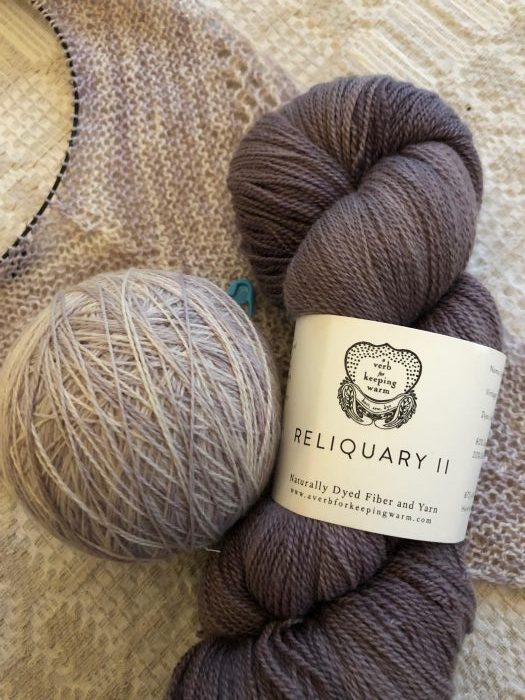
yarn a verb for keeping warm

There were so many highlights to this trip–a visit to the UC Berkeley campus where we could see all the way to the Bay from Sather Tower.  We visited Pegasus bookstore which has been an online resource for me for years.  Now I’ve been to the brick and mortar shop, where all three of us–Melody and Bob and I–found books we had to buy.

And then there was a long weekend spent up in Mendocino County, a place Bob and I have returned to since our children were young.  Chris also loves this part of California, so he arranged for all of us to spend some time together there. We knew the years have flown by when our son, who once stayed home with grandma on our first trip to this area, now drove us around while we relaxed in the back seat!  Bob and I loved it!

Chris found a house right on the coast for us to stay.  See the bit of deck railing in the lower left?  What a view we had from this house!
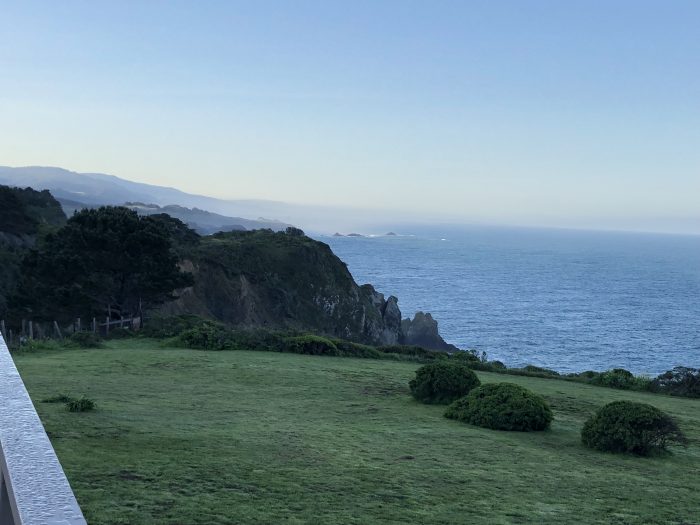
IMG_2412

Melody and Chris playing with new family member, Mila.
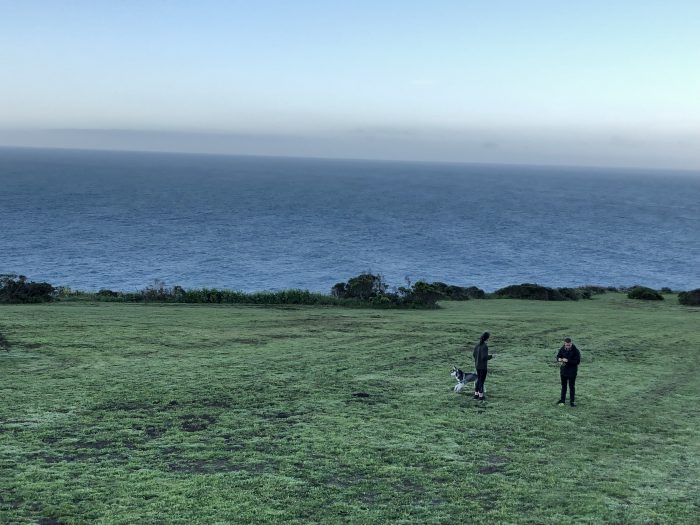
IMG_2413

Chris brought his barware, including glass coupes, for several kinds of cocktails.  He is becoming quite an accomplished mixologist. We loved this comfortable house!
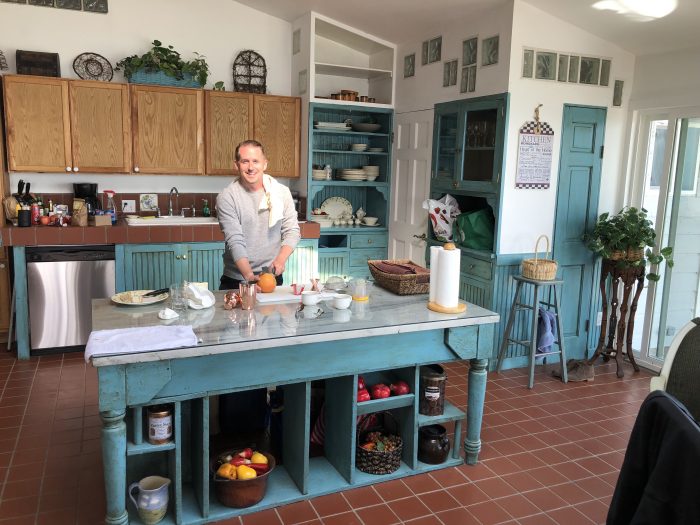
IMG_2421

We visited wineries, took walks along the coast, and ate some amazing meals, both that we made ourselves at our rented house and in restaurants in Mendocino.  You can get some creative meals at various wineries too–like Pennyroyal, where the daughter of one of our long time favorite wine makers has started her own business.

I can’t resist sharing this photo of Chris and Mila at our favorite vineyard in the Anderson Valley, Husch.
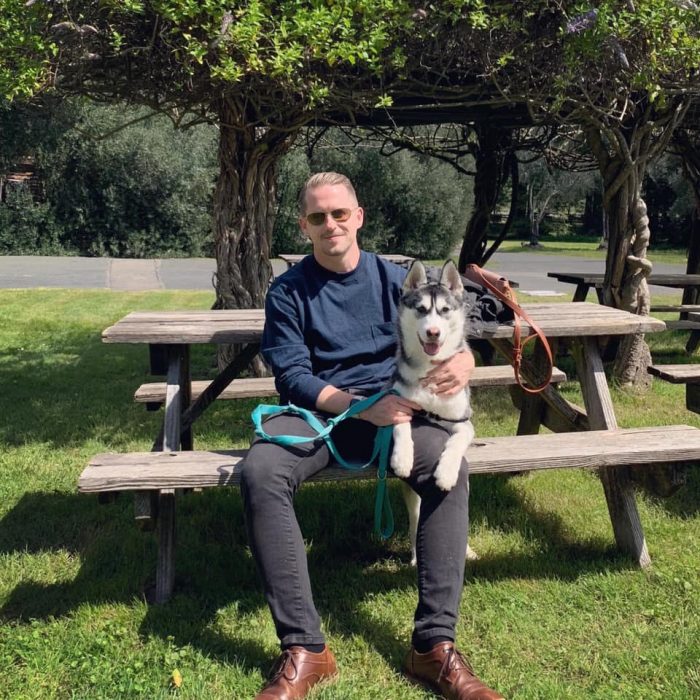
Chris and Mila Husch

We spent our last day in San Francisco.  It was a wonderful time of year to be on the coast of California and to be with Chris on his birthday.  We got to know Melody better and see Mila for the first time.

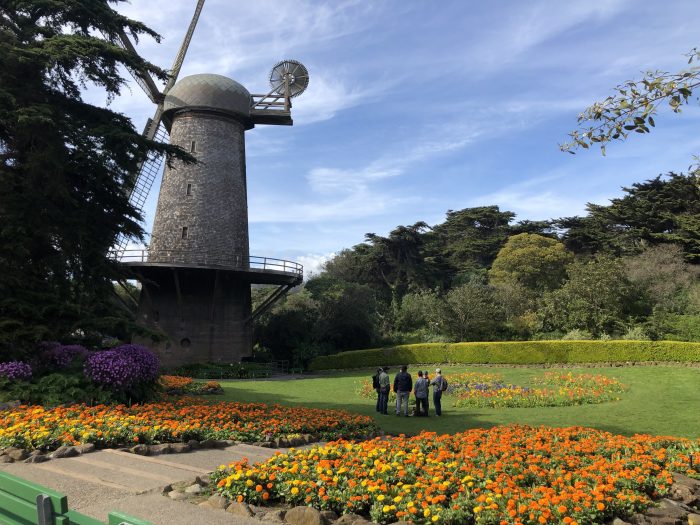
I was thinking of the poppy seeds I scattered in my garden at home as I visited this wonderful garden in Golden Gate Park.  It’s one of Chris’s favorite destinations and now one of ours as well.  He used to live only a short walk from this park and wouldn’t mind moving back here someday.
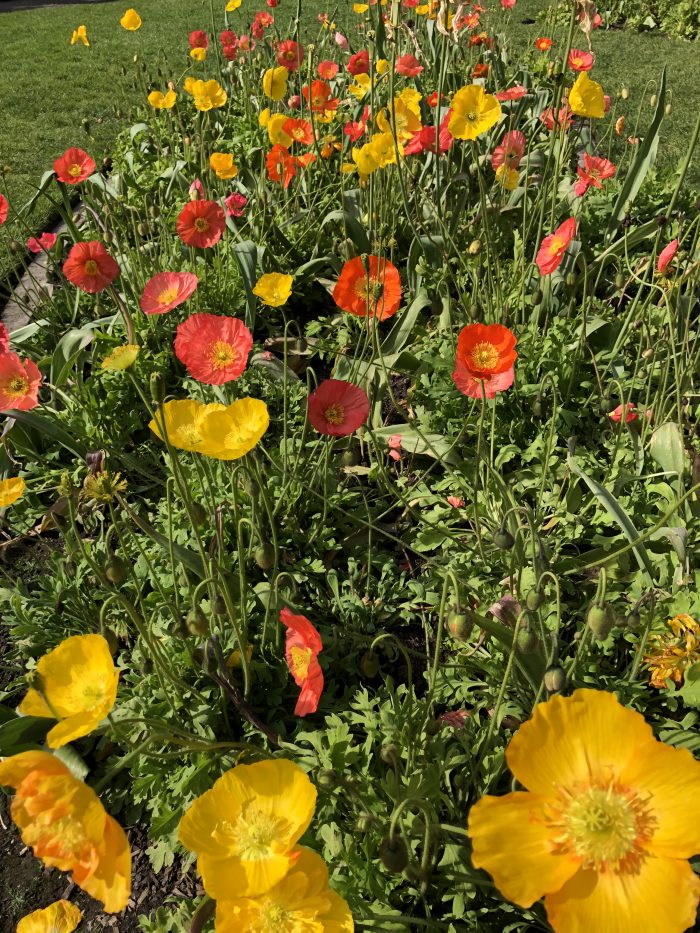
IMG_2439

IMG_2441

And back at home, I have about a million little poppy seedlings coming up.  I know that they will not fare as well as they do in California, but I’ll think of this garden if/when my own poppies bloom.  I’m knitting the shawl from A Verb for Keeping Warm now and then in the evenings and reading one of the books I bought at Pegasus. Best of all, I’m feeling quite re-energized and ready for spring in New England.

Happy spring!
Toot! Toot!

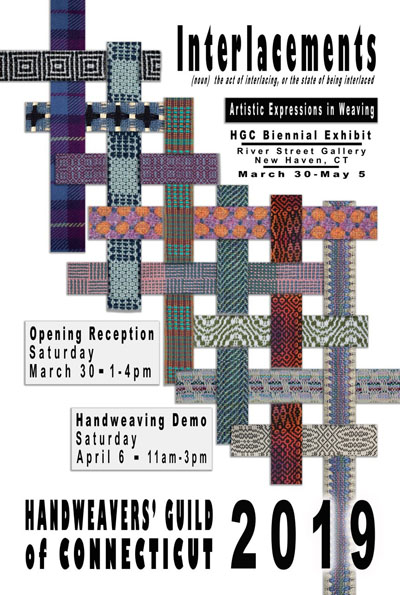
2019PosterSm

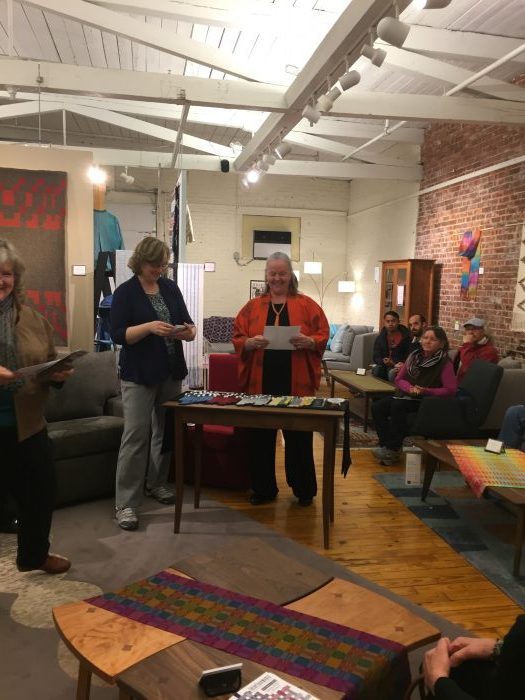
Handweavers of Connecticut has a juried biennial show during the month of April in odd years.  This year we have returned to an interesting venue called the River Gallery in New Haven.  It is part of a furniture store that features handmade furniture and accessories.  The gallery area has furniture arranged into living spaces.  My guild’s handwoven items look great in that setting.

IMG-8653

The awards table is set up, and our leader, Julia Ludlow-Ortner, is about to begin announcing the awarded pieces.  Take a look at the gorgeous runner on the table in the foreground, woven by Stephanie Slattery.

2-IMG-8648

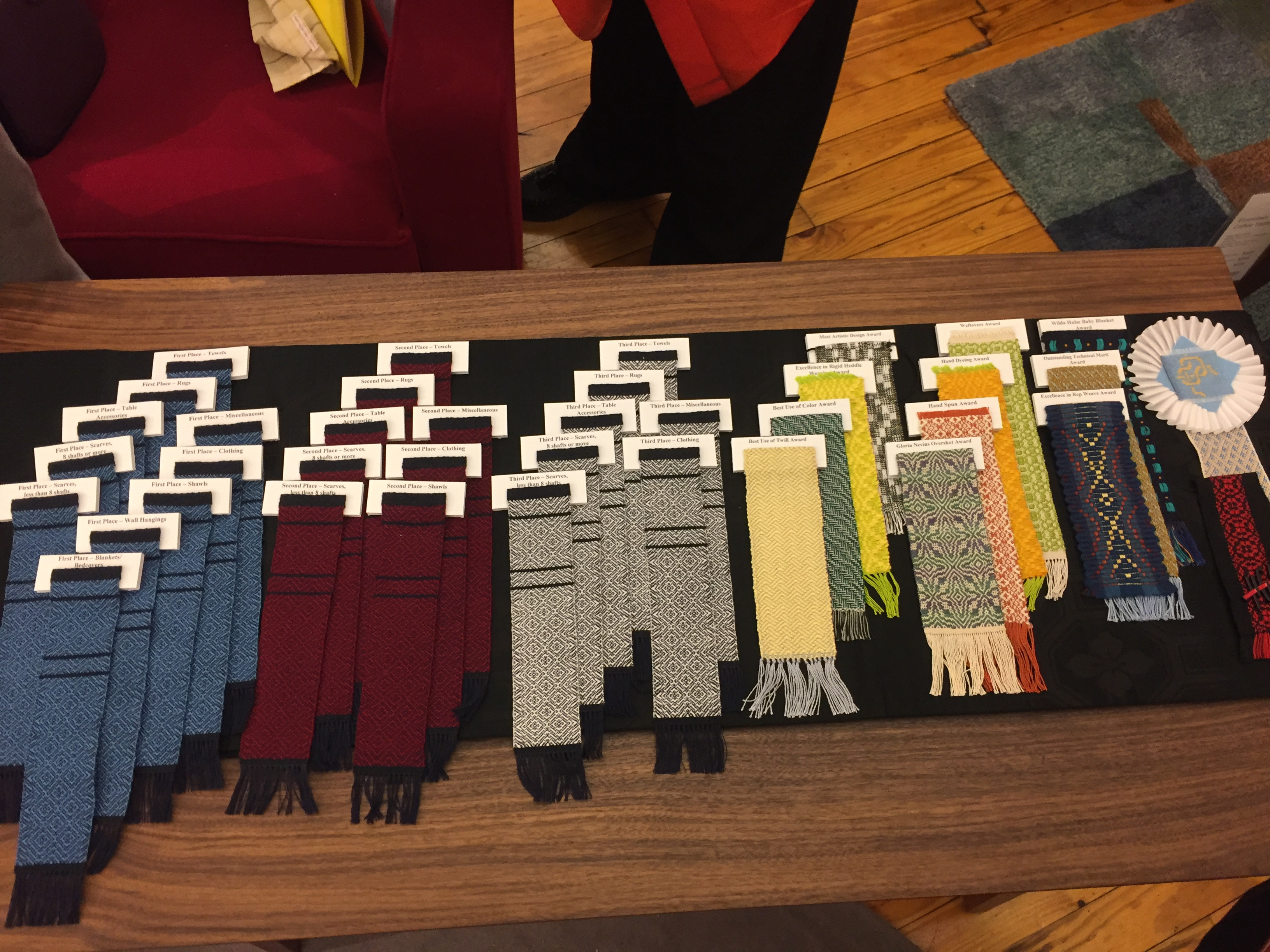
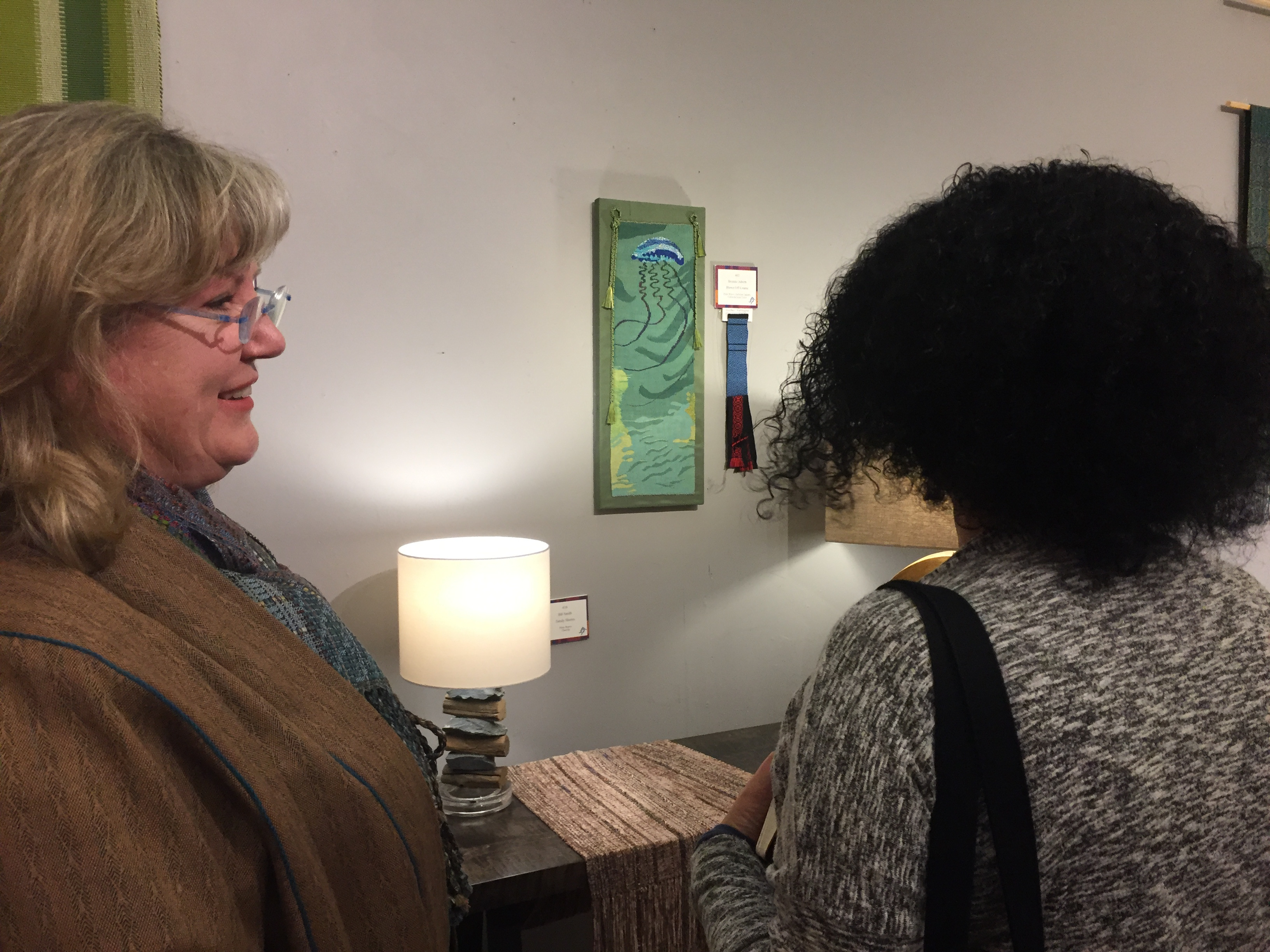
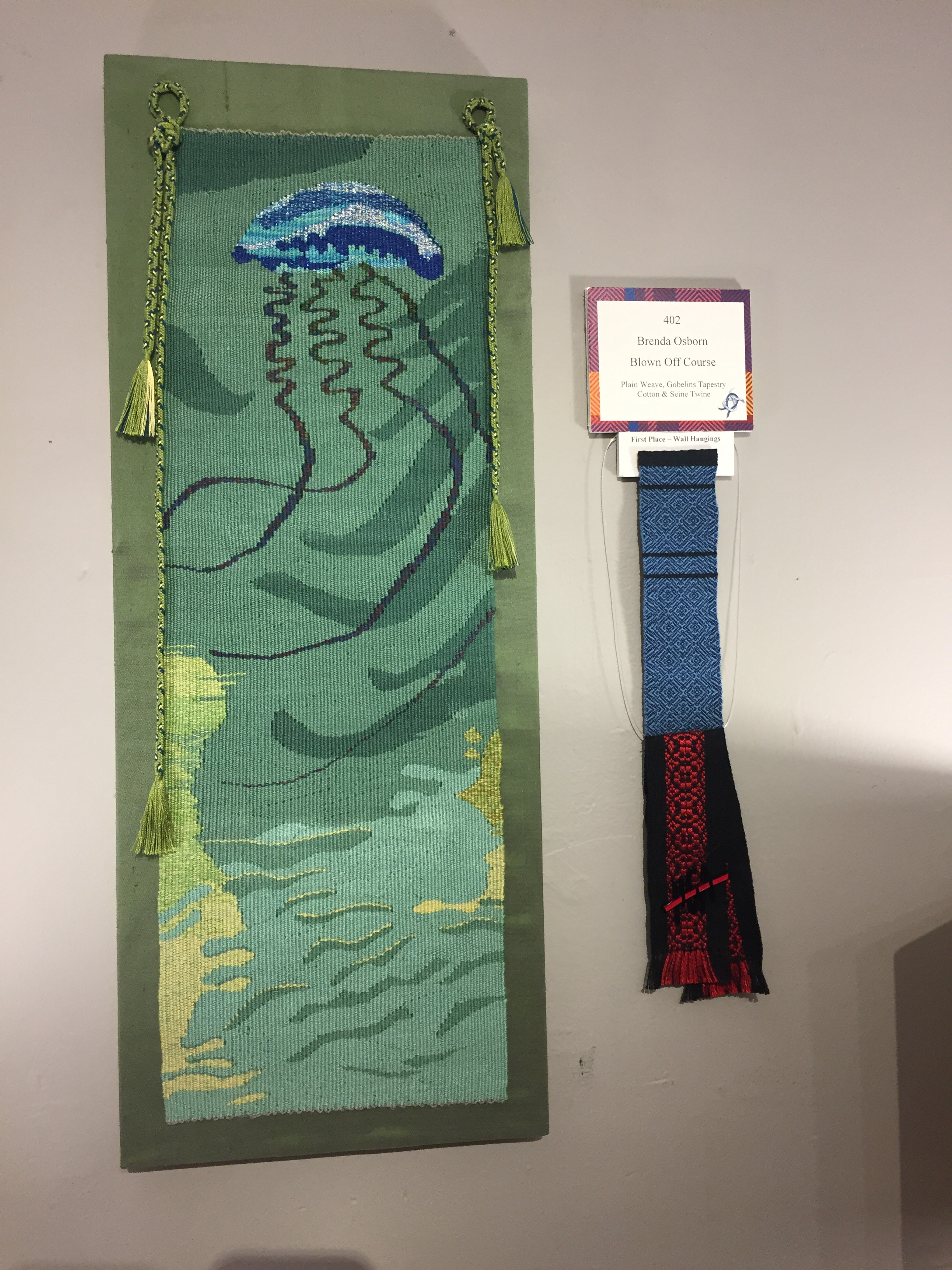
Aren’t these ribbons beautiful?  I was thrilled to get two of them! –a blue ribbon from the left side of this photo for 1st place in the Wall Hanging category, and that wonderful red and black ribbon all the way to the right, which is the Handweavers’ Guild of America award for Outstanding Fiber Art.  Woohoo!

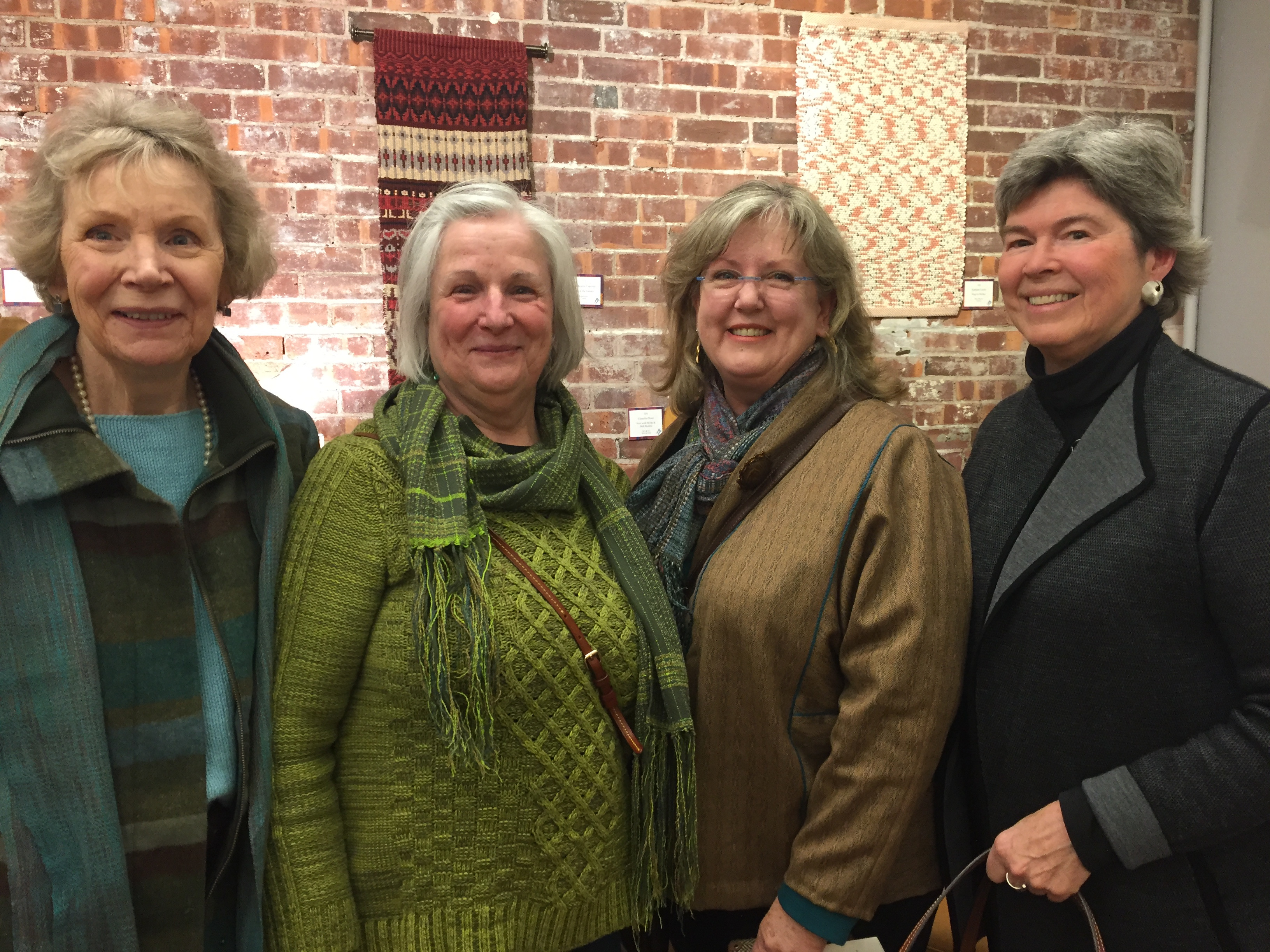
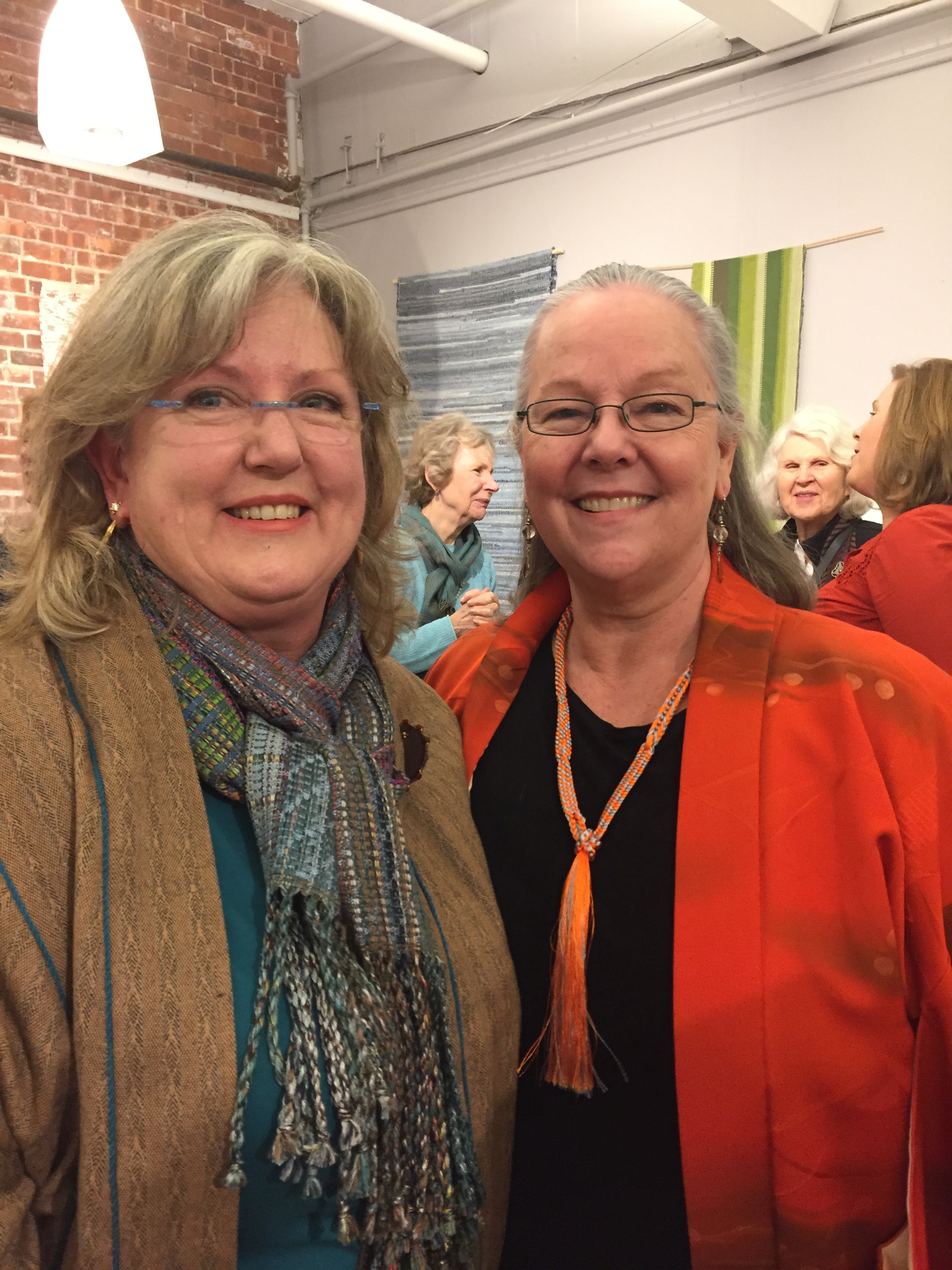
The opening was a success with lots of attendees.  Not only are we a large guild — and our members brought family and friends–but the gallery did a good job promoting the event so there were other visitors on hand.  Bob caught a shot of me with some of my dear weaving friends.

1-IMG-8646

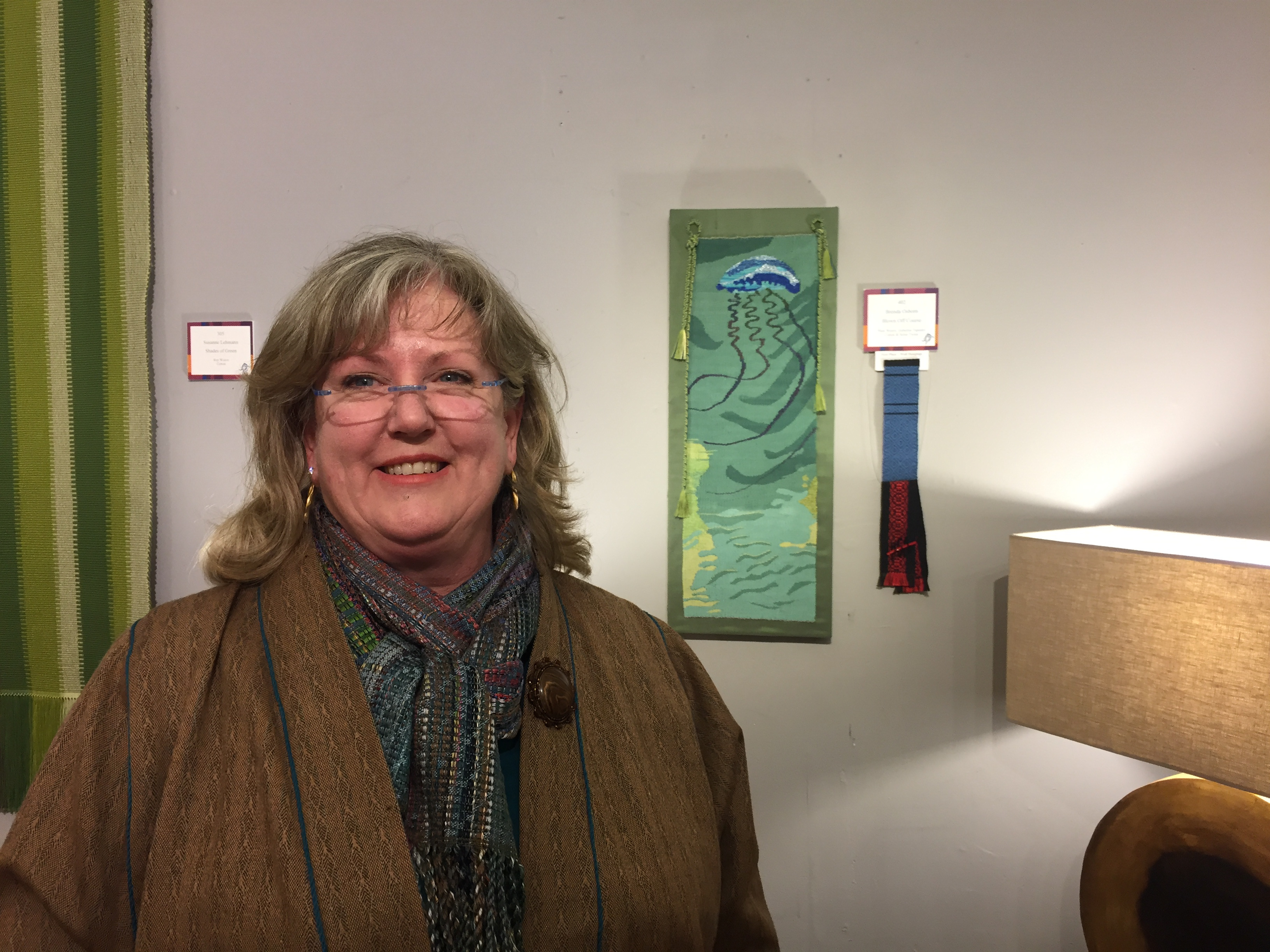
A reporter from the New Haven Independent interviewed me about my tapestry!

5-IMG-8665

The article is called “Art and Story Interwoven at River Street Gallery,” and it came out today!

These kinds of events take a lot of work by a lot of volunteers, but you always need the guidance of a leader, and this year Julia Ludlow-Ortner was our intrepid director.  She did a great job keeping all her volunteers on track and allowing them to use their creative gifts to the fullest.  She is also my braiding friend, and we have traveled together for a couple of memorable kumihimo conferences.

3-IMG-8657

The story of this piece has dragged on for a few years. If you want the backstory, you can read it here.  Finishing this piece last October and finally bringing it out in public has energized me to return to my larger vision for these creatures.  I have a lot of work to do!

But, for the moment, I’ll just take a little time to bask in the satisfaction of finishing something and the thrill of getting two awards!

6-IMG-8666

Thanks for looking!

7-IMG-8668


Just a Bit More DDW

Moments after posting the last entry about Deflected Double Weave, I happened to open the current issue of Vav Magazine to find an article about this written by Madelyn van der Hoogt, along with a project for weaving DDW circles.

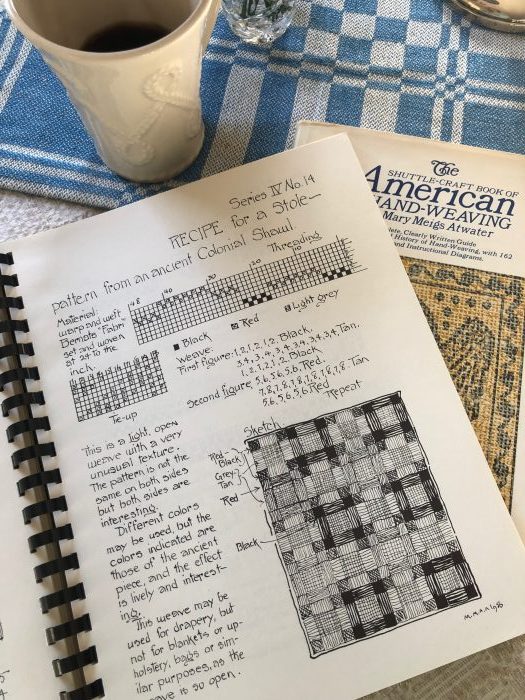
In the article, Madelyn credits both Mary Meigs Atwater and Ulla Cyrus-Zetterstrom with publishing some of the earliest examples of DDW.  You can find Atwater’s pattern in her “Recipe Book” under the title “Ancient Colonial Shawl.”

As you can see, I am sitting at my kitchen table this morning, enjoying the early spring sun while delving into these wonderful old resources!

IMG-2336

In the notes, Mary describes the fabric as an “open weave with a very unusual texture.  The pattern is not the same on both sides, but both sides are interesting.”  She recommended Bernat’s “Fabri,” set at 24 epi and woven to balance.  I think this yarn may predate my early weaving explorations from the mid-1970s!  A search yielded this photo of the yarn label and information that Fabri was a lace weight, 100% wool yarn, that came packaged in 56 gram balls, with 156 yards.

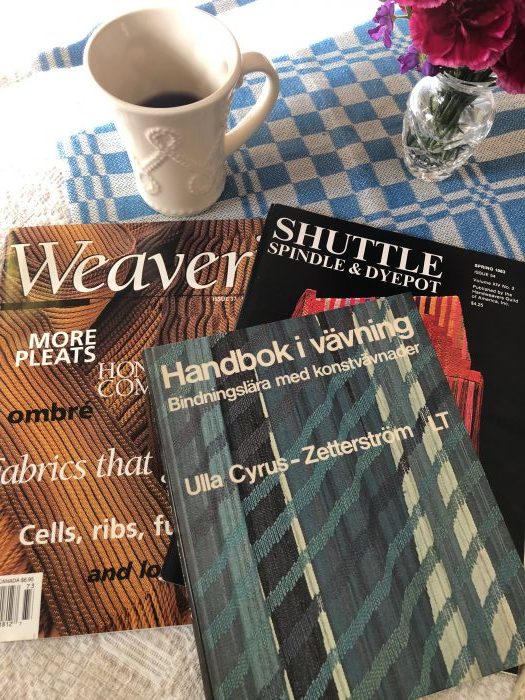
In case you want to dive through your resources for other articles on DDW, here are a couple of photos of the covers you’ll be searching to find.

I have the Swedish version of this book, and so far I have not found the DDW project which is listed as being on pages 122-123 of the English version.  Aha!  I found it!  –on pages 106-108.  In Swedish it is fargeffekter–which I believe is color effect.  There are other weave structures in this section such as ‘log cabin’ and houndstooth twill.  There are three interesting examples of what we now call Deflected Double Weave.

IMG-2337

And here are some articles from various periodicals.  Dini Moes’ article in “Shuttle, Spindle, and Dyepot,” Issue 54, Spring 1983, proved to be quite interesting.  In the article she says the woven shawl she first saw in this technique was described as “two-faced, false double weave” by the weaver.  After Dini studied it herself, she called it ‘integrated weave,” which does describe what’s going on very well.  There are two separate cloths being woven as in double weave, and then there is a patterning area where the two cloths weave together with floats that become deflected once the cloth is removed from the loom and wet finished. The photographs that illustrate this article are terrific!  I’m inspired!

Dini Moes’ article in Issue 37, Fall, 1997, of ‘Weaver’s” magazine also has some great images, and she has a 6-shaft pattern among the various 8-shaft pattern ideas.

Lastly, I visited Janney Simpson yesterday, a friend from my local weaving guild who has done quite a bit of experimentation in this structure (see Handwoven, Nov/Dec 2016, for her article and DDW scarf project).  I am considering one of her looms as a replacement for two of mine.  Does this make sense?  I think by combining the advantages of both my AVL 16-S loom and my large 60″ wide Toika into one loom,  I can have more studio space, which translates to more commodious space for my new taka dai and a bigger cutting table for sewing.  I am leaning toward buying a 60″ AVL compudobby with 16 shafts.  My friend’s house is full of looms!  Yesterday I saw that most of her looms had various DDW projects in progress.  It was an inspiring visit!

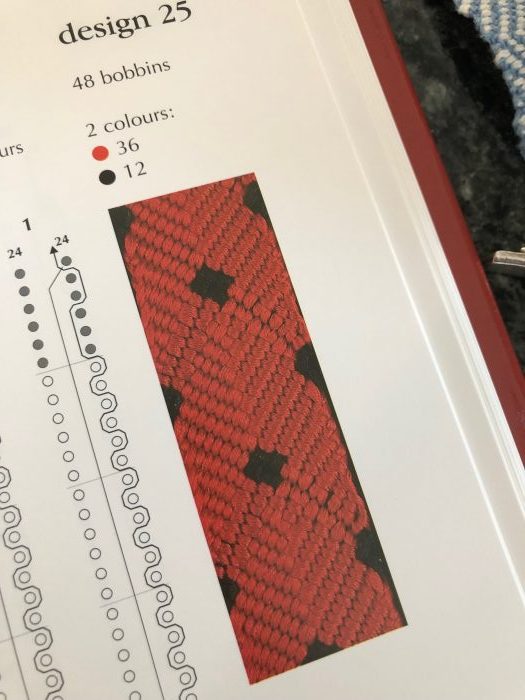
Now I am well armed with information and ideas for some future DDW project.  I rather like the idea of circles.  I just need to finish the long warp of DDW that I already have underway….and my latest braid on the taka dai (I chose #25 to test Bob’s koma), and I also need to get serious about drawing ideas for my ‘next big thing’–the long planned Portuguese Man of War tapestry.  So many temptations, so little time!

Deflected Doubleweave, as promised

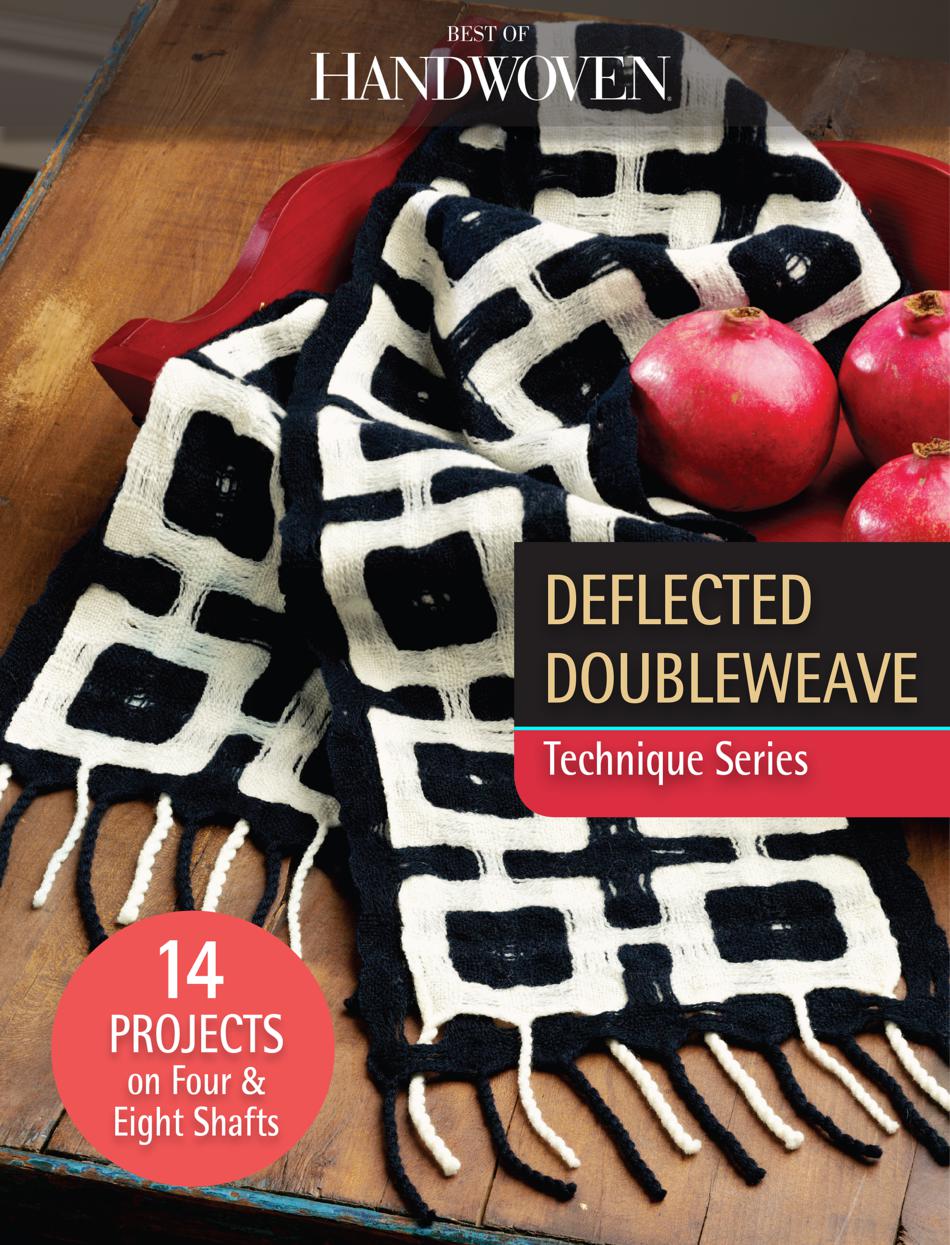
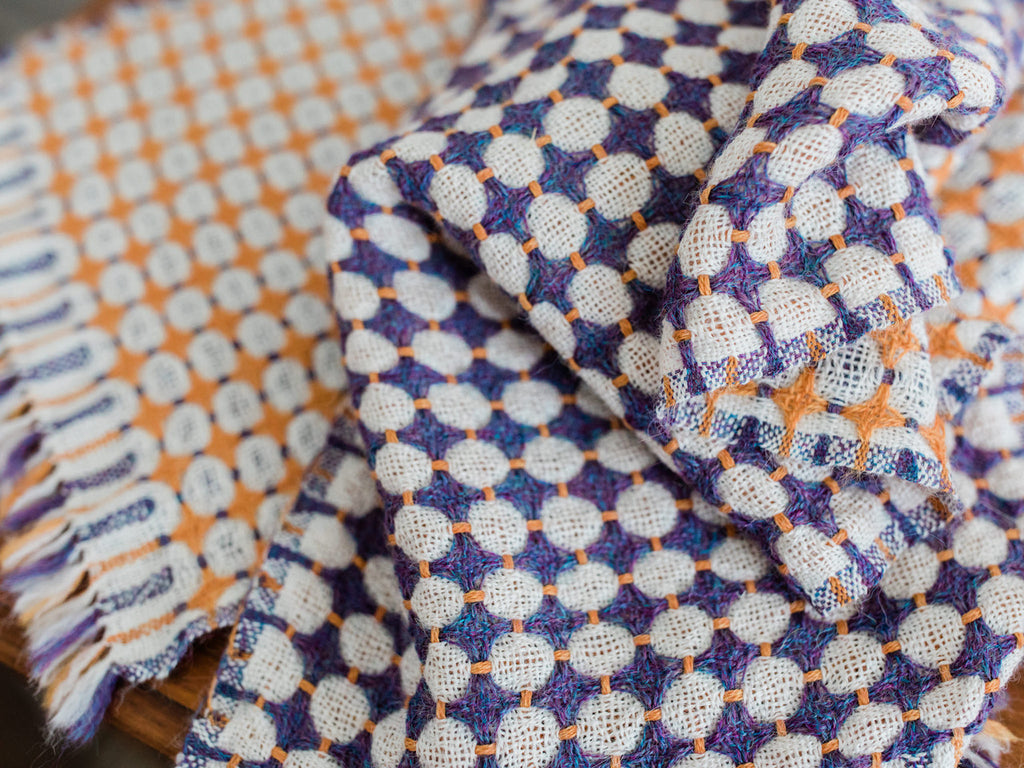
When deflected doubleweave first became a ‘thing’ I was not interested.  Back then it seemed to me that people wove this technique in stark contrasts, pushing the ‘deflected’ bit as far as possible.  I remember lots of black white, heavily felted textiles that looked pretty unpleasant to my ‘delicate’ sensibilities!

Times do change, and this technique has been calling to me for several years now.  Everything has its time, doesn’t it?  Since I now live in an area where there is a wonderful DDW teacher, as well as a non-profit weaving center where a few accomplished weavers design beautiful patterns that are woven by trained weavers, I have been inundated by beautiful pieces of Deflected Doubleweave. (Check out Hartford Artisans for a unique organization where experienced weavers train locals who are considered visually impaired, to weave an array of wonderful textiles.)

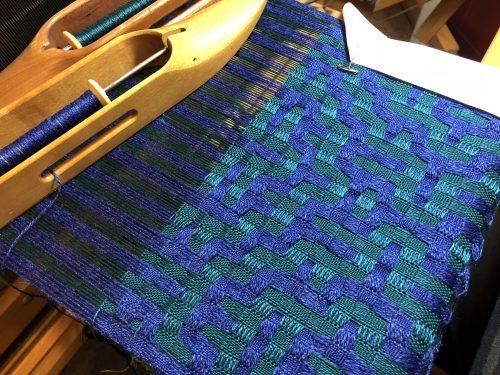
The teacher is Janney Simpson.  You can find her article and beautiful DDW scarf in the Nov/Dec 2016 issue of handwoven.  You can also read about her interesting collaboration with weavers in Micronesia.  I signed up to take a local workshop with her, and then had to miss it at the last minute.  Nevermind about that–she gave me the workshop notebook and the yarns she wanted me to use for warp– a deep green merino/silk zephyr and a deep teal 10/2 tencel.  When I finally got down to it, the project went swimmingly well, apart from the glitches of using a new-to-me Baby Wolf with combby.  Since then I’ve done a little a gathering of other DDW resources.  I’ve done this to have as a reference for future.  If it helps you too, I’m pleased.

Here is the link to Interweave’s digital magazine that includes Janney’s DDW article. If you already have Handwoven magazines in your library, Janney’s article is in the Nov/Dec 2016 issue.

And perhap before I get any further down this rabbit hole, I should define this technique.  Here is a definition from Madelyn van der Hoogt: “In double weave two layers are usually woven simultaneous, a top and a bottom, while in deflected double weave warp and weft threads of each layer are interlaced. The result is one pattern that produces 2 different looks, one on each side.”

Alice Schlein writes about many weaving explorations.  You can find her DDW experiments on her blog Weaverly.

In one of Alice Schlein’s DDW posts, she mentions using a linen/cotton yarn from Gist.  Alice documents her weaving samples and even the wet finishing.  Very helpful!

A visit to Gist’s website shows they offer a kit for making these two colorways for a wool/alpaca blend scarf.  They offer the pattern as a free download, but I could not find it–only a link to a DDW pattern by Elizabeth Hill that I already own.

The pattern from Gistyarn is based on this baby blanket pattern from WEBS.   I bought this pattern and look forward to making blankets for my three grandchildren sometime in the near future.

Elizabeth Hill has made a couple of videos showing the technique for dealing with selvedges while weaving DDW.  This is a 2-shuttle weave, and one of the wefts does not go all the way to the selvedges.  You have to decide how to handle that.  Janney teaches a method of having two selvedges on each side that I happen to prefer.  Elizabeth Hill demonstrates that here.

In another video Elizabeth demonstrates the method that Madelyn van der Hoogt uses.

I you do a google image search you’ll find lots to enjoy and consider in planning your own DDW adventure–same is true for looking on Pinterest.  The DDW time has come for me.  I still have plenty of warp left on my first project in this technique, and lots of ideas for how to proceed with the warp that’s left.  I just need to spend time tweaking at the combby on that loom to get it to play well with me!  Here are my first three samples from that warp.

IMG_1944

If two colors are good, wouldn’t seven be better?  maybe….maybe not….

IMG_1986

How about two colors that are different (but in same color family) as the warp?  Hmm…this photo is not accurate.  I’ll have to try again when I get this loom working.  So far, it has been quite fiddly.

IMG-2298

More soon….


Long awaited Taka Dai

In the late 80s I discovered the Japanese technique of making braids on a marudai.  I took a class from a woman in NJ, where I spent a day as the only student in the class at the teacher’s house.  I no longer remember much about it…. I have no idea where I drove for this class, and no idea if I then bought a marudai or if that came years later, when I met Rodrick Owen.  The teacher for that first class was Charlene Marietti.  She was excellent and helped me make some beautiful braids that day.  I’m quite pleased to find that she writes a blog called Filamenti.

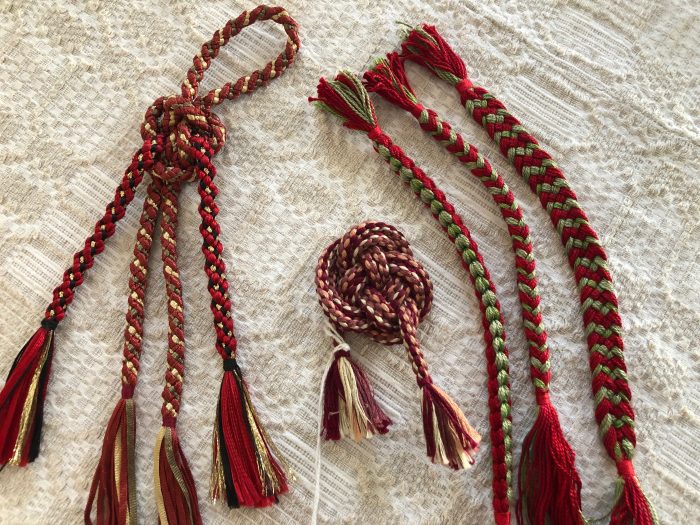
Here are the braids I made that day, a lifetime ago! Charlene supplied all the materials, from the marudai and tama to the threads I used for braiding.  She had some fun braiding materials, such as rayon ribbon, chainette, and metallics.  These braids have to be about 35 years old now.

IMG-2226 (1)

I made braids for a few years before ever taking another class.  Eventually, probably in the late 90s, I met Rodrick Owen and was very lucky to get to study with him in quite some depth since he occasionally stayed at my house between the classes he taught at the Weavers’ Place, in Maryland,  and  classes in the NY-metro area.  During his free time, he generously gave me some excellent guidance.  In some of the classes I took after this point, some of the students were using taka dai to make more involved flat braids.  These included twills and double weave braids. I was very intrigued.  At some point–early 2000s?– I bought Rodrick’s plans for making a taka dai so that Bob could make one for me.

Along the way I tried a few ‘shots’ on other people’s taka dai.  I began to think I’d never have one.  Time passed and I eventually stopped braiding except very occasionally, and that was about 25 years ago!  Then last year, about this time, I learned that I’d just missed the first meeting of the newly formed American Kumihimo Society.  Two weaving friends of mine in my new home state had gone to it.  They both did a lot of braiding on the maru dai and also both owned taka dai. Over last summer, Clare let me weave several braids on her taka dai.  Once a week for a couple of months I went to her house on Thursdays to weave.  What a terrific opportunity for me!

These are the braids I wove on Clare’s taka dai.

I joined to the AKS so I could participate in the 2nd annual conference and meeting.  I also found that Rodrick is still teaching in the US, and that Terri Flynn is still connected to him although she had long ago given up her store front business, Weavers’ Place.  I decided to put my name on the waiting list for a taka dai at Braiders’ Hand.  They are made to Rodrick’s original shop drawings.  I attended the AKS conference in Florida, and also took a weekend class on the taka dai with Rodrick and Terri at Red Stone Glen in Pennsylvania.
I wrote about both those events here and here.

For the workshop at Red Stone Glen, I was able to rent a taka dai from Terri, and it was wonderful to get to delve in to the techniques used in weaving on this equipment.  That waiting list for a taka dai from Braiders’ Hand had grown to almost 2 years by the time I signed on for one.  While Bob was reorganizing his woodworking shop he found the maple pieces he had pre-cut decades ago in order to make a taka dai.  We both went on a hunt for the shop drawings I had bought back when he started this project.  Were with my kumihimo books?  Were they somewhere in Bob’s shop? During that hunt, I also bought plans from Carol Franklin, just in case we didn’t find Rodrick’s (which I thought were now unavailable), but it was immediately obvious to Bob that Rodrick’s plans were considerably different.  In order to continue with what he’d already started he’d need to find those original plans.

Needles to say, since I am making my first warp for my taka dai, Bob did find Rodrick’s shop drawings.  Bob keeps things pretty organized so I wasn’t too surprised when he found them, all these later and in a different house from when he began this project!

I’ve taken photos and a couple of videos along the way.  Neither Bob or I took note of the date he began this project years ago….or even the date he re-engaged with it!  He thinks he’s been working on it for about two months, off and on.  Thank you Rodrick for making these plans available, and Clare who took at least a dozen phone calls from us asking her to check various measurements on her taka dai (from Braiders’ Hand) against the plans, and to Dave at Braider’s Hand who also answered a number of questions.

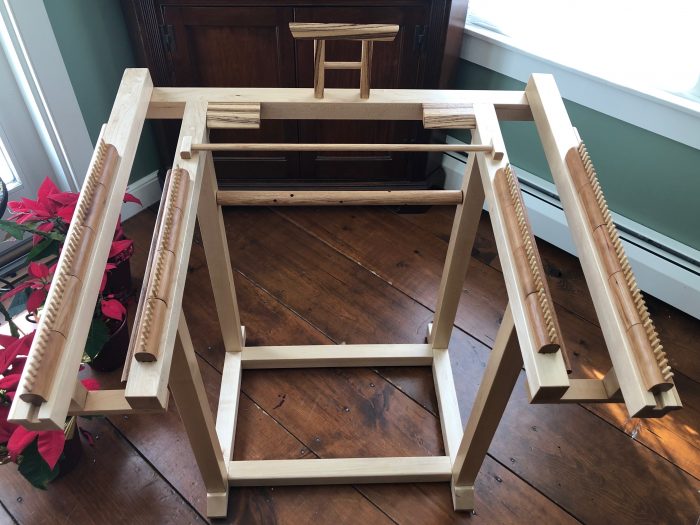
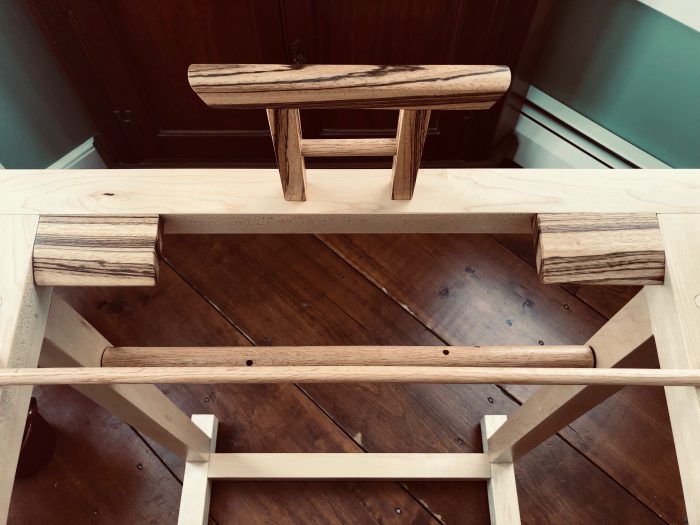
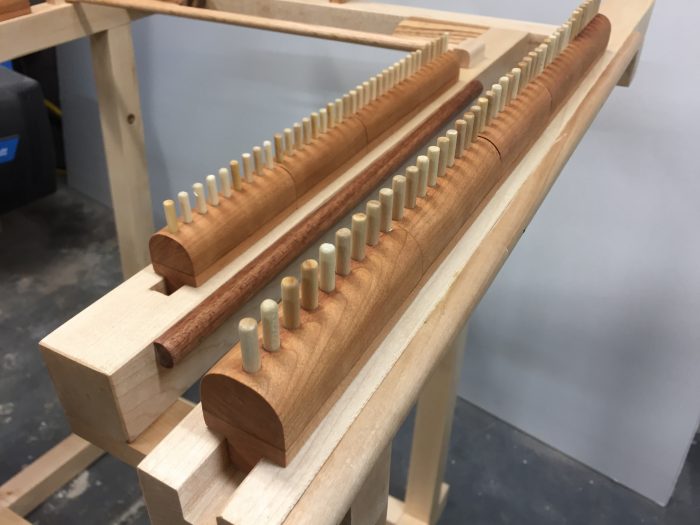
Here it is ready for use!

IMG-2215

And some of its wonderful details–like the zebra wood Tori and sword pads.

IMG-2216

Bob made 44 koma, each with 9 pins.  I will keep 22 of them, and whoever gets the other taka dai will get the rest, which means we’ll each have four extra koma. Oh yeah, did I forget to mention that he made two taka dai??  There were a number of complicated parts to this thing–and jigs to set–so Bob figured if he had to do all that, he might as well make two.  Do you know someone who wants one?  Send me a message!

IMG-8530

Look at the difference before and after the finishing oil!

IMG-8525

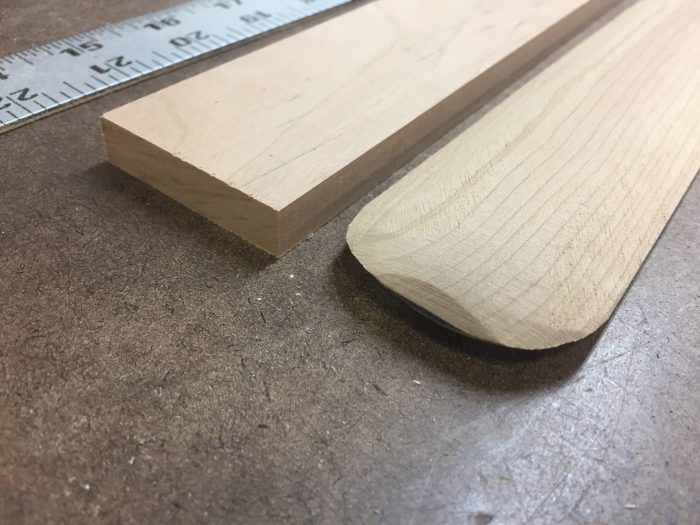
Today Bob is focusing on making my weaving sword and a raddle.  The sword has a lot of shaping required so that the edges are as sharp and smooth as possible for beating in each weft.  It’s cherry.  I can’t wait to see that beautiful grain once there’s a finish on it!

IMG-8541

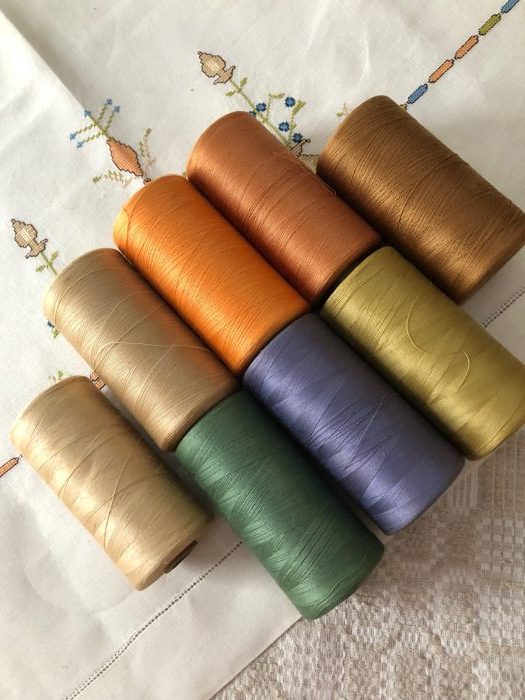
I’m about to make a warp for my first braid on my own taka dai!  Last year I bought this wonderful group of fine cottons from our guild stash called “Weftovers.”  There is a beautiful sheen on these cotton threads.  They are very fine!

IMG-2221

So it’s time to get busy making that warp.  I’m either going to use 7 colors to make #12 from Rodrick’s book Making Kumihimo….
IMG-2224

….or I’ll choose two colors and make #25.  I want to get my bearings with my new taka dai before I delve back into the more challenging designs.

IMG-2225

Time to make a warp!


Scroll to Top