ArgoKnot

Author name: ozweaver

Tapestries, Paris, 500 Years Apart

The tapestry class I’m teaching started earlier this week, and since we are studying traditional Gobelins style techniques, I can’t get the “Lady and the Unicorn” off my mind. I started reading the book I bought at the museum, which also brings up bits of info that are filed deeply in my brain from my college years–a long, long time ago at this point. I enjoyed studying the MIddle Ages in college, in between the classes I needed for my majors.

During the Middle Ages a popular literary form was the bestiary, in which stories about real and imaginary animals were told in order to convey moral concepts. The unicorn featured often in these tales, where it represented two opposing sides of the same idea: ideas of purity, virginity, and Christian virtues, as well as less pure concepts of sexual desire and attractions, giving into one’s senses. At this time in history the senses were considered to be base, in need of control by the higher call of duty and control of one’s desires. There are descriptions of a 6th sense, the heart or the soul, an inner compass that could give guidance to the lower senses of touch, taste, sight, smell and hearing. So, naturally, many scholars have weighed in on what that might mean to the purpose of the story in the six tapestries of the ‘Lady and the Unicorn.’ After 500 years, there are still so many disagreements–and unknowns.
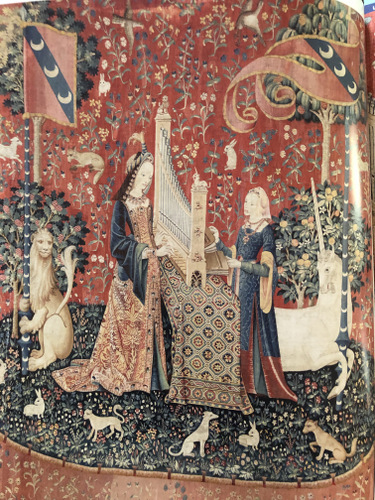
“Hearing,” from “The Lady and the Unicorn”

I was intrigued to learn that the tapestries were repaired in the late 19th c., after being acquired by the Cluny Museum, and that the woven areas near the bottom of certain pieces have faded dramatically from the rich red to a greyish pink. The upper areas that are still original have surely faded some, but are still a deep madder red. What was used on the repaired areas? Could it have been the recently developed aniline dyes? Can I get an answer on this? Do you see the badly faded area at the bottom of “Hearing?”

I find the photos is in the book I bought so inspiring! The facial expressions on the woman and her lady in waiting, their wonderful hairstyles, their jewelry, their clothing!–I can look and look and still find more that amazes me. The animals and flowers are endlessly entertaining, aren’t they? A few years ago, when I still lived near the Cloisters, I took a tour with a docent who focused on the gardens there and what the plants were used for edibly and medicinally, and in folkore . She told us stories about what strengths various plants were believed to lend to the body if eaten, or applied in some way. At the end of the tour, the docent took us to the gallery with the “Hunt for the Unicorn” to show us many of the same plants depicted in the millefleur: foxglove, carnations, roses, lilies, and plenty of others. How amazing that these plants were so well portrayed 500 years ago. Just writing about this memory makes me want to weave!

At the moment it’s the organ and the woven rug in “Hearing” that make me think this is the best tapestry I’ve ever seen. How many weavers sat side by side to work on this? Did more than one weaver work on the organ pipes which are spot-on brilliant? That rug is a show stopper too, not to mention the Lady and her maid. Whatever these weavers made in wages, it was not enough!
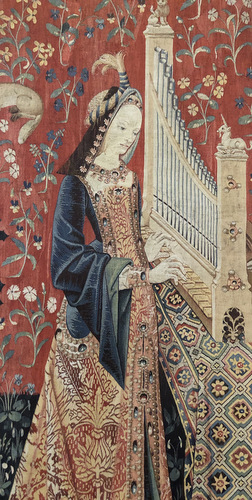
“Hearing,” detail from “The Lady and the Unicorn”

So now I’ll skip ahead to a couple of 20th c. tapestries that evoke these medieval masterpieces with a modern sensibility. We weavers still do not make reasonable wages. Some things never change.
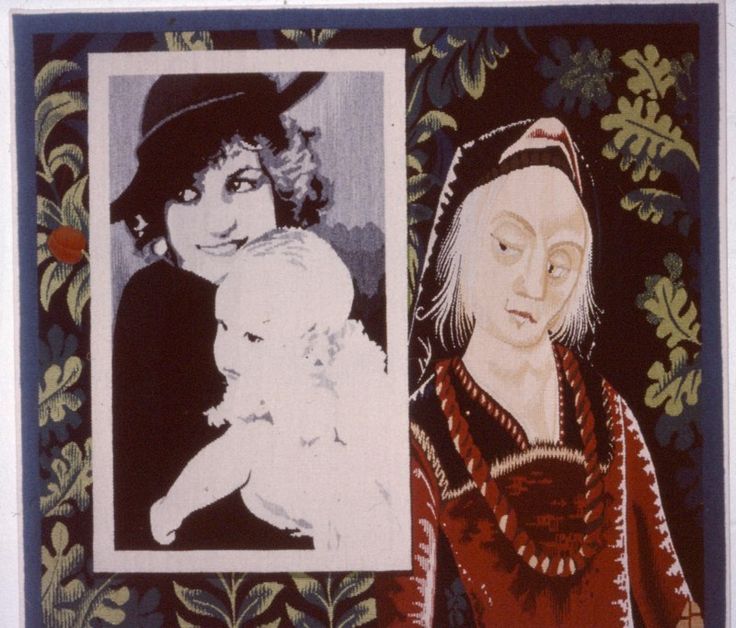
A Medieval Maiden Meets Princess Diana. Archie Brennan.
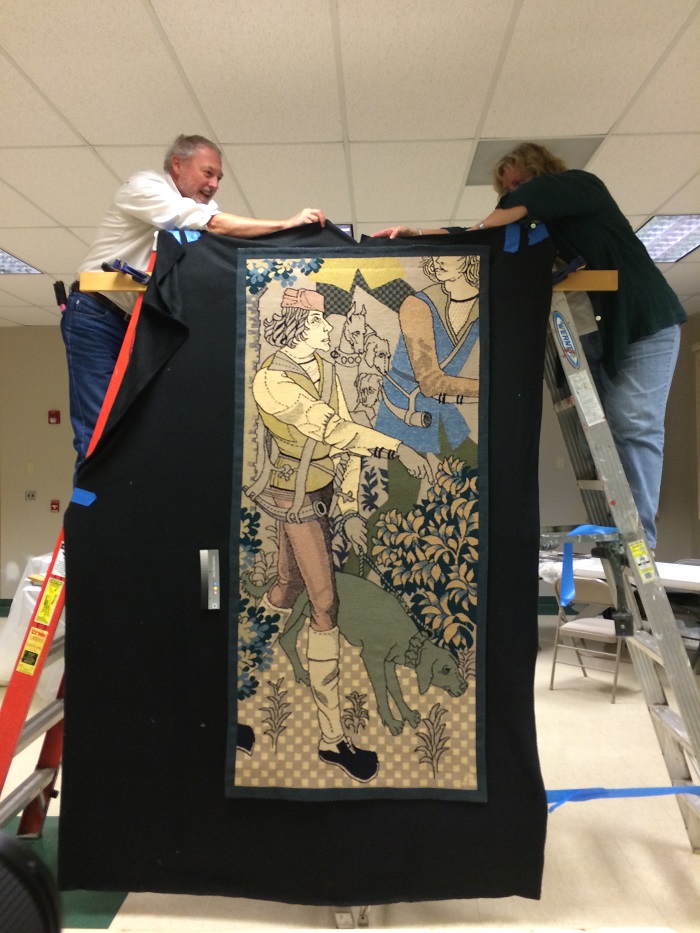
A friend helping me get ready for Bob to photograph Archie Brennan’s “The Lymerer,” which is Archie Brennena’s reconstruction from “The Hunt for the Unicorn.”

Archie Brennan was my teacher for about a dozen years, and actually he still is. There will always be something to learn from him as long as there are images of his work available and memories of his terrific advice. Like medieval tapestries, the more you look the more there is to see.

While in Paris, Bob and I visited the address, 31 Rue de Seine, near and dear to my heart. It’s been a well known address over the decades of the past century and a half. First, it’s known as the residence of George Sands (1804-1876), who happened to write about the “Lady and the Unicorn,” as well as set her novel Jeanne in the Boussac castle, where the tapestries lived during that time period. Fast forward a few years, and Raymond Duncan (brother to Isadora) lived at this address where he ran a sort of commune for art students. Archie found himself there in the early 1950s, weaving tapestries for Raymond. I have no idea where Archie’s work there may have gone.
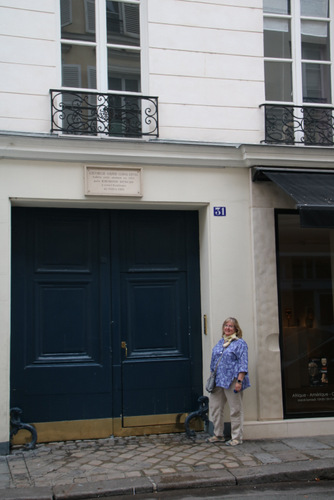
31 Rue de Seine, Paris, where Archie lived briefly in the early 1950s and worked for Raymond Duncan as a tapestry weaver.

You can’t imagine how it made my day to visit this spot! We went into the art gallery next door (to the right in the photo, Hourde Charles-Wesley) to ask about the current owners of #31. The gallery assistant said the gallery has a key that opens those big blue doors to the courtyard. Archie has written about that courtyard, where Duncan made large sculptures. I’ve often felt that I could picture it based on Archie’s descriptions (and one tiny photo I found online years ago). And voila! I saw it for real.
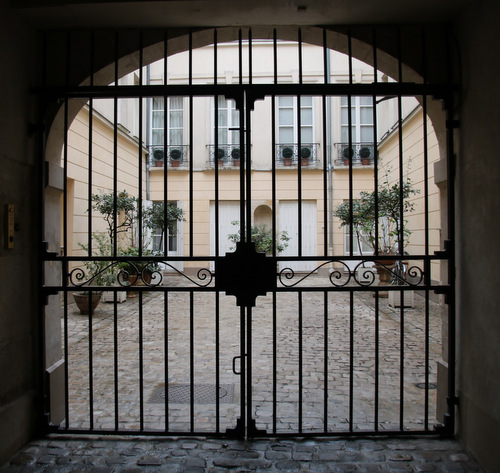
The gallery assistant told us that recently the owners found some artwork in the basement. She didn’t say what–Raymond Duncan’s sculptures? Archie’s tapestries? I doubt it, but something may have been left from that time period, and, if so, likely it would be work of some of the students. Archie felt that Duncan’s work would not stand the test of time. Most of the residents of the commune were students, mostly wealthy American and Japanese women who found it trendy to live in a Bohemian setting and study under Duncan. Archie was one of a few artists who were paid to work there. Interesting times.

This piece happened to be in the courtyard. I have no idea if it’s one of the pieces found in the basement. I have a lot of questions, and luckily I now have a contact in the gallery next door!
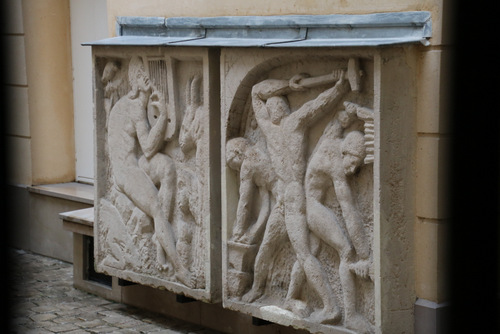
Recounting these days in Paris: the disappointment at not seeing “The Lady and the Unicorn,” the excitement of getting past those big blue doors at 31 Rue de Seine, piecing things together from my (almost) 20 years of working in tapestry, revisiting medieval history; well, it’s been memorable for me. Tapestries, Paris, 500 years apart. It was a moment.

My Excellent French Adventure

Part I: Paris

Yesterday Bob and I returned from two weeks in France. The idea for the trip started with an invitation from our son’s partner, Melody, to meet them in Paris before joining them on a jaunt to the wedding of one of Melody’s friends from college, who was getting married at her family chateau in a small village in the Loire region. No kidding!– a family chateau…first built in the 12th c. and renovated and expanded in the 15th and 17th centuries. Even the local church where the ceremony took place was from the 12thc. It was the stuff of fairy tales! It was also an opportunity to spend time together in magical places, like Paris, the Loire region, and Normandy.

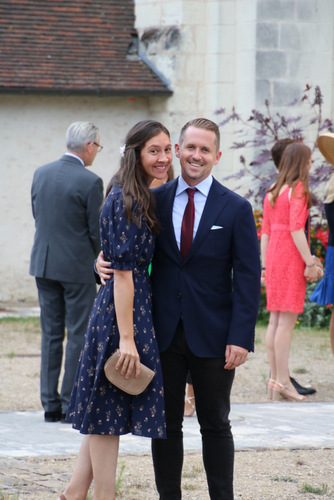
Melody and Chris at the wedding of a friend in Lencoitre, France

Of course, I had an agenda. At the top of my list was seeing the Lady and the Unicorn tapestries at the Cluny Museum in Paris. In my heightened state of excitement about the trip, and clearly in my growing ‘feathery’ state of mind, I called this set the Unicorn in Captivity several times before I realized my mistake. Duh…. what can I say? I’ve known that this is the name of the final tapestry in the Hunt for the Unicorn series, so I have no excuse or even possible reason for my confusion. These moments do give me pause to wonder where I’m headed (mentally).

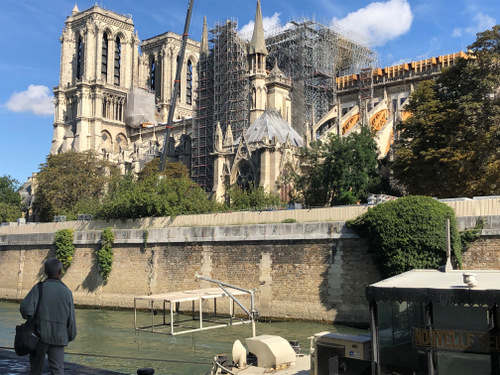
I thought I might spend most of a day at the Cluny , so I planned to do this before the kids arrived, in order not to bore them to tears. That was the first and biggest hurdle of a trip that had a few more hurdles. I have always had the experience that museums are closed on Mondays, so since Bob and I did not get to our Paris hotel until mid afternoon on the first Monday in September, I put off making the Cluny the very first thing we did. Instead, we took the afternoon and evening to travel on the Seine and enjoy floating by such famous monuments–Notre Dame, looking decidedly memorable after the terrible fire; the Louvre; the D’Orsay; the Grand Palais, the Eiffel Tower. It was amazing that we could sit in a boat and see so many beautiful examples of architecture from so many centuries pass by in the space of only a few hours.

Approaching Ile St. Louis by ferry,with Ile de la Cite and Notre Dame in the background on the left.

Notre Dame with all the repair work underway.

First thing on Day 2, Tuesday, I was off to the Cluny, which is when I learned that many museums in Paris are closed on Tuesdays. They had all been open on Monday when I passed on going. Ugh. We learned the hard way–meaning a long walk and metro ride– that the L’Orangerie was also closed on Tuesdays. This a good lesson to check the guide books before making plans, but I may be too old a dog to have this lesson stick. There is more to come on that!

First thing on Day 3, after another trek to the Cluny, I learned the truly terrible news that the tapestries were not on view at the moment. That was the reason that entry to museum was free that day. Their gallery was having some minor work done. Can you imagine what a bitter blow this was? This was the #1 one attraction to me in all of Paris, and I missed it. To add insult to injury, I learned that the gallery with the tapestries would open again this morning–while I am now sitting in my kitchen, drinking bitter coffee. When I learned this, my first thought was to change my itinerary and pay whatever penalty was necessary to stay an extra day at the end of our trip to see these tapestries. A fine plan, but sadly, I will be starting to teach a course on tapestry this week, and I could not spare even one extra day. Somehow I managed not to burst into tears in public over this. It does seem outrageously absurd that in all the years I have hoped to see these works, I managed to finally get there during a brief time frame when they were not on view. And I’m trying not to beat myself up too much since I found no notice online of this short closing of the exhibit. It was just a phenomenal moment of bad luck.
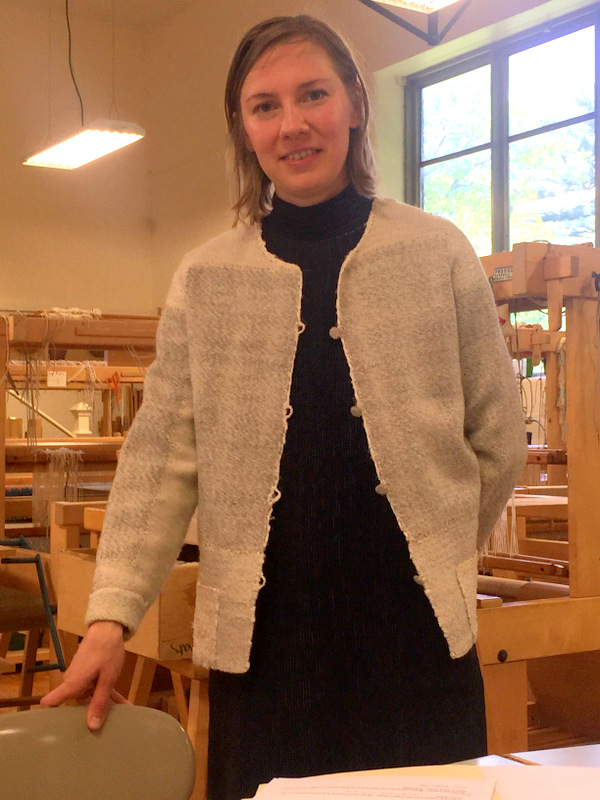
So I bought a book on the tapestries, and some paper bookmarks to hand out to my students during the first class this week. What a pathetic consolation prize. Still, the book is a good resource, not just a book of pretty photos, so I’ve already begun to enjoy reading it. There were two tapestries from a later time period on view in one of the open galleries. Later that day, I did get into the L’Orangerie to see Monet’s large water lily series. A couple of years ago I read the book Mad Enchantment, which is about Monet’s last years, when he painted these large scale works as his contribution to the war effort. He wanted to leave behind something truly French since everyone believed that France would soon be lost to Germany. He was suffering from progressive cataract problems, he was aging, and he had bouts of extreme mood swings. Reading this book added to my knowledge of what went into the display of these huge works.

The Lady and the Unicorn tapestries (the six that are extant) were woven around 1500, the height of the Middle Ages. They were woven in a workshop in Flanders (now Belgium), where being a tapestry weaver was a well known occupation. The Hunt for the Unicorn series was woven about the same time. Scholars know that both sets were designed in Paris, but I have not found a reference for where the “Hunt” series is thought to have been woven. In fact, no one is certain that the seven tapestries now displayed together at the Cloisters (part of the Metropolitan Museum of Art in New York) are from the same set. No one can determine who commissioned the works. Both the “Hunt” series and the “Lady” series were rediscovered in the mid 19th c. The “Hunt” series had been looted from its Paris home during the French Revolution (first recorded hanging in the Rochefoucauld family residence in 1680), then rediscovered in 1850s, in a barn. The “Lady” series was discovered in 1841, also in disrepair, in a 12th c. castle in Boussac, in what is now the Nouvelle Aquitaine region.

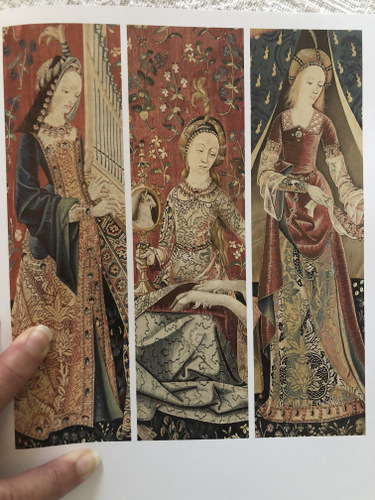
Here are the six ladies in the Lady and Unicorn series. Each one represents one of the five senses, plus one extra that is a bit of mystery. These first three, which I photographed from the book I bought (I certainly didn’t want to imply that I’d actually seen these beauties, so you can see my finger holding open the book) represent, from left to right, hearing, sight, and the mysterious one which is called ‘Mon Suel Desir.’ That roughly means heart’s desire.

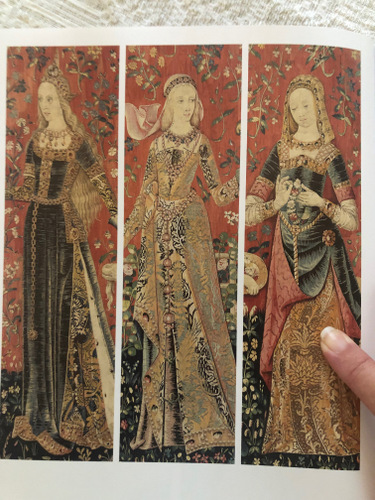
Here are the next three: touch, smell, taste. These are the most beautiful women in tapestry. Their clothing is exquisitely portrayed, although the Devonshire Hunt tapestries might be more exciting for examining how to weave garments. This is certainly the resource I’d turn to for examining faces. They are stunning!

There were two tapestries on display in the gallery of medieval art at the museum. One is called “The Bath,” from the 16th c. and shows a medieval lady in the bath with her ladies in waiting. I read on the nearby placard that bath scenes were a popular subject at this time. I certainly know that has been true for other periods of art, but this particular case is earlier than I expected. It seems to me that tapestries in the Middle Ages and the Renaissance were used for telling great stories, either from mythology or the Bible, or stories about the importance of the person who commissioned the work. The unicorn and his many layered representations of maidenhood and Christology was also a popular subject during the Middle Ages. The thought that so much work went into depicting a bath scene is pretty amazing to me!

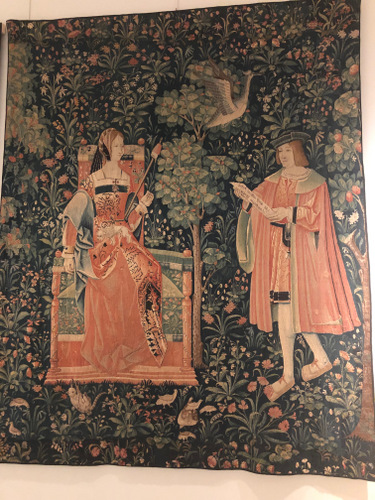
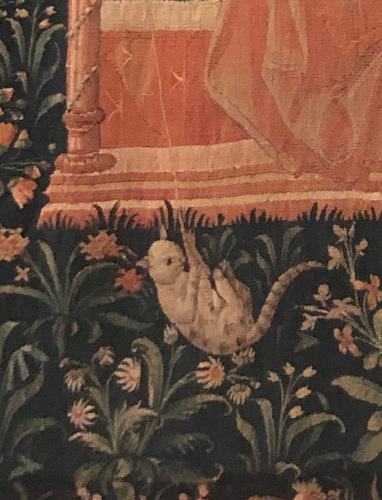
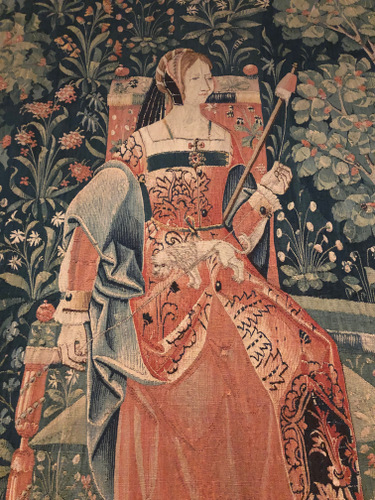
It was the second tapestry that really caught my attention. It is about a letter, but I was struck by the wonderful depiction of a woman spinning. There is a cat playing with the spindle and a dog in the woman’s lap who appears to contemplating the cat. It so wonderfully captures everyday life. Who knows about that letter the man is reading to her?….. is he reading it because she cannot read for herself? ….because nothing can distract her from her spinning?…..even a cat batting at her spindle cannot pull her away from her spinning. I love the possibilities!

Look at her dress and the fabric on the chair. And of course, there is all the millefleur going on as a background. Have you ever wondered about that style, and why the weavers created such elaborate, busy backgrounds during this period? I can give you a short answer: when you are weaving a detailed image on a plain background, you are likely to run into a lot of tension problems between the many small shapes and the large background. Trust me on that one….but don’t take my word for it; ask any tapestry weaver. Also, imagine a group of weavers sitting at a loom together weaving an image. Would you want to be the one who is weaving a solid background while your companions are enjoying all the details involved in the woman’s face, her gown, the dog, the cat? Simple answer, but likely true. I can’t take credit for this. I learned it from Archie Brennan, who also believes that prior to the Renaissance the cartoonist was likely to have been an experienced weaver. I believe that too. I wonder if it will ever be proved.

And I can’t resist adding one more thing. The text in tapestries from the Middle Ages and the Renaissance was always quite elaborate. It happens to be easier and more effective to use angles and curves for letters than to weave block letters. Angles and curves allow you to create text that does not have as many slits that will not need sewing afterward. It looks more complicated but was actually more pleasant to weave, with less finishing work afterward.

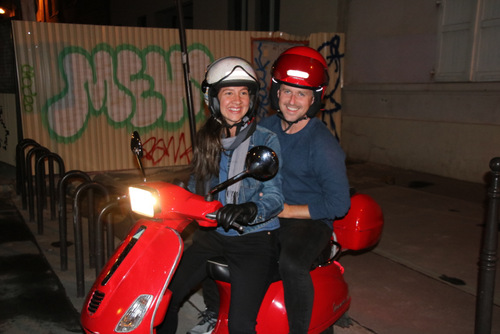
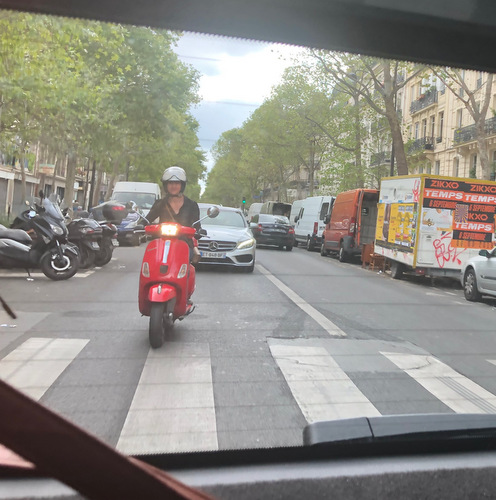
I can’t close without a glimpse of our adventurous companion, Melody. She has a motorcycle license and enjoys touring her vacation destinations on a bike. I spent Rob’s entire adolescence trying to keep him from getting a motorcycle. He got his license about a nano-second after he graduated from college. Now I have two motorcyclists to worry about.

I had to hold my breath (and say prayers) when she drove in busy Paris traffic. It’s not a great shot, but I couldn’t give the photo my full attention since I was busy praying (and not breathing).

In spite of missing my most significant reason to be in Paris, it was still an excellent adventure. There is more to come, not only from our time in Paris, but also in the Loire region and Normandy. I had some excellent adventures in lace and other handwork along the way.

Summer Distractions

For some, summer ends this weekend. I’m an equinox/solstice season follower, so it will be summer until September 21.

This summer has held some wonderful distractions. I’ve missed my weaving guild meetings during our summer hiatus, and I missed our regional conference too….but other things have called my attention and been incredible opportunities.

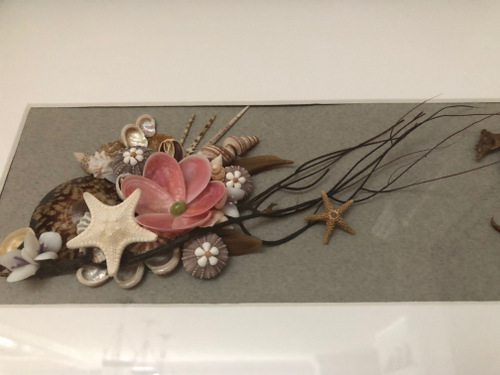
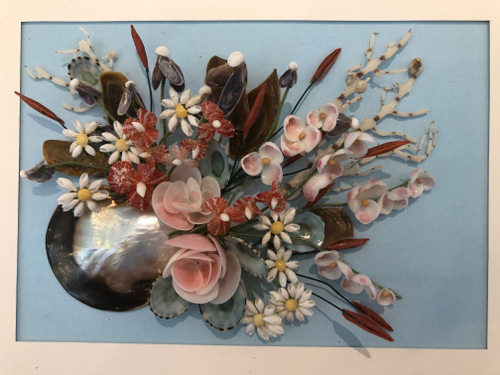
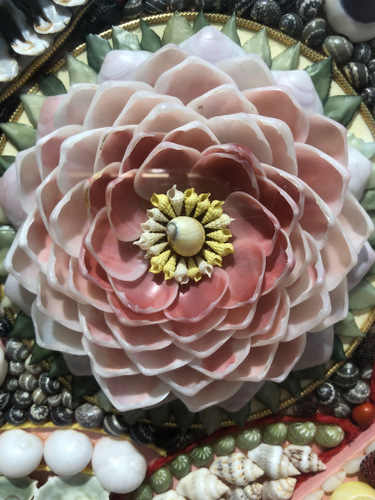
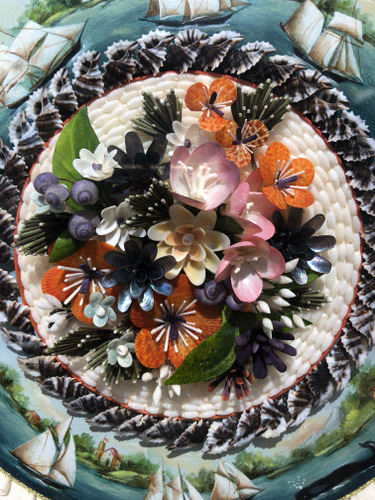
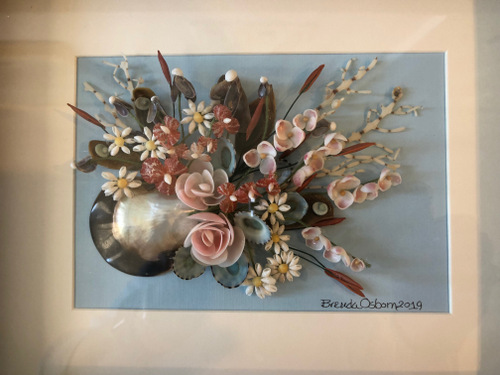
The biggest event of my summer happened just earlier this month. A friend of mine who now lives full time on the Cape (in what was previously her summer home), invited two of us rather old friends to spend a week with her studying with a well known Sailors’ Valentine designer. Full disclosure here: I am not a huge fan of sailors’ valentines. They are overly fussy to me, and it’s hard for me to take in so much visual busy-ness. But there are also shell compositions that evoke garden scenes, or flowers in a vase. Those really get my attention. This small arrangement really pulled me toward wanting to try my hand at some shell designs.

One of Kayrn’s shell designs

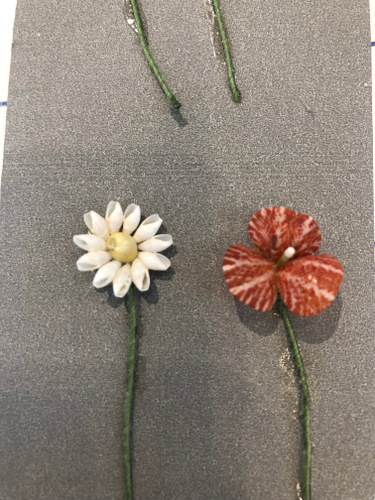
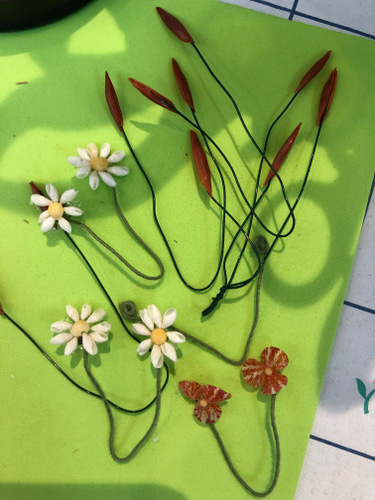
We spent 4 days learning to make a few flowers under the tutelage of Sandi Blanda, in order to create our own floral designs. Here are a few of the flower techniques. We were using E5200 glue, applied with a toothpick or bamboo skewer.

Daisies and something I can’t quite identify.
A few of my favorites! Daisies, a type of flower that is quite familiar but I can’t name(!), and some reedy looking things, like cattails you find along the shoreline.
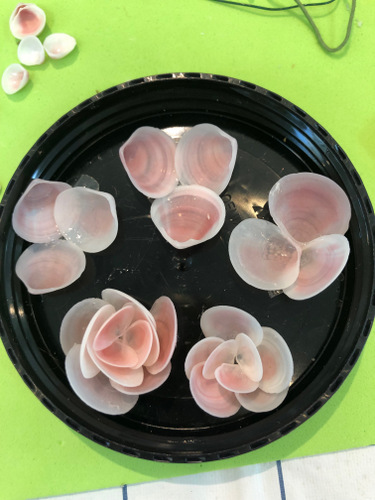
A little tray of ‘rose cups’ in the process of becoming roses.

You have to make a lot of flowers to create a design! You need more than you’ll actually use just so you have some possibilities for arranging. At this point I felt mine design was ready to frame under glass in a shadow box. I did not want the look of a vase of flowers; I was trying to achieve an underwater garden of things growing out of a shell and bending in the current.
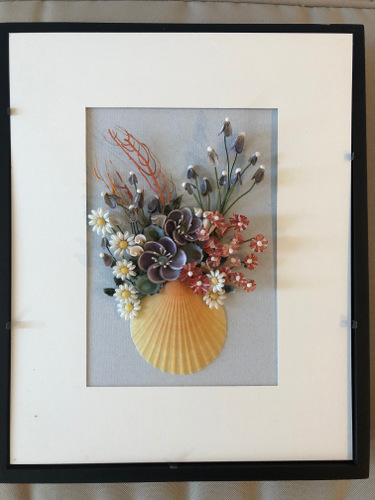
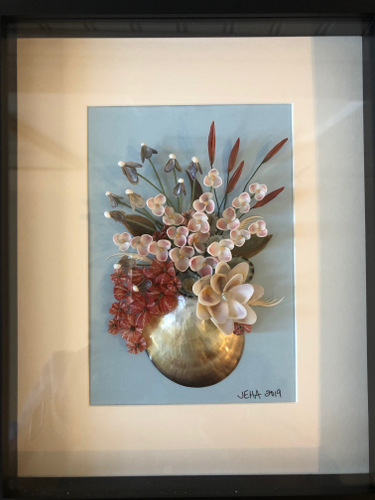
My more experienced friends made beautiful flower arrangements in shell vases.

Karyn’s finished piece
Janet’s piece.

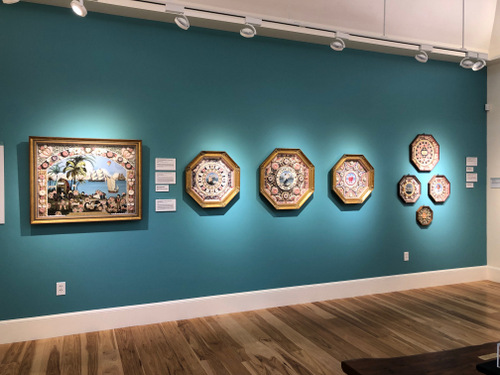
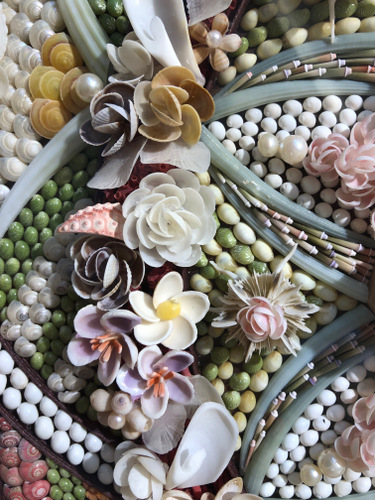
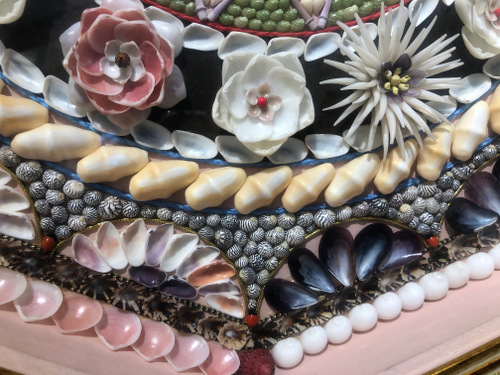
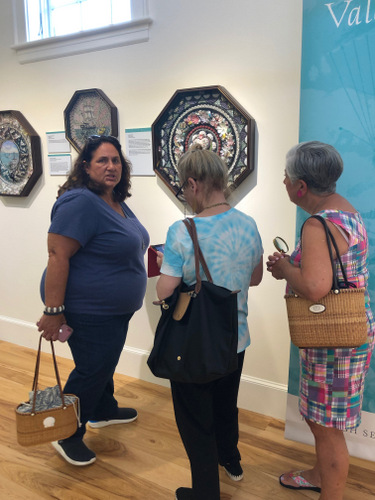
One of the afternoons we took a break to visit the Sailors’ Valentine exhibit at the nearby Cahoon Museum. This is shell extravaganza!

Now you’ll get a good sense of how many tiny shells it takes to make just one flower in these elaborate valentines! Egads!

I love the spikey flower on the right!

This is just a small section of a large valentine. It just boggles my mind that someone could make something so intricate!

For many years, people thought sailors made these valentines for their sweethearts during their time onboard, much like the ivory work and Nantucket baskets made during this same time period. In recent years it has come to light that many of the shells used in these designs came from Barbados, and often the valentines were wrapped in newspapers from that island. It now seems more accurate that islanders made these elaborate shell arrangements, and sailors bought them for their loved ones.

The exhibit at the Cahoon, which ends tomorrow (Sept. 1), features traditional valentines as well as the work of some talented current shell artists. Our teacher was featured in the exhibit, and she has a solo exhibit in one of the upstairs galleries.

Sandi Blanda is in the center of this photo, showing us something on her ipad while we admired one of her pieces in the main gallery. My friends are experienced basket makers too. Take a look at their wonderful Nantucket tote bags!

This type of shell work is incredibly fiddly–as you might imagine! It was tremendous fun while we were together. The thought of tackling another, especially on my own, is a bit daunting. I don’t know if I’ll do it again. Meanwhile, here it is, framed under glass.

During the rest of this month I’ve been sewing. Yes, sewing. I’m not terribly proficient at it in spite of learning when I was about 12, and in spite of having two grandmothers who were quite excellent at it. I’m ever hopeful. I have some wonderful handwoven fabrics, and someday I hope I’ll be wearing them as garments.

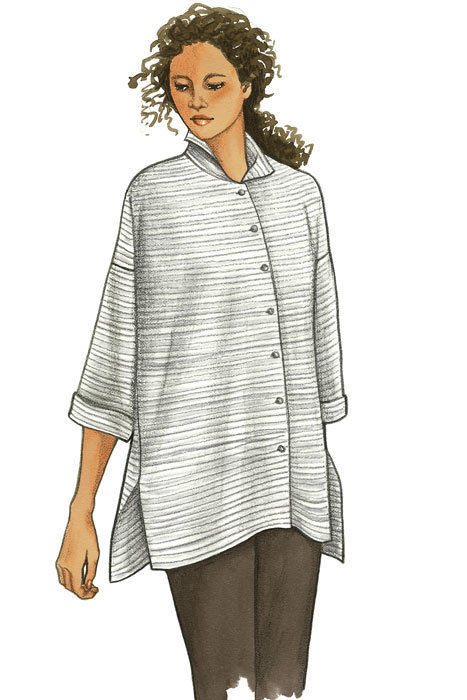
My local sewing shop has been offering some classes in fun techniques and a couple of cute shirts patterns. Both shirt patterns are from The Sewing Workshop.

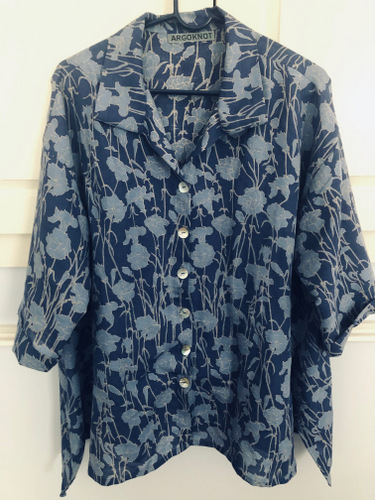
The London Shirt is one that I’ve now made four times. I love it! In my favorite version I used a French fabric–a lightweight linen print that I bought in Martinique.

And the other is the Liberty Shirt that I just finished last week. It has a bit more fiddly construction.

Someday I’d like to make a little something out of any one of my handwoven fabrics, but I’ll need a lot more practice sewing first…

WAIT!!! How could I forget that there is one more BIG thrill to my summer! Tomorrow I’m leaving for two weeks in France! At the top of my must-see list is the “Unicorn in Captivity” series at the Cluny Museum*, followed by the Bayeux tapestry on our excursion to Normandy. I will also see lace in Bayeux and in Alencon, and a couple of special haberdashery shops in Paris (what I would call notions shops). I can’t believe the time has finally come to have this adventure! I’ll be taking my Liberty shirt and three of my London shirts. In fact, I’m calling the one made with French fabric my “French London.” I can’t wait to have an end of summer fling in France!

*Oh boy, was that a senior moment! Not my first either. The “Unicorn in Captivity” is the title given to the last tapestry in the set at the Cloisters, which is known as the “Hunt for the Unicorn” in its entirety. I’ve known this forever …..so why did I have that little brain malfunction? The set at the Cluny is called the “Lady and the Unicorn.”

High Summer

Isn’t it grand? There have been summer classes to take, regional conferences to attend, as well as some down time for sitting in a chaise lounge in the shade, doing some knitting and reading a few of the latest weaving periodicals. I’ve done a bit of all these things.

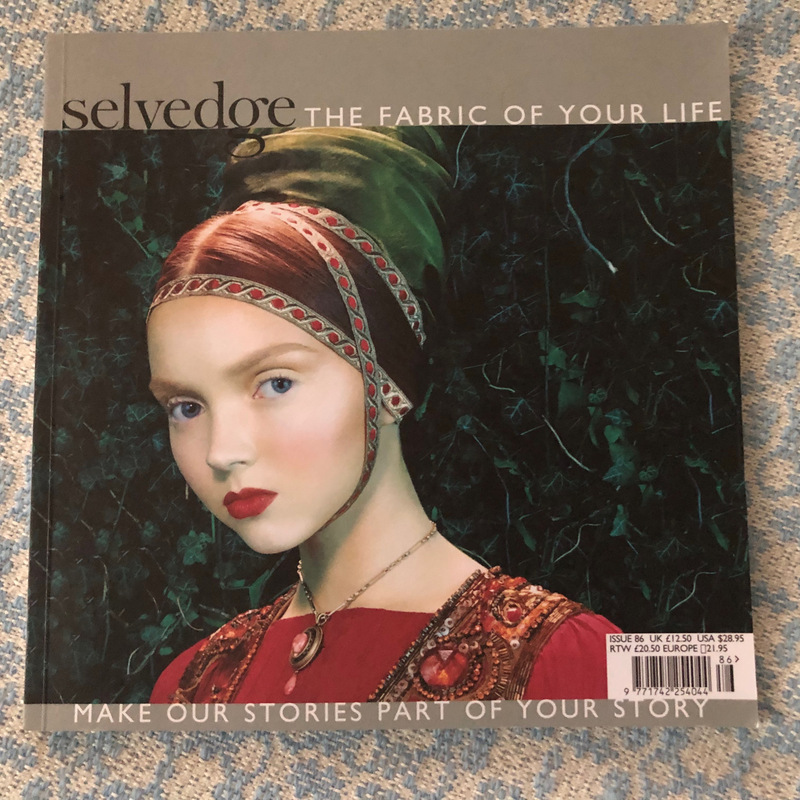
Bob and I made quick trip to Camden, Maine about a week ago, so on the way home I got to make a stop at Halcyon. I bought the Sept/Oct issue of Handwoven as well as an issue of Selvedge. With a price tag of almost $30, I don’t buy Selvedge too often. But I ask you, how could I resist the Renaissance issue??

The Renaissance issue 2019

With articles about the global textile industry, costumes for Anthony and Cleopatra for the National Theatre, a renovation of the Whitchurch silk mill, two articles on lace– and the clencher for me–an an article on “text-iles.” Oh boy!

My summer got off to a great start at the last meeting of the year of my close-knit weaving group that goes by a couple of names–Wacky Weavers, The Flockettes, or simply the Marymount Weaving Women. The group has been going for 40 years, led by Sr. Bianca from the order of the Religious of the Sacred Heart of Mary. Although I’m not Catholic, I’ve been in the group for more than 25 years now. In May, I arranged for Mae Colburn to speak to us. She is currently involved in a number of remarkable textile projects, and she is likely to be an important voice in contemporary weaving.

Mae is the daughter of a weaver with Swedish heritage and expertise in Scandinavian weaving traditions. Mae’s mother teaches traditional wadmal weaving and has developed a fulling mill that will soon be available in the US. Here’s a link to some of Carol Colburn’s interesting projects.

Mae is currently Helena Hernmarck’s assistant. She is taking to tapestry as well as she took to weaving cloth for clothing. Mae is also part of a group of weavers producing one of a kind garments for well to do clients. You can read about that here. Mae’s presentation to us was about finding one’s way in a fast paced environment with high technology, by choosing to make things entirely by hand without any modern technology (beyond the use of administrative technologies). Her company, called Friends of Light, uses only locally sourced fibers that are then spun and dyed and woven to shape (no cutting!) by members of the group. The group intends to pay themselves a fair wage for their labors. I hope they can make this work! They already have a handful of commissions, and they’ve already realized that they did not account for a number of administrative costs. One of Mae’s interesting points in her presentation was that although we now live in an age where ‘time is money,’ there may be a desire for things made entirely by hand and for the benefit of one client only. I hope she and her Friends of Light collaborators are successful. That would be a boon for weavers everywhere–not to mention a boon other crafts as well.
Here is Mae wearing one of the made to order jackets. There is not cutting–each piece of the garment is woven to shape for it’s intended recipient. Yeah….
At the end of the day, I happened to get this photo of Mae and Sr. Bianca together. For me it’s a touching image of the generation of weavers who taught me to weave, holding hands with the future generation of textile artists who are now coming of age. Sr. Bianca is 91 now, and Mae is….well, she is a beautiful young woman! It was a memorable meeting.

Along the way to this moment in high summer there were regional conferences everywhere. I did not make it to NEWS this year, and I was pleasantly surprised to get a survey asking me why I did not attend. I guess the powers that be in New England want to know what they can do to entice some of us to attend. I wish I had gone for a day, to see the exhibits and to visit the vendors, and, most of all, to hear Mary Zicafoose give the key-note address. She is a great speaker and I’m still smarting a bit from missing it. A few friends let me know I really missed a good presentation (but I already knew that!)!

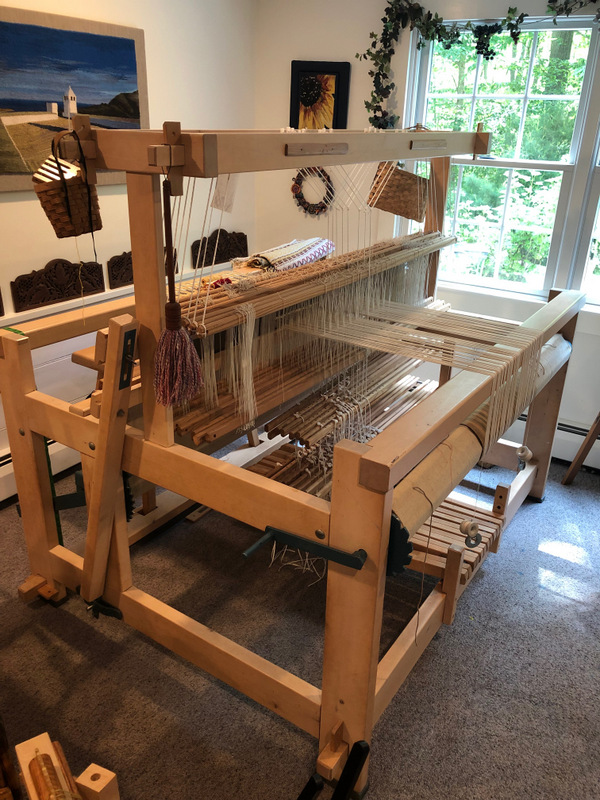
There are big changes afloat in my weaving life. I have decided to make a total re-do of my studio space. Over the few years I’ve lived here in what is our ‘retirement house,’ I have managed to to fill my generous space so that I can barely move. I have made the decision to sell my two biggest floor looms and replace them with only one loom. That will make a noticeable difference in my space. My big Toika (60″ weaving width) is already gone! It’s seems miraculous that it sold so quickly, and I give all credit for that to the Weaving Center at Marymount Convent. The weavers there are not afraid to dream big, and they all love Toikas, since that is what Sr. Bianca has in the studio. That loom was sentimental to me. It came from my dear friend June, who was part of the small group I mentioned earlier–the Wacky Weavers– and who was responsible for my joining the group. Now her loom lives with someone else who weaves at that center. Perfect.

Soon I will put my 40″ AVL (16S mechanical dobby) up for sale. I have already scoped out the loom I want!– a 60″ AVL computerized dobby with 16S. I have the very loom in mind and have agreed to get it as soon as my AVL leaves the premises. Want a mechanical dobby? Get in touch! It’s got lots of great features, and if you live in an area that loses power due to storms or severe winter weather, you can still weave on a mechanical dobby.

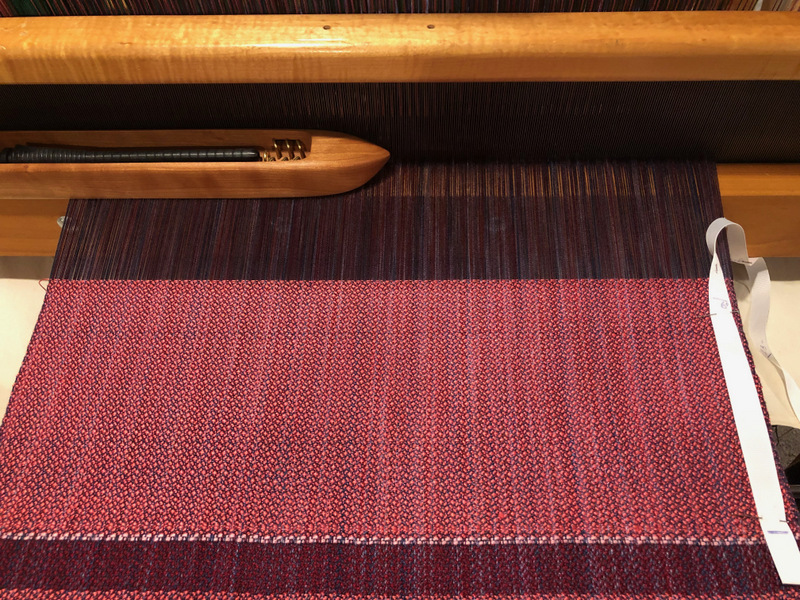
This is the latest fabric I cut from the AVL. It’s a JOY (Just Our Yarn) warp with a Treenway silk weft. I wanted to make a jacket with the fabric, but I’ll be lucky to get a vest out of it. Somehow my 5 yard warp turned into only 2 3/4 yards when woven. Clearly, my warp was not 5 yards!

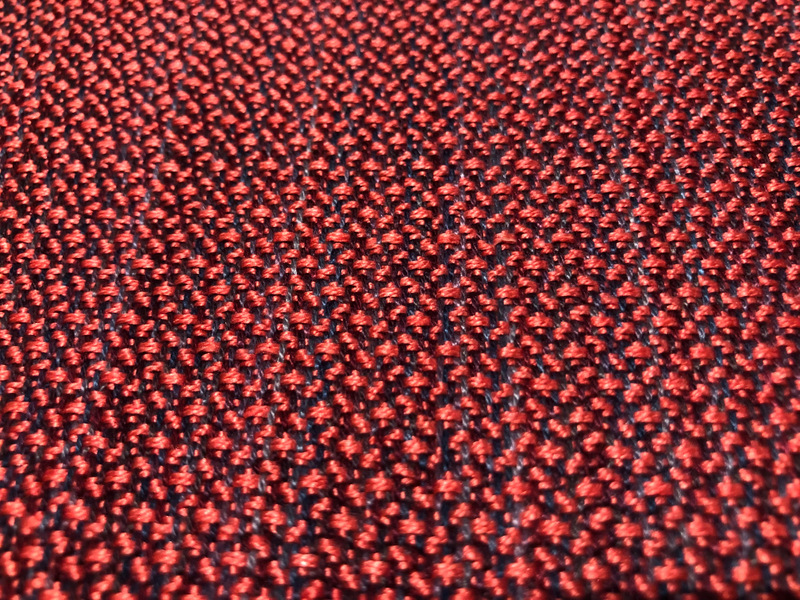
It’s an interesting weave structure–sort of a broken twill on 10 shafts that creates little pebble shapes. It has great drape.

When all these changes fall into place, I’ll have my big Shannock vertical loom for tapestry, a big dobby for fabric weaving, a taka dai, and a sewing machine and serger in the main room, with plenty of wiggle room to actually get to these things. In the adjacent room I have two walls of bookshelves that hold my textile library, and in the middle of that room is my small 8S Baby Wolf. I’m so excited to get to this next phase of organization.

It’s high summer, and I have great hopes for getting more space with better organization by the time fall rolls around. Here’s hoping!

Lookie, Lookie!

Do you get a lot of promotional emails from places where you’ve placed orders, or looked at websites? These days my inbox is mostly full of promotional emails. It’s such a drag to delete all these unwanted messages. In spite of UNsubscribing from many of them, and making a filter that sends many of them to the trash automatically, I still have to wade through so many unwanted messages. Ugh.

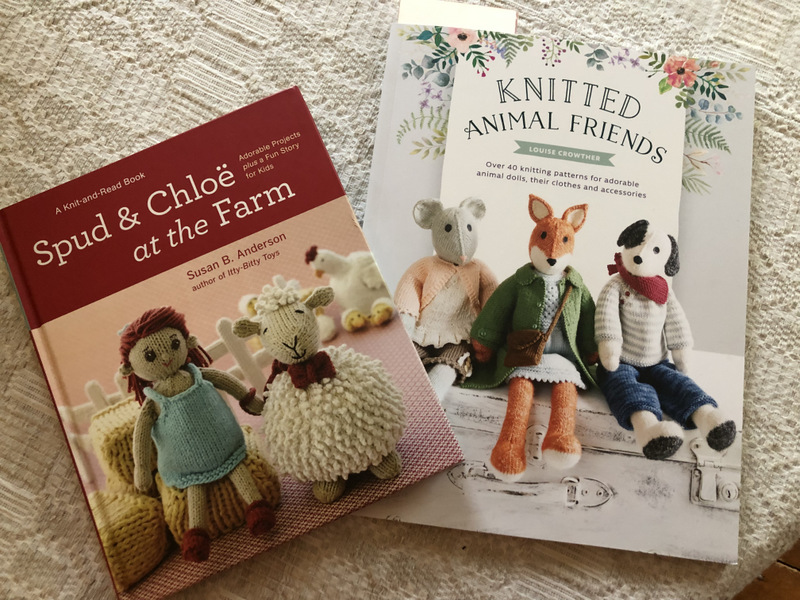
Sometimes there are nice surprises in all that junk. Earlier this week, I got an email from Knitting Daily about a new book of adorable knitted animals. I haven’t seen a book this cute since Spud and Chloe!

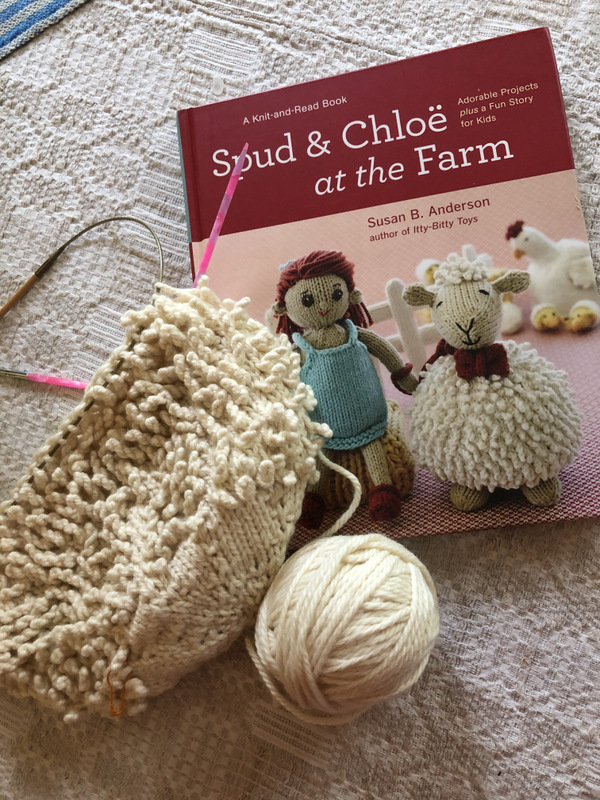
Sorry to show you a promotional video after just complaining about my inbox clogged with emails. It’s cute though, isn’t it? I have a partially finished Spud that will go to my granddaughter Tori eventually. I put it away when it came time to add plastic pellets and stuffing to Spud’s body. I didn’t have either, and I never ordered them. Well, today I’m back on it and expect to have those materials tomorrow.

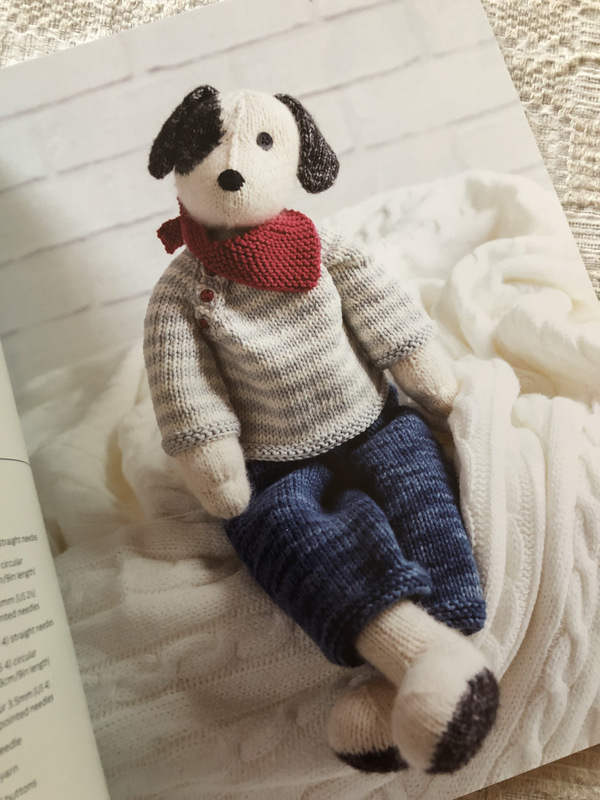
BECAUSE….. I need to make a few of the adorable animals from Knitted Animal Friends next! It would impossible to choose which animal to knit first, so I feel a bit lucky that the dog (George) called out to me as an almost-Bobi-look-alike. Bobi was my son’s dog for about a decade, and when Tori was born she quickly loved Bobi almost as much as she loves her Mom and Dad. Bobi died in January, and Tori still talks about him. When she colors dogs she always makes them “brown like Bobi.” This knitted dog, done in Bobi colors of white and brown, will look very much like him. The dog in the book even has a red neckerchief very much like Bobi used to wear.

Here’s an iconic moment in the Osborn family of Rob and Bobi.

Both books are full of fun things to knit….if I didn’t have grandchildren I would definitely knit some these for myself. And at some point I will knit a Tori-type Chloe to go with the animals.

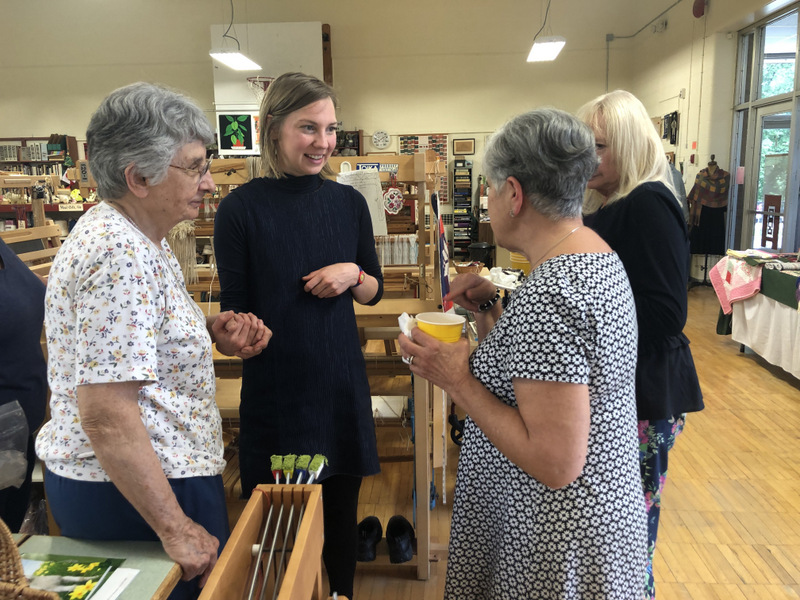
Yesterday my small group weaving guild met at Jan Doyle’s weaving school, in the Octagon House in Carolina, Rhode Island. It’s a fun place to visit, and a I know it’s a fun place to weave. I think spending time with other weavers, or other people in whatever activity you love to do, always enhances your own work.

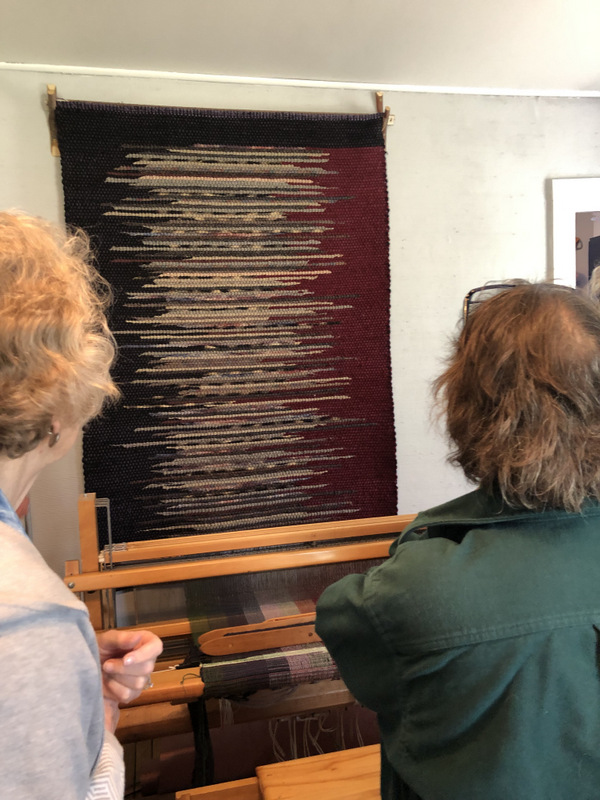
Two friends admiring a rug woven in double weave with inlay.

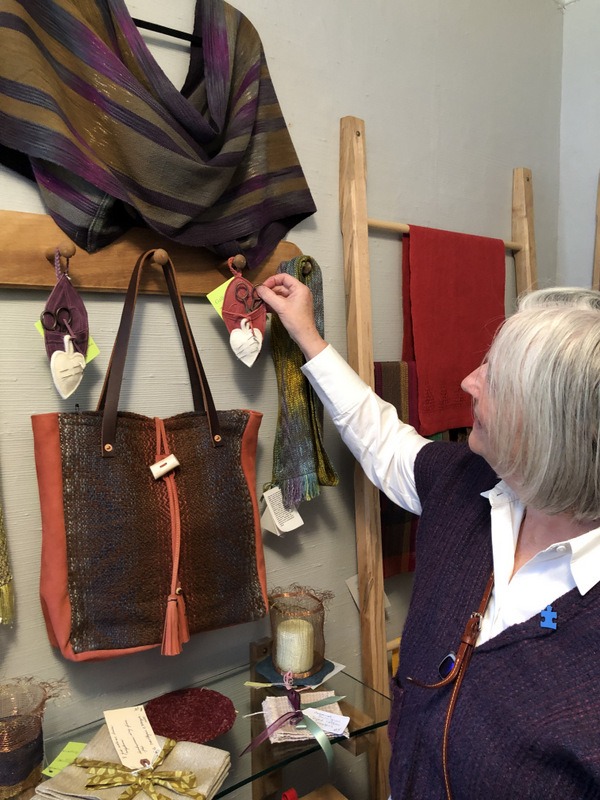
There is a shop in the center where weavers can sell their work. Pretty tempting stuff. I managed to get out of there with a wonderful indigo ikat woven pin cushion. I dearly wanted a wool tweed overnight bag. Maybe it will still be available next time I visit.

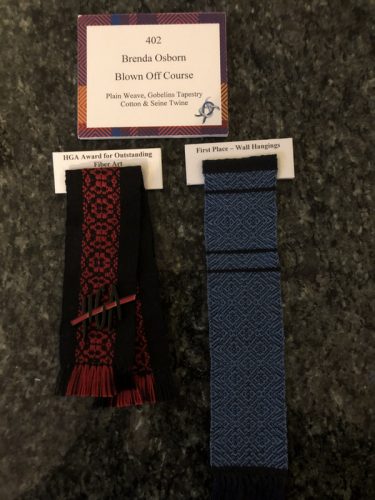
In other news, my little Portuguese Man of War tapestry got returned to me yesterday. I’m quite thrilled with these beautiful ribbons, and I plan to frame them together. I love the HGA pin most of all.

This is short because I have a date with my Baby Wolf Combby. Linda from the service department at Schacht spent some time on the phone with Bob earlier this week. In fact she ‘facetimed’ Bob in order to take a look inside our combby to see what might be malfunctioning. She instructed Bob on straightening all the wires that connect the shafts to the solenoids, and now the loom weaves like a charm. At least it did for 20 minutes with no misfires. I’m going to weave for an hour or two now. I am SO hopeful that I can begin to trust this loom. That’s a big hurdle!

Scroll to Top