ArgoKnot

Author name: ozweaver

A New Year, A New Decade

The last couple months of 2019 brought some unexpectedly sad surprises. Archie Brennan left this world on Hallowe’en, followed closely by one of my tapestry students. I did not know her well, but she was instrumental in helping me realize how important it is to share our knowledge with others. She was new to tapestry, and after a lifetime of beautiful work in other areas of handwork, she was serious and committed to learning a new skill in weaving tapestry. I was so sorry that we didn’t have more time together. The final shock came when a close friend of mine died unexpectedly in early December. She had not shared her situation with anyone but her closest friend, another tapestry weaver and mutual friend. The mutual friend made sure that things were in place as well as they could be. I’m still reeling from this loss. Of course, it was cancer, one of the most likely causes of an early demise.

I am still thinking of these friends– Archie, Nancy, and Anna– every day, repeatedly going over my memories and shared experiences of each of them. It’s a treasure trove of learned insights, experiences, and shared fun. Sometime over the past few years I came across these quotes about grief–

“I’ve learned grief is just love. It’s all the love you want to give but cannot. All of that unspent love gathers up in the corners of your eyes, the lump in your throat, and in that hollow part of your chest. Grief is just love with no place to go.”

“Grief is like the ocean; it comes on waves ebbing and flowing. Sometimes the water is calm, and sometimes it is overwhelming. All we can do is learn to swim.”

I’d like to think that during the next few months I’ll begin to enjoy my memories without so much pain attached; I’ll learn to swim the tides and currents. The important thing is to take these dear friends with me, to remember them, to keep working, knowing that in some way they are at my side.

And through all this the holidays were insane. We spent time on both coasts, which meant a lot of travel, and this occurred after deciding to spend 10 days with Bob in Antigua, in mid-November. It was a great distraction to be with family. My last few days at home before traveling to Maryland and then California, were spent in a frenzy of knitting and weaving presents I wanted to give. In most years, finishing projects is a stressful time, and of course it was stressful this time around as well. But, it was different in a significant way. It was therapeutic to be at my loom for hours on end. It was therapeutic to sit in my favorite chair, with my feet up on an ottoman, knitting for someone I love. I realize how essential handwork is to my well being. Duly noted for future.

So, my new year’s resolution is do more handwork. I made a good start yesterday by warping one of my copper pipe looms and even starting to weave. I worked on the idea for my image, and I felt so proud to get such productive work done on the first day of the year.

Here are some photos of those projects that calmed me during this time of loss. I didn’t finish everything I’d hope to do, but I made peace with that. I had bigger fish to fry for sure.

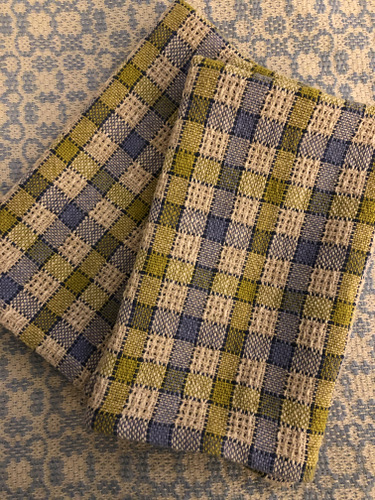
Here are two of a set of napkins that I wove for Chris and Melody. I barely had time to weave just the two and get them hemmed. I knew they’d understand, and of course they did. I was so touched by how much they like them.
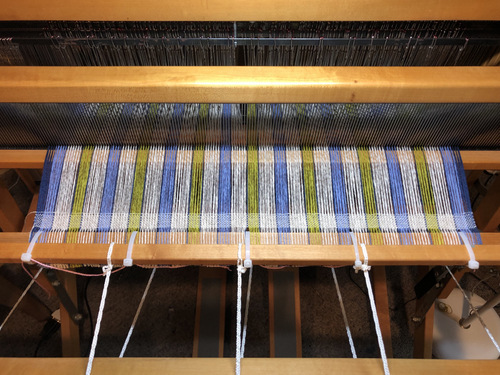
Before I left I stayed up late retying the loom so I could get back to it when I return in April.
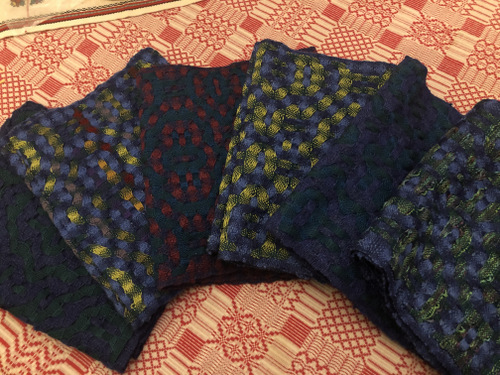
I had a long warp of deflected double weave on the loom for a good part of the year. Of course, when November rolled around I thought what great gifts cowls would be. There are six of them, in differing lengths. I gave five of them to friends and family. I loved seeing Melody wear hers, which is the one all the way to the right.
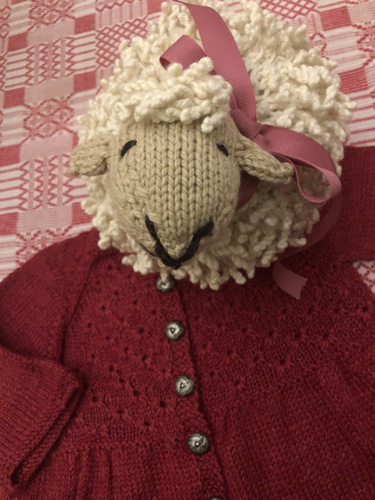
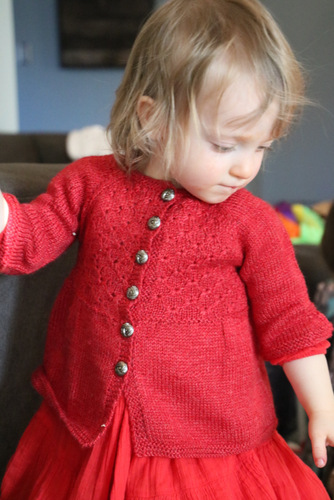
Lastly, there are the knitting projects: a sheep named Spud for our granddaughter Tori who just turned 3, and a tunic sweater for our 18 month old granddaughter Emme.
Emme is adorable in red, and I loved making this sweater pattern.
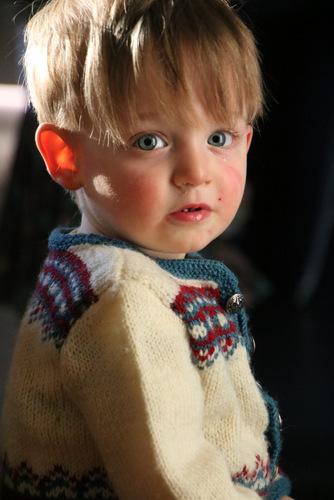
When we celebrated Christmas with our grandchildren and children I brought Rhett a sweater that I knitted for his father Rob, more than 30 years ago. You can imagine what this photo means to me.
So we are at the start of a new year and a new decade. Admitting to myself the importance of working with my hands every day, I hope this will be the start of some good things. Grief never leaves, but it can certainly be put to use for healing and celebrating the wonderful times and learning experiences that have come from those who meant so much to us. I know that sounds quite sentimental. It is what it is.
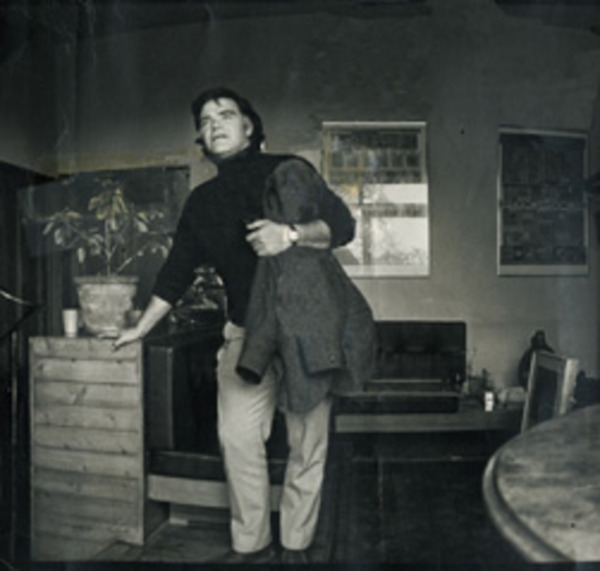
Loss in the Midst of Bounty

It’s a fact that we all march on with our lives, lurching or gliding, and then something stops us in our tracks. As John Lennon said, “Life is what happens when you’re busy making other plans.” Oh boy. So true. (Actually, I just googled that phrase, and it seems that it is attributed to someone named Allen Saunders who wrote an article for Readers’ Digest in 1957, with that phrase in it. There you go….the marvels of the internet. Most of us know this phrase from a wonderful John Lennon song, “Beautiful Boy.” If you’re interested, see this.)

I did not mean to digress. Nothing can match that feeling of hurtling along through life and having all your plans stopped cold by an event, a moment after which nothing can ever be the same. During the morning of November 1, only 10 days ago, I learned that Archie Brennan had passed away during the afternoon of the previous day–Hallowe’en. At that moment all my whirling and spinning stopped. I know that thousands of others, across every continent, felt that same shock. Dear Archie…. he meant so much to everyone he encountered.

Archie at Edinburgh College of Art

I imagine his many students and friends are in much the same position I’ve been in lately: struggling through current projects, delving into uncharted, creative ground, making progress and facing setbacks. The bounty of our work: I have too many projects going on at once, and I imagine you do too. Inspired chaos….well, hopefully inspired.

So what do we do with our grief? With our wonderful memories of classes and workshops with him? Meals shared–pizza and Chinese take out? With the memories of his humor, his gentle critiques of our tapestry work? Most of us who studied with him are not spring chickens ourselves at this point. What’s the best use of our own time left? There’s no one answer to any of these ponderings . But there are lots of possibilities for each of us to consider about our own creative output, whether in tapestry or some other art form, or in the way we interact with others. Everyone who encountered Archie certainly got a glimpse of how creatively Archie looked at the world. There was humor and a gentle social commentary in every piece that Archie chose to spend his time creating. He was endlessly fascinated with getting know the people who crossed his path, and he was generous, so generous with his knowledge. Those of us who weave are much indebted to what he taught us.

Someone once asked Archie what was the most difficult piece he had ever woven; he answered: the one on the loom right now. …and there it is, the very nature of everything we do. Each of our hurdles advances us some tiny bit forward for the next hurdle. Archie was part of our advancement, either in tapestry weaving or in looking at the world in a more creative and socially conscious way. The best we can do is take our hard-won knowledge and use it, over and over, and remember him often along our journey.

I am not a religious person, but it was poignant that Archie left this world during the hallowed evening, on the precipice of all saints. His patience and his humor always made me think he was a bit of a saint…. Farewell, dear teacher.

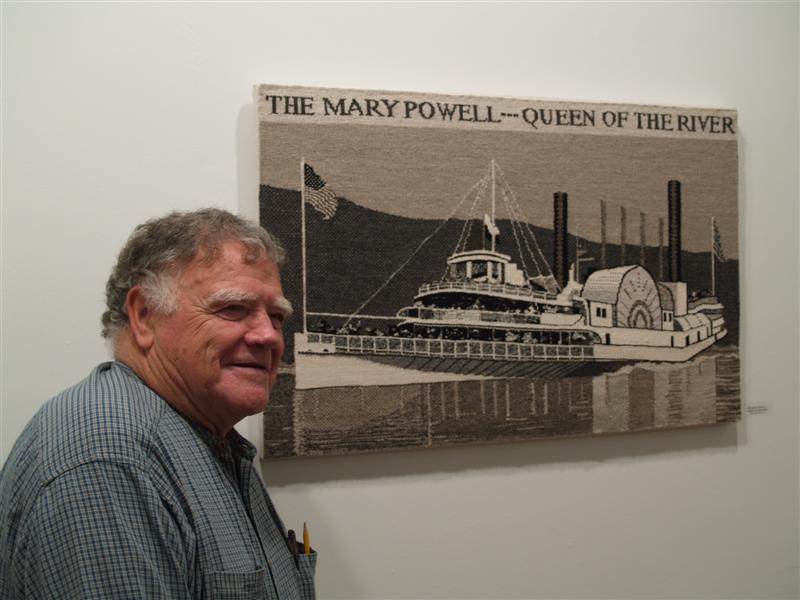
Archie and his tapestry “The Mary Powell,” at the opening of the Wednesday Group’s celebration of the quadricentennial of Henry Hudson’s exploration of the river that bears his name . Autumn, 2009

Haberdashery(ing) in Paris

It has been a month since Bob and I returned from France. We are hurtling through time, getting ready for our winter living onboard, and I am attempting to do something textile-y with every day I have left on land! So, in some ways it feels like our trip to France happened about 6 months ago! In other ways I feel like I’ve just returned.

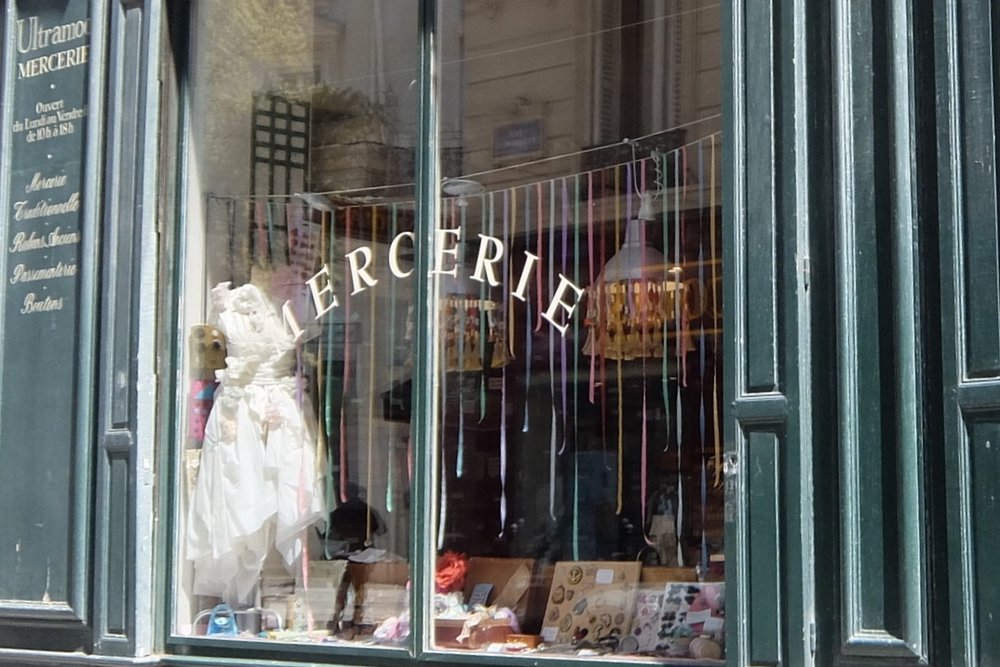
A friend of mine alerted me to the fact that Paris has wonderful shops for notions and fabrics. I had experienced a bit of that two years ago, when I found a fabric shop in Fort de France, Martinique. I couldn’t wait to see what a shop full of buttons, ribbons, and trims might offer–in Paris!

My friend had mentioned Ulta Mod, which has two shops on opposite sides of the street on Rue de Choiseul. It might be the oldest haberdashery in Paris since it opened in 1832.

Rebecca Devaney has some wonderful descriptions of the history of Ulta Mod as well as its current offerings in the newer store–and great photos! You really should take a look at all the great interior shots of the store on Devaney’s website. I think it vies with French boulangeries as a compelling reason to visit Paris! While I was there, a woman had her tweed coat spread out on a counter and was choosing new buttons. I thought the buttons that were already on the coat were quite nice! I don’t think I would have considered changing them, but then I am not French, let alone Parisienne. This woman, and the saleswoman waiting on her, clearly understood that the coat could be so much better with new buttons! How they got through the wall of buttons to make a choice was mind boggling.

I got lost in the section of trims. I was thinking of braiding as I looked through bins and bins of offerings. There had to be about a 100 color choices of just one type of cording that caught my eye. As often happens to me when there is too much choice, I couldn’t pick anything! My loss….

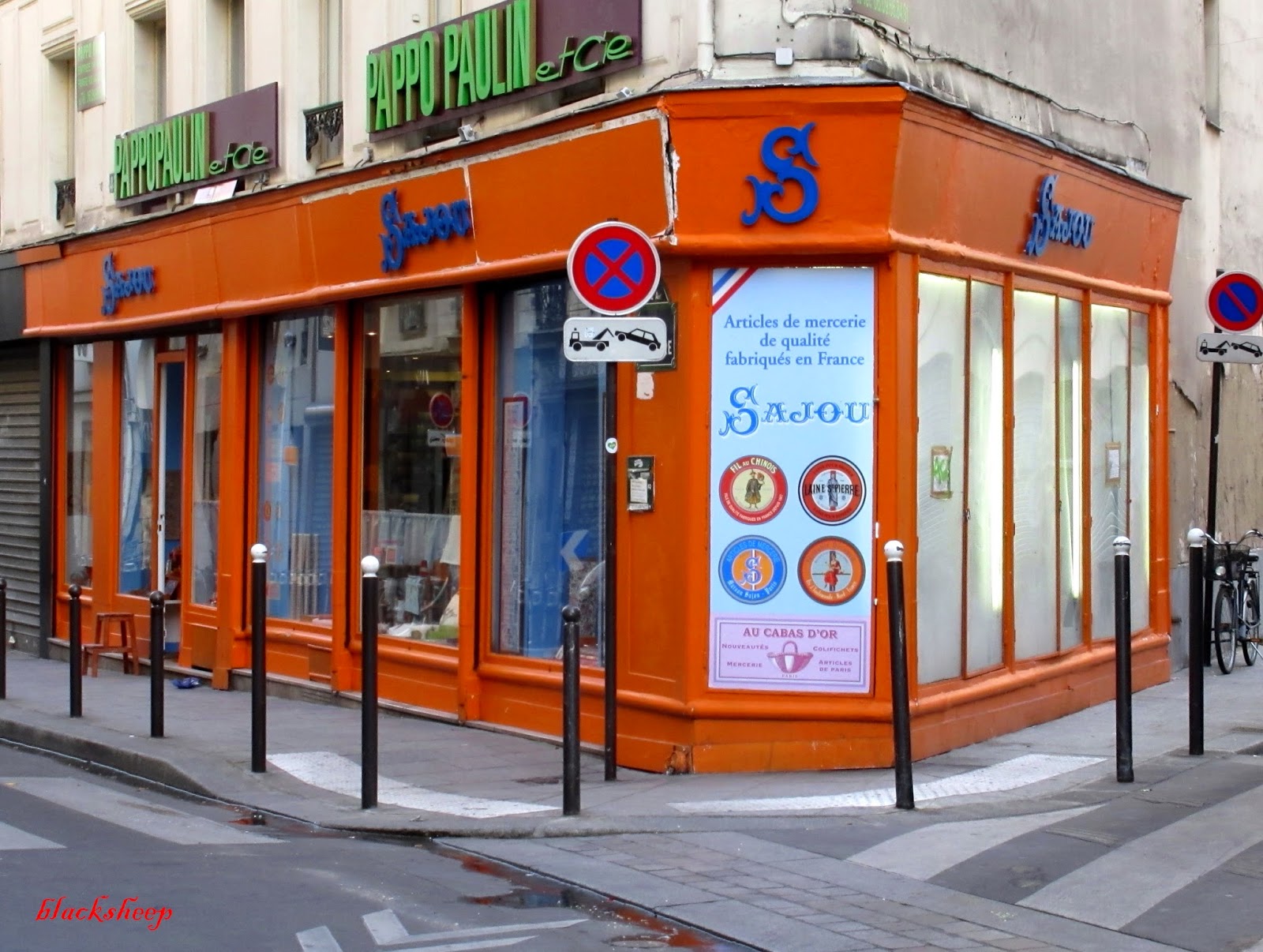
I had done a bit of internet searching ahead of time and wanted to visit Maison Sajou. Oh my! This is an embroidery shop where every project, every spool of thread, package of needles, and every fabric on display made my heart race. I don’t even do embroidery anymore, but I wanted everything in this shop! Actually, I wanted to live here.

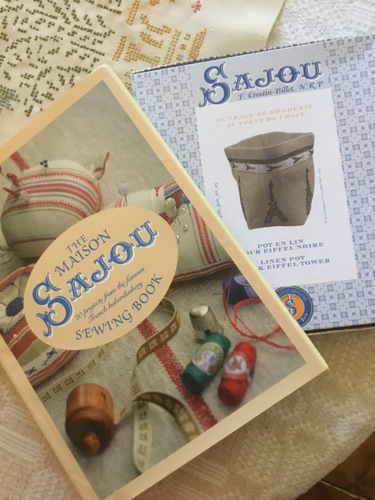
Now I plan to give embroidery another whirl. It’s certainly an easy thing to take onboard for the winter. After much deliberation, and after putting various spools of linen embroidery thread and some cute packages of embroidery needles in my cart, I added this project kit. Tres adorable!

I bought the book online before I ever even got to France! The cross stitch in the background was done by one of Bob’s great aunts as a gift to us back in the 70s.

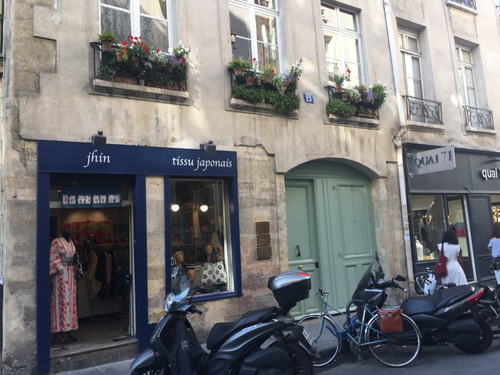
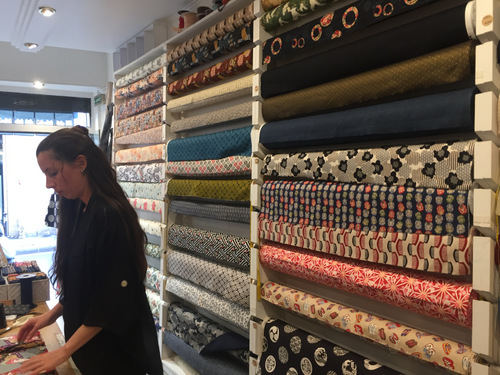
I think I missed a great opportunity to see some fabric shops in Paris. We were leaving the Cathedrale Montmartre, walking down a street of fabric shops, all closing for the day. I have no idea if this is the hotbed of French fabric shops since I didn’t get to check them. On another day, I went searching for a fabric shop I’d found online in the area where we were staying, the 11th arrondissement. I found a Japanese fabric shop called Jhin.

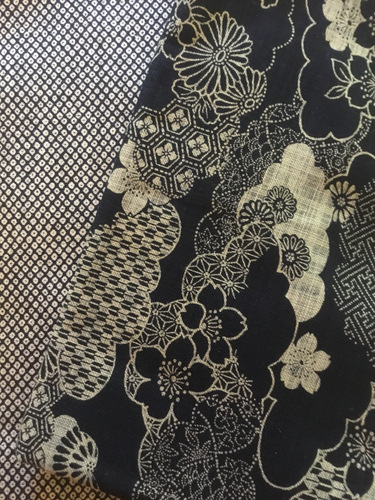
Of course I envisioned returning home with French fabric, perhaps outdoing the beautiful linen print I found in Martinique. But fate took me to Jhin and I came home with two beautiful Japanese prints for me, and another two for a friend. Serendipity can be so much fun!

Japanese fabric from my trip to France.

I’ve begun embroidering the cute little tote from Sajou. It’s a restful way to spend time–perfect for days in tropical harbors in the Caribbean. I’ll be there soon.

The Most Famous Tapestry

The most famous tapestry in the Western world is not, in fact a tapestry, but that does not diminish its incredible workmanship or its place in history. I’m referring to the Bayeux tapestry. A visit to Bayeux to see this work was high on my list of things must-dos while in France last month. (It was 2nd only to seeing the Lady and the Unicorn.) It remains in excellent condition after almost 1,000 years. I don’t think it’s ever been stored away in an old barn as many woven tapestries have been, so it is in remarkable condition. At the museum in Bayeux, where it is housed, you can walk along the length of this epic embroidered tale, and marvel. I marveled that the background was entirely handspun and handwoven. I marveled that all the embroidery threads were handspun and hand dyed. I thought about those nuns who sat together and wielded their needles one thousand years ago. In some fundamental ways we are so similar to those women. Nihil novi sub sol.

The museum in Bayeux has done such a clever job of displaying the tapestry that I never even missed the fact that I could not take photos. The “tapestry” is displayed in a dimly lit glass case that flows in a large circle in the center of a darkened gallery. Everyone is given headphones to listen to an audio description of the work and the story of the Norman Conquest of England in 1066. Like everyone else, I was compelled to keep up with the narrator so that I could see the bits of the story illustrated in the embroidered piece, as well as taking some time to enjoy the lovely colors of the dyed threads and examine the stitches.

The piece is 224 feet long. It tells the story of the Conquest, from King Edward’s death, through the envoy that went to France to alert William of Normandy that he was the chosen successor to Edward, to cousin (or some kind of relative) Harold usurping the English throne for himself, through William’s amassing troops and building ships to sail to England and claim his place. It’s intriguing to ‘read’ this story in the imagery of the embroidery. It’s hard to pick any part of the piece that stands out above the rest. The building of ships caught my eye, with all the details of cutting down trees and the depiction of the tools used for shaping the stem and the planks for the boats. I think this was part of the work that captured Bob’s attention.

The scenes of the ships sailing across the channel made me realize how much I’d enjoy weaving the various men onboard and the colorful sails. A few years ago, one of the Wednesday Groupers decided to weave a small section of the Bayeux tapestry as woven tapestry. I totally understand. I’m feeling pulled to weave those ships under sail. I hope the nuns enjoyed their creative interpretations as they stitched.

The battle scenes were equally well executed, and I found the depiction of horses in battle quite moving.

Standing in the presence of something so well preserved and so beautifully made is quite emotional. It’s impossible not to think of the women who made this piece, the men who commissioned it, the men who lived the story being told. It’s impossible to ignore the long projection of time that brought us to the 21st century, how our native tongue is now a mix of Norman French and Saxon and Old Norse, how our way governing spread through the world through England’s vast expansion of colonies. Here is one story, told at the beginning of this long history of evolution and progress of the English language and English justice, worked in embroidery by women.

A Short Tour of the Normandy Coast

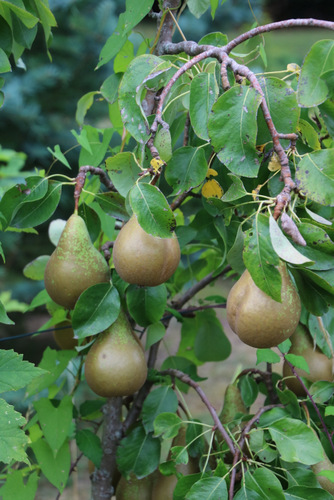
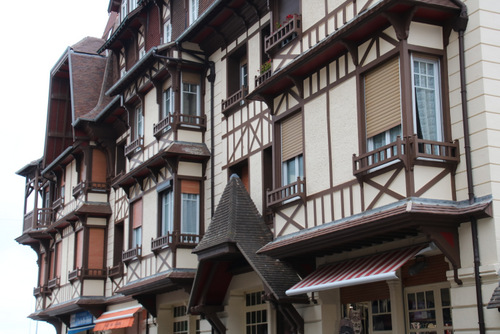
Normandy is a beautiful area of France, known for cheese, for apples and pears and Calvados, for damp foggy days along the shore.

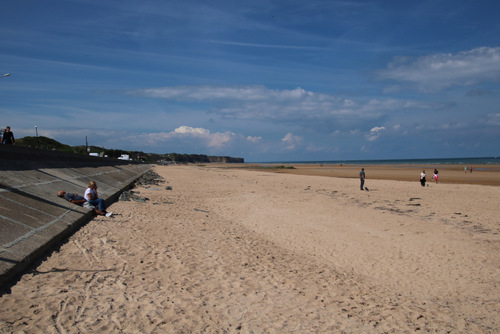
We were quite lucky to have clear, dry days while we were there. The beaches were stunning, but it was easy to imagine how difficult that D-day landing was over 75 years ago, on a far less beautiful day. That was another memorable part of our trip that lies outside the subject of my post. Still, after seeing the amount of work in the Bayeux tapestry, telling a 1,000 year old story, I couldn’t help but notice the similarities in the various battles fought along the same coastline, during the past 10 centuries.

Omaha Beach on a sunny September day
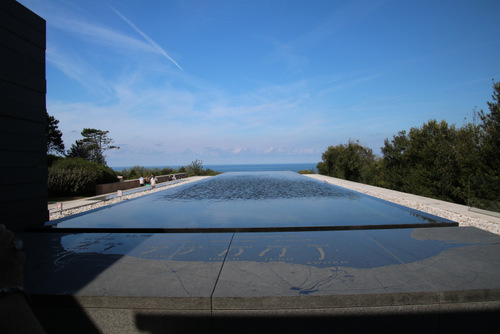
The infinity pool at Omaha Beach
The American Cemetery

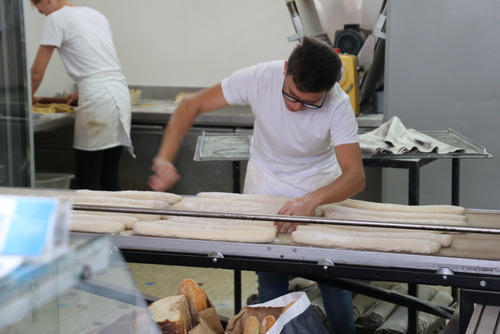
We ate cheese each day, and each day we sampled some apple cider and a few times some Calvados. My compulsion to make lists of must-sees/must-dos included having sole Normandie. I couldn’t wait to have the same meal that Julia Child had on her arrival in France so many years ago. I was shocked that I could not find it on any menu in Bayeux, Honfleur, or Etretat! That was another little disappointment, but the cheeses surely made up for not it…and the bread!

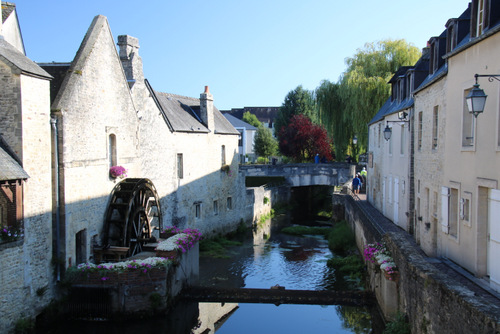
In spite of the fact that the coastal towns along the Normandy shore are famously scenic, I found Bayeux to be my favorite. It may have been the light. We were blessed with dry, clear days.

A stunning day in Bayeux

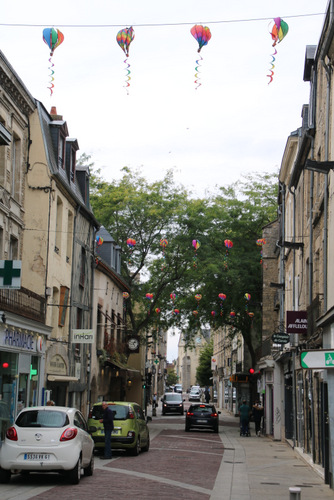
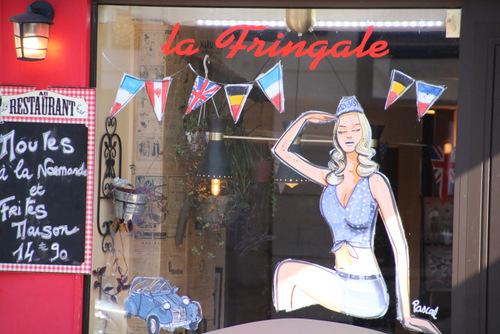
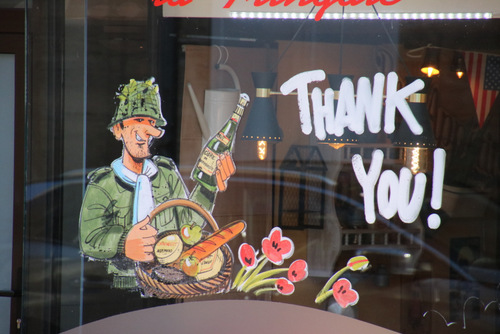
The streets of Bayeux are festooned with colorful balloon type decorations, and many shop windows have been painted with images and slogans of gratitude for saving French culture during WWII. There are French, British, Canadian and US flags everywhere, and even a few German flags.

Bayeux

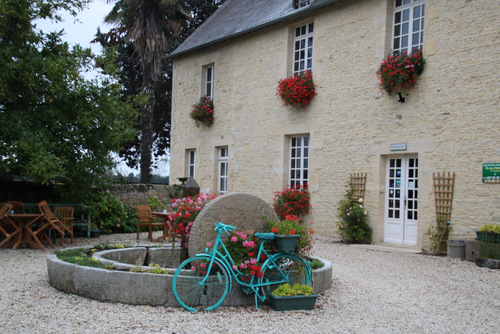
We stayed just outside Bayeux in a farmstay, and it was an excellent choice. This place is as charming as a fairy tale, and we walked along a country road at the edge of several farms and into a tiny nearby village.

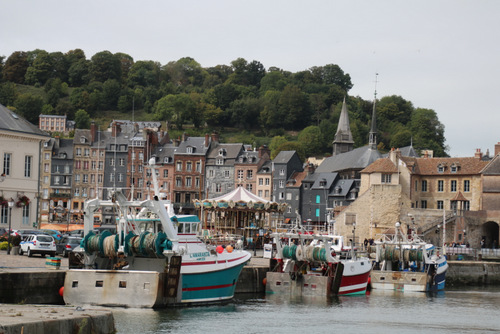
From Bayeux, we traveled north to Honfleur and Etretat. Honfleur is incredibly scenic as touristy, and Bob enjoyed a day of looking at boats. I think he took about 1,000 photos. For lunch we sat under one of those umbrellas to the left of this photo.

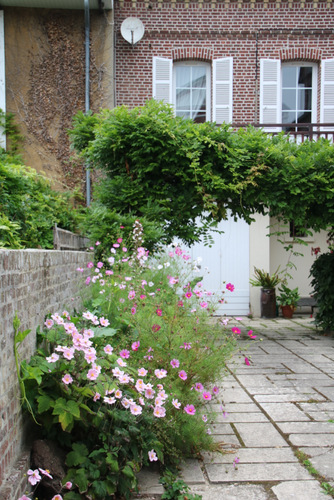
If I were to start writing about the gardens….well, it would be a deep rabbit hole. Gardens, window boxes, and florists were so lush everywhere we traveled. The roses I saw everywhere were as perfect as roses in June in New England. Can I limit myself to one photo? Maybe….just for this post.

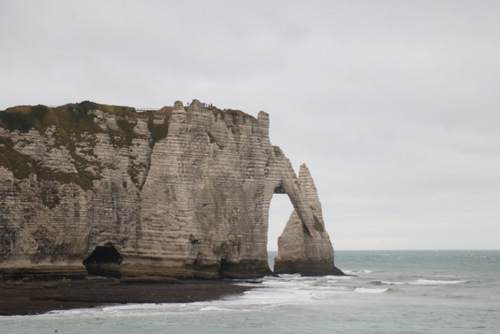
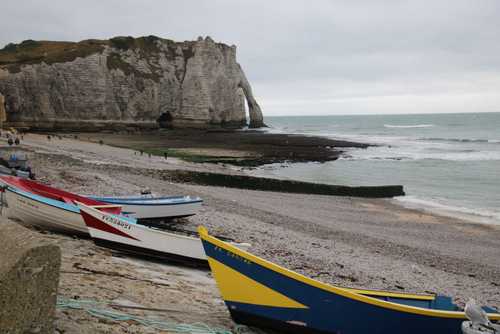
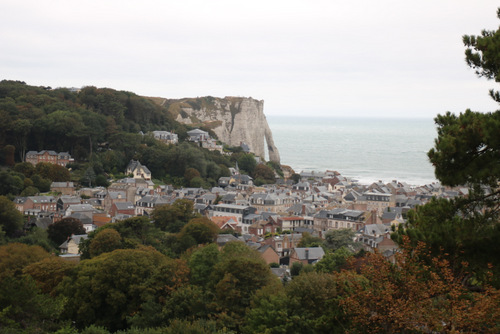
I hope I never forget the view of the shoreline in Etretat, seeing the very view that Monet painted on several occasions. It made me realize how fluid time is, that I could stand in the same spot that someone immortalized in art a century (or 10 centuries) before I stood in that very place.

Etretat

We could even see this memorable landmark from the tiny balcony of our room at one of the highest points in town.

We celebrated Melody’s birthday in Etretat and then began our journey back to Paris, stopping in Rouen and Giverny.

Happy Birthday, Melody!

I think I need a post about the bounty of French markets’ fresh vegetables and fruit, perhaps touching briefly on gardens which of course includes Giverny, and all the lace I saw throughout Normandy. Next time…

A Digression and a Rare Treat!

This has been an olympically busy week, and all of it was unexpected. We had an unplanned visit from Bob’s brother at the beginning of the week, which made my mother in law’s 90th birthday truly special. Boating friends have arrived via sailboat midweek, and we want to spend time with them. Bob is up to his chin provisioning our boat Pandora for his departure next week for points south, leading down to Antigua in the Caribbean. This is a giant hurdle for us each year, because all our clothing, all my textile projects, and all our food staples have to get onboard before Bob sets sail. We will not be able to ship any of these items, or take that much stuff on a plane!

And to top off a week of fun but unexpected pleasures (read hectic), I got an email about a presentation at Yale Art Gallery that I simply had to attend, no matter how much schedule rearranging it necessitated!

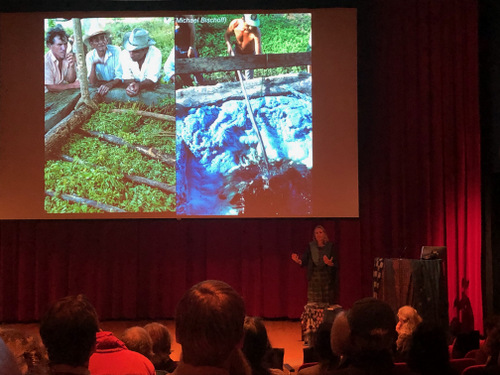
I expected to spend the next two blog posts sharing some textile-y experiences I enjoyed in France, but I need to interrupt that program to talk about last night’s presentation at Yale. The speaker was Jenny Balfour-Paul! I certainly was not going to miss a chance to meet this fascinating woman who has done so much research into the world cultures that have a long history of dyeing with indigo. Two years ago, my local weaving group read her most recent book Deeper than Indigo and then spent our September meeting discussing the book. Indigo is such a fascinating subject! How did anyone ever figure out how to extract that wonderful blue from the plant? It seems like alchemy, especially since the dye itself is not blue, and when you pull your yarn or fabric from the dye vat, it does not turn blue for several seconds. It starts yellow and goes deep green before finally turning blue. It’s quite a magical experience, and I can imagine how ancient cultures who had no knowledge of the chemistry involved, must have marveled at this mysterious process. The Indians and Japanese always prayed to their indigo god before beginning a dye session, and they always gave thanks to that god at the end.

Jenny Balfour Paul has been researching indigo for over 40 years. If I wrote about all I learned about her last night, this post would be far more than a little digression. She is a living treasure on the history of indigo, and she has traveled all the parts of the world where indigo dyeing was done in ancient times, and the parts of the world where indigo dyeing was big business during the colonial expansion era of the Western world. Recently, she’s been involved in projects for creating textiles with less impact on our fragile ecological system. She will be talking about that on Monday, next week, at the Explorers’ Club in Manhattan. You can read about the project here. Her first exploration, 40 years ago, was to the Middle East, where traditional dyeing techniques were fading into obscurity. She wanted to record those techniques in order to preserve them. Considering the language barrier between her and these remote tribes, she mostly gained knowledge of their dyeing process by watching them. This included seeing the plants grown in the fields, harvesting, and the complex process of turning plant into dye. After the Middle East and North Africa, her research has taken her to the Far East, to remote parts of China, to remote parts of both Africa and India, to the South America and the tropical islands where Western ventures into mass production of shippable dye stuffs took place during the colonial period. One of the most fascinating projects she’s working on is using indigo cakes that were recovered from a shipwreck in the Marquesa islands in the late 17th c. She let us all hold one of the indigo cakes, and it looked brand new, even after being submerged for centuries.

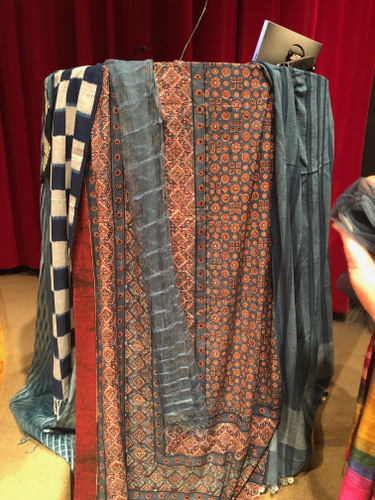
For her presentation last night, Jenny draped the podium in beautiful indigo fabrics

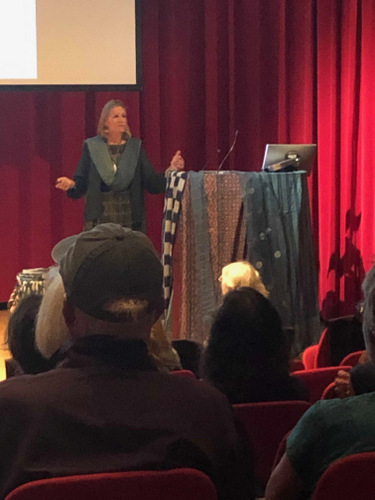
She wore a stunning outfit of indigo dyed fabrics. Her beautiful dress was dyed by her first teacher who set her on the path of researching the dyeing traditions of other cultures. The colors in my photo are quite ‘off’ due to the stage lighting. Her silk scarf is really a deep blue touched with subtle shades of green. Her beautifully printed dress fabric is what her teacher dyed. It has a lot of green in it, and also tan from where it was tied to create rows of resist. It is also patterned with tiny dots where her teacher used a wooden block with nails, dipped in wax, to add resist to the fabric (like batik) before dyeing.

I was thoroughly enchanted with Jenny Balfour Paul, both as a dedicated researcher and as someone who was refreshingly passionate about her subject. Her enthusiasm is contagious! When I spoke to her after the presentation I admitted my lack of confidence in dyeing, especially with indigo. I’ve had some successes, but only using someone else’s dyebath. I’ve been fortunate during my time in Connecticut to have other guild members share their indigo vats me. Last night Jenny gave me a bit more confidence to try again to make my own vat. She recommended the indigo kit from Maiwa. I’m on it!

And so goes a short digression. Like many things, this is going to send me down a deep rabbit hole. But I’m looking forward to gaining some confidence in dyeing with indigo. I wonder what Bob would think of that as a project onboard this winter. Hmmmm….

Scroll to Top