ArgoKnot

Author name: ozweaver

Sericulture in Connecticut and a Workshop with Sarah

That title is a mouthful.  Initially, I just liked the sound of “Sericulture in Connecticut,”  but I could not write about that when I’d also just spent a fabulous three days sewing with Sarah Fortin!  Some week!   I guess if all weeks were as educational and productive I’d be wiped out all the time. Who knew there was a silk industry in Connecticut?  I did not.  I certainly knew that China and other Asian countries have had  silk production since the dawn of time.  And I knew that by the Renaissance, European countries wanted to grow their own silk worms so they could stop buying costly silk from China that involved the long and treacherous journey on the silk roads.  Well, it turns out that the English wanted to see if silk could be successfully cultivated in the American colonies.  The experiment started in the area from Virginia to Georgia, around 1650.  This is the same period in which the English experimented growing indigo in the southern colonies as well.  A century later the southern colonies were focused on cotton and tobacco, and an experimental silk culture had started in Mansfield,  an area east of Hartford.  This was a cottage industry in which farmers were encouraged to plant black mulberry trees in their orchards, and their wives raised the silkworms and learned to reel the silk. The program was presented by Ann Galonska from the Mansfield Historical Society.  She has been researching the silk industry in this part of Connecticut for a number of years and she also decided to try her own hand at raising silk worms.  She was able to feed the caterpillars on the leaves from the few remaining black mulberry trees in the area.
1-IMG_1551

Interestingly, Ann told us that silk worms put on 80% of weight during the last week of their caterpillar cycle.  They go through so many mulberry leaves that she has to replenish the leaves multiple times a day.

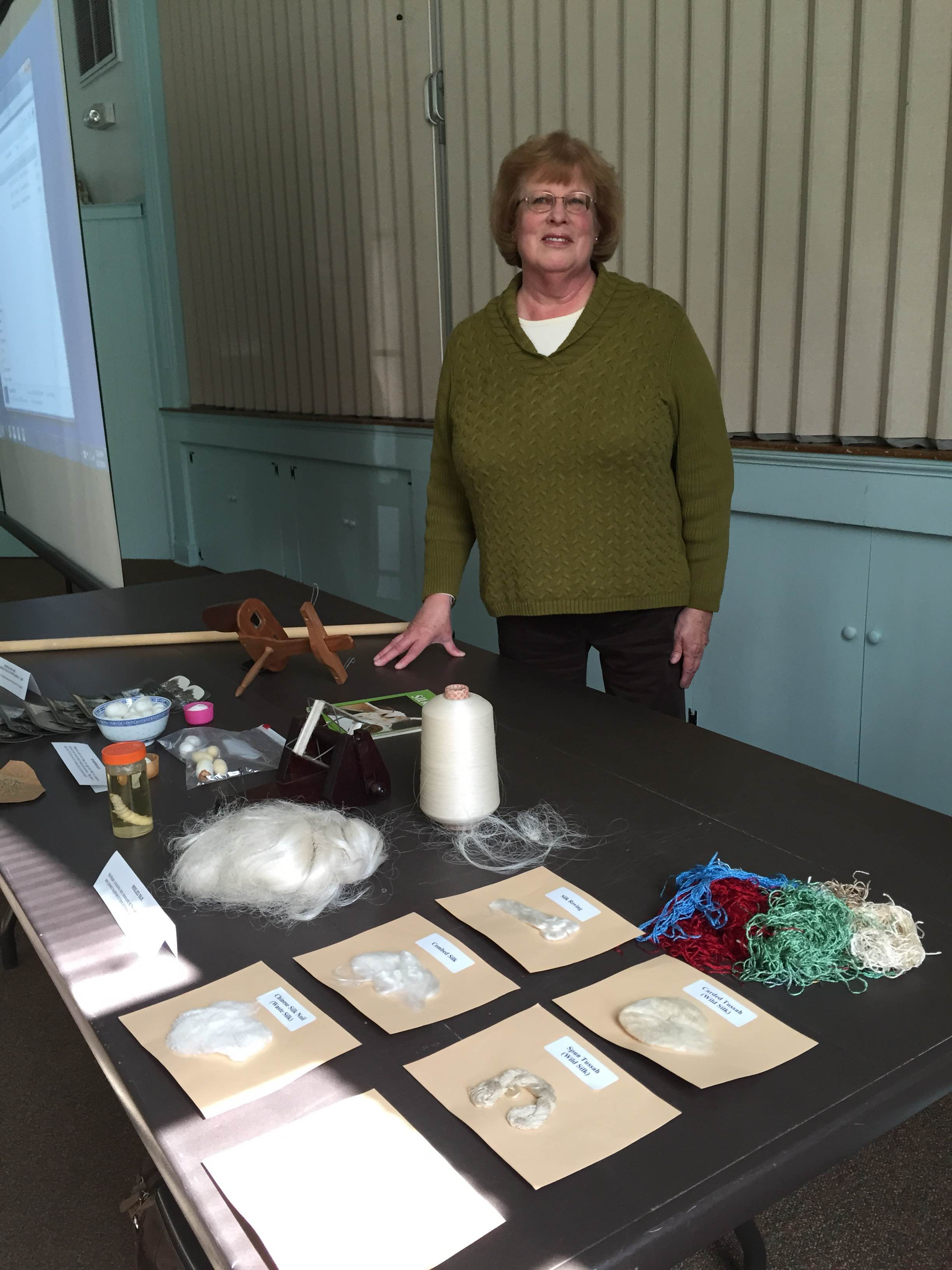
Ann brought silk cocoons, silk worm eggs, a silk worm preserved in a jar (formaldehyde?), and various samples of different silk preparations.  She showed slides of the various silk mills that cropped up in the area.  Hanks Silk Mill ws the first mill in the US, established in 1810.  As time went by more mills were established:  Chaffee Silk Mill and Mansfield Silk Company, until by 1869, there were eight mills in the area. She showed bills where farmer were paid for the silk they delivered, as well as ledgers of bartering with silk as payment for household goods.

She showed an adverstisement from 1834, urging farmers to buy mulberry trees to add to their orchards: 100 black mulberry trees for $3 – 5.  Hard to imagine, even given the cost of things back then.  By the end of that decade the same 100 trees cost $500.  And that is even harder to imagine!  Silk was a profitable industry in this area for a couple of decades, but the decline began when people started buying saplings of the white mulberry tree, which was known to be preferable to black mulberry.  Ann said these trees survived the first couple of winters in Connecticut which happened to be mild, but when a more typical New Engalnd winter ensued the white mulberries were not hardy enough to survive.  And most of the farmers had cut down their black mulberry trees in order to plant the white version.  While raising silk worms swiftly declined at this point, the mills hung on well into the 20th century using imported silk.  You can find more information, along with early  20th c. photos of some of the mills at the historical society’s website.  And there are tours of the mills at certain times of the year.  Now that would be a treat!

Much of last week I spent at a workshop with Sarah Fortin, learning to sew a garment from handwoven fabric.  This is far from my forte (ha ha!)–so far that I would say I am completely inept at making a flattering garment.  So to cut into precious handwoven fabric for a likely-to-fail attempt at making a jacket made me pretty uncertain about taking this workshop.  I brought a nice selection of commercial fabrcis to choose from:  a length of Harris Tweed, two lengths of wool melton, and a selection of other wool crepes and one chenille that I thought might work up as something interesting.   Somehow, in the tote bag of fabrics I also included a very precious length of wool fabric that Rabbit Goody wove, and that I bought from her as a remnant, about 20 years ago.  This piece of yardage was far more precious to me than any of my own handwoven fabric, and I cannot explain why I took it with me to the workshop!

Naturally, when I showed Sarah my fabric choices, I began listing all the reasons why I would not consider cutting into the Rabbit Goody fabric.  And naturally, Sarah listed all the reasons why I should.  In the long run, Sarah (with enthusiastic support from the rest of the workshoppers) won this debate.
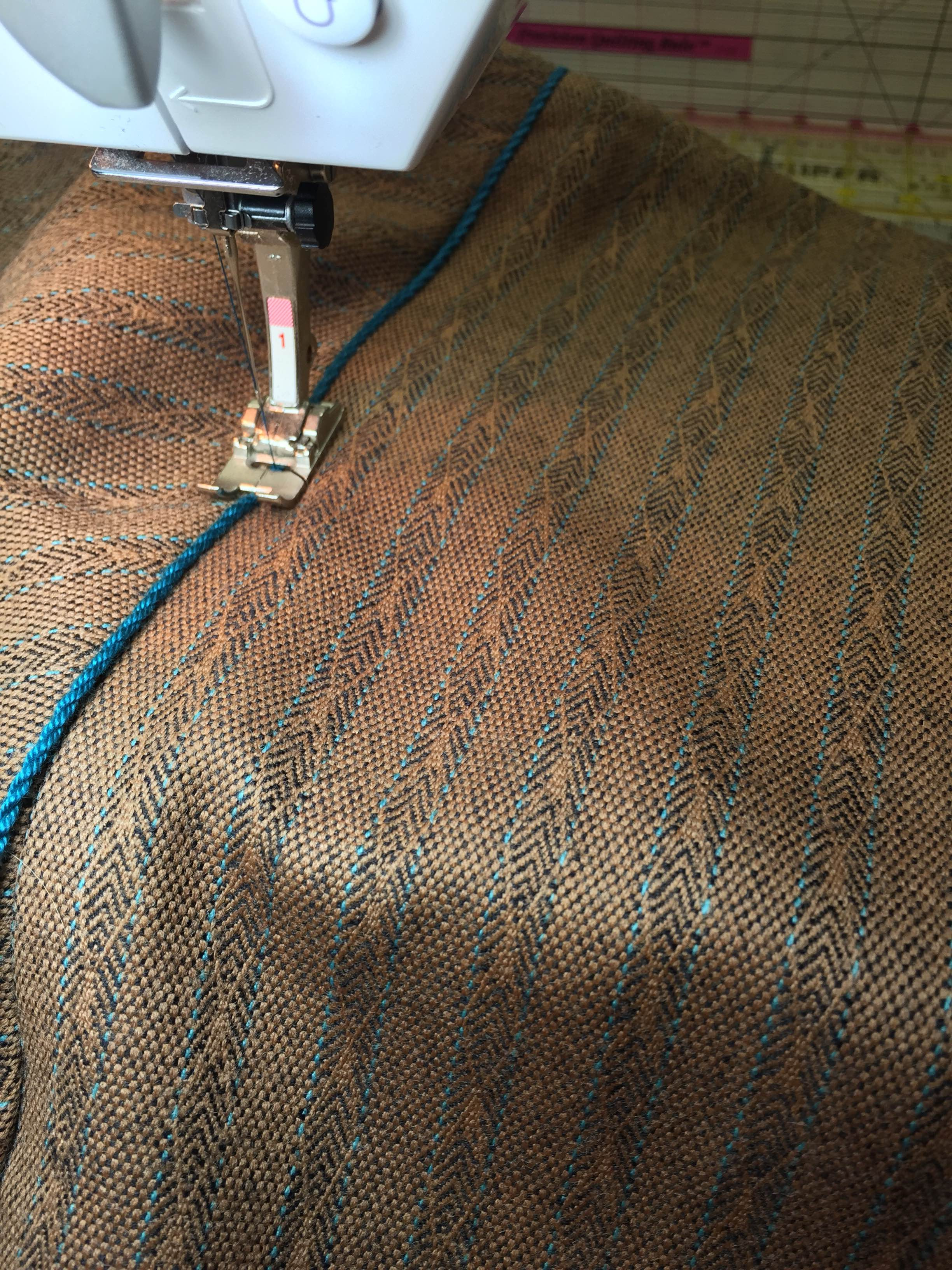
1-Sewing with Rabbit Goody fabric

I have to say it was not easy to cut into that beautiful fabric.  The sewing was enjoyable and ate up most of the workshop time.  When I reached the last seam in assembling the jacekt I suddenly got very anxious.  I knew it would be time to try it on.  It still had a lot work to do–all the embellisments I’d planned as well as all the finishing for the sleeves and the hem and attaching a front band.  But it was at this point, when all the pattern pieces were together, that I could try on the jacket, and I did not want to do it!  Sarah came with me to a more private area where the others could not watch, and I put it on.  I was very shocked to find that I loved it!  ….and that it fit so well.  Whew!  All credit for this  goes to Sarah, of course, for helping me size the pattern before cutting it out.  And of course she was right– better to enjoy this fabric as a garment– the very reason I bought it in the first place, rather than hiding it away in my stash.
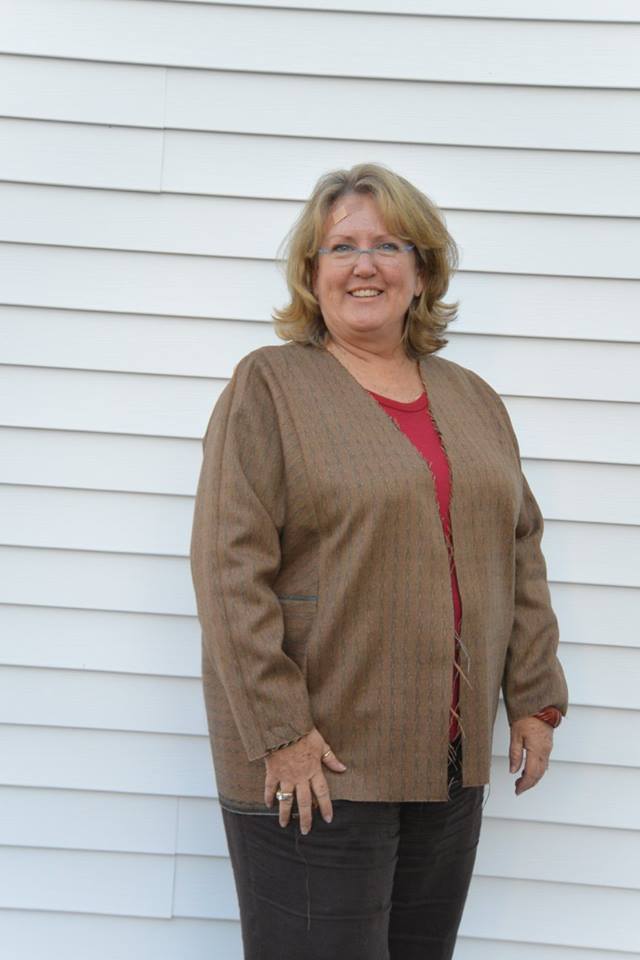
Sarah Fortin workshop me

Everyone made a successful jacket during our workshop.  Marjie, who is likely our most accomplished seamstress, finished her jacket first. The pattern she used is called the ‘swing’ jacket. Look how pleased both Marjie and Sarah are with the outcome!  The rest of us are are sighing over this and hoping ours will turn out as well!
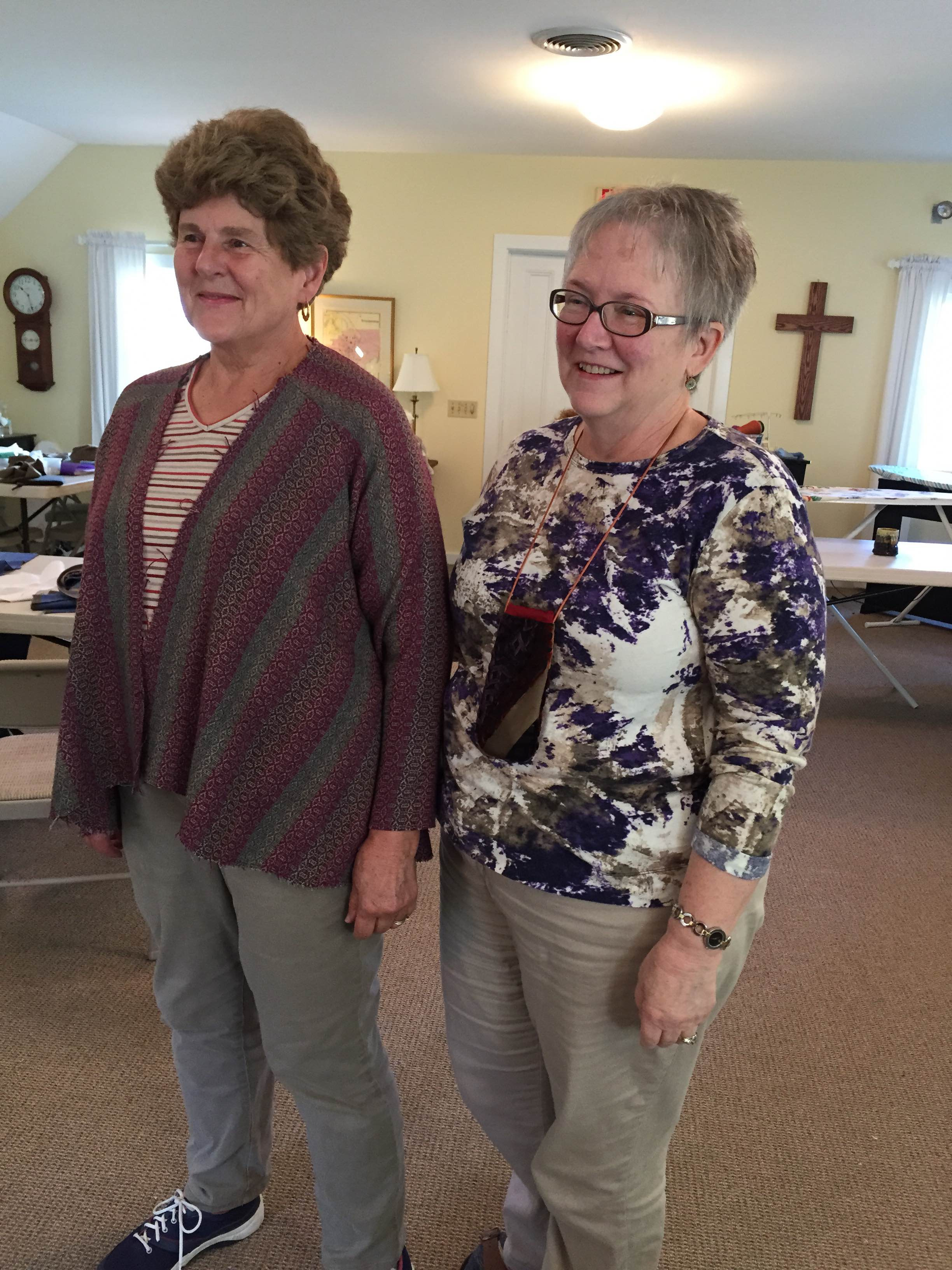
3-Sarah Fortin workshop

Last day of class, more people are approaching the finishing! This is Jody’s jacket, a wonderful fabric woven on a warp at Vavstuga. The coloris quite off–it’s actually a great mixture of two greens and brown.  Jody made the same pattern I did, called the “bias sleeve” jacket. I think Jody’s jacket is the most successful combination of weave structure and garment design.  It’s a beauty and it looks fabulous on her!

2-Sarah Fortin workshop Jody

One more finished swing jacket with terrific color placement!

4-Sarah Fortin workshop swing coatSome of us will be getting together again this week to continue to work on our finishing.  I’m now a bit confused about my sleeve finish and how to put on the front band.  I’m hoping some of the more experienced sewers (that would ALL of them!) can give me some pointers.  Also, Sarah has offered to answer any questions so I think I will email her.  I’d better get to it!

Weaving Vignettes

Over this summer I have stumbled on some wonderful weaving videos, everything from an historic reenactment of working with flax and wool in the Bronze Age to a number of videos showing tapestries in progress, to a Google video about high tech weaving with threads that have conductivity and can be attached to a very small computer chip imbedded in the cloth.  Huge thanks to everyone who makes these terrific videos–sharing their knowledge and their weaving talents and information on such fascintating endeavors with the rest of us.

Here’s the video about conductive threads that have been designed for use in weaving fabrics for clothing, upholstery, and other applications where the cloth will then be compatible with any computer device.

So now it might be fun to see the other end of the weaving spectrum:  Bronze age flax and wool processing and weaving in northern Europe during this time period.  The Center for Textile Research, which I believe is associated with a university in Denmark,  has documented this period of history so beautifully!

Here is a great stop action video of weaving one of  the “Hunt for the Unicorn” tapestries that were re-interpreted and woven by weavers from West Dean College in Sussex for Stirling Castle in Scotland. The original tapestries (from around 1500 which were woven in Flanders)  are hanging in the Cloisters in New York.  This project of recreating the seven tapestries in the series began in 2001, and was not finished until 2014.  The last tapestry in the set was hung at Stirling Castle this summer, 2015.  The weavers made a number of trips to the Cloisters to study the originals.  I met a few of them on one of their trips, and it is something I’ll never forget!

Isn’t it wonderful to watch the unicorn’s horn get woven?  On that note, I’d better get back to weaving myself!

The Sublime to the …well, NOT

On the right hand side of this blog page I keep a list of the exhibitions where my tapestries have been shown.  Yesterday was the opening of a show in a venue I’ve never participated in before.  The focus was all kinds of fiber work, and when I dropped my pieces off for the jurying I was quite intrigued with a number of pieces already there.  There were quilts of course, and different kinds of felting from felted landscapes to nuno felted vests and jackets.  There was a beautiful double weave scarf displayed on an acrylic rod in a deep black frame that enhanced the glowing colors of the fabric.  There were a set of free form coiled baskets made from linen and coiled with waxed linen.  There was a bit of knitting and a bit of handmade paper forms.  It was the most diverse exhibition I’ve ever been part of, and I was looking forward to meeting some of the artists who made these works at the opening.

I do not have any photos from the opening because I was too shocked to actually think of taking any.  Perhaps they just accepted too many items into this show…. some walls were beautifully displayed and others had too many things jammed together.  So the crowded walls had things displayed salon style, and the sense of the whole was just a mish-mash because the pieces had nothing to tie them together…..in fairness maybe color, not technique, and not with a sense of cohesion.  It was just painful to look at.  I couldn’t help thinking that the pieces that were well displayed were the pieces that were valued by the judges–the award winning pieces.  But this was not the case.  Some of the beautifully arranged walls had no awarded pieces on them at all.

Bob took two photos of my works at the opening.  “Hudson River Idyll” got an honorable mention.  It was hung quite high above a quilted piece , and our two pieces are quite jarring together.  I’m trying to put a happy face on it!

IMG_1506

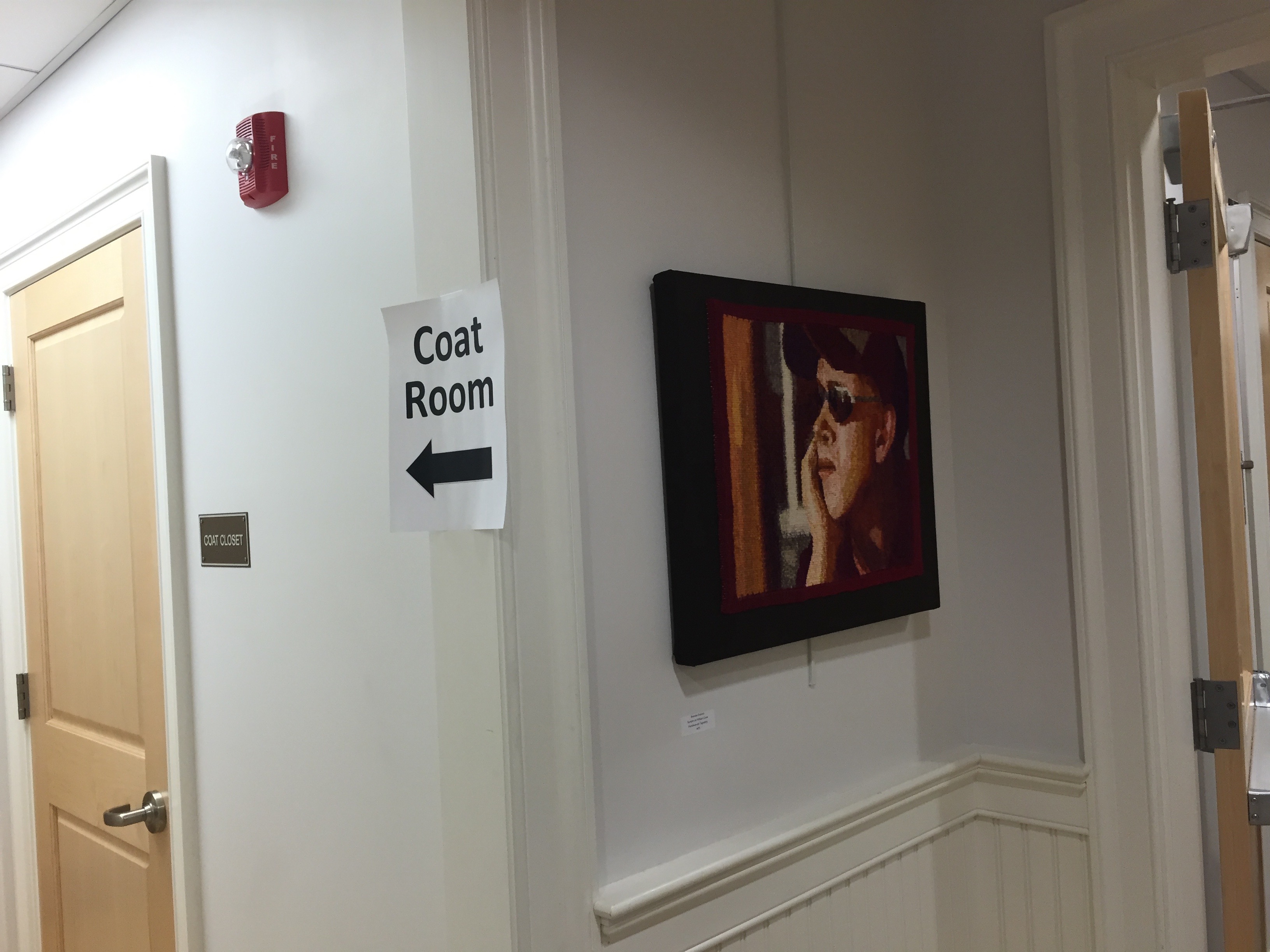
And “Sunset on Wilson Cove” was hung in a place that was not even part of the show.  There were three gallery rooms and a long hallway that had works on display.  Then the very back of the long hallway was separated with some architectural molding and this is where  there was the coat room, the bathrooms, and an exit to the stairway that leads to the lower level.  THAT is where “Sunset on Wilson Cover” was hanging–the only piece that is not in the actually gallery area.  Frankly, I think it should have been rejected from the show entirely rather than put it in such a disrespected location.  I was quite embarrassed by this….  and I don’t understand it.

IMG_1509

The walls that were carefully chosen were stunning.  The walls that were over-filled just made everyone’s work look bad…..even cheap.  And having one piece of work off in a different place entirely was just mind boggling to me.  There comes a point when accepting more pieces into a show than the space can handle just deters from seeing anything well.  The other shocking thing is that some pieces still had stickers on them–stuck right to works themselves, not on the sides or backs–with the entry numbers written on them.  Luckily I can say the volunteers who checked me in at the drop off put stickers on the stretched fabric of my frames, not directly on my tapestries.  But the pieces hanging on the walls for the opening had stickers stuck right to the pieces themselves.

On the other hand, I did meet some of the very interesting artists!  I was happy to see that some works were made by men.  The most interesting person at the opening –to me– was a felt artist.  She had done a wonderful nuno felted jacket as well as a hand felted mandala (for which she also got an honorable mention–and I have to say it–there was a sticker on this piece) and she had made a large quilted wall hanging.  She happened to be wearing the most interesting top of all the interesting garments that fiber artists can dream up to wear to openings, and by the end of the opening I just had to approach her and ask about her garment.  She had made it herself, from a commercial pattern to which she added some handpainted designs and a very funky set of closures to the assymetrical line of the front opening.  I wish I had asked to photograph her…..but the upside is that I have her contact information and she has offered to help me learn fitting techniques so I can possibly have better success at sewing!  So, all in all I enjoyed meeting the other artists as the highlight of the event.

There is one other positive feature about this gallery that I should mention.  The windows are very tall and they have been covered with balck venetian blinds.  For this exhibit the blinds are closed, keeping the textiles from too much UV exposure over the next few weeks.  Of course the halogen spotlights are screamers, but the the gallery is only open from Thursdays to Sundays in the afternoons each week, so not full time.

Looking back at my admittedly narrow experience in showing fiber works in public spaces, I’ve been quite fortunate to be part of exhibitions in large spaces that allowed such very different techniques to be seen to good advantage.  I guess it takes a bad experience to better appreciate the good ones.  Meanwhile, for the next month my tapestry of the sunset on my son’s face can greet people as they retrieve their coats and visit the ladies’ or the men’s….. (snark)…

Mute

It’s quite hard for me to believe that I have not written a post in more than six weeks now.  I have been working like a woman with her hair on fire….and that usually goes hand in hand with having a LOT to say–or write.  For some reason I’ve been strangely mute.

Finally I have turned my attention to a project that has been lingering on my big Toika loom for several years.  I managed to move that loom with the warp on it when we relocated here in Connecticut, and I’ve managed to play with it for short bursts over the past few years while we’ve lived here.  Suddenly I want it off the loom and on the wall!  That’s always a good motivation!

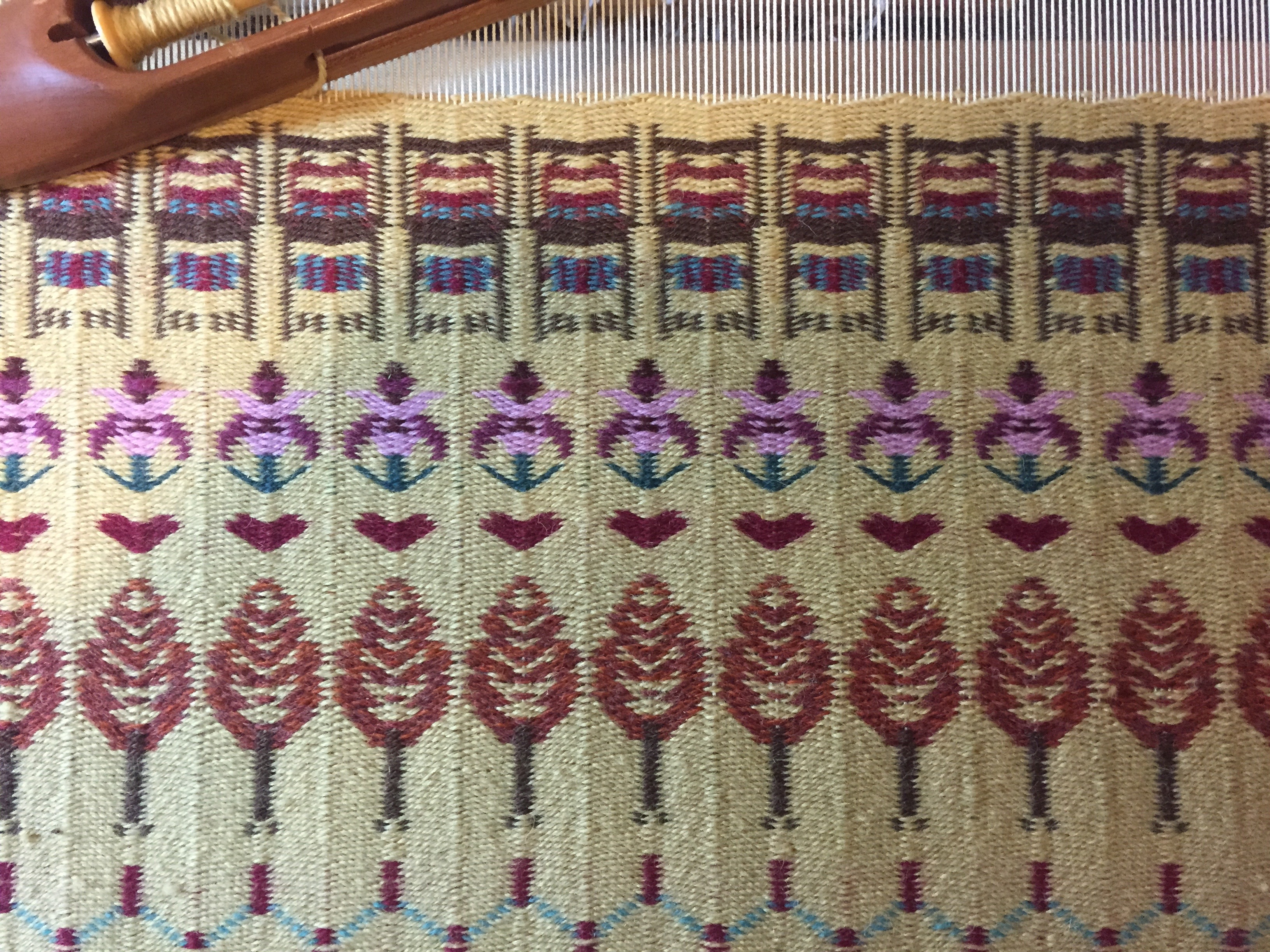
I’m chronicling the 40+ years that Bob and I have known each other.  The piece starts with a row of autumn trees to represent our first outing together: a walk in the woods, in the nature preserve called Devil’s Den in Weston–back in 1972!  What do you think of my boundweave loom?  I can’t take credit for drawing that gem.  It is Karen in the Woods’ design which she posted on Weavolution.  I learned to weave in 1976.

IMG_1474

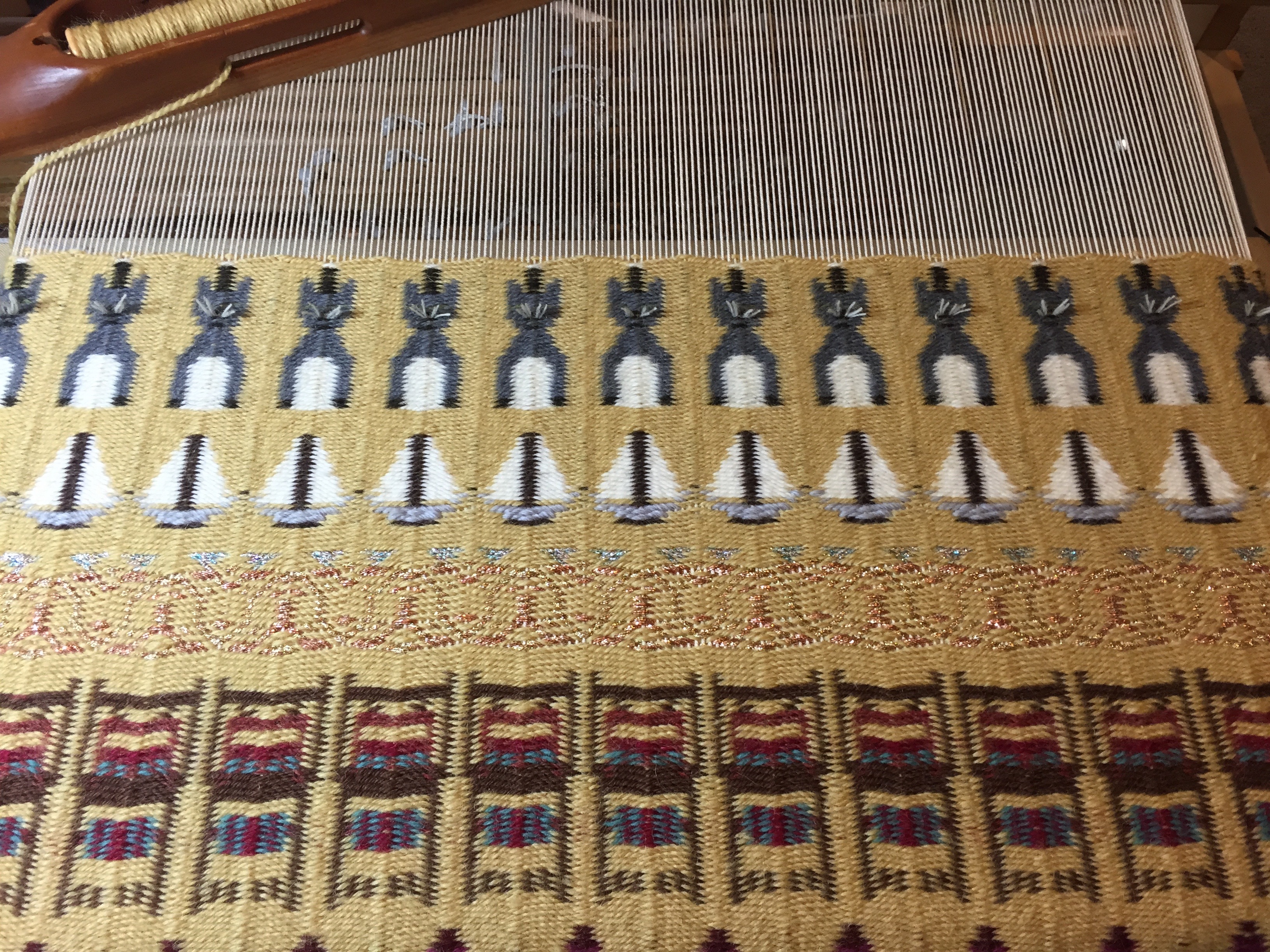
The past couple of days I’ve worked on wedding rings, sailboats and kitties.–wish you could see their green eyes.  I’m now in the early 80s.

IMG_1503

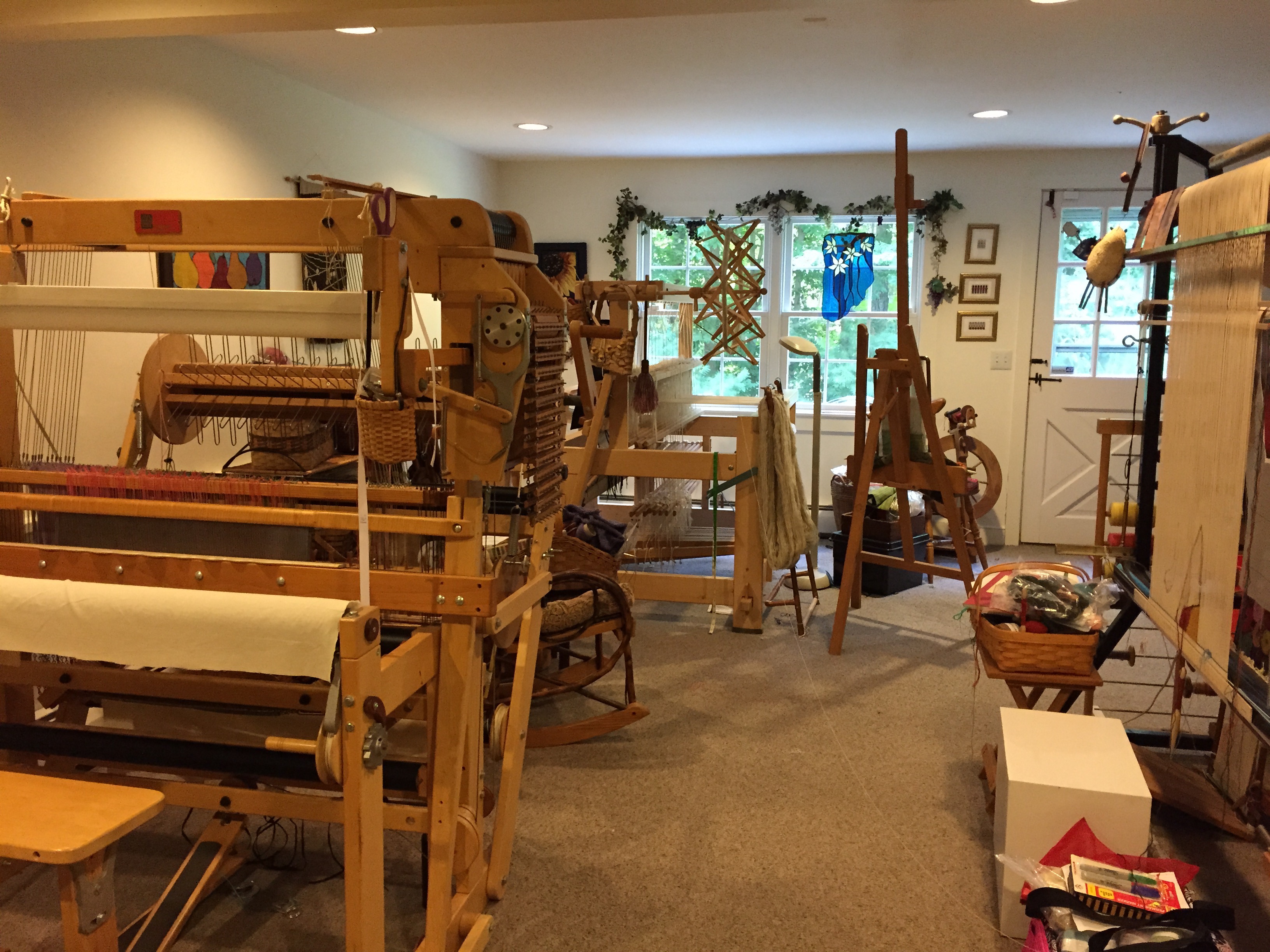
When I settled down to weave this project I could not concentrate until I completely picked up and reorganized my studio.  There was way too much clutter everywhere I looked.  Now that I’m in the thick of boundweave my studio has become messier than it was when I couldn’t stand it any longer.  Funny how that happens.  Now I cringe a bit when I enter the room, but I really had to pull out all that yarn out for picking the colors and the softness I need for my little boundweave figures.

IMG_1426

It was a beautiful summer although, aside from the linen tote bag, I did not knuckle down to any floor loom weaving until August.  There was SO much I wanted to do–I won’t bore you with the list….

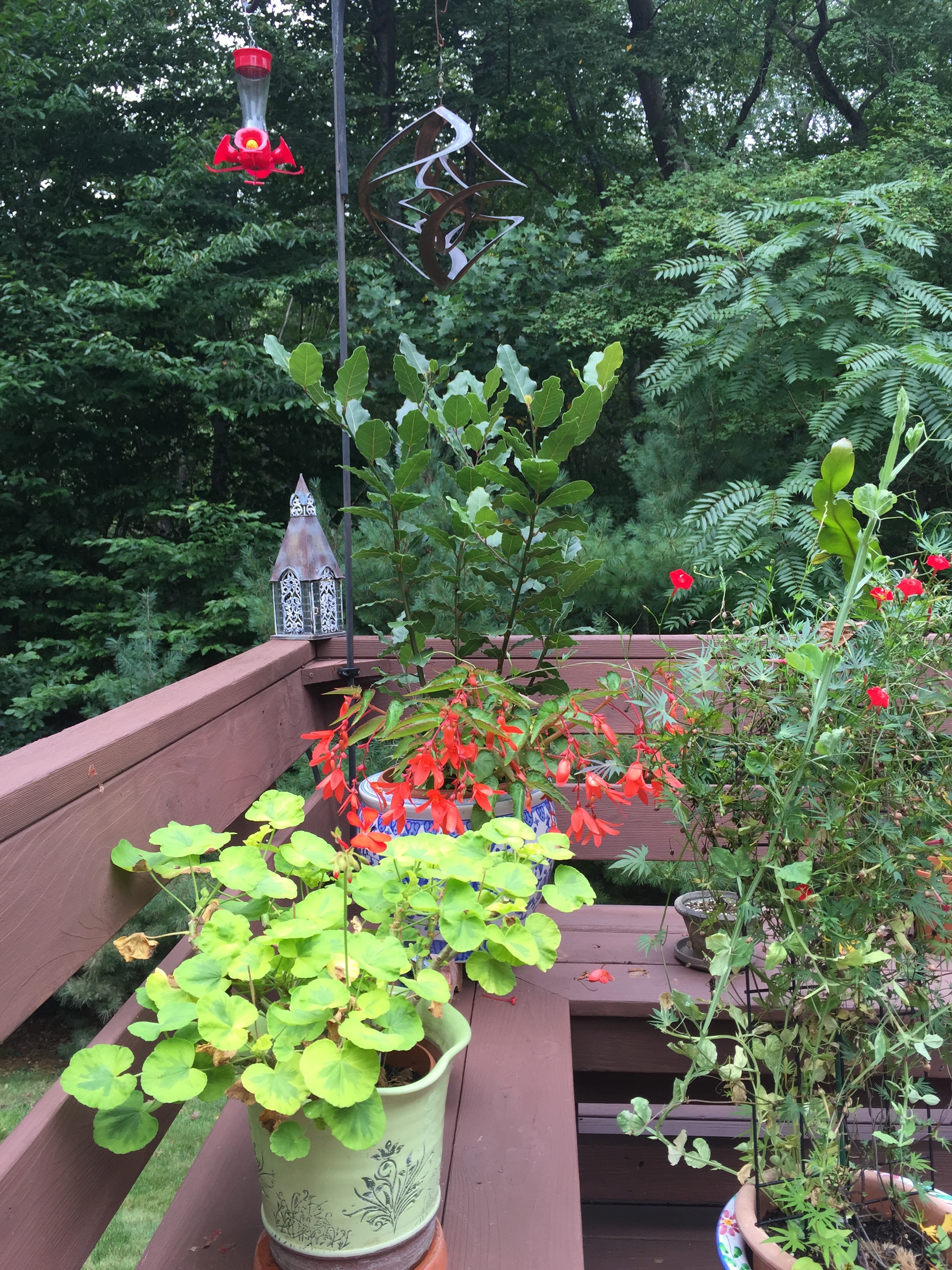
We had more hummingbirds than we’ve had in previous years.  One of the females would sit on top of the iron plant hanger and chase away all other birds who came to feed.  I grow lots of red flowers on the deck to keep everyone happy.  The hummingbirds were constant companions for us.

IMG_1422

IMG_1490

In September I was invited to give a presentation on tapestry weaving to the Rhode Island weavers’ guild.  There are several women in that guild who are also in the CT guild so I already knew a few members.  They are a dynamic group who do some amazing work.  You can find articles that various members have written in back issues of Handwoven.  There are some well known weavers in Rhode Island:  Antonia Kormos, Norma Smayda, Jan Doyle…. I could certainly learn more from any one of them than I could possibly teach them!

For the presentation I collected images from all the tapestry weavers whose work inspires me.  I was impressed how willingly each of these weavers shared their photos with me so I could share them with the RI guild.  Such beautiful work!–Joan Baxter, Tommye Scanlin, Jon Eric Riis,  members of the Wednesday Group, of course!–along with Archie and Susan.

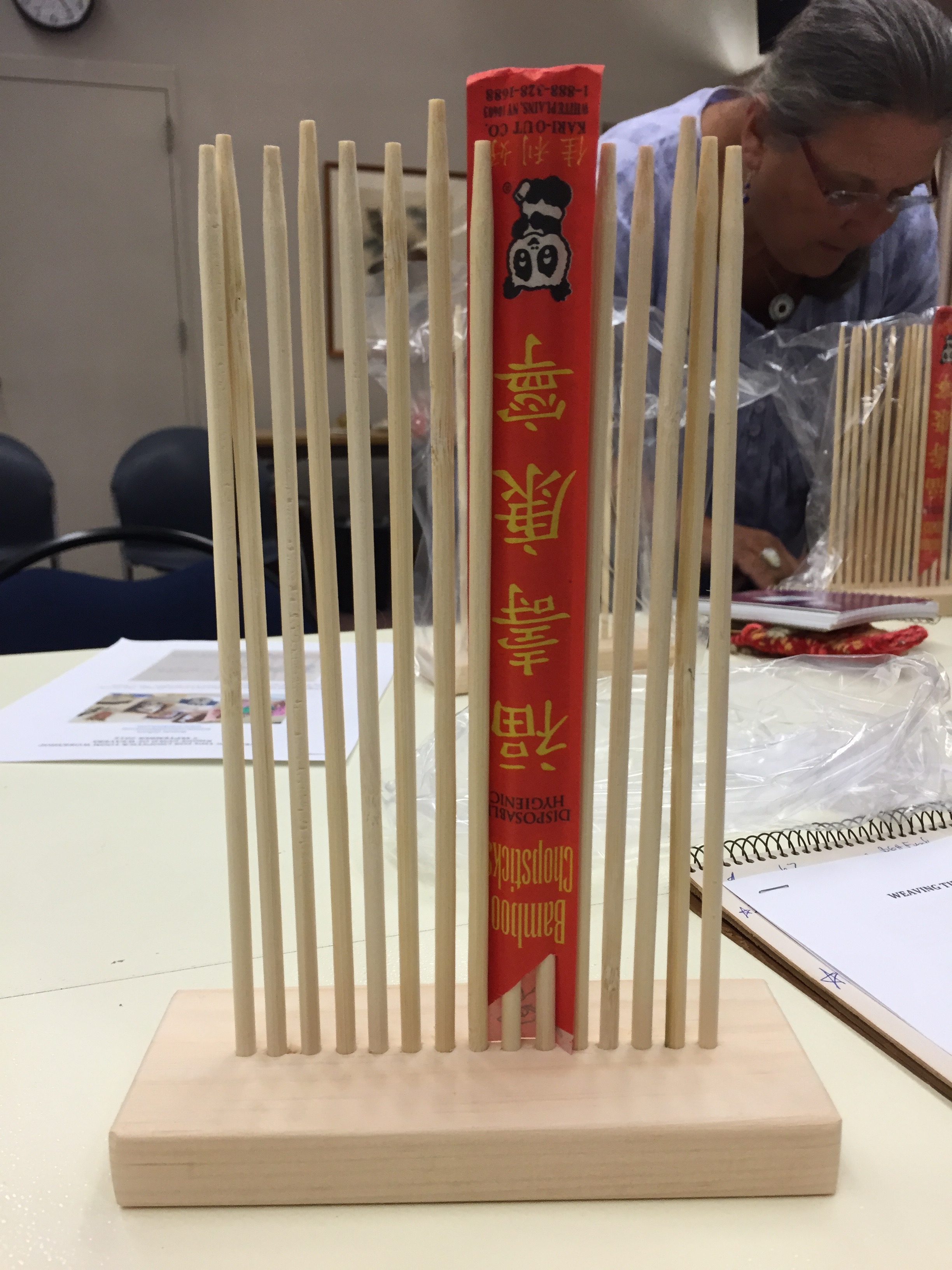
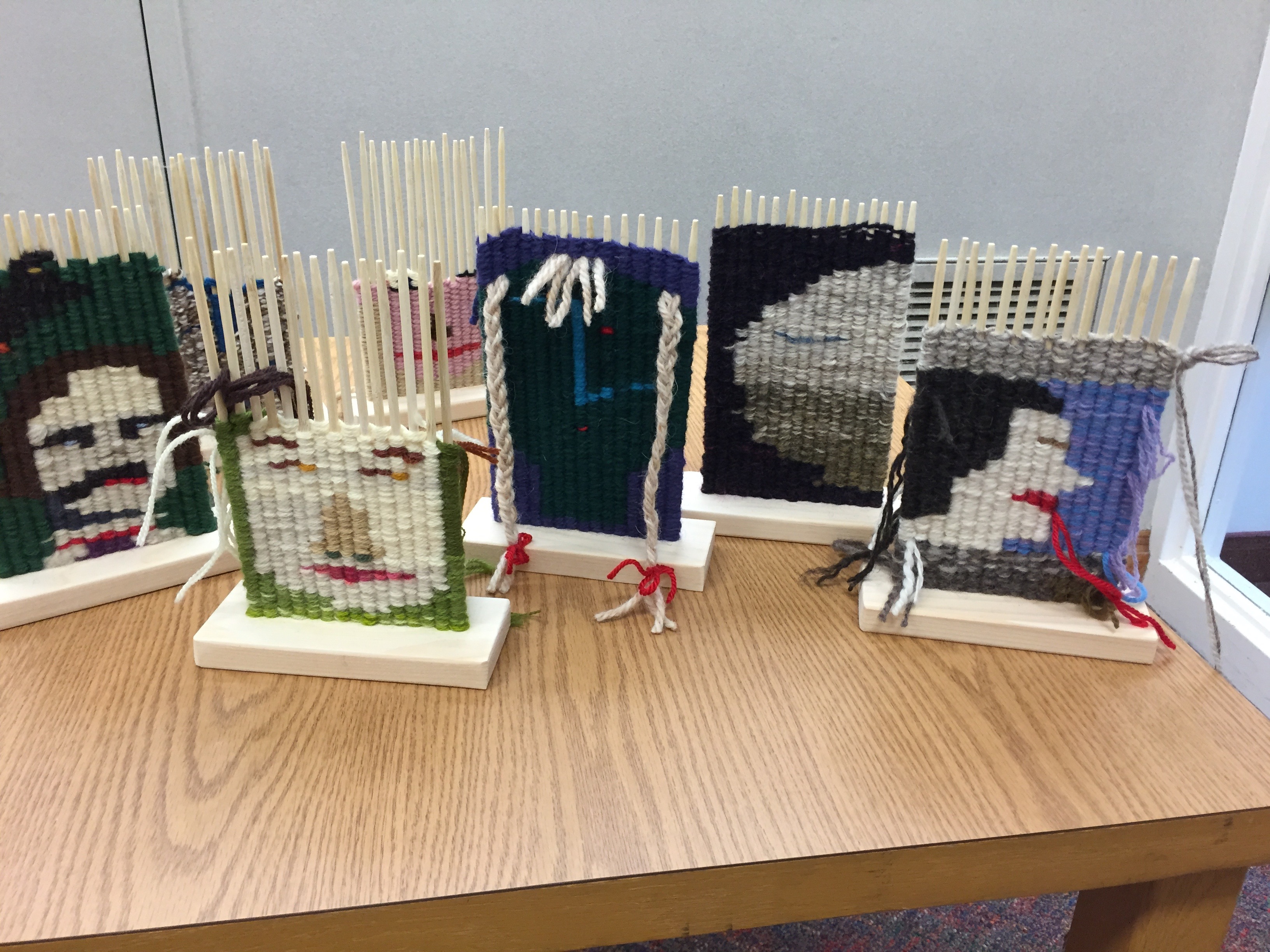
And in the afternoon an adventurous group of guild members tried their hands at weaving on chopstick looms.  Sally’s husband made the looms, and he did such a stellar job that it made all our Wednesday Group looms look pathetic!  I’m not going to give out Henry’s last name or he might be inundated with requests for these beauties!

IMG_1391

Here are some of the portraits, all well woven!

IMG_1397

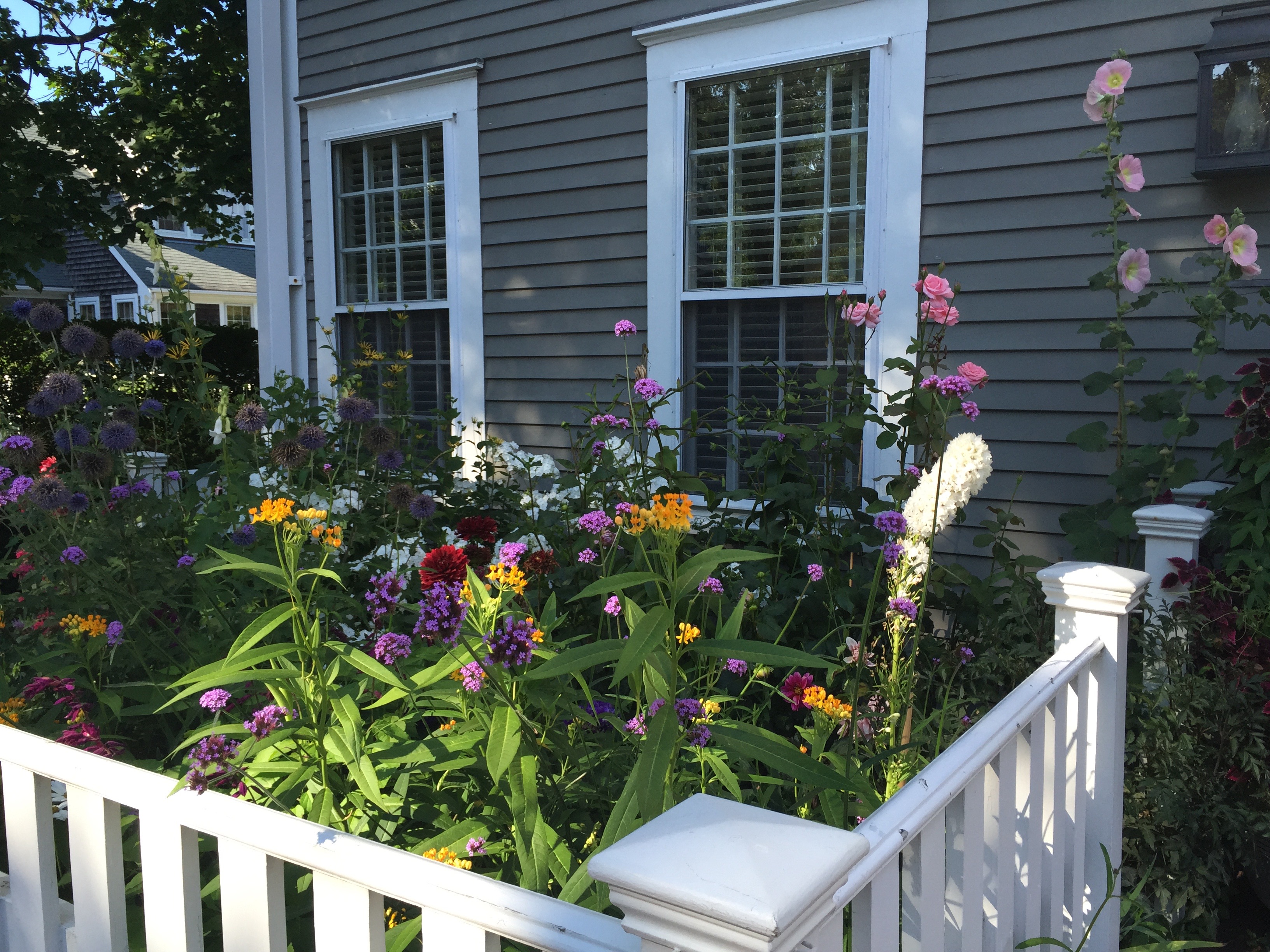
In August, after the wedding,  Bob and I spent a week sailing on our new Pandora, all the way to Nantucket and back during the most mild and beautiful week of the summer.  I’ve got a new stash of window box and front door photos from all the pretty houses there.

IMG_1310

IMG_1353

Maybe I’ll post more of these another time, as a ‘postcards from summer’ type entry. I can’t help myself when it comes to gardens, and there were a lot of wonderful gardens on Nantucket….and I visited the oldest house on the island for the first time.

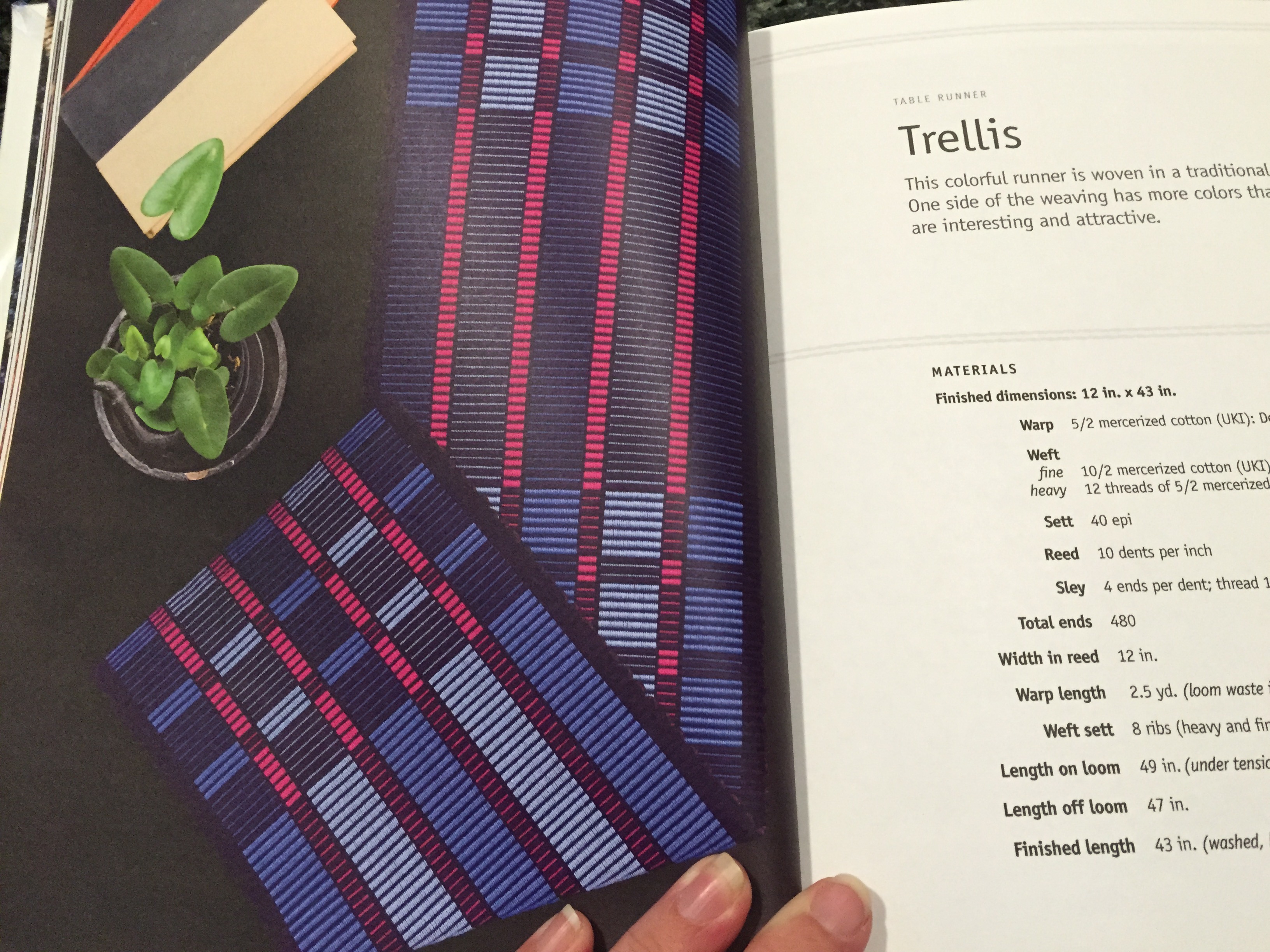
I’ve got warp ideas filling my head, and hope to get at least two of them on looms before we leave for the winter.  Lucienne Coifman is in my guild and has just published an intriguing book on Rep weave.  I bought it after also borrowing it from my guild library.

IMG_1505

 This is the project that is calling me!  I think it would make wonderful placemats and runners (in a different colorwary) for my son and his wife’s new dining room.  Naturally, I don’t have any 5/2 cotton which is the weight I’d like to try for a rep project.  So it looks like a big order is looming….ha ha!  I hope I can get it all together before I leave.  I know from experience that it is a wonderful thing to come home to a loom just waiting for me to sit down and weave!


Past Wedding, Full Forward on Inspiration!

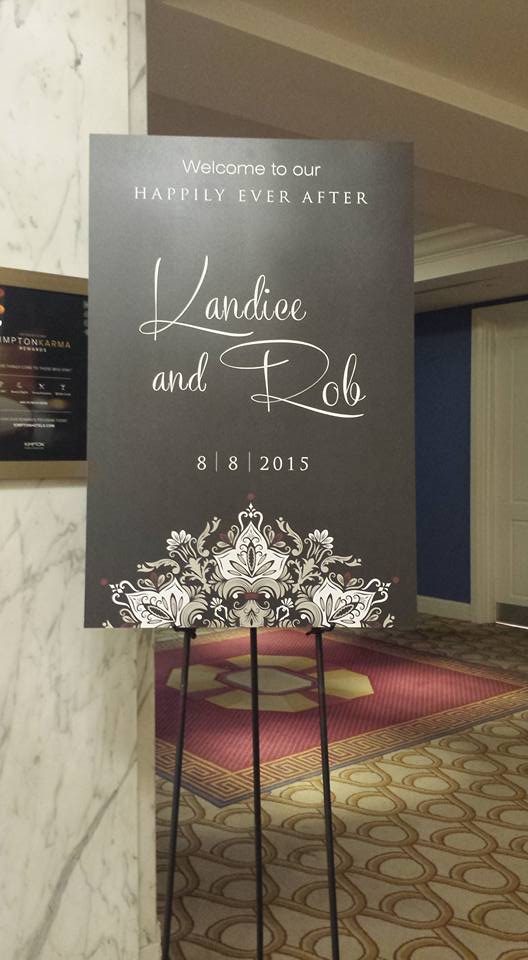
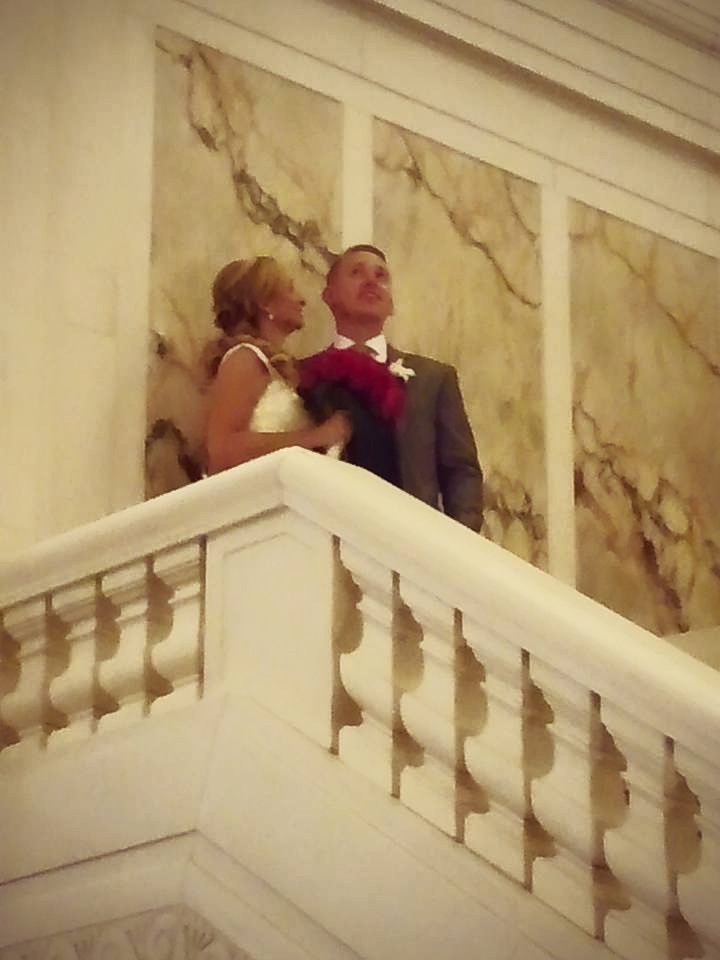
First a moment of shamless personal happiness:  our older son was married over the weekend in Baltimore.  It was a glorious event!  I enjoyed every detail of it starting with our private time with the almost newly weds when we arrived on Wednesday evening last week, right through to the after-wedding-Sunday-brunch.  It was a small wedding, but the honored guests came from as far as San Francisco and Denver and Florida, to as close as right down the street.  It was a congregation of close knit friends and relatives.  It couldn’t have been better!

rob and kandice wedding begins

 We invited our very oldest friends–two couples we’ve known since long before either Rob or Chris were born–Chris and Pat and LeaAnn and Garrett– and a dear friend, Craig, who has been more than an uncle to our boys….and my sister Sheryl and her family–Carl, Madison and Chloe.  It was perfect!

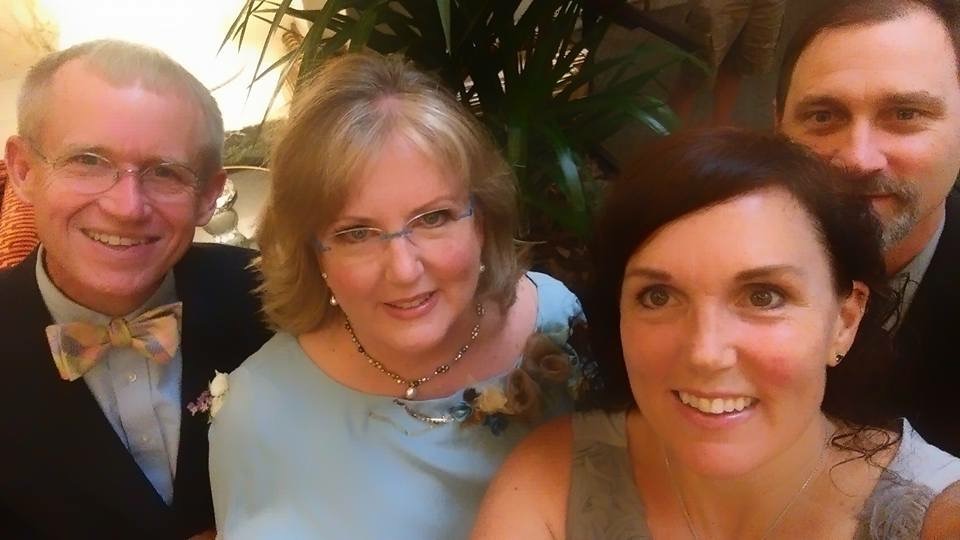
Elevator selfies are certainly the rage now!

IMG_1282 The wedding party was large for so small a wedding– 6 bride’s maids, 6 groom’s men,
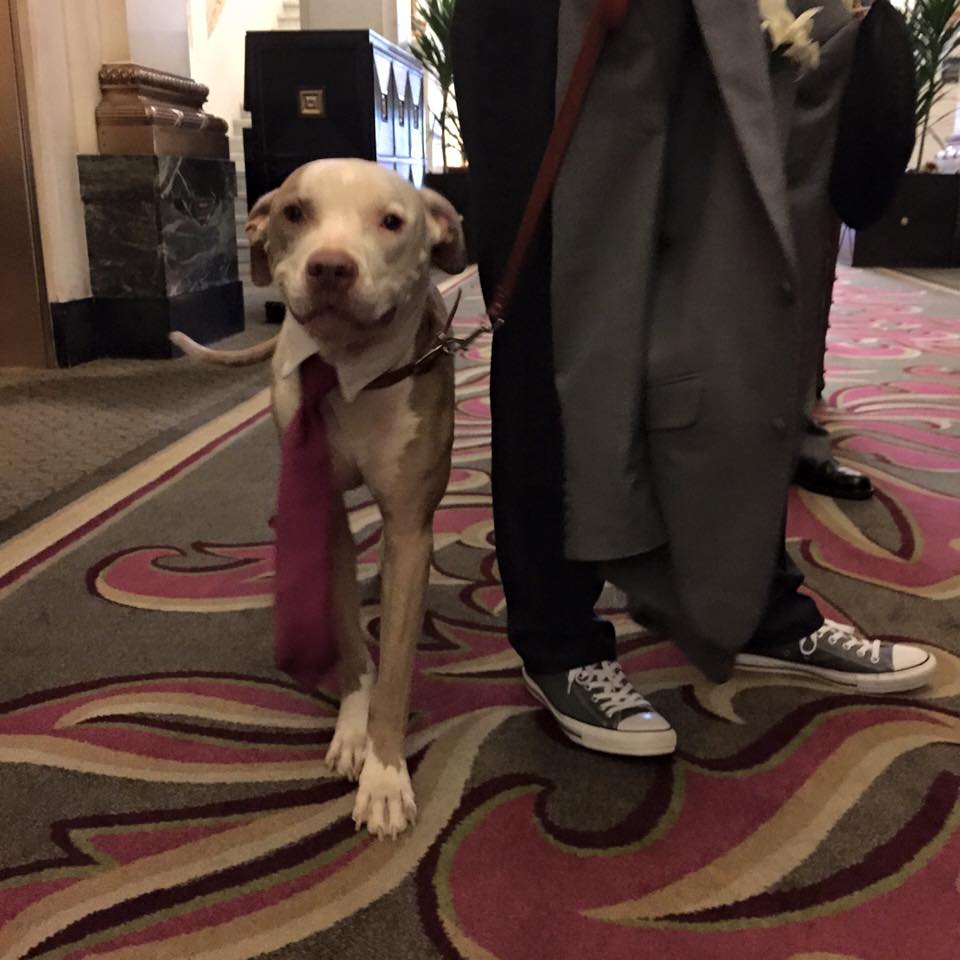
1 groom’s dog, 3 flower girls, and 2 ringbearers.  The groom’s dog may have stolen the show.  After walking down the aisle with the groom, he then gave the groom a ‘high-5’ moments before the bridesmaids entered.

rob and Kandice wedding Bosun procession

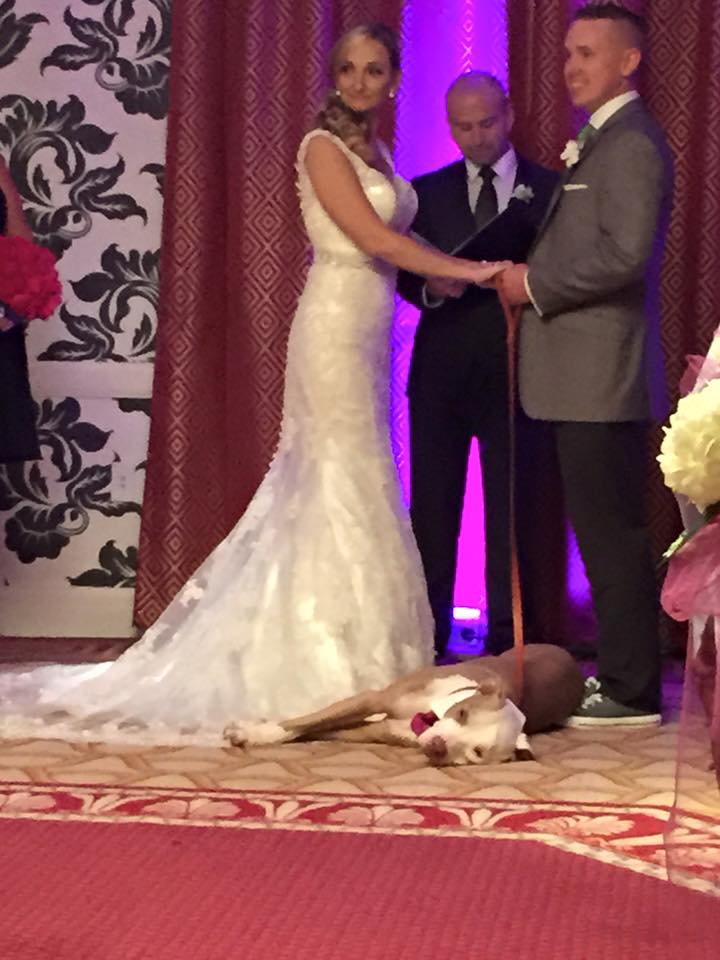
 He lay down peacefully between the bride and groom when the vows began.

Rob and Kandice wedding vows with Bosun

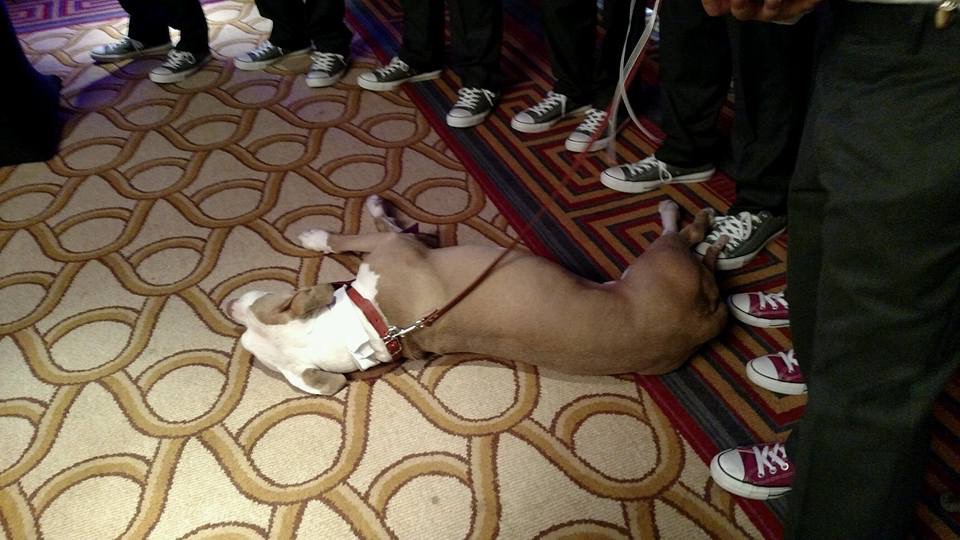
When he began to make nesting movements with the bride’s beautiful wedding dress, he made no fuss at being moved in front of the groomsmen. Just look at all those Chuck Taylors!

Bosun and groomsmen

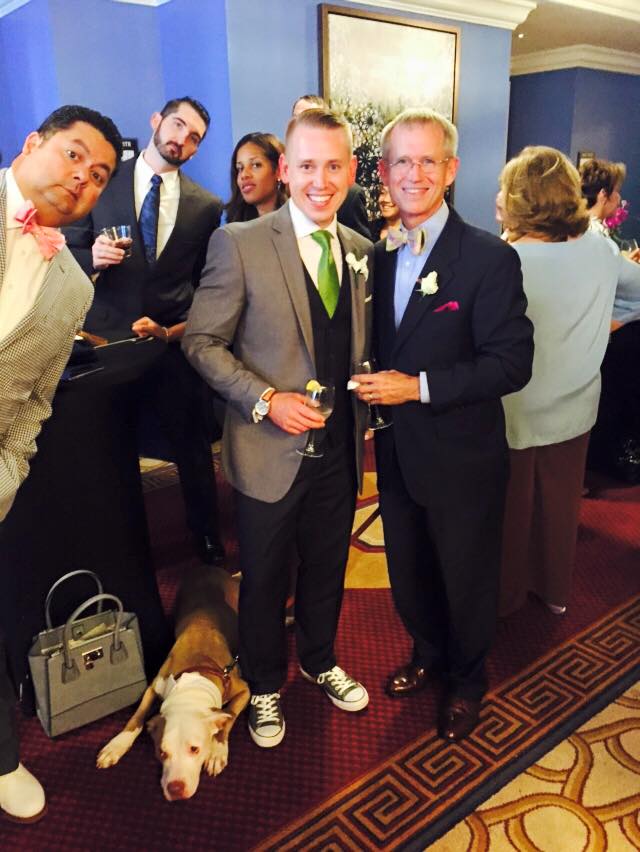
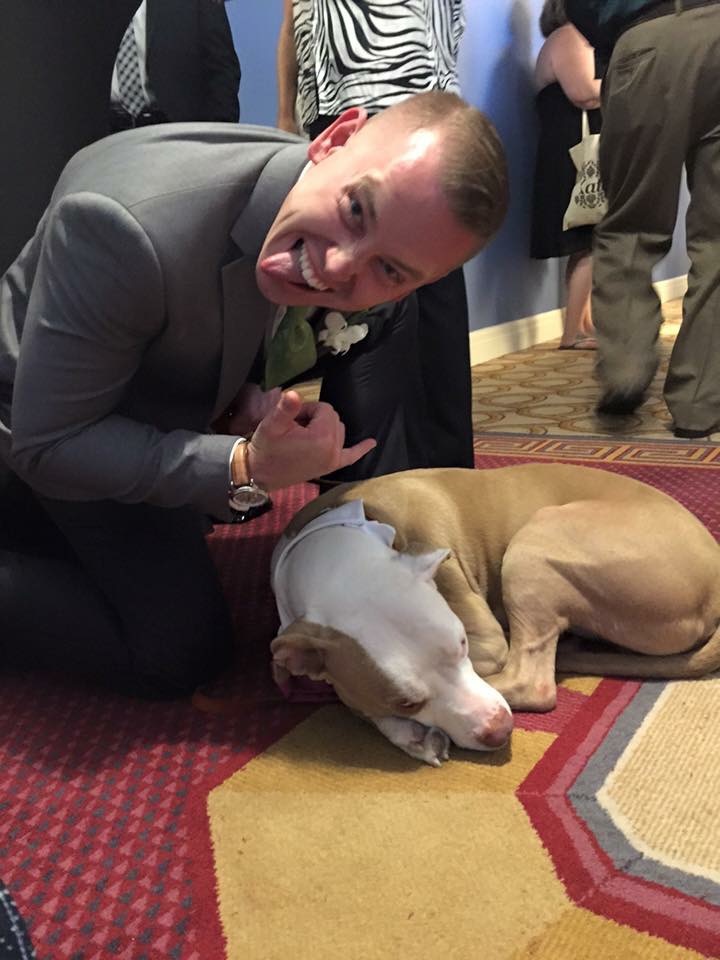
He got to spend a few moments at the reception before he was sent up to the bridal suite to to relax with a very attentive friend.

rob and kandice wedding rob and dad bosun

Here are more moments from the day… I loved every minutes of it!

IMG_1266

Photo ops in the beautiful Hotel Monaco in Baltimore.

IMG_1274

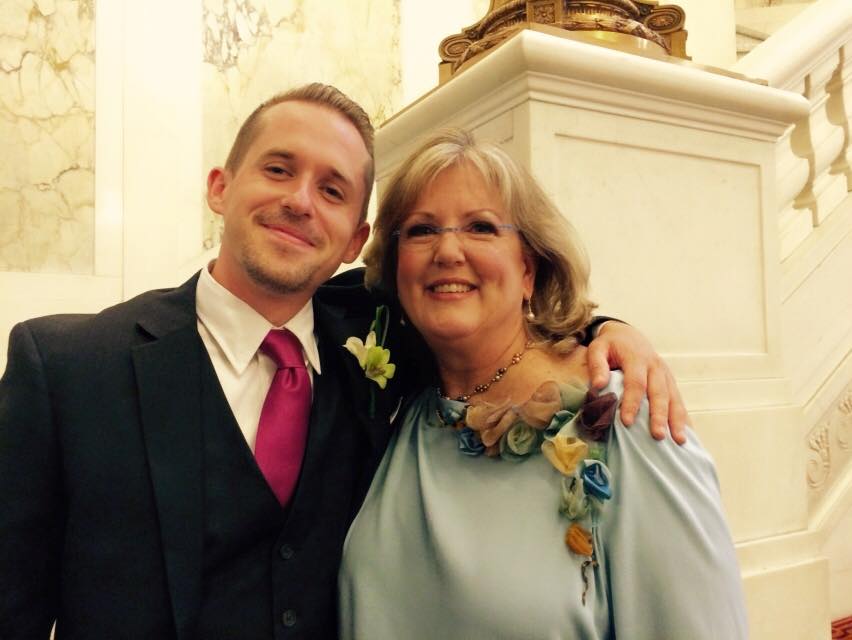
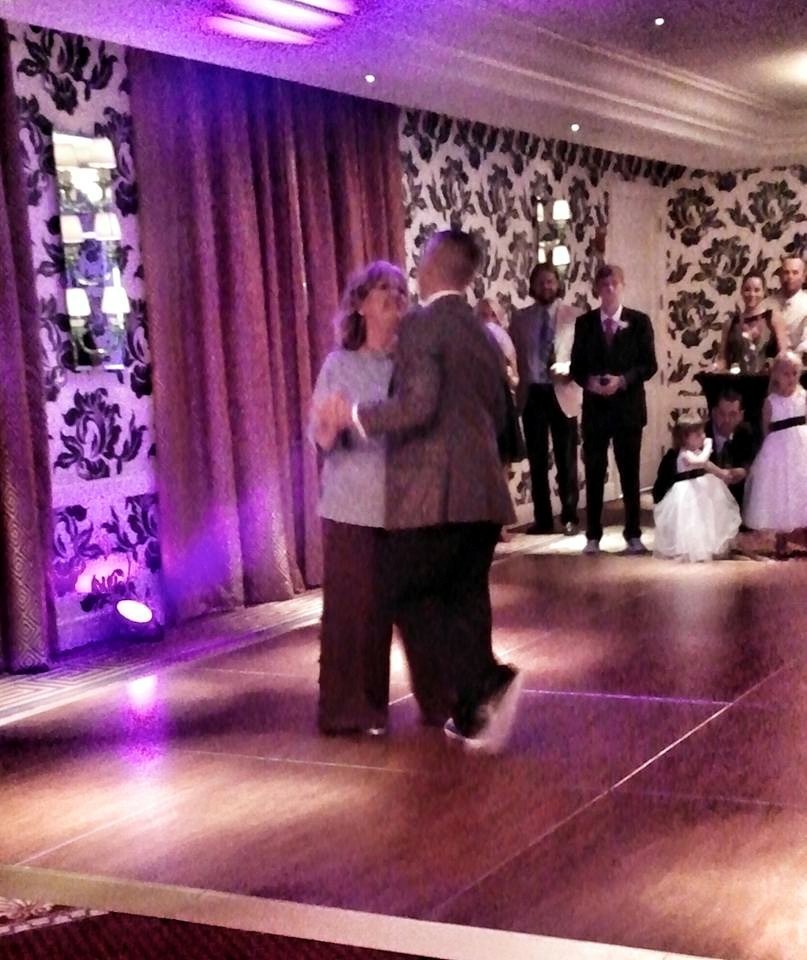
The best man and the mother of the groom–moi!

rob and kandice wedding Chris and me

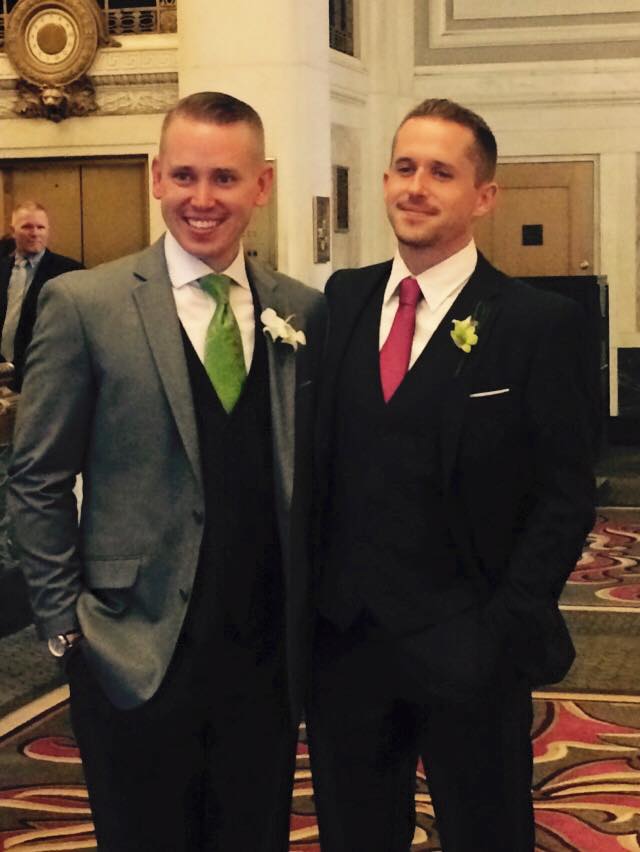
I am shamelessly proud of these two young men–the groom and his best man brother!

rob and kandice wedding rob and chris

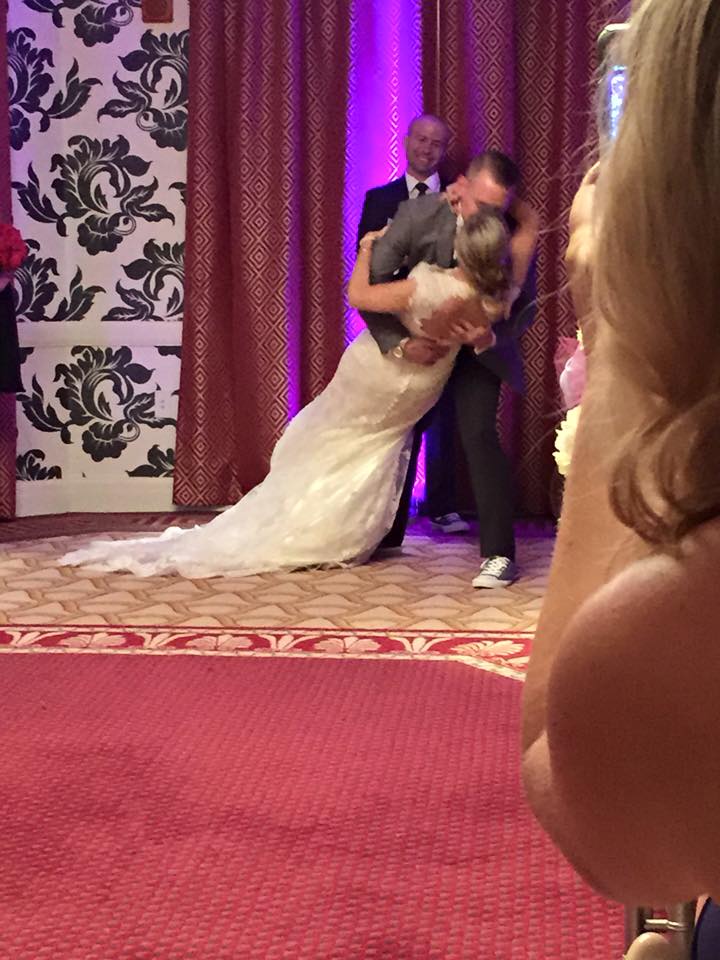
The finale of the ceremony!

Rob and Kandice wedding the kiss

That wonderful moment for any mother of the groom!

IMG_1276

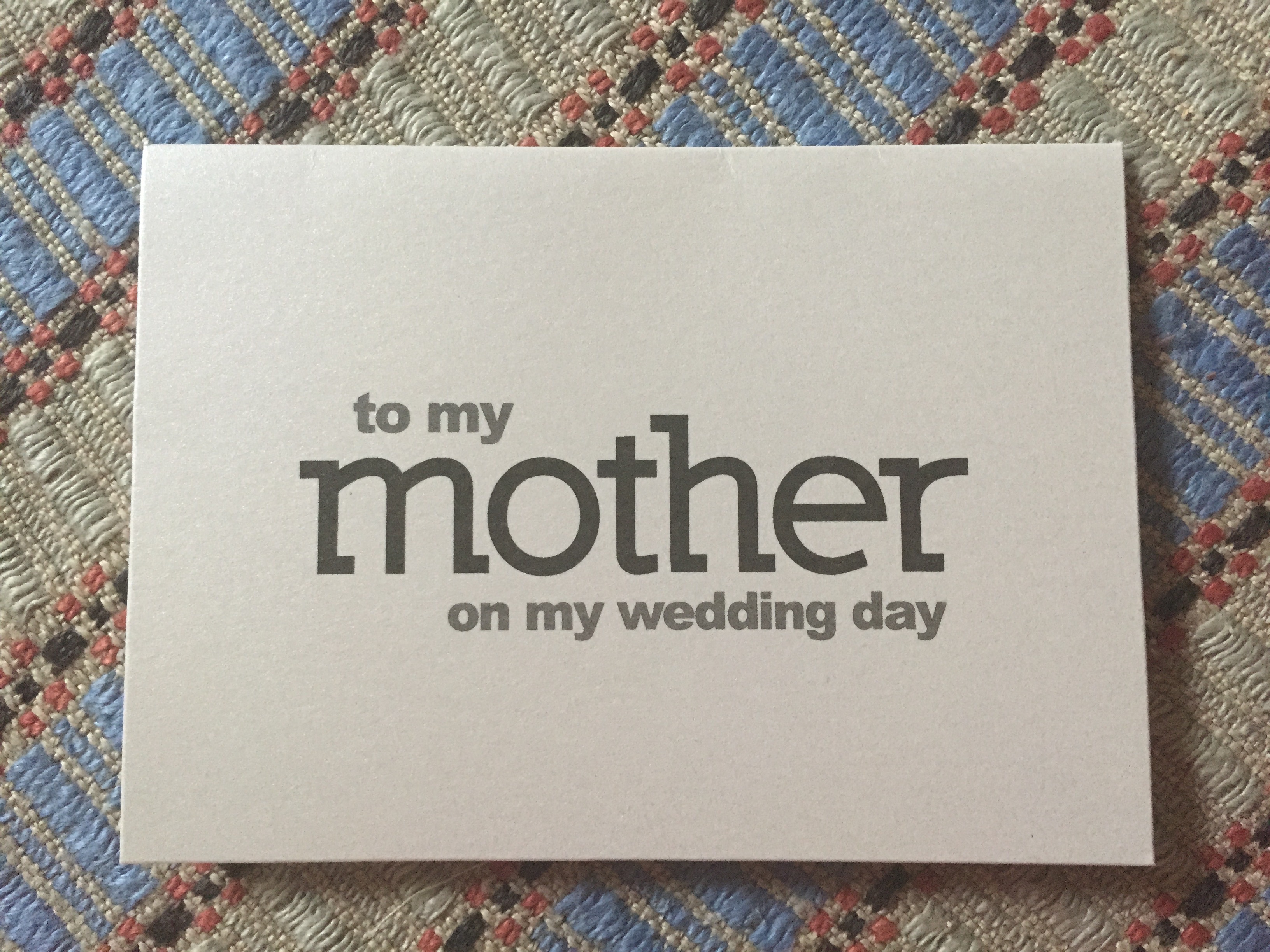
The very best moments of this weekend aren’t documented with photographs.  It was spending some wonderful time with both our sons, our new daugher in law, our friends, my sister and her family.  It was finding two very sweet handwritten notes from my son thanking us for so much, acknowledging what a wonderful relationship we’ve had over the years behind us and the years to come.  This note arrived with a gift just moments before I left our room to go down to the ceremony.  It just doesn’t get any better!

IMG_1283

With a little help from my friends (there’s always a Beatle theme when our family is together) Bob and I hosted a brunch for the newly weds on Sunday morning at their new house in the suburbs of Baltimore.  If not for Pat and Jeremy, and of course Bob, the brunch would not have been nearly as buttoned down as it was!  I guess we were way too busy hosting to get any photos.

I am so indebted to our old friends and my sister’s family for making such a long trek to be part of this event.  Being with them put the frosting on the cake and the cherry on top!

Now back at home I am relishing the all the memories and enjoying looking through all the candid photos taken by friends.  We’ll have the photographer’s images shortly.

I have turned my attentions back to the tapestry presentation I’ll be giving in early September to the weavers’ guild in Rhode Island, to working on what I’ve lovingly called the “Archie Project” for the past ….. years.  I refuse to admit how long this project is taking!

Bob and I took inventory of his stash of dowels in the workshop to determine what he might need to buy in order to make a backstrap for loom for me.  It looks like we have everything needed!  I might be weaving by early next week.

This morning LeaAnn sent me links to a wonderful illustrator and writer who lives in Wales — Jackie Morris.  My imagination took off while reading her blog.  On Saturday, while we were celebrating a wedding, she wrote this:

The summer is always busy. It’s hard to find the silence required for clear thought. George MacKay Brown talked of writing poetry as ‘the interrogation of silence.’ I know not everyone needs it to work, to think, but I do.
…I become more fascinated by silence as I grow older. But finding silence is different to being silent. When you choose to stop speaking you unnerve people. They fill the silence, the space you leave. They interpret your silence in their own way. 

At the end of her post she invited people to comment on how they achieve the silence they need to think and work, or to respond that they do not need to find this silence.

I agree whole heartedly with her description about needing inner silence and attempting to find it. There is no one place where I find mine. Sometimes it is easy to retreat to a wonderful silent place, and sometimes, no matter where I go I cannot get to it. I’m certain it has more to do with the state of my mind than the features or faults of any physical place. It all comes down to me. I just have to learn to be still and let it come.

As a weaver I often find that being at one of my looms is the best place for me to be silent and reap the benefits of where silence can lead. It doesn’t always work, but it is almost foolproof. On a floor loom or at a spinning wheel there is a rhythm of mechanical music that takes me deep into my inner self where there is a vast landscape of something like silence.

In tapestry I almost silently lift each warp thread by hand to create an image, and in that case it is my own deep thinking about the image that draws me away from the world, from any other noise but that deep music inside me. These are the reasons I return to weaving again and again.

After all the busy-ness of this summer–the SSCA extravaganza, visiting friends, the biennial weaving conference, and the wedding–it’s time to find that silence and get some good work done.

Scroll to Top