ArgoKnot

knitting

Let Me Get Out My Soapbox

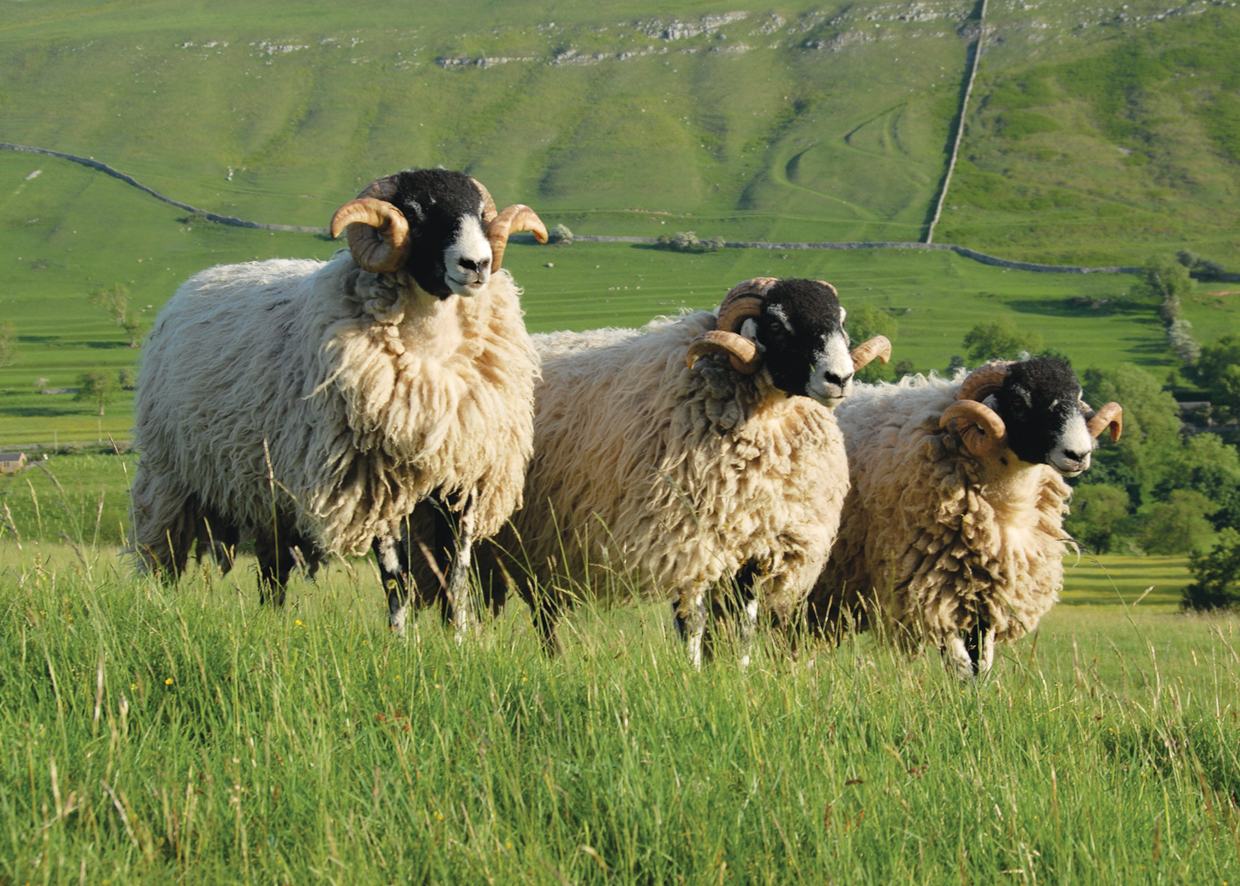
Oh, boy! Last night I got quite riled up about people’s attitude toward wool. Bob sent me this article from the Times of London. It’s called “Shear Waste,” and it covers the dire situation of sheep farmers across the UK. This year many farmers burned their fleeces or added them to their compost. For years I’ve heard that farmers expend more energy and money in caring for sheep than they get when they sell the fleeces at market. This year the new low was 33p per kilo, which I learned does not even cover the expense of shearing. This is heartbreaking. Seriously, I am crestfallen by this situation.

From the Times of London, Fleeces being composted at Stuart Fletcher’s Sussex farm

I went looking for more information, and I started with the Campaign for Wool. I had no idea this endeavor is now 10 years old. Time flies. How have things gotten worse instead of better? It seems that many people in the UK feel that wool is only useful for rugs these days. Whoa! I have had the pleasure of spinning some wonderfully soft wools from the UK, and nothing–absolutely nothing!–gives me more pleasure than knitting or spinning Wensleydale or Shetland wool. Am I mistakenly under the impression that everyone in the UK knits? …at least for a few years as a child? Don’t they need fresh supplies of wool and the ability to try the many breeds that are grown all around them? Aren’t designers, especially of men’s suiting, always in need of wool?

A few months ago I read the book Wild Dress: Clothing and the Natural World, by Kate Fletcher. The author is Professor of Sustainability and Fashion at the University of the Arts London. She has written other books, but in this one her writings are autobiographical. She explores the relationship between garments and our human connection to nature. The chapters read like essays to me, and in one she marvels at people who spend time in nature by hiking through the landscape. She notes that nowadays, you have to dress the part of someone who spends times in nature by wearing the most unnatural clothing. If you aren’t wearing a polyester fleece made from recycled plastic bottles and elastane-nylon pants, you must not be a serious outdoorsman. Kate Fletcher writes, “As garments go, there are few pieces less natural than a polyester fleece pullover. Nor are there many pieces that act to distance the world outside more than those made from filaments of hydrocarbon with their high resistance to micro-organisms, poor heat isolation and low water absorbency. The things we are wearing to arrive in nature do not, cannot, let nature in… We keep her at arm’s length, or more literally at sleeve’s length, with hydrophobic fibres, an impervious fabric membrane and garments so durable they will outlive us all.”

Wool has so many uses. It can keep you warm and is fairly water resistant. Through millennia of sheep breeding wool can be soft enough for undergarments and tough enough for weatherproof yurts. It can insulate houses, hang on the wall as a beautiful way to keep out drafts. It can become stunning clothing and household items when knitted or woven or felted. I thought there were many millions of people clambering to have excellent sources of wool. So how can these farmers be in dire straits right now? I am worried that they will soon give up sheep farming and turn to something else. What will I do? I can’t possibly be the only one who fears this.

I own exactly one polyester fleece pullover which I bought at least 30 years ago to support a non-profit group I had joined. I still have it, and I wear it only occasionally, although never out in public. I have a wardrobe of sweaters I knit myself that I love to wear out in public. Most of my friends and acquaintances also love the sweaters and other garments that they have woven or knitted. Even if you yourself do not knit or weave, I bet you know at least a handful of people who do. We are everywhere.

About a decade ago I joined the Association of Guilds of Weavers, Spinners and Dyers in the UK. Ten months of each year there are online workshops to take. One month we focused on breeds of sheep that are not well known. Each participant got a small amount of fleece directly from the farmer to comb or card and then spin. I got some Ronaldsay fleece from the Orkney Islands off Scotland. I got some Bowmont-Merino fleece from Leslie Prior’s farm in Devon. That was an amazing bit of fleece to spin. She has the only Bowmont sheep farm in the world, and at one point there were only 28 sheep at her farm. I felt so lucky to get a bit of this wonderful fiber to spin. Since then I believe she has prospered with this breed. She has an outlet for getting the yarn spun in the UK, and made into garments and household items that are manufactured in the UK.

When we had the fleece workshop through the UK Guild, those of us outside the UK did not know for certain if we’d ever receive our fleece samples, or how long it might take to receive them. The ones I chose all arrived at my house, and I think the longest delivery time was only three weeks, which is fast considering these packages had to go through the Animal Plant Health Inspection Service of the United States Department of Agriculture. The inspectors have the right to send back anything they deem unsafe. After playing with various fleeces from the around the UK, I ordered a kilo of Ronaldsay from Orkney. I washed the wool, combed it and spun it before knitting it into a sweater for my younger son Chris. I’d love to spin some more Bowmont now!

This is my long winded way of saying that I hope there is some way to save the wool industry in the UK. I read that half the wool stays in the UK, but the other half gets exported throughout the world. One quarter of the wool goes to China, and this year, due to the pandemic, no wool could be sent there. In the article I linked at the beginning, I also learned that British wool is used in carpets on airplanes and cruise ships, and those industries are certainly suffering at this point in time. To me, wool can be such a luxury item that we should all cherish it. I don’t want to lose that. What can I do?

I’ll end this with some stunning wool products and some links.

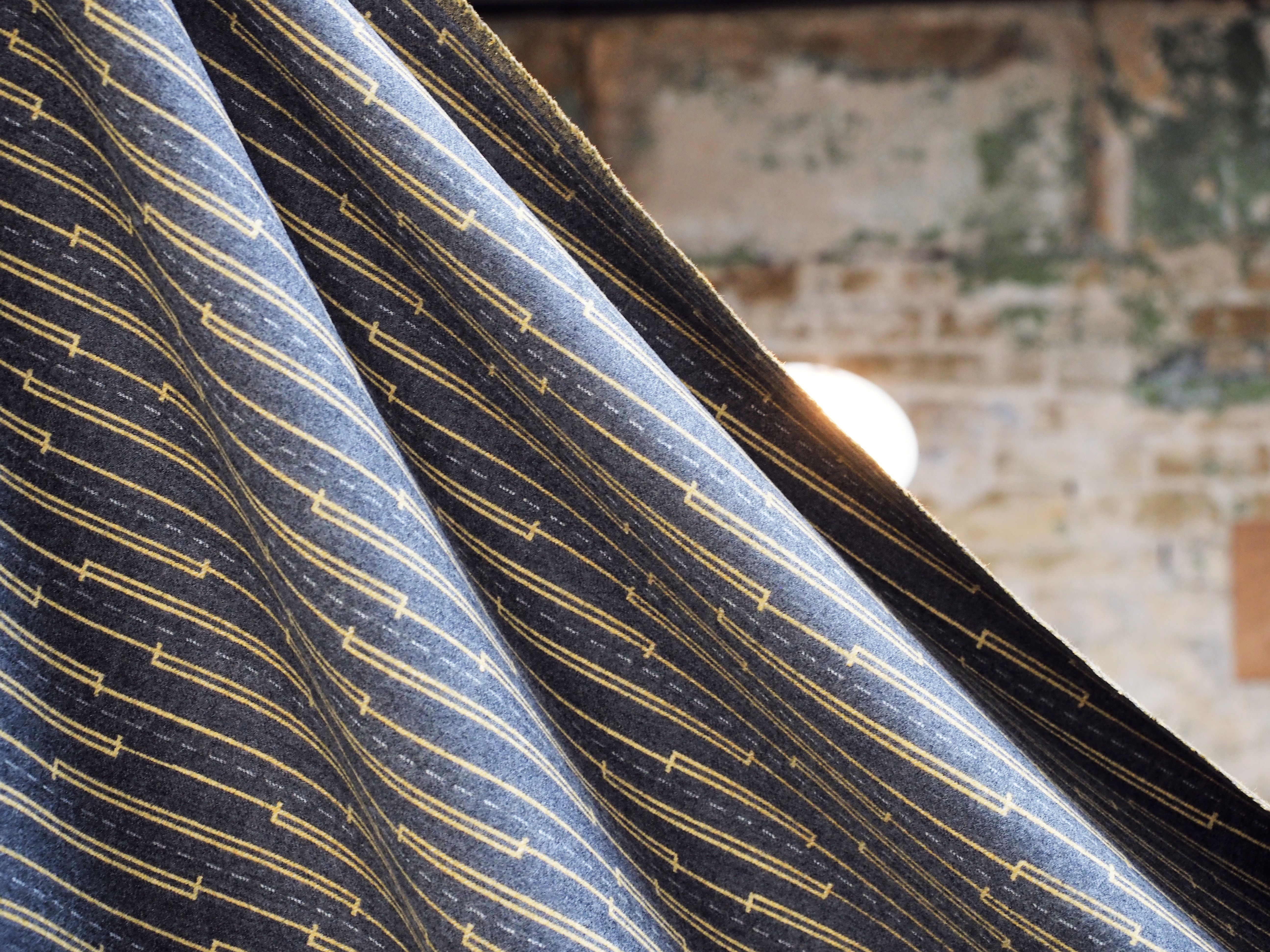
This is the story of a student design project for Campaign for Wool to create new designs for Holland and Sherry, a well known Saville Row shop known for their use of high end wool fabrics.

The Campaign for Wool is making a good argument for using wool to insulate dwellings.

And no post about British wool from me would be complete without a mention of the wools grown and spun and woven on the Hebrides Islands for Harris Tweeds.

Stay well, pick up some wool, and get busy knitting….or weaving….or felting…or spinning.

Departure

The time has finally come! While I haven’t had nearly as much experience with long passages as Bob has, this is what I always encounter: We provision and wait for the weather window. Our provisions grow low in the waiting so we provision again. We wait again. On and on. Inevitably, we get the word to “GO!” now, right when we need to provision again! The waiting is a killer. I feel like I’ve been holding my breath for ages, and feeling anxious. By the time we really do ‘GO!,’ I’m exhausted. I’m exhausted now. So, naturally, it’s time to go. And wouldn’t you know, we need fuel in our extra jerry cans and we are a little low on fresh food.

I put a scopolamine patch on last night hoping to stave off any seasickness ahead of time. Fingers crossed. It should take us about 7 days to get to the Lake Worth inlet on mid-coast Florida. We could not get a marina reservation in Fort Pierce because they are already full. But some of those boats will be heading north as soon as mild spring weather arrives in the North Atlantic, so hopefully we won’t have to wait too long.

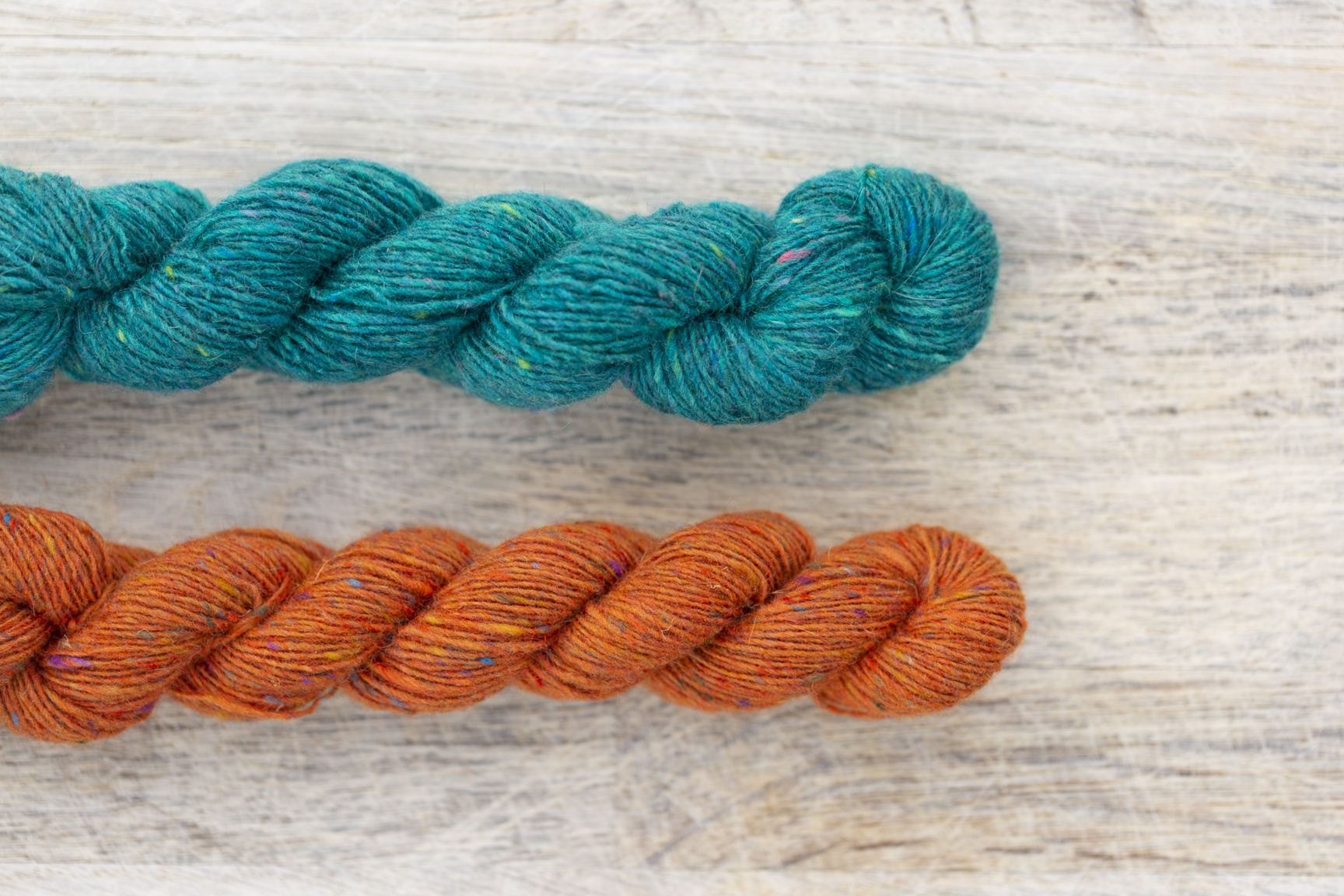
The closer I get to home, the more excited I’m getting for projects. Temptations arrive in my inbox daily. This winter I stumbled on KDD designs, a site with so many interesting facets–poetry and writing, knitwear design, even yarn from local sheep (in Scotland), where that yarn is also spun and dyed locally. It’s not local to me, but it’s in my DNA to need and want textile-y things from Scotland.

I’m in love with this amazing color of orange! I’ve loved the color orange for years, although I do not have a favorite color. The color of this yarn, with the little bits of other colors in it, is a show stopper for me. The teal is wonderful too, but that orange! Oh my!

I’m ready to start knitting this vest, also designed by Kate Davies (of KDD)! It’s called “Con Alma,” after the Dizzy Gillespie recording from the early 60s. Temptations are wonderful things, aren’t they? I put a kit for the project in my shopping cart, without giving it more than two seconds’ thought. Sadly, this yarn is already sold out. Sigh…. I hope I can order it soon, so that it will be winging its to me as I wing (hopefully) my way home.

I’m enjoying the possibility of what other sea creatures will work their way up the warp on my current tapestry. Sea turtles and rays for certain. Maybe a couple more ‘post card’ moments. I have to start drawing soon because the next creature will get added before the octopus is finished. Adding any more ‘post card’ images might involve weaving buildings again. The church tower in Deshaies, Guadeloupe (pronounced Day/A) is such an iconic landmark. Tempted for sure, but I should know better.

So, it’s time to leave, and here I sit. Am I stalling? Probably. Bob has taken the dinghy into the nearest town to fill the last couple of our jerry cans so we can have enough fuel to add to our tanks as the trip wears on. Supposedly there will be so little wind between here and Florida that we’ll have to motor a good deal of the time. As long the seas are flat, I’ll be very happy to motor, thank you!

So to pass the time ’til Bob returns, I will forge ahead on my Wrist to Wrist sweater from Purl Soho. Great color, isn’t it? But it’s not orange.

I hope I can knit during our passage home. I have a couple of audio books to listen to when I stand watch in the middle of the night. I am praying I can do that this time. It’s all Bob requires of help, so he can get a little sleep. A week without sleep is a long time. Off we go! Shortly I hope I’ll walk through the side door on our porch, and have a good cry of joy to be back. Welcome home!

Plan C, D, E…etc.

All we do these days is make plans for getting home before the hurricane season starts down here. I was going to write about these plans, but they are mutating too fast for me, faster than shifting sand trickling through my fingers. We’ve now gone well beyond Plan C, D, and E. I started this while we were still in Antigua, but now nothing from that post is relevant. Lots has changed, but nothing really has.

We left Antigua last week, on Thursday, to sail through the night to St. John, in the USVI. We arrived on Friday afternoon. My medications are waiting for me in Red Hook, and Bob is taking the ferry there now to get them, as I write this. We tried to make landfall there on Friday afternoon, but it was so rough in the harbor that I did not think I could handle Pandora while Bob picked up the mooring lines. We have been in Caneel Bay on St. John since then.

I was frightfully sick on the passage here, and that has given me quite a concern about making the much longer passage home. People love to tell me that everyone gets better after three days at sea. I’m sure that’s true most of the time. But what about those three days? How is Bob supposed to get through three long days without help? The 2-night trip to Antigua in early March was a terrible burden on him. He had no help from me at any point on that trip. And it happened again on the way here. I’ve been sailing with him for 45 years now. We’ve made some long passages and we’ve covered a lot of ground between Maine and Florida on the east coast of the US, and on to the Bahamas. I don’t just get mildly sick; I get incapacitated-ly sick. It’s a risk to have me onboard. That is weighing pretty heavily on me. (I have a huge stock of different seasickness meds, trust me!)

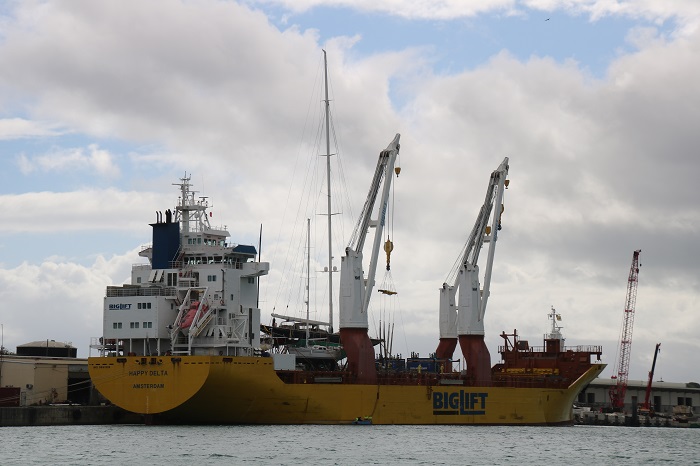
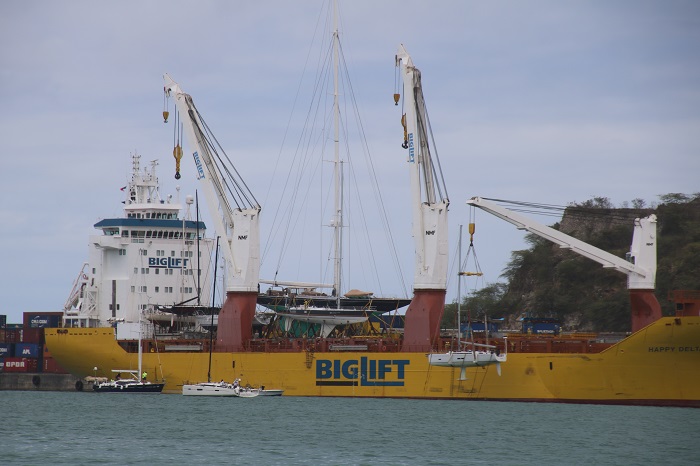
The day we sailed to St. John, capital of Antigua,–not the island where we are now– to clear out, we saw this ship carrier in the harbor. You cannot imagine how much I wanted this to be our plan! Just take Pandora to Newport, and let us go! The cost of $20,000 to take her was a bit sobering. Still, I was tempted. Bob was not.

Here you can see boats lining up to wait their turn in the crane. Too bad Pandora couldn’t get on line.

The stress of worrying about this is taking its toll. I feel I am burden onboard, but no one else can get down here to help Bob. What to do? We talk to our weather router off an on over the months we are down here. Last week when Bob told him how sick I was with the following seas on our way here, he suggested that we consider the ‘northern route’ home, which would take us far out to sea, east of the Bahamas to make a straight shot to the Carolinas or even all the way to Connecticut. This route has more easterly winds and would put the wind and sea state coming across the middle of our boat, which is called a beam reach. This is the route Bob always takes each year. But that terrifies me. It’s so far from anything. Once again this morning we called the Venerable Chris Weather Router to ask if there was a way to get home in flat seas. This may be a possibility. The ‘southern route’ would take us north of Hispaniola (DR and Haiti) and into the Old Bahamas Channel. The winds and waves would be from behind, my least favorite direction, but if we pick a window when there is very little wind, the sea state should be flat. We’d have to motor most of the way to Florida. Horrors to real sailors like Bob, but that sounds pretty nice to me. Bob is in favor of doing whatever makes me less fearful. He is on a hunt for some diesel cans so we can carry extra fuel. Wouldn’t you know that all those sailors who sheltered here before we arrived bought up all the diesel cans at every store within walking distance in both Red Hook and St. John. I’m amazed that any of these chandleries are still open. (But that is another story)

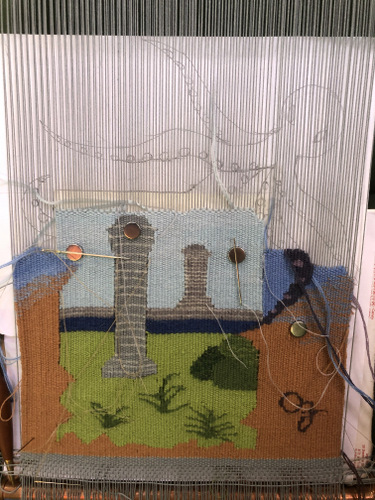
In my distress over how I’m going to get home, I have returned to some of my projects that were so boring to me weeks ago. Now I relish anything that will take my mind off what lays ahead. On my small tapestry I have finally made it past the pillars in English Harbor. Really, I have no business weaving buildings. I need to imprint that on all my bobbins–No Architecture!! Now I’ve started the octopus that wraps around the little postcard scene of Nelson’s Dockyard, so I’m having considerably more fun.

I’ve joined in a couple of Rebecca Mezoff’s “Change the Shed” get togethers on youtube through live streaming. It’s been one of the best diversions I’ve been able to find. I weave my own tapestry while she weaves and talks to the weavers who send her questions or comments through live text messages. It’s fun. Lately I haven’t had enough connectivity to do it, and I miss it!

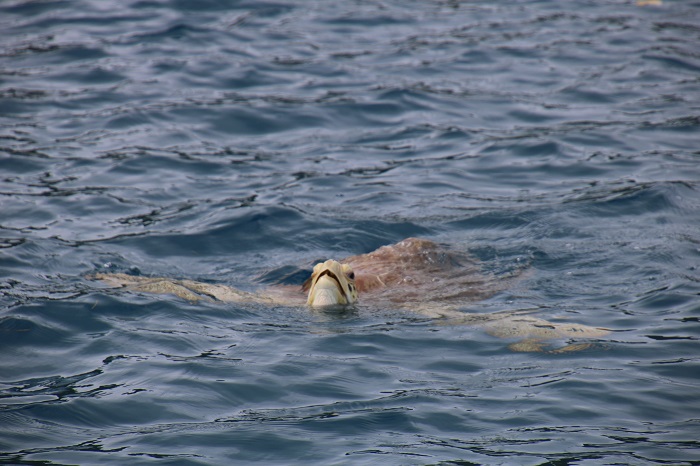
St John has some nice distractions too. There are lots of turtles here, and they are not nearly as shy as most sea turtles. One of them checks us out throughout each day. We must be sitting on top of his favorite patch of turtle grass. In fact, in Caneel Bay you may not anchor because anchors and chain tear up the grass that is so necessary to the turtles. There are moorings here, and now that the island is a bet less crowded, we were lucky to get one.

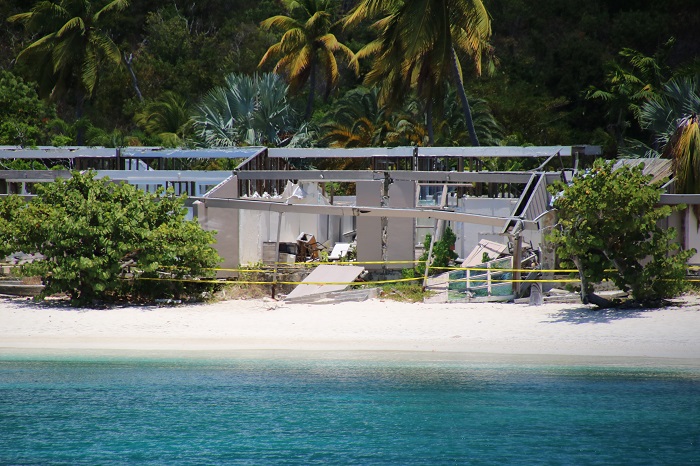
Our mooring is just off the beach of a derelict resort that was started by the Rockefeller family back in the 50s. It made it through all those decades and then was destroyed in 2017, by Hurricane Irma. Now, only 2 1/2 years later, it looks like it’s been out of commission for many years, not just a few. A local resident told us that the property’s 99-year lease will be up in two more years. There’s a rumor that a big resort company has bought the resort and will rebuild when the lease runs out.

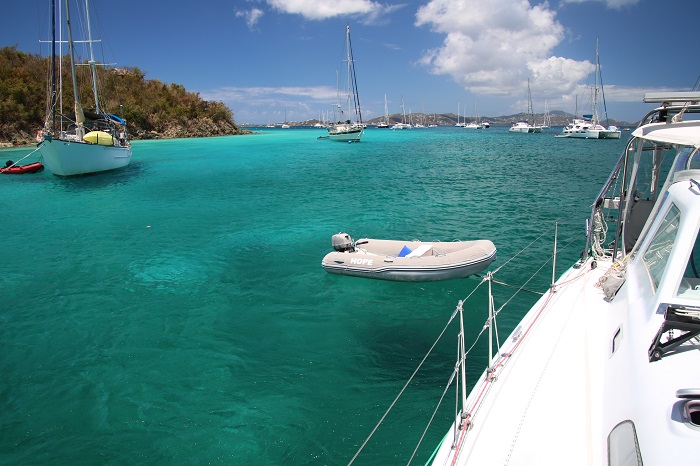
The view from Pandora right now is quite spectacular. It’s hard to imagine that you can have tough decisions ahead and a hard trip home while sitting in such a place.

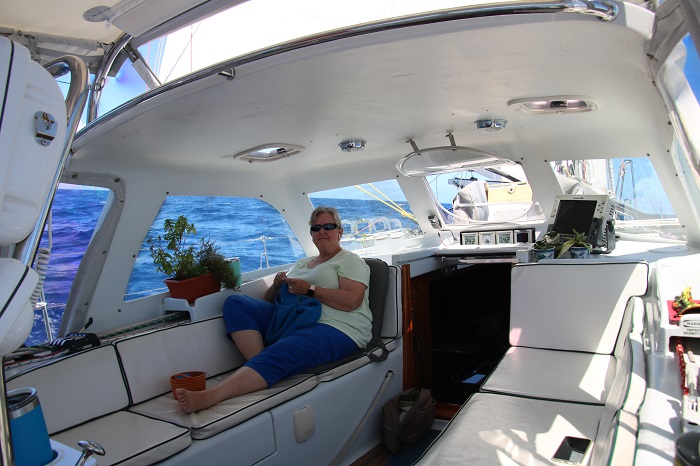
It took me a full day to get over the trip here, but as you can see, I am relaxing while I can, before we have to head out again.

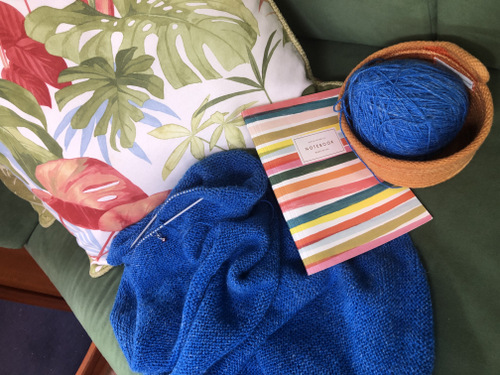
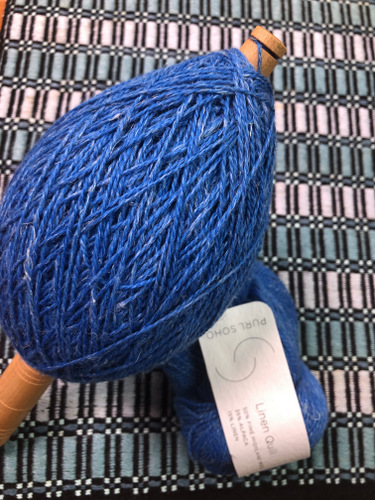
I am working on a sweater design that Purl Soho offers on their website, called End to End Pullover. The yarn is also theirs, called Linen Quill. It is a blend of merino, alpaca, and linen. It is about the weight and grist of Shetland jumper weight, but so luscious due to the alpaca, and heathery, due to the linen. I’m enjoying the feel of it, and the Caribbean blue, even though the knitting has grown boring. I am almost half done.

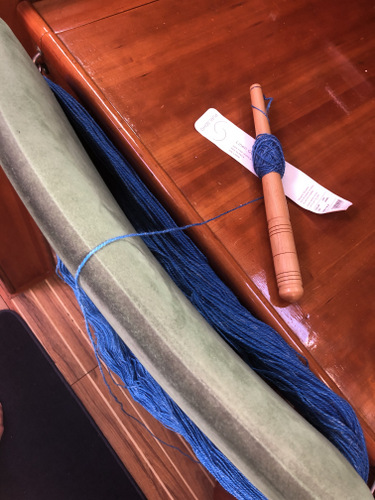
I’m not sure that I use my nostepinne correctly, but I wanted to knit from a center pull ball. I have to drape the skein on our navigation chair, which is a bit too small. Of course at home I make balls with a ball winder and it goes at least 10 times faster.

My balls always turn out like eggs!

And I am baking and cooking, like everyone else on the planet right now. Even though I have a pound of yeast in the freezer onboard, I miss making sourdough. I thought I’d find out what wild yeast in the Caribbean would be like. It’s very healthy! It must love the salt air and warm temperatures. Playing with sourdough also has been a little ray of contentment during my worrisome days.

And the best balm for my fearful days has been the connection with friends who are checking on me daily. It’s been so therapeutic for me to know that friends are thinking of me. Somehow that is always such a sweet surprise! –to hear that people take the time to think about me when their own lives have a full share of worries. I feel wrapped in the love of people who are routing for Bob and me to have a safe trip home. Thank you immensely!

From Antigua to Orkney

The weather has been wild in this part of the world, not unlike many places these days. We are having multiple squalls a day (and night), with high winds and torrents of horizontal rain to go with it. At night we open and shut our hatches so many times, first to get a bit of a breeze in order to sleep, then to shut things down so our cabin doesn’t get drenched. We both lose track of how many times we get up in the night, and at this point we are both suffering from sleep deprivation. So, when I found this recent article from the BBC online, I could not help but notice the similarities, even a world away from here.

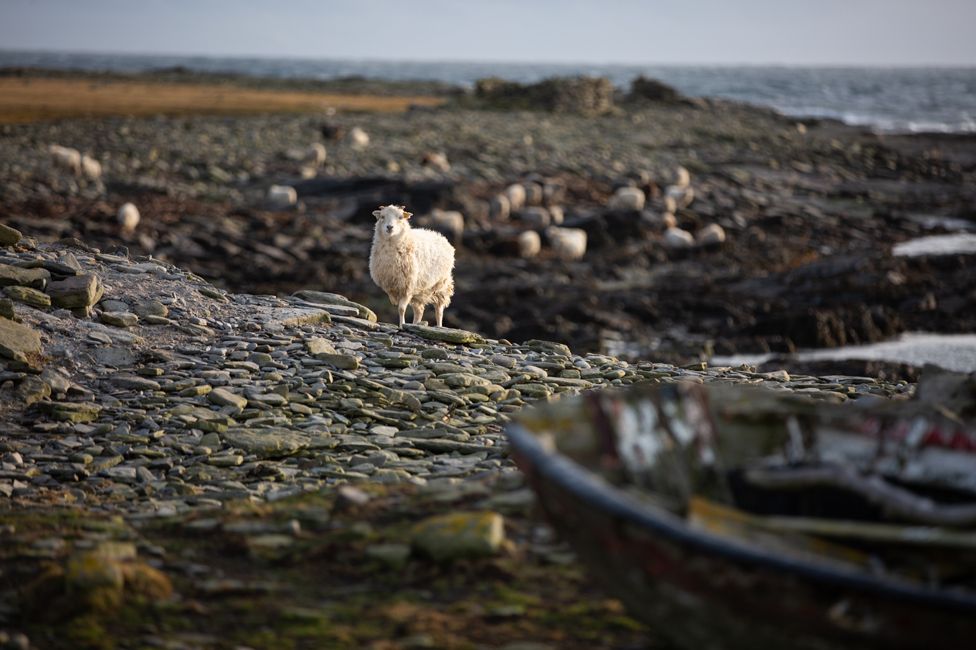
The article is about Ronaldsay sheep on Orkney Island just off the northern coast of Scotland. Another article called Orkney “a freckle off the north coast of Scotland.” How true. Ronaldsay are small, hardy sheep who’ve managed to live on a seaweed diet for quite some time now, ever since the sheep owners cut the sheep off from pasture.

Ronaldsay sheep on Orkney. photo from BBC

Cute sheep, isn’t she? About a decade ago I ordered a kilo of white Ronaldsay fleece from Elizabeth Lovick on Orkney. She has a venture called Northern Lace, and she teaches and designs knitting patterns in traditional Orkney lace work. It took a long time for my fleece to arrive. When she mailed it, she mentioned that I might never get it, if US customs should deem it unsafe. Well, it did arrive, and I enjoyed the process of washing and combing it before spinning it. When at last I had a medium weight, 3-ply yarn, I knitted it into a fisherman’s gansey for my younger son Chris. No, it’s not traditional. The yarn was, but I made up the sweater pattern myself, attempting to satisfy Chris’ needs and style. At the time he was an undergrad student in Rochester, NY. Later he took the sweater, along with several pairs of wool socks that I also knit for him, to Manhattan while he continued his studies there and then worked for a few years. At one point, he lived in an unheated hallway in Chinatown (yes, he paid rent for this dwelling; yes, it was illegal). That sweater came in handy for a few years. Now he lives in the Bay Area has no need for such a garment!

Pretty low resolution back in 2007.
wow! Small photo, low res. He’s so young!

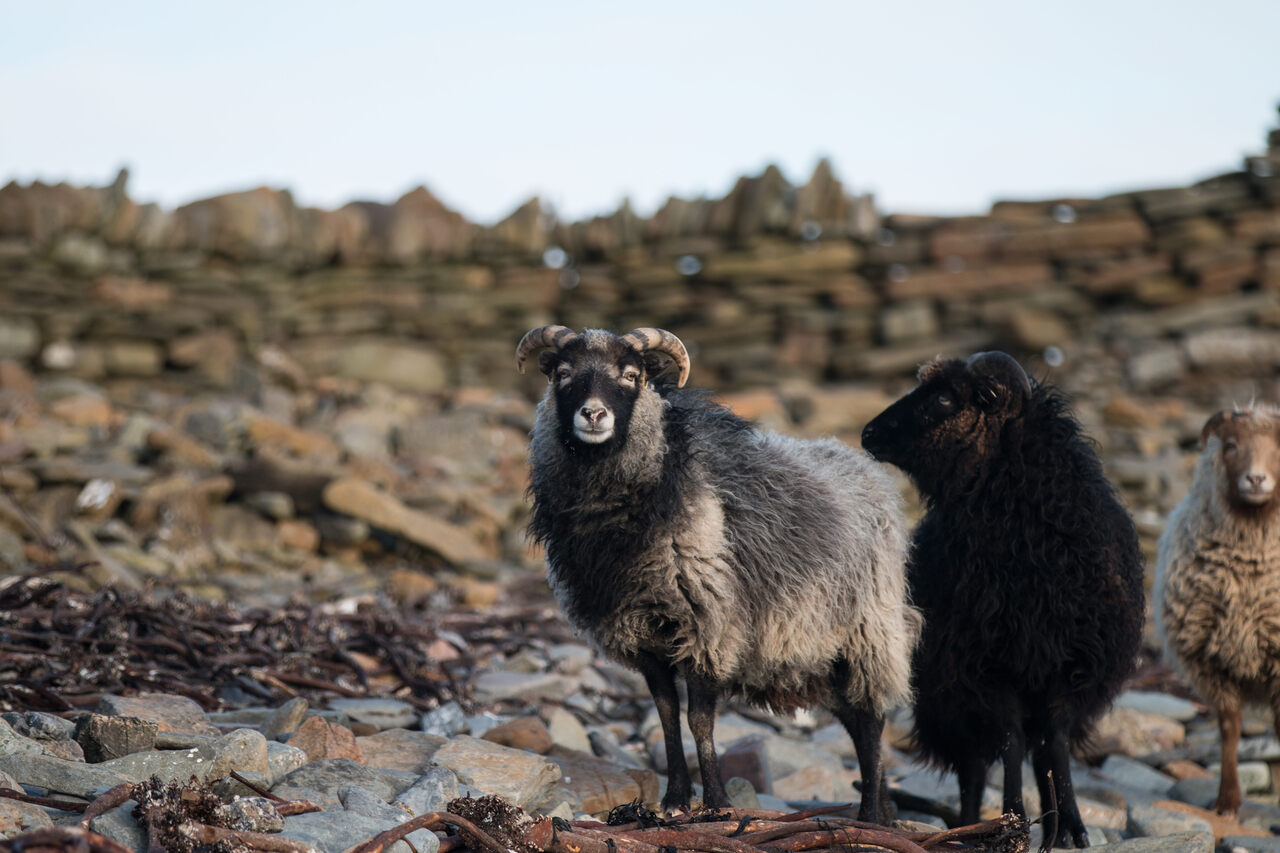
But back to the sheep. Close to 200 years ago, the sheep farmers built a stone wall around the entire perimeter of the island to keep the sheep on the beach so that other livestock could feed on the pasture. The sheep have become accustomed to, and have actually thrived on, their seaweed-only diet. Occasionally a sheep will get through a broken or weak part of the stone wall, and you know if one sheep gets out it’s not long before they are all out.

The sheep on the proper side of the wall. Photo from orkney.com

The article is about the new sheep dyke warden/shepherdess who’s been hired to maintain that wall and keep an eye on the sheep, as well as what scientists are learning about a seaweed diet. It turns out the seaweed-eating sheep do not emit methane when they belch. It turns out that methane gas is 30 times more harmful to the environment than carbon dioxide. Think of all the ruminant livestock throughout the world, adding so much methane to the environment. While it’s certainly not a cure-all for our problems, it could be one of many efforts to ease things. These diminutive sheep have led scientists to research the possible benefits of adding seaweed into more livestock diets. The North Ronaldsay Trust began looking for someone to fill the position of sheep dyke warden during the past summer, 2019. Sian Tarrant who is from East Sussex, and has a degree in marine biology from St. Andrews, seems to fit the bill. She wanted the job, and the island folk wanted her. She has already worked on a number of National Trust projects, recently studying seals on one of the uninhabited islands in the Orkneys as well as in the sub antarctic off the coast of South Georgia. Want to read more about this interesting woman? Here you go!

All this makes me want to comb and spin some Ronaldsay again. This time, I’d go for the darkest brown fleece. Maybe I would use it for tapestry. So many ideas, so little time! Meanwhile, the wind is howling here on this Sunday afternoon. We won’t get frostbite from it, or die of hypothermia, but it is still pretty extreme weather.

A Lovely Day in Cocoa

I continue to marvel at how lovely the Christmas season can be in the tropics!  Bob and I took a walk together through the more historic residential area of Cocoa, the major style being bungalow from the early 20th century…..my favorite!

Nice modern addition to this classic bungalow, although I do wonder how hot that glass enclosure gets in the summer!

There were also quite a few more traditional looking Spanish inspired houses. Most of these houses had historic plaques.

Palm trees and Christmas decorations….it does work!

I wonder if this lovely shade of blue was chosen to match the flowering vine on their arbor.

Christmas with orange trees, bougainvillea, hibiscus, and lots of little lizards skittering across our path wherever we walked!

I capped off the day by visiting Knit and Stitch again to sit with the other knitters and work on my Ann Jacket.  What a lovely spot!  On top of being in a community of knitters, I learned that one of the women who works in the shop, Barbara,  is an avid weaver  and reps Schacht products for the store.  One of the other shop women, Ann, seems to have done some weaving herself, so I felt that I had found some wonderful connections here.  Thank you!

As if this wasn’t enough of a perfect day, we spent the evening on board Meltemi (a Catalina 42′) with Jeff and Susan, while they taught us a popular Bahamian cruisers’ domino game called “Mexican Train.”  (I shudder at how un-PC this name is!) I never knew there are dominoes with 12 spots on them!  I was terrible at understanding all the little dots on these tiles!

 Today we are headed to Melbourne….not Australia.  Before this trip I didn’t know there was a Melbourne in Florida.  It seems that wherever the English went they used place names from home.  Makes for a very confusing world!

Day 86, December 5: Cocoa to Melbourne

Scroll to Top