Recently I was asked to write something about the weaving museum and workshop in Perugia that I have now visited twice. It needed to be just enough info and images to be made into a poster. Here it is, mostly because I want to remember what I wrote.
A most unusual tradition in Perugia during the Middle Ages is that women did the professional weaving that was mostly done by men during that time in Europe. The women wove altar cloths for churches throughout Italy and northern Europe, without male dominated guilds to dictate their work. Starting in the 12th c. these women designed elaborate woven patterns that they picked by hand as well as simpler patterns that could be woven on their rudimentary harness looms.
While very few of the actual textiles from this period have survived, they are well documented in the paintings by famous artists of the period, such as Giotto, Ghirlandaio, and da Vinci. Over time, due to wars and economic situations, this tradition became less and less prominent. By the 16th c. very few weavers were making these textiles. Weaving survived in the homes of women in hill country of Umbria, outside Perugia.
In the early 20th c. a wealthy Perugian woman, Giuditta Brozzetti, decided to start a business rekindling this tradition. She collected 18th and 19th c. manual Jacquard looms, which could be “programmed” to weave quite complex patterns. She gathered information about the traditional patterns that the women of the Middle Ages had woven. She hired local women who had a background in these traditional patterns and taught them how to use the more modern looms. Four generations later, her great granddaughter, Marta Cucchia, is continuing this business. Marta is the first of the women in this family to be a weaver herself. She understands the various jacquard looms, which are all quite different and challenging to use. She has studied the medieval patterns and translated them to the punch cards that are used by jacquard looms.
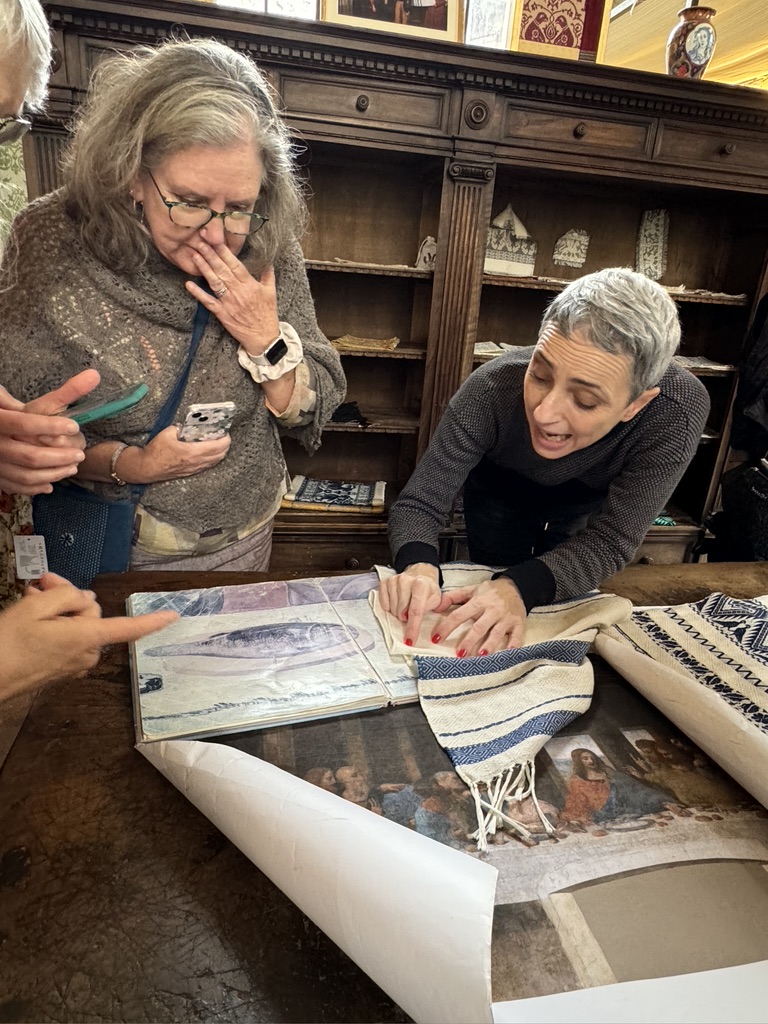
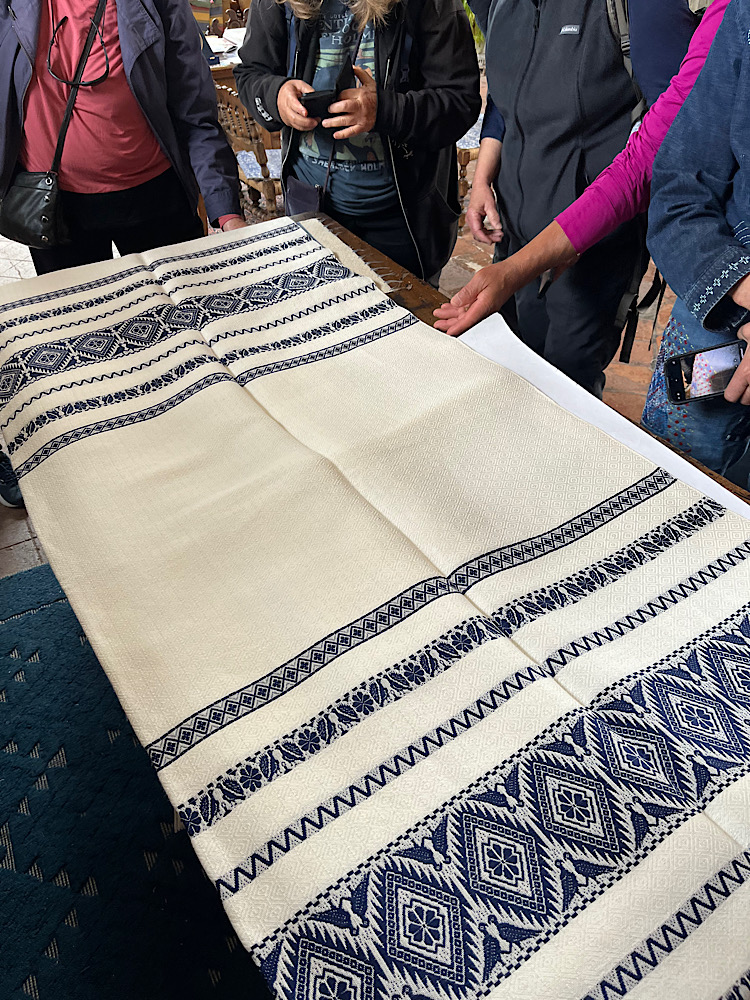
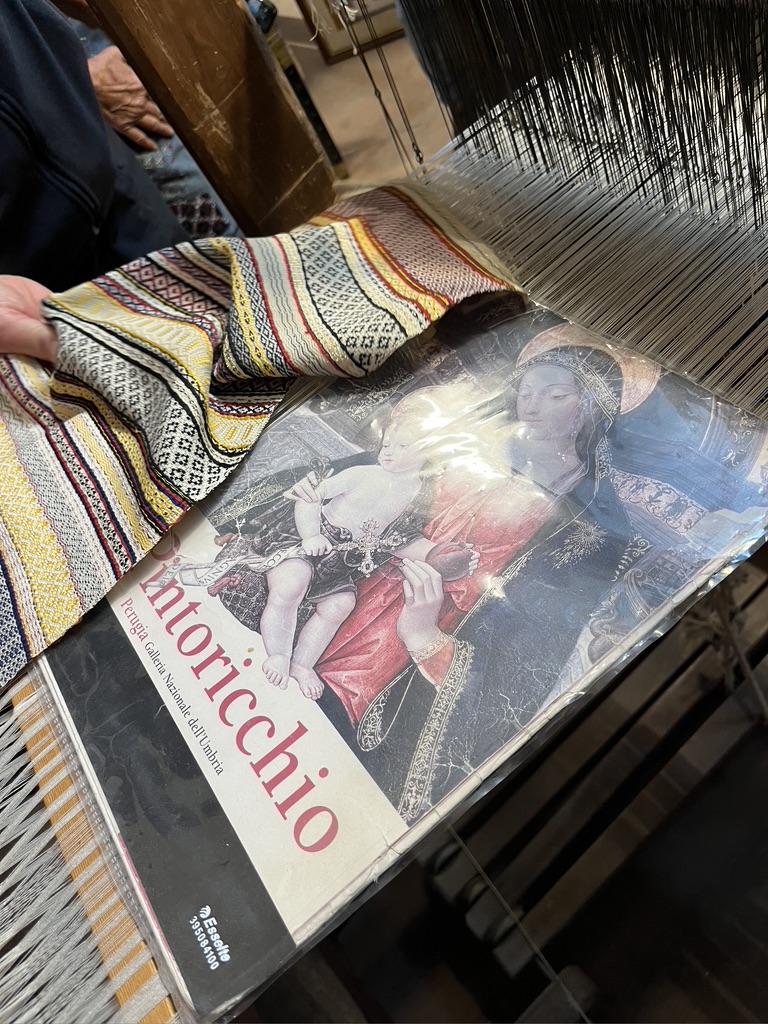
Her most challenging study was to decipher the patterns that Leonardo da Vince depicted in his fresco “The Last Supper.” That tablecloth is quite elaborate; even the white background fabric is heavily patterned. Marta has also documented many fabrics depicted by other artists who painted images of the Madonna and Child. The infant Jesus was often shown wrapped in a traditional Perugian woven textile.
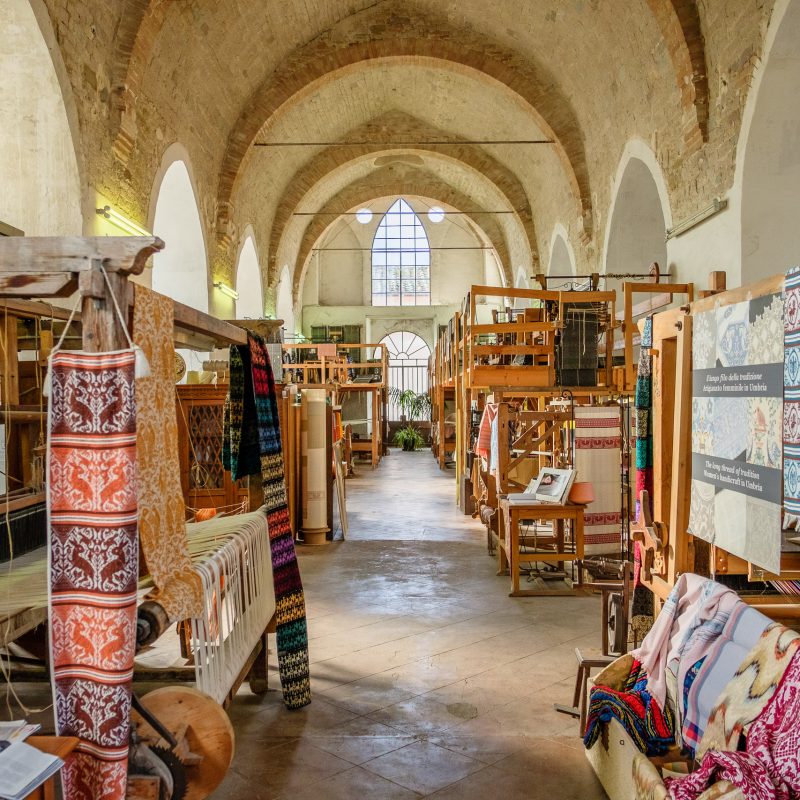
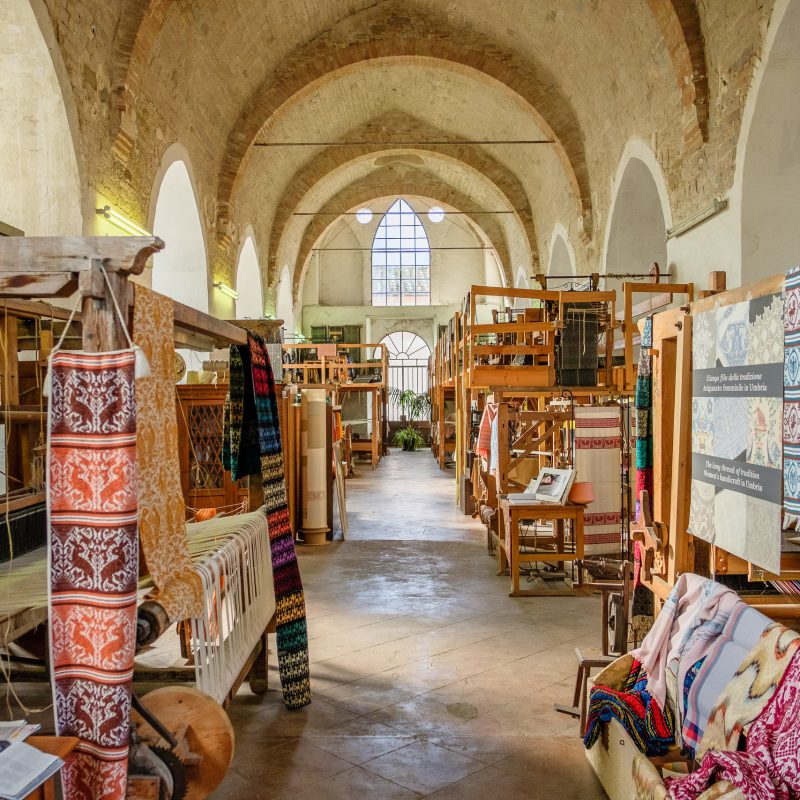
In 1995 Marta moved the workshop/museum to a 12th c church outside the medieval walls of Perugia. This building was the first church built for St. Francis of Assissi. Over the years other, larger churches were built in St. Francis’ honor, including the enormous cathedral in nearby Orvieto. The little chapel in Perugia was sold to the Benedictines early in its history and used as a convent. During the 19th c it was used briefly as a spinning mill. It is a glorious environment to house the antique “modern” looms that now weave the traditional fabrics of Perugia.
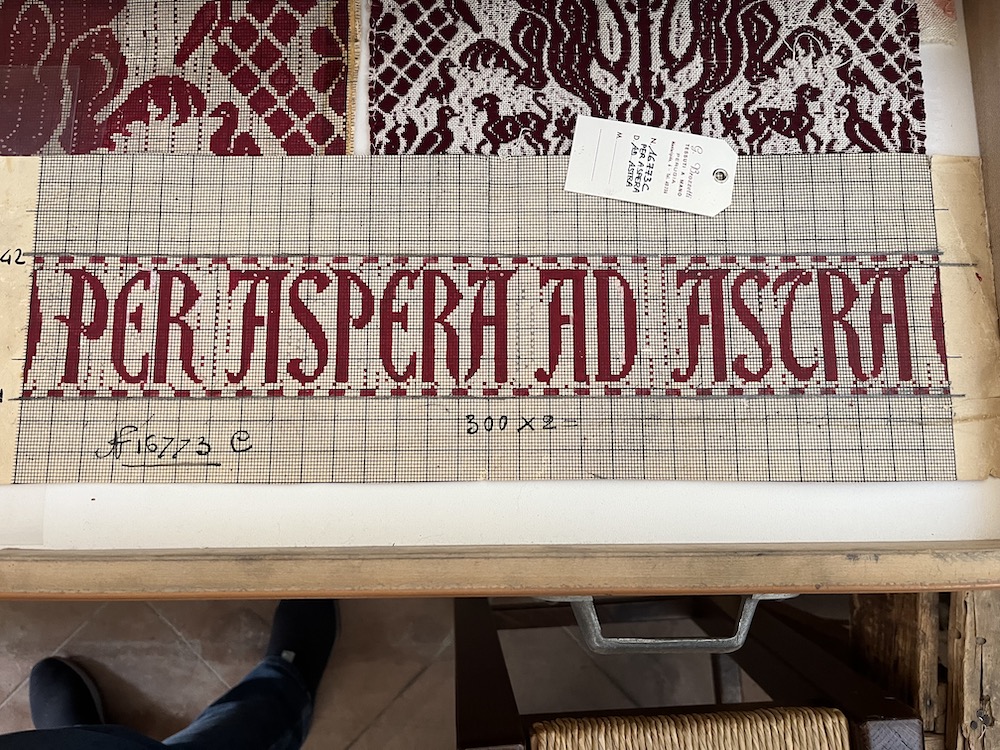
The motto for the city of Pergia is “Per Aspera ad Astra,” literally “from hope to the stars.” Perugia suffered many setbacks during the Middle Ages and Renaissance, and this motto demonstrates the Perugians’ endurance and creativity.
More info check out the website.