ArgoKnot

Shelter

A brief update, sort of a post script at the beginning rather the end: March 22
All islands are now closed. We plan to begin this long journey home on Wednesday (Mar. 25), with a first destination of USVI. One of our small flotilla contacted the consulate there to ask to be admitted. The consulate believes we can clear in. At the moment, in many of the islands, legally cleared in cruisers are being forbidden from going ashore to provision, even after finishing a mandatory 2-week quarantine, in order to protect the locals. In Martinique, legally cleared-in cruisers are being evicted if they are not a EU registered boat. All American flagged boats will be evicted with no ability to clear into any other island. That seems unduly cruel. Once we leave St. Lucia, we cannot make landfall, even for a night of rest onboard, even without going ashore. So we will sail directly the to USVI and hope we’ll be admitted. We’ll rest and do the larger jump to the US, wherever we will be allowed to enter. We have plenty of provisions to make it to the USVI, and perhaps even enough to make it to the US. We don’t yet know where we can clear in on the East Coast, but one of our volunteers will start working with the State Dept. tomorrow. We are low on cash and no way to get more here. I am hoping, hoping, hoping for calm seas for this 2000 mile journey.

My good friends will know that I am not living at home at the moment. My husband and I spend our winters onboard our sailboat and travel through the Leeward and Windward islands of the Caribbean. Some people imagine us living a dream, floating about in calm waters with umbrella drinks amongst tropical scenery. For brief moments that can be true! The reality is that the sea conditions down here can be quite “sporty” since we are sailing in open ocean between islands, and those ocean swells have come non-stop all the way from Africa! Most of these islands do not have protected harbors, so we anchor in bays that have some ocean swell rocking the boats at anchor. Life on a boat is a step back in time. Things we take for granted at home, especially modern plumbing, is a distant dream onboard. Toilets, showers, laundry are all BIG issues on a boat. We ration fresh water and electricity, so anything having to do with water, and especially hot water is not a given. By the time I return home each spring, I am deeply in need of homelife! This year will be even more so.

I have always felt my own homes to be good shelters, safe havens from the outside world. I have relished those safe havens and perhaps taken some of the conveniences there for granted. For some time now I associate this word–shelter– with yarn. Yes, yarn….specifically Brooklyn Tweed’s yarn called ‘Shelter.’ I made a sweater once with a beautiful color of green Shelter called ‘Bottle.’ I knitted it one fall while Bob and I were making our way down the ICW (intra coastal waterway) in mid-autumn weather. I finished it and got to wear it when we arrived in chilly St. Augustine.

Actually, this shows the color more accurately–a lovely, beer-bottle green.

Now our boat is looming large–actually, looming smaller and smaller– as our shelter. Sorry for the pun. Can you tell I miss my looms? I admit I am a bit envious of my weaving friends who are sheltering at home. I know they are weaving. Sigh…

I don’t often talk about sailing because this blog is not a travel blog, and it’s certainly not a sailing blog. That would be my husband’s domain, and you can find him here. I stick to textile techniques, and I try to search them out wherever the wind takes us while we are living aboard. But today I need to talk a bit about sailing.

Yesterday we learned that the Secretary of State announced that all Americans currently out of the country have to get home immediately, or shelter in place wherever they currently are. He said this situation could last a long time, perhaps 18 months. That narrowed our decision about whether to stay down in the Caribbean to wait out the pandemic or sail almost 2,000 miles to get home We were lucky to check in to St. Lucia before they closed the island, but now we see that we must begin the long journey home unless we are prepared to stay here for an indefinite amount of time. We are not. Most of the islands in the Windward and Leeward chains are now closed to visitors, and some of them have implemented severe rules that cruisers may not come ashore to provision, even if they have cleared in with immigration. They are protecting their own citizens from exposure to us who have been visiting many islands countries over the past few months, and they are ensuring that their own citizens have access to the limited food and supplies in the shops. All good. We, on the other hand, cannot live somewhere indefinitely without the ability to restock our provisions.

The list of islands now closed to visitors is almost all of them. The few that are still open, either require quarantining visiting cruisers onboard their boats, or rejecting them due to the places they may have visited before arriving. Because the incident of the virus has risen dramatically in the US, boats from the US are being excluded from some of the few islands still accepting visitors. I feels a bit like a diaspora, although I know we are so much better off than people left homeless on land.

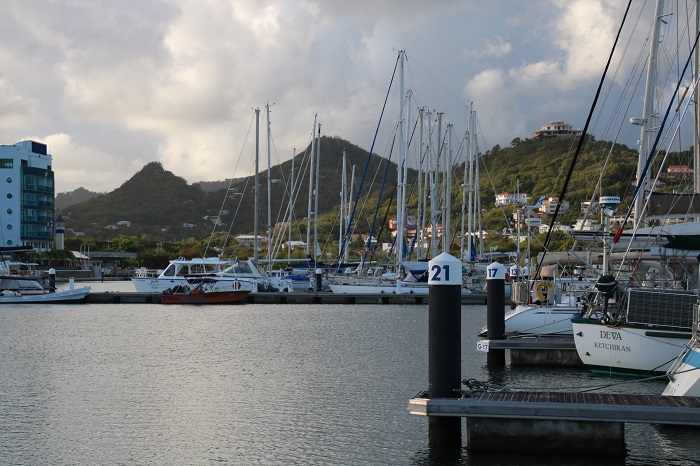
This is the marina tucked inside Rodney Bay, St. Lucia. We are so lucky to have gotten here before the island closed. The marina is full at the moment. The water is too dirty for swimming, and we cannot make fresh water here. But there is good water on the dock, and we have electricity!

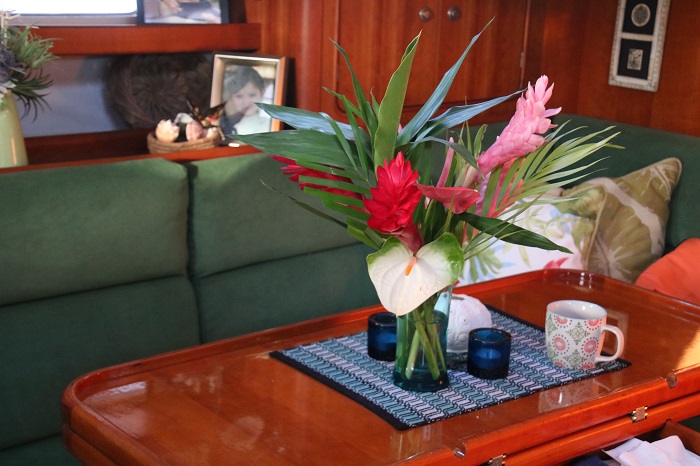
Bob knows my level of concern. A good deal of it is based on the kinds of malfunctions and near-disasters he has encountered during his and others’ past few voyages to and from the Caribbean. Amidst all the prep he is doing to get us ready to leave, mostly involving the water maker and the new fridge unit, he bought flowers! Yes, that went some measure to making things feel normal for at least the next few days. To quote the Queen, “Stay Calm and carry on.” Flowers onboard do lend a sense of calm!

Here is our current plan. I apologize in advance for getting into more sailing jargon than any non-sailor should have to endure. We will sail up the chain of Windward islands, starting sometime next week, when the winds and sea swell should be down a bit. We will rely on our excellent weather router, Chris Parker, to advise on the calmest time to leave. Although all these islands are closed to us, for the sake of my inexperience, we will stop each night in a bay on some island to anchor. We will be on our way again the next morning. This is technically illegal, and some islands, like St. Lucia, are policing their bays and shooing away visitors. If this should happen, we plan to plead my lack of qualifications for this journey and our need to rest.

Our first destination is St. John in the American Virgin Islands. We should be able to get there in 10 – 14 days. Before we arrive there we hope that land-based volunteers from our several blue water sailing groups will be working to get the State Department to understand our plight and designate some American ports where we can shelter. We have heard that harbors along the East coast are closing. We need to have some places open for our arrival. We need to know where we can go. Our land-based volunteers also plan to ask the Coast Guard for help in tracking our routes, or keeping track of us in some way. We will have a list of boats making this journey to give to both the State Department and the Coast Guard. Most of us have transponders onboard for keeping track of our location.

Because of my lack of experience (frankly, I am so unqualified for this journey it is frightful), we will be taking a route that keeps us relatively close to islands where we can bail out as necessary, even though these islands will be closed to us. We don’t have an exact sail plan yet, but it’s likely that we will go to Puerto Rico (closed for entry) and possibly through the Bahamas (also closed). Then perhaps to Florida or Georgia. From there we can go up the Intra Coastal Waterway. The only remaining ocean passages would be the coast of NJ, always horrible, and perhaps the outside of Long Island. I cannot think about that part of the trip now. It’s a long way off, and who knows how things will be by then.

My worries are:
–Normally Bob would sail home with two or three experienced crew members, but no one can get to us right now.
–We are currently in St. Lucia which is part of the forbidden hurricane zone, starting on June 1. Our insurance will be voided if we don’t get north of Cape Hatteras or south of the Grenadines by that date. Considering how slow travel by sail is, we need to get out of here soon, either north or south.
–since we will not be permitted ashore during our travels, we need to make sure we are completely self sufficient in food, water, and mechanical necessities onboard. We have just had a new refrigerator/freezer installed since our original one died in Dec. It took all this time — 3 months! — to get the new equipment shipped and installed. In order to fit this new appliance onboard we had to move our water maker. The installation of both these items is still not complete, so we have not been able to test that they are in good, working condition. I am very worried about this. We need to make our own water and we need to keep some of our food cold…..for quite a long time.
–I will be out of meds in April, so I hope I can get help with that in St. John since we’ll be on American soil. Fingers crossed. I also do not have reliable seasick medicine, and as the only crew member I need to be able to do my share.

We hope to be home by mid-May. I have never been at sea for such a long time. This will be very different than the island hopping we’ve done in past winters. We should have moderate connectivity through our trip to St. John in the USVI, but after that I have no idea. It’s hard to be so far from home with little or no ability to keep in touch. So, fingers crossed and holding my breath that I’ll get home and be weaving in a couple of months’ time.

Carnivale….it’s all about the textiles and the smiles

Carnivale started yesterday afternoon in Fort de France, and will continue through Ash Wednesday. The schedule of events is complex and interesting — everything from children dressed up as little devils on ‘Red Day’ to ‘Unilikely Couples’ on Wedding Day. I think Ash Wednesday is a Black and Red day, when a relic of King Vaval, the devil, will be paraded around and then symbolically buried for the start of Lent.

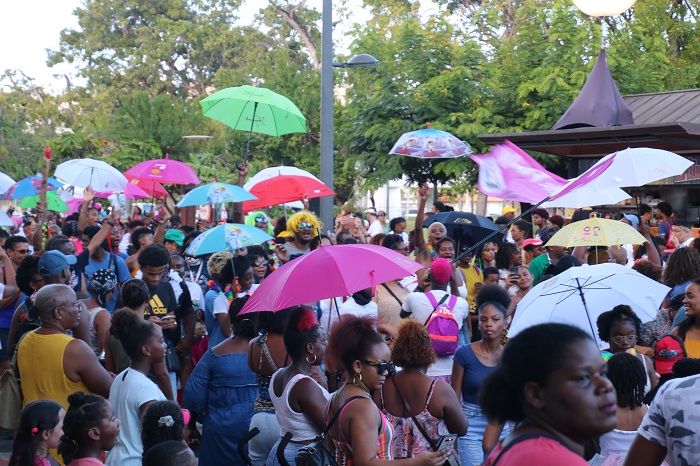
The parade on Saturday was like a pre-game event. It began with locals carrying colorful umbrellas and walking/dancing to loud drumming. It got us all in the mood!

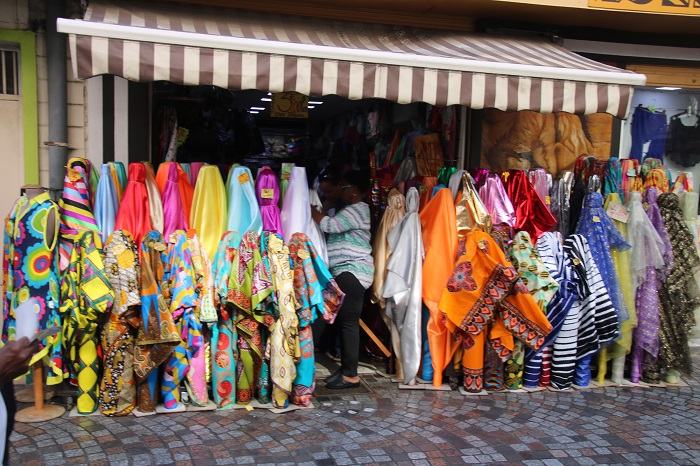
Two years ago we were here in February, but it was not yet Carnivale. People were getting ready, though. The fabric store wares were spilling out into the street, and the fabrics were all garish, glittery yardages geared for making the most outlandish costumes.

I happened to wade/paw my way through the bolts to the back of one particular store, where I found beautiful printed linens from France. I hope to find a similar treasure this year….. I did not remember where the shop is located, but I have now managed to stumble on it twice, and lose it again. I hope I can find it one more time tomorrow morning when the shops will be open only for the morning. No pressure!

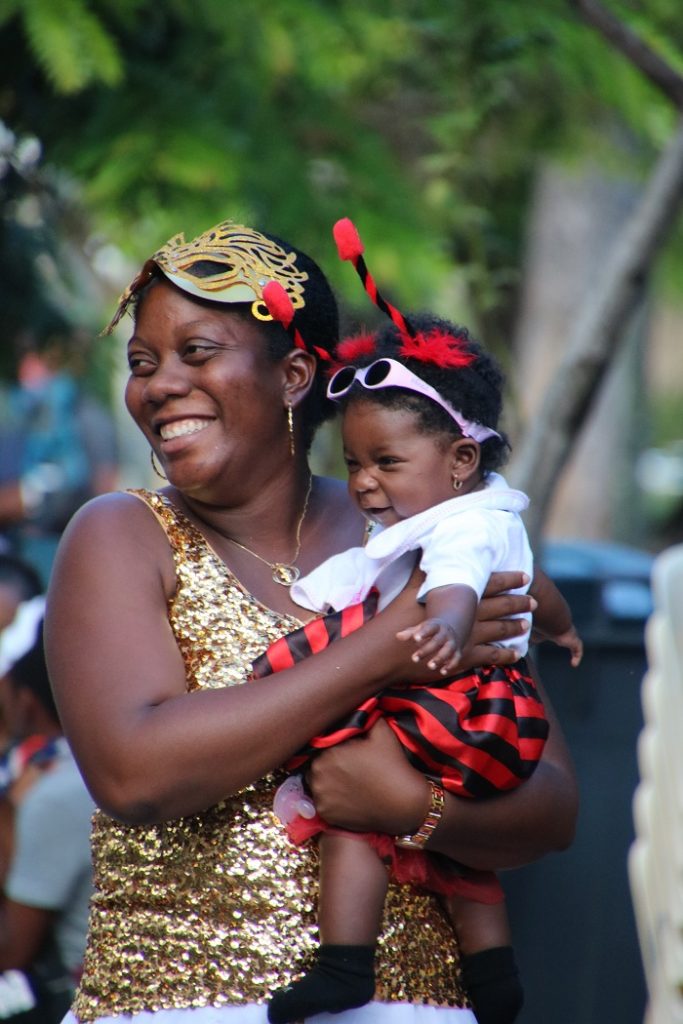
Some of the bystanders in yesterday’s opening parade were as interesting as the participants! Perhaps this little lady bug will be part of the childrens “red day.” I saw this gold sequined fabric in a number of shops.

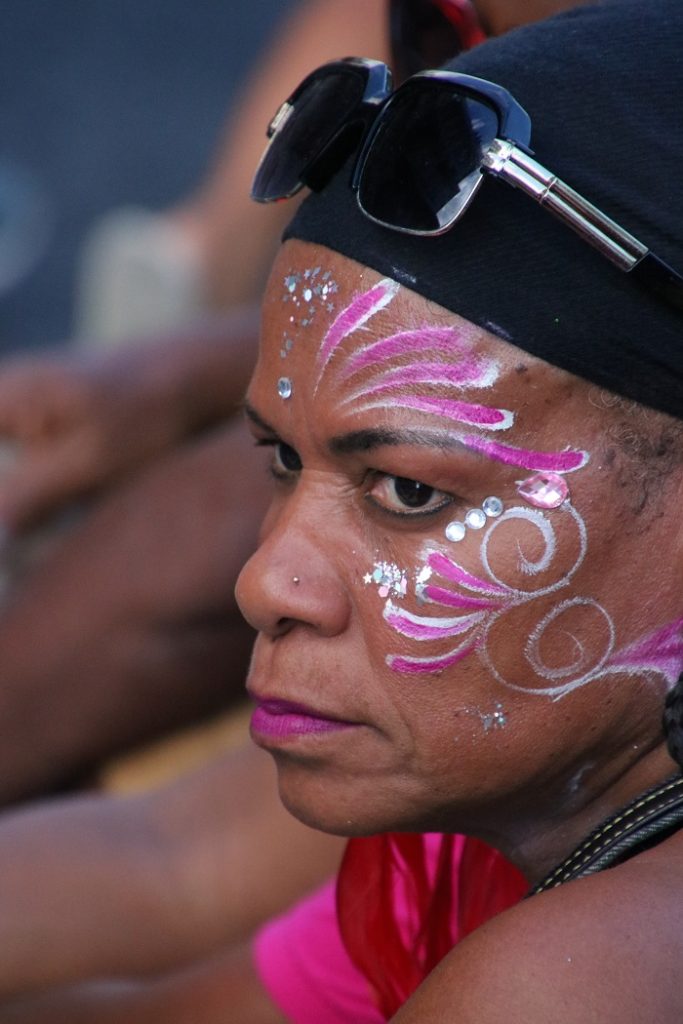
Face painting extraordinaire!

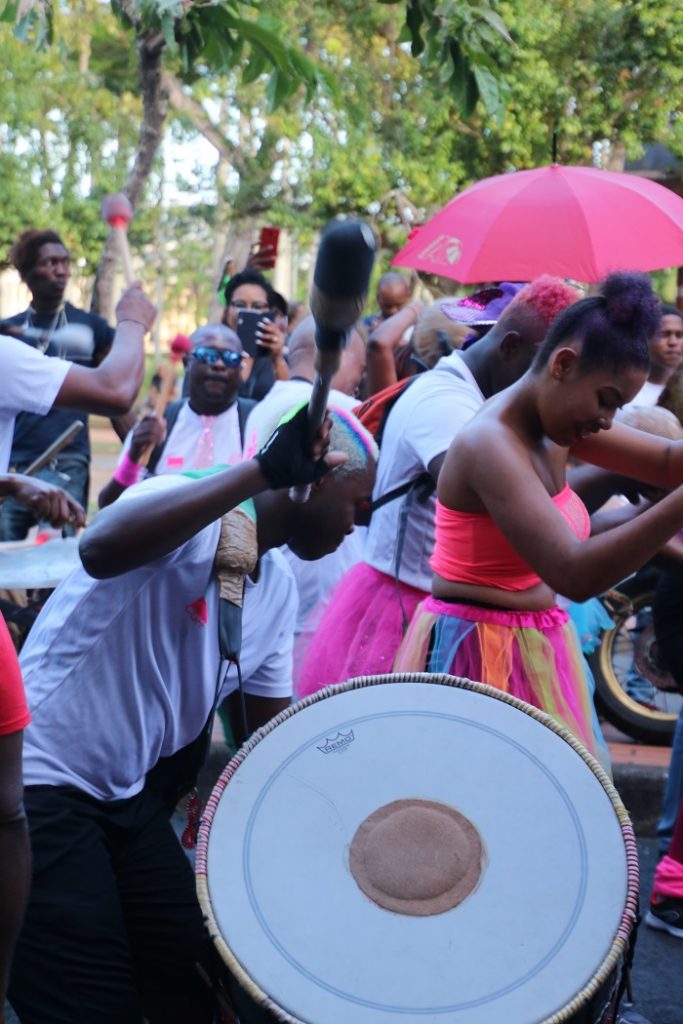
Drumming factors heavily in these parades, and for several days prior we heard various groups practicing. It’s hard not to get in the mood when these wonderful rhythms are pulsing and vibrating through the city!

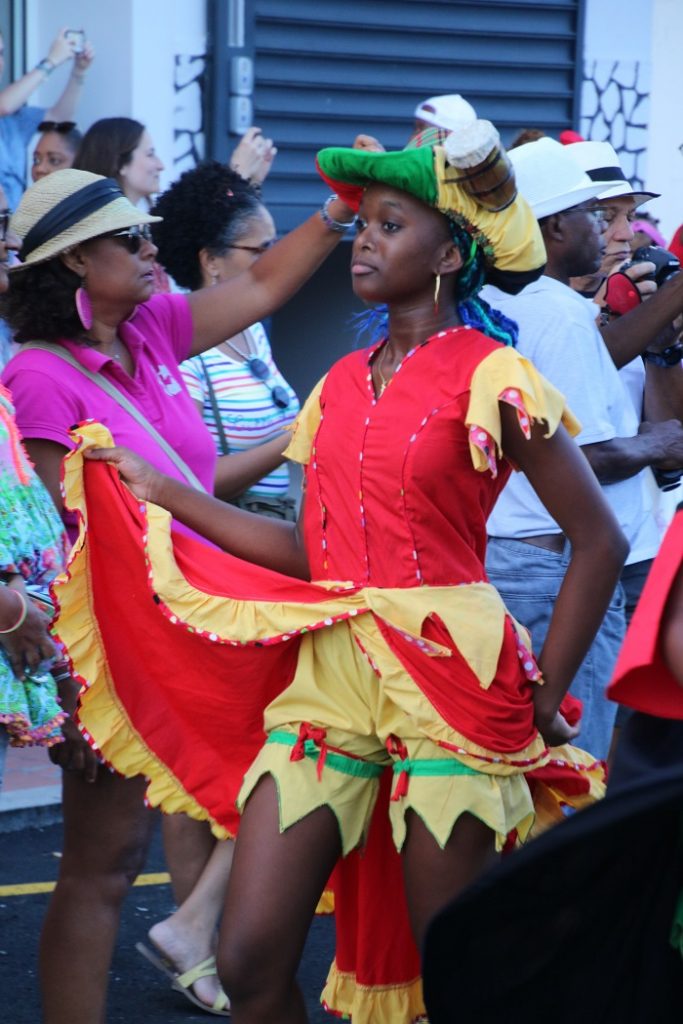
There were costumed dancers to accompany every drum corps (do you think that’s what they call themselves? Nah….), and plenty of spectators joined in the dancing too. Tutus came in all colors, sizes, and lengths.

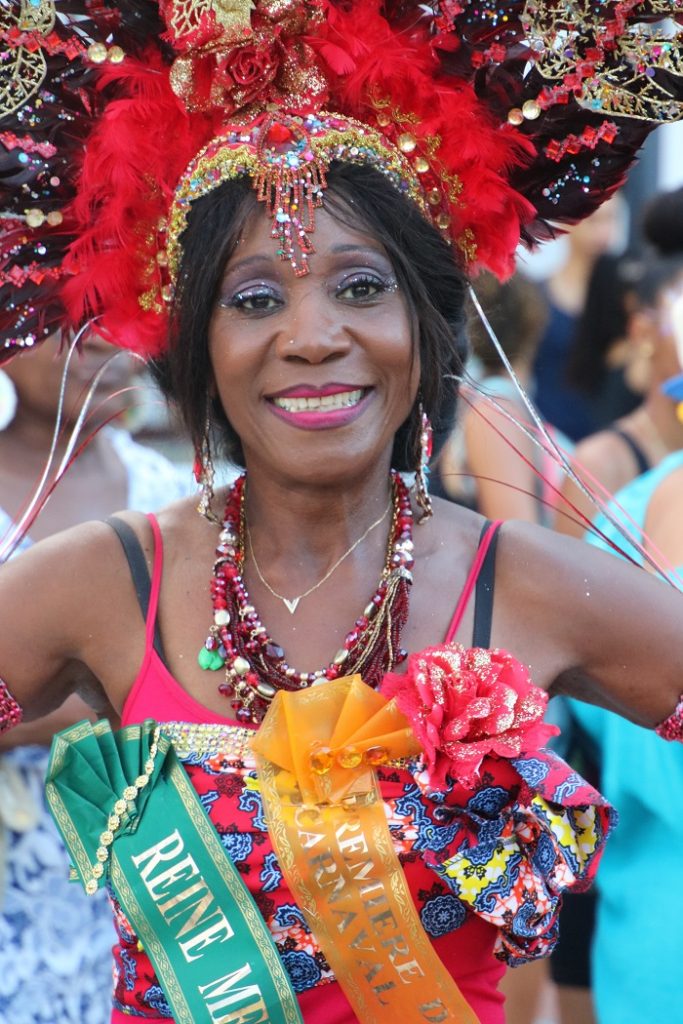
There were queens of every conceivable type. I think this lovely woman must be queen of Fort de France for Carnivale.

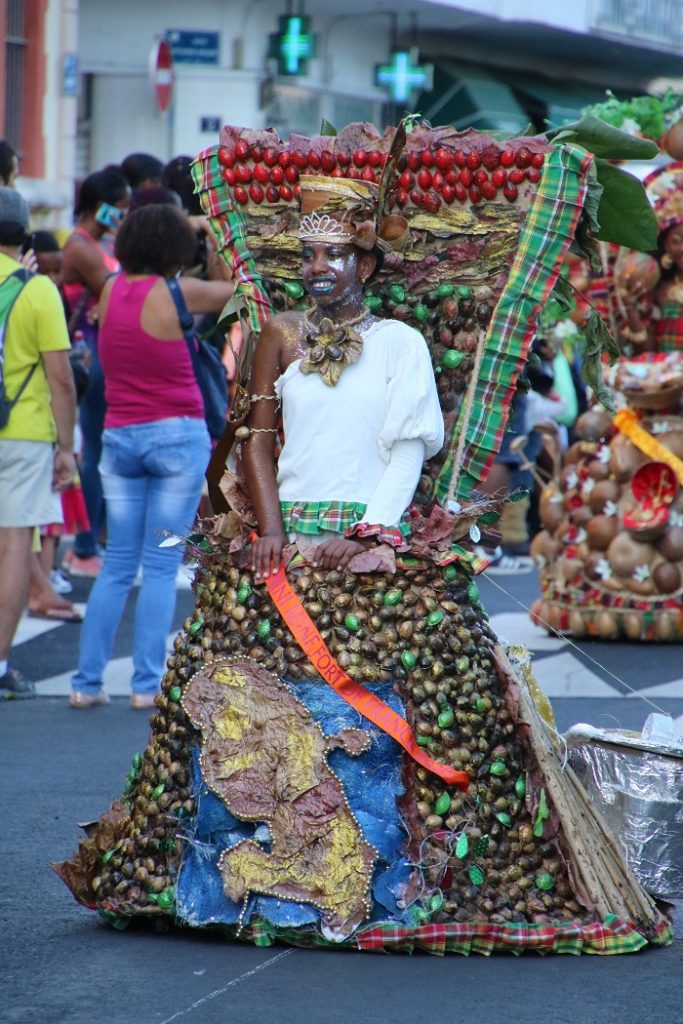
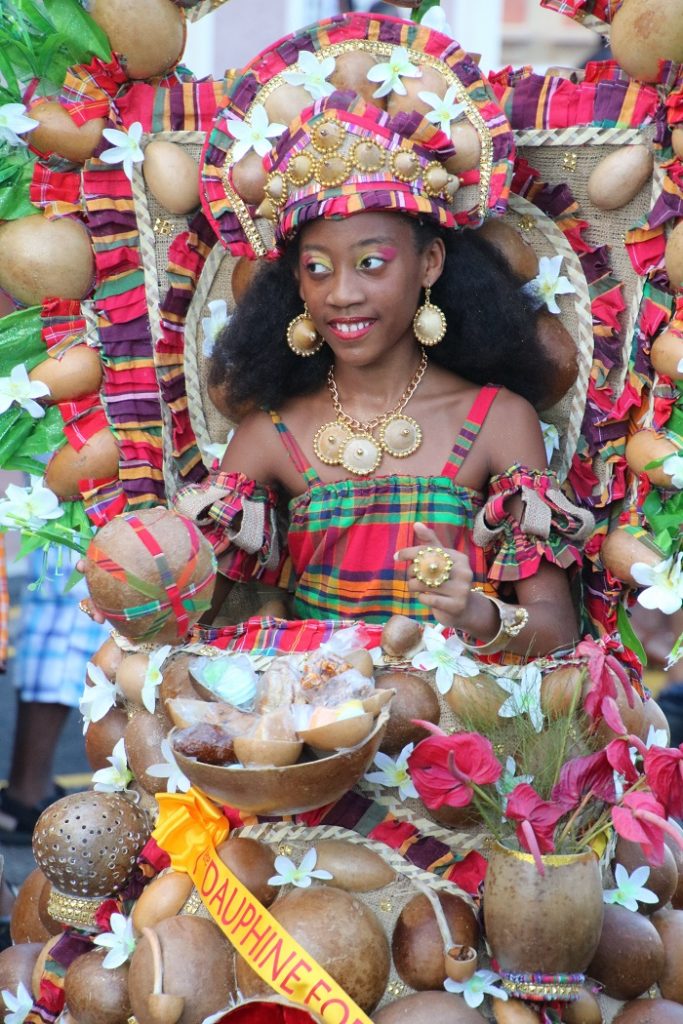
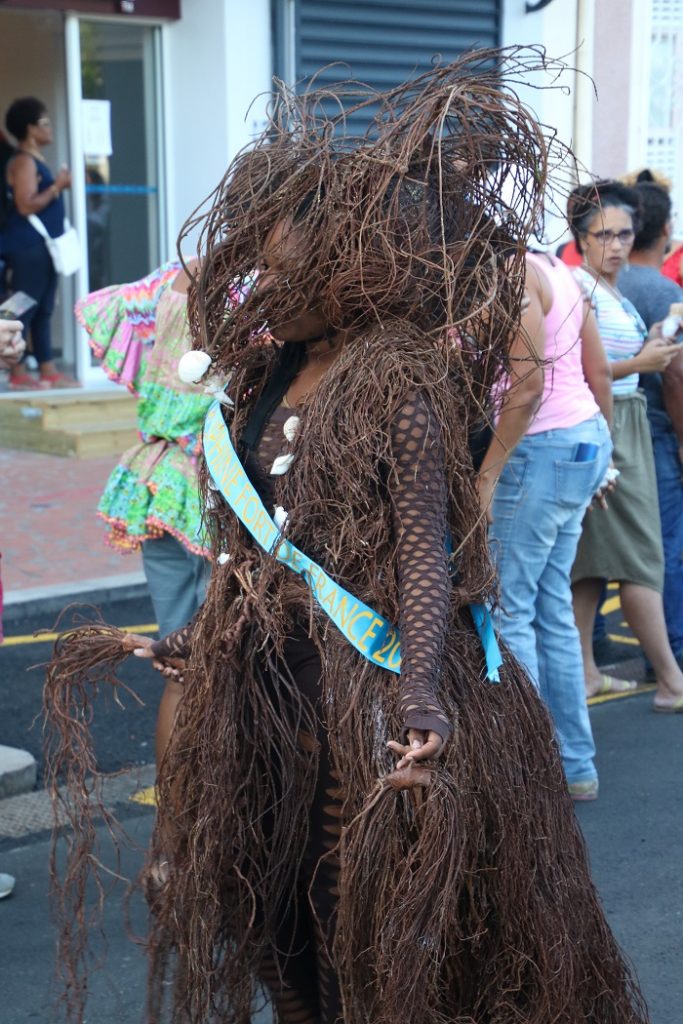
The Coconut Queen….actually, I believe her banner reads Dauphine for next year’s Queen of Fort de France. Madras is the traditional fabric for all these islands.

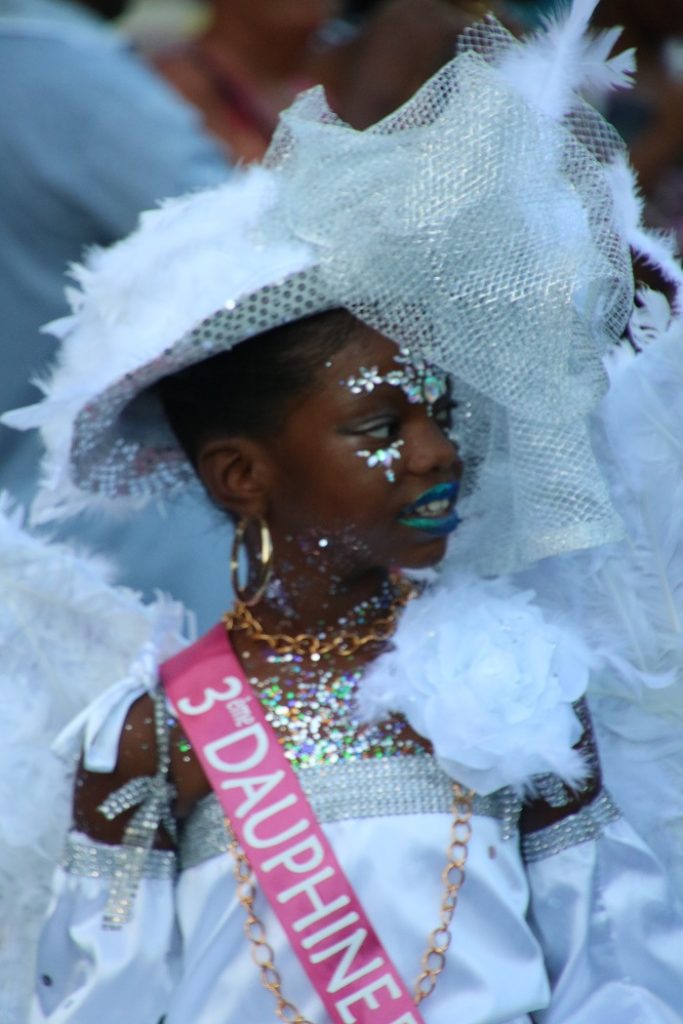
There were lots of other queens too…. here is a tiny bride. Perhaps her ‘dauphine’ title suggest that she will be a bride in some future Carnivale….perhaps in 3 more years. I wonder if they pick these queens so long ahead of time so there is plenty of time to make these incredible dresses. I’m just conjecturing.

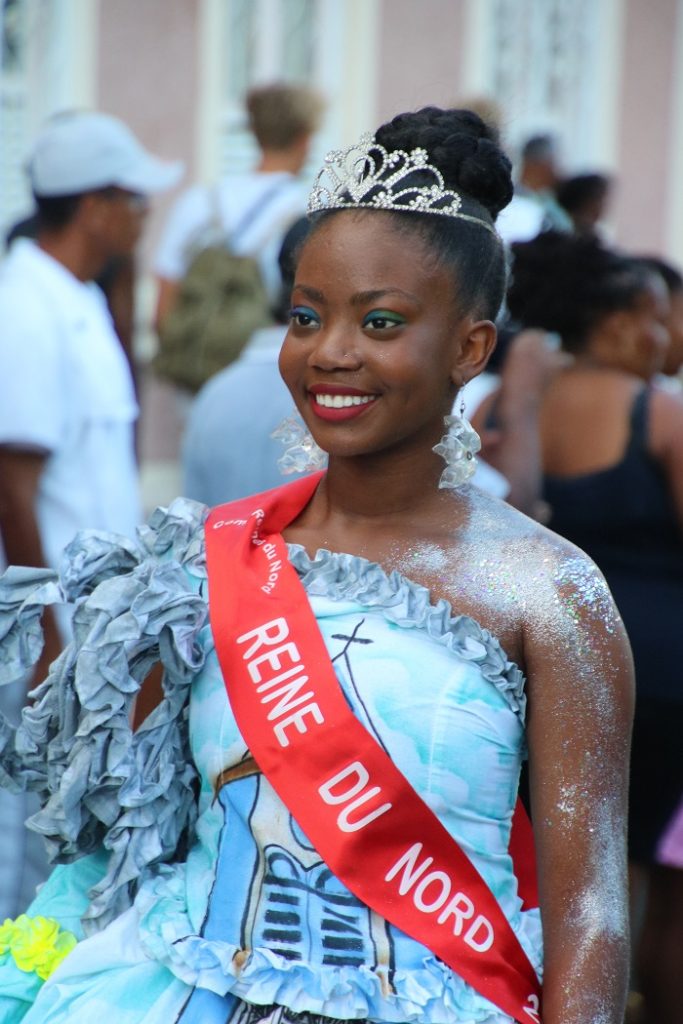
In the realm of beauty queens there were quite a few categories. I believe this beauty’s sash reads “queen of the north.” What beautiful young women, all. And the dress…it has hand drawn images, carefully placed

I’m not sure what this woman represented, but what a great costume!

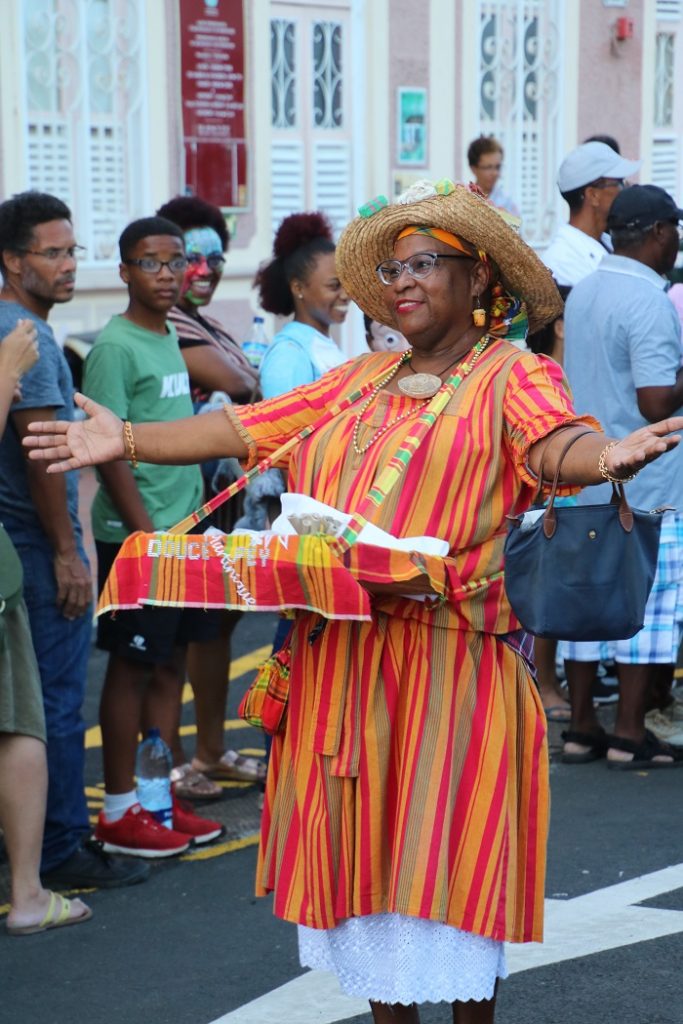
Not all the women were young. Here’s a woman of a certain age, looking elegant as ever. I could not read all of her sash– perhaps queen mother of St. Lucia.

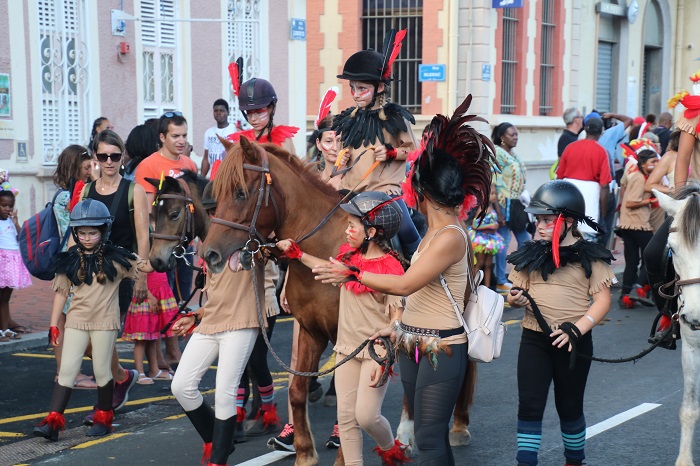
There were two children’s groups. One had children dressed in stereotypical Native American costumes–although this photo of the first row does not show that as well as the next several rows of chidlren– riding tiny ponies. They were adorable. Comically, they were followed by several older children carrying shovels and a one large garbage can in case of droppings.

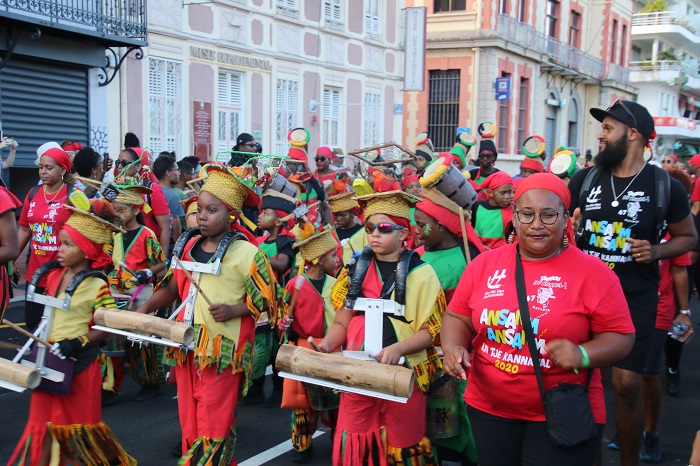
The cutest children’s group was a drum corps. They seem to be elementary school aged children. Some played lengths of large bamboo while others played bongos and small drums. Their headdresses were the most fun! Can you see the bongos on their heads?

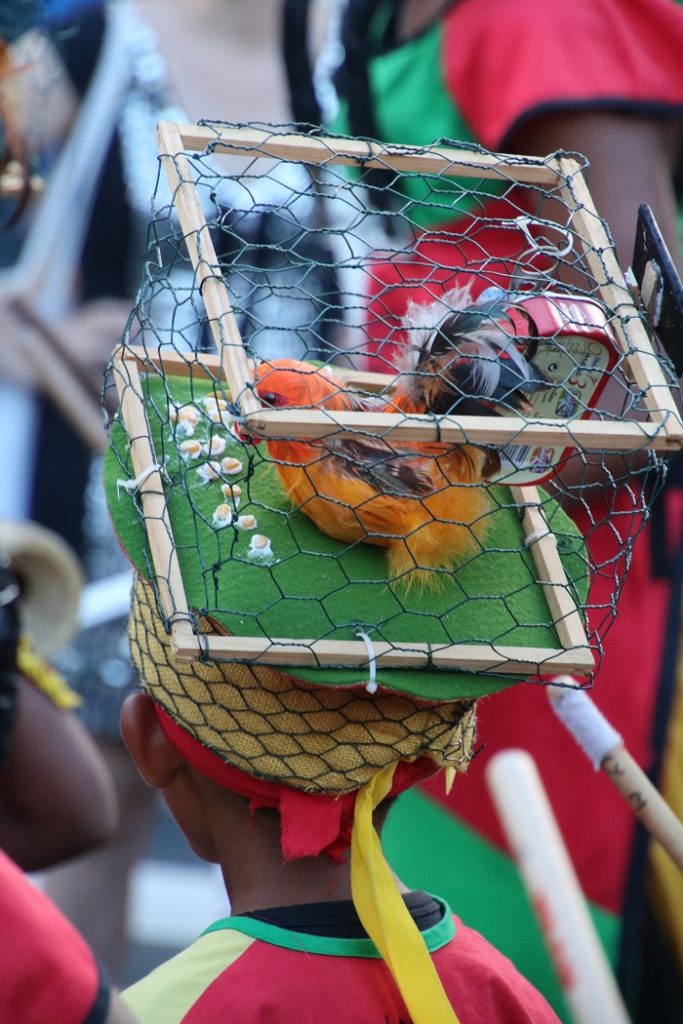
Even better than wearing a bongo on your head might be wearing a cage with a parrot inside! Do you think the kids quarreled over got to wear the caged birds? Do you think moms and grandmoms had fun making these? — though I certainly don’t want to assume that only women could make these fun accessories. Some men could have had a hand in these great headdresses!

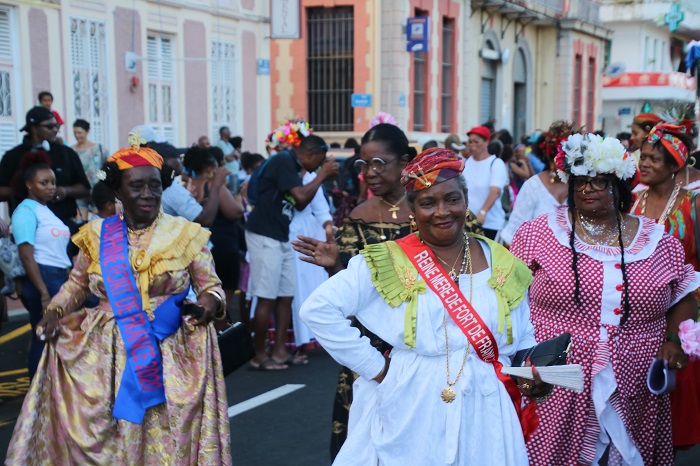
Then there was a group I have dubbed The Grandmothers. Enjoy their ageless beauty, and most of all, their grace! I wish I could show you how they danced their way down the street.

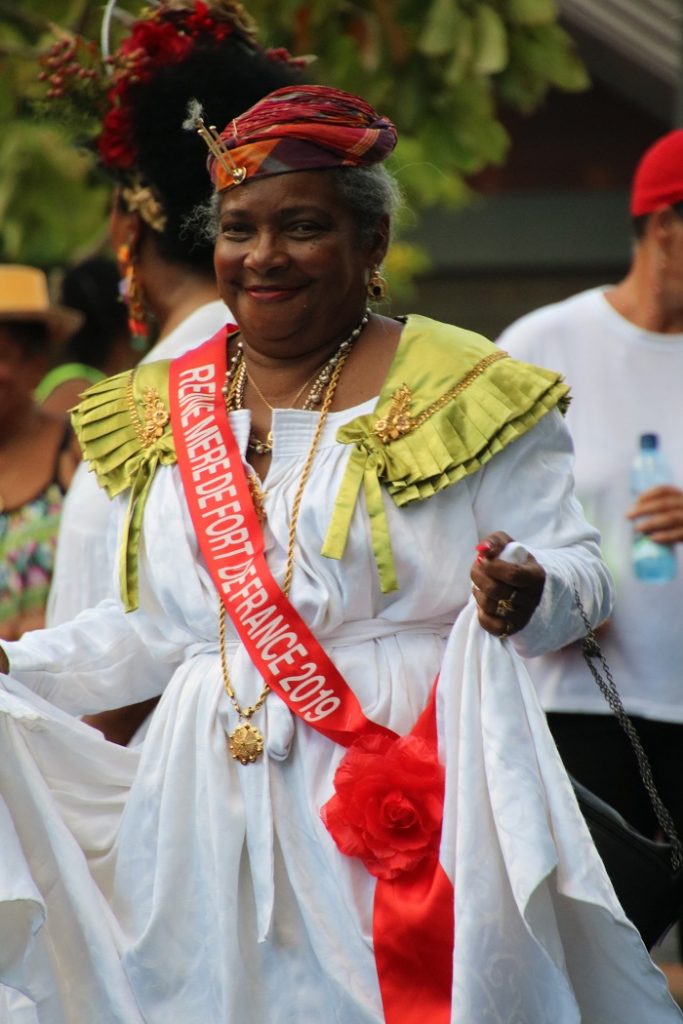
And my favorite, the Queen Mother of Fort de France.

Tomorrow, Shrove Sunday, is the beginning of the true celebrations. It’s the day for all colors. And it’s King Vaval who will be buried on Ash Wednesday. Monday and Tuesday are called the ‘fat days,’ Lundi Gras and Mardi Gras. Who knew? Here is a rather clumsy Google translation of the day:

The Shrove Sunday is the first day of the carnival celebration. This day is open to all follies and everyone puts on the disguise of their choice. A richness and a creativity are mixed then in the various parades, thanks to the freedom left to each one, to show his imagination. This day is characterized precisely by the variety of colors. It is also the day when King Vaval, a giant puppet made for weeks, will be presented in total secrecy. He will take the lead in the procession and will be promoted until Ash Wednesday.

I’m looking forward to it!

Mend and Make Do

…a well used phrase from my parents’ and grandparents’ generations. It served them well through two world wars and the depression. It’s gaining favor again, as our affluent culture has had so much consumerism and so many things sent to landfills. Some of us are trying to make do with less, and repurposing the things we have. The culture of recycling things, reinventing uses, and making do has never gone out of favor in the small islands where Bob and I are living this winter. The people here have had no choice about that!

Bob and I are in Dominica now, the ‘nature island.’ Indeed, the rainforests here are as unspoiled and pristine as you could possibly imagine. It’s been just over two years since this island was flattened during hurricane Maria, which rapidly escalated to a category five hurricane. Bob and I visited here about two months after Maria occurred. The entire island was brown, with not a leaf left in the rainforest. Along with many other cruisers, we delivered tarps for use on houses and buildings that had lost roofs. Here we are again, barely more than two years later, and the rainforest is healed, but many man made structures are still covered with tarps that have decayed and shredded over the past two years. Patrickson Wallace, who was our guide for a day tour of part of the rainforest told us that he was without electricity for 10 months. At least he now has power and a real roof. Meanwhile, nature heals herself faster and more thoroughly. I am currently reading Overstory by Richard Powers. Being here is a wonderful environment for reading this book. The link will take you to Barbara Kingsolver’s review in the New York Times.

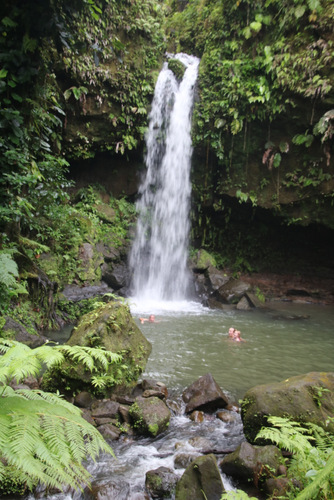
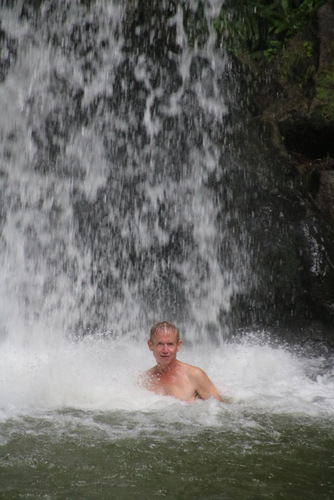
Dominica is a small island (17 miles wide by 29 miles long) that rises straight out of the sea with volcanic mountains covered in rainforest. This island has 365 rivers, and many waterfalls. A small group of cruisers that we’ve met over the past few years spent a day together with our guide to visit a number of waterfalls. We were lucky to be almost alone at Emerald Pool where we swam at the base of a tall waterfall.

Emerald Pool

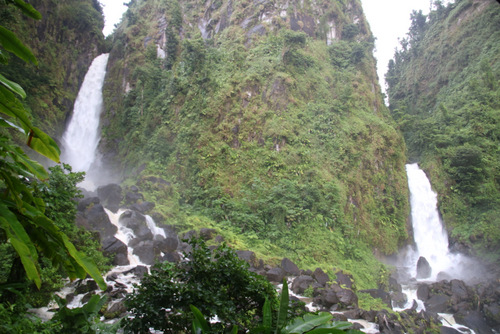
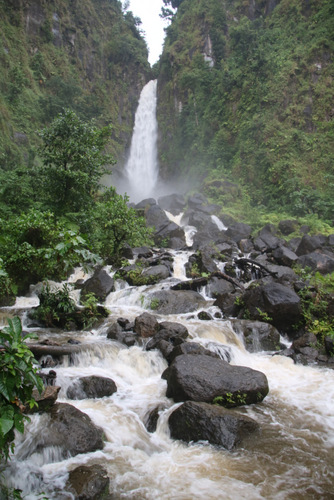
Then we visited Trafalgar Falls and had lunch on a deck overlooking another waterfall that made us feel as though we were high up in tree house! We ended the day at a hot spring fed from volcanoes.

Trafalgar Falls
The view at lunch

I took a video of Trafalgar Falls, but I don’t have enough bandwidth to upload it. Hopefully I can get that done sometime soon from someplace onshore!

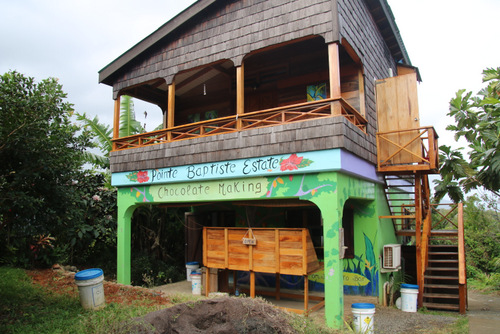
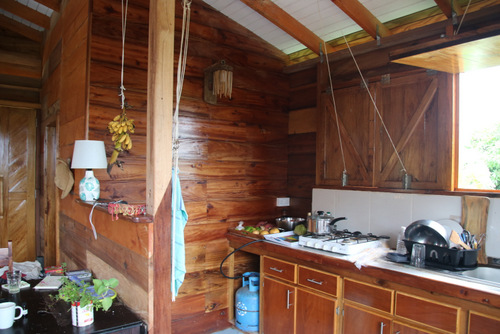
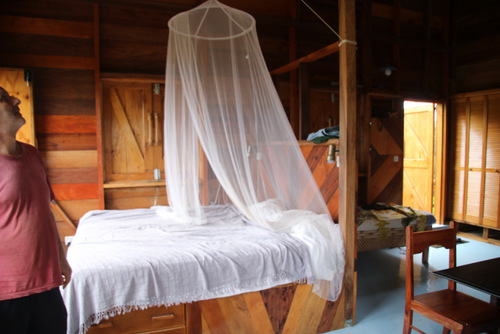
Another visit we took was to a small, family run chocolate factory. The estate grows both cocoa beans and coffee beans. The chocolate is made entirely by hand, and the daughter of the founder took us on a tour of the process. So… speaking of using what’s available…. the father and founder of this endeavor used wood from the property, that was mostly downed in hurricane Maria, to make a small living space above the chocolate sales area for his daughter. Wow! Sometimes making do turns into something spectacular. All the exterior wood–railings and shingles–and all the wood in the interior came from this property. The owner sold Bob two very nice boards of Galba, the local name for this hardwood. I will let Bob figure out if there is a more familiar name to us for what he got.

A romantic aerie with amazing views from the unglazed windows
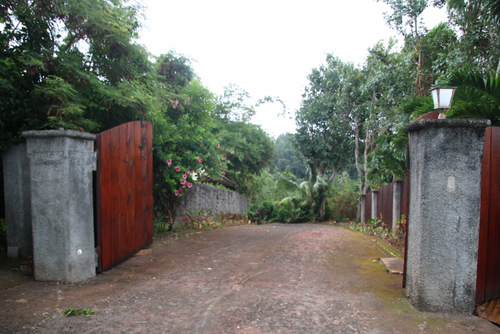
Farewell to the Pointe Baptiste Estate

Onboard our floating house, Bob and I have done a moderate amount of mending and making do. Our refrigeration is failing. We need a new compressor, or perhaps an entirely new system. Our system is not made anymore, and Pandora has a 24v system since she was built in Finland. Someone in California is cobbling something together for us. He’ll ship it to St. Lucia sometime in the next fews days/weeks. We’ll sail there, and either Bob will install it or he’ll find a local technician to do it. In the meantime, we mostly buy each day’s food, and we plan to live off pantry items if (when?) it fails.

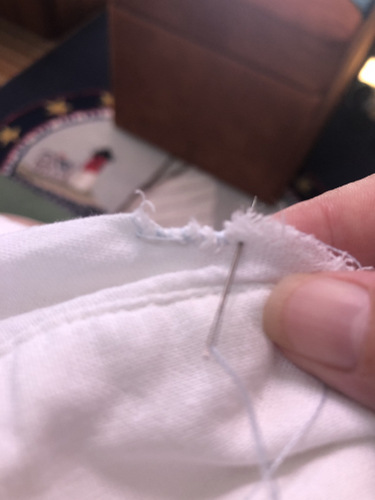
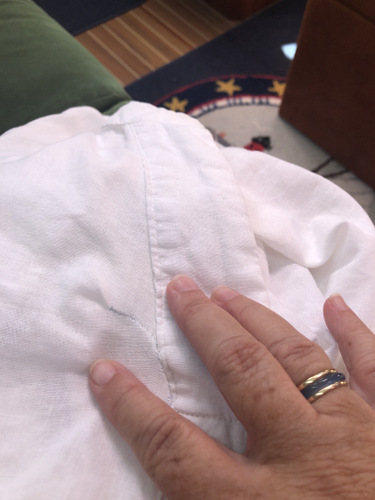
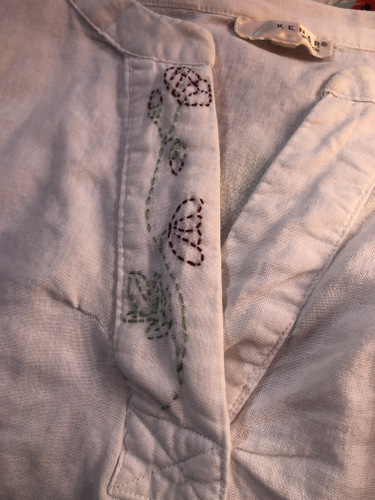
On a more personal level, both Bob and I have had to repair some of our clothing! We can’t just pop down the road to the local Marshalls or a local shoe store to replace the clothing that has fallen apart. I bleached one of my white shirts which had become dingy from so much sunscreen on the arms. Can you believe it? Sunscreen turns cotton a very odd yellow. I must not have rinsed out the bleach well enough because the fabric at the neckline just disintegrated while the shirt dried on a line. And of course the decayed fabric did not occur on a seam, and of course I don’t happen to have any white thread on board. I had to make peace with using pale blue thread for the repair. It’s not quite as discreet a mending job as I’d like. So another adage came to mind: if you can’t hide it, decorate it!
I do have quite a few colors of embroidery thread onboard, so I had another run (with running stitch) at poppies. I do love poppies!

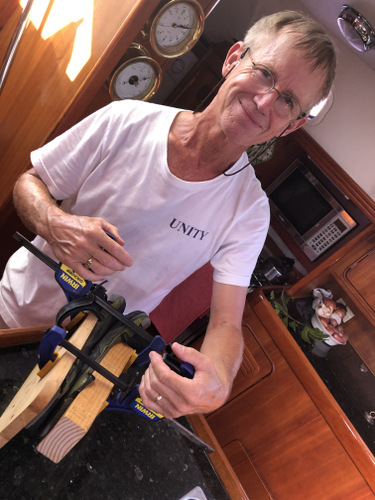
Bob has found that his best walking shoes (Tevas) have delaminated on the soles….both shoes, not just one! He happens to keep some rubber cement onboard, so he peeled apart the layers of the shoes and used a small paint brush to cover each delaminated layer with rubber cement. In this photo he has just finished clamping the shoes, hoping that the pressure will make the glue adhere better. I guess we’ll find out tomorrow when he tries them out walking up to a Fort Napoleon.

Both Teva sandals are clamped together for get the rubber cement to take.

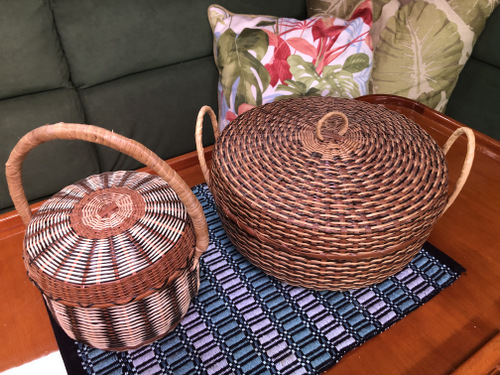
The first time I visited Dominica I bought small baskets with lids for the members of my basket group. I was told that the baskets were made here, but I wasn’t sure I believed it. And I didn’t ask enough questions! On this visit, I am seeing many more baskets!–some of them are exquisite. I asked some questions! There is a native culture here called the Kalinagos who live in their own community. They are known for making baskets out of a type of reed plant that some early native settlers brought with them from South America. The first of these settlers may have arrived on Dominica as early as 500 bce, a full millennia before the French claimed Dominica as their own in 1635. Along with baskets, the Kalinago make items out of gourds and coconuts, as well as making dugout canoes and throwing pottery.

The basket materials come from a reed plant called larouma. The reeds are shaved into 1/4″ staves and 1/8″ weavers, and are often dyed with natural dyes in brown, black, blue, and yellow to create designs with the natural tan. I’m so glad that I learned a bit more about these basket and the people who make them. If our refrigerator holds out a bit longer and if the weather keeps us pinned here, we’d love to visit the Kalinago Territory here in Dominica. Mother Nature will make that call for us.

We’ll see what the next few days bring. Our weather router predicts that we’ll be here in high winds for some time longer. Meanwhile, Carnivale will start next week in Fort de France, Martinique, and we hope to be there! We cannot make any definite plans since the weather controls our destiny. We’ll have to see what comes and make do.

From Antigua to Orkney

The weather has been wild in this part of the world, not unlike many places these days. We are having multiple squalls a day (and night), with high winds and torrents of horizontal rain to go with it. At night we open and shut our hatches so many times, first to get a bit of a breeze in order to sleep, then to shut things down so our cabin doesn’t get drenched. We both lose track of how many times we get up in the night, and at this point we are both suffering from sleep deprivation. So, when I found this recent article from the BBC online, I could not help but notice the similarities, even a world away from here.

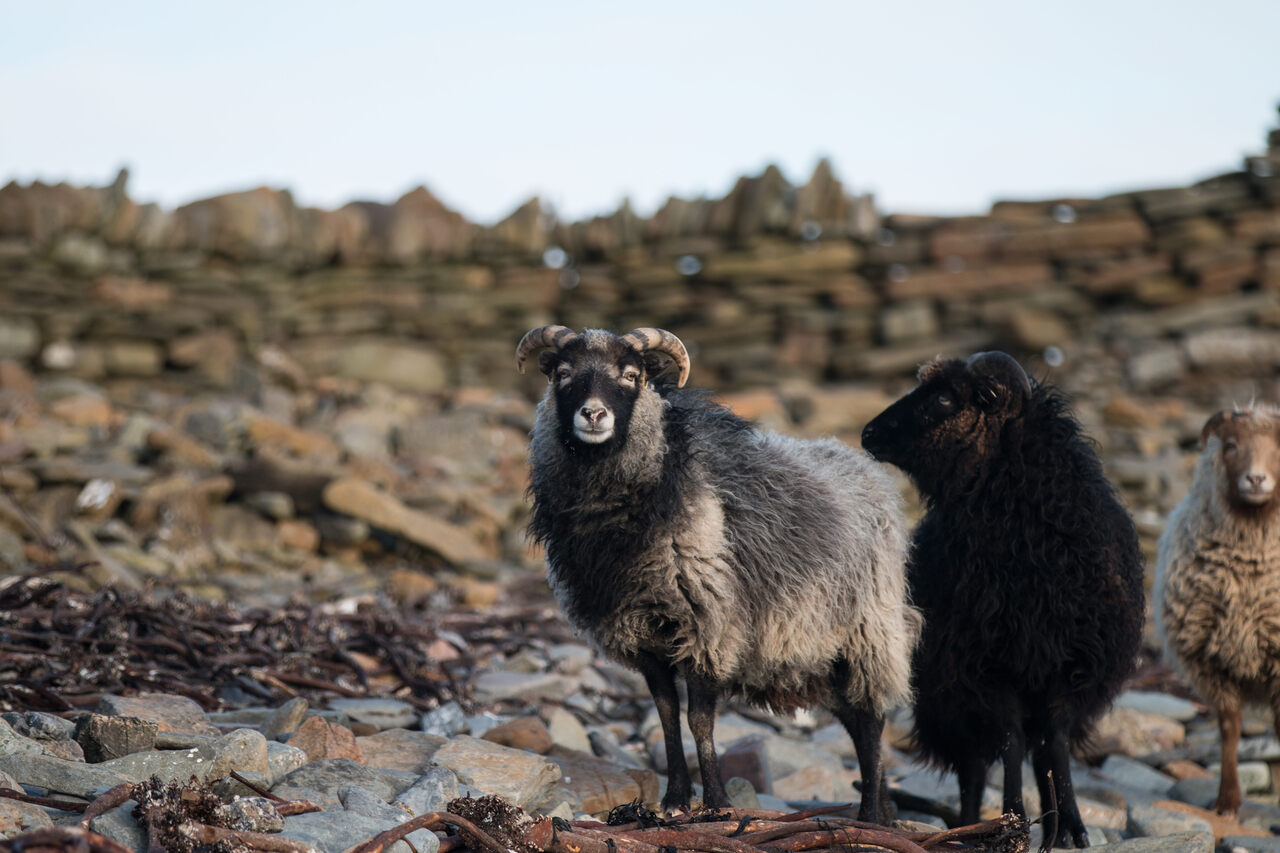
The article is about Ronaldsay sheep on Orkney Island just off the northern coast of Scotland. Another article called Orkney “a freckle off the north coast of Scotland.” How true. Ronaldsay are small, hardy sheep who’ve managed to live on a seaweed diet for quite some time now, ever since the sheep owners cut the sheep off from pasture.

Ronaldsay sheep on Orkney. photo from BBC

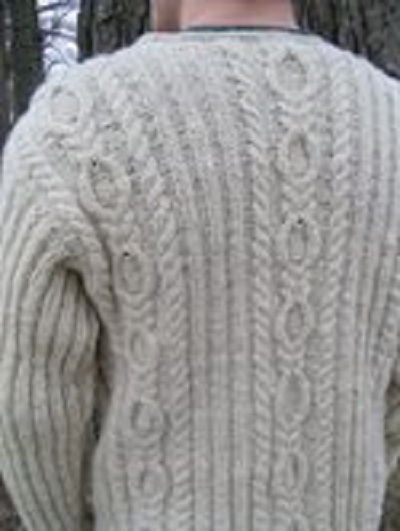
Cute sheep, isn’t she? About a decade ago I ordered a kilo of white Ronaldsay fleece from Elizabeth Lovick on Orkney. She has a venture called Northern Lace, and she teaches and designs knitting patterns in traditional Orkney lace work. It took a long time for my fleece to arrive. When she mailed it, she mentioned that I might never get it, if US customs should deem it unsafe. Well, it did arrive, and I enjoyed the process of washing and combing it before spinning it. When at last I had a medium weight, 3-ply yarn, I knitted it into a fisherman’s gansey for my younger son Chris. No, it’s not traditional. The yarn was, but I made up the sweater pattern myself, attempting to satisfy Chris’ needs and style. At the time he was an undergrad student in Rochester, NY. Later he took the sweater, along with several pairs of wool socks that I also knit for him, to Manhattan while he continued his studies there and then worked for a few years. At one point, he lived in an unheated hallway in Chinatown (yes, he paid rent for this dwelling; yes, it was illegal). That sweater came in handy for a few years. Now he lives in the Bay Area has no need for such a garment!

Pretty low resolution back in 2007.
wow! Small photo, low res. He’s so young!

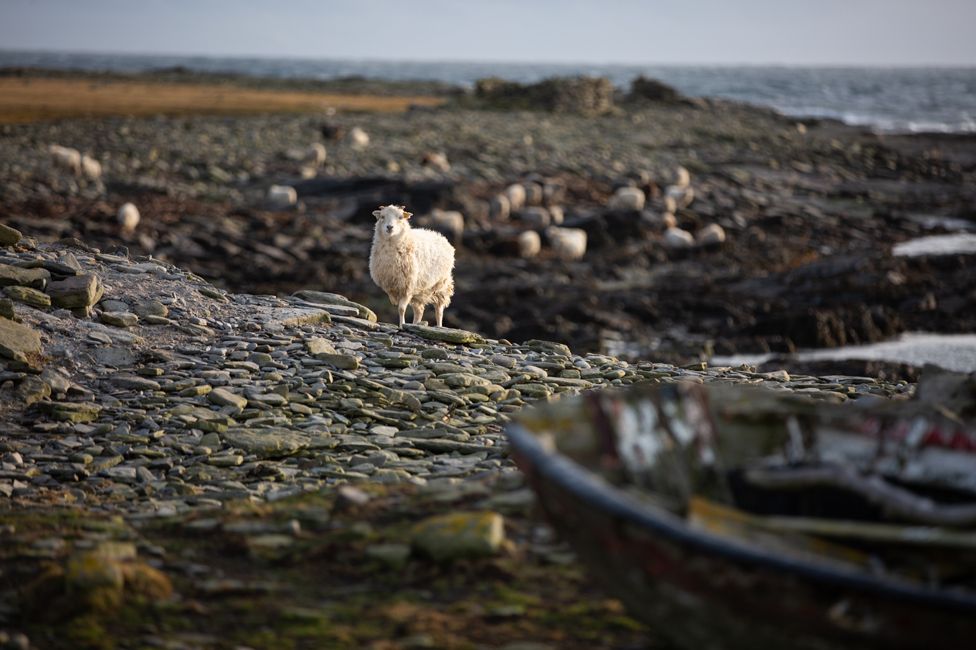
But back to the sheep. Close to 200 years ago, the sheep farmers built a stone wall around the entire perimeter of the island to keep the sheep on the beach so that other livestock could feed on the pasture. The sheep have become accustomed to, and have actually thrived on, their seaweed-only diet. Occasionally a sheep will get through a broken or weak part of the stone wall, and you know if one sheep gets out it’s not long before they are all out.

The sheep on the proper side of the wall. Photo from orkney.com

The article is about the new sheep dyke warden/shepherdess who’s been hired to maintain that wall and keep an eye on the sheep, as well as what scientists are learning about a seaweed diet. It turns out the seaweed-eating sheep do not emit methane when they belch. It turns out that methane gas is 30 times more harmful to the environment than carbon dioxide. Think of all the ruminant livestock throughout the world, adding so much methane to the environment. While it’s certainly not a cure-all for our problems, it could be one of many efforts to ease things. These diminutive sheep have led scientists to research the possible benefits of adding seaweed into more livestock diets. The North Ronaldsay Trust began looking for someone to fill the position of sheep dyke warden during the past summer, 2019. Sian Tarrant who is from East Sussex, and has a degree in marine biology from St. Andrews, seems to fit the bill. She wanted the job, and the island folk wanted her. She has already worked on a number of National Trust projects, recently studying seals on one of the uninhabited islands in the Orkneys as well as in the sub antarctic off the coast of South Georgia. Want to read more about this interesting woman? Here you go!

All this makes me want to comb and spin some Ronaldsay again. This time, I’d go for the darkest brown fleece. Maybe I would use it for tapestry. So many ideas, so little time! Meanwhile, the wind is howling here on this Sunday afternoon. We won’t get frostbite from it, or die of hypothermia, but it is still pretty extreme weather.

A New Year, A New Decade

The last couple months of 2019 brought some unexpectedly sad surprises. Archie Brennan left this world on Hallowe’en, followed closely by one of my tapestry students. I did not know her well, but she was instrumental in helping me realize how important it is to share our knowledge with others. She was new to tapestry, and after a lifetime of beautiful work in other areas of handwork, she was serious and committed to learning a new skill in weaving tapestry. I was so sorry that we didn’t have more time together. The final shock came when a close friend of mine died unexpectedly in early December. She had not shared her situation with anyone but her closest friend, another tapestry weaver and mutual friend. The mutual friend made sure that things were in place as well as they could be. I’m still reeling from this loss. Of course, it was cancer, one of the most likely causes of an early demise.

I am still thinking of these friends– Archie, Nancy, and Anna– every day, repeatedly going over my memories and shared experiences of each of them. It’s a treasure trove of learned insights, experiences, and shared fun. Sometime over the past few years I came across these quotes about grief–

“I’ve learned grief is just love. It’s all the love you want to give but cannot. All of that unspent love gathers up in the corners of your eyes, the lump in your throat, and in that hollow part of your chest. Grief is just love with no place to go.”

“Grief is like the ocean; it comes on waves ebbing and flowing. Sometimes the water is calm, and sometimes it is overwhelming. All we can do is learn to swim.”

I’d like to think that during the next few months I’ll begin to enjoy my memories without so much pain attached; I’ll learn to swim the tides and currents. The important thing is to take these dear friends with me, to remember them, to keep working, knowing that in some way they are at my side.

And through all this the holidays were insane. We spent time on both coasts, which meant a lot of travel, and this occurred after deciding to spend 10 days with Bob in Antigua, in mid-November. It was a great distraction to be with family. My last few days at home before traveling to Maryland and then California, were spent in a frenzy of knitting and weaving presents I wanted to give. In most years, finishing projects is a stressful time, and of course it was stressful this time around as well. But, it was different in a significant way. It was therapeutic to be at my loom for hours on end. It was therapeutic to sit in my favorite chair, with my feet up on an ottoman, knitting for someone I love. I realize how essential handwork is to my well being. Duly noted for future.

So, my new year’s resolution is do more handwork. I made a good start yesterday by warping one of my copper pipe looms and even starting to weave. I worked on the idea for my image, and I felt so proud to get such productive work done on the first day of the year.

Here are some photos of those projects that calmed me during this time of loss. I didn’t finish everything I’d hope to do, but I made peace with that. I had bigger fish to fry for sure.

Here are two of a set of napkins that I wove for Chris and Melody. I barely had time to weave just the two and get them hemmed. I knew they’d understand, and of course they did. I was so touched by how much they like them.

Before I left I stayed up late retying the loom so I could get back to it when I return in April.

I had a long warp of deflected double weave on the loom for a good part of the year. Of course, when November rolled around I thought what great gifts cowls would be. There are six of them, in differing lengths. I gave five of them to friends and family. I loved seeing Melody wear hers, which is the one all the way to the right.

Lastly, there are the knitting projects: a sheep named Spud for our granddaughter Tori who just turned 3, and a tunic sweater for our 18 month old granddaughter Emme.

Emme is adorable in red, and I loved making this sweater pattern.

When we celebrated Christmas with our grandchildren and children I brought Rhett a sweater that I knitted for his father Rob, more than 30 years ago. You can imagine what this photo means to me.

So we are at the start of a new year and a new decade. Admitting to myself the importance of working with my hands every day, I hope this will be the start of some good things. Grief never leaves, but it can certainly be put to use for healing and celebrating the wonderful times and learning experiences that have come from those who meant so much to us. I know that sounds quite sentimental. It is what it is.

Scroll to Top