Wishes Come True
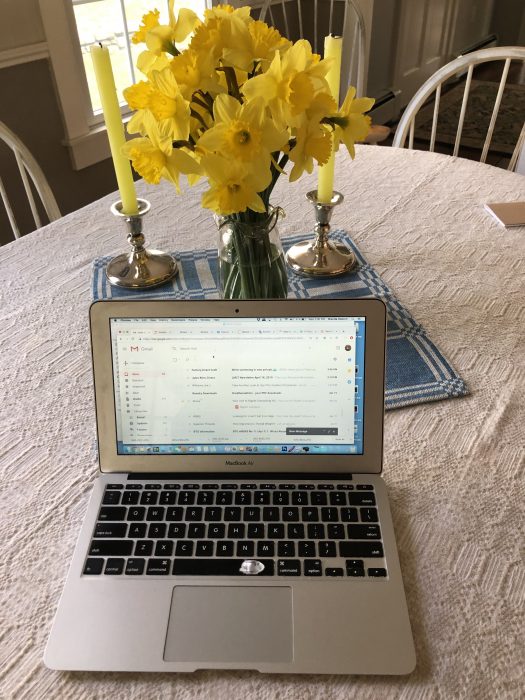
It’s a damp, bedraggled Monday after Easter, but spring is definitely here. Bob saved a nice bouquet of daffs before the deluge began. We’ve had our share of April showers now.
This was our first Easter without any family. It was odd for sure, and I don’t plan to do it again, but I had a wonderful afternoon on Saturday with my sister, sitting in a coffee shop and catching up on a couple of months of news together. Before that, Bob and I spent 10 days in California with Chris and Melody! Those wonderful days should keep me smiling for a long time.
Northern California is a wonderful place, even without the added treat of being of with family, and being there in April when the hills are so alive with poppies and Indian paintbrush and myriad other wildflowers was just the thing. It was a perfect time away. To top things off, Melody and Chris made sure I got to visit some places that have been on my ‘wish list’ for many years.
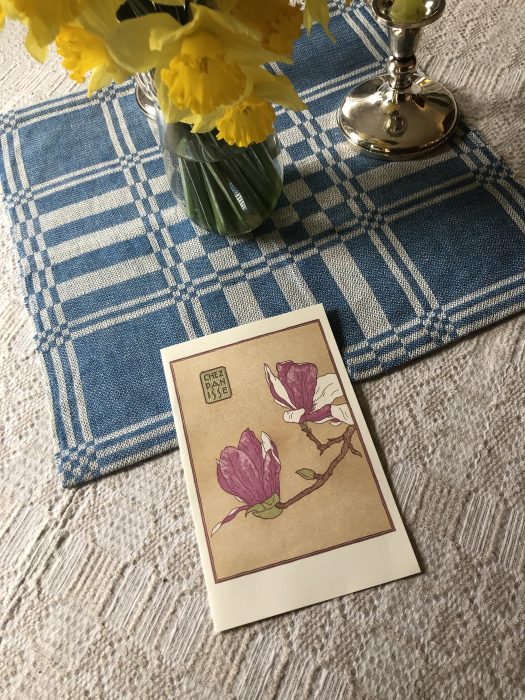
How about dinner at Chez Panisse? I actually never thought I’d do this because it is on the other side of the country, in a town I’ve never visited, even when I was visiting the West Coast. But fast forward to now, when our younger son works in Berkeley and lives just a few minutes south! I’ve been intrigued with Alice Waters since she started this restaurant, when I was a teenager on the verge of falling in love with cooking. Remember the 70s?–the back-to-nature movement to whole grains and locally sourced, sustainable veggies? Molly Katzen and the Moosewood Restaurant? And how about The Vegetarian Epicure? For me, Alice Waters is all tied up with my initiation into cooking. Her restaurant conjures up all kinds of magic for me, and the reality of it was every bit as magical as all my years of imagining! We got keepsake menus for the night…. Amy Dencler was our chef that night, which was a thrill to me since I’d read about her joining Chez Panisse. And to top off a stellar evening, Alice herself showed up for a while during during the prep of our meal.
 Dinner is served.
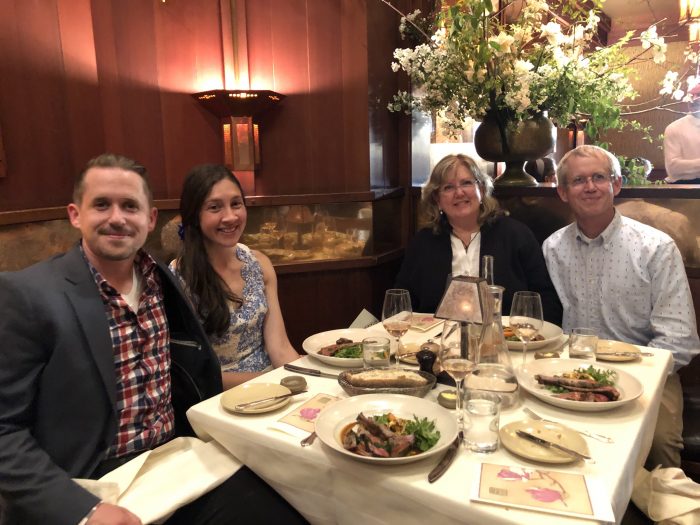
My favorite course may have been the soup, which was a pureed asparagus. I decided to make it for our Easter dinner yesterday. I looked online for a recipe by Amy Dencler, or even Alice. No luck, so I fell back on Julia’s recipe from the first volume of Mastering the Art…. which I already knew from years of making it that it would be delicious!
The Lacis Museum has also been on my wish list for eons. It is also in Berkeley. All these years, Berkeley has just been a place name to me. We’ve been to San Francisco and along the northern coast of California numerous times, but I’ve never included a stop in Berkeley. I never even bothered to look up where the Lacis Museum is located. So I’m not sure you can imagine how excited I was to learn that Chris works only a few blocks from there!
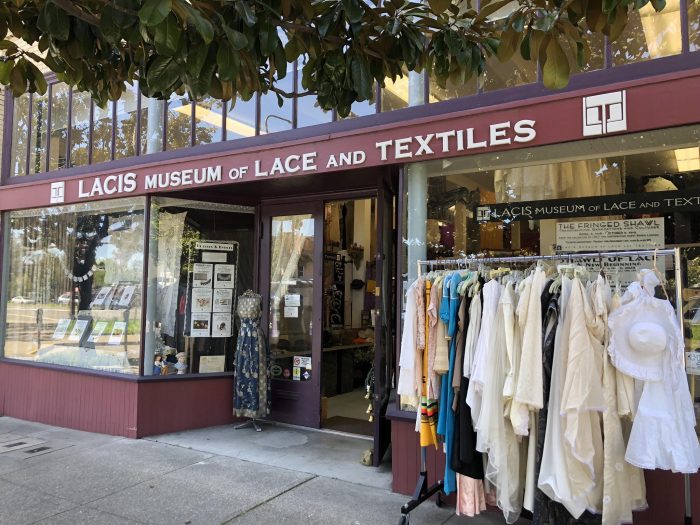
Inside is an unbelievable opportunity to buy lace supplies for lace knitting, tatting, bobbin lace, embroidery–I think that’s just the tip of the iceberg! I got some supplies that I’ve been putting off searching for online.
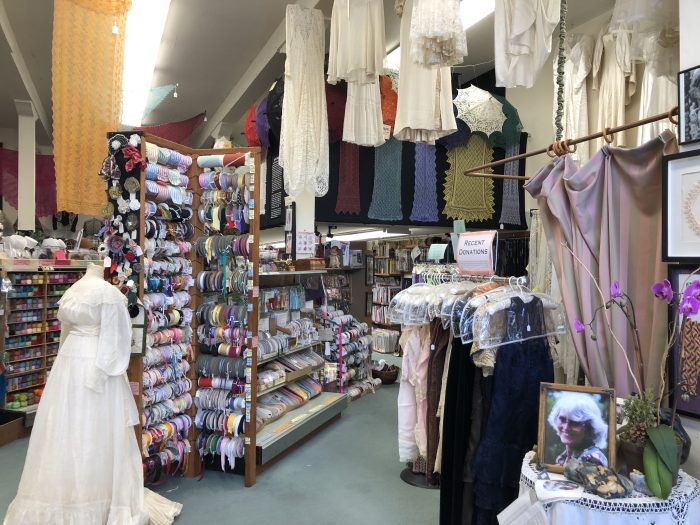
Upstairs from the shop is where the lace exhibits and classrooms are. At the moment there is an exhibit on embroidered shawls from the late 19th and early 20th centuries. Jules Kliot arrived to take us up to see the exhibit. I have been getting the email newsletters from him for at least a couple of decades. Now I’ve met him!
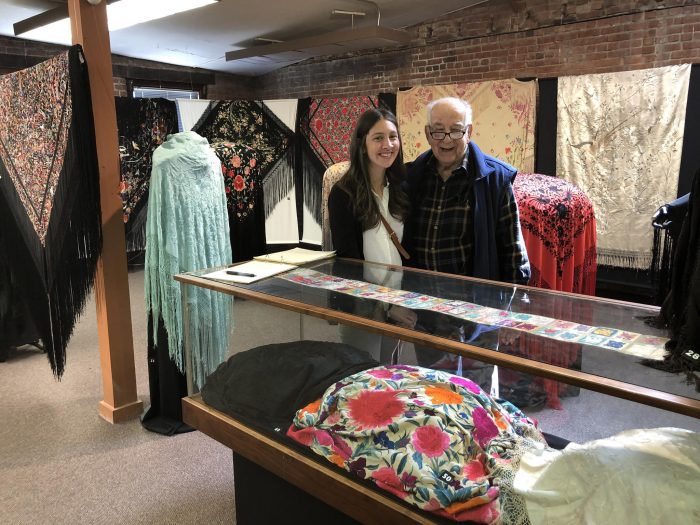
There are so many shawls in this exhibit, and all beautiful. The early ones are all hand embroidered with hand tied fringes; Jules said they took 10 years to make. Later shawls were machine embroidered with machine tied fringes. I took a lot of photos which I’ll enjoy looking at in detail for years–some in natural shades and some in such brilliant colors.
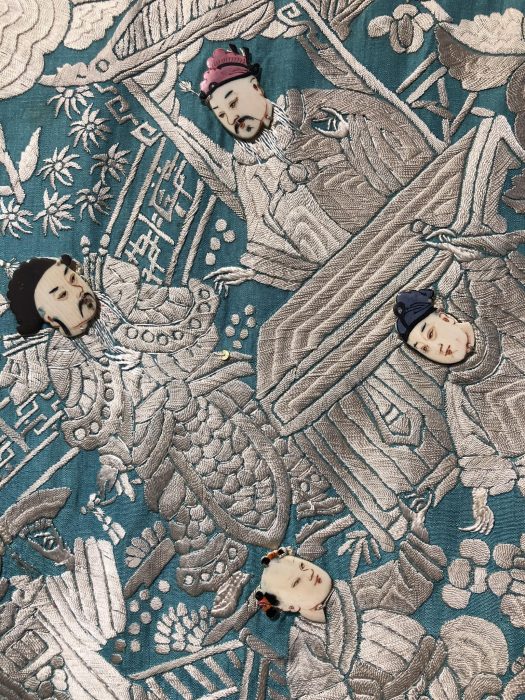
I want to include all the photos I took, but how about just this one shawl? It is hand embroidered with attached faces done in painted porcelain. The embroidery was all done in shades of cream, natural, ecru. One or two of the faces were missing, and underneath the missing porcelain faces there were still embroidered faces.
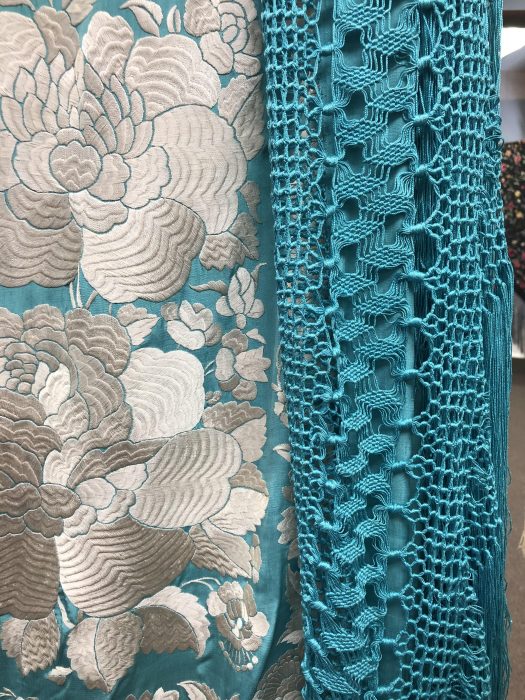
The hand-tied fringe is pretty elaborate too.
Next on my wish list was a shop called A Verb for Keeping Warm, or AVFKW….kind of a mouthful! It has only been on my list for a couple of years, since I keep reading about it in the Making and Madder magazines. I didn’t even know it was in Berkeley until I just happened to be looking at one of my knitting patterns while out there.
What a fun shop. They dye all of the their own line of yarns with natural dyes. Their own yarns range from worsted weight to lace weight, in wonderful wools and blends that include silk and alpaca. As you can see the shop is full of luscious yarns and wonderful knitted items to entice anyone. Look at all that dried indigo hanging along the wall. They grow about 250 pounds of indigo every year.

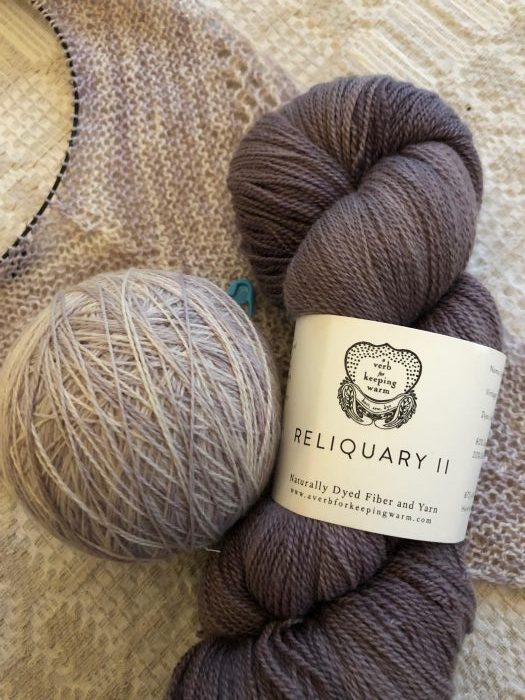
I fell for a knitted shawl on display designed by Andrea Mowry of Drea Renee Knits called “Find Your Fade.” You can make it in as many as seven different colors, or just one. I took a look at the naturally dyed, laceweight merino/silk blend yarns and chose two skeins that were dyed with logwood. My version of the shawl will use these two skeins. I also bought a packet of ground madder.
There were so many highlights to this trip–a visit to the UC Berkeley campus where we could see all the way to the Bay from Sather Tower. We visited Pegasus bookstore which has been an online resource for me for years. Now I’ve been to the brick and mortar shop, where all three of us–Melody and Bob and I–found books we had to buy.
And then there was a long weekend spent up in Mendocino County, a place Bob and I have returned to since our children were young. Chris also loves this part of California, so he arranged for all of us to spend some time together there. We knew the years have flown by when our son, who once stayed home with grandma on our first trip to this area, now drove us around while we relaxed in the back seat! Bob and I loved it!
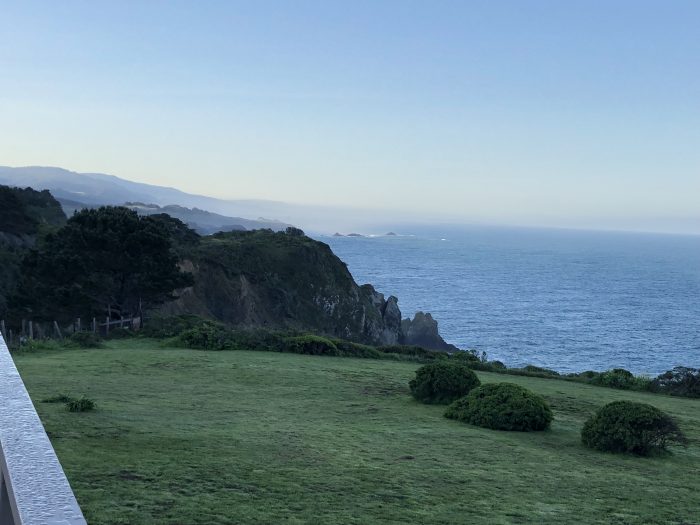
Chris found a house right on the coast for us to stay. See the bit of deck railing in the lower left? What a view we had from this house!
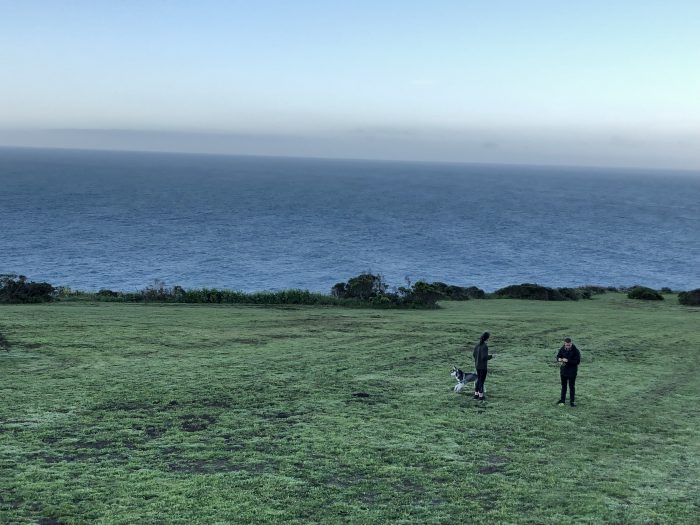
Melody and Chris playing with new family member, Mila.
Chris brought his barware, including glass coupes, for several kinds of cocktails. He is becoming quite an accomplished mixologist. We loved this comfortable house!
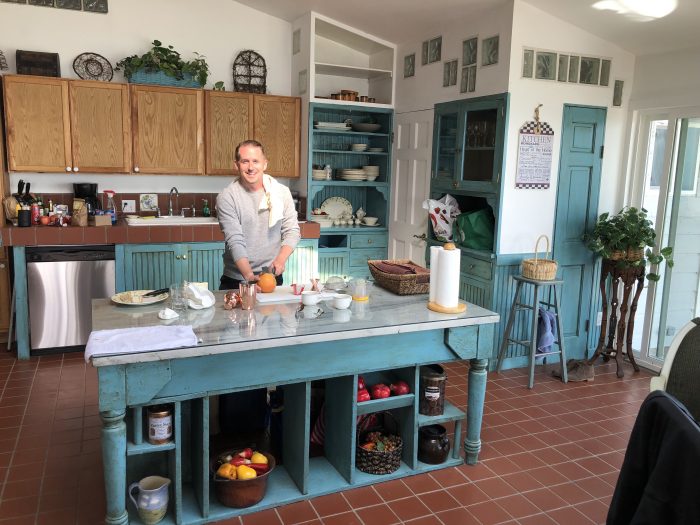
We visited wineries, took walks along the coast, and ate some amazing meals, both that we made ourselves at our rented house and in restaurants in Mendocino. You can get some creative meals at various wineries too–like Pennyroyal, where the daughter of one of our long time favorite wine makers has started her own business.
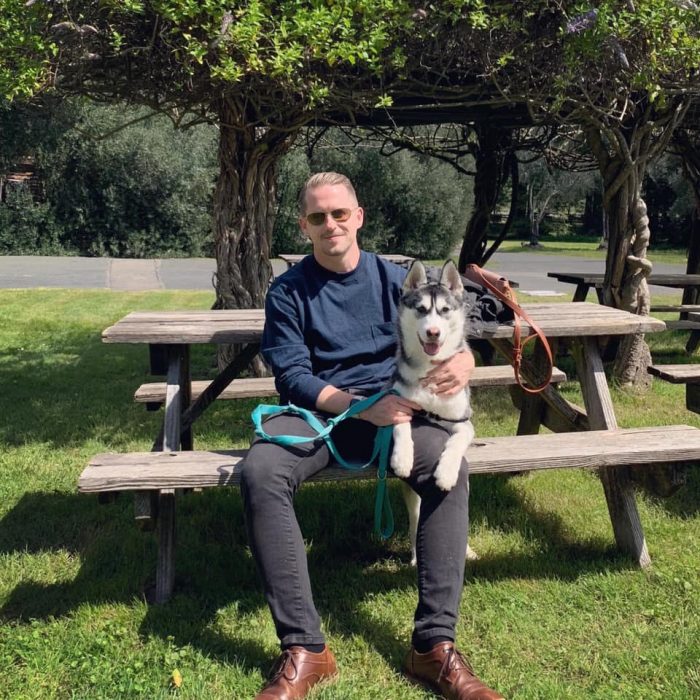
I can’t resist sharing this photo of Chris and Mila at our favorite vineyard in the Anderson Valley, Husch.
We spent our last day in San Francisco. It was a wonderful time of year to be on the coast of California and to be with Chris on his birthday. We got to know Melody better and see Mila for the first time.
I was thinking of the poppy seeds I scattered in my garden at home as I visited this wonderful garden in Golden Gate Park. It’s one of Chris’s favorite destinations and now one of ours as well. He used to live only a short walk from this park and wouldn’t mind moving back here someday.
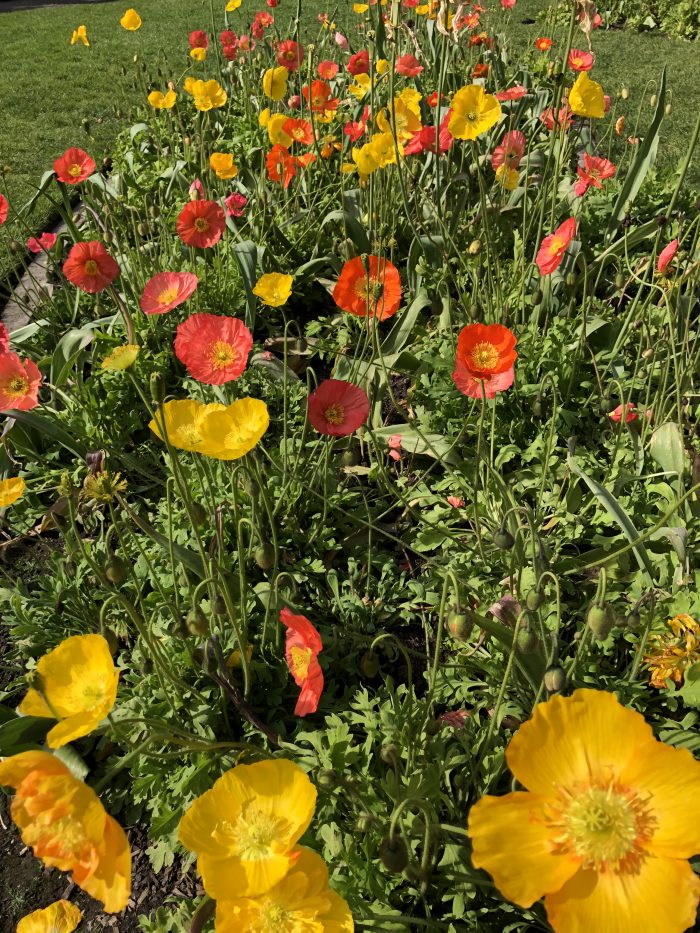
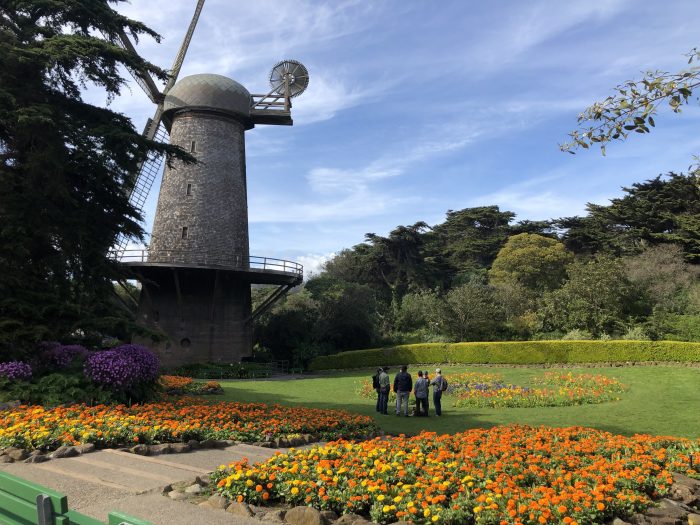
And back at home, I have about a million little poppy seedlings coming up. I know that they will not fare as well as they do in California, but I’ll think of this garden if/when my own poppies bloom. I’m knitting the shawl from A Verb for Keeping Warm now and then in the evenings and reading one of the books I bought at Pegasus. Best of all, I’m feeling quite re-energized and ready for spring in New England.
Happy spring!