ArgoKnot

travel

The Work of My Hands

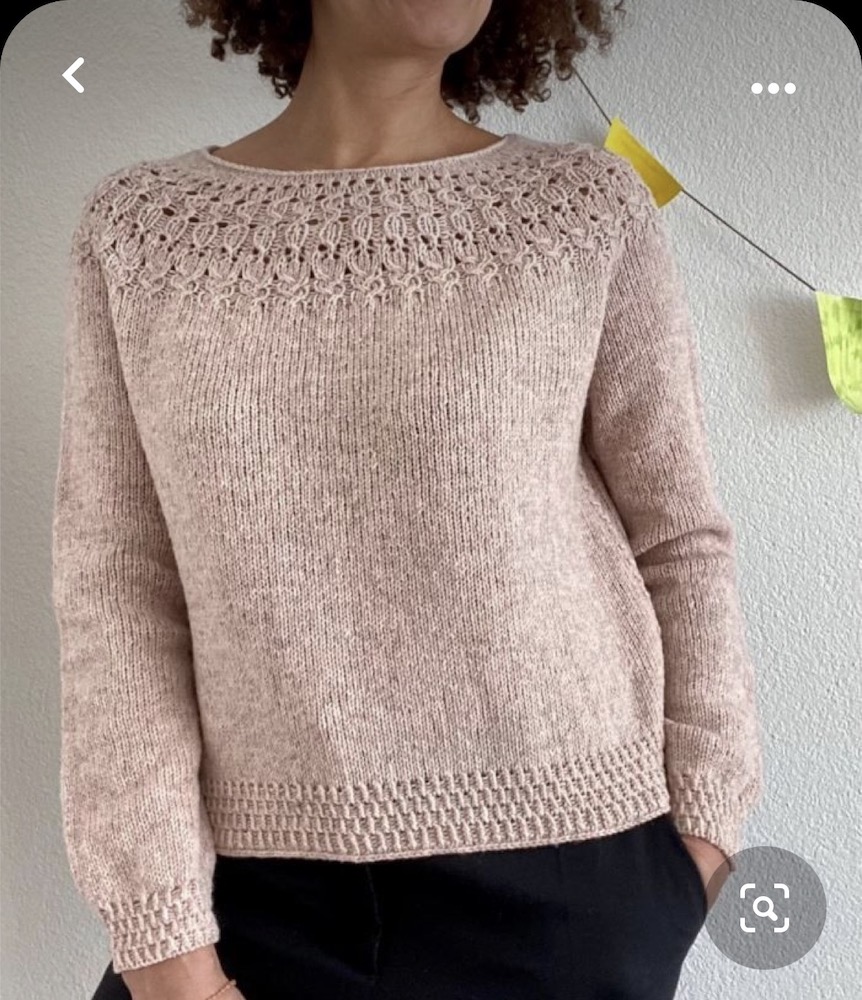
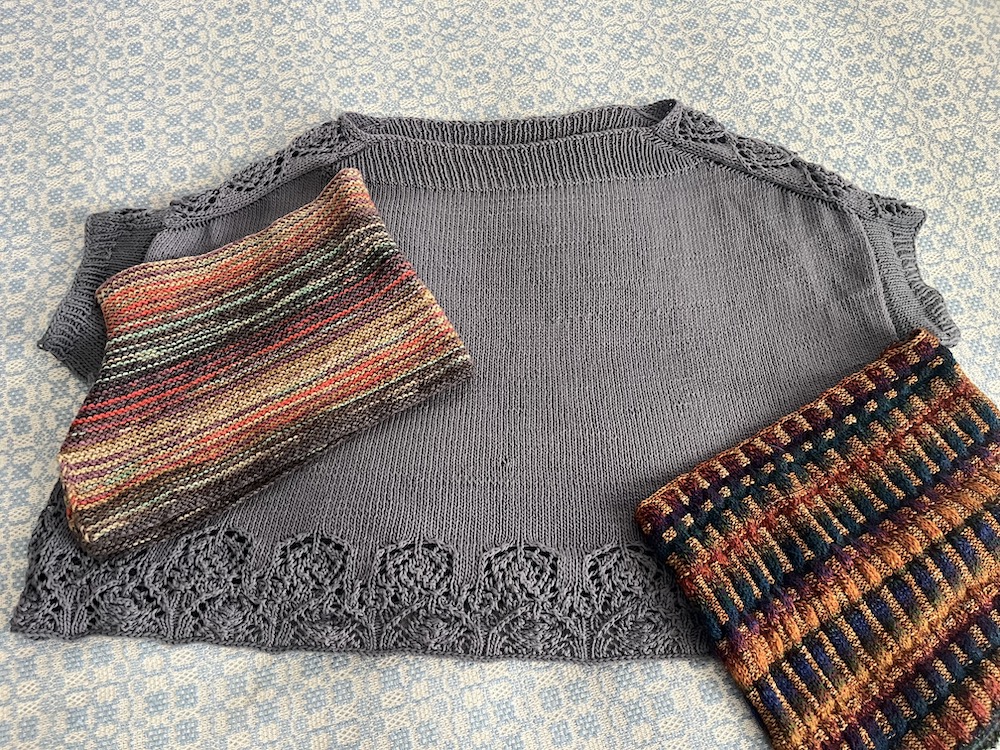
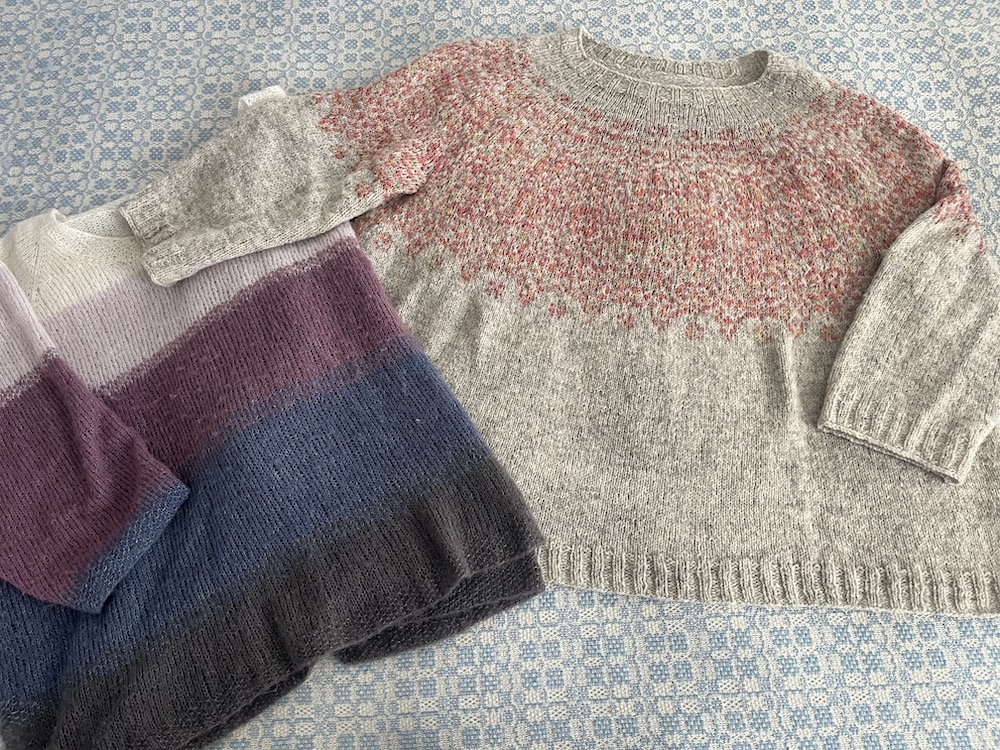
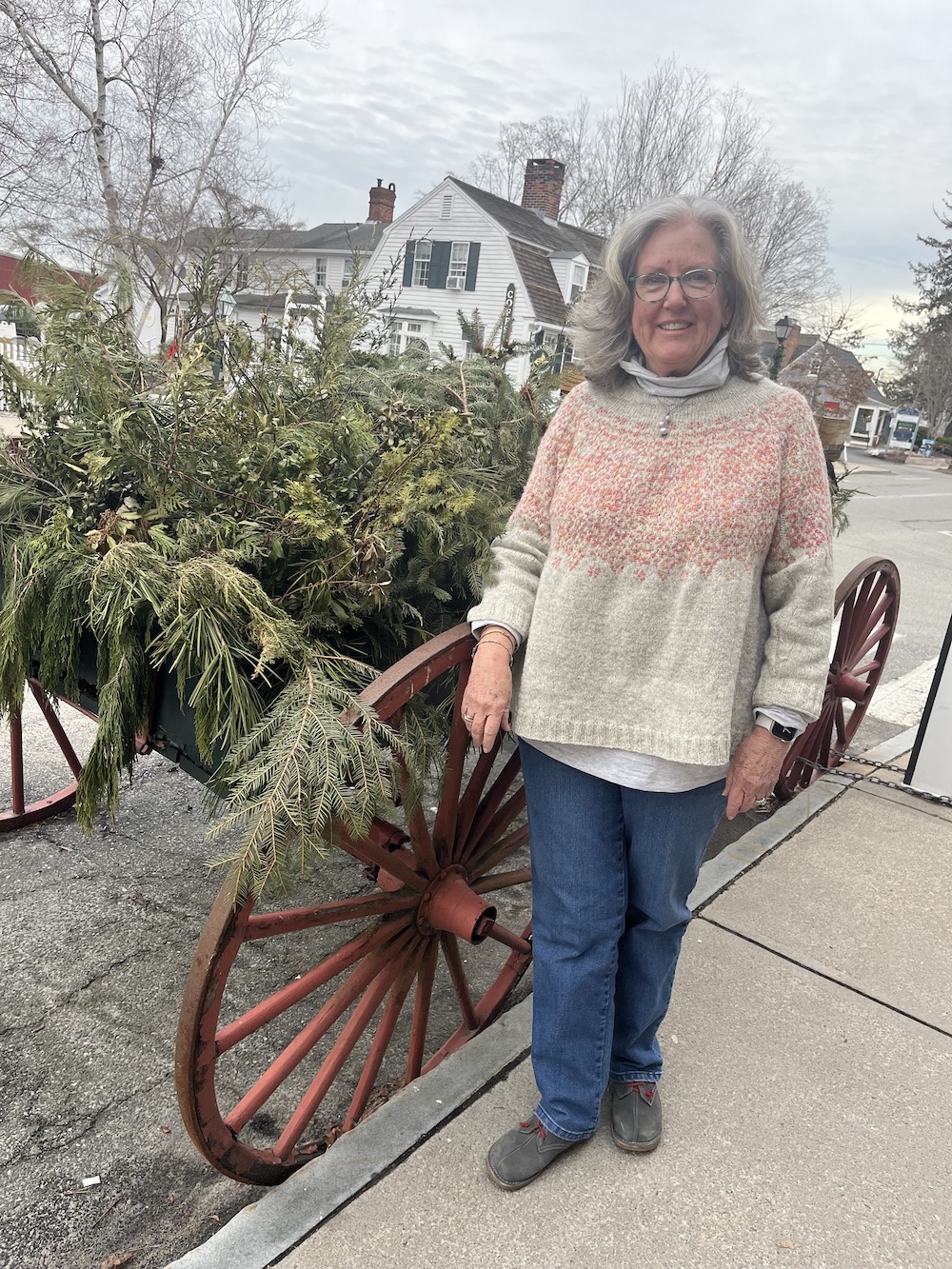
It’s early Sunday morning, and I am sitting in my favorite chair unraveling the sleeve on my most recent sweater. It’s a design by Kate Davies which has serendipitously turned out with quite a different silhouette than the images on her website. My sweater is significantly bigger than I expected, and I love it this way. A very nice surprise. As I was knitting the 2nd sleeve mid-last week, I realized if I just sped up my knitting I would finish the sweater that day and be able to wear it to my holiday guild meeting the next day.

The temptation to finish was great, which is what made me ignore what I know for a fact about knitting speed, at least for myself and Meg Swanson: the faster I knit the looser I knit. So, this sleeve looks considerably looser than the first sleeve, and also looks rather flimsy and messy compared to the rest of the sweater. Haste does indeed make waste. Time to rip and re-knit. Sometimes the work of our hands is creative and sometimes it needs to be a chore, like re-knitting a sleeve. I’m trying to not think of this as drudgery since it’s a quiet, pre-dawn morning, and there is coffee brewing.
It has become a time of mending since I have just finished re-sewing the side seam of a sweater I wanted to enlarge. Last winter I planned to add a gusset to the side seams of my old “Hild” sweater by Elsbeth Lavold, but I tried it on yesterday and felt the gussets are now unnecessary. That was good news for me! Since I’d only managed to knit one partial gusset before putting it aside, I unraveled the gusset on the first side and re-sewed that seam this morning. I will wear it tomorrow to another group meeting of weavers.

Doing these chores, which barely seem tedious in the quiet pre-dawn of a winter morning, has me thinking about all the kinds of work we do with our hands. I tend to focus on creating, but sometimes I have to take a step back, undo something to either fix it or make it more useful to me. I have not worn the “Hild” sweater in at least 5 years, so I’m thrilled to have it back. I probably knit it shortly after this book was released in 2006. I’m still smitten with it!

It’s now early in the following week. I have worn both sweaters! What a trill to have a new sweater and also to wear one that I made so long ago — that hasn’t fit me for years.

In Italy, while staying at the art school La Romita in Umbria, I indulged in some new work for my hands. The workshop was 10 days of tapestry weaving and natural dyeing, as you may have seen in an earlier post. I have barely done any natural dyeing, and this workshop has piqued my interest in doing more. When you see the photos of the colors we produced, you may go down this rabbit hole with me!

Two of the students took charge of this part of the workshop. They are Yonat Michaelov and Kris Nardello, both from California. Their expertise was just what we needed to get over 50 colors in only 10 days, with very limited equipment for dyeing. There was only one umbrella swift, and we had 10 lbs of local merino to wind into skeins suitable for dyeing. Chairs to the rescue.

While the skeins were scoured and mordanted in alum, I dabbled with making watercolor paints from the ingredients that our leader, Shelley Sokolofsky brought for us to try. Jody Brewer took this photo.

I now have an exciting set of colors to try, in spite of knowing nothing about water color. Another rabbit hole for me.

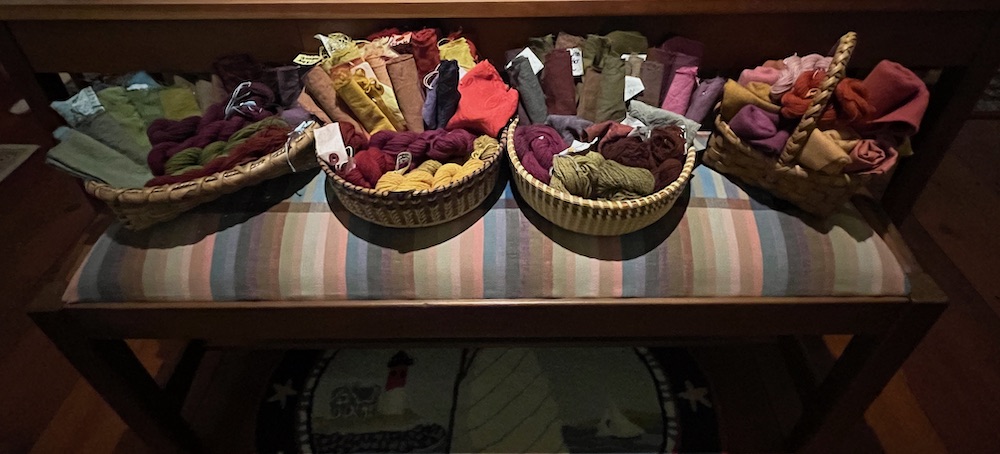
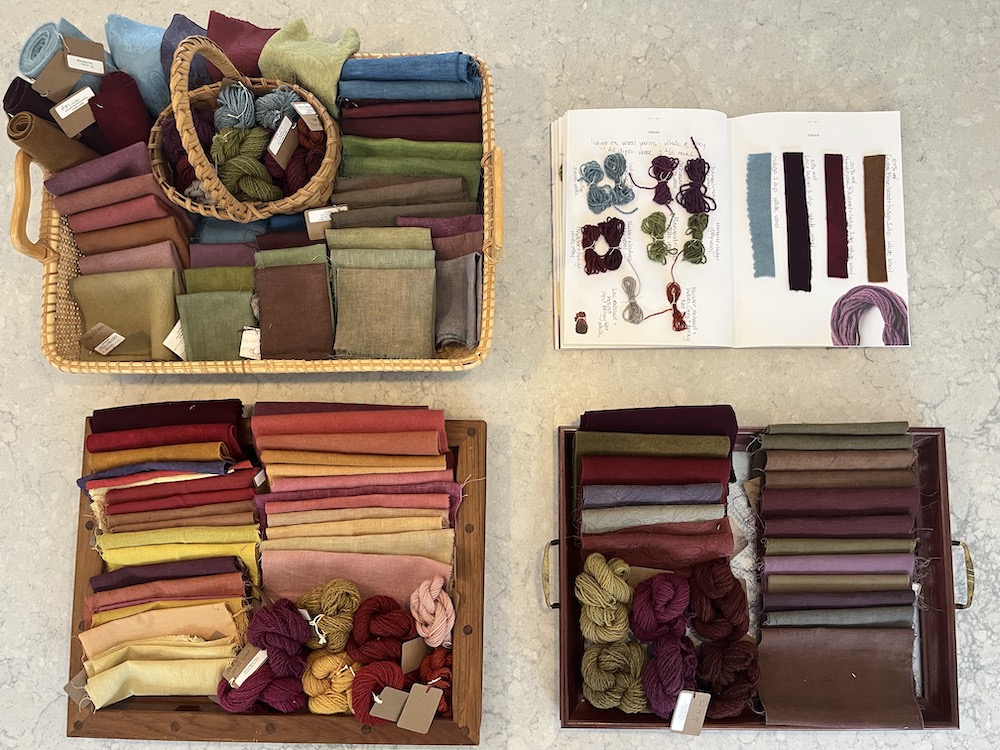
Here are the first dye colors from only about 3 days of work. Yonat and Kris were amazing in their organizational skills, having only two pots on two burners, with a few buckets to save some colors for overdyeing. I can’t believe what they accomplished. I was so lucky to be their assistant.

And here, Yonat explains the process and dye for each color we got so far, which was mostly the traditional dyes used throughout history, which Shelley brought from the US from Botanical Colors.

The workshop description stated that we would also use local plants from Umbria for dyes. That required some of us to get up early and go foraging. It wasn’t added to our itinerary, so Yonat and Kris foraged almost every morning to bring us more plant material to try. They found olive leaves and branches, a variety of bright orange mushroom called omphalotus, abundant local flowers called Dittrichia viscosa, over ripe pomegranates, fig leaves, prunus leaves, and oak galls. We had a treasure trove of material to try.

Jody Brewer took the next few photos of the local plant colors we dyed.

The entire range of colors we got from the local plants.

Colors from Olive leaves and branches

Oak galls.

The lovely and abundant flowers of Dittrichia viscosa.

Lastly, here is Yonat holding the color card displaying all of hers and Kris’ hard work!

Once home I find myself wanting to dye more than do the work needed for the holidays! I have a small olive tree that we prune every fall in order to keep it small enough to put inside during the winter months. I don’t cut too much so there was only 58 grams of leaves and branches. With that small amount I only tried 25 grams of the Italian merino in the dye bath.

My color falls right in the range that we got from olives in Umbria, but I wish I’d gotten a more saturated hue. I’ve saved the dye solution because it’s definitely not exhausted. For this batch I simmered the yarn for 1 1/2 hrs and then let the yarn sit in the bath overnight. I repeated this process for three days. Now the leaves are probably decomposing a bit in the bath that is sitting in my chilly garage. I want to try at least one more day of simmering and cooling to see if I can darken the color. Jody and I plan to spend a couple of days working with a sucrose indigo vat which we will make together and some madder powder. I got both those from Botanical Colors. I hope the work of hands produces some exciting results.

Jacquard Weaving in Perugia

Here I sit in English Harbour, Antigua, thinking about my recent return from Umbria, Italy, and the highlight of my time there: a visit to a jacquard weaving museum and atelier in Perugia that is housed in a 13th c. Franciscan church.

Perugia became a walled city in the Middle Ages, prior to the building of this church in 1212. It was originally a simple hermitage that was founded by St. Francis of Assisi when he and his followers stayed here together. By 1252 the monastery was ceded to Benedictine nuns and given the name San Francesco delle Donne. St. Francis of the women—for the women? It was abandoned numerous times through the centuries, and I don’t know those stories. Our host at La Romita, the art school where we were taking a workshop on tapestry weaving and natural dyeing, mentioned that Perugia defended itself many times over the centuries. Most of the conflicts had to do with the vying city states and their status in the Catholic Church, and throughout the Middle Ages Perugia was an impoverished place, in spite of their reputation for excellent craftsmanship in pottery and textiles, and probably other fine crafts that I haven’t found in my searches. There is some great information on the Giuditta Brozzetti website.

The Brozzetti family started the weaving museum and atelier in 1912, but not in its current location. The museum is named in honor of the current owner’s great grandmother, Giuditta Brozzetti. Giuditta started an atelier to bring back the historic handwovens of Perugia, especially the “Perugian tablecloths” that were often used as altar cloths in churches, as well as being tablecloths in the homes of the very wealthy. Textiles were far more valuable throughout history than they are today and were always listed in the inventories of wealthy families. The atelier and museum moved to this magnificent site in the church in 1996. I believe it took a lot of work to bring the church into state we see it today. It is magnificent!

Here is an excerpt from an interview with Marta Cucchia, the great granddaughter of the founder and current owner:

My studio is one of the last weaving ateliers in Italy – and the only one that reproduces medieval Perugian Tableclothes using Jacquard looms from nineteenth century. Furthermore, with the pedal looms, typical of the Umbrian countryside, we create fabrics using millenary techniques passed down orally from generation to generation. My great-grandmother, Giuditta Brozzetti, founded this Laboratory in 1921. From then on, the passion for hand-weaving was passed down from mother to daughter, each woman bringing her own experience according to her personality and studies.”

Marta has four women who assist her in the studio, and they have all come out of textile schools to make this field their livelihood. What an exciting place to work!

Some of the projects that Marta oversees are replicas of actual textiles in paintings from the Middle Ages and the Renaissance. During our visit Marta showed us a couple of impressive replicas. She had high resolution images taken of Leonardo da Vinci’s “Last Supper,” and she had small areas enlarged so she could study the tablecloth. In hind sight, why didn’t I think to ask her if she thought that cloth had been woven in Perugia?

Even in this low resolution image of the fresco, taken from the intenet, you can see that the tablecloth is highly figured at each end, but also there is a hint that the white on white areas also have interesting weave structures.

Detail of a similar fabric from a different painting:

Here Marta is showing us some of the images she used to design the tablecloth. Clearly I am scratching my head in amazement!

Photo by Jody Brewer

And here is the finished cloth, woven at the Giuditta Brozzetti Atelier:

The jacquard looms in this studio are all from the 19th c except one that is older from the 18 c. These are hand manipulated looms, where the process of weaving involves attaching every thread in the warp to a jacquard attachment that has a series of cards that control the patterns. The weaver stands at the front of the loom and depresses the one treadle (a heavy one that sits rather high off the ground!) with her right foot —yes, they are all women at this atelier. Depressing the treadle opens the shed, and the weaver pushes a lever that is above the beater that engages one of the jacquard cards, then she pulls a cord that sends the fly shuttle through the shed of the open warp. Here is a video of the process, although at this point the weaver is weaving some plain weave between the designs, rather than the more interesting pattern.

Here is Marta showing us one of the many charts of jacquard designs in her collection. These graphed charts are used to make the cards which will control the weaving patten on the looms.

And here is my best attempt at getting a shot of the entire loom. The warp on the loom will be obvious to most of you. The yellow cords anre atracked to each warp thread and are running vertically to a loft area where you just see a bit of the roll of cards used to weave the design. There are other ‘chains’ of cards being stored on the railing of the loft.

I neglected to count how many jacquard looms are in this large studio, but here’s a photo of the long row of them in the museum.

Many traditional Perugian designs can be woven on regular shaft looms with floor treadles. Marta demonstrated this on what looks like an equally old loom to the jacquard looms.

Here is particularly stunning tablecloth woven on a shaft loom in a traditional woven structure with luscious colors. I tentatively asked if it was for sale (and the price) and learned that Marta wove this tablecloth for her wedding. What a treasure…

During the time when Marta’s mother led this studio they produced some designs for clothing. During Marta’s tenure she has also had commissions from Italian haut couture houses.

Photo by Jody Brewer

These dresses were designed and woven here, and I’m guessing this occurred in a past decade, perhaps the 1960s? 1970s?

There are other modern designs available here. This is quite a striking pattern that was for sale as a shawl or a cushion.

While we were there one of the weavers brought out this tiny gem woven in the same structure. They are not yet available, but as soon as they are I need one! I’m sure they will be popular. When I posted a photo of this Facebook some of my friends immediately asked how to get one.

This is my prize purchase from the day, a gem that gives me a little shiver of thrill whenever I take it with me somewhere. It is equally beautiful on the inside, lined in a fine silk fabric from Fendi.

Marta and I also discussed some of the fine finishing that goes into many of the pieces they make. In particular, Marta’s mother adds a beautiful bullion edge to some of the table runners. I must give this a try on some of my handwoven projects. I bought a small runner that I cannot show you because it is at home, and I am writing this in Antigua. Mine is off white on white, with jacquard designs at each end, and the point twill design in the middle. This one is far more elaborate, but I want you see the bullion stitch edges.

Each one of the pieces woven here are exceptional examples of textile skill. In many parts of the US, textiles are no longer valued as they deserve. I hope we can bring some of that respect and awe back into our lives. My house is full of my own handwovens, and sometimes I marvel that many of my guests don’t realize that. I’m not sure people even see textiles anymore, beyond noticing someone in a beautiful dress. There is so much to marvel at in the world of handmade cloth. The Giuditta Brozzetti Museum and Atelier has to be one of the best places to go and relish the beauty of handwoven goods. Get there if you can! If not, there are beautiful images and descriptions on the website.

Back At It!–in Umbria, Italy

This is quite a thrill for me to access my website and write a new post. This site has been ‘sick’ for about six months, and I have not been able to access it.

It would be quite an epic if I tried to cover all the things that I’ve thought about, done, and struggled with over the past six months, so I think my best option is to just tackle a few vignettes, starting with my trip to Italy in October.

I went to Italy for a natural dyeing and tapestry weaving workshop at La Romita, which is in Umbria. I asked some of my students if they’d be interested in joining me, and my weaving friend Jody decided to go. The two of us quickly made friends with two experienced natural dyers, Yonat and Kris, from California. Part of the workshop description was that we would meet local dyers and weavers, but there were no dyers on our list of day trips. We decided to skip one of the trips and rent a car together to drive north to visit the workshop of Elena Villa in Castiglione del Lagos, a walled medieval town on the shore of Lake Trasimeno, where she sells her hand-dyed yarns and various finished items, like knitwear and dyed scarves.

We’d been warned that we’d probably have to take a car with manual transmission, and since I was the one who’d most recently driven standard cars, the driving fell to me. It had been about two years since I’d done that, although I’ve driven standard transmission cars for most of my driving life, so I was a bit nervous. A strange car with a standard transmission in a foreign country–but as luck would have it, we got a big American car with an automatic transmission. I have a sense that it was because Valerio, who took us to the Avis agency in Terni, pleaded our case with the staff there.

The trip was a cinch with Google maps, and we all had a terrific day. I think we were the biggest car on the road–not my first choice!

And here we are! Elena opened her shop for us that day although she is normally closed on Thursdays. Lucky for us.

Elena is in the foreground, with Kris (R) and Yonat (L) looking through yarns. Can you imagine how much we were swooning over all these wonderful items in such stunning natural colors?

Elena’s husband took a wonderful memento photo with the lake behind us. It was such an exciting experience to meet her and to see her work. Elena recommended we go to a certain restaurant before heading back to La Romita.

We left feeling inspired and ready to create things with the yarns that have such lovely blended gradations of color, as only natural dyes give. I found a whole shelf of merino yarn fine enough to use in tapestry.

The colors are:

  1. Solidago (golden rod) a bright gold on the merino yarn and softer yellows on the three scarves
  2. Solidago with “Robbia” (madder), the salmon/orange
  3. Solidago with “Cipolla (onion), the orange/rust/yellow/gold/green variegated yarn.
  4. Fitolacca (pokeberry!), which is havested more than once from spring through late summer, giving different colors as the season progresses.
  5. Noce (walnut, although I don’t think walnut trees grow in Italy), medium, warm brown.
  6. Galle di Quercia (oak galls), medium grey. I bought three skeins of this because I thought it would be a great neutral.

Lunch was another rare surprise for the day. When we entered the dining room we discovered the terrace overlooking the lake. Beautiful!

It’s so rare to have photos of myself because I am usually behind the camera. The photos that include me were all taken by Jody. It’s great to have a record of being here. Here is our terrace lunch with a view of Lagos di Trasimeno.

It was a magical day, the best any of us could have imagined. I bought some fiber from local Appeninica sheep that Elena had dyed with golden rod. I didn’t have a spindle with me, so Elena went home to get one of hers and delivered it to me while we had lunch. I will never forget that! Now I have to think of something remarkable to do with this yarn.

I spun this wool on both the spindle I got from Elena and, once home, on my Nano 2 e-spinner. The spindle spun yarn is on the right and is finer and more loosely spun than the skein on the left which is I what I spun on the Nano 2. I plied both these skeins on my folding Lendrum.

I just read about Appeninica sheep on Wikipedia. They are a modern breed, first established in 1970s, and based on quite a few other breeds. They are raised mostly in Umbria and Tuscany and were bred to do well in the Apennine mountains. Their wool is considered medium/coarse. That was not my impression of the roving I had. Perhaps the golden rod softened it a bit. Who knows?

It’s exhilarating to travel, and even more so when we can branch out and explore the exact thing we are most interested in experiencing. The four of us became good friends during the workshop, and we feel we made a great connection with Elena and her stunning shop.

Winding Down

It’s the last weekend in March. We fly home on Monday, April 1st. It’s been a difficult winter season in a number of ways, and weather has been part of that. This part of the world is in the trade winds where the winds are predictably East. To have West winds at all used to be quite rare. This year it was a regular thing. And then there were tragedies: three deaths of sailors in the space of only three months.

But whatever the weather and whatever other circumstances block our path, the Caribbean is always colorful. Beautiful dawns and sunsets greeted us every day, with daily rainbows after the rain showers. Twelve years ago when we returned from our first passage to The Bahamas, an old friend asked me if my color palette had changed based on spending so much time in tropics. All these years later, I can answer that Caribbean colors have definitely found their way into my palette–clothing, tapestry, fabric weaving and yarn spinning, knitting.

Here is a particularly lush image from Martinique. We are in the rainforest, but also note the colors in the mineral water flowing over that cliff. There are hot springs here where you can ‘bathe’ for a fee. We are with two couples, one we’ve known for years, and other new cruisers this year.

Here is a rare moment in St. Pierre when the summit of Mount Pelee is visible. It’s normally always hidden in the clouds, one of the iconic places that gave credence to the phrase that these islands are “the islands that kiss the clouds.”

A view of the harbor in Deshaies, Guadeloupe, from the botanical gardens. Pandora is

somewhere in the mix.

Sunsets and last light are always a beautiful time of day, everywhere in the islands. Bob took all these photos because it’s his favorite time of day and A favorite pastime to record it.

I have an endless number of photos of houses, doors and windows in beautiful Caribbean colors, but WordPress won’t let me post them. I haven’t confronted this before. I’ve spent years posting images of private houses on my blog, so I don’t know what has changed. So I’ll only post one of this beautiful flowering plant.

This is the church in the center of Fort de France, Martinique. It’s brilliant to me that the building across the square has mirrored glass that reflects the front of the church. Stunning! The church is one of the iconic buildings designed by Pierre-Henri Picq, a student of Gustav Eiffel.

Plants grow everywhere there is bit of water and space, even a tiny space.

When I arrived in the Caribbean this winter one of my goals was to finish this tapestry that I started back in July, in a workshop with Connie Lippert at the regional New England Weavers’ Seminar (NEWS). I wanted to insert some areas of ‘standard’ weaving, or Gobelins style weaving, into the wedge weave background. I wove the small green square with the internal shapes while onboard.

Some days I wove out in the fresh air.

About a week ago I cut the piece from the loom.

My first wedge weave experiment

I’ll do the finishing work at home. Connie recommended I place a wet cloth on top of this piece for 24 hours to bring out the wedge weave undulations. I’ll do that home next week!

A few weeks ago I had quite a bad moment of anxiety over this piece and the knitting I brought with me. I put this piece away for several days, and one day I woke up with the energy to undo some of it and try to get it finished. Maybe all I needed was a few nights’ sleep away from the daily thinking about and looking at this piece. I needed a break! But with two of the three sweaters I brought onboard, that same break only showed that they were ‘no-go.’ I managed to make peace with that and begin the process of unraveling, perhaps as a metaphor for this strange winter. I restarted the biggest of the sweater projects and am now happy to realize that I have passed the place where I began the unraveling. Now it’s forward motion toward a finished piece!

Typical of life in general, I take two steps forward and at least one step back. But there is progress in general, and a feeling of good work is the more important thing to realize. Projects onboard are either finished now or well underway. It’s time to wind down this journey and head home, where a number of new ideas are waiting for my attention, like sashiko-ori. I’m ready!

Work in Challenging Conditions

We are having a rip-snorting winter season in the Caribbean. I would prefer a gentle season, but there is no bargaining with Mother Nature. Actually, I know this weather is not her fault. It’s humanity’s fault, so I am partly to blame. I won’t go into the weather here, but you can see some pretty frightening images and videos on my husband’s recent post on SailPandora. We moved to the mooring field in Les Saintes one day before this storm hit, and it was a good choice for staying safe.

Not many days have been calm enough for weaving onboard, but I am trying. I brought so many projects onboard, and I feel compelled to make progress and even finish a few of them. If I finish two tapestries I won’t have to cart the looms home with me when I fly home in April. That’s a pretty strong reason to get them done!

I am trying my hand at wedge weave, and I started this project back in July under the tutelage of Connie Lippert at the NEWS conference in Worcester, Massachusetts. For some reason my brain gets confused on which direction the wedges travel and when to continue on the diagonal or move across the warp to create a horizontal section. I may have unwoven almost as much as I’ve woven, and I don’t seem any closer to making sense of the angles. Old age? I hope not!

During the July class I added the little gold rectangle woven in Gobelins style. While onboard I wanted to add a more complex bit of Gobelins style, so I wove the square that has a couple of shapes inside it.

Here is the one glorious day when I was able to weave in the fresh air in Pandora’s cockpit.

I have consulted Connie a couple of times along the way recently. Being outside the US makes me feel a bit disconnected which can also make me wonder if I’ve taken a detour away from where I need to go to acquire some skills at wedge weave. I’ve had an impulse to add a circle to the wedge weave. I pondered this, wondering if I’d have to weave an easier shape, like a square, in order to put the circle inside it. But that is not what I envisioned. I wanted a circle with the wedges abutting the edges of the circle. Connie thought I should give it a try.

I now have my circle!…but, my wedges are going in opposite directions. I’m not sure what will happen when the wedges meet above the circle. These wedges are confusing me!

In other news I’ve made some wonderful textile purchases. Bob and I took a day trip with friends while in Dominica, to visit the private lands owned by the Kalinago nation. They are not the original inhabitants of Dominica, but they certainly predate the European settlers. The European explorers named these people the Caribe. Naturally, they prefer the name they call themselves, Kalinago. Bob and I have visited here in past years. I’m intrigued by their lifestyle which makes such good use of plant life for food, remedies, and building materials. They are well known for their baskets, and this is my third time to collect more of their beautiful baskets, which are made from a reed like plant. They condition the reeds in different ways to give color the material. To make black they bury the reeds in a pit where the minerals in the soil darkens the reed. Our friend Bill got this photo of Bob and me trying to decide what to take with us.

Here we are sitting in the shade of the beautiful community where the Kalinago live. Oops! Actually, this is another day we spent together in Deshaies, Guadeloupe! We are with Bill and Maureen from Kalunamoo.

And since I’m adding photos from other days, here is one of my favorites with a number of our sailing friends who gathered for dinner that night.

On several visits to Dominica I’ve had my photo taken in front of a vendor’s stall called “Brenda’s Craft Shop.” This year I got meet Brenda! I bought a finely crocheted wrap skirt to give as a present. I can’t show you because it’s to be a surprise for a dear friend.

I tried my hand at an unfinished embroidery project I brought with me this year. On some days I simply could not line up the needle with the place I needed to insert it because of the rolling waves coming into our anchorage. It was daunting, and I often felt I might become crosss-eyed, but now I am happy to report that this project is finished! At home I hope to try my hand at framing an embroidery myself. This embroidery design is from an English company called Melbury Hill. They have some coordinating designs that go with these bluebells, but for now I need to stick to weaving those two tapestries.

As I write this we are on a mooring in the small archipelago of islands at the bottom of Guadeloupe. The main island is called Terre de Haute, and it has a charming village that entices many French visitors who arrive multiple times a day by ferry from Guadeloupe. There are some wonderful shops and many restaurants.

I must be getting tougher, or perhaps just more determined (desperate?) as I age. I am working on days I could never have worked in previous years. It’s good, and bad, in equal measures. I hope I will be taking a home a number of finished items in April.

Scroll to Top