Over the 10+ years that Bob has sailed from Connecticut to Antigua in November, song birds have found their way onboard to rest during their long migration south. These are always single birds so we imagine that they are individuals who have fallen behind the flock. It has never ended well. Most of them die onboard within 24 hours of arriving. It’s very sad, although it is part of nature. Maybe these are all older birds, but it always hurts to watch this happen. Maybe we should take comfort in the fact that each of these birds had a little rest and perhaps died peacefully. I know I am putting a lot of human emotions on birds. Nature is not sentimental.
It is now Memorial Day in the US, and over the weekend Bob and I sailed 200 miles from Menorca in the Balearic Islands to Sardinia. We arrived in a small cut on the western coastline of Sardinia yesterday, Sunday, after about 40 hours of motoring, sailing, and mostly motor-sailing. On Saturday around midday a little song bird arrived in our cockpit. I immediately had the same old dire emotions of this little bird being exhausted and dehydrated, and likely close to death. He flitted about for some time. Then he left us.
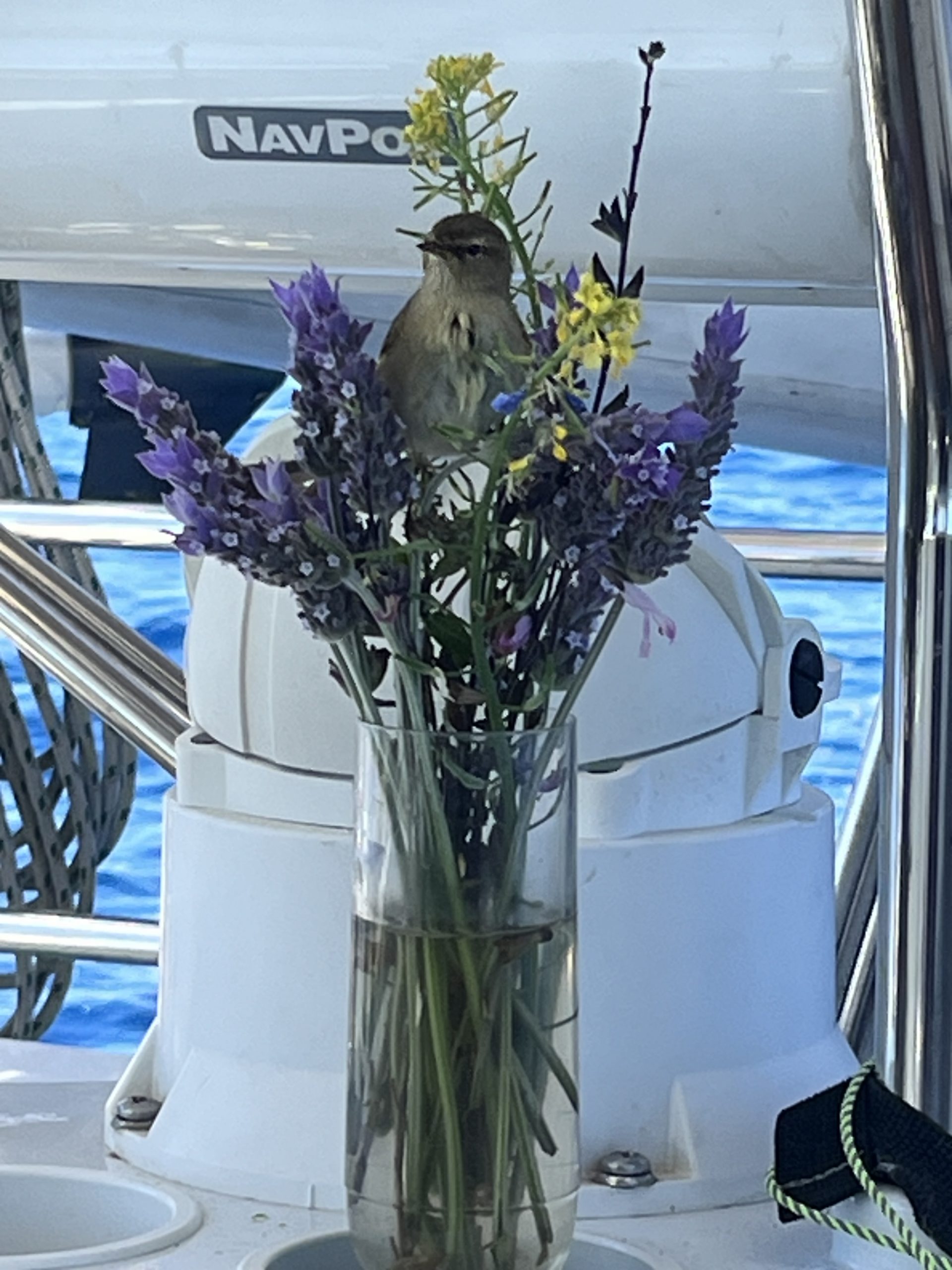
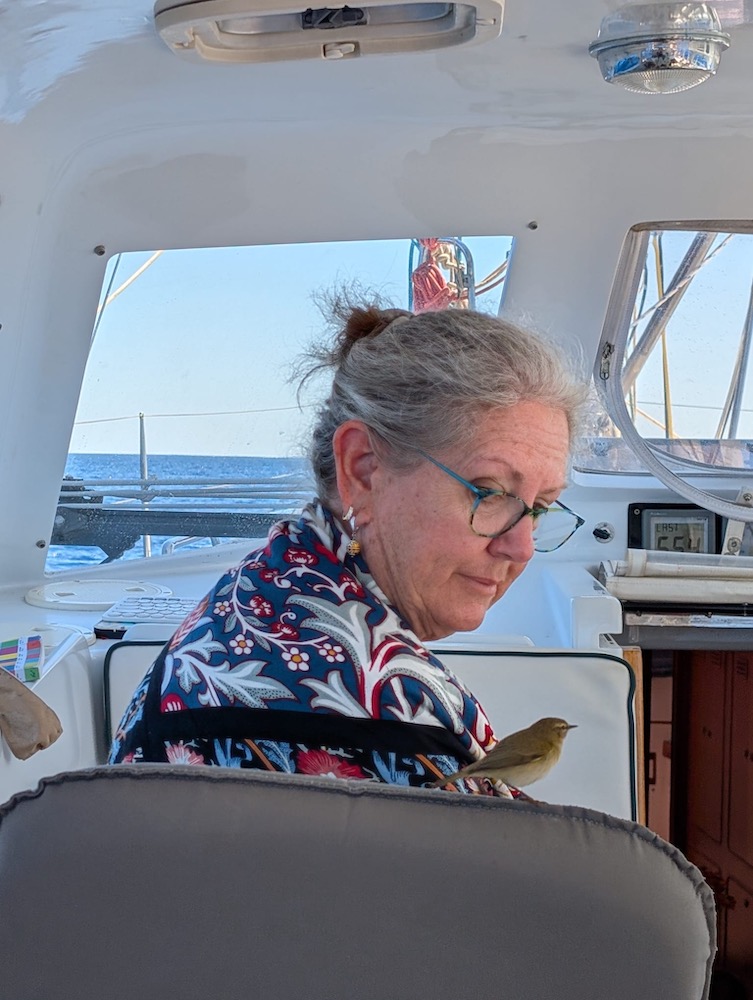
We noticed that he perched most comfortably on my little vase of mostly dead flowers. I felt that he knew there was water in the vase, but it was too deep and narrow for him to get to the water. Bob filled a lid from one of our plastic storage containers with water and set it next to the vase, but our little visitor left before finding it. During this visit he landed on top of Bob’s head!–he moved before I got my phone ready. And he landed on my hand twice, which is at the end of the video above.
About an hour later he returned. He found the water and drank for a while. He seemed to understand (again, anthropomorphising on my part) that we were not too threatening. He flitted about, and we heard one lovely note of his song. We could not identify him at this point because we were very far offshore, so cellular data and our starlink connection were not operable.
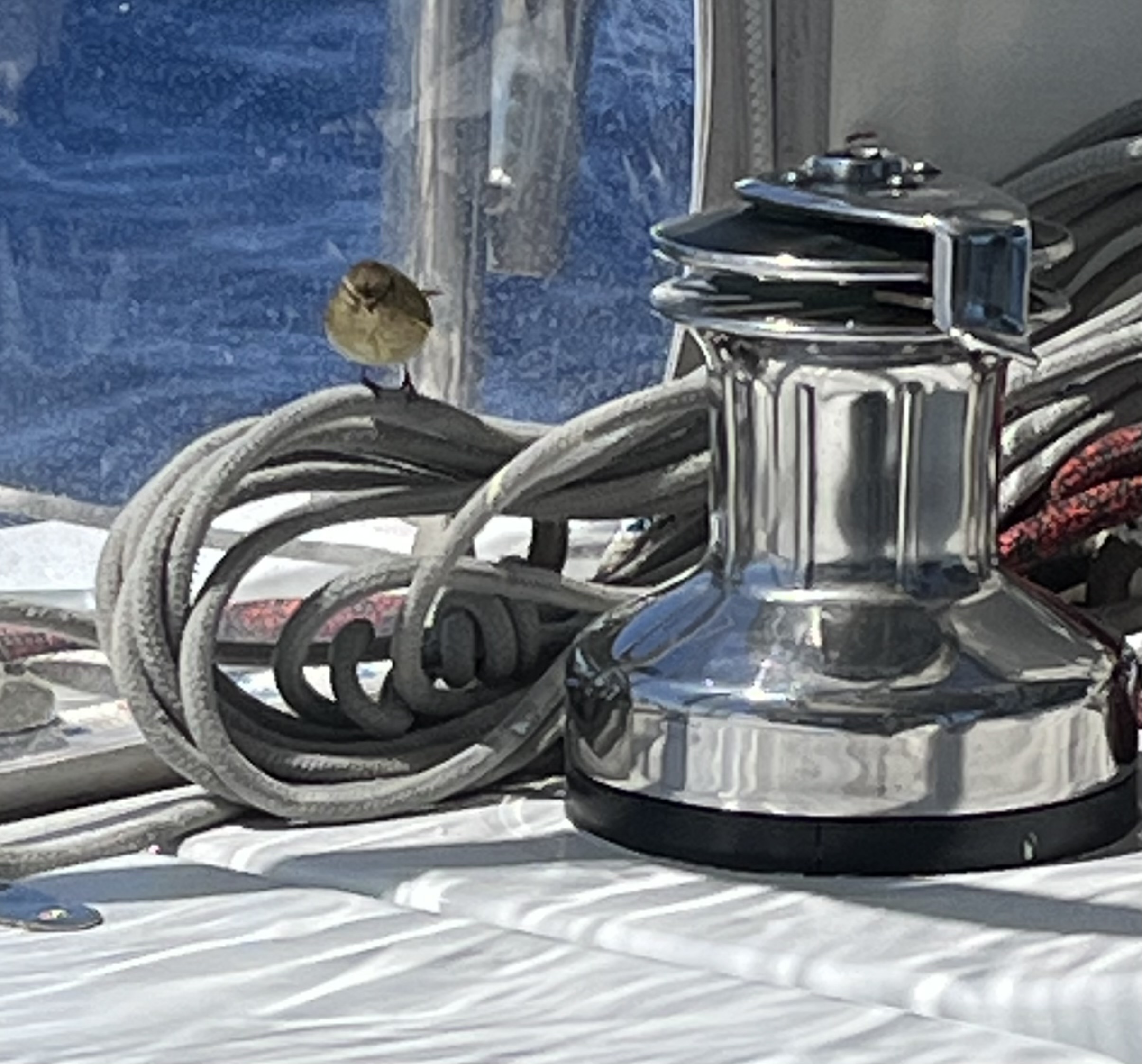
Look at his beautiful wings spread for flying! On this visit he found the water which made me ridiculously happy. He explored the front of our cockpit on this visit, but left again within a few minutes. I thought about him all night and on Sunday morning. To our surprise he came back about midday on Sunday. Song birds are not water birds, so he could not have spent the night on the water. On his first visit we were about equal distance from both Menorca and Sardinia, roughly 100 miles to reach either one. I have no idea how far a tiny song bird can travel, and I mostly think they travel over land if possible so they have options for stopping. Yet he arrived again on Sunday morning, and at that point we were abut 40 miles from Sardinia. It gave me great hope that he would make it back to land. Where on earth did he spend the night??
Once we got back in cellular/starlink territory I searched online for what kind of bird he is. He was the color and size of our eastern gold finches in winter–a dull olive. He had black and white bands around his eyes. According to google he is a Mediterranean warbler, possibly an olive Sardinian warbler. He does have a beautiful song, and I felt lucky to hear one note of that song while he was onboard.
Here are some still photos I took of him.
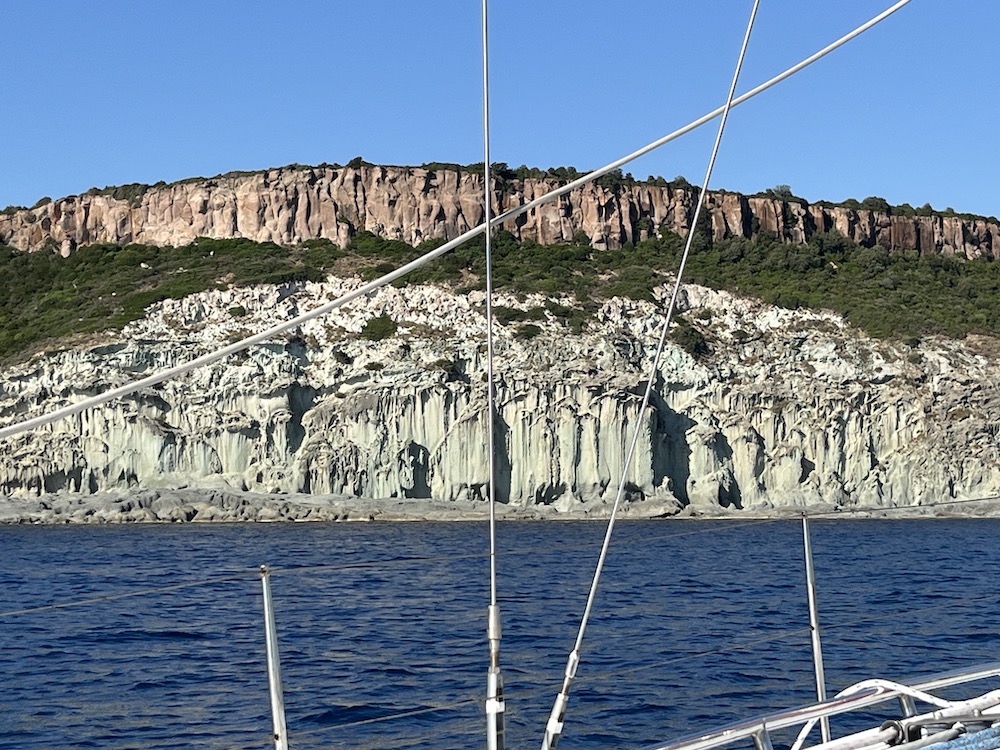
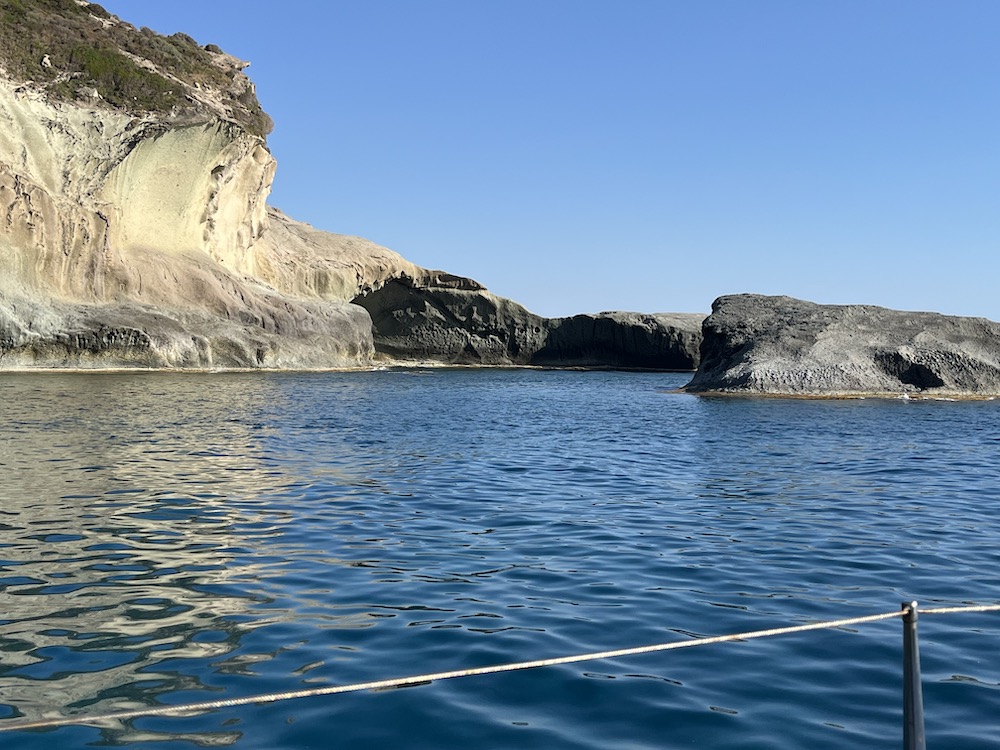
We are now in a tiny cut on the western side of Sardinia, called Cala E Moro just moments north of Bosa. We anchored here in order to delay our arrival at a marina in Bosa since we were exhausted by the time we got here and figured there would be no dock hands available on a Sunday evening. This spot is incredibly dramatic. Parts of the rock outcrops look more like a lunar landscape than earth. The rocks closer to the water are blue/green which might mean there is copper in the rocks. I have always thought that copper deposits are underground and have to be mined. I don’t know that I’m right of course, but these lower rock formations are quite an odd color.
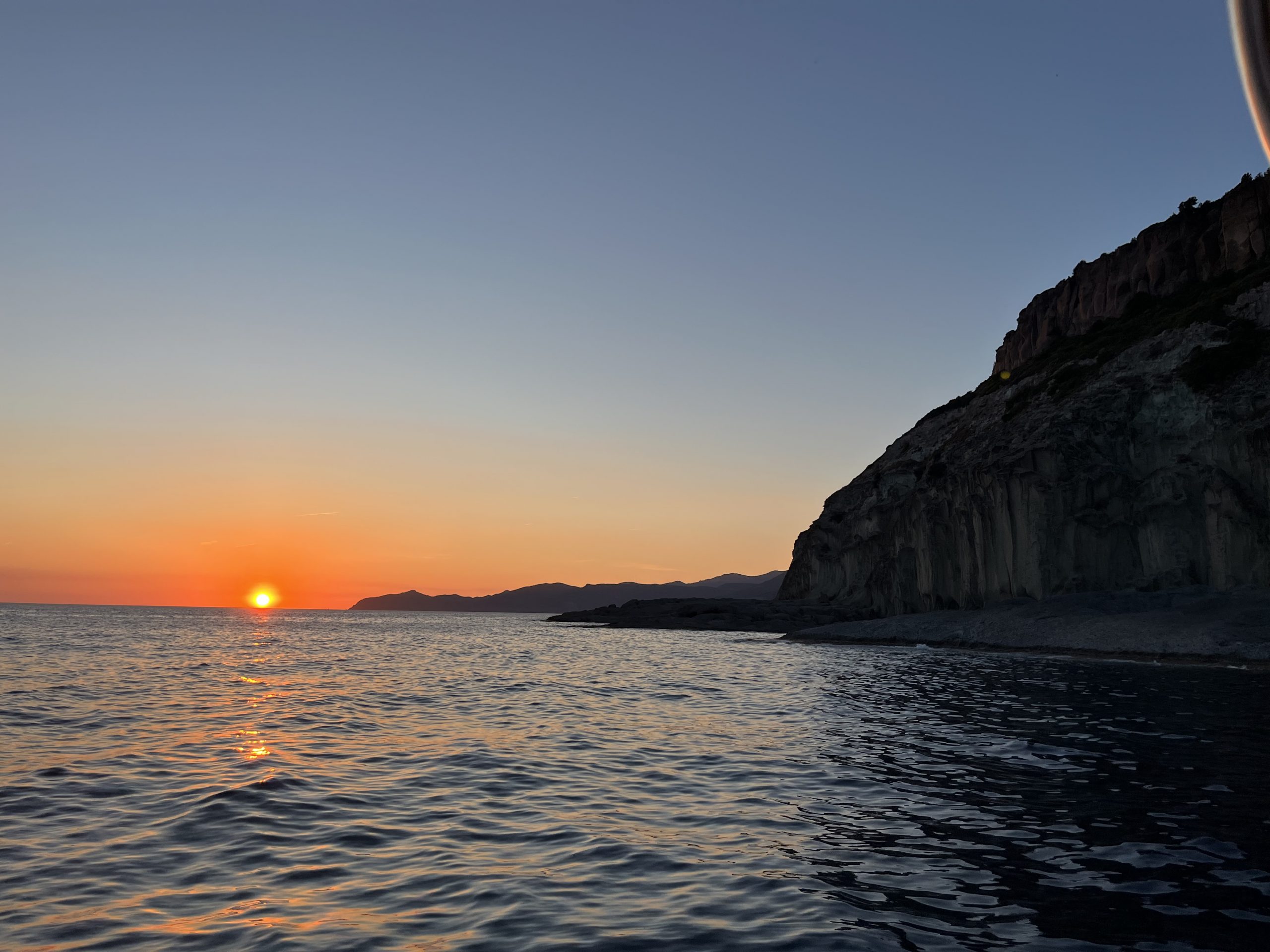
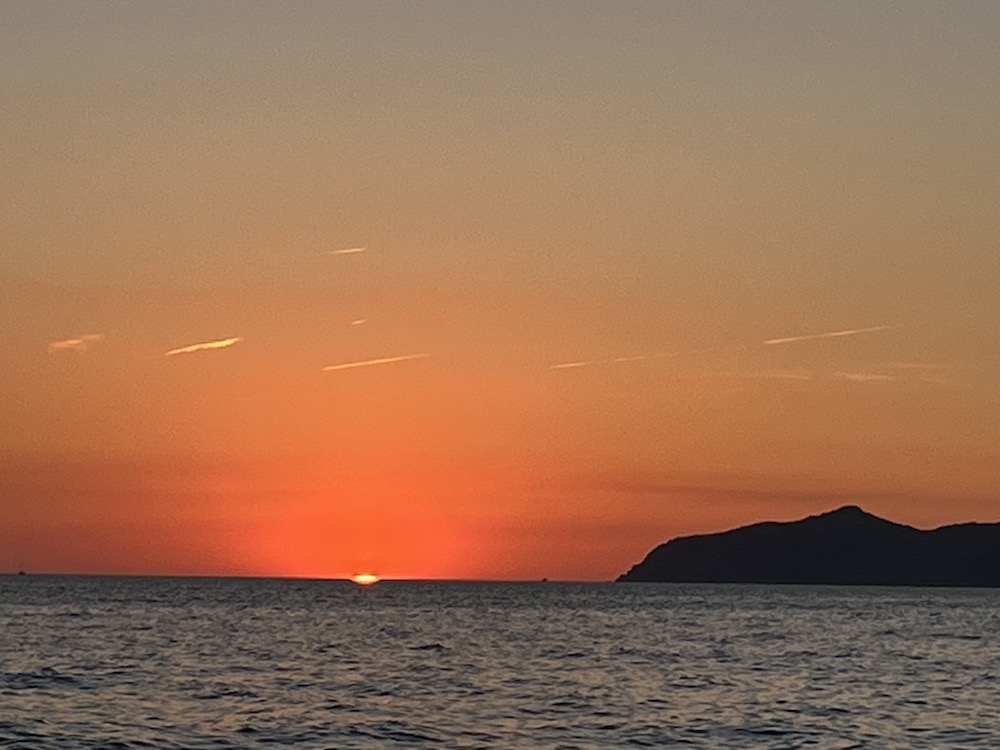
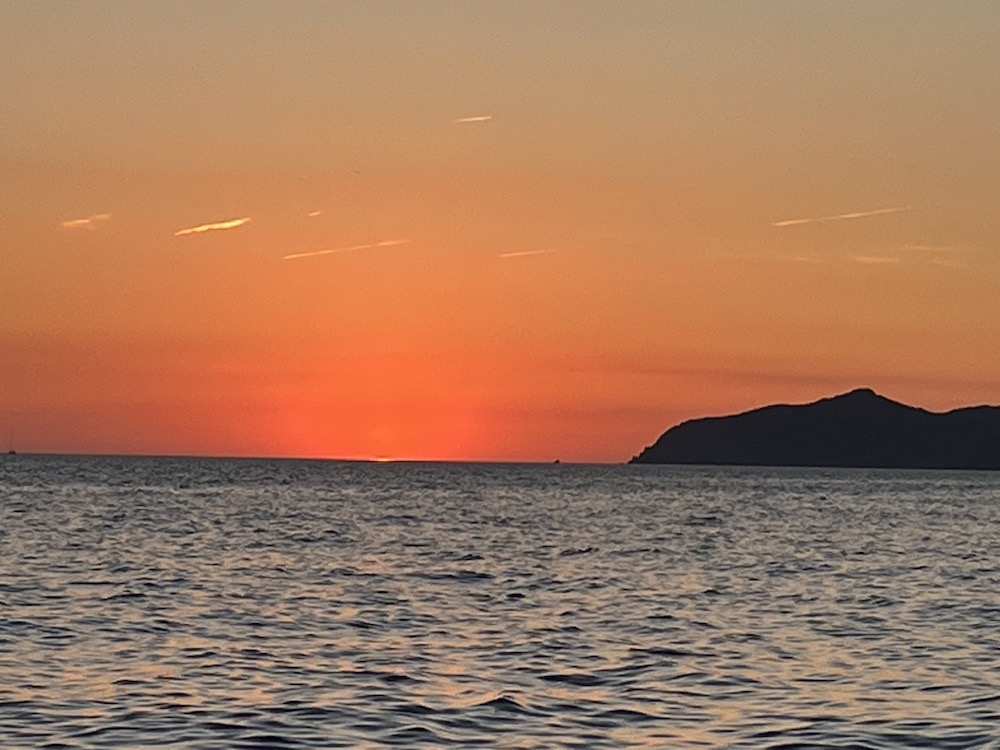
We enjoyed a lovely sunset here, and I felt somewhat confident that our little visitor is alive and well somewhere on Sardinia!
In October of 2024, I visited Perugia, Italy, for the first time as part of a workshop in Umbria on natural dyeing and using the wool to weave tapestry. I only had part of a day there, but it was one of the best days of that trip. You can read about it here, or maybe just look at the photos of this incredible place. Almost a year later I learned that through VAWAA you can book a week long workshop at Giuditta Brozzetti. A weaving acquaintance found the opportunity, and if she got three others to join her the cost for each of us would be reduced. I wasn’t sure where I’d be during the 3rd week of April this year, but I was certain I was going to get to Perugia for this workshop. As it turned out, Bob and I were in Almerimar, Spain, facing a record number of repairs needed on our sailboat Pandora. But I took a flight from Alicante, Spain, to Rome, and met my three weaving cohorts the following morning. We took a train to Perugia and saw a great deal of the countryside. It was a magical trip from the start.
We arrived on Saturday evening and spent Sunday touring the historic area of the city. Our lodging was not as charming as described on the website, and definitely ODD. It took us two hours to check with the owner’s ‘contactless check-in.’ I don’t recommend this. To get into the accommodation we had to go through a locked gate, then up two long fights of stone steps from the Middle Ages to a locked door. More time corresponding with the owner to get through that locked door, then another flight of modern stairs to the first room. My room required yet another flight of stairs. The rooms were not quite as advertised, but they had some antique charm and we made the best of it.
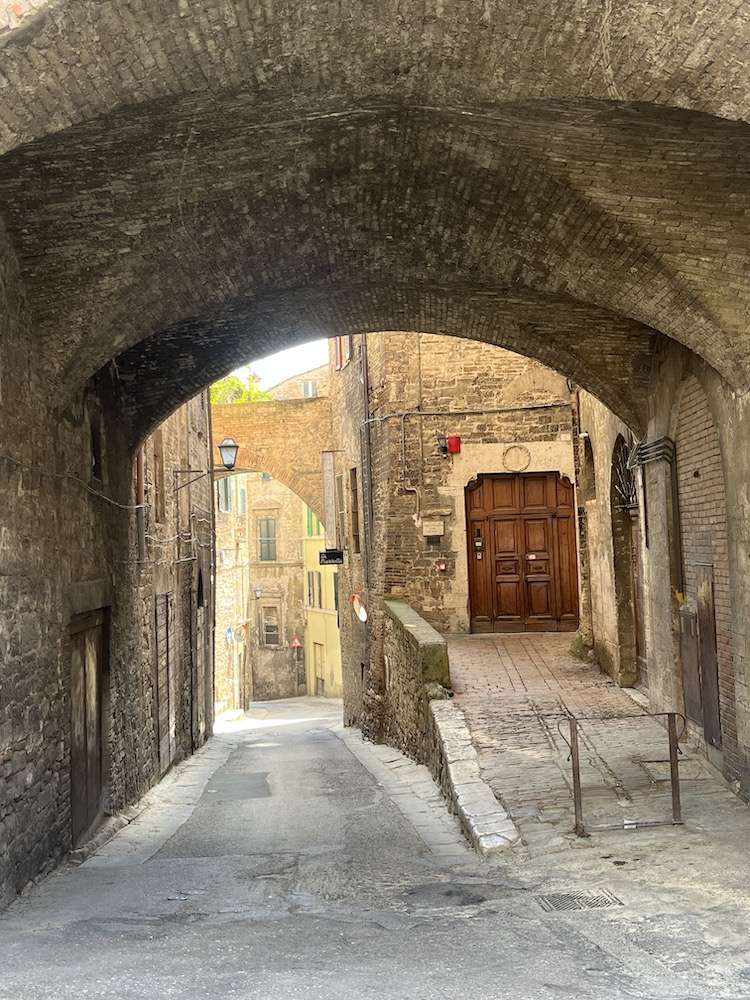
We were staying in a medieval part of the town which was very scenic. This is right outside the gate to the building where our rooms were.
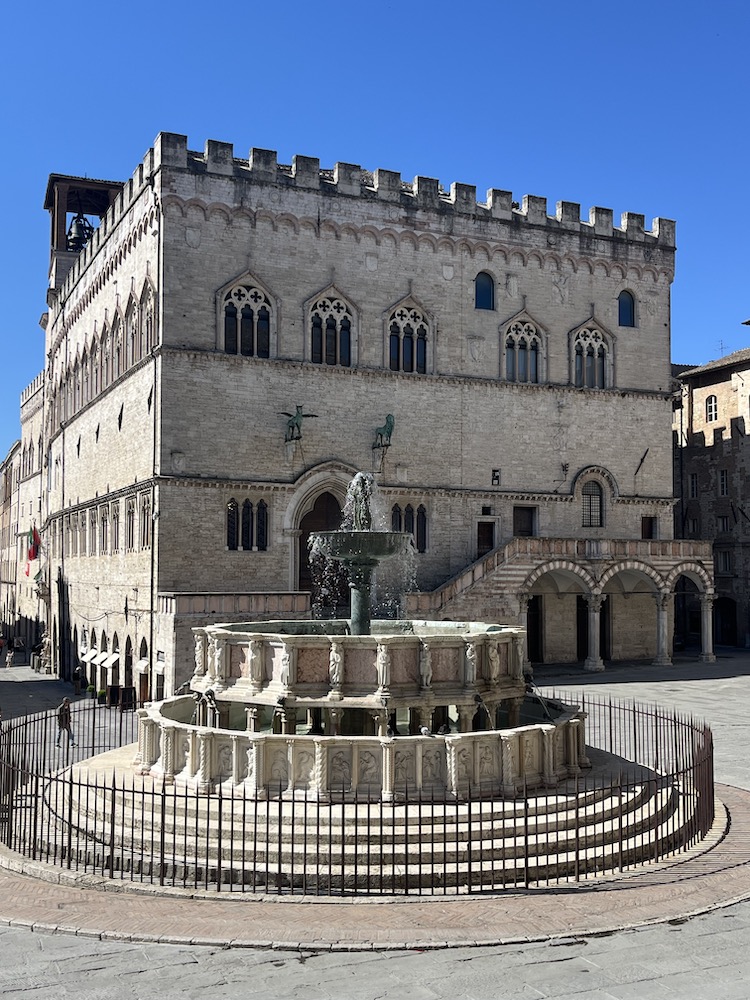
At the bottom of this narrow street we turned into the large Piazza IV Novembre. It was great location for seeing much of historic Perugia.
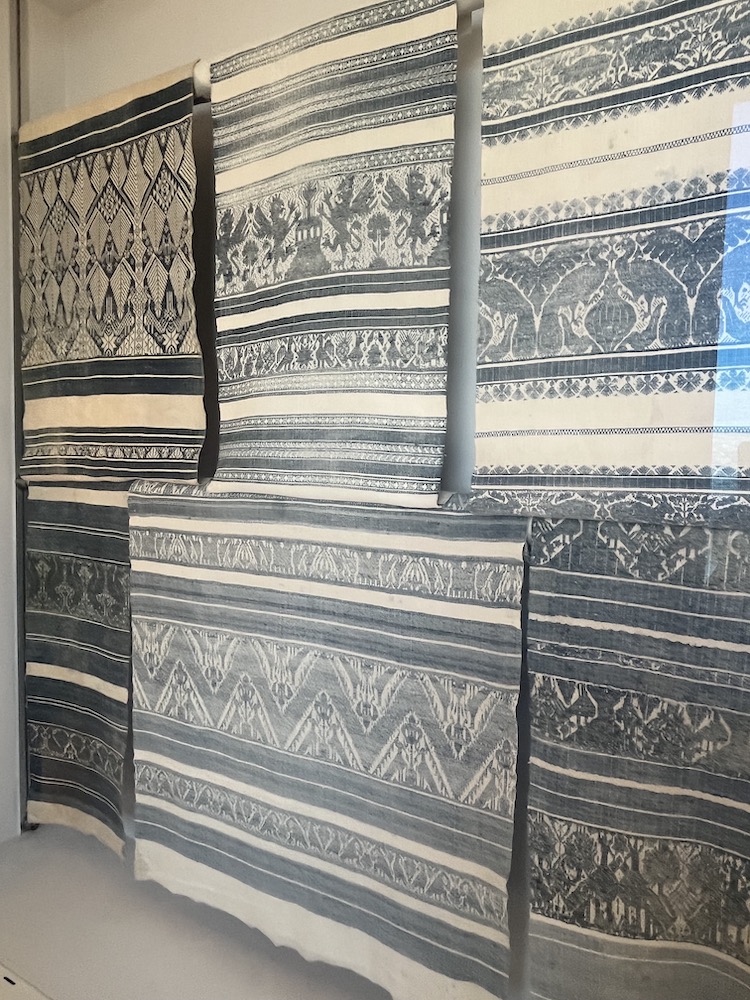
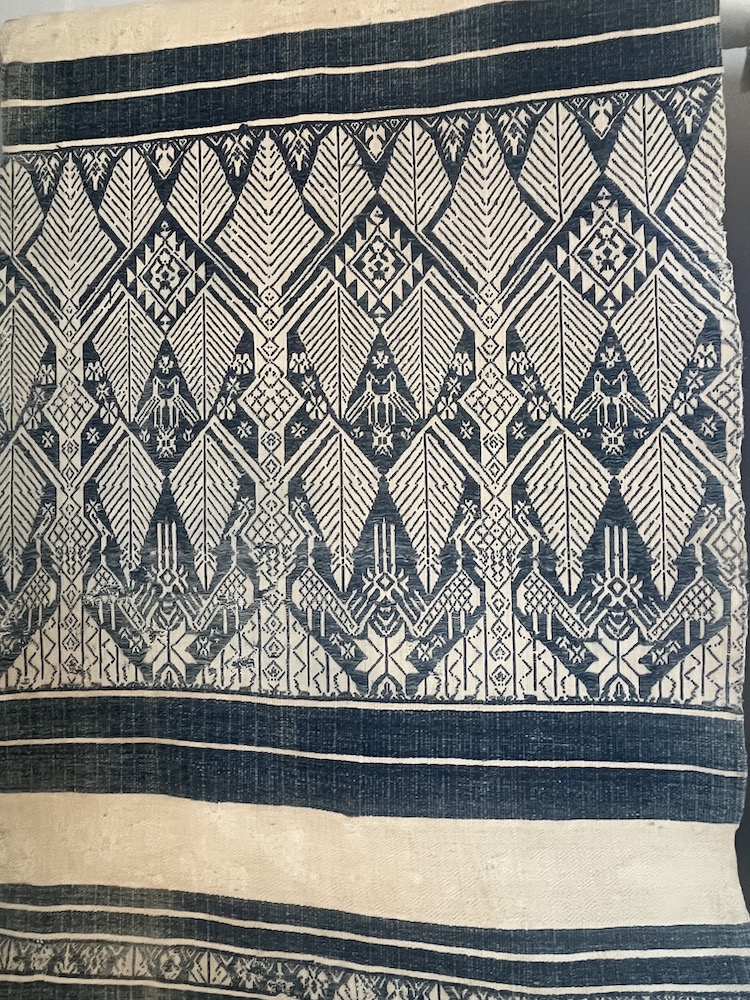
The building behind the fountain is the National Gallery of Art that is housed in a medieval castle. The collection is focused on medieval religious art, with a wing devoted to Giotti and his students, and the effect they all had on portraying figures more realistically and emotionally. A hightlight for me was a small collection of highly figured woven altar cloths that Perugian women were so famous for making during the Middle Ages and Renaissance.
These beautiful altar cloths were woven on floor looms where the ornate designs had to be picked by hand. Looms that could weave these designs had not yet been developed, so all this work was done painstakingly by hand. The tradition in the Middle Ages was to make the warp out local white linen, also spun by hand in this period, and to use very precious cotton from Egypt, dyed locally with idigo, for the patterned weft designs.
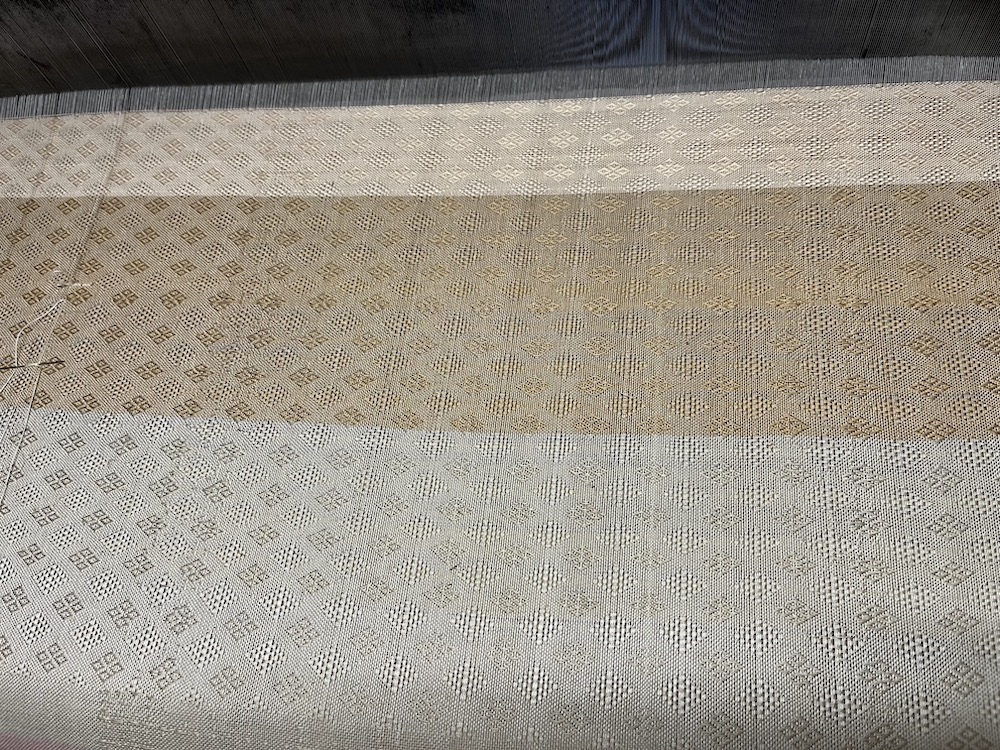
These woven fabrics are from the 13th c. so they are around 700 years old and still look so beautiful. You cannot tell how highly figured the white background cloth is. It is woven in a series of different diamonds, some created with lace weaves, and some with twills.
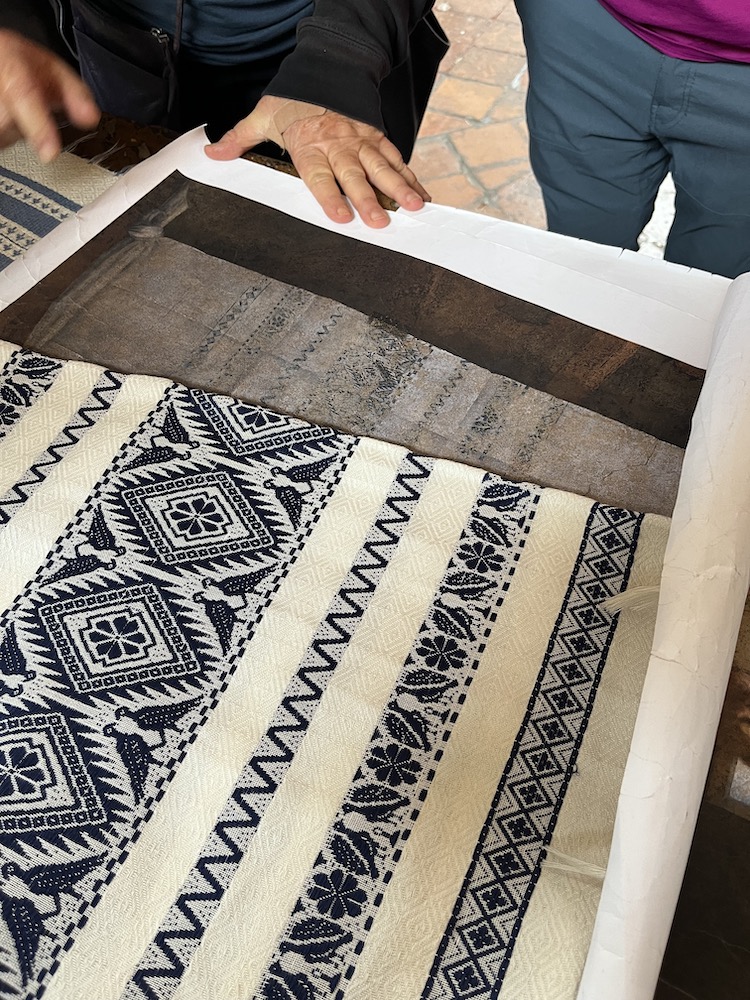
As I mentioned in the post from 2024, Leoanardo da Vinci used these cloths for inspiration in painting his fresco of the Last Supper. The current owner of the Giuditta Brozzetti workshop, Marta Cucchio, studied high resolution images of the fresco to recreate these elaborate designs for weaving on 18th and 19th c. manual jacquard looms. Four generations of Brozzetti women have worked to keep this Perugian weaving tradition alive. Marta is the first in the family to weave hersefl; her mother, grandmother, and great grandmother ran the business rather than doing any of the weaving. In the Middle Ages and early Renaissance these cloths were highly valued and commissioned for churches all over Italy and throughout Europe, which is why Marta’s family wanted to see this tradition continue on modern looms. While most of these cloths are no longer extant, many of the painters from this time period have preserved them in religious paintings, such as da Vinci’s fresco. If you look closely at the enlarged image of the fresco, you can see the patterns on the digital image and compare them to the modern tablecloth. Marta has studied these designs and recorded them for punch cards to be woven on jacquard looms. My cohorts and I dubbed the large diamond design “da Vinci’s diamonds,” and we gave the smaller designs names as well–“da Vinci’s small birds and flowers,” and “da Vinci’s DNA chain.” In this photo you can also see how highly figured the background cloth is.
Here is Marta and I, back in 2024, looking at a high resolution detail of the fresco, along with a photo of the entire fresco and part of the woven reproduction of the cloth. Can you tell I am awestruck?
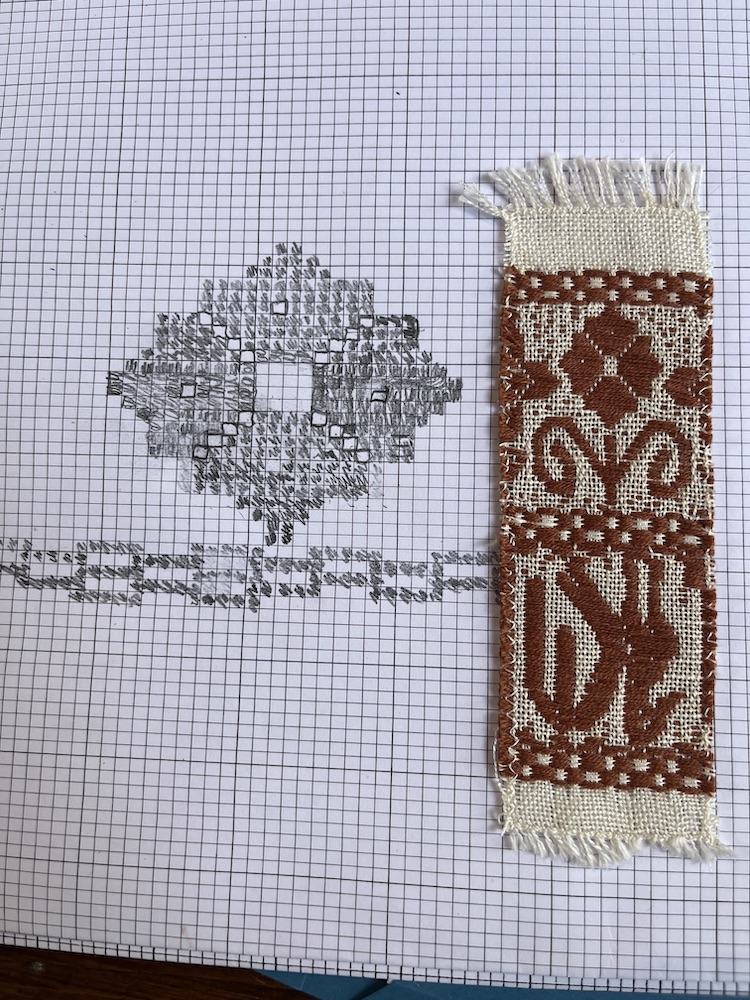
All four of us were smitten with these historic designs and used them in our own work during the week. Our first exercise was to study a simple medieval design and draw it on graph paper as if we would translate it to the punch cards used on jacquard looms. It was an excellent exercise in understanding the jacquard loom. The penciled-in squares on the graph paper represent the weft threads, and the uncolored spaces are the warp tie-downs. I used this flower in one of the pieces I wove during the workshop.
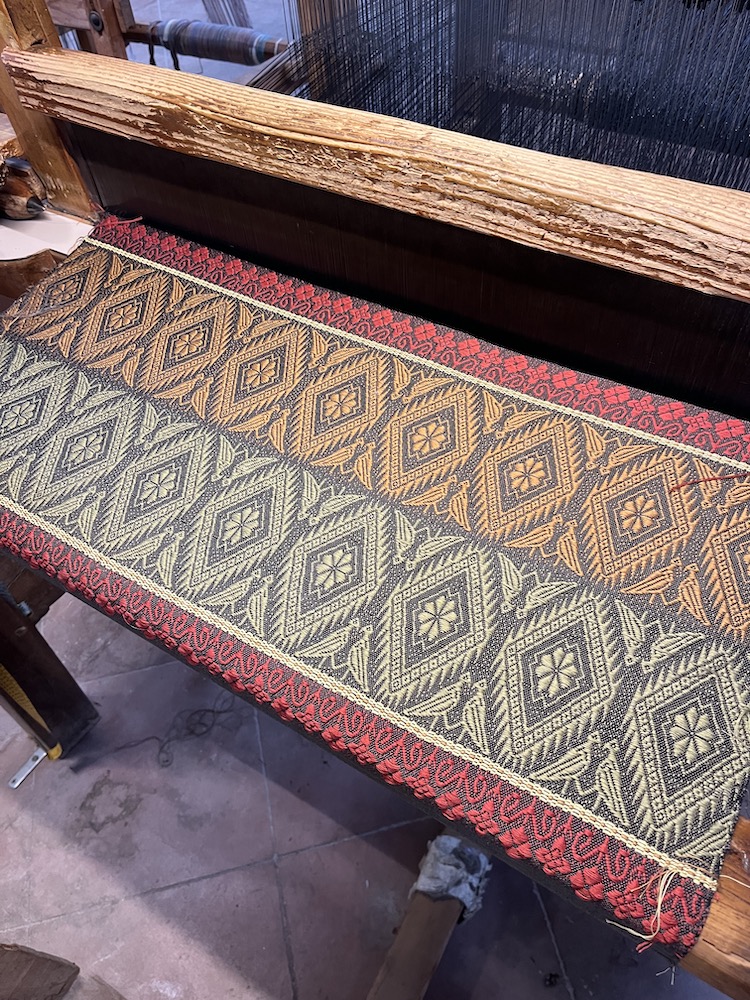
Marta and her assistant Alessia worked with us throughout the week to hone our skills in using the jacquard looms. There is a lever above the beater that controls whether you are throwing a pick of background or a pattern pick, That is the first thing you set with each pass of weft. Then you depress the one treadle which is quite heavy since it is controlling the lift of many warp threads, sometimes thousands. Next you pull the cord for the fly shuttle, which was set for either background weft or pattern weft when you set the binary lever at the center of the loom above the beater. The rhythm is binary lever, depress treadle, pull the fly shuttle cord, release treadle, beat. Each of the looms is a different width and has its own quirks in operation. One thing that was standard is that we needed to depress the treadle somewhat gently, but to release the treadle aggressively and quickly. By the end of the week I was struggling to release the treadle quickly enough. You only use one leg for treadling, your right, and the treadle is rather high. By the end of the week I was struggling to lift my leg high enough to release the treadle quickly. Not being quick at this maneuver causes small weft skips that will have to be corrected. I’ll have a number of corrections to make!
It’s surprising and thrilling to be able to weave so much in so little time. Here is some of our work
This is my first finished piece. Beyond the cloth beam I had practiced half the diamond design and some of the flowers. I was particularly smitten with these oldest designs that have been handed down through artwork, so my first piece is “da Vinci diamonds” and the ” da Vinci little flowers.”
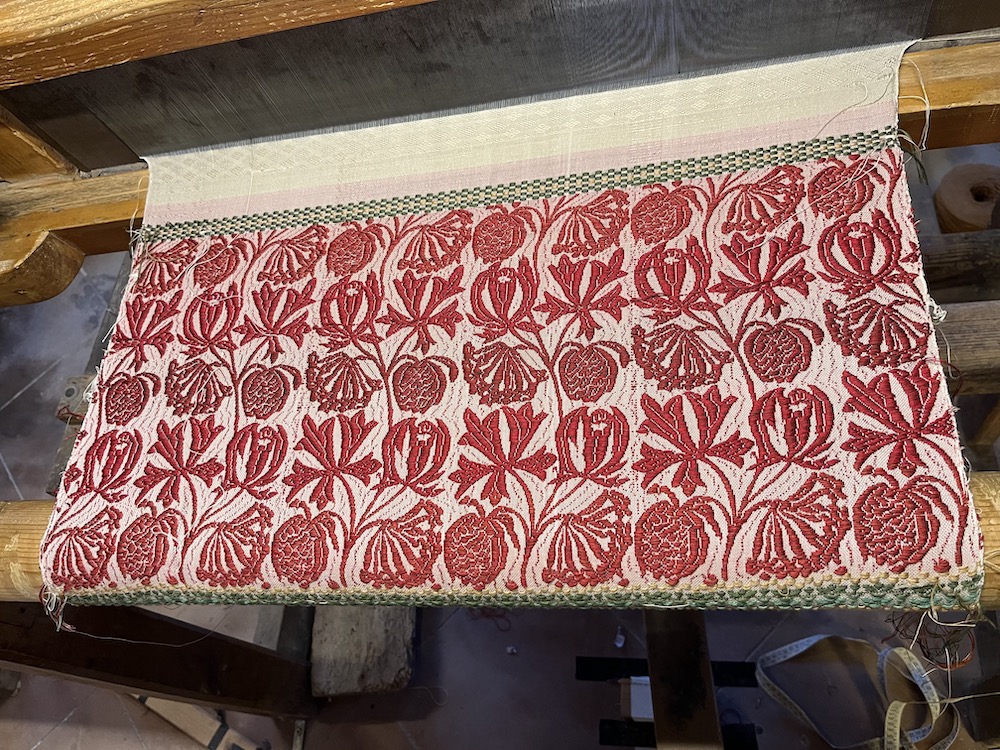
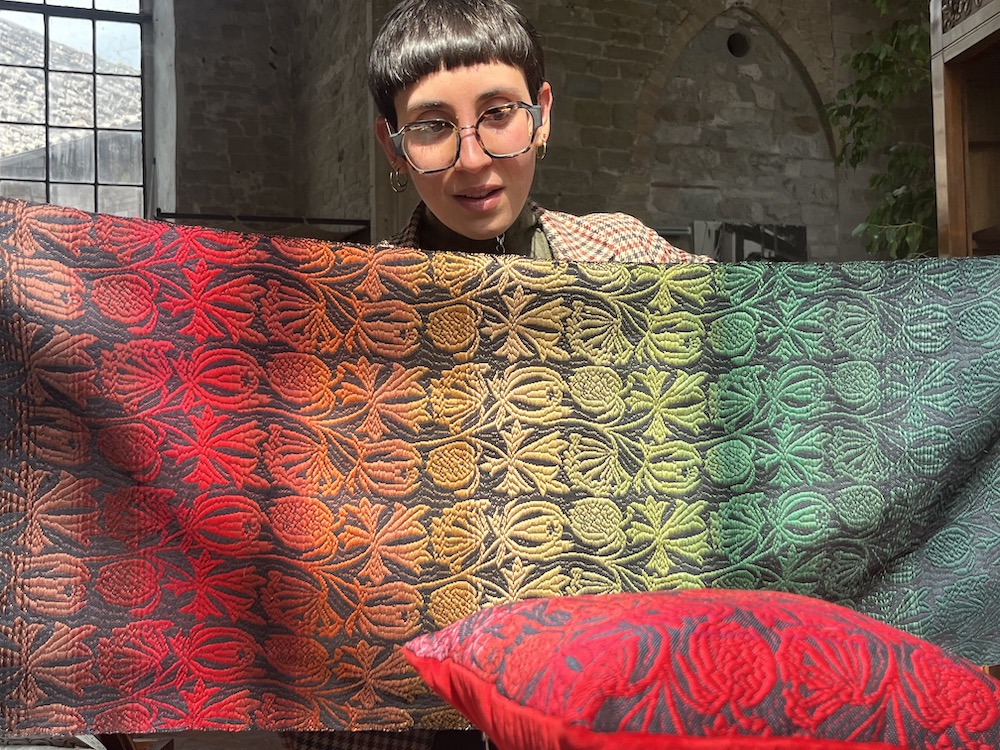
The second piece I wove is from the London Liberty period during the Arts and Crafts period. It’s pomegranates, and I blended three colors of reds for each repeat of the design–light reds first, then medium reds, and finally dark reds. I then repeated that sequence backwards for light, medium, dark, medium, light. Each pattern weft requires three threads of 4/68 cotton held together, so all of us enjoyed creating our own color blends. The bottom border is a chain and then small trees, and the top border is several repeats of the chain. Alessia said she’d like to weave my color combination herself! Maybe she says that to everyone… She recorded all our color choices, and we did as well, not that I may ever have the opportunity to use a jacquard loom in the future. I have grandiose plans to make this fabric into a handbag, like the one I bought when I visited here in 2024.
pomegranate design from the Arts and Crafts period in England, woven using a blend of reds.
I also wanted to weave fabric of the interesting background designs. I chose several colors of cream to weave against the cream warp, and then a combination of wheat colors for the middle section. I want to do a rolled hem on this piece and little picots of bullion stitch to turn this into a table runner. At the end of this I wove a short section of little trees to cut into book marks.
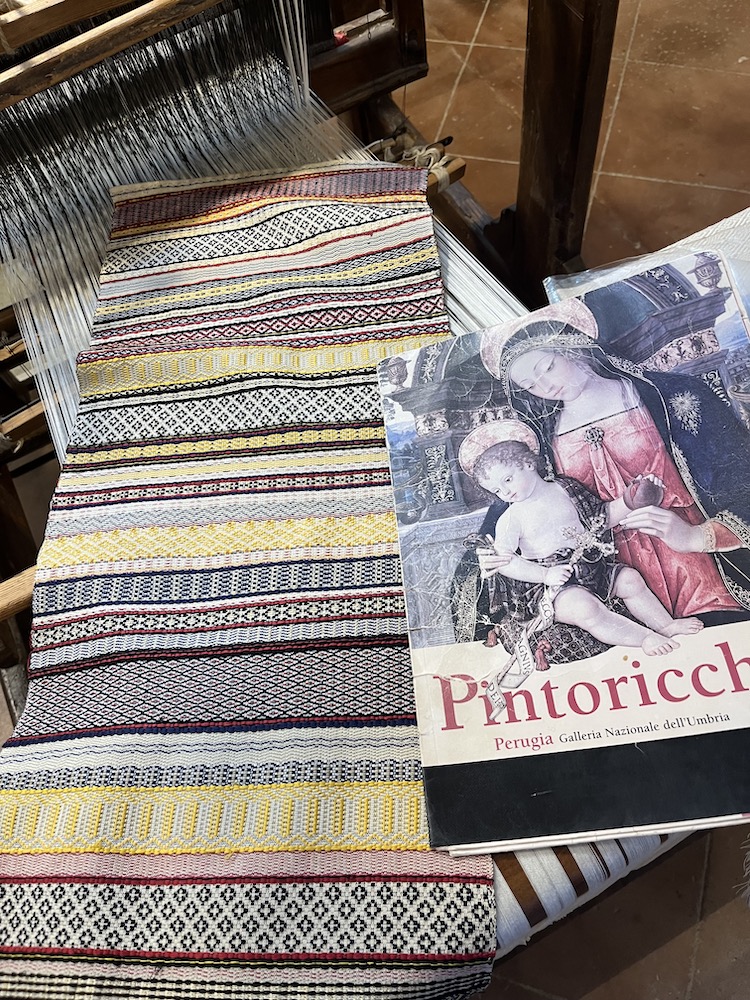
In the middle of using the jacquard looms, I tried the 4-shaft floor loom when I had to wait for the next available jacquard loom. These cloths were simple twill designs that look more complicated than they actually are. There are paintings that depict the Madonna and Child with the baby Jesus wrapped in these type of woven cloths. This painting is by Pinturicchio from 1496.
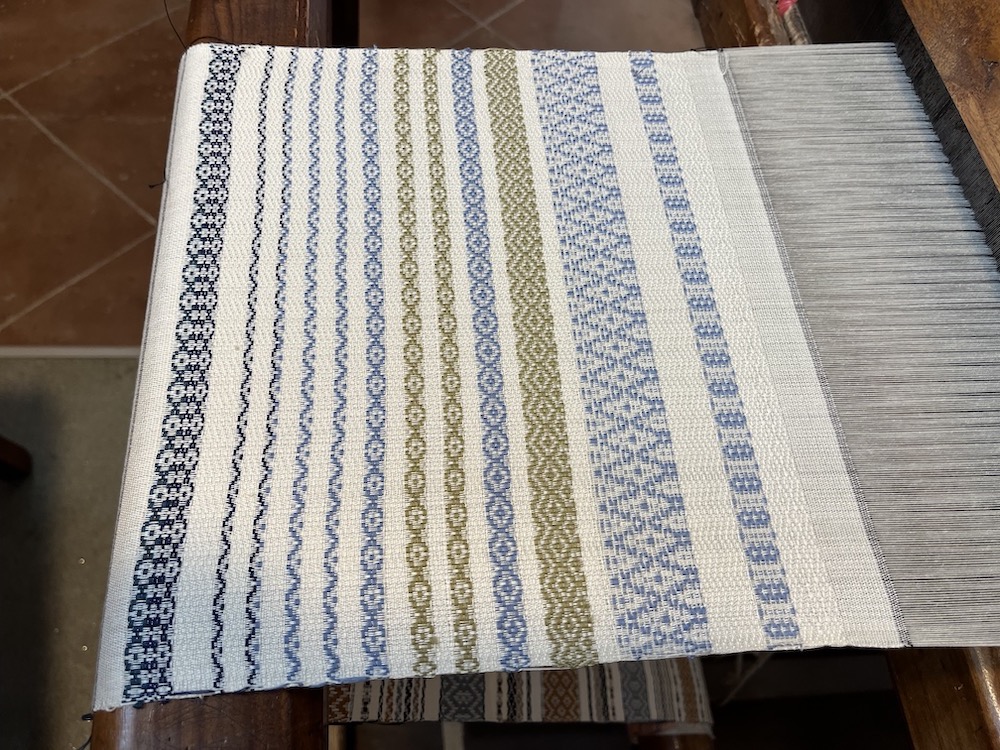
I was quite intrigued by what the Perugian women wove with simple, 4-shaft twill designs in the Middle Ages on counter balance looms. There are plenty of examples at Giuditta Brozzetti. I spent some time weaving a sample to take home with me. There is a possible tablecloth in my weaving future.
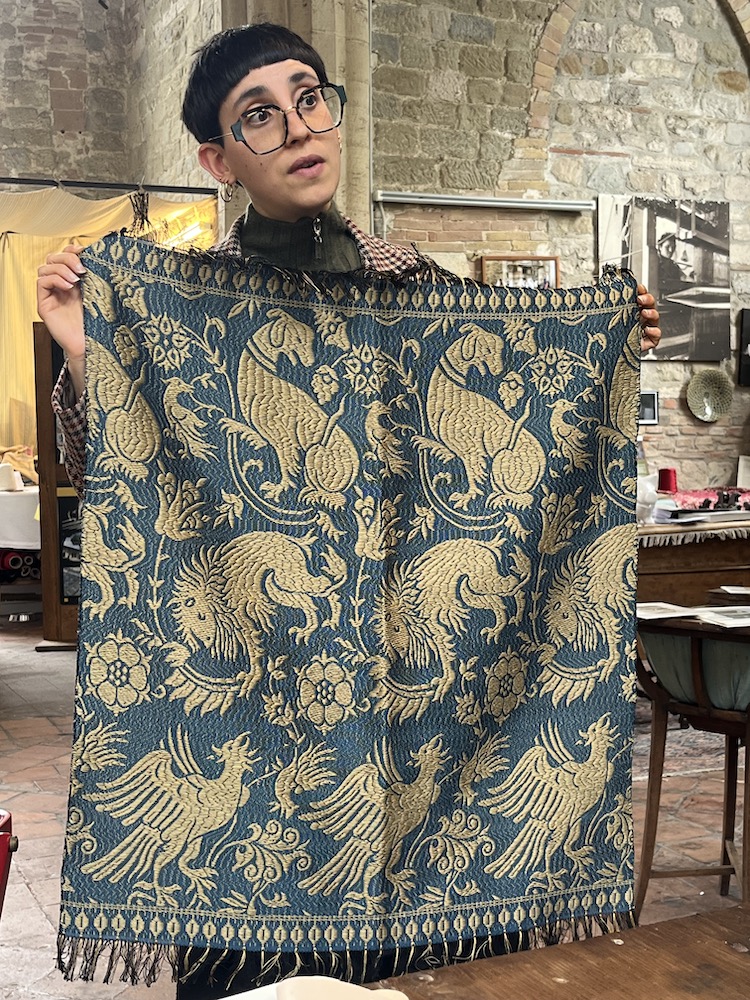
Here is our wonderful teacher Alessia Galassi showing us some of the woven goods at the workshop. She has a master’s degree in historic jacquard weaving, and did research on the mistakes in woven jacquard fabrics. You can find info about here here.
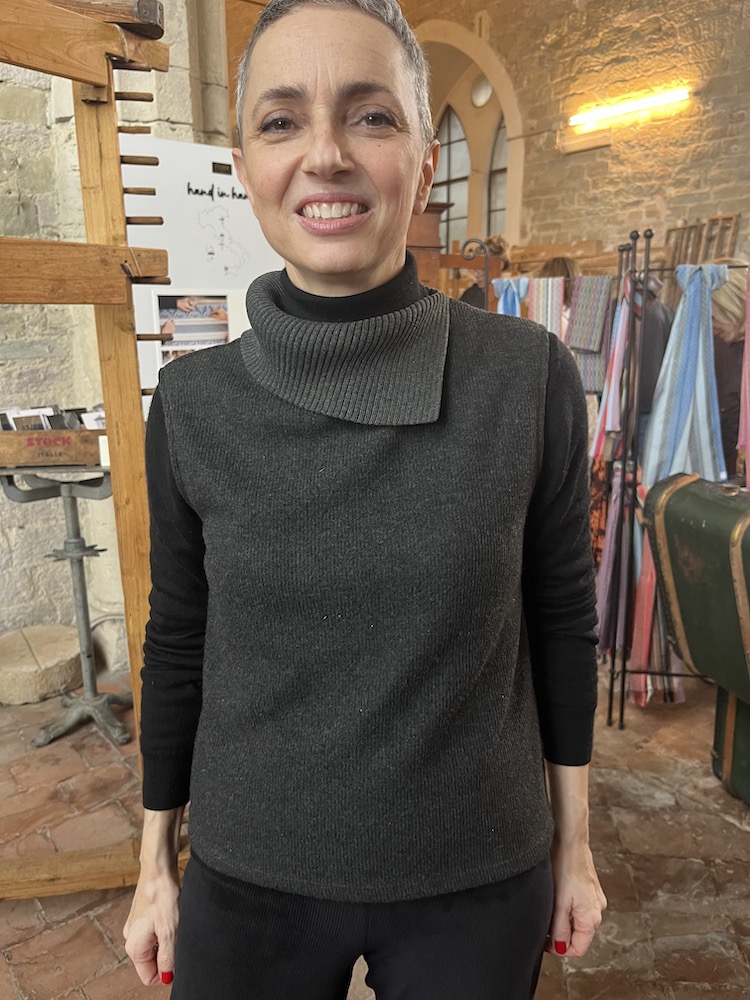
And here is Marta Cucchio whose family started this venture in 1921, and who has been running the business since the 1990s. She is an enthusiastic champion of preserving this Perugian tradition. Thank heaven. Giuditta Brozzetti Museo e Laboratorio. I took this photo because I’d like to make a vest like she’s wearing. I want to weave the fabric in a fine wool plain weave and knit the interesting collar.
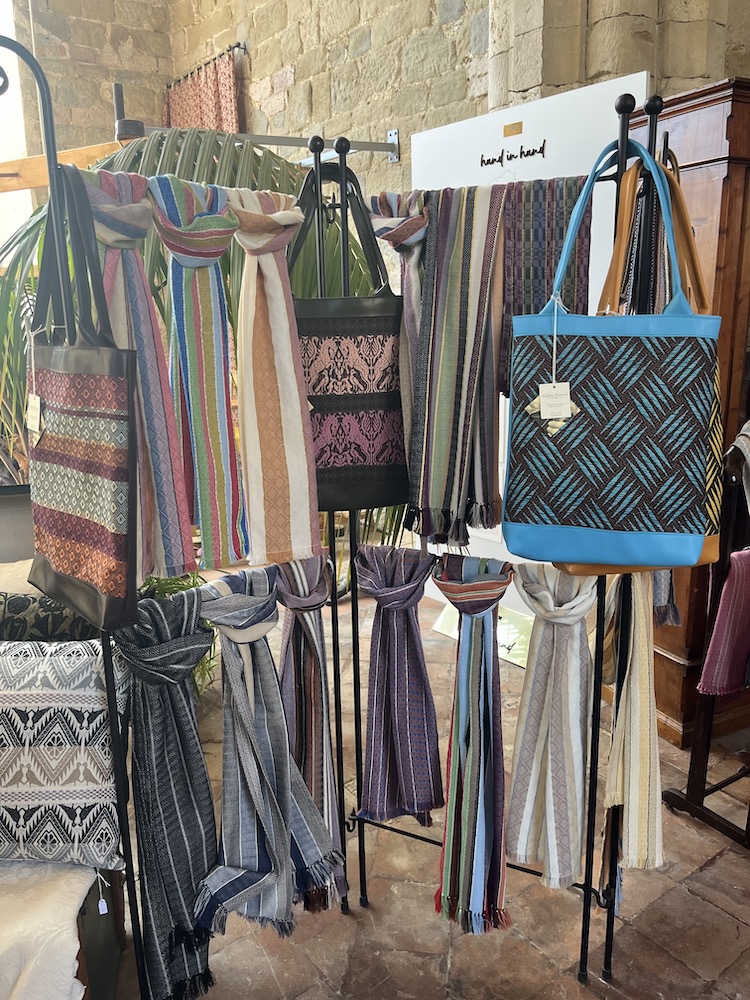
In 1995 Marta bought a 13th c. chapel that had originally been the first church of St. Francis of Assissi. It was later sold to the Benedictines and used as a convent. Over its long history it has also been a spinning mill. It’s a stunning setting for the jacquard looms and the fabrics made here that are for sale.
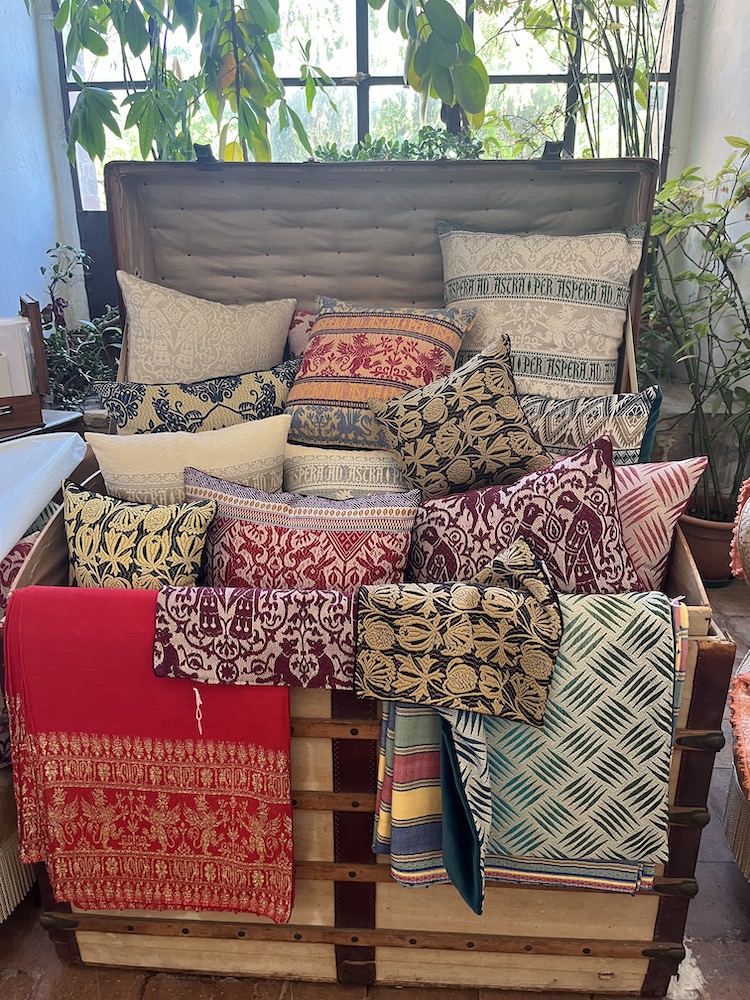
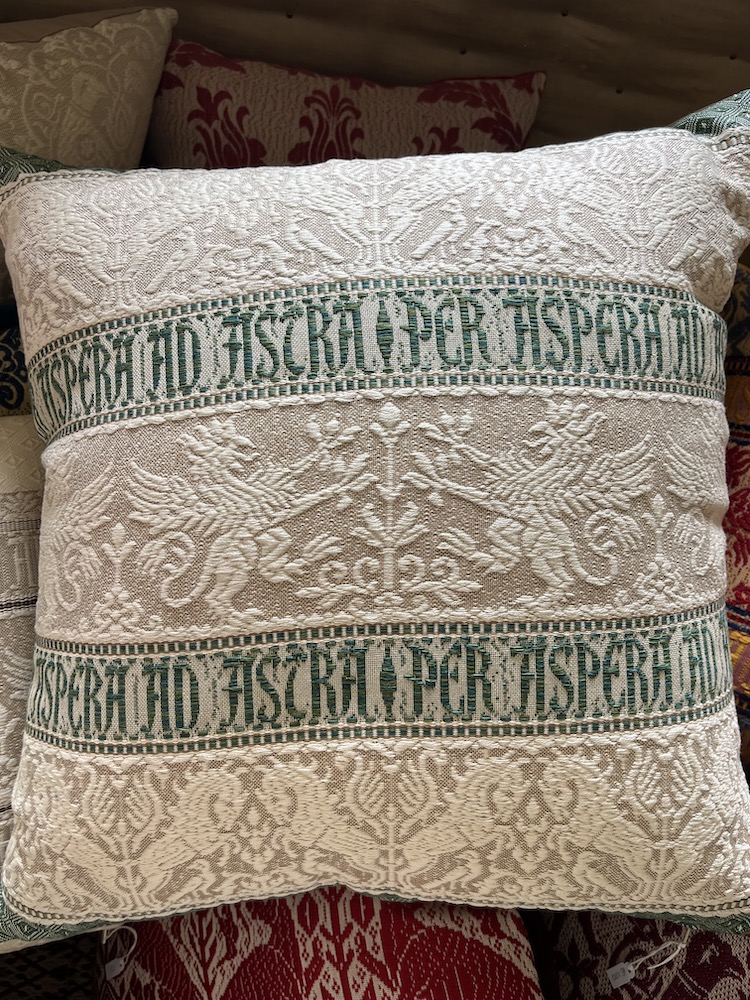
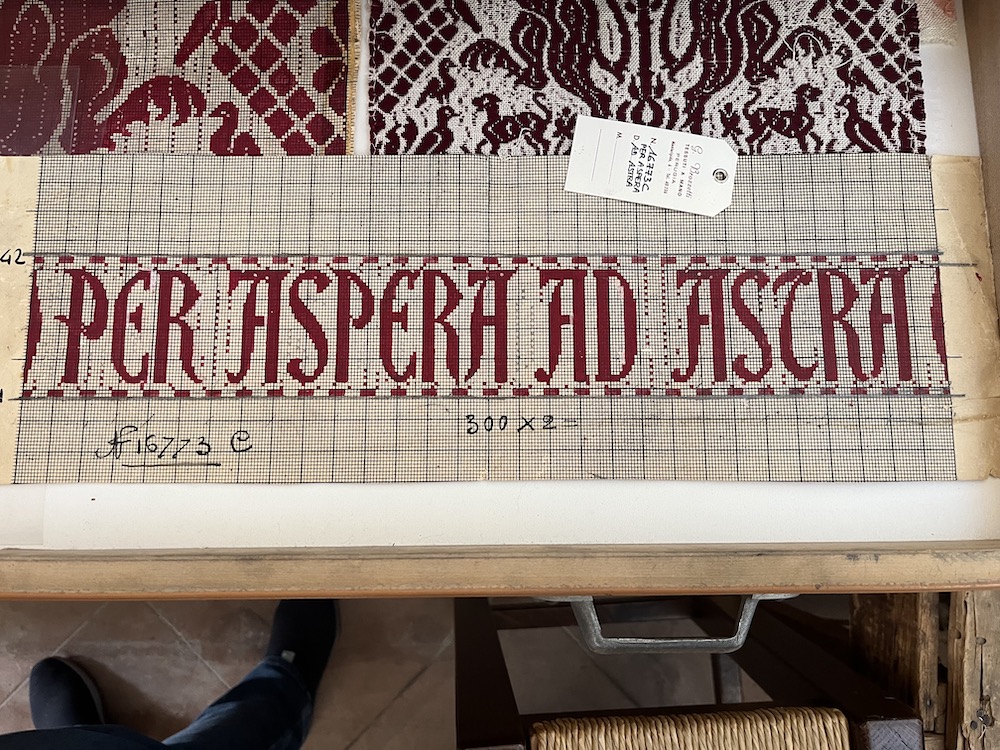
I am particularly interested in this woven phrase which is Perugia’s motto: Per Aspera ad Astra. In Latin this literally means “Through hope to the stars.” Marta says it means something more like through life’s challenges hope brings us to the stars. I wanted to weave this as one of my projects, but that jacquard chain only fits on the largest loom, which students do not use. Alessia got out the graph of this design, suggesting that I might use it for embroidery. Good idea. On the image of the woven pillow the phrase is surrounded by griffons, which are the emblem of Perugia. A griffon has the head of an eagle and the body of a lion, which is symbolic of being able to fly to heaven to talk to God and to be powerful on earth.
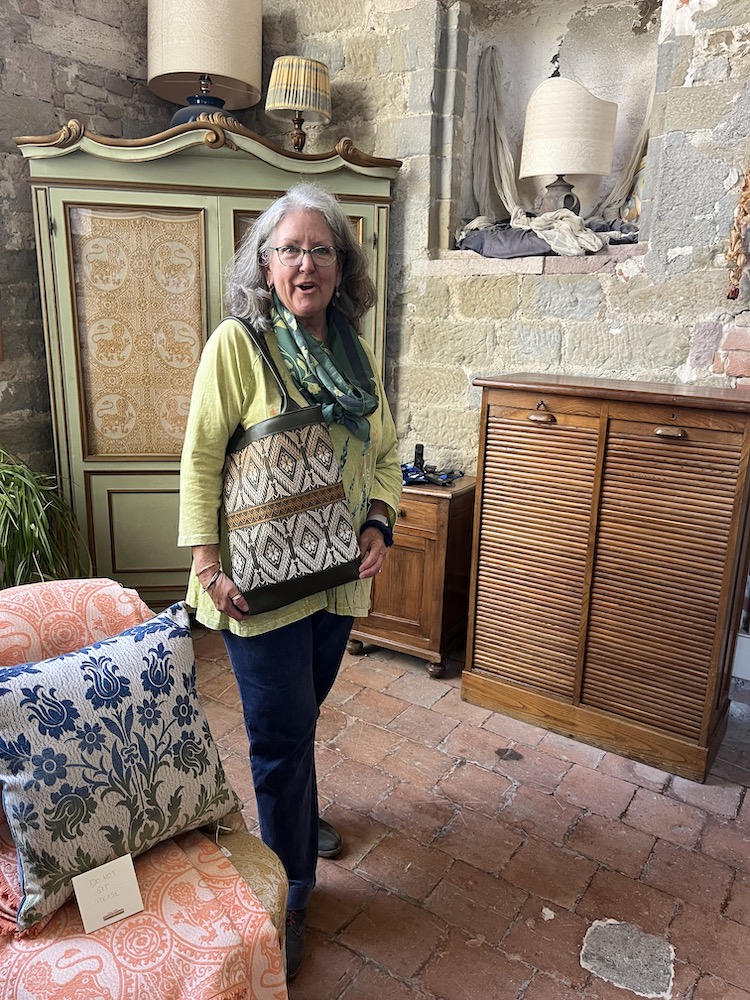
My biggest thrill was buying a tote bag! Several months ago I had seen that Marta had designed and made a tote bag for one of the hauture Italian fashion houses for an opening event they held. I asked if she planned to make more, and she responded that she wasn’t sure when she’d have them. When I arrived at the workshop I didn’t see any, and I was too disappointed to ask about them. Then, on the last day of our class Marta arrived late because she driven somewhere to pick up the first six tote bags! I was very lucky to get the first pick since I had asked for one. It is a treasure, along with the handbag I bought when I was last here.
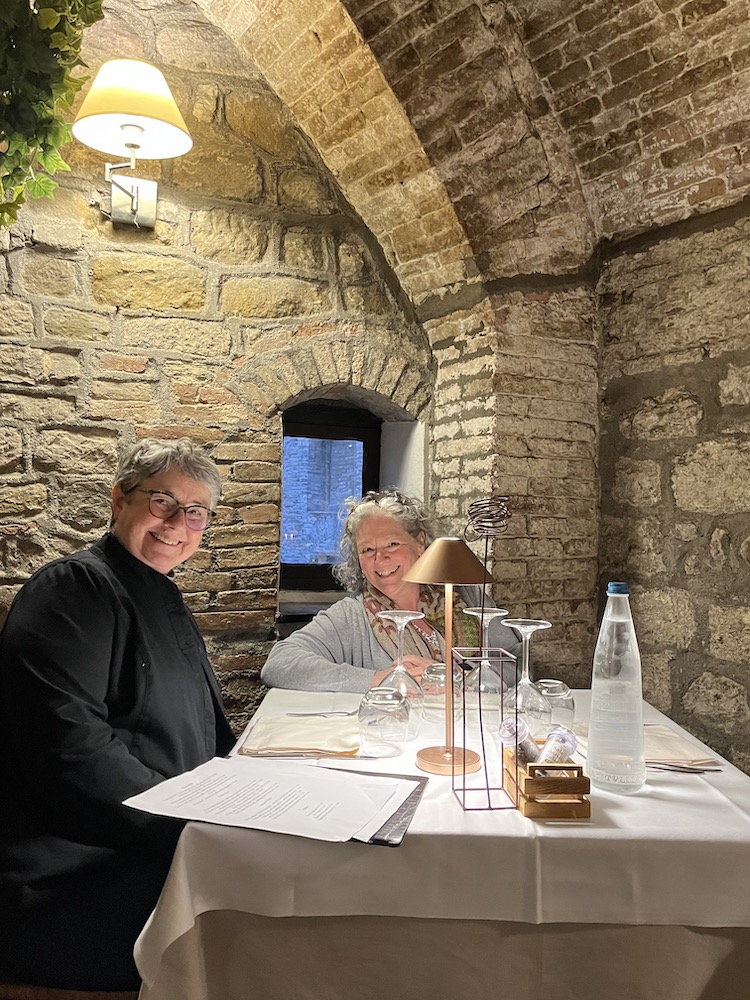
During our stay we managed to see and do some memorable things in Perugia. We had a number of dinners in medieval spaces that were nicely renovated for modern living, such as this restaurant in a nice corner with Chris (L) and Shari (R).
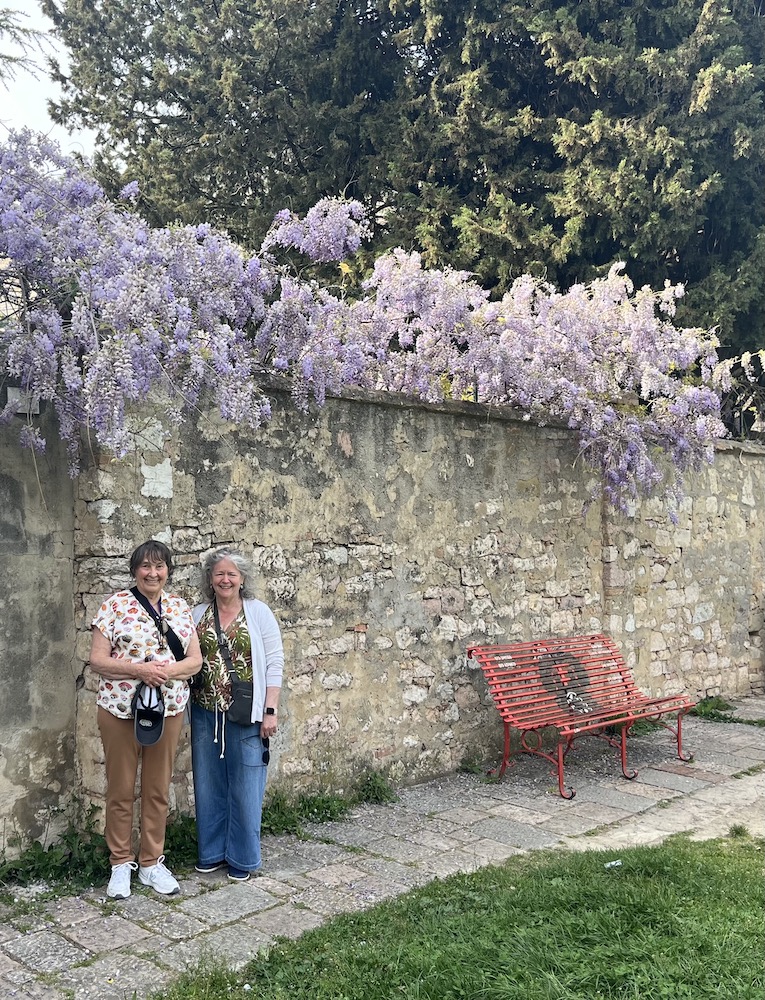
It was a lush time of year in Perugia, and we were lucky to only have a short shower one day during our visit. Here are Bev (L) an Shari (R) standing under a large wisteria vine.
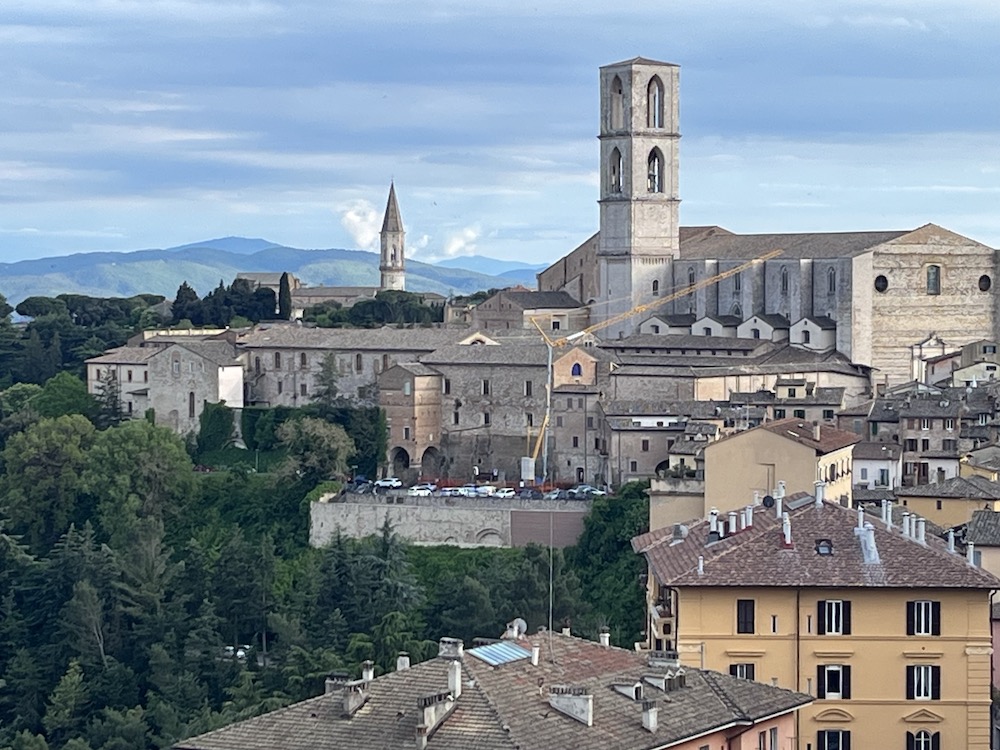
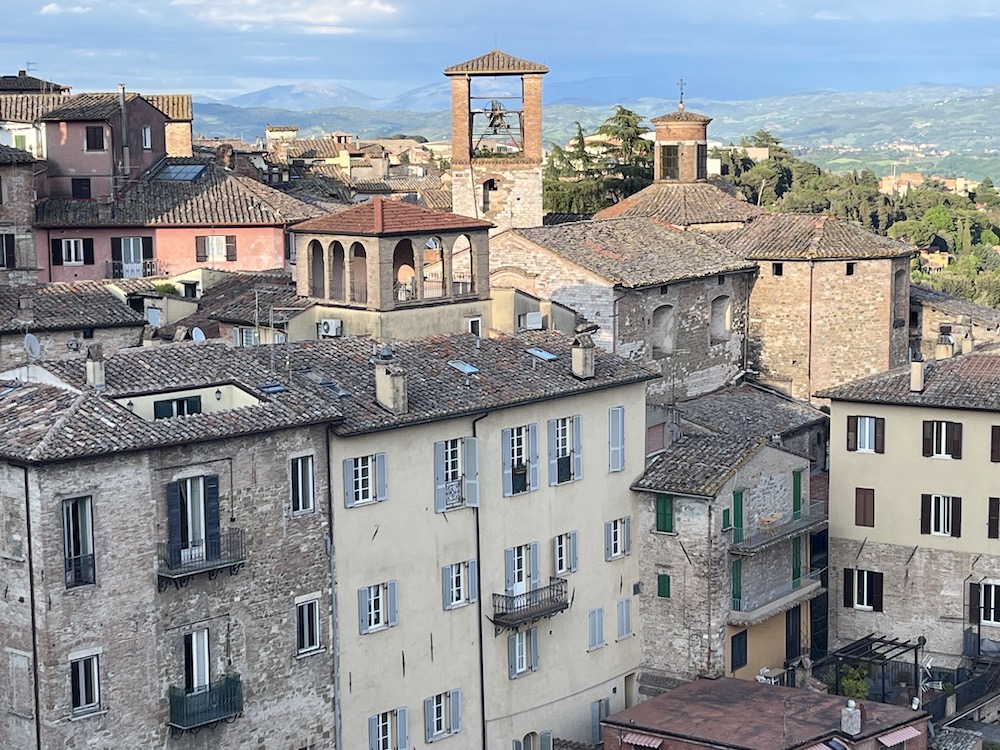
The views from the medieval wall were impressive. What a beautiful city!
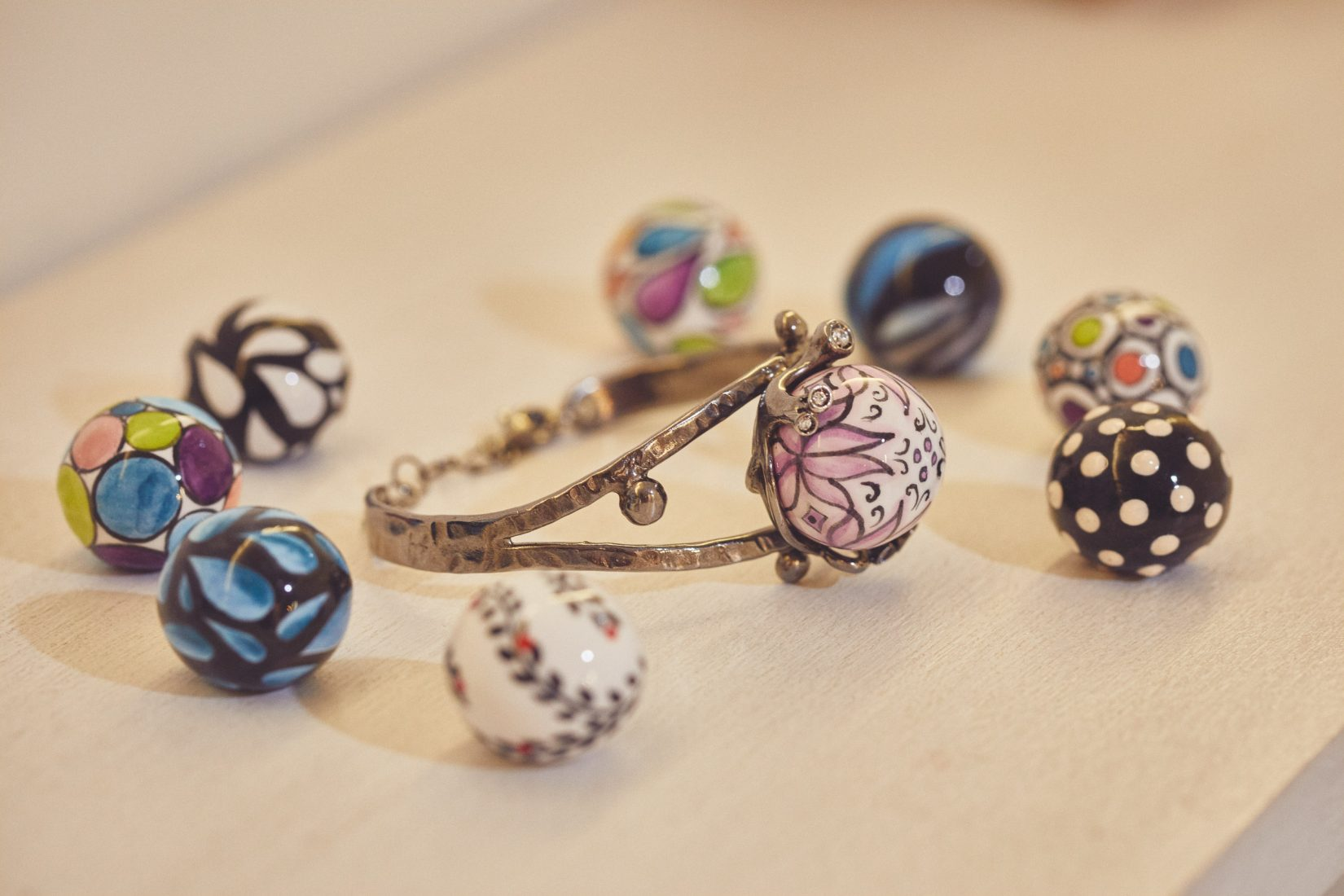
I had hoped to buy a piece of Deruta pottery during this visit, but Marta warned me that Perugia is not the place for that, allthough Deruta is from Umbria. My friends all bought Perugian chocolate, but I missed that opportunity–not sure why! We did find a mother/daughter enterprise who paint tiny spheres of pottery in a technique called “fuseruola.” They make exquisite jewelry and other things in this technique, which is an ancient art that was originally used to decorate the whorls of drop spindles. How could I NOT buy one of these? I chose earrings, but I was seriously tempted by a larger sphere painted with sea shells that could sit on a shelf on Pandora. I do regret not getting that. You can see their work online.
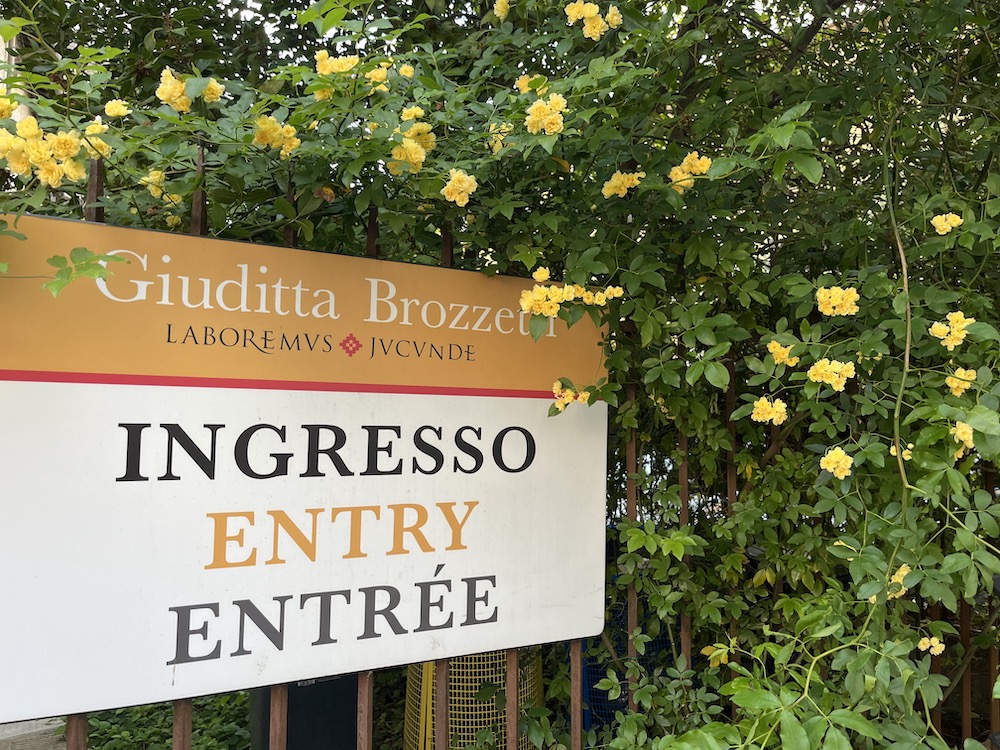
The entrance sign to Giuditta Brozzetti draped in yellow roses in April
“Per Aspera ad Astra!” I hope to have a Perugia 3.0 someday. I never realized how much I would enjoy weaving on these looms in spite of the physical challenges involved. Naturally, I wish I’d discovered this when I was younger, but I’ll take what I can get, and however long I left to weave, I hope it includes more time on a jacquard loom.
While I was in Perugia I thought that Bob and our friends would sail to Cartagena, but Bob was mired in so many repairs. Our friends were supposed to meet Bob in Cartagena, and I was supposed to fly there from Italy when I finished my workshop in Perugia. Nothing has gone as planned on this trip, except for the incredible time in Perugia. Thank heaven for that! At the end of the workshop I flew back to Almeria, our friends joined us a day later, and we all waited an additional two days to set sail for Cartagena. In our original plans I would have missed Cartagena all together, so in the long run, some bad events open up great opportunities.
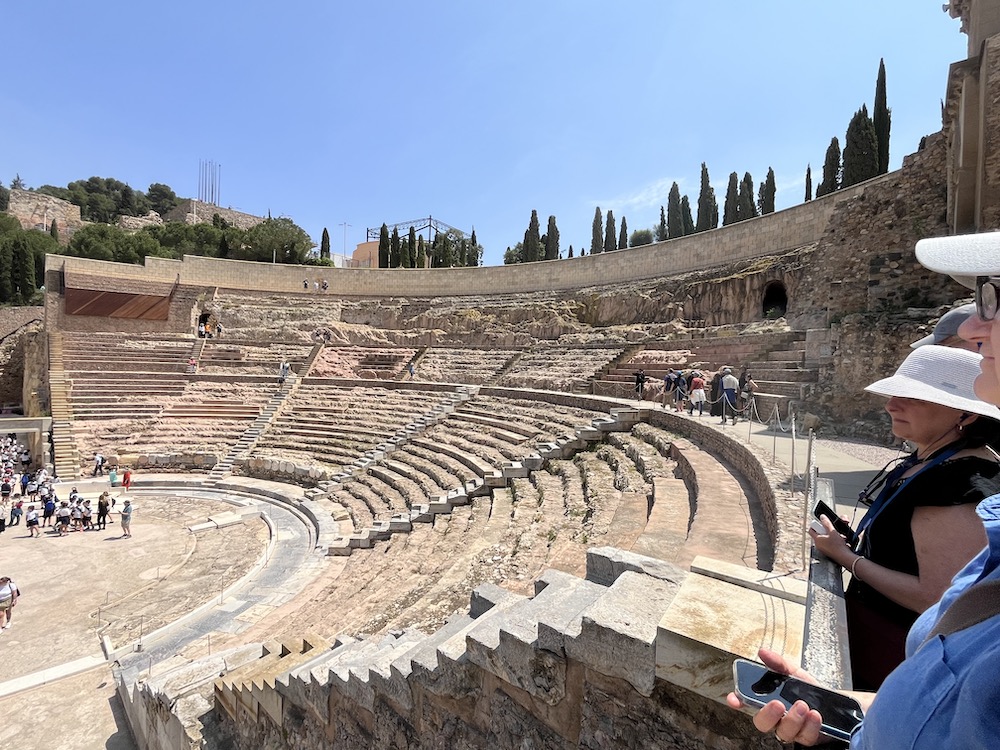
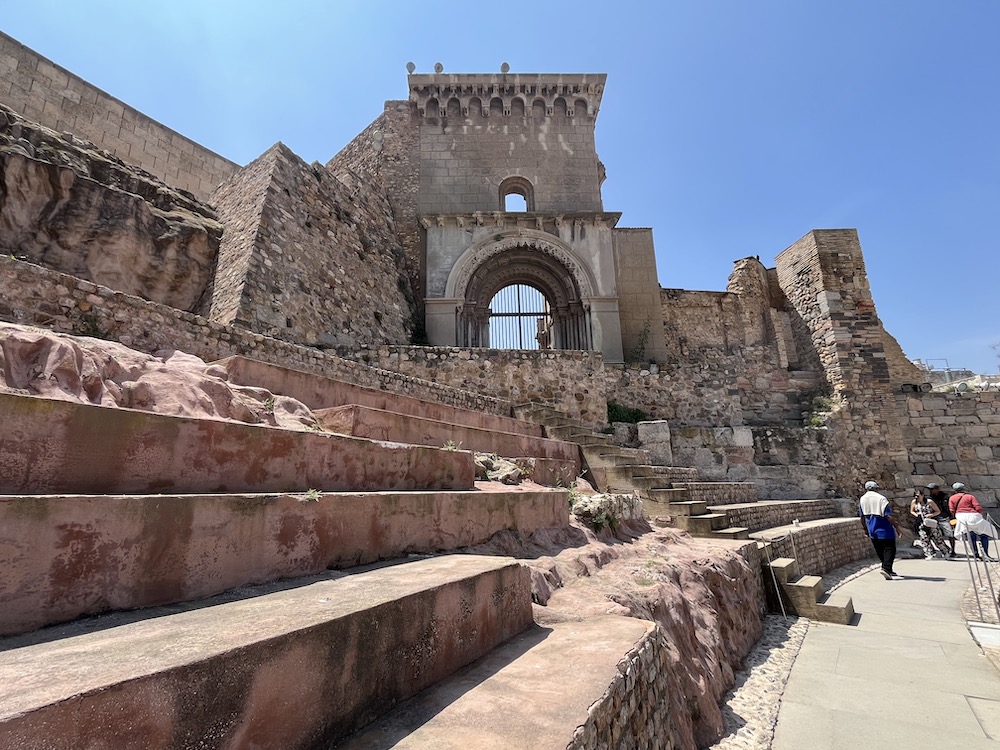
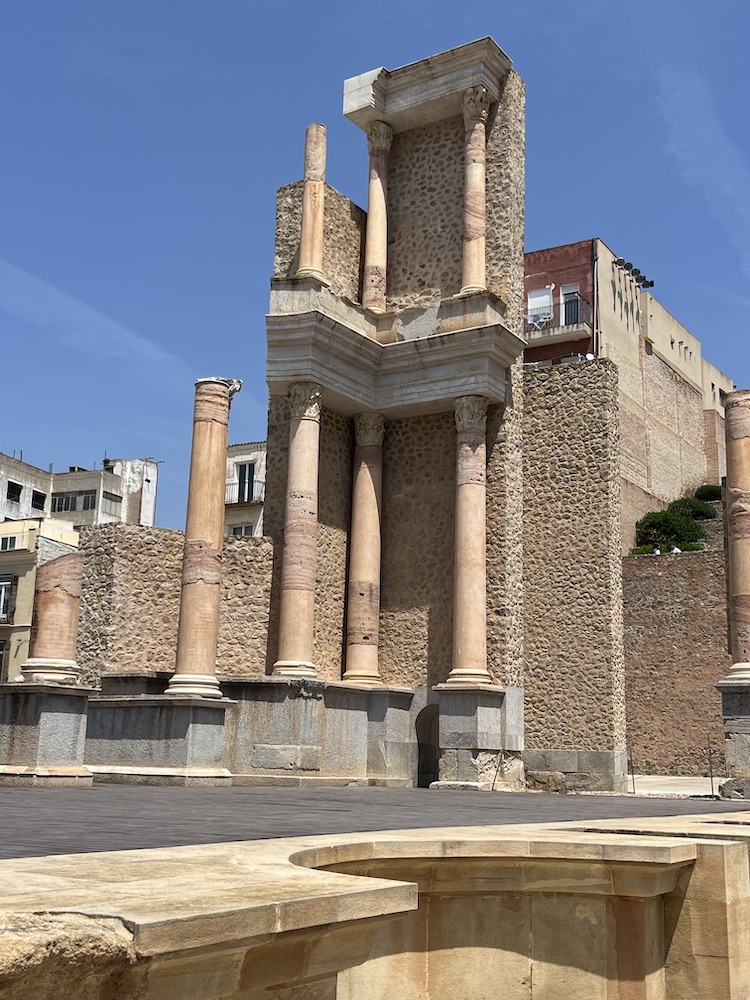
I am so happy to be in Cartagena! The Roman museum and amphitheater are beyond my imagination. The museum has some terrific artifacts from the Roman period, and the work to excavate the theater is impressive. The theater held 7000 people. It was built during Augustus Caesur’s reign. The Roman empire was failing, and Augustus wanted a place to hold events honoring his reign as well as theatrical performances. Reminds me very much of our current situation in the US.
It was definitely as impressive as the amphitheater in Rome that I visited while doing studies in Roman history in college—50 years ago. It was a thrill to visit something Roman again after so many decades! — almost as thrilling as getting to Tarquinia when I visited Umbria the first time, in October of 2024. These moments returning to places so important to my past life are quite exciting.
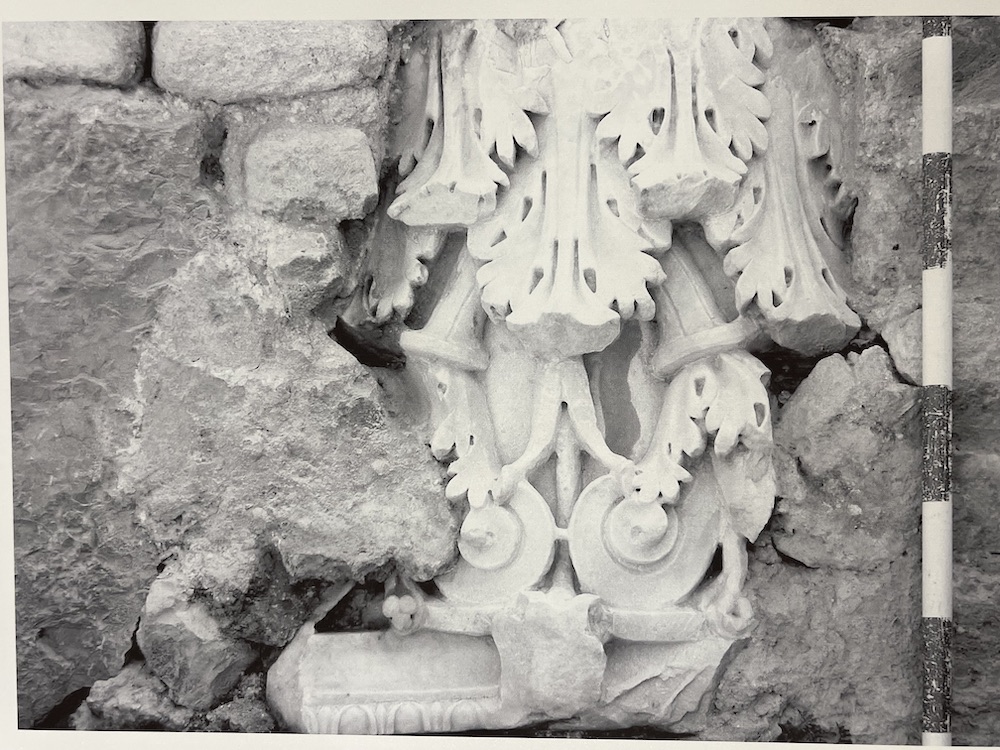
A beautifully carved capital on a column
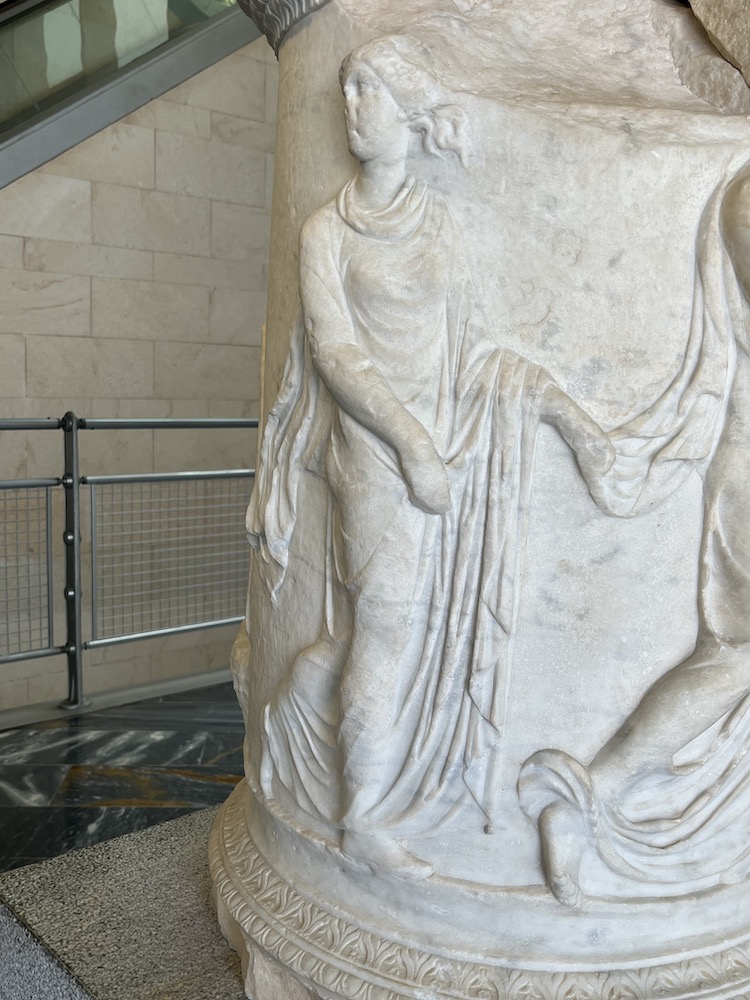
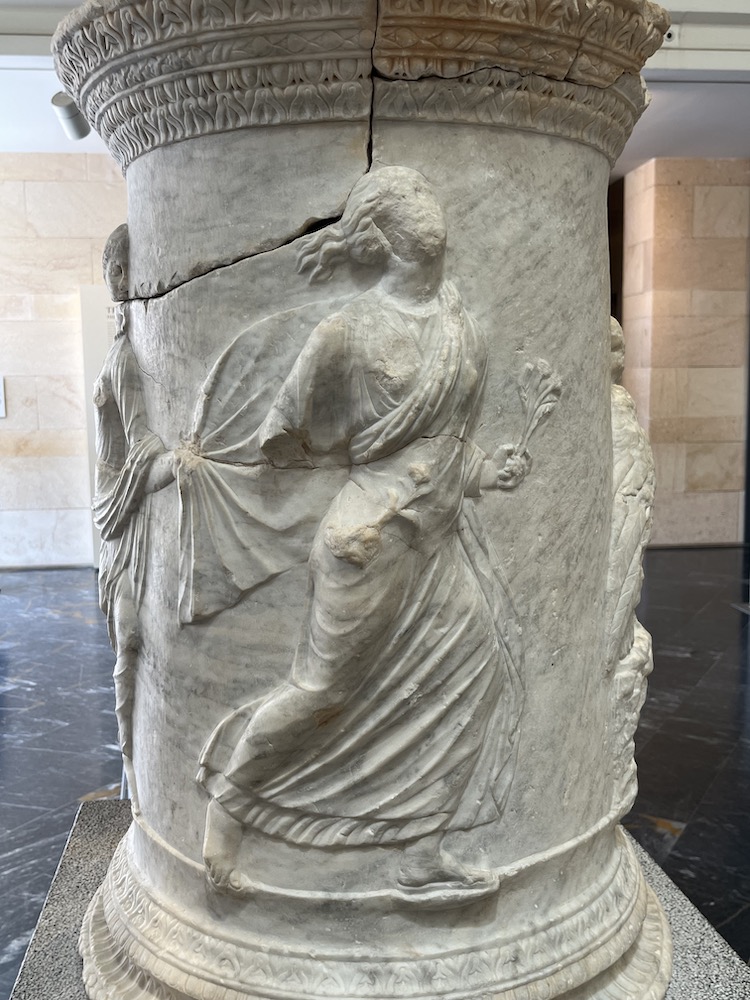
Other capital carvings in the museum. I often imagine weaving tapestries of images that were originally carved in stone.
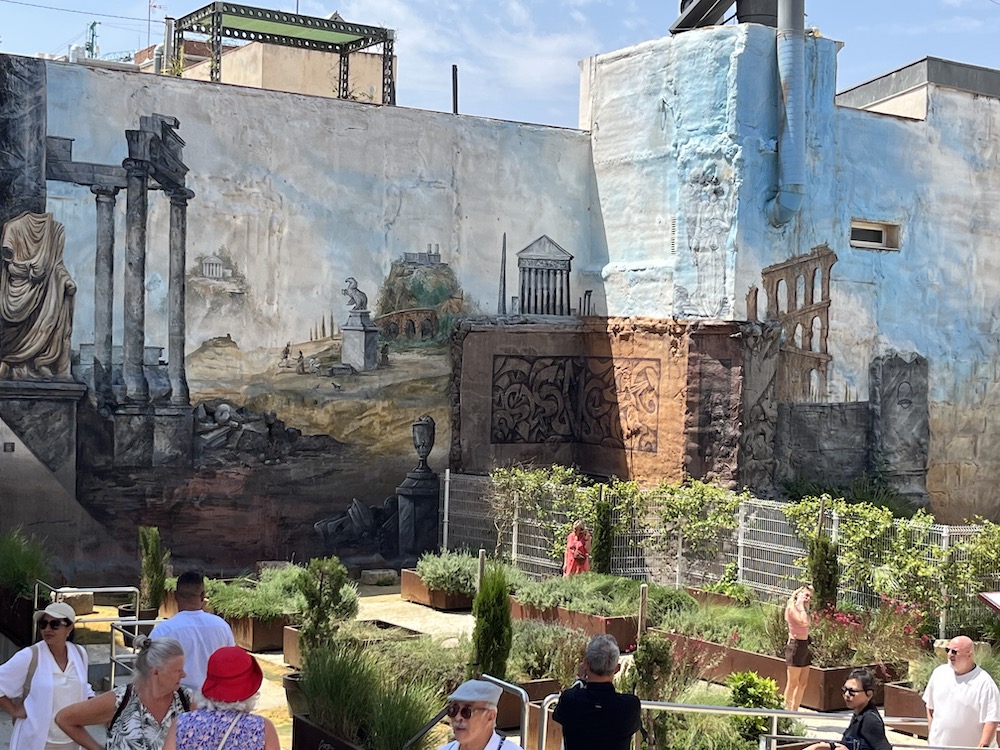
Afterward we walked around the area where this excavation continues. The Roman forum is not open to the public because they are still working on it. Here is a beautiful garden and fresco in the area.
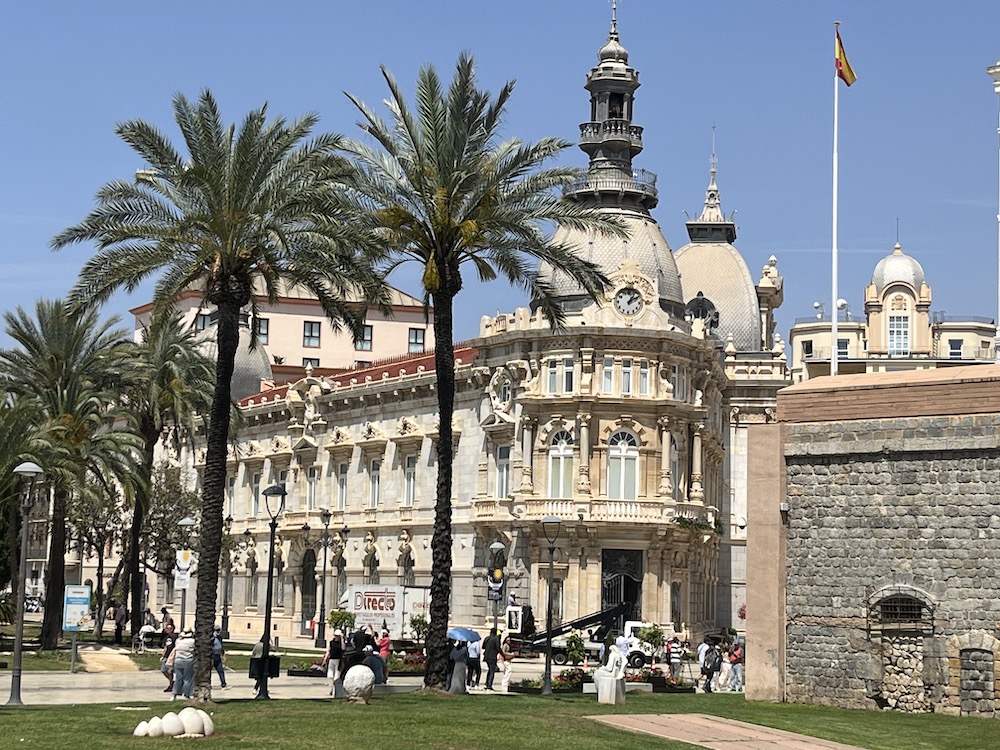
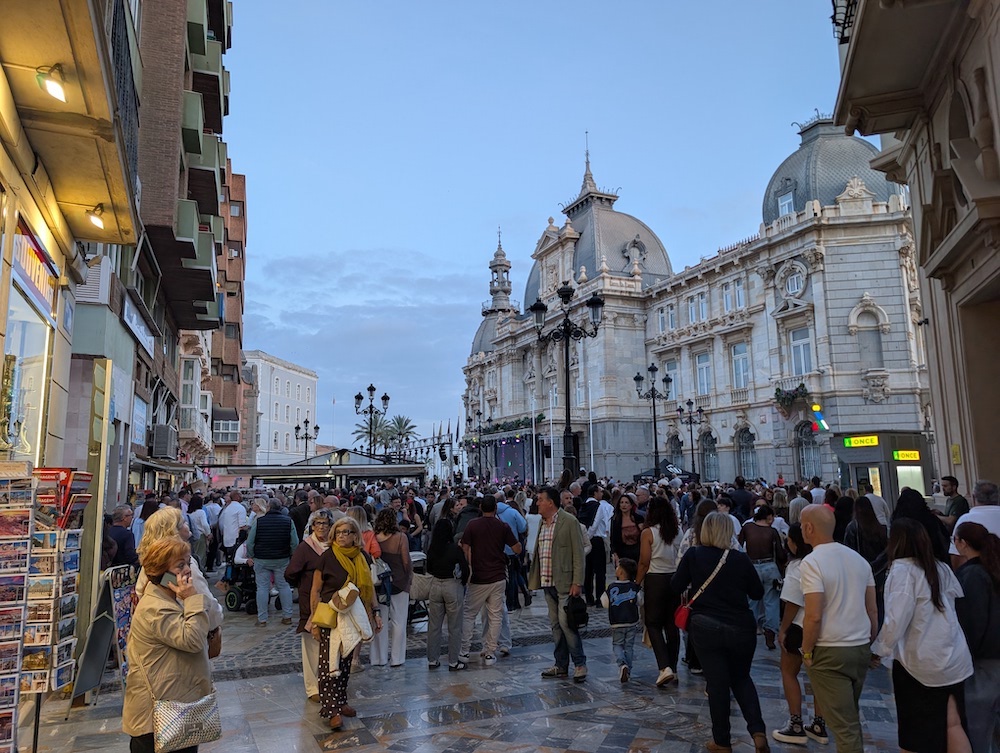
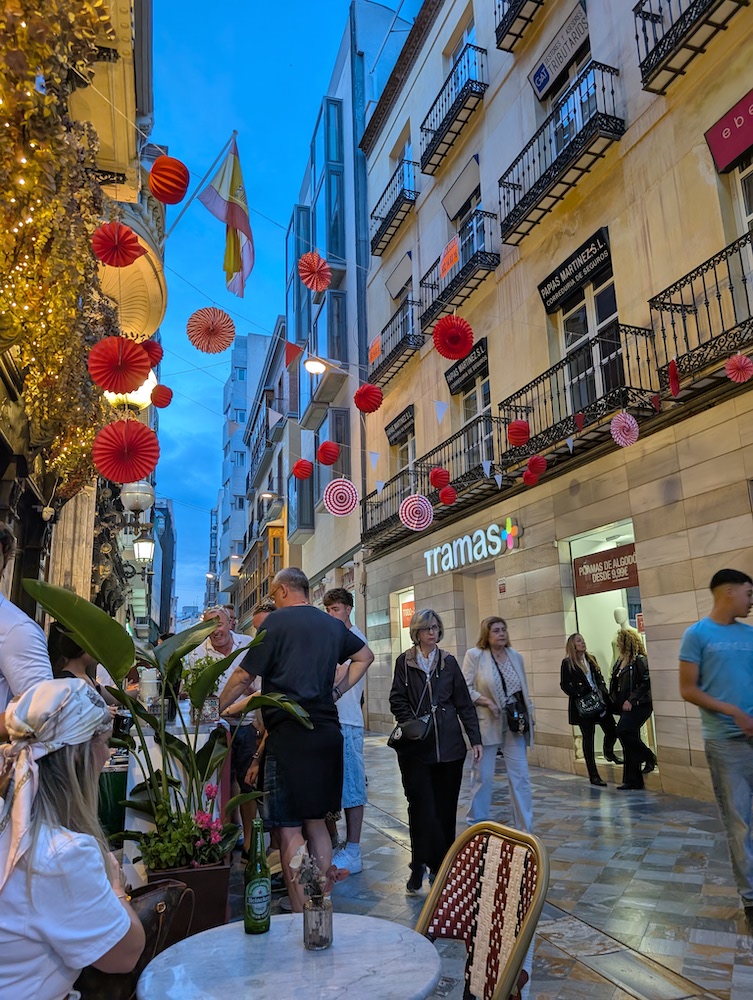
Some sights from the center of Cartgena
May 1 is Labor Day in Spain, and the Spanish know how to celebrate a holiday better than we do. The shops and museums are closed on May 1, instead of being open for big sales. Afterall, it’s a holiday to celebrate workers so they should have the day off! The entire city of Cartagena was turned into a giant festival with live music, including some famous bands and singers who performed on a big stage near the city’s promenade that runs along the edge of the Mediterranean. The festival lasts from Friday through Sunday.
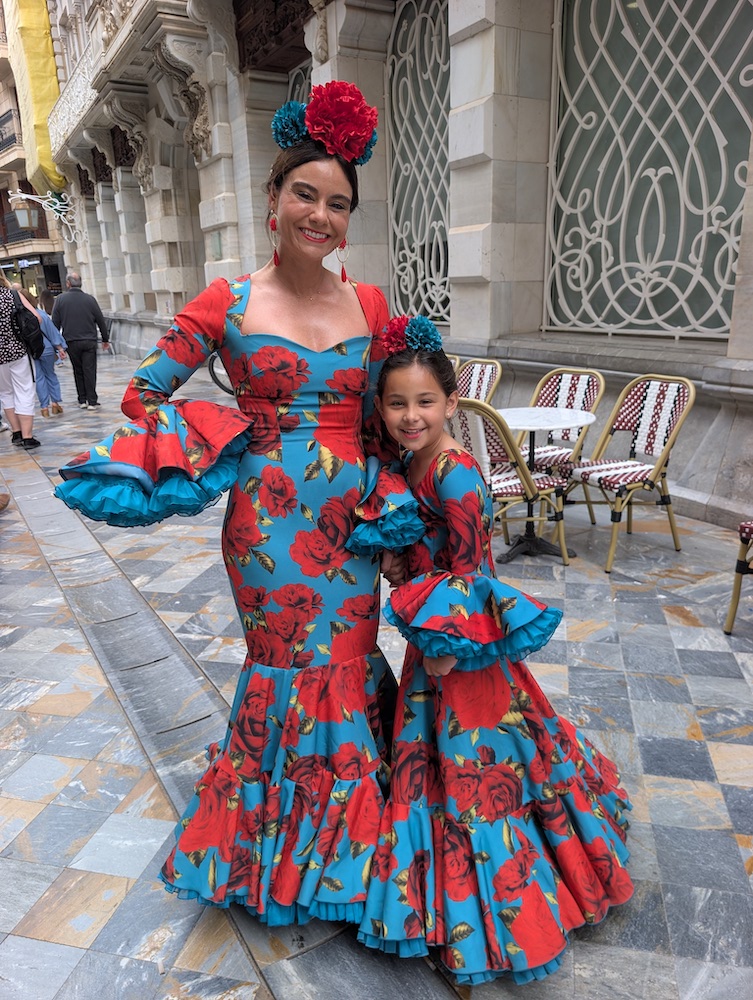
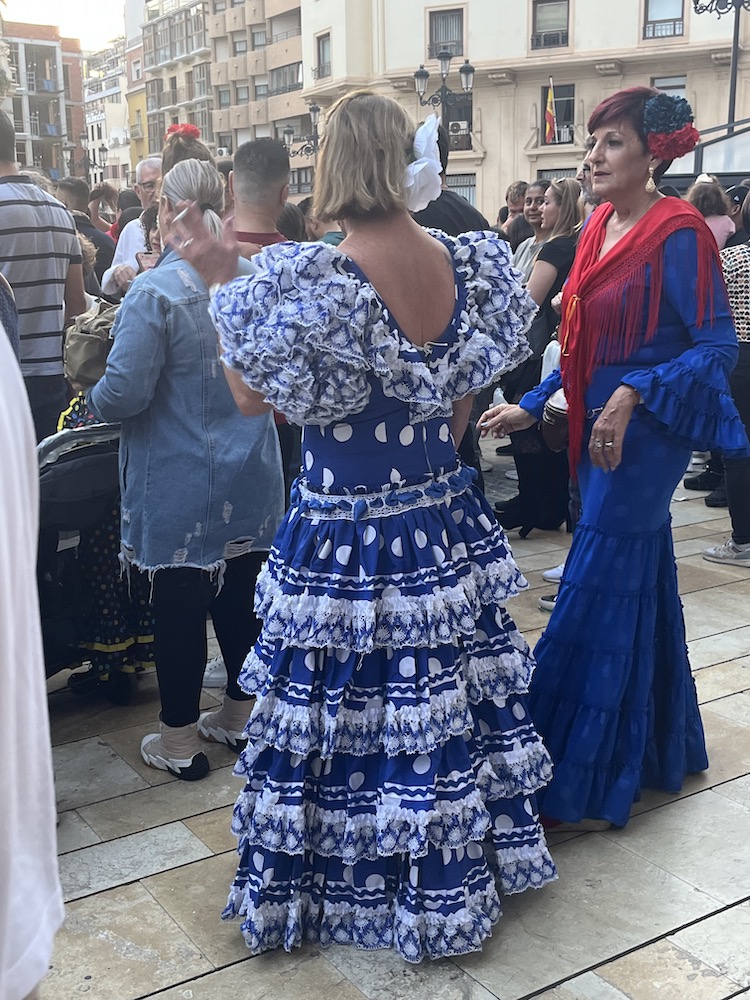
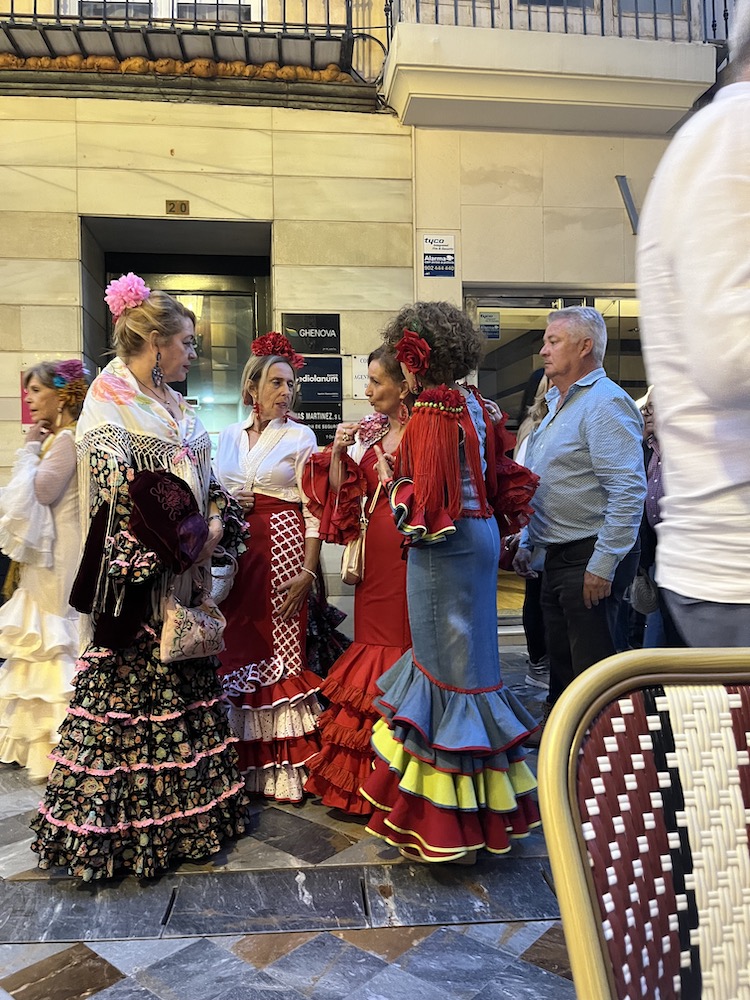
There were many women and young girls dressed in flamenco costumes.
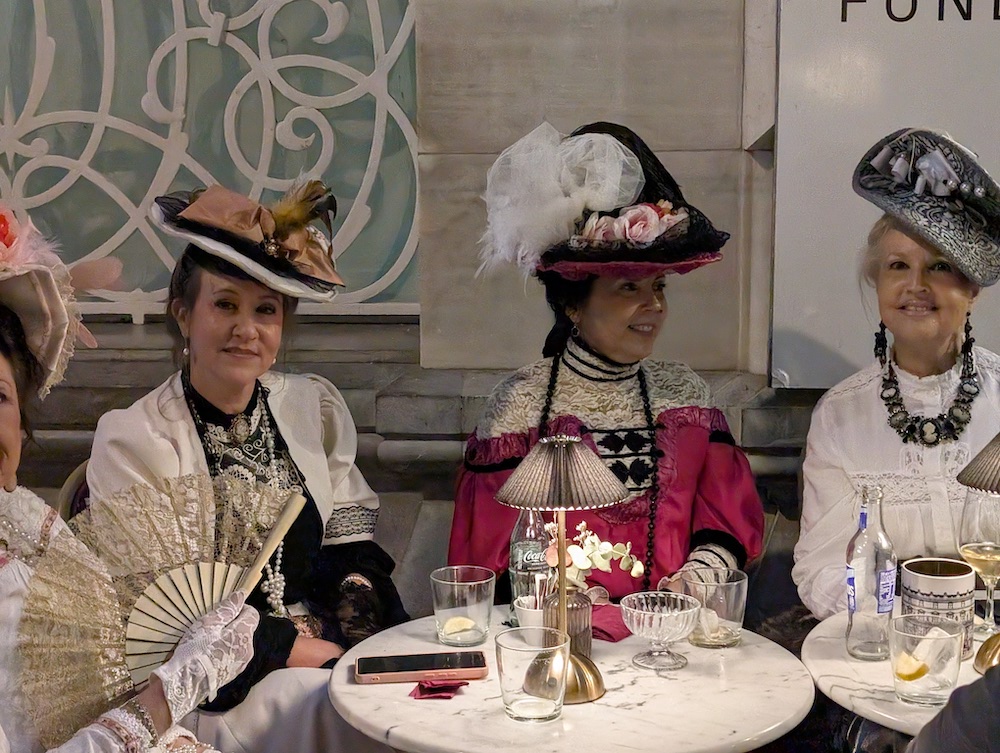
And here is a group of women ‘of a certain age’ dressed in Victorian costumes, enjoying cocktails together. Gloves and lace fans!!
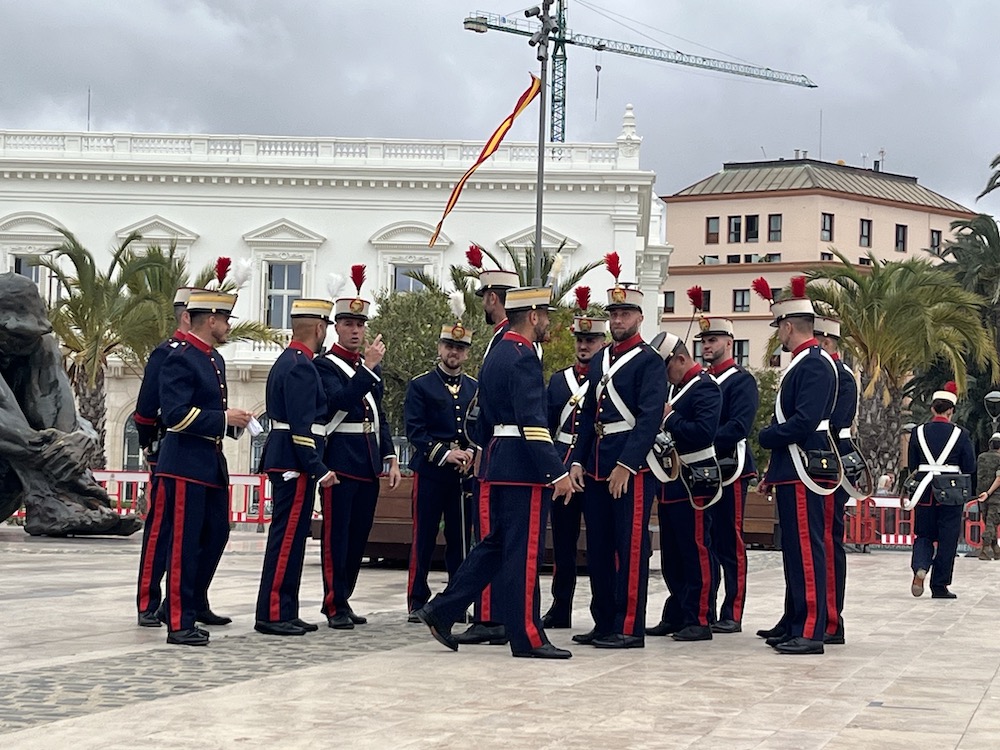
On Saturday the Labor Day festivities continued, and another celebration took place as well. From what I understand the May 2nd celebration is specific to Cartagena. It is called “Gesta del 2 di May” and honors the soldiers who served in the war against Napolean, when in 1808 the Spanish succeeded in defeating Napolean’s forces and expelling them from Spain. But the parade and exercises seemed to honor more than that. There were speeches that seemed to cover the history of Spain, medals were given to soldiers from various branches of the military. The ceremony opened with the military band playing while a small corp gave a 21 gun salute on the four canons that had been placed on the parade grounds. Here are the canon guard before the ceremony started.
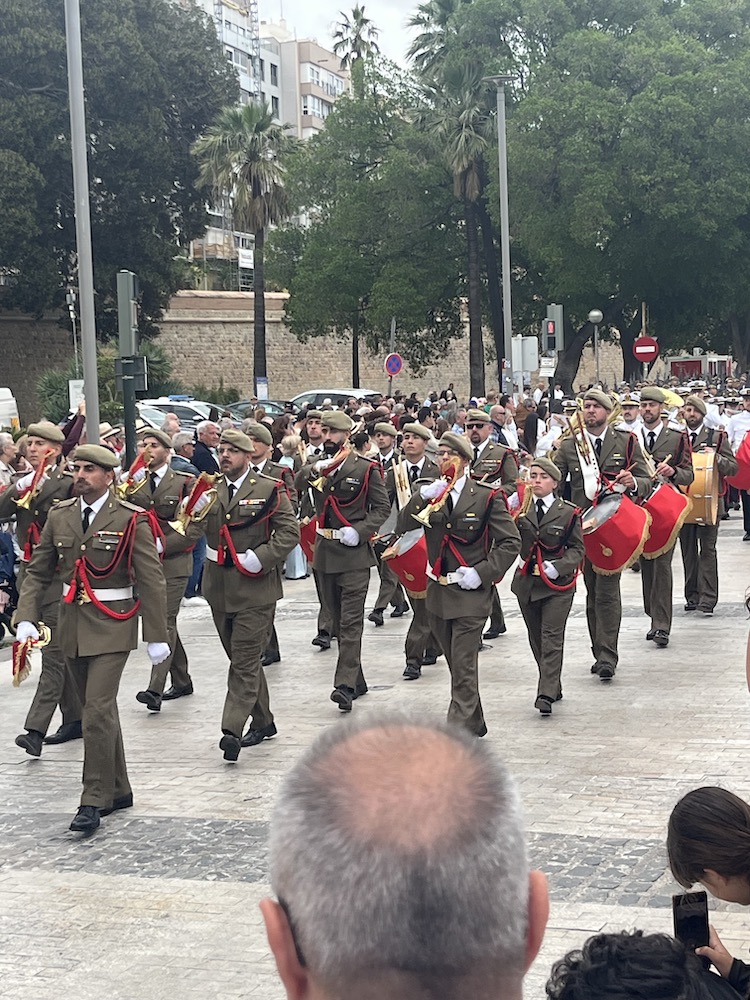
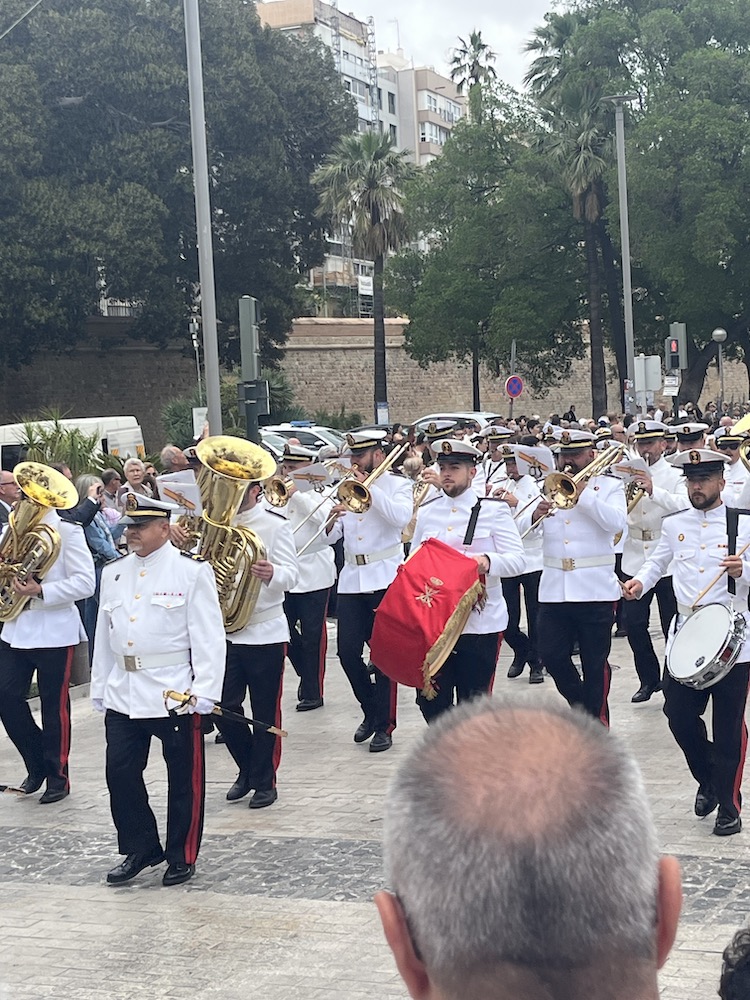
All the branches of the military paraded in to the site while the drum corp set the pace.
Trumpets and drums playing for entrance march.
The final event of this ceremony was another gun salute on canons and the placement of a wreath on the black obelisk that honors those who served in the Spanish American war that was fought in Cuba. This ceremony was well attended by locals who heartily sang the two songs the band played that had lyrics. I don’t know which song was their national anthem, but surely the anthem was part of the ceremony. I also don’t know why this event only takes place in Cartagena each year.
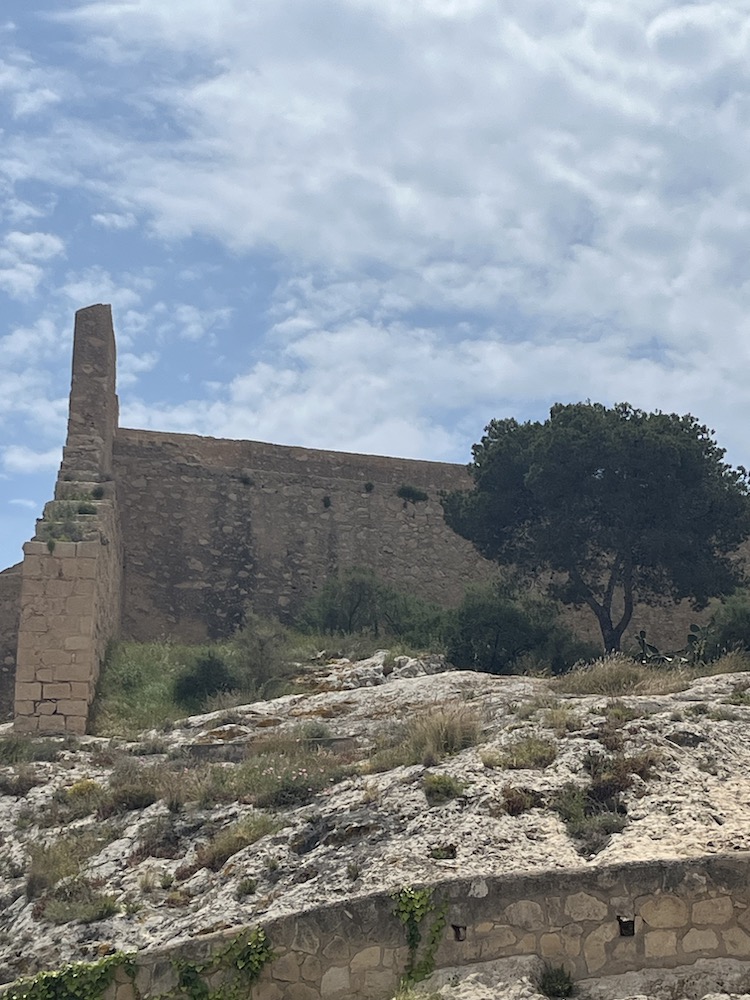
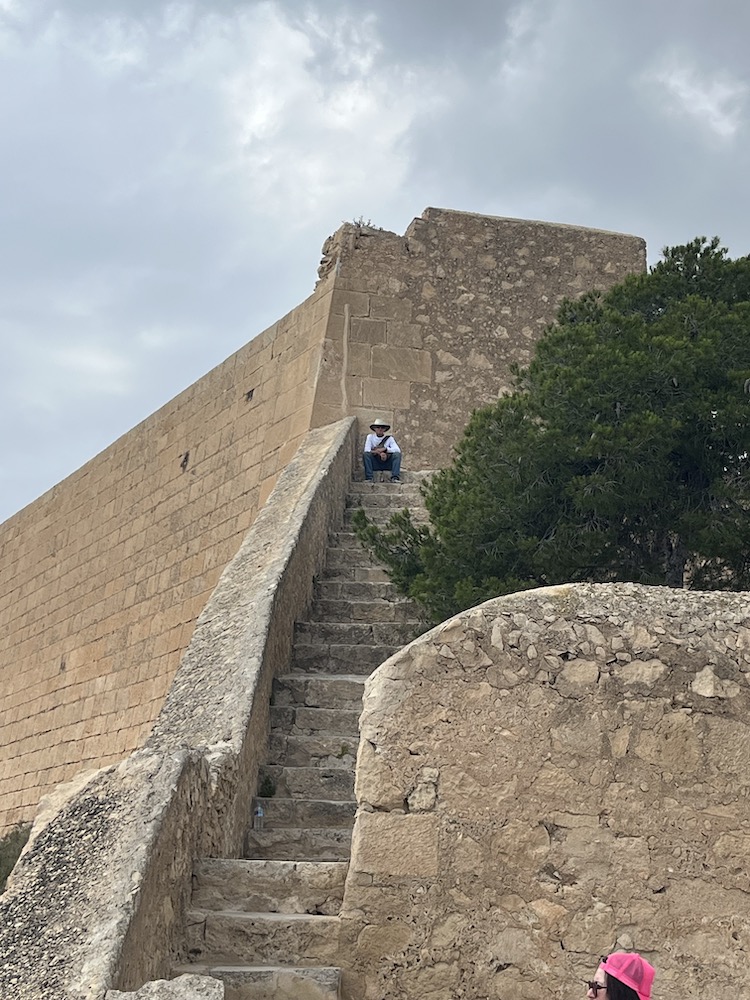
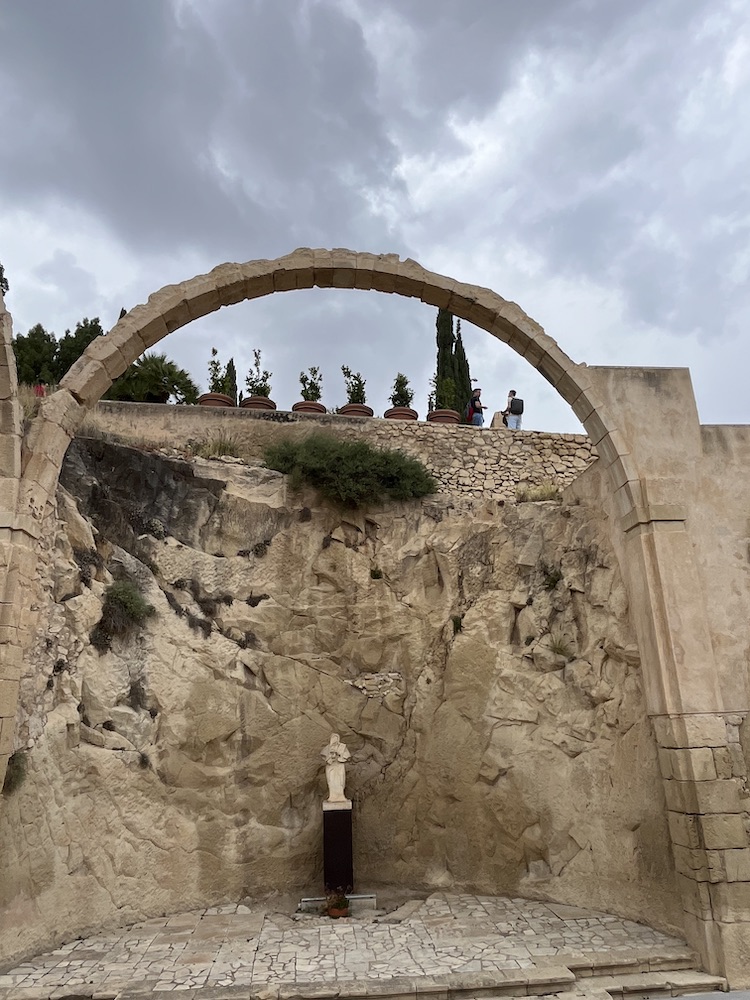
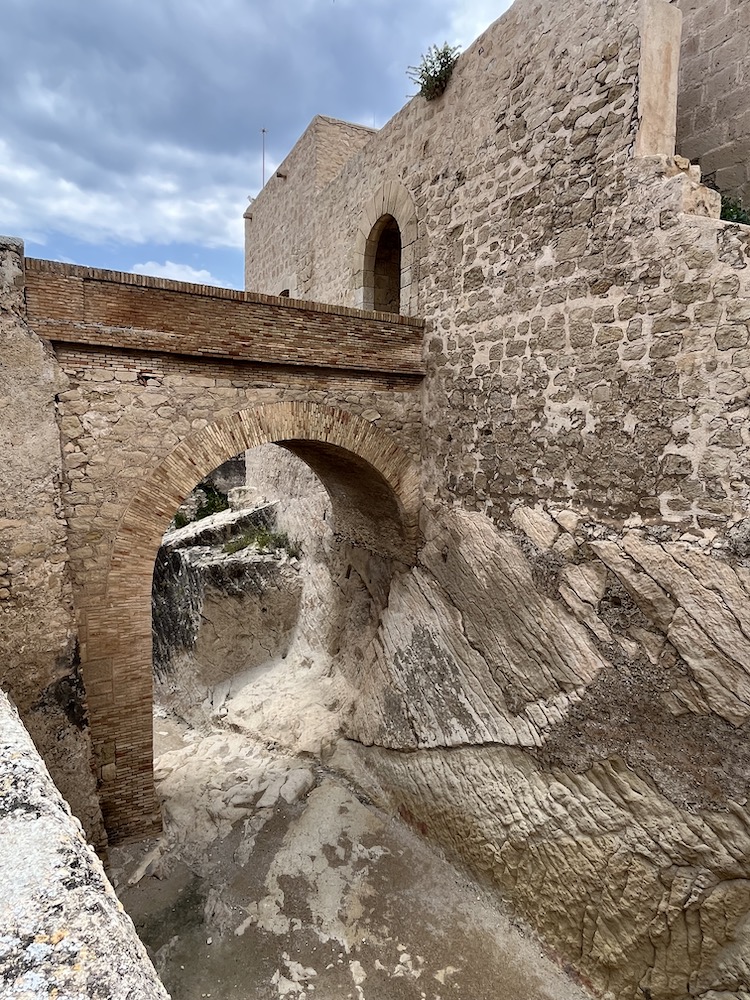
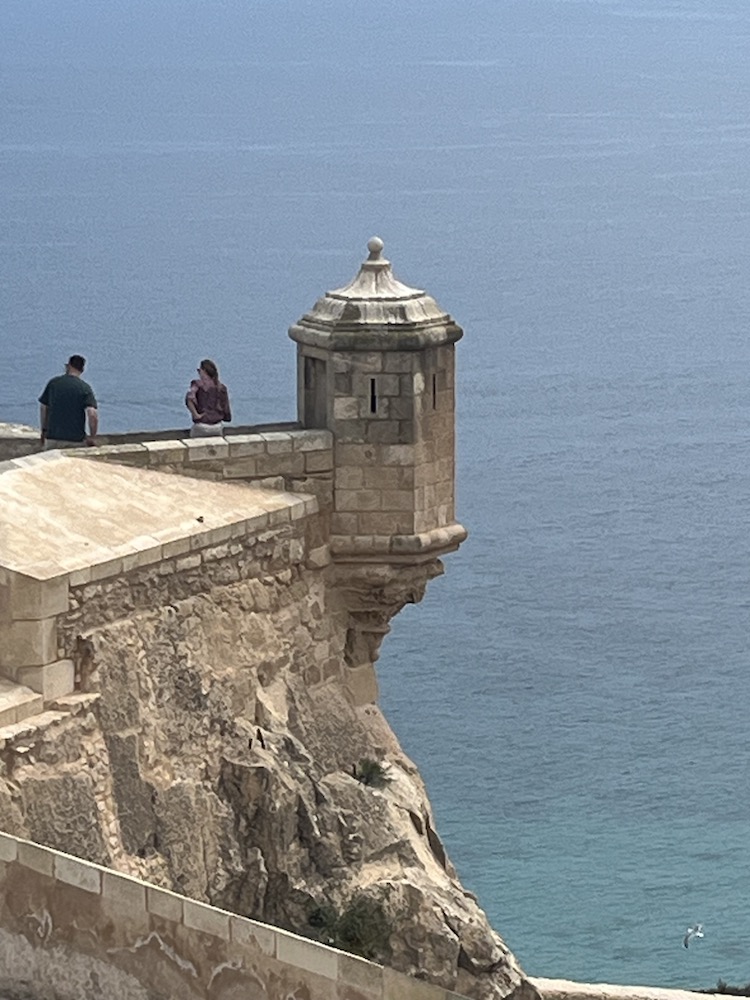
Before this festive weekend in Cartagena, we took our friends to the airport in Alicante to fly home. Boy! Do we wish they could have stayed with us longer to experience this weekend in Cartagena. We dropped them at the airport in mid-morning and then used the rental car to visit Alicante, which has a castle dating from the Moorish middle ages through the Catholic renaissance.
Here is Bob sitting at the highest point in the castle.
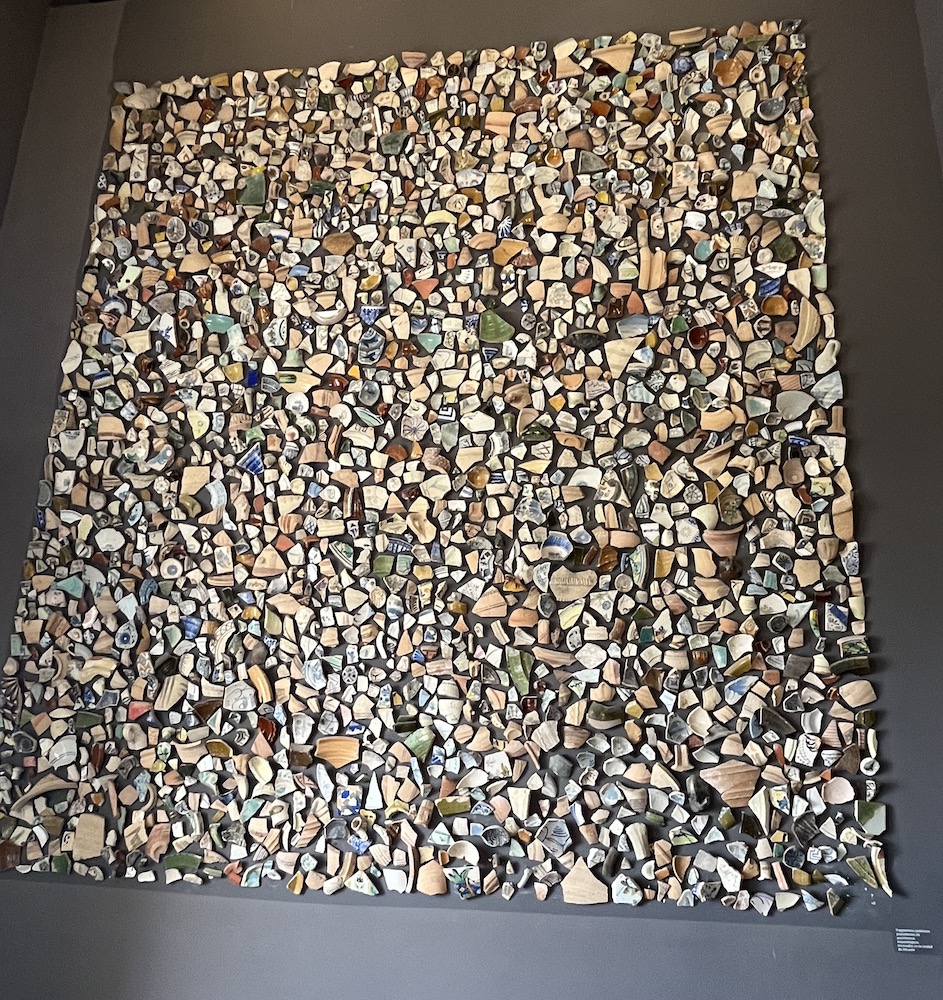
The Castille de Santa Barbara (surely the name given to it in the Catholic period) has an interesting exhibit on the pottery shards found on this site. The first item on display is an incredible assemblage of shards from the entire time the castle was in use.
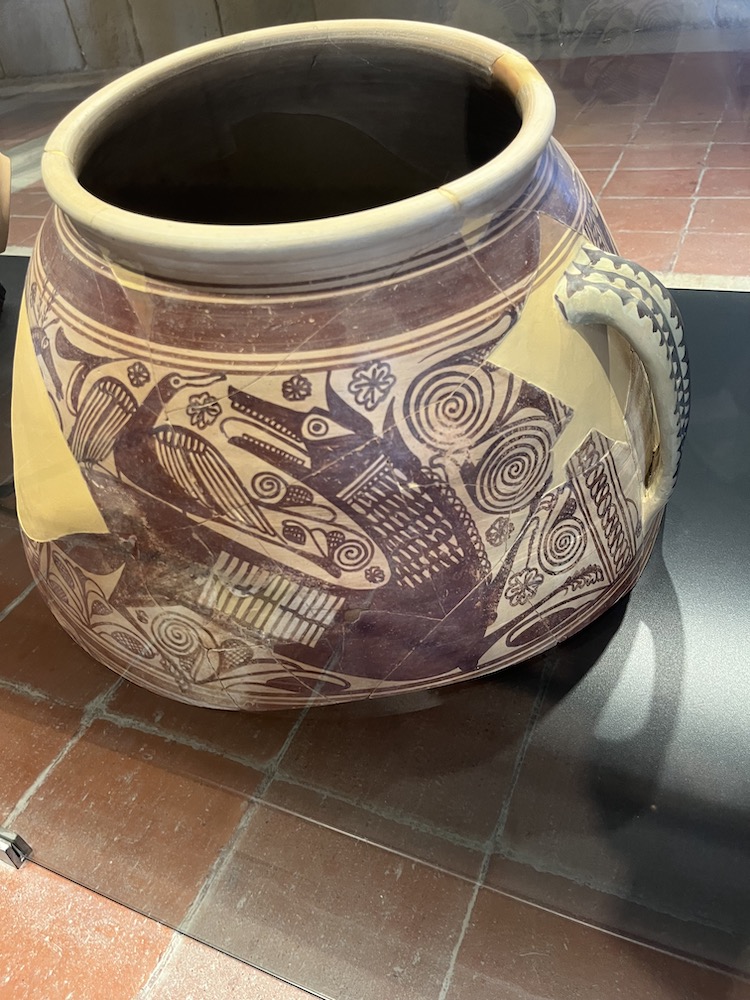
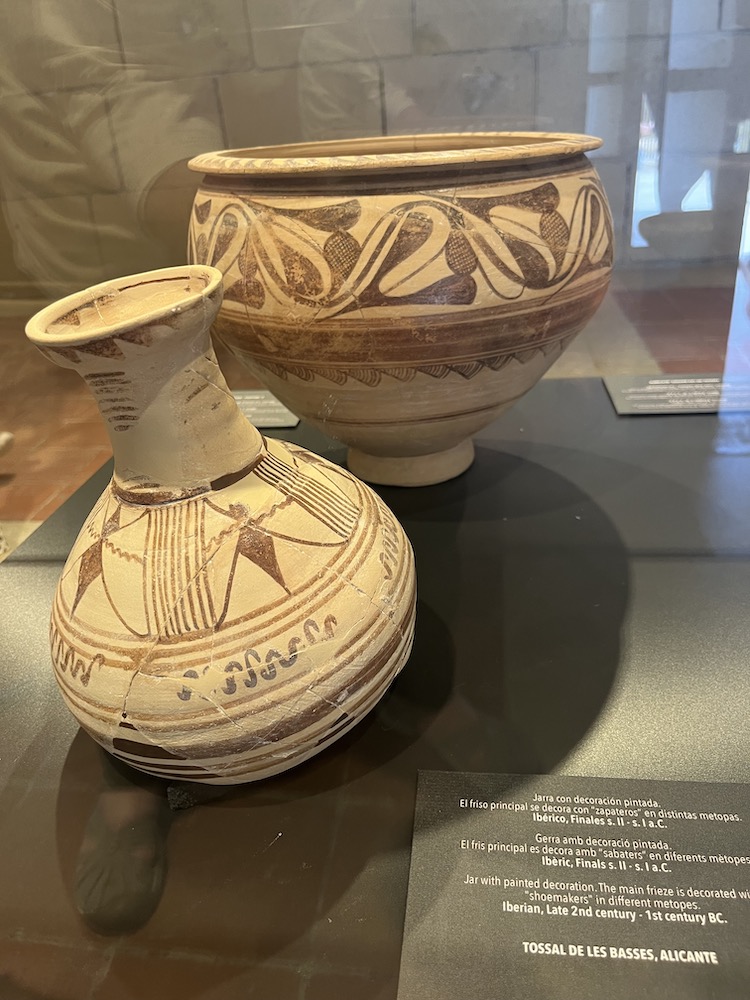
While I love pottery, I can also imagine the beautiful imagery on these pots being used for a tapestry.
The info on these pieces date them to the 1st century BC, yet they are so timeless.
There was glitch to this visit to Cartagena and Alicante. While standing in line to pay my entrance fee to the Roman museum, I got pickpocketed! I had gotten out my very smal travel wallet, then put it away when my friends paid my entrance fee. The pickpocket probably saw where I returned it to the tote bag I was carrying, and I have to admit that I was not hugging the tote to my body as I should have done. Also, there was a cruise ship in port, which always brings out the skilled thieves. Within an hour there were charges on the two travel credit cards I carry, and also an attempted withdrawal on my debit card. The banks involved caught all the attempts right away and closed my accounts. While that is a burden, we are thankful that Bob has one credit card that was not affected, and I still have one card that does not have currency exchange exemptions. We’ll be fine for the next month on our continued travels.
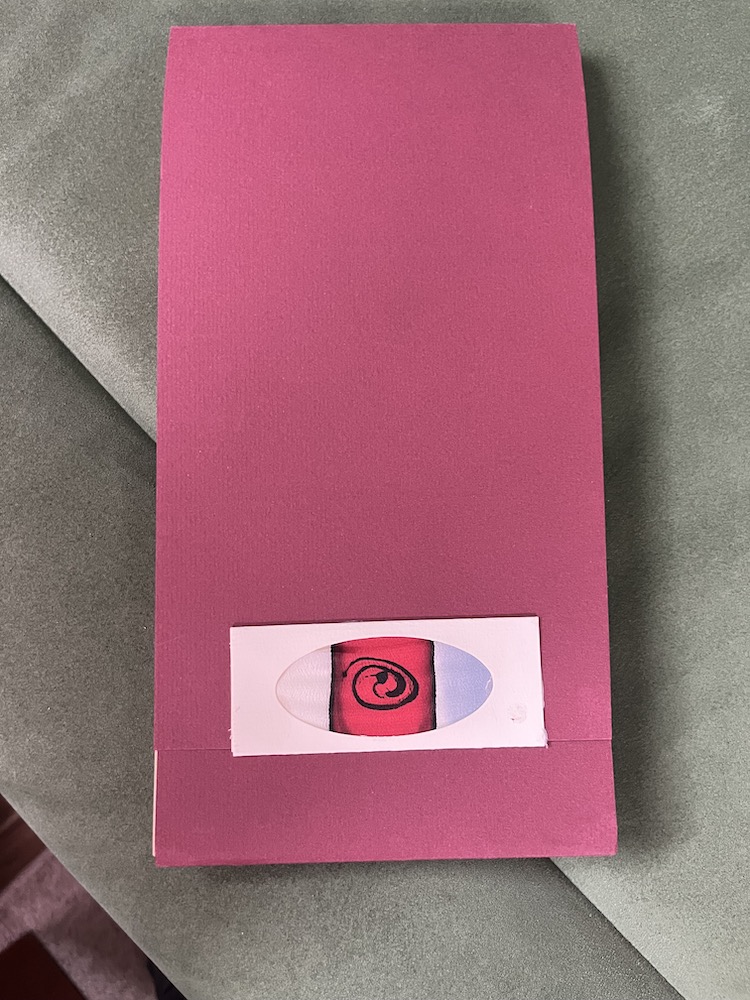
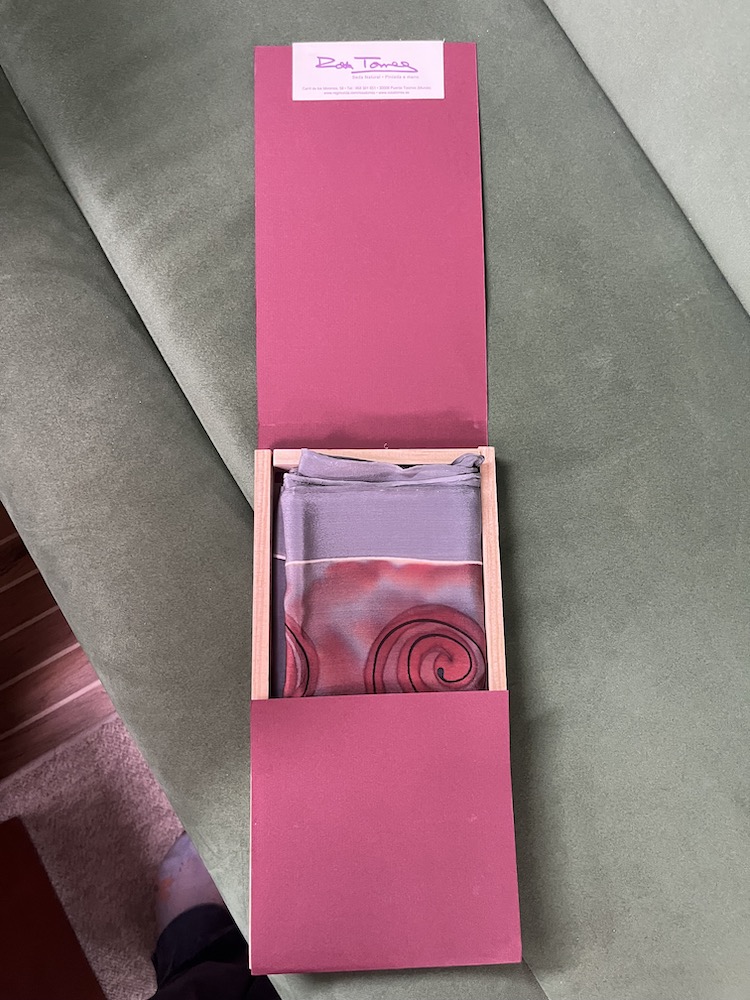
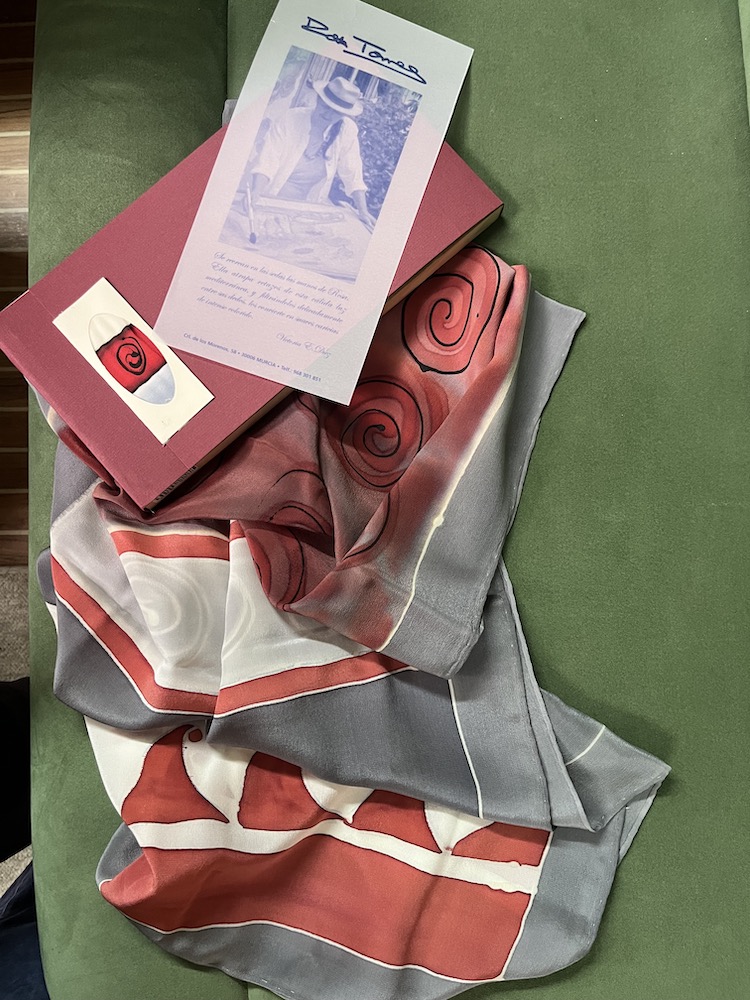
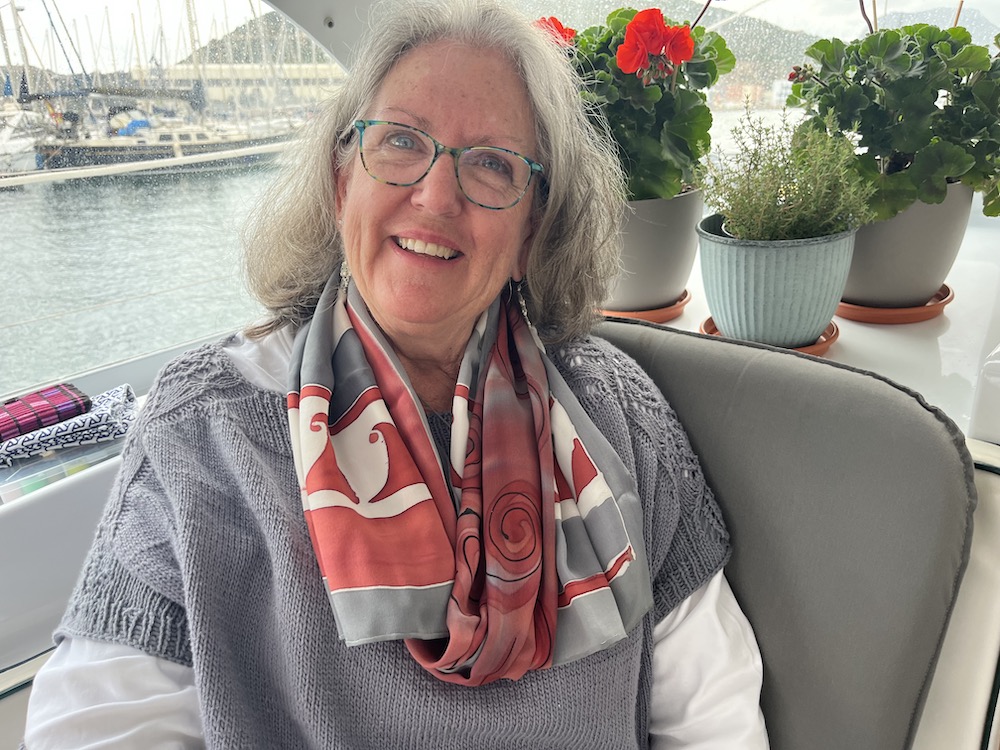
I returned to the Roman museum yesterday to buy a silk screened silk scarf that I would have bought if not for the pickpocket situation. It is designed and silk screened by an artist named Ron Torres. I have not yet found him online, but I will. Here is the unboxing…forigve me, but I was so smitten by the scarf and the presentation.
Wasn’t I lucky to get to visit these two cities with such long histories? There are signs throughout the center of Cartagena noting its 3000 year history. I am thrilled to be here, especially since I thought our sailing plans would make me miss it. That’s one thing no one can predict about traveling by sail, and it worked out very well for me on this adventure.
As of the end of this weekend, we will have been in Almerimar for three weeks! How did that happen? We planned to take 10 days to check repairs on Pandora and do some maintenance, like putting on the sails, checking the systems, etc. But the work that should have been over the fall/winter was mostly not done. Some of the work was not done well and had to be re-done. It hasn’t exactly been a nightmare, but as charming as Almerimar is, I’d love to move on.
We had plans to be in Cartagena by early April. Now I won’t see it all. I will miss seeing the Roman amphitheater and forum, along with the museum. I will miss seeing the local fine crafts—weaving, basketry, and pottery. A good friend was hoping to see fabrics that I might get for her. None of it happening. It’s a big disappointment for me.
And I haven’t mentioned the wind! Egads! It started yesterday, and on top of being fierce, yanking us all over in our slip, it is deafening. One of lines on the boat next to us has chafed our brand new paint job on our port stern quarter. The wind is screaming through the rigging on all the boats, and boat halyards are banging constantly. I am someone who comes unglued with too much noise, and boy! This is too much. It’s a bit quieter today, but I need a break from it.
Yesterday evening Bob began looking into what we might do for a few days while we wait for our new roller furler for the jib to arrive from Denmark. Tracking says it will arrive on Tuesday, so Bob and the rigger will spend all day Wednesday installing it and putting the sail back on. On Friday I fly to Rome to meet three weaving friends to travel together to Perugia to take a week long workshop on weaving on manual jacquard looms. My flight is from Alicante, and because of delays on Pandora, we can’t get there by boat in time for my flight, so we will be renting a car then as well as now.
But…lemonade! Bob noticed that Granada, which is closer to us than Cartagena or Alicante, has some very interesting textile possibilities. Finding a place to stay and a car to rent has been Herculean, and it’s not done yet. So perhaps writing about it now could be highly jinx-able. We have a room booked in the historic part of Granada, but no car yet for getting there! And of course we cannot get a car here in Almerimar on such short notice, so we will need to take a 2-hour bus ride to the airport in Almeria to get a car. We’ll spend the day in Almeria, so that will hopefully make up for the long bus ride.
The history of silk weaving in the area around Granada is fascinating. The Arabs brought these skills and materials with them when they overtook the area in the 8th c. They planted mulberry trees in the area and brought with them horizontal looms (like today’s floor looms) for producing silk fabric on a large scale. Granada became part of the Silk Road. The outlying area has a number of workshops known for tapestry, rug weaving, and finer textiles. I’m a little worried that what I’ve seen online looks a bit touristy, but it will be a much needed change of venue.
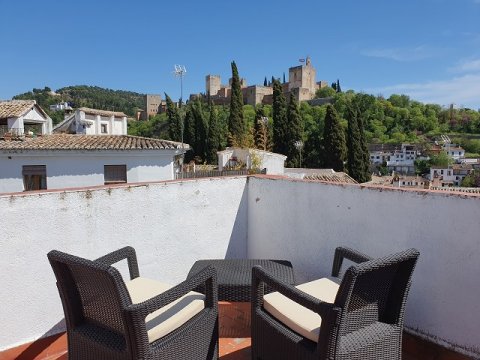
And this will fill the bill nicely. It’s the Casa del Aljarife, where we will stay from Sunday to Tuesday, and will certainly enjoy this terrace view of the Moorish castle
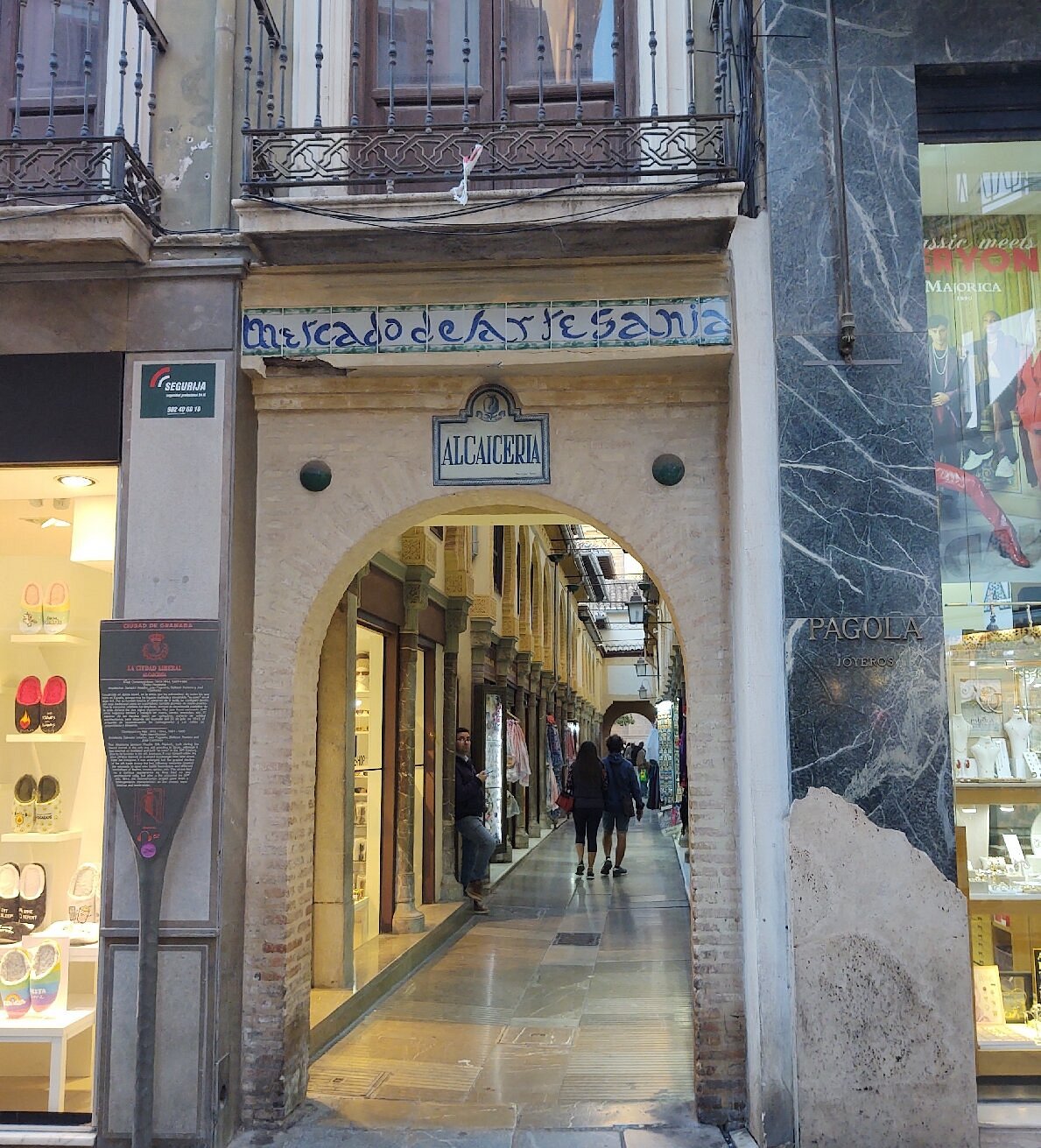
And here is the entrace to the current ‘silk market’ in Granada.
We will spend tomorrow in Almeria where I hope to find a knitting store so I can buy a crochet hook, which I forgot to bring, in order to start my next knitting project with a provisional cast on. It seems like I should be able to do a chain stitch with a knitting needle, especially since you can do it with nothing but your fingers (just too large a scale for what I need). I plan to look into that! But this shop should make a very nice distraction for me whether I need a crochet hook or not!
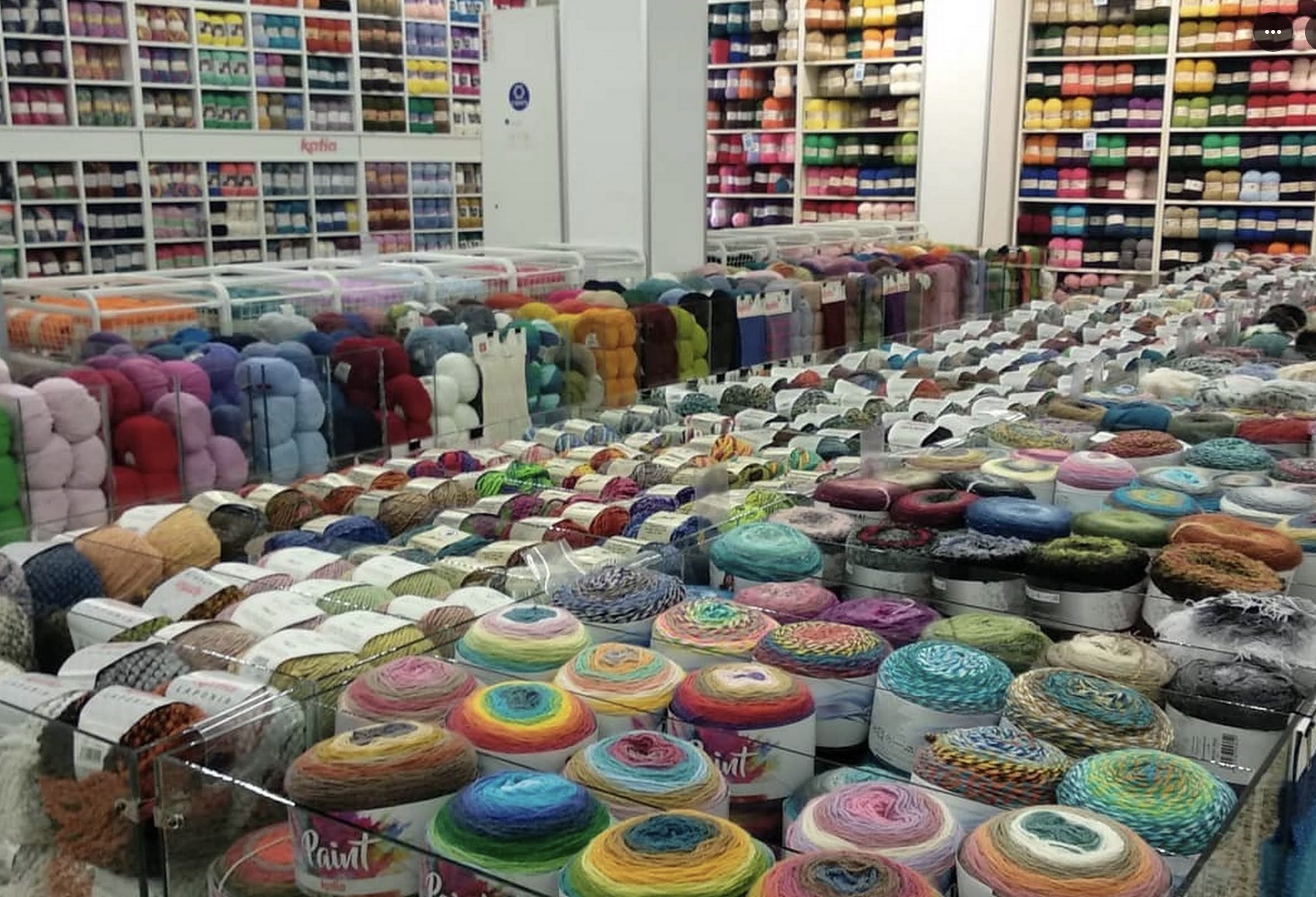
Puntexsa yarn shop in Granada–just one of numerous yarn possibilities in Granada
So the weekend should hold some interesting opportunities for me, not to mention a much needed change of scenery. Lemonade is now made, thanks to Bob who is very good at lemonade.
We seem to be living on tapas and small bites here in Almerimar since we don’t want to eat dinner at 9pm. In that vein I have two of my own small bite creations to post here.
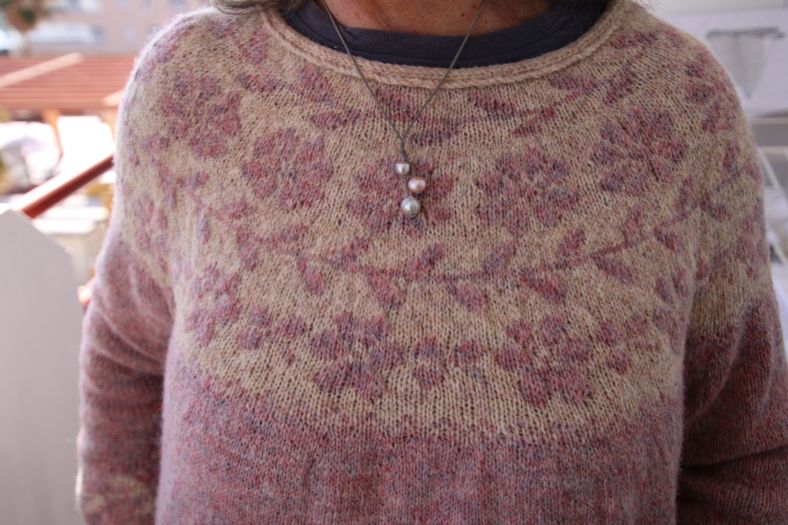
I have finished the “Sonann” sweater with time to spare before the deadline for test knitters. Hooray! It is a design by “Journey through Wool” on the Isle of Uist in the Outer Hebrides. The suggested yarn is from Uist Wool, which I was not able to get in time, nor did I want to deal with our unfair tariffs. Instead I have used Jamieson’s “spindrift,” which is also a yarn from the Outer Hebrides, that I could buy through various US distributors. Of course that meant I paid the tariffs anyway, but the shipping was faster. My colors are “Sand” and “Wild Violet.” The sweater pattern will be released in mid-April on Ravelry. I enjoyed test knitting this design.
Here is a close up of the stranded pattern on the yoke. I am posting this on my ipad which doesn’t seem to allow me to re-size the photos. Since my computer will not connect to the internet I am attempting to use an ipad. Mysterious electronic glitches always occur when I am out of the US. I know it’s user error.
I may decide to rip back a good deal of this sweater, now that I’ve finished in time for the deadline for test knitters. I’m not entirely happy with the shaping, and I need to dive back into the instructions to see if I made an error in the increases or if it was in the pattern. It’s a big job, ripping all the way to where the sleeves get put on holders, but since I love the design and my yarn choices, I must do it!
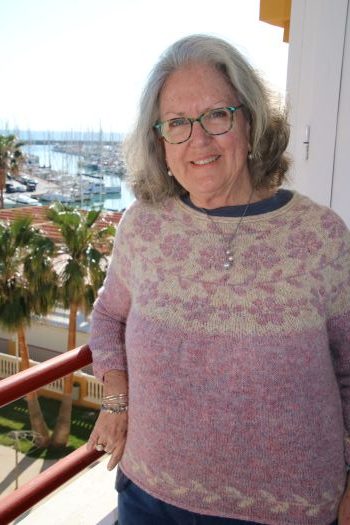
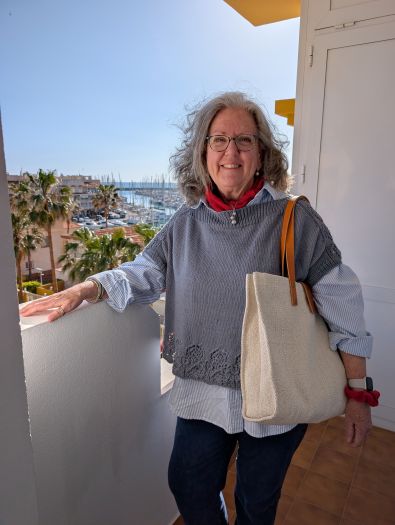
My new tote bag is a gem. I am on cloud 9 that I found it almost a year after I first saw it. And I am notorious for getting my photo taken in windy places so that my hair is winging out like it’s going to sail away. Just look at the gorgeous tote bag and ignore the model. Please also notice the cute sweater on the hair-challenged model. The vest pattern is by Elenor Mortensen, and you can find her on Ravelry. This pattern is called “Eowyn Tee,” and it is knitted in the round from the top down with a clever boat neck that morphs into lace on the shoulders. I enjoyed knitting it, and enjoyed using cotton yarn (Rosario) that I bought in the Açores last summer. I certainly love knitting with yarn from places I visit. It’s the highlight of traveling for me!
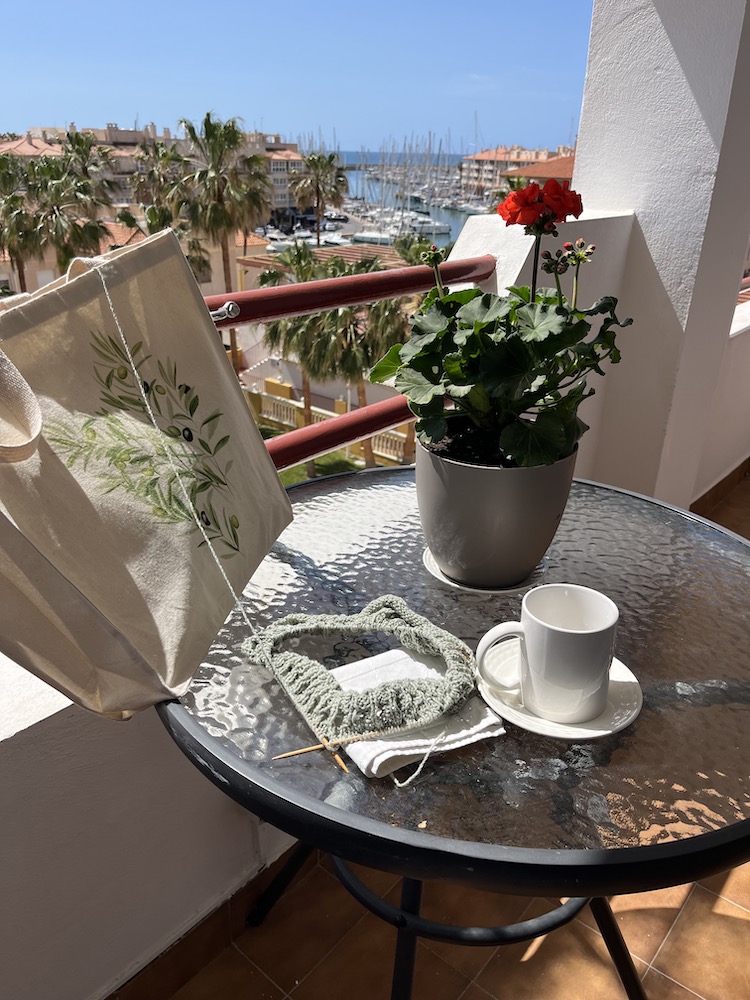
The next project on my needles also uses locally sourced yarn. I saw the pattern and the yarn on a US website for the yarn store Wooly Thistle. They are carrying a variety of Spanish yarns from a company called Wool Dreamers. The yarn for this sweater is “Soana,” a 50/50 blend of Spanish merino and cotton grown in Spain. I couldn’t order it in time to get it from the Wooly Thistle before we left, and then I realized I would be in the country where this yarn is produced. So I looked at Google Maps to see how I might buy this yarn in person. No luck there as most of the yarn shops were a lot further north. Even though we had a car for a few days, it would be a really long drive to Barcelona or to Madrid. So I ordered it online and had it shipped to a local shop in Almerimar that offers package deliveries. I’ve never heard of this before. Boy, was I happy when I walked to the shop to pick up my package!
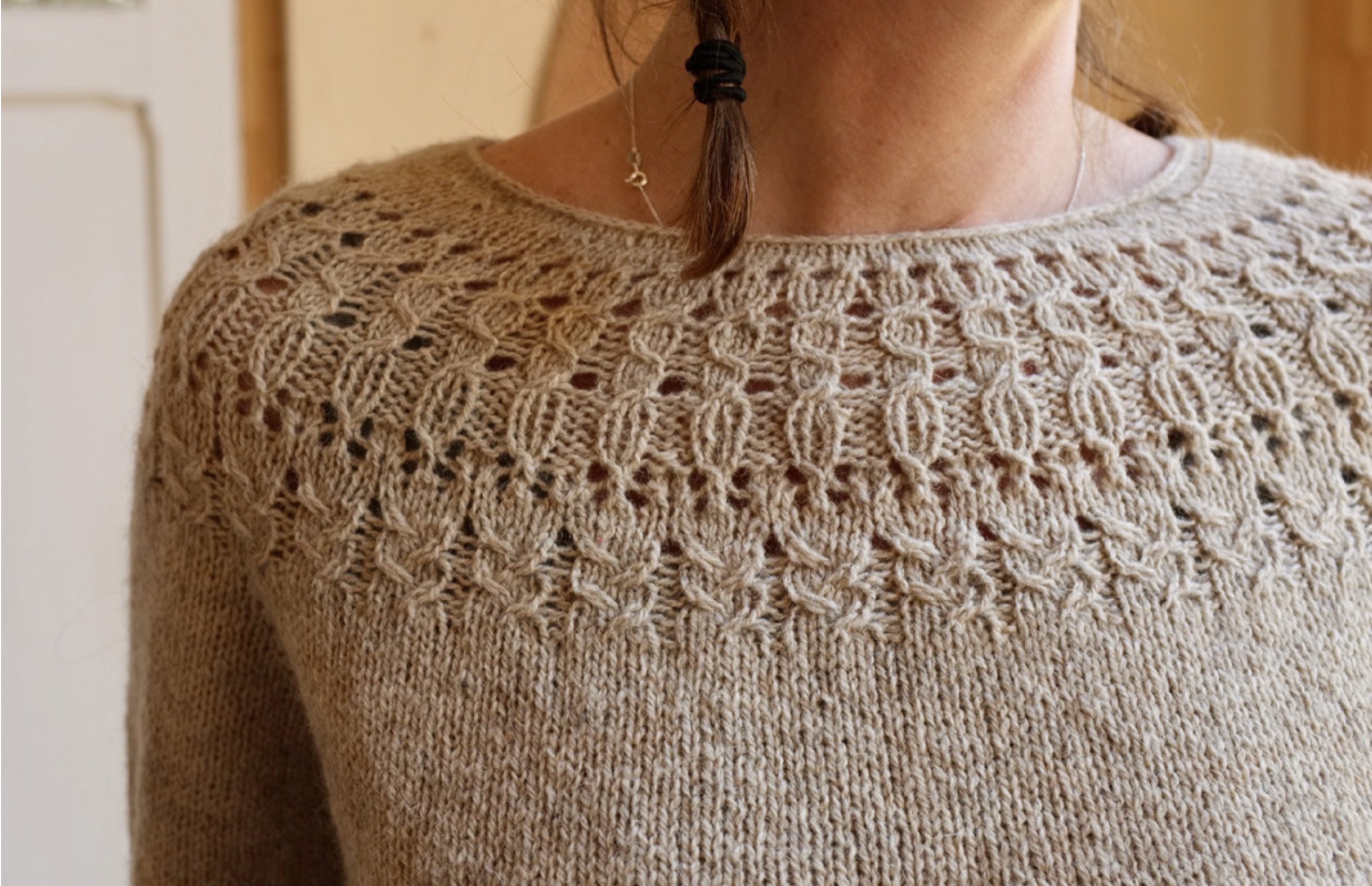
I am knitting the pattern that Wooly Thistle recommends for this yarn, and I’ve chosen a muted celadon green because I am thinking “spring.” It’s a design by Tete Beche (Orlane Sucche) called “Ilha.” I’m particularly enthralled with this design because it is supposed to evoke the baskets that are made on the islands off Portugal. What a wonderful idea, and the designer has done a very clever job of creating cabled and eyelet patterns that are quite like the wicker woven baskets from these islands. The name “Ilha” is Portuguese for “island” and is pronounced “ilyah,”. Since I enjoyed my time in the Açores so much last summer, this sweater will bring back sweet memories from that adventure.
At the moment my knitting looks like a blob. The cable and eyelet yoke will need a good wet blocking to bring out the pattern. Here is an image of the finished yoke that comes with the pattern.
Screenshot
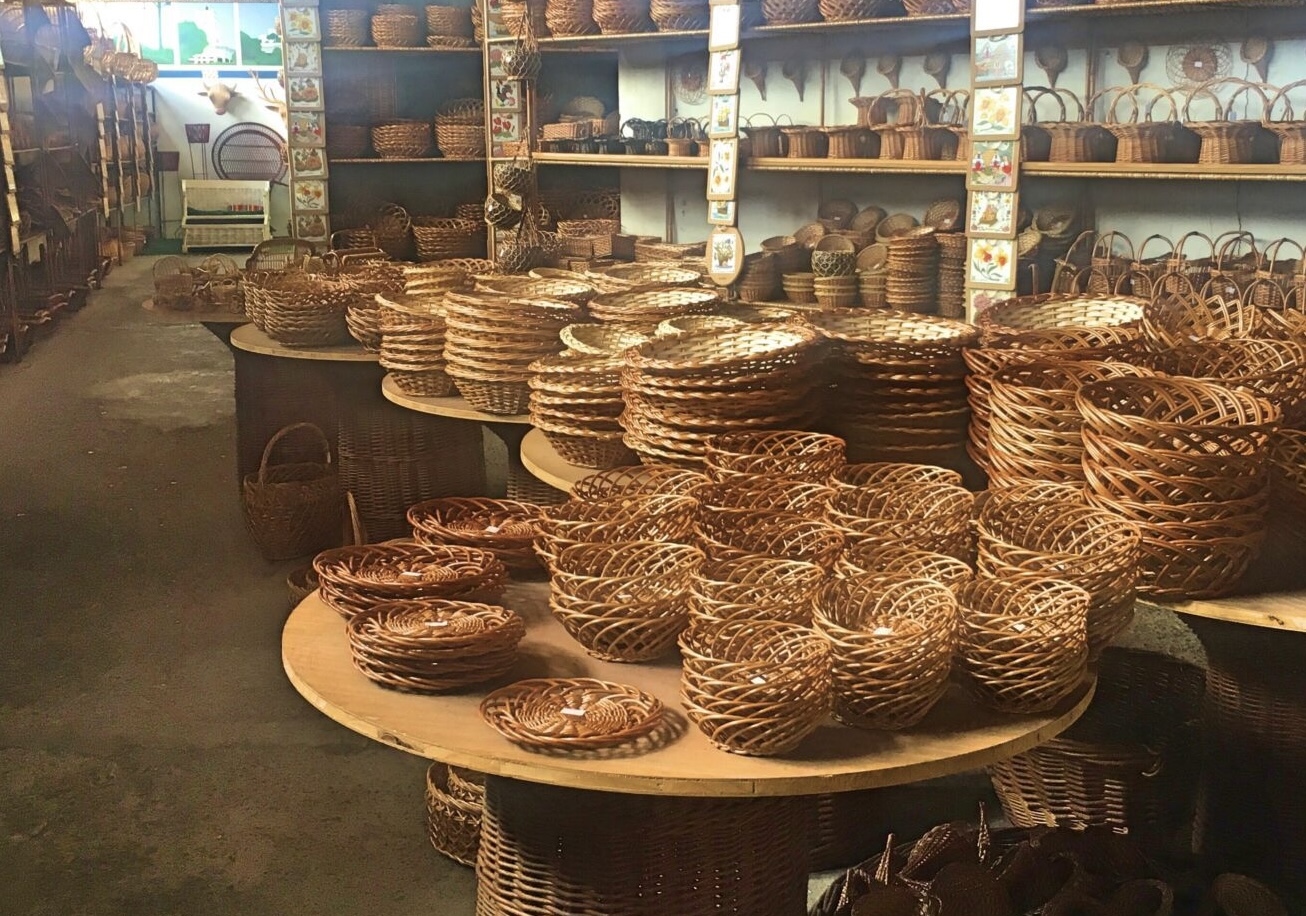
And I want you to see some of the baskets that inspired this design. The open designs on some of the baskets and the braided edges on others are so well translated into knitting by this clever designer.
We have not yet moved aboard Pandora because it’s been too windy to put her in the water and move to a slip. Bob is also deep into cleaning and doing some repairs himself. Luckily the prickly man who was to rebuild Pandora’s rudder sent over a small crew to make it better. It looks quite good now. Thank heaven because a boat needs a straight rudder to steer properly! The current plan is to move aboard on Tuesday, March 31. We’ll start a new month aboard, and as soon as Mother Nature gives us a weather window we will sail to Cartagena, where I”m sure there will be more delights.
Time to knit. As always, thank you for following me!